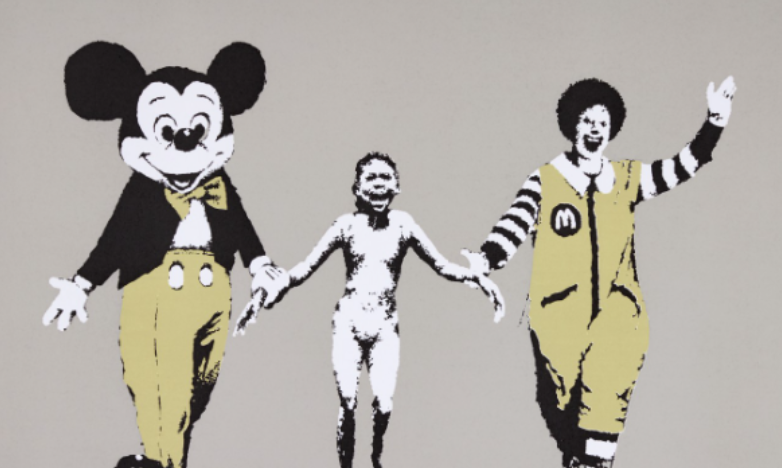
Napalm
Medium: Screenprint in colors on wove paper
Year: 2004
Sheet: 50×70 cm (19 5/8 x 27 1/2 inches)
Printer & Publisher: Pictures on Walls, London
Editions
Signed Edition: 150
Unsigned Edition: 500
Artist’s Proof Editions
Napalm (Rainbow AP): 27 signed AP
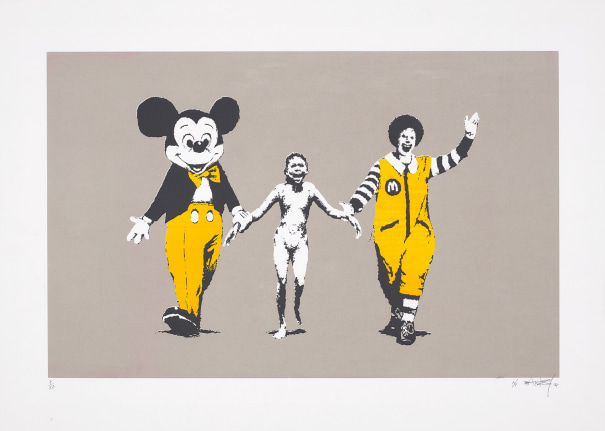
Napalm (Orange AP):27 signed AP
Serpentine Edition
50 signed, 29 signed AP
A Collision of Worlds
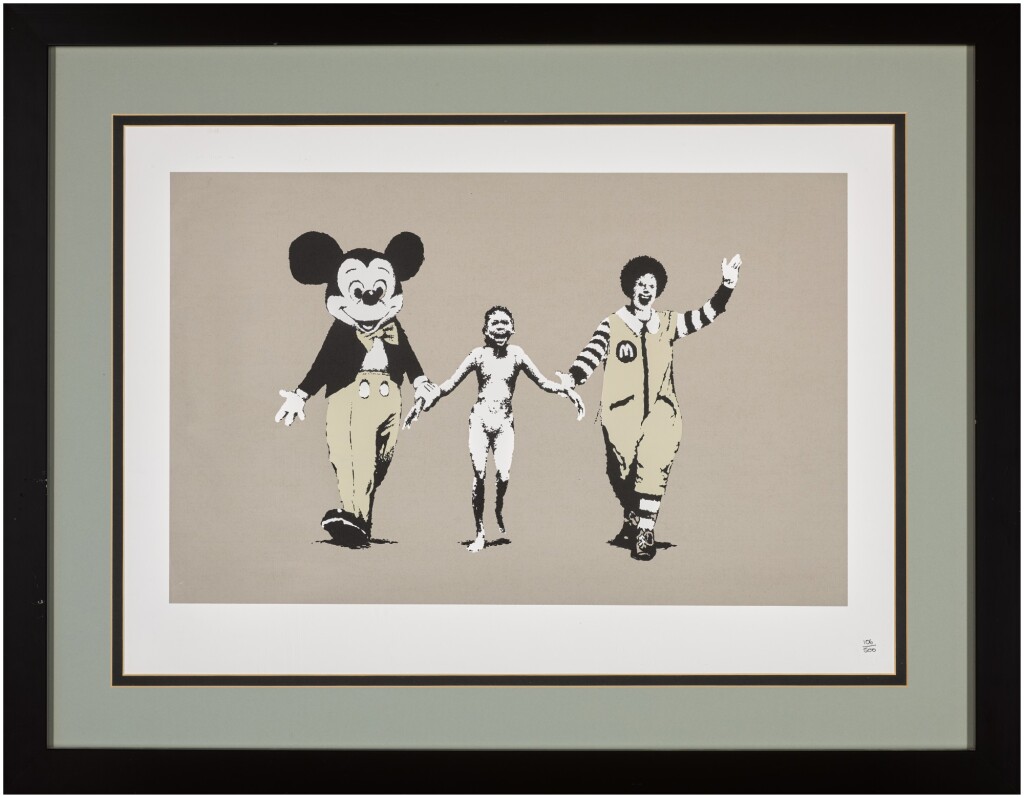
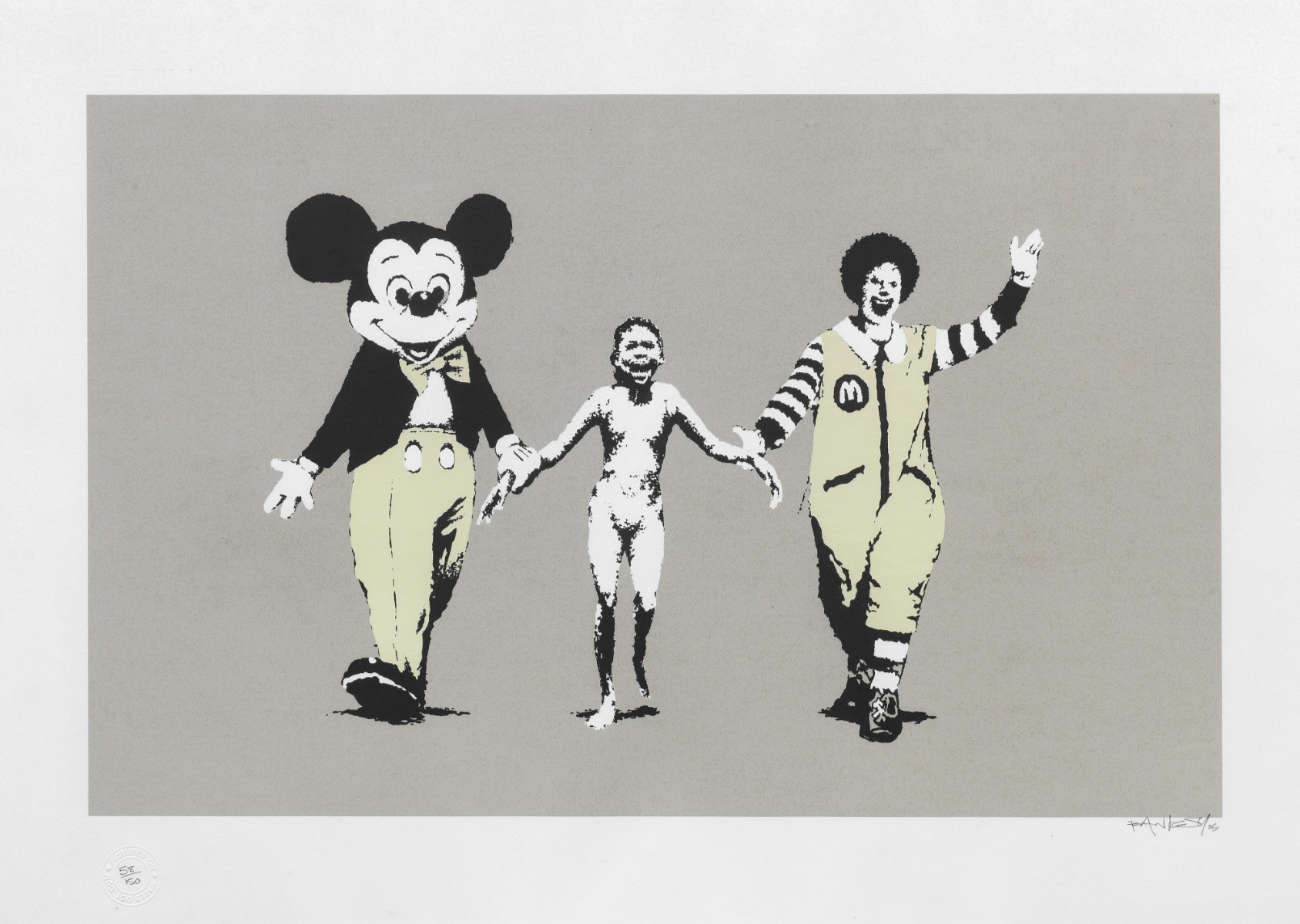
Few images in Banksy’s oeuvre strike with the same brutal clarity as Napalm. By colliding one of the most harrowing photographs of the 20th century with the cheerful icons of global consumer culture, Banksy produces an image that is impossible to ignore—and even harder to reconcile. Napalm, also known as Can’t Beat That Feeling, is among Banksy’s most politically charged and visually devastating works. Drawing directly from one of the most iconic images of the Vietnam War, the artist reframes historical trauma through the lens of Western consumerism. The result is a work that transcends satire, confronting viewers with a deeply uncomfortable reflection on complicity, detachment, and the normalization of violence.
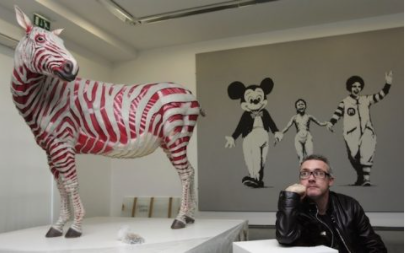
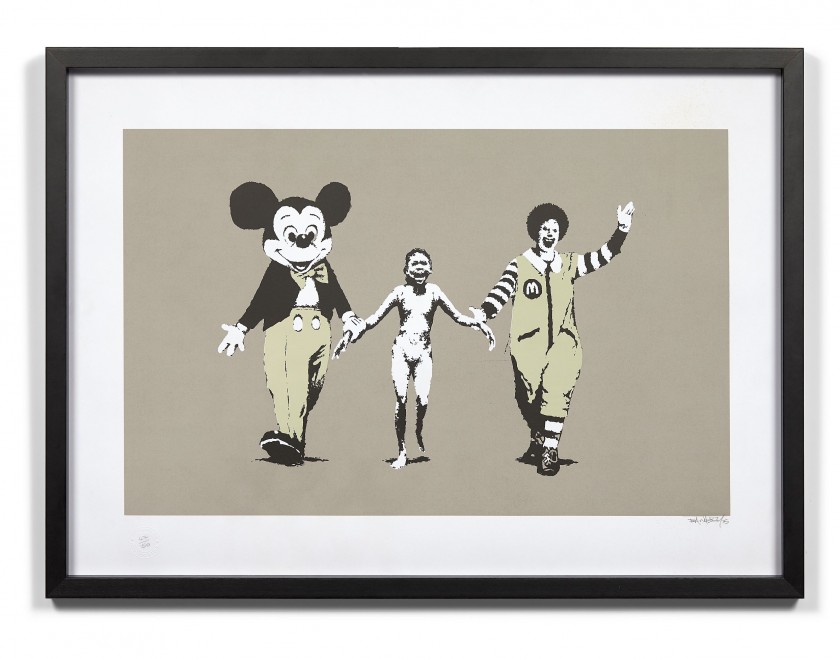
The composition appropriates the central figure from the famous 1972 photograph of a young Vietnamese girl fleeing a napalm attack: her body burned, her expression marked by terror and pain. This image, etched into collective memory, is widely recognized as a symbol of the human cost of war. Banksy radically alters the scene by placing the child between two instantly recognizable figures: Mickey Mouse and Ronald McDonald. Smiling and holding her hands, they appear oblivious to her suffering.

The contrast is violent. The girl’s anguish is real, historical, and specific; the mascots are artificial, cheerful, and detached. Together, they create a visual paradox that forces the viewer to confront the dissonance between entertainment, consumption, and human tragedy. Executed in Banksy’s signature stencil style, Napalm relies on stark contrasts and immediate readability. The black-and-white rendering reinforces the documentary nature of the original photograph, while the simplified forms of the corporate characters enhance their symbolic function.
Violence, Consumption, and Moral Distance
At its core, Napalm is a work about disconnection. By inserting symbols of global capitalism into a scene of extreme suffering, Banksy exposes the mechanisms through which violence becomes abstract, distant, and ultimately consumable. The smiling figures of corporate culture do not merely contrast with the child’s pain—they neutralize it. Their presence suggests a world in which tragedy is absorbed into the same visual language as entertainment and advertising.
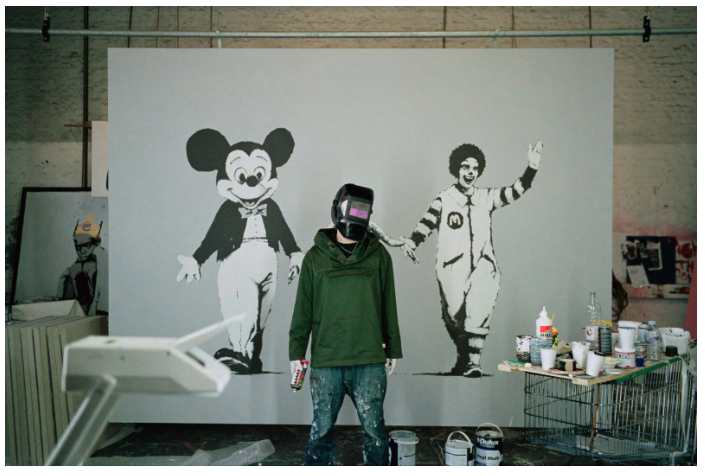
James Pfaff, Welder’s mask session, London, 2004
The work does not accuse directly; instead, it implicates. It asks how such images can coexist, and what it means for a society to move so fluidly between them. The discomfort it produces is not incidental: it is the work’s central function. This artwork is a striking statement against the military-industrialist complex linking warfare with capitalism that Banksy is criticizing all along his oeuvre. More widely, this work also encapsulates a critique of the sometimes disastrous impact of colonialism, and occupation. Banksy reinvents the Pulitzer Prize-winning image of this 9-year-old girl, fleeing a napalm blast naked in fear. By wittingly adding alongside two icons of American consumer culture, Mickey Mouse and Ronald McDonald, the artist creates a sickening juxtaposition with the image of Kim screaming in pain from the napalm burns. Napalm comments not just on the horrors of the Vietnam war, but of the then recent US-led invasion of Iraq in 2003. The comparison of one of the most provocative and horrifying photographs of war with two symbols of American culture highlights the commodification of war.

McDonald’s, together with Disneyland are major “targets” for Banksy as they represent the hegemony and destructive power of US consumerism.
Napalm Colorways

Napalm (Rainbow AP), 2004

The Serpentine Edition

Digital pigment print in colors on wove paper
30×42 cm
Published by The Serpentine Gallery and Other Criteria London
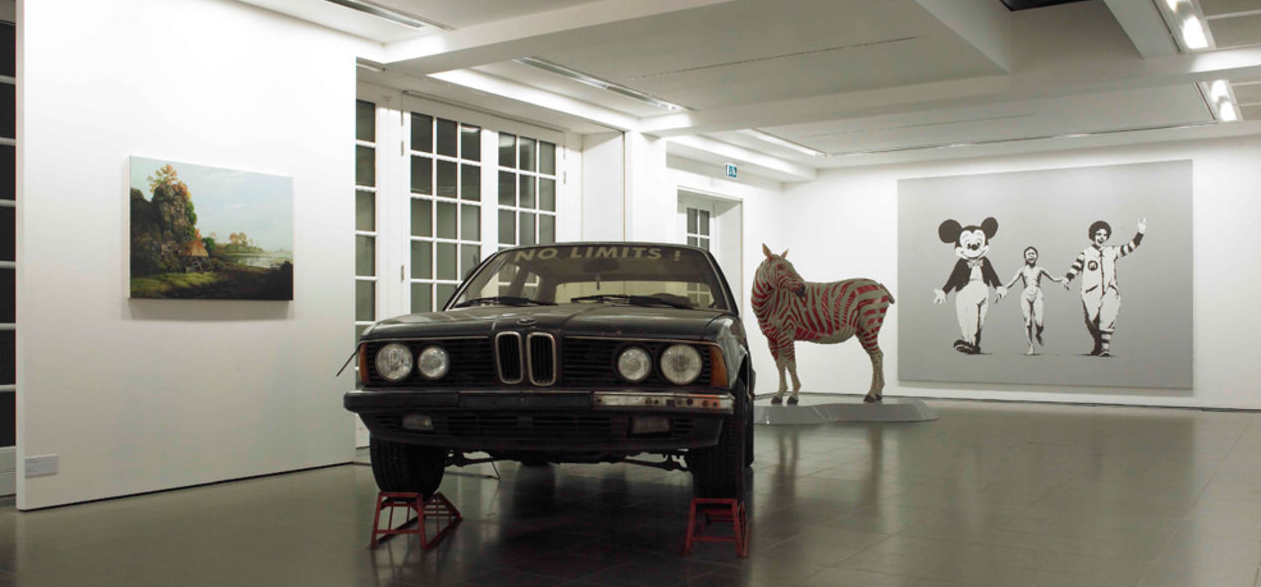
Damien Hirst and Banksy are known to have great mutual respect for each other. They have collaborated at numerous occasions. Damien Hirst ended up acquiring the original Napalm painting.
Auction Results
PLEASE CLICK BELOW FOR AUCTION RESULTS