ANDY WARHOL
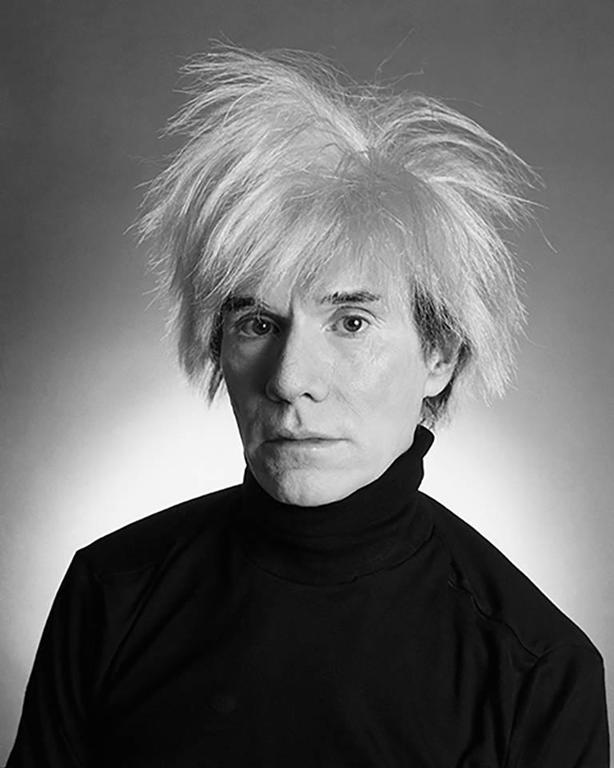
The King of Pop
Andy Warhol (1928–1987) was one of the defining artists of the twentieth century and the leading figure of American Pop Art. Beginning his career as a successful commercial illustrator in New York, Warhol turned toward fine art at the beginning of the 1960s and began painting the images that surrounded everyday American life: advertisements, supermarket products, newspaper photographs and celebrities.
It was a radical idea. At a time when serious art was still largely associated with individual expression and the unique handmade object, Warhol treated the imagery of mass culture as worthy of the museum wall. His art reflected a world increasingly shaped by advertising, consumer goods, television and celebrity.
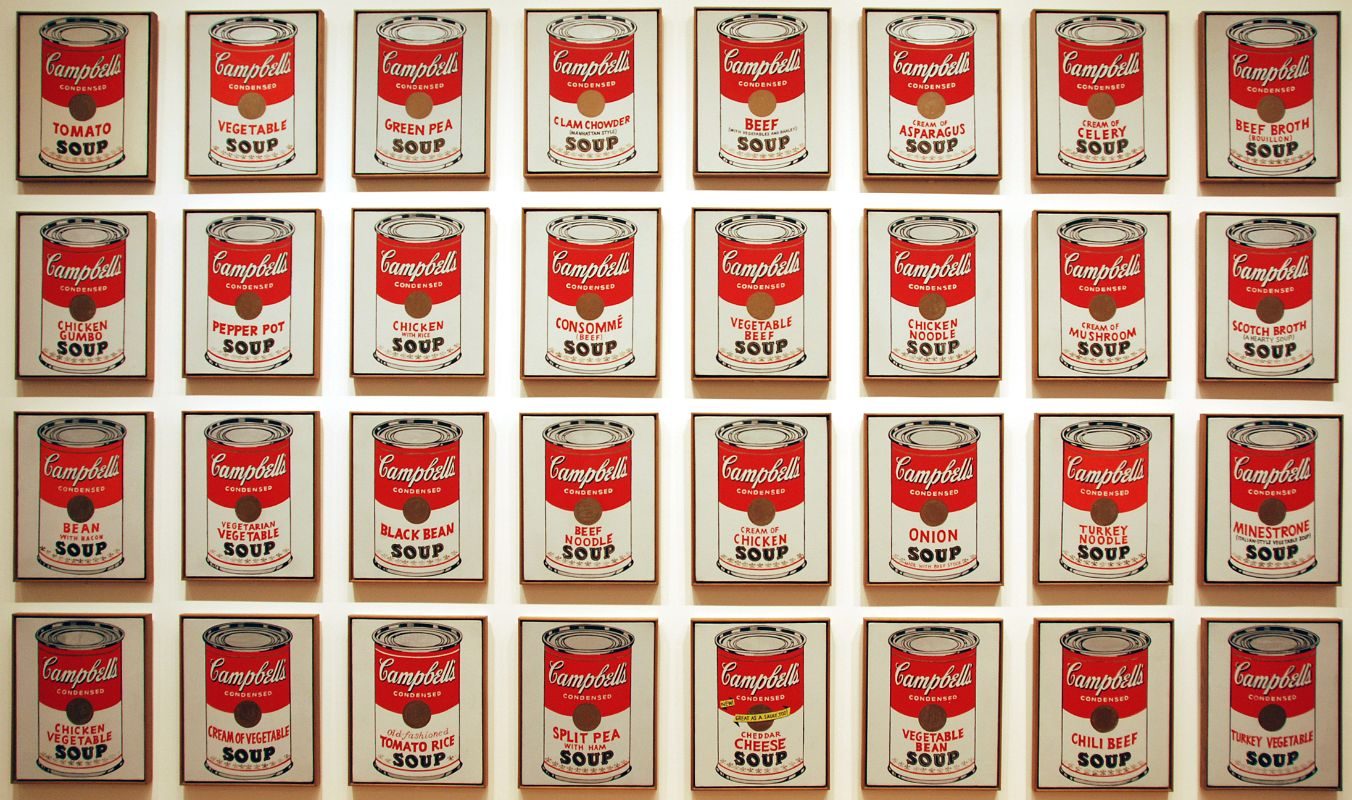
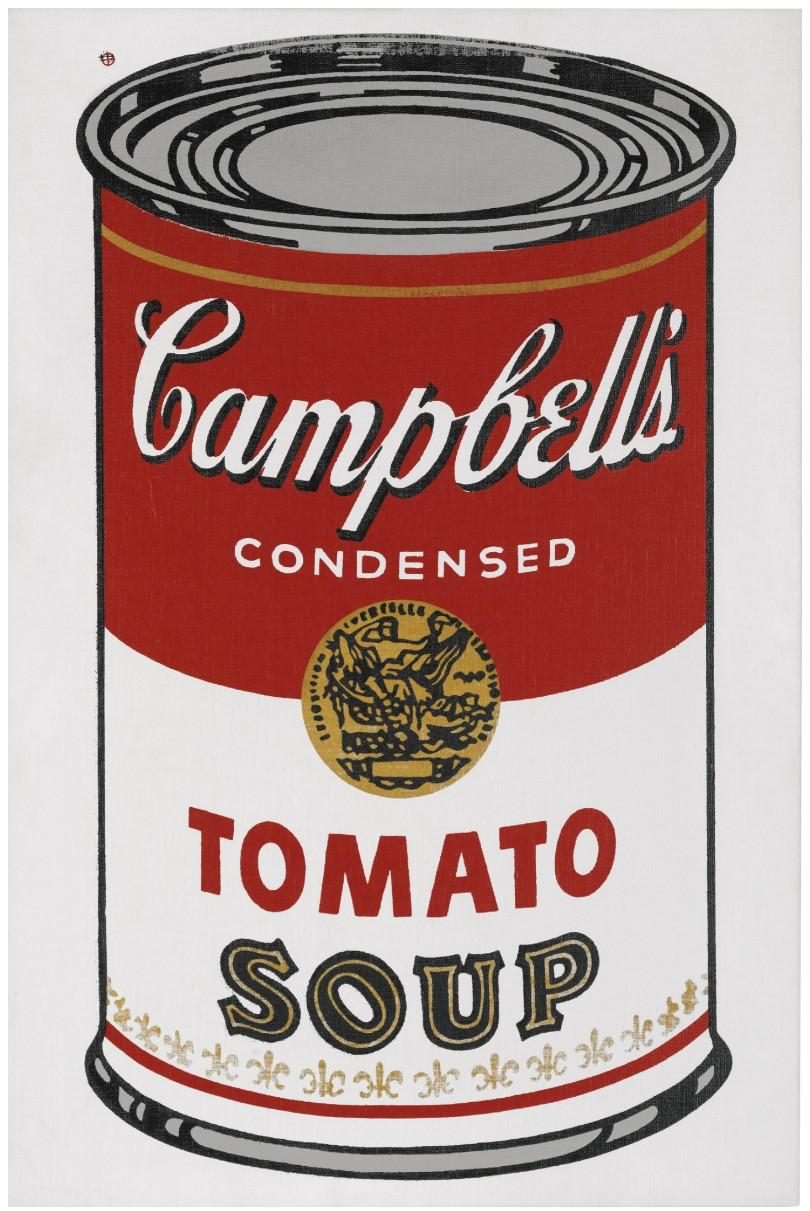
His most famous works have become almost as recognizable as their subjects. Campbell’s Soup Cans (1962), now at the Museum of Modern Art in New York, consists of 32 canvases representing the varieties of Campbell’s soup then available. His portraits of Marilyn Monroe, begun shortly after the actress’s death in 1962, transformed a Hollywood publicity photograph into one of the defining images of Pop Art.
Warhol increasingly embraced screenprinting and repetition, allowing him to produce images in a manner resembling commercial manufacturing. His New York studio was appropriately called The Factory.
Warhol understood that modern culture was increasingly a culture of images—and that a soup can, a movie star or a Coca-Cola bottle could become an icon. Banksy understood exactly the same thing.
Marilyn: The Face of Pop Art
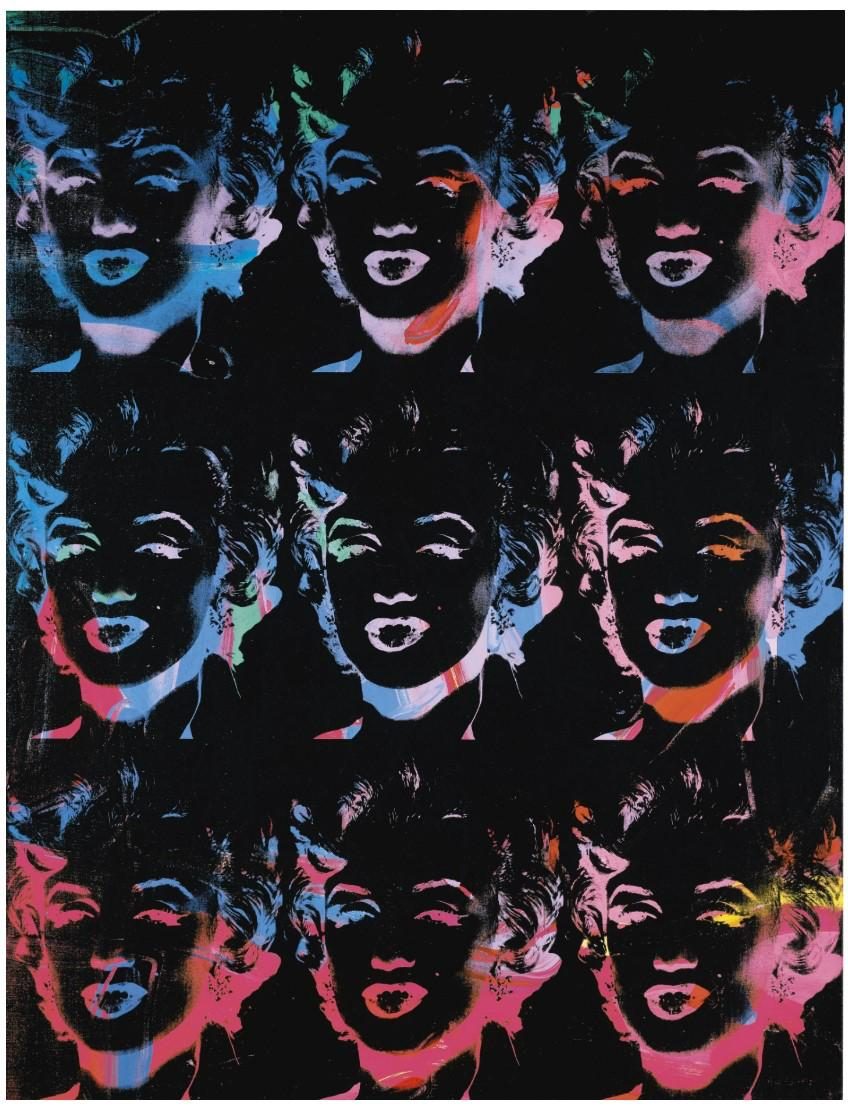
Few images are more closely associated with Warhol than Marilyn Monroe. Following Monroe’s death in August 1962, Warhol began using a publicity photograph made for the 1953 film Niagara as the basis for paintings and screenprints. Her face was enlarged, repeated and transformed through brilliant, sometimes deliberately unnatural colors.
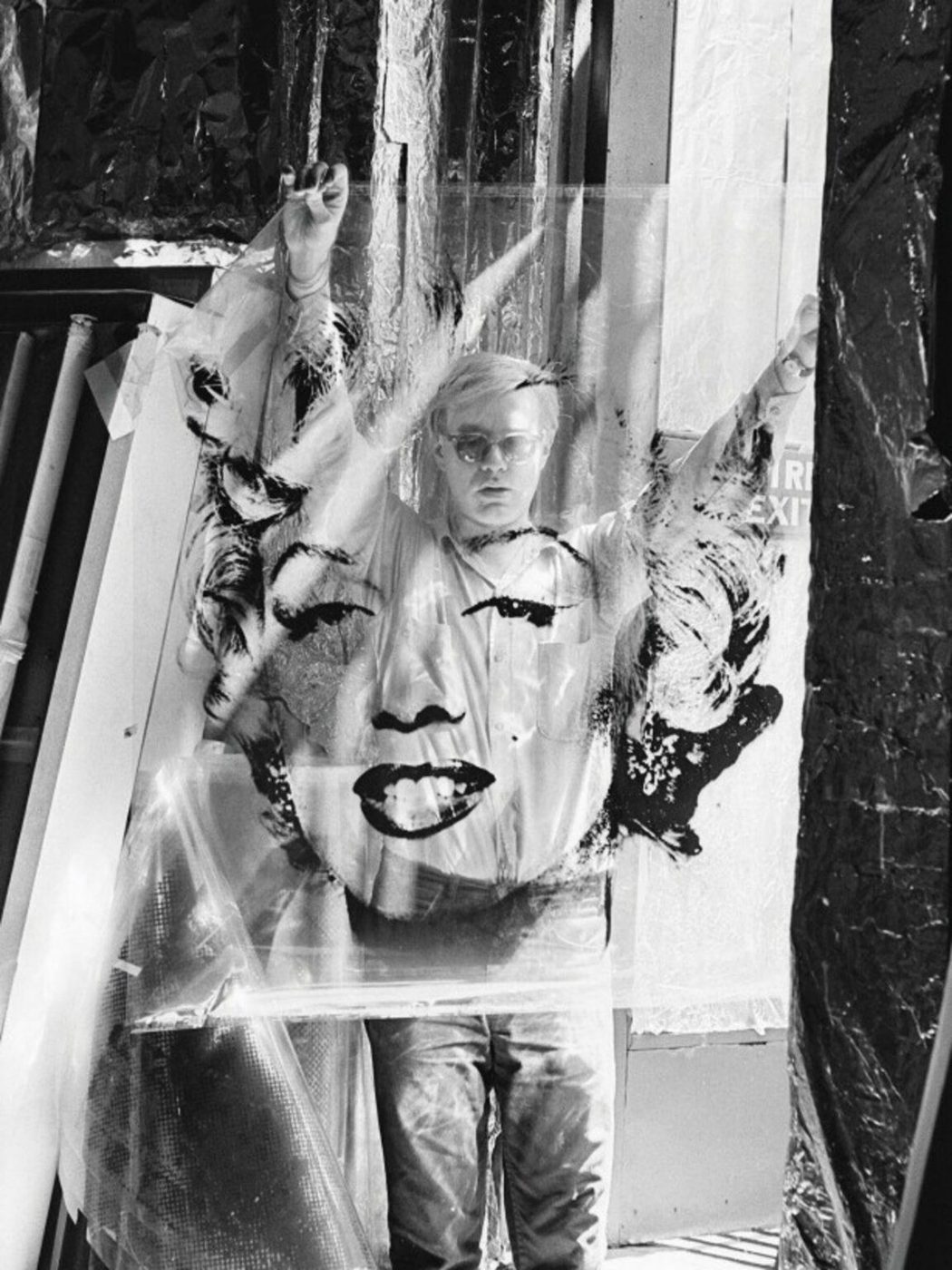
One of the greatest examples is Marilyn Diptych (1962), now in Tate’s collection. Fifty images of Monroe are repeated across two panels: twenty-five in vivid color and twenty-five gradually fading in black and white. Celebrity, repetition, death and the mass circulation of images come together in a work that has become one of the landmarks of twentieth-century art.
Warhol returned to Marilyn repeatedly. In 1964 he produced a group of monumental square portraits that included Shot Sage Blue Marilyn, an image whose later history would demonstrate just how completely Warhol’s celebrity portraiture had entered the canon of art history.
Shot Sage Blue Marilyn: A $195 Million Icon
In May 2022, Shot Sage Blue Marilyn sold at Christie’s New York for $195 million including fees. At the time of the sale, it became the most expensive twentieth-century artwork ever sold at auction and established an auction record for an American artist.
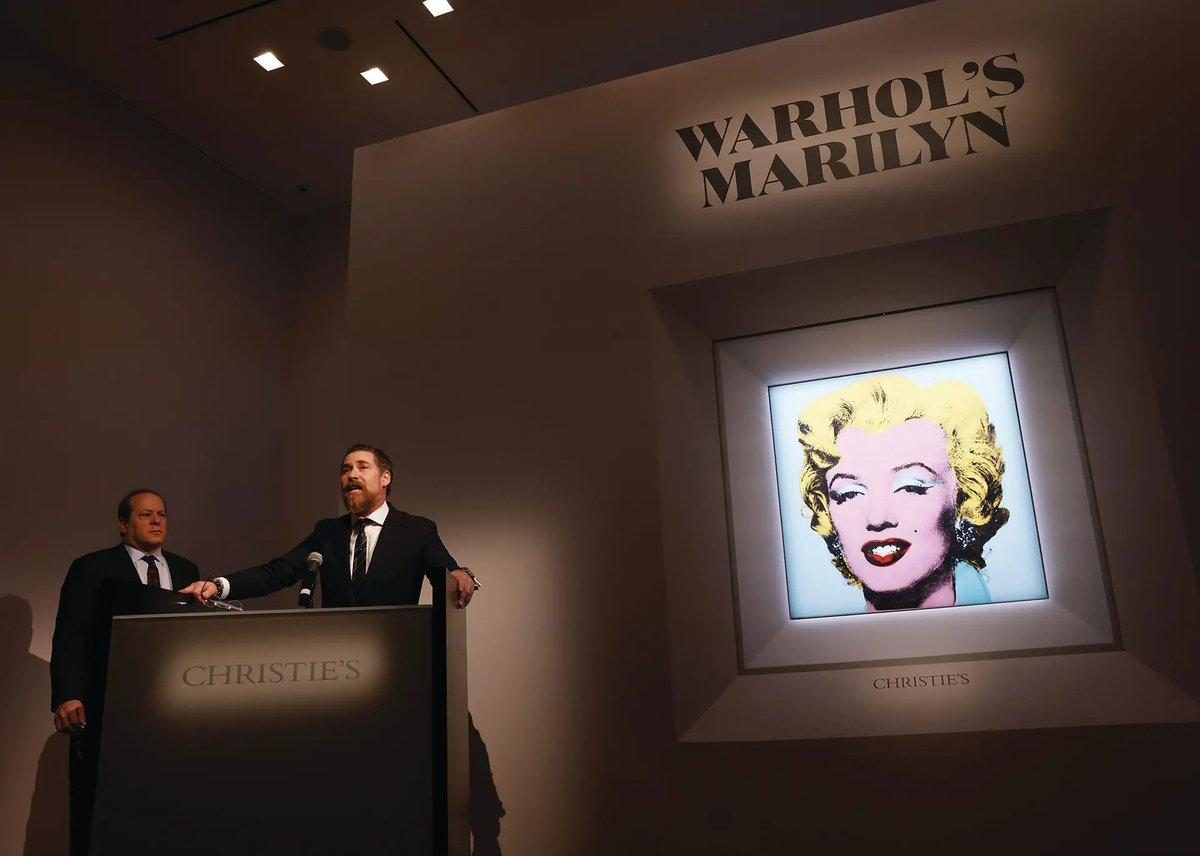
The result provides a remarkable conclusion to Warhol’s experiment with mass culture. An artist who deliberately blurred the boundaries between fine art, commercial imagery and mechanical reproduction ultimately created an image valued alongside the great masterpieces of art history.
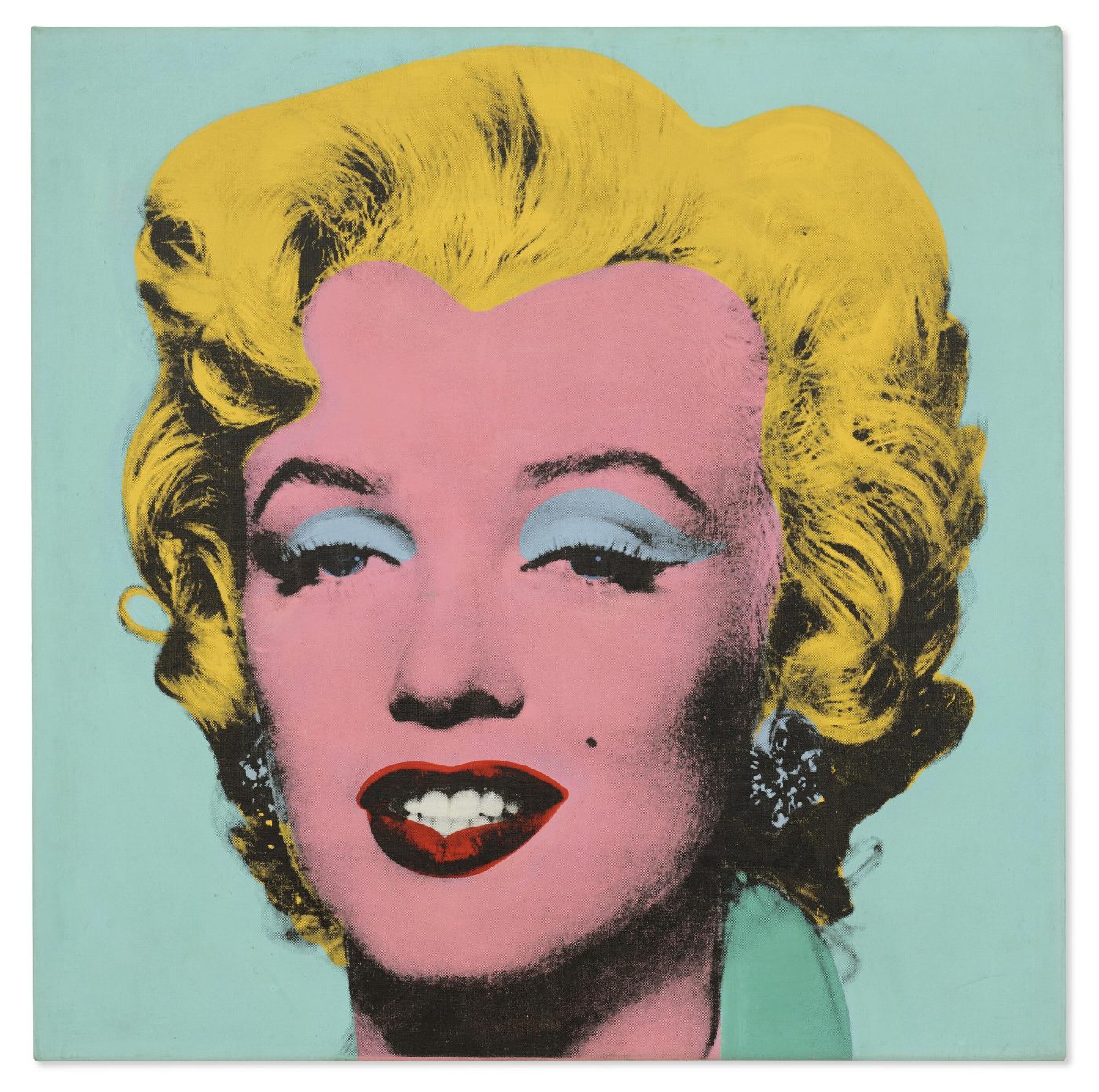
Marilyn had already been transformed by Hollywood into a global celebrity. Warhol transformed her again into an icon of modern art. And decades later, Banksy would replace her with another famous face.
From Marilyn to Kate Moss
Banksy’s Kate Moss is one of his clearest homages to Warhol.
Moss was among the most recognizable models of Banksy’s generation, her face circulating through fashion magazines, advertising campaigns and popular culture much as Monroe’s had circulated through cinema and the press decades earlier.
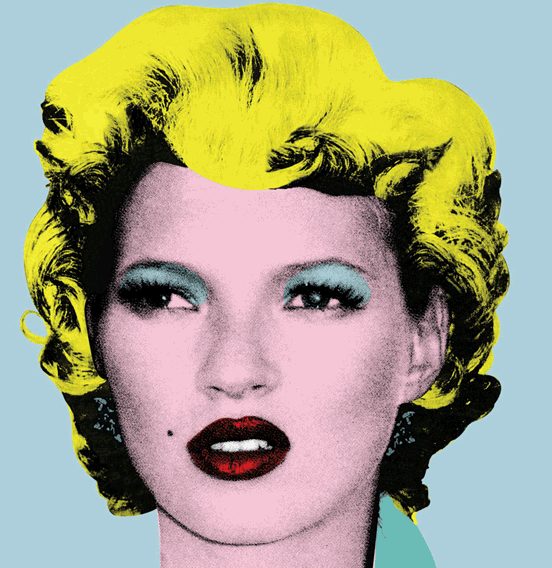
Banksy presents Moss through Warhol’s unmistakable visual language, even giving her Marilyn’s famous hairstyle. The transformation effectively appoints a new occupant to the role of contemporary celebrity icon.
The reference is particularly clever because Warhol’s Marilyn had itself become part of mass culture. Banksy is therefore appropriating an artist who had built much of his own art from appropriated images.
From Campbell’s to Tesco
Banksy’s other great conversation with Warhol begins not with a celebrity but with a can of soup.
Warhol’s Campbell’s Soup Cans of 1962 transformed one of the most ordinary products in the American supermarket into art. Thirty-two nearly identical canvases were displayed together like products on a grocery-store shelf, challenging conventional distinctions between commercial design and fine art.
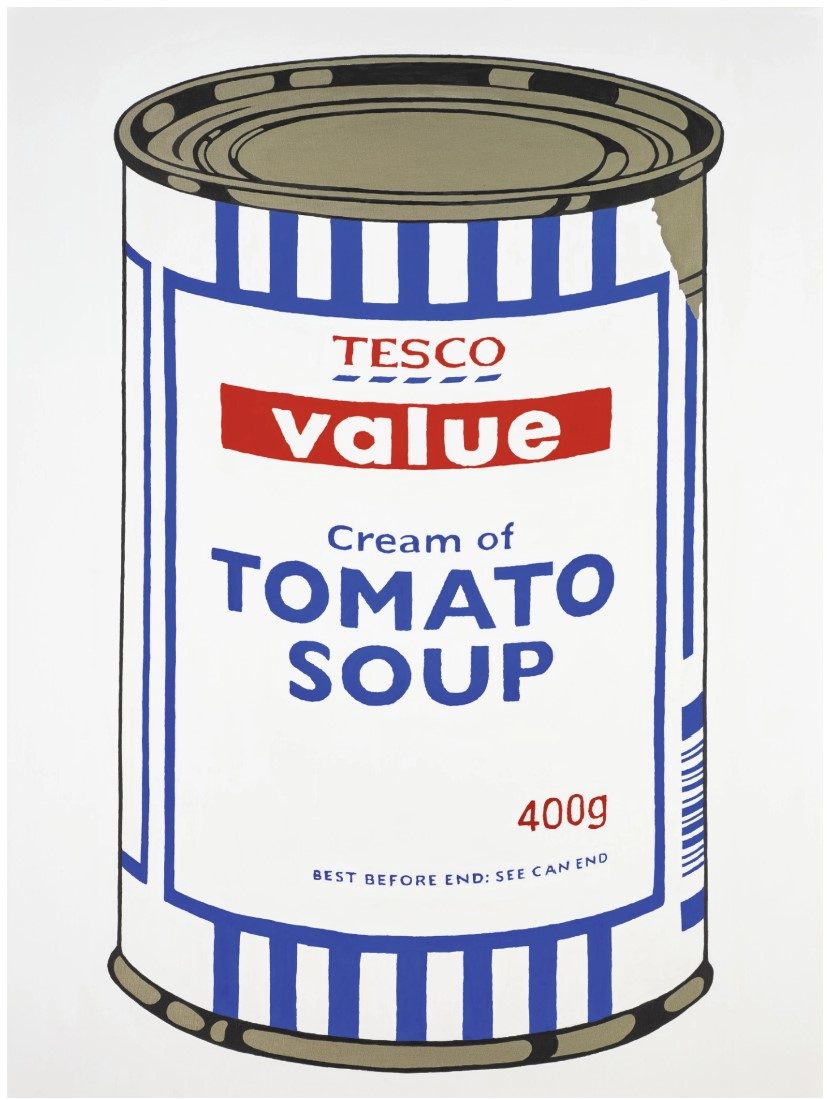
Banksy revisited the idea with Tesco Value Soup Can in 2004.
The reference is unmistakable, but the substitution is carefully chosen. Campbell’s red-and-white packaging had become an icon of post-war American consumer culture. Tesco Value represented the deliberately unglamorous end of British supermarket branding: inexpensive products sold in stark, functional packaging.
Banksy effectively updates Warhol’s consumer icon for contemporary Britain. The Pop Art masterpiece has gone discount.
There is also an interesting technical connection. Warhol’s original Campbell’s soup-can canvases were painted largely by hand before screenprinting became central to his practice. Banksy’s Tesco Value Soup Can is likewise an unusually painterly work, executed by hand rather than relying principally upon the stencil technique for which he is famous.
Banksy is not simply borrowing Warhol’s subject. He is returning to the handmade origins of one of Warhol’s most famous ideas.
From Marilyn Monroe to Sid Vicious
Banksy pushed his dialogue with Warhol in another direction with Sid Vicious, replacing Marilyn Monroe with the notorious Sex Pistols bassist within a composition derived from Warhol’s Marilyn Diptych. The substitution creates a wonderful contradiction.
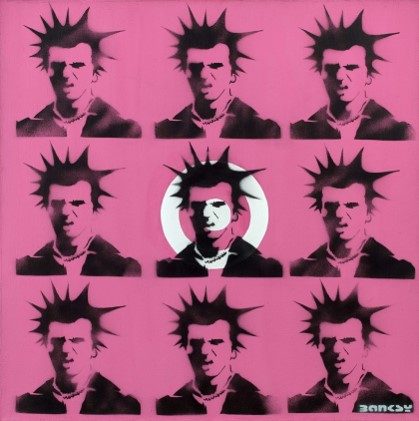
Warhol’s art is inseparable from celebrity, consumer culture and the mass circulation of images. Punk presented itself through rebellion, anti-establishment attitudes and resistance to conventional culture. Sid Vicious, one of punk’s most notorious figures, is therefore subjected to the visual machinery of Pop Art.
Yet there is another irony. Punk itself became enormously marketable. Its music, clothing, personalities and rebellious imagery became commodities of their own. Repeated like a Warhol celebrity, Sid Vicious becomes another cultural product—an anti-establishment icon transformed into an endlessly reproducible image.
Banksy After Warhol
Of all the artists Banksy has appropriated, Warhol may be one of his most natural predecessors.
Both understood the extraordinary power of images already circulating through society. Neither needed to invent an entirely new visual world. Instead, they took things people already recognized—consumer products, celebrities, advertising and political imagery—and changed the context in which we encountered them.
There are important differences. Warhol often maintained an enigmatic distance from his subjects, making it deliberately difficult to decide whether he was celebrating consumer culture or exposing its absurdities. Banksy tends to sharpen the joke and make the social criticism more explicit.
Yet Banksy’s dialogue with Warhol also contains genuine admiration. Tesco Value Soup Can, Kate Moss and Sid Vicious demonstrate how thoroughly he understood the visual language Warhol created and how easily that language could be adapted to another generation.
Warhol took the supermarket and put it into the museum. Banksy took Warhol—and sent him back to the supermarket.
STAY INFORMED
Receive the latest news, exhibitions, artworks and market updates on Banksy.