A VERY BRITISH ANGEL
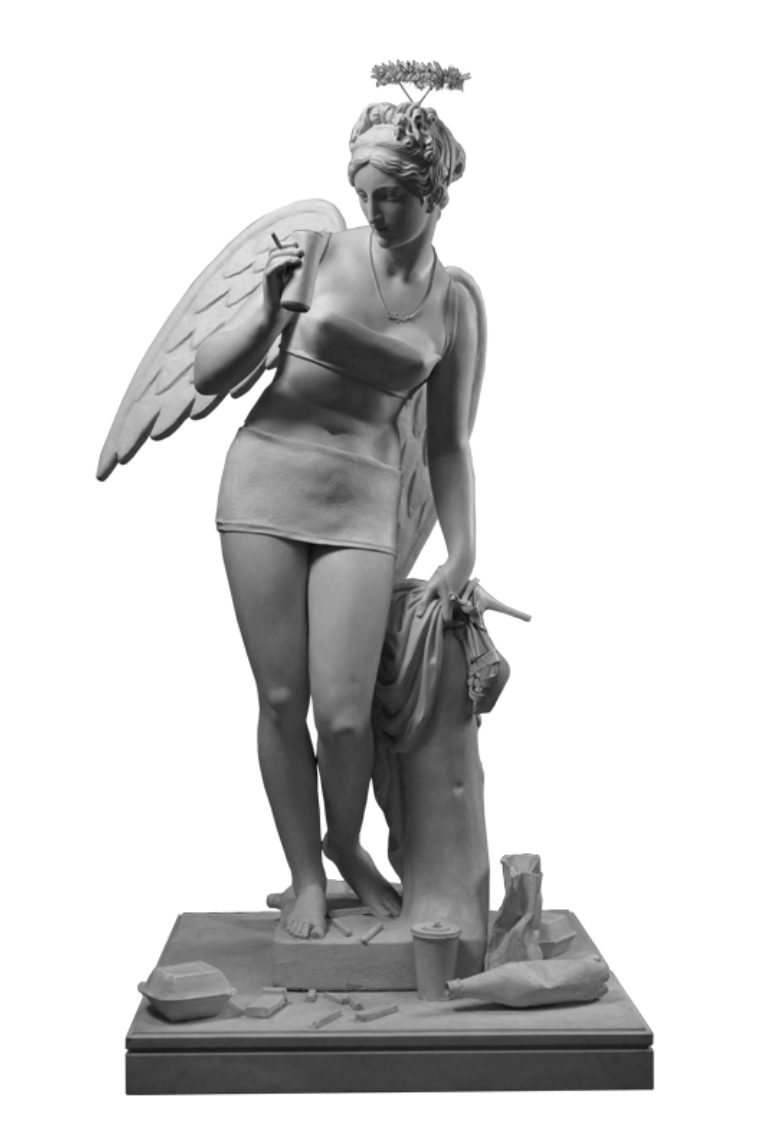
Created for Banksy versus Bristol Museum in 2009, Angel of the North transforms the elevated language of classical sculpture into an acerbic portrait of contemporary British life. A winged female figure stands in the traditional pose of an allegorical or celestial being, complete with a delicate halo above her head. Yet Banksy has stripped the angel of almost every expectation of dignity. She wears a short, close-fitting dress, holds a drinks can in one hand and a cigarette in the other, while discarded fast-food packaging, cups, cigarette ends and other debris accumulate around her feet.
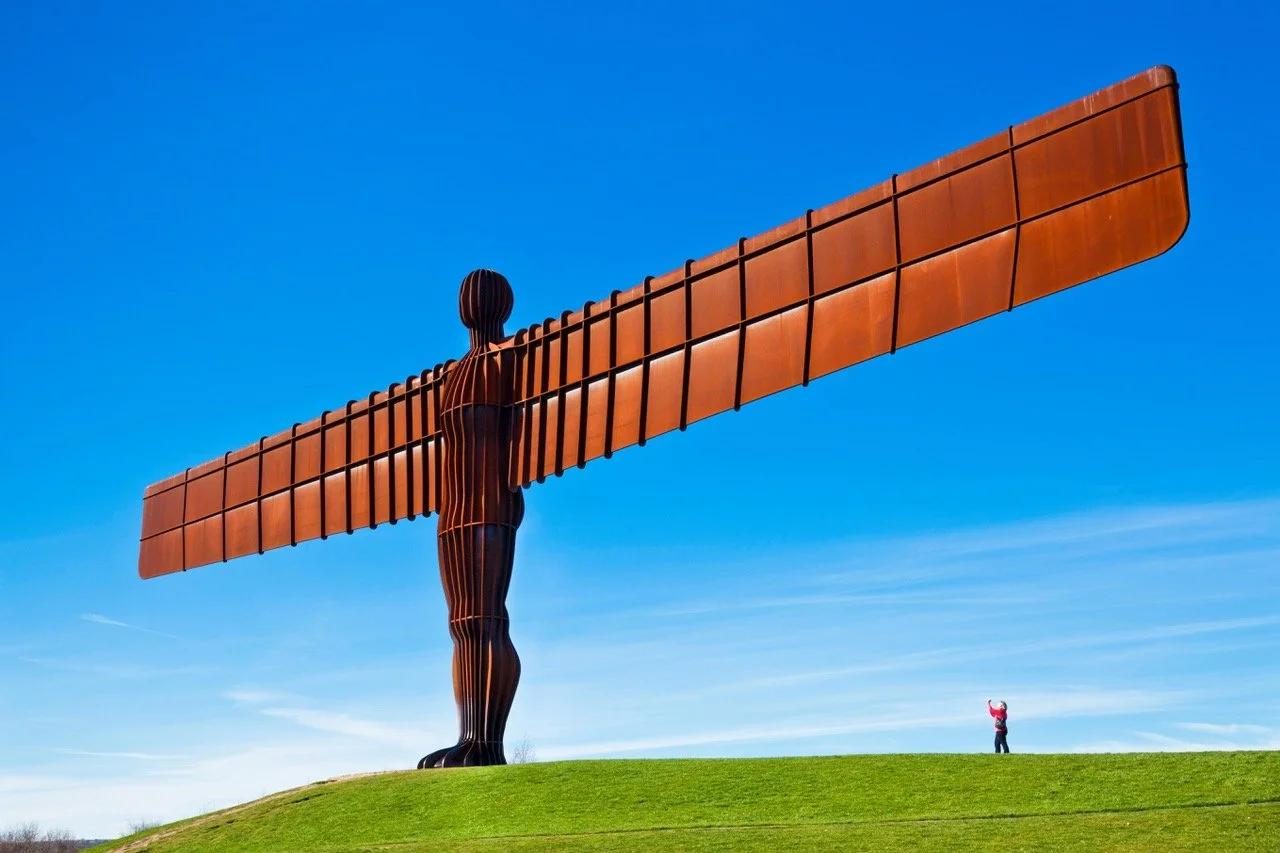
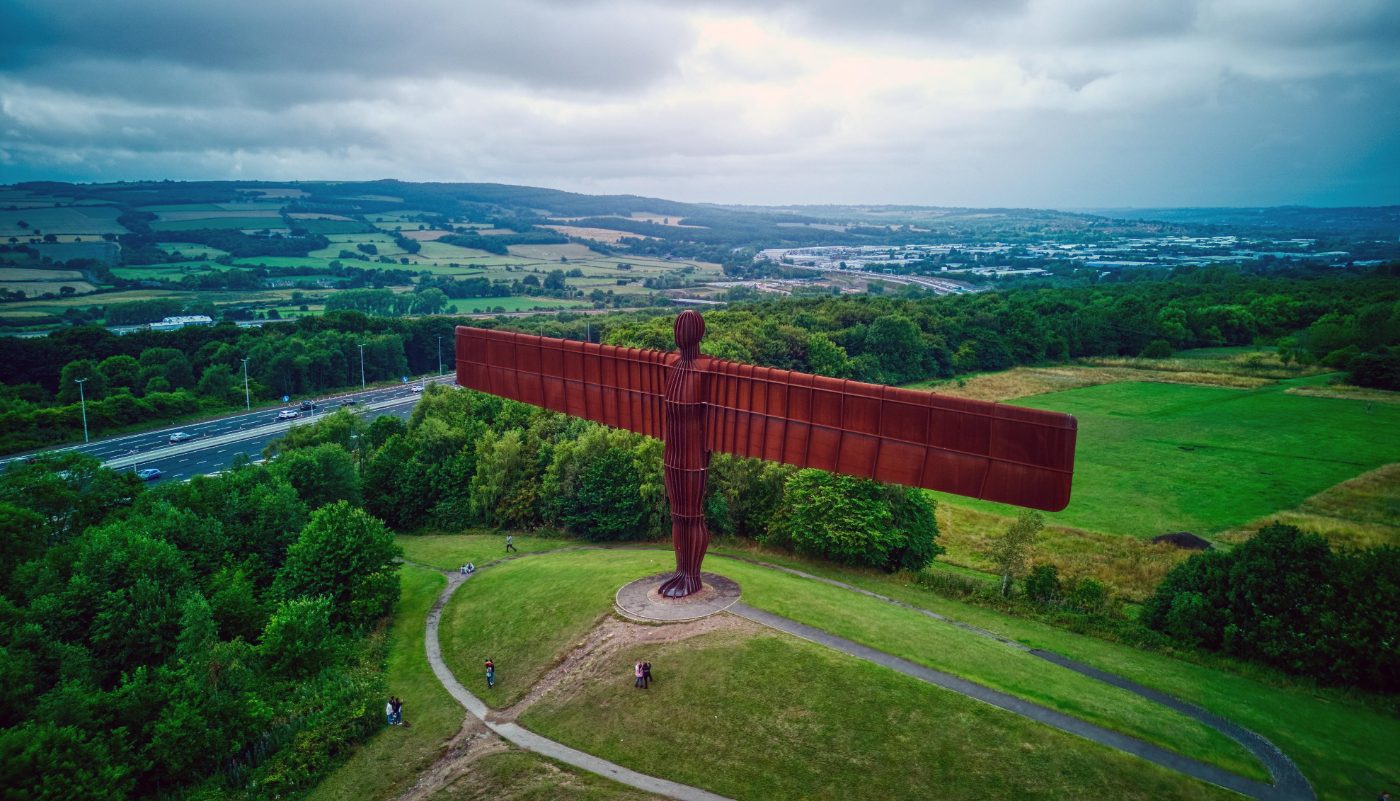
The title establishes the central joke. Antony Gormley’s monumental Angel of the North, erected at Gateshead in 1998, had rapidly become one of Britain's most recognizable works of public sculpture. Banksy replaces Gormley’s vast industrial figure—standing more than twenty meters high and surveying the landscape—with an altogether less heroic northern angel: a young woman apparently emerging from a night out. Contemporary responses to the Bristol exhibition immediately understood the reference, with one visitor describing Banksy’s sculpture as a southern view of a Saturday night on Tyneside.
FROM CLASSICAL IDEAL TO CONTEMPORARY CARICATURE
The humor depends upon collision. Wings, halo, contrapposto and the monochromatic appearance of carved stone evoke the authority of classical and museum sculpture, while the can, cigarette, mini-dress and litter belong emphatically to contemporary popular culture. Banksy does not destroy the traditional figure so much as force two incompatible cultural registers to occupy the same body.
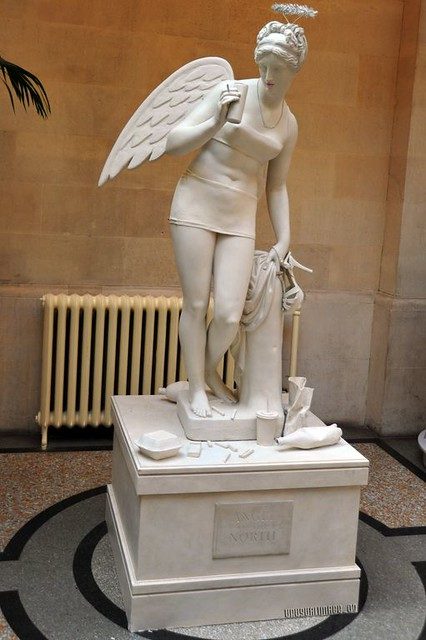
That strategy was fundamental to Banksy versus Bristol Museum. Throughout the exhibition, objects resembling the museum's historical collections were infiltrated by contemporary habits and anxieties. Nearby stood Happy Shopper, another classical female figure transformed through sunglasses and an accumulation of shopping bags, while Paint Pot Angel subjected an apparently traditional angel to a cascade of brilliant pink paint. Contemporary accounts specifically recorded this family of altered female sculptures in the entrance hall.
BANKSY VERSUS THE MONUMENT
Yet Angel of the North adds another layer because Banksy is not simply parodying classical sculpture: he is parodying a modern British monument that had itself already become an icon. Gormley's angel embodies permanence, scale and civic aspiration. Banksy's version is intimate, disheveled and deliberately ordinary. The heroic monument has descended from its hilltop and joined the Saturday-night crowd.
The work therefore fits beautifully into the larger argument of the 2009 exhibition. Banksy repeatedly collapsed distinctions between high and low culture, museum object and everyday commodity, historical artefact and contemporary joke. Here, even the angel has fallen—not through some grand theological catastrophe, but through the considerably more mundane temptations of a drink, a cigarette and a takeaway.
STAY INFORMED
Receive the latest news, exhibitions, artworks and market updates on Banksy.