CASH MACHINE GIRL
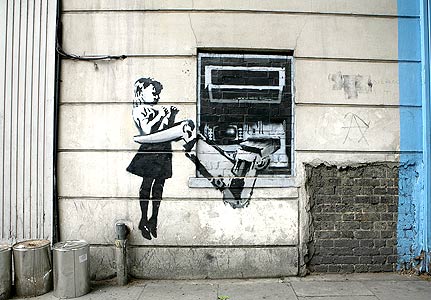
Money Takes the Child
Painted beside a functioning cash machine in Exmouth Market, Cash Machine Girl is one of Banksy's most effective uses of existing street architecture. A mechanical arm appears to emerge directly from the ATM, grabbing a young girl by the waist and lifting her from the ground while her legs struggle beneath her.
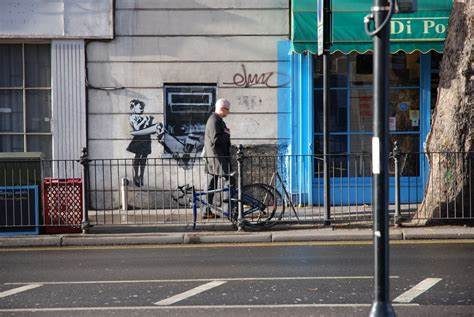
The real cash machine is essential to the composition. Rather than simply making an image about money, Banksy transforms the physical mechanism through which people access it into an active predator. The machine no longer dispenses cash; it reaches into the street and takes something from us instead.
The Price of Consumerism
The image reverses the normal relationship between people and money. We approach an ATM believing ourselves to be in control, yet Banksy's machine becomes autonomous, almost monstrous. The choice of a child intensifies the idea: innocence and vulnerability are literally being seized by the financial system.
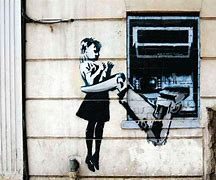
Created shortly before the global financial crisis, Cash Machine Girl belongs to Banksy's broader critique of consumer culture and the power of money, alongside works such as Shop Till You Drop, Festival and Christ with Shopping Bags. Yet its argument is unusually concise because the surrounding city completes it.
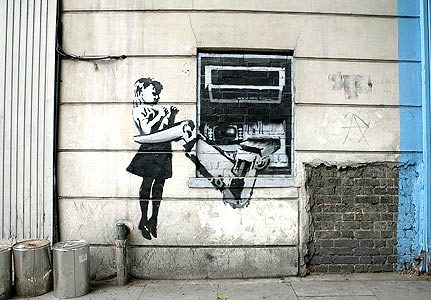
The mural has since disappeared. Like many of Banksy's most successful street interventions, however, its meaning depended precisely upon its original location: the ATM was not beside the artwork. It was part of the artwork.
STAY INFORMED
Receive the latest news, exhibitions, artworks and market updates on Banksy.