REVOLUTIONARY ICON, CONSUMER IMAGE
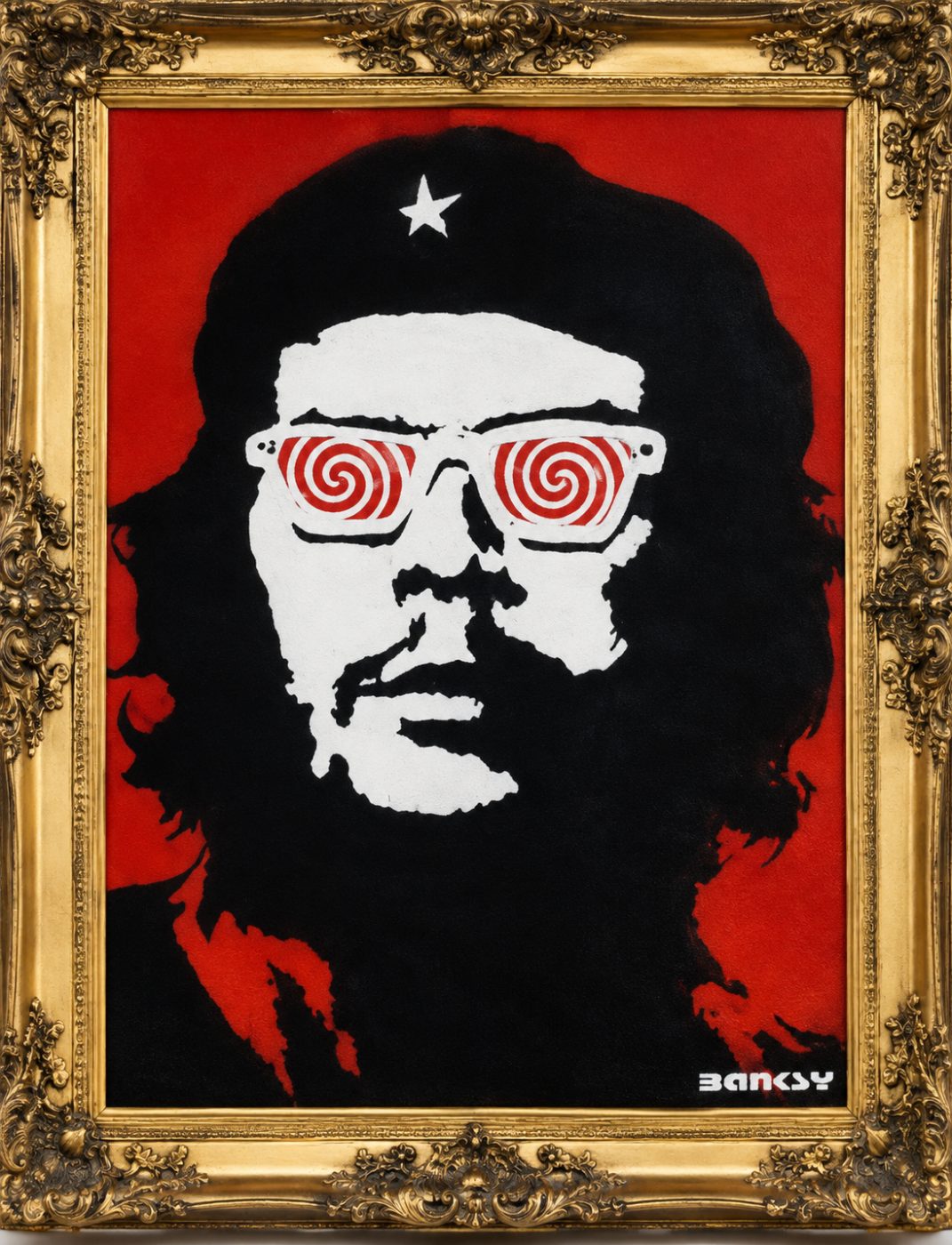
Created for Banksy’s landmark Turf War exhibition in London in 2003, Che Guevara appropriates one of the twentieth century’s most reproduced political portraits and subjects it to a characteristically economical act of visual sabotage. Guevara’s familiar face is rendered in stark black and white against a vivid red ground, but his eyes have been replaced by a pair of hypnotic spiral spectacles. The intervention is remarkably simple, yet it fundamentally alters the psychological force of an image that had already travelled far beyond its original revolutionary context.
The work is documented in the scholarly reconstruction of Turf War as a “print in black and white on red with hypnotic rotating eye glasses,” signed with Banksy’s tag. The available documentation does not establish the precise printing technique or support, and these should therefore remain unspecified until further evidence emerges. The surviving contemporary exhibition photograph clearly records the work in its ornate gilt frame and shows Banksy’s white tag at lower right.
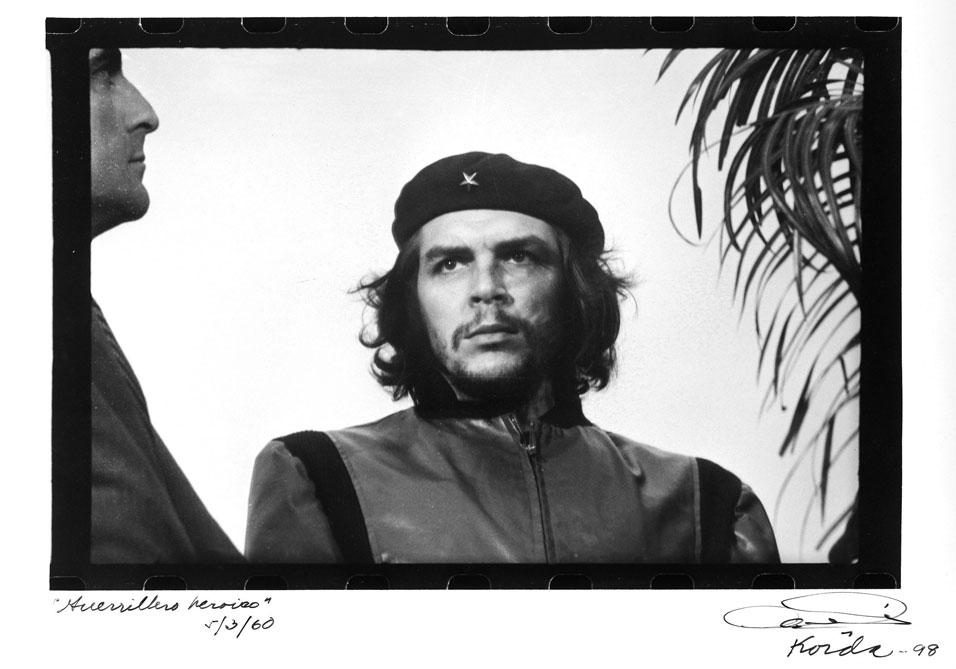
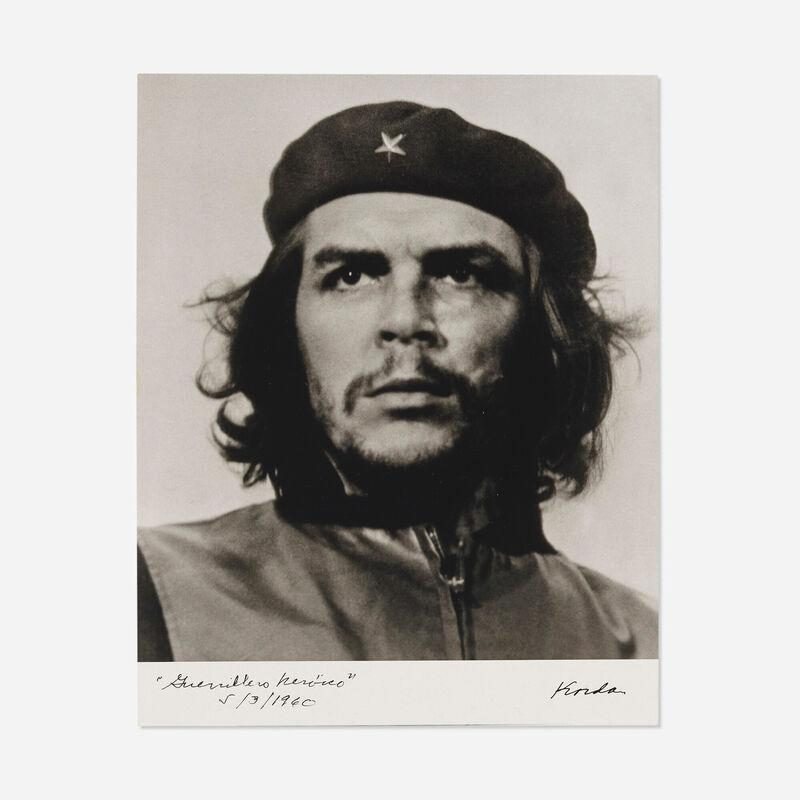
The source is the celebrated image of Ernesto “Che” Guevara derived from Alberto Korda’s 1960 photograph Guerrillero Heroico. By the beginning of the twenty-first century, Korda’s photograph had undergone an extraordinary transformation: the portrait of a Marxist revolutionary had become one of the most ubiquitous images of global popular culture, reproduced across posters, clothing, advertising and consumer merchandise. Banksy’s spiralling glasses push this contradiction further. Guevara remains instantly recognizable, but the revolutionary gaze—the feature through which Korda’s original projects conviction and heroic resolve—has been replaced by the visual shorthand of hypnosis. The icon appears simultaneously mesmerized, blinded and emptied of sight.
TURF WAR AND THE POLITICS OF THE ICON
The work acquires particular resonance within Turf War. Banksy’s breakthrough London exhibition repeatedly manipulated established symbols of political, national and cultural identity: Winston Churchill received a punk-like strip of green turf, Queen Elizabeth II was transformed into a chimpanzee, policemen acquired acid-house smiley faces, and familiar images of authority and rebellion were subjected to irreverent visual mutations. Che Guevara belongs naturally within this environment. Rather than attacking Guevara’s politics directly, Banksy appears more interested in what happens to a revolutionary image once repetition transforms it into a universally recognizable brand.
This concern was particularly relevant to Banksy himself. By 2003, his own rats, policemen, monkeys and bomb-carrying figures were becoming increasingly recognizable and reproducible visual signs. Che Guevara therefore touches upon a contradiction that would become increasingly central to Banksy’s career: the ability of images created in opposition to established systems to be absorbed, reproduced and ultimately commodified by those same systems.
CHE (DOLLAR)
The theme was reinforced at Turf War by a second treatment of the same revolutionary icon. Banksy also produced Che (Dollar) (2003), an offset lithograph in which the star on Guevara’s beret is replaced by a dollar sign. Examples were reportedly distributed to VIP guests at the exhibition, effectively transforming the revolutionary icon into an exhibition souvenir while simultaneously commenting on precisely that process of commodification.
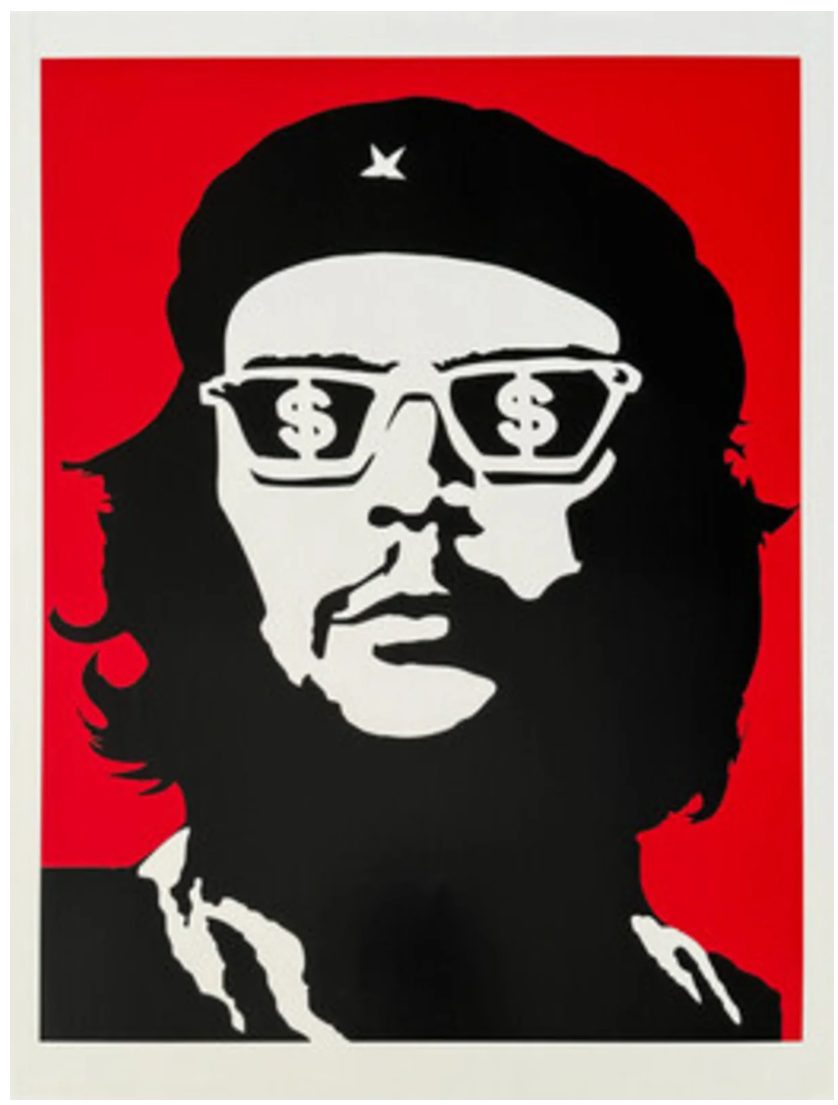
The two works manipulate the same universally recognizable portrait in complementary ways. In the exhibited Che Guevara, Banksy replaces Guevara’s commanding gaze with hypnotic spiral spectacles, suggesting an icon rendered passive through endless reproduction and consumption. In Che (Dollar), the critique becomes explicit: the emblem of revolution is literally marked by money. Together, the works address one of the central paradoxes surrounding Guevara’s posthumous image—the transformation of an anti-capitalist revolutionary into one of modern consumer culture’s most successful visual brands.
Seen within Turf War, the pairing is particularly characteristic of Banksy’s early practice. Political history, popular imagery and commercial culture are not treated as separate territories but as competing systems of signs. Banksy’s intervention requires only the smallest alteration—a pair of spiralling eyes or the substitution of a dollar sign—to expose the contradiction already contained within the image.
Che Guevara consequently stands as an unusually concise example of Banksy’s early engagement with the commodification of dissent. The revolutionary has not disappeared; his image has become so successful that it risks consuming the very politics it was intended to represent.
STAY INFORMED
Receive the latest news, exhibitions, artworks and market updates on Banksy.