CHRIST WITH SHOPPING BAGS, 2004
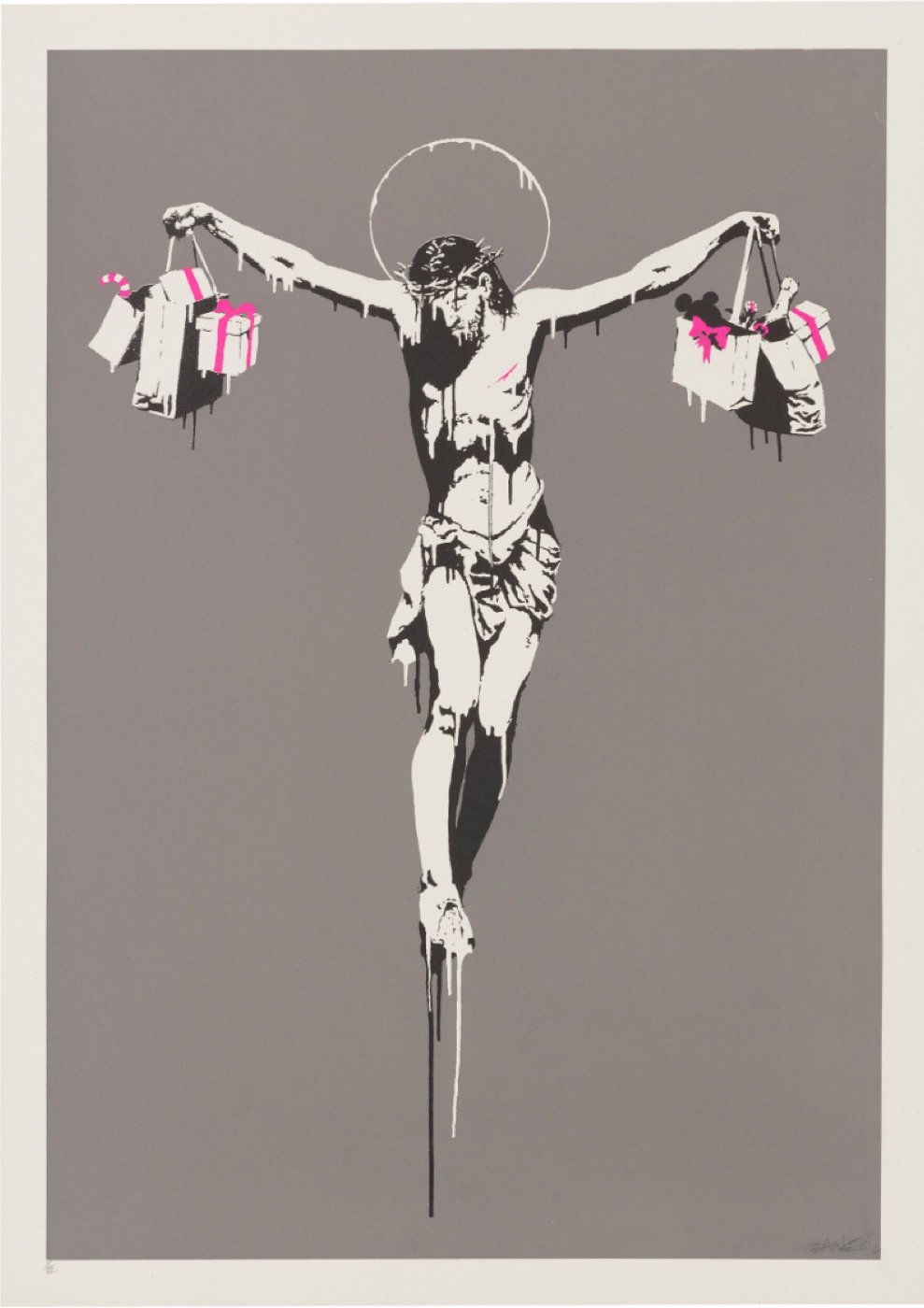
In Christ with Shopping Bags, Banksy delivers one of his most provocative and unmistakable images—merging one of the most sacred figures in Western culture with one of its most dominant contemporary rituals: consumption. The result is not subtle, but it is sharply effective. Created in 2004, the work revisits the iconography of the crucifixion, a central image within Christian tradition. Banksy retains the essential structure—the outstretched body, the suspended figure—but introduces a decisive and unsettling alteration. In place of a purely spiritual narrative, the work becomes a reflection on modern values, where faith and commerce collide.
Crucifixion Reframed
The composition presents Christ nailed to the cross, his body stretched horizontally, head inclined, echoing centuries of religious representation. Yet from each hand hangs a shopping bag. These bags, filled with consumer goods, replace the visual focus of suffering with objects of acquisition. Their presence is both absurd and deliberate. The crucifixion, an image of sacrifice, redemption, and spiritual transcendence, is reconfigured as a moment entangled with material desire. The weight Christ bears is no longer only symbolic of sin, but of consumption.
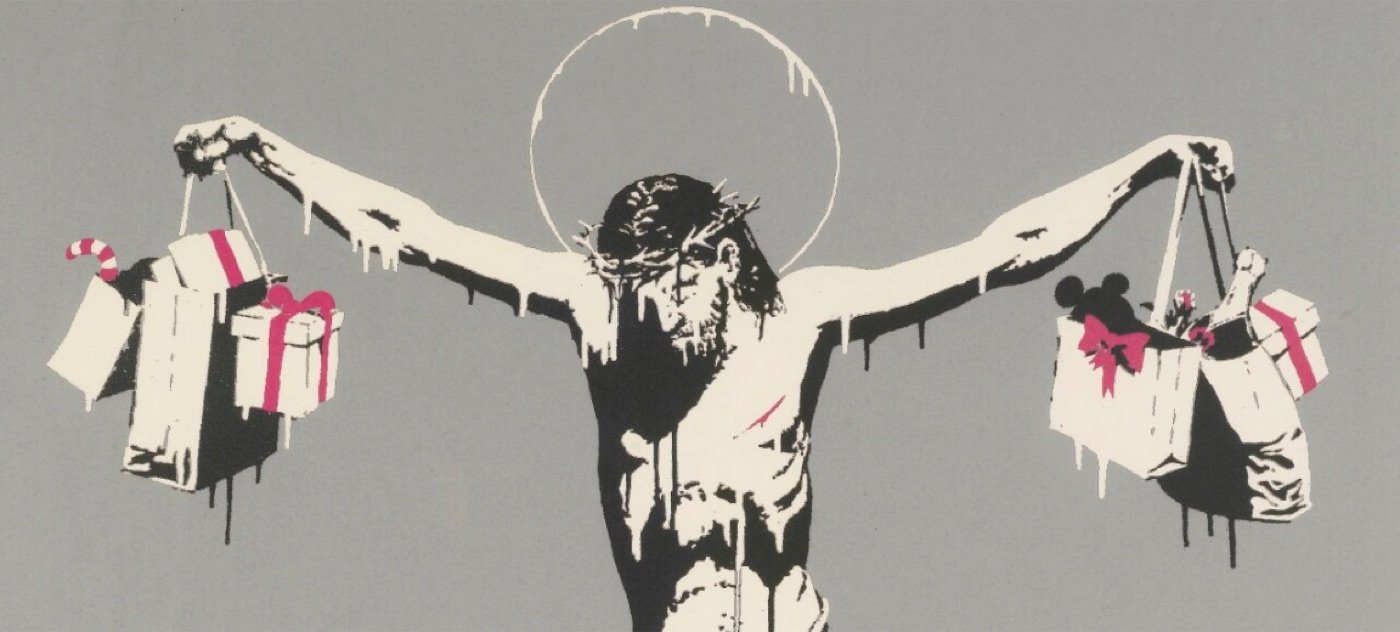
Executed in Banksy's characteristic stencil style, the work relies on stark contrasts and clarity of form. The figure of Christ remains instantly recognizable, allowing the intervention, the shopping bags, to carry the full conceptual shift. There is no need for complexity. The image functions through a single, precise disruption of an established visual language.
Christmas and the Loss of Meaning
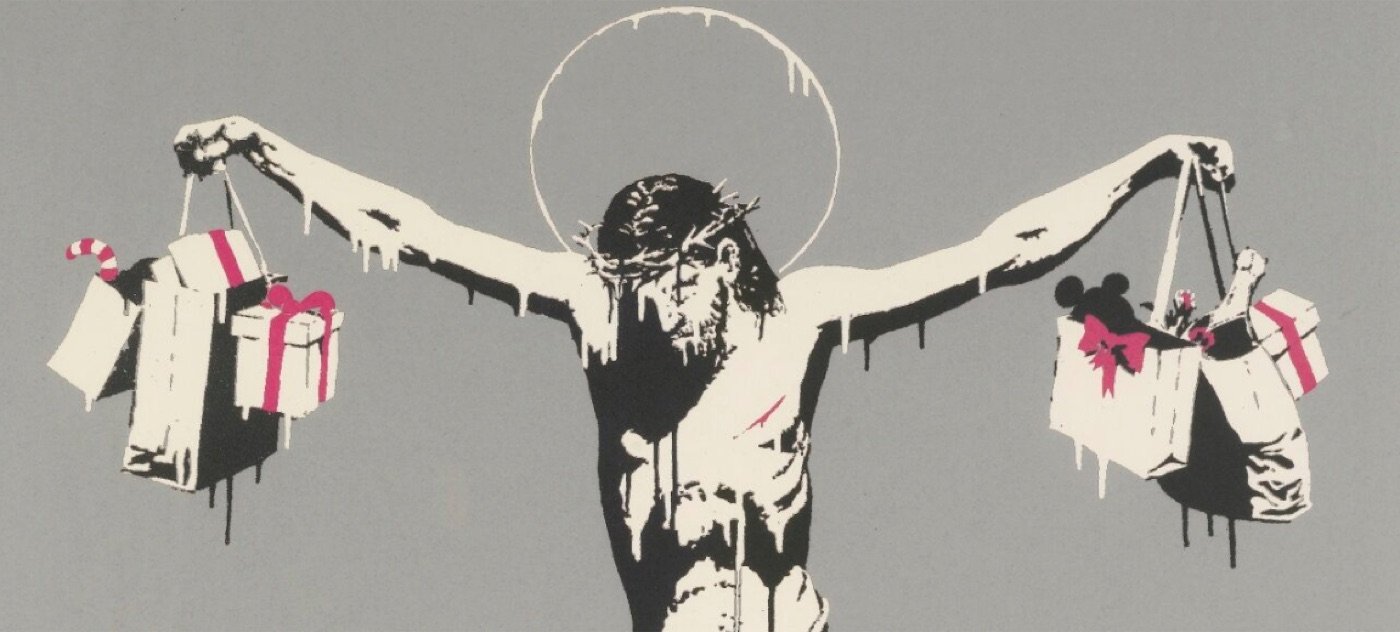
The work is often read in relation to Christmas: a period originally rooted in religious significance, now largely dominated by consumer activity. The shopping bags suggest gifts, purchases, accumulation. In this context, Christ becomes not only a religious figure, but a silent witness to the transformation of his own narrative. What was once a story of sacrifice has been replaced by a cycle of acquisition. Banksy does not argue this explicitly. He shows it.
It is not the only time Banksy uses the image of Jesus Christ to make a point. Another highly provocative work was shown at the Walled Off Hotel, pairing the figure with drones to illustrate the artist's anti-war position.

The strength of Christ with Shopping Bags lies in its refusal to soften its message. The image is not humorous in the conventional sense. It creates discomfort, precisely because it juxtaposes reverence with triviality. The sacred is not destroyed: it is repurposed. And that repurposing is what the work exposes. Christ with Shopping Bags remains one of Banksy's most recognizable and widely discussed works. Its clarity makes it immediately accessible, while its implications continue to resonate. More broadly, it stands as a stark reminder of a central question: what happens when belief is replaced by consumption?
STAY INFORMED
Receive the latest news, exhibitions, artworks and market updates on Banksy.