CLOCK RAT
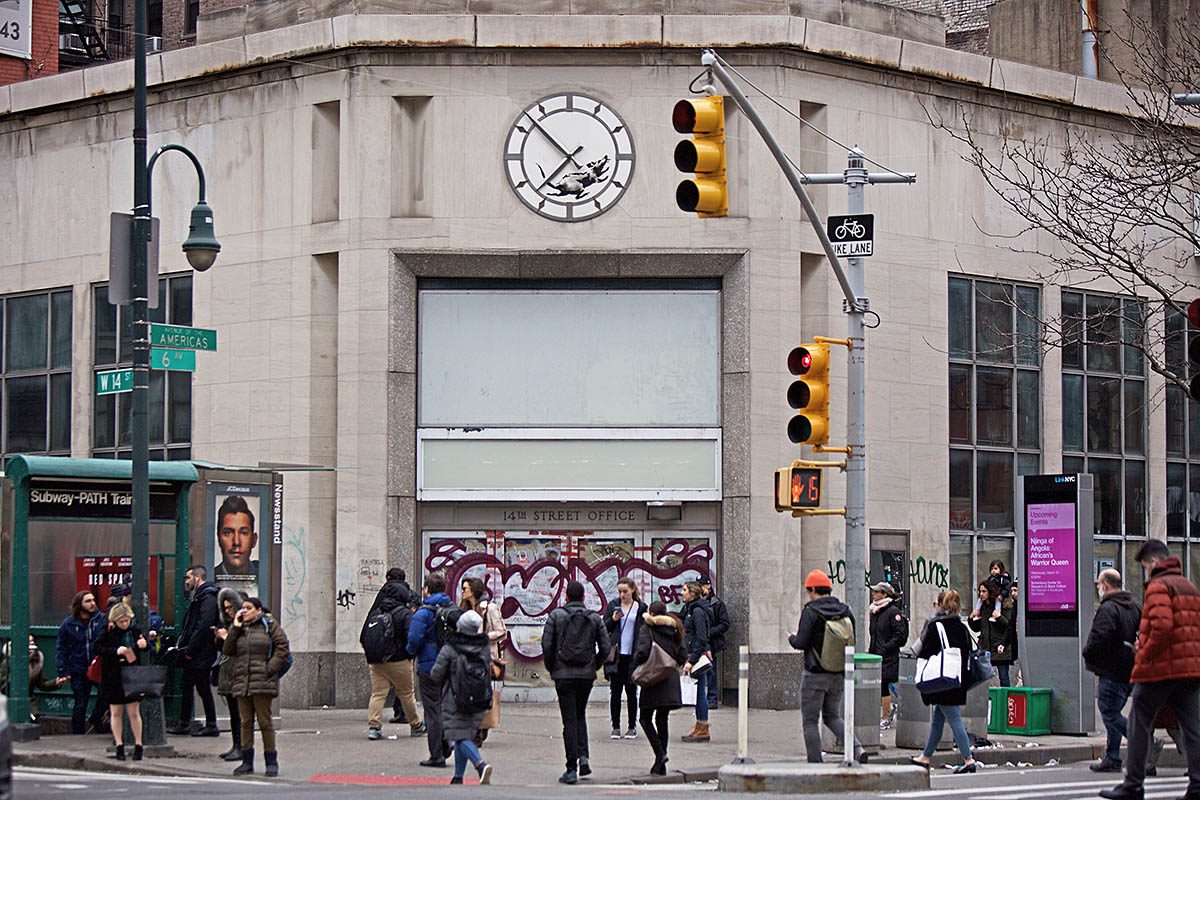
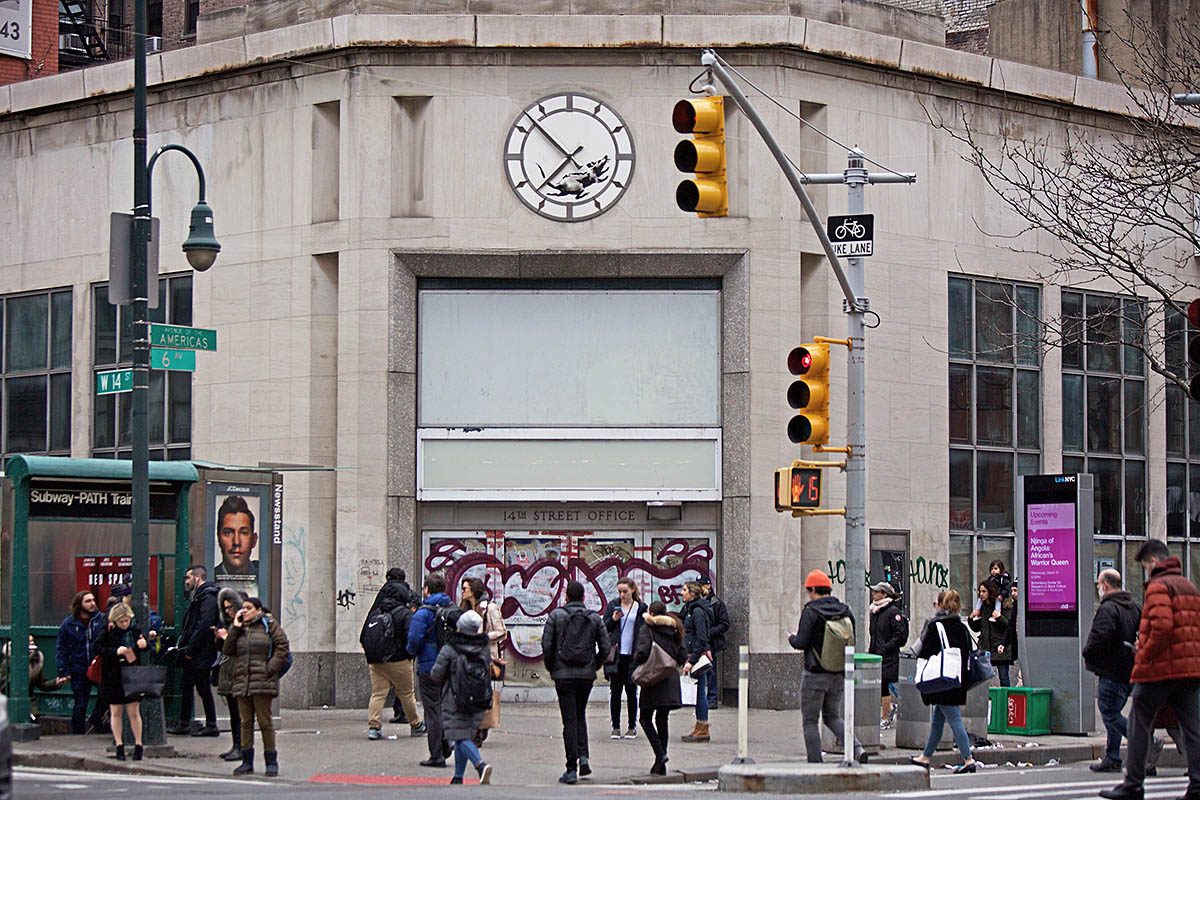
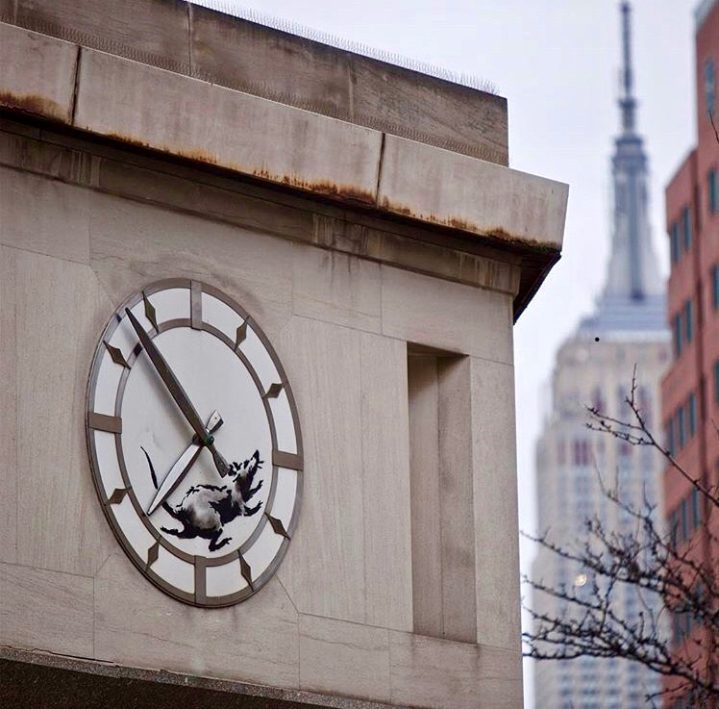
Banksy revealed the work on 14 March 2018, posting it to his Instagram that afternoon. The rat was stencilled directly onto the face of an existing clock high on the façade of the former Greenwich Savings Bank, at the northwest corner of West 14th Street and Sixth Avenue. Village Preservation independently documents the work at the same location on 15 March.
THE RAT RACE
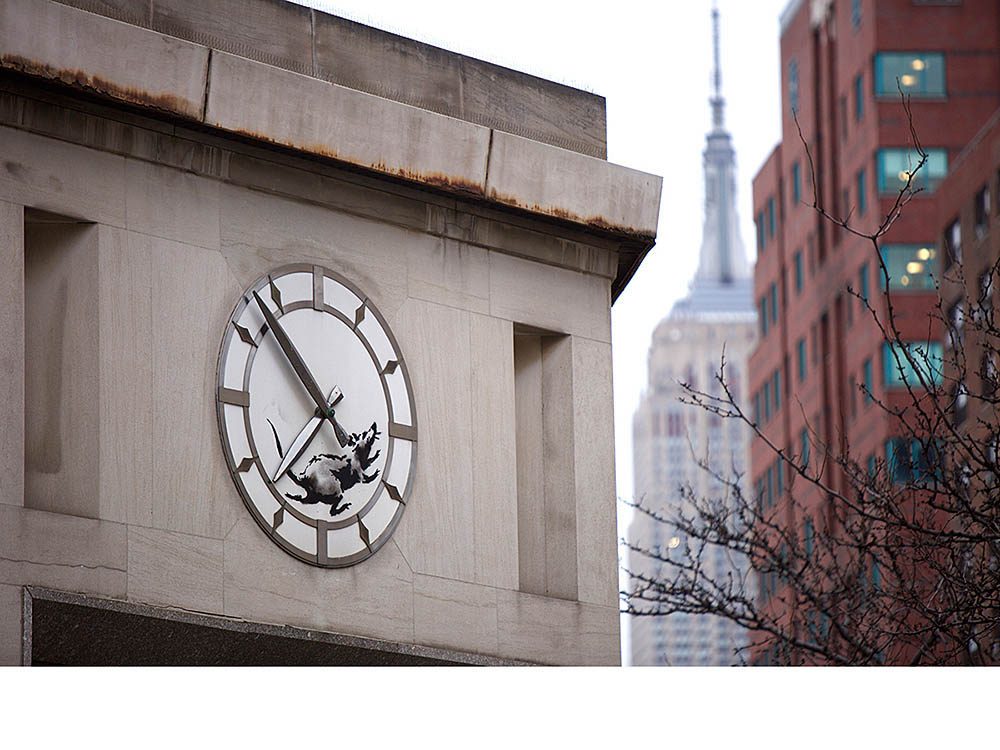
Banksy transformed an ordinary architectural clock into an unusually economical site-specific intervention. A large black rat appears inside the dial, positioned beneath one of the clock hands as though it were running around the face like a rodent trapped in an exercise wheel. Almost nothing was added to the existing structure: the clock, its hands and circular frame already provided the setting, while Banksy's stencil supplied the protagonist. The result converts a functional measurement of time into an image of perpetual movement without progress.
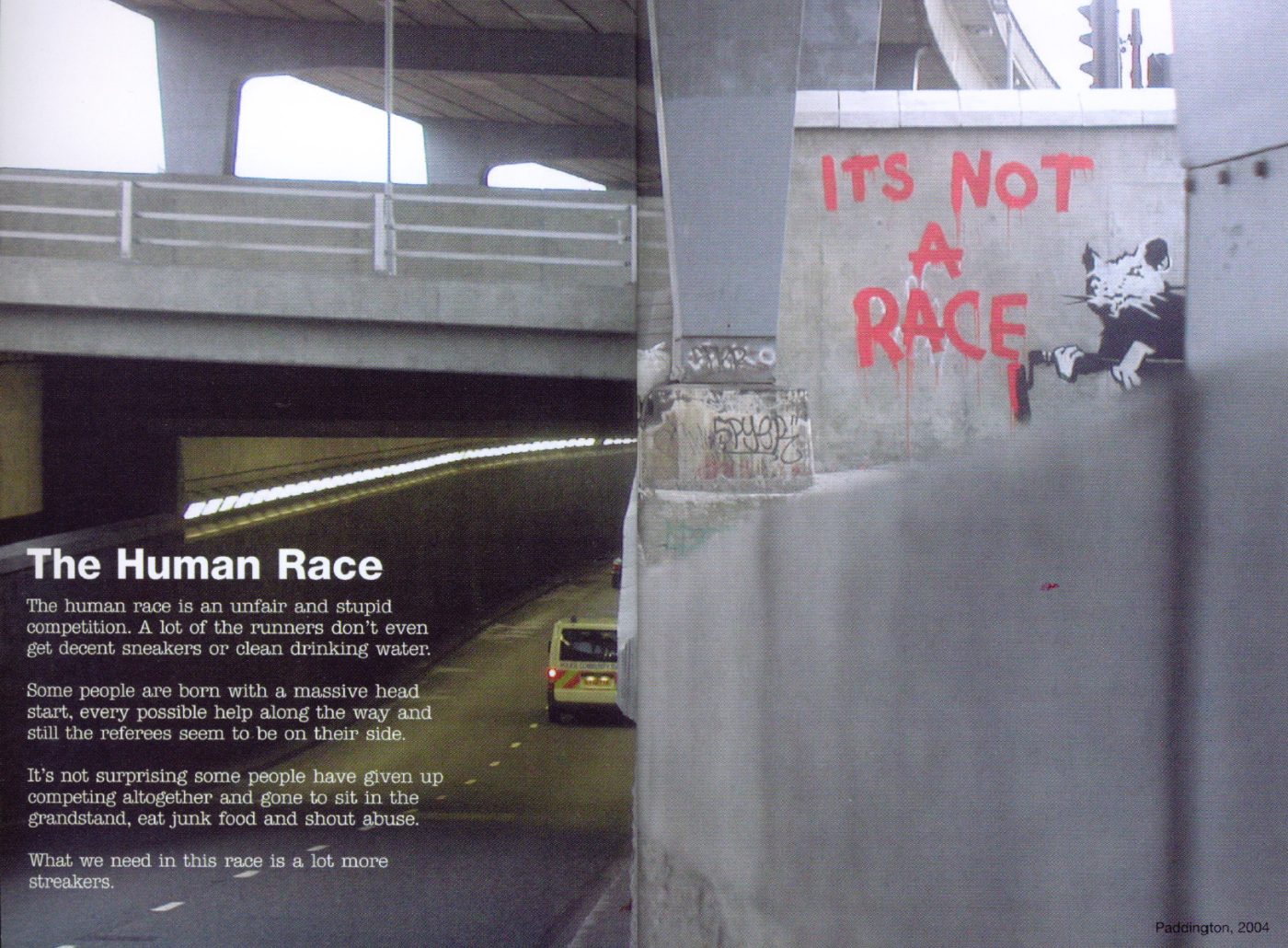
The association with the “rat race” is difficult to avoid. Positioned above one of Manhattan's busiest intersections, the rat appears caught in a cycle governed by the clock, suggesting the repetitive routines of work, consumption and urban life. Banksy had used rats since the beginning of his career as figures for those who exist at the margins of the city—unwanted, adaptable and capable of surviving almost anywhere. Here the metaphor becomes particularly appropriate to New York: the rat is simultaneously one of the city's most familiar inhabitants and a figure literally trapped by time.
The surrounding architecture added another layer to the work. The former bank building was already vacant and scheduled for demolition when Banksy painted it. The intervention therefore placed an image about time on a building whose own time was running out. Contemporary photographs—including your second image, with the Empire State Building visible behind the clock—make that relationship especially effective. Banksy did not need to paint a background or construct an elaborate composition; the clock, condemned building and Manhattan skyline supplied it.
BANKSY RETURNS TO NEW YORK
Clock Rat marked Banksy's first confirmed New York street intervention since Better Out Than In, his celebrated month-long residency in October 2013. Its appearance announced a brief return to the city during March 2018. The following day Banksy revealed a much larger work on the Bowery Wall dedicated to imprisoned Kurdish artist and journalist Zehra Doğan, and further interventions subsequently appeared in Brooklyn.
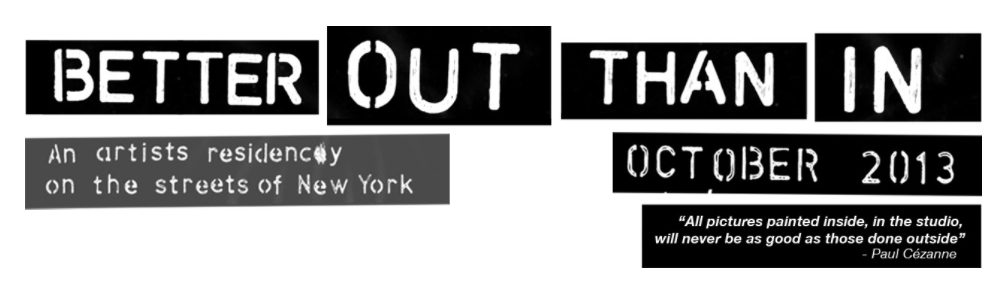
The contrast with Better Out Than In is notable. In 2013, Banksy had announced a month-long project and released a new work almost every day. Five years later there was no comparable programme. Clock Rat simply appeared above a Manhattan intersection, using an existing piece of architecture with the economy characteristic of Banksy's best street interventions.
FROM THE STREET TO THE CLOCK
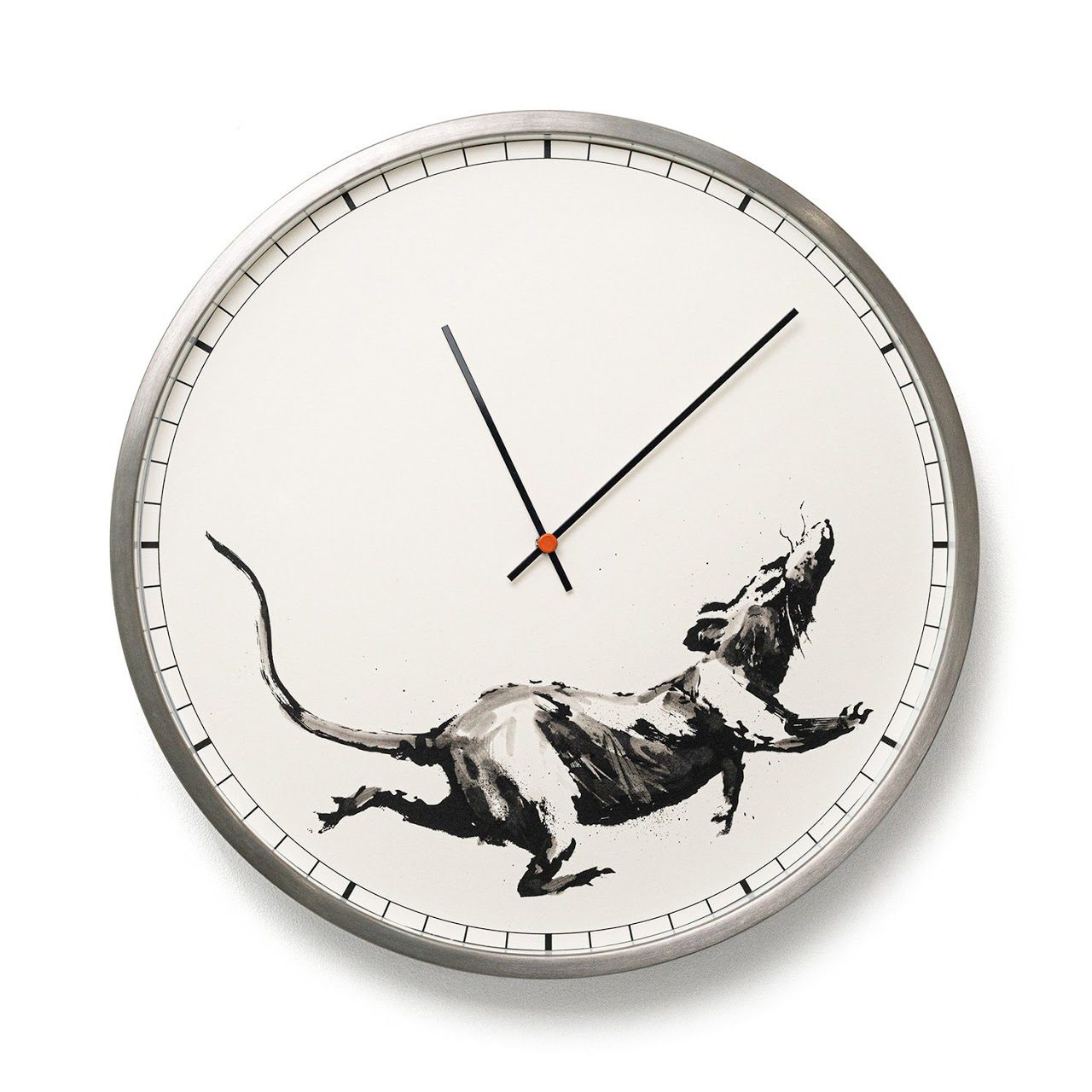
The idea introduced in New York in 2018 did not end with the removal of the Greenwich Savings Bank clock. The following year, Banksy returned to the image for Banksy™ Clock, released through Gross Domestic Product in 2019 as an edition of 150. Rather than appropriating an architectural clock already embedded in the city, Banksy transferred the running rat onto an ordinary mass-produced office wall clock, described as having been “upcycled” from an office-supplies store. The transition is particularly revealing: the New York work transformed a public clock into an artwork, while the GDP edition reversed the process by turning a familiar domestic object into a functional Banksy. In both cases, the circular movement of the clock completes the metaphor, making the familiar expression “rat race” literal—the rat runs continuously while time advances around it.
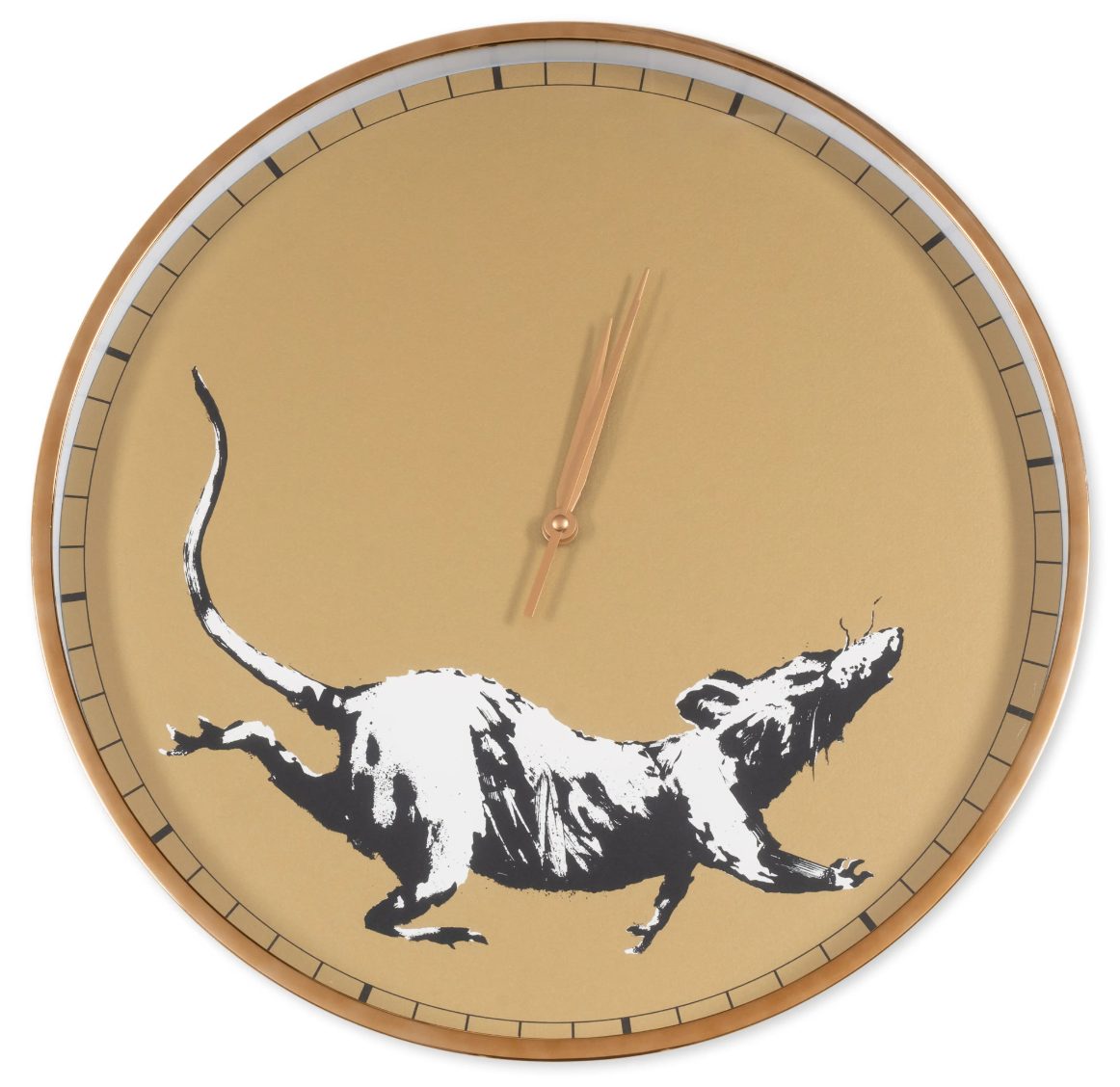
Banksy revisited the composition again in 2021 with Rat Clock (Gold), a series of unique variants in which the inexpensive appearance of the original office clock was replaced by a conspicuous gold surface. The change of material introduced an additional tension between time and wealth. Gold traditionally signifies value, permanence and success, yet the rat remains trapped in exactly the same endless race. Across the three iterations, the underlying idea remains remarkably consistent while its context changes completely: from a rat running across an obsolete clock on a condemned Manhattan bank in 2018, to a domestic consumer object in 2019, and finally to a luxurious gold artwork in 2021. Together they form a concise sequence around work, ambition, consumption and the one commodity that neither money nor status can ultimately control—time.
A VERY SHORT LIFE
The work survived in situ for less than a week. On the morning of 20 March 2018, workers acting for the building's owner dismantled the clock face and removed it from the façade. The owner, real-estate company Gemini Rosemont, stated that the clock had been placed in storage while it considered what to do with it. The removal attracted criticism, including calls for the work to remain publicly accessible. The building itself was subsequently demolished.
Its removal created a characteristic Banksy paradox. The artist had transformed an obsolete clock on a condemned building into a work whose meaning depended substantially upon that precise location; almost immediately, the object became valuable enough to be physically extracted from the architecture that had completed it. The clock survived, but the original artwork—as an intervention involving the rat, the clock, the bank façade and the New York streetscape—effectively disappeared.
STAY INFORMED
Receive the latest news, exhibitions, artworks and market updates on Banksy.