CREATE ESCAPE
Escape Through Art
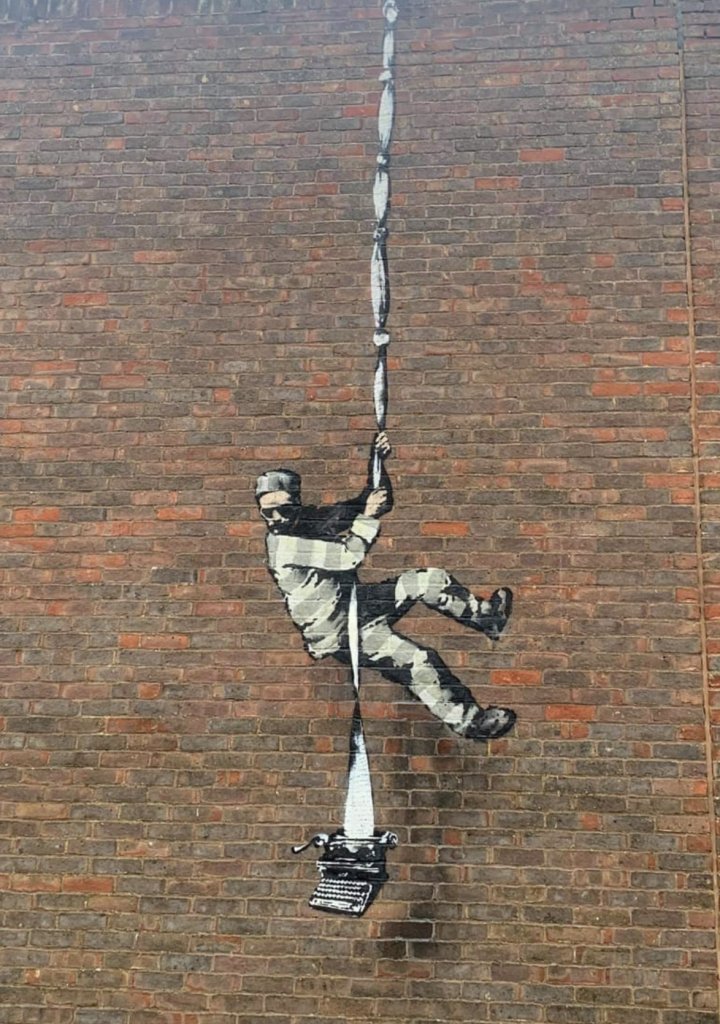
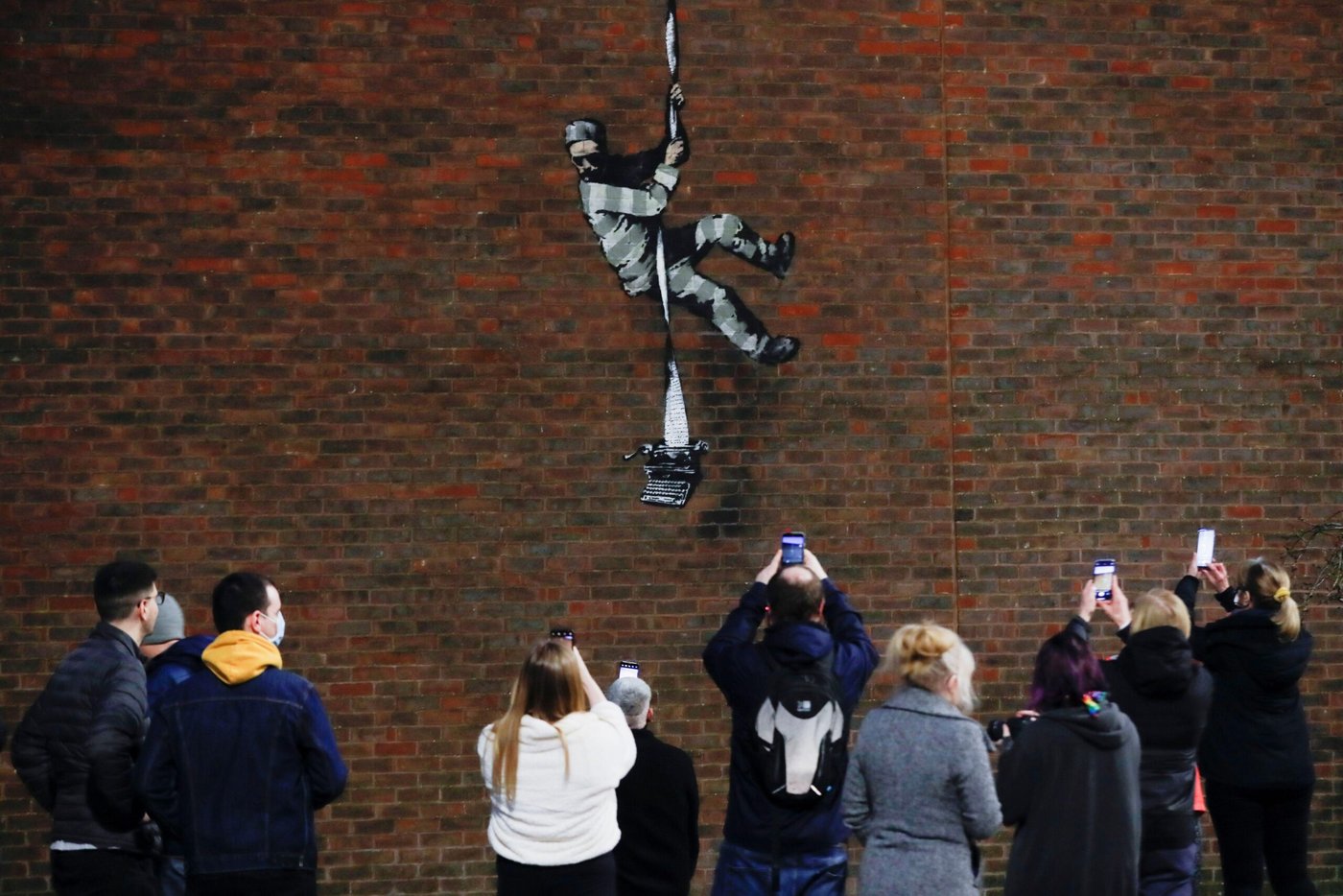
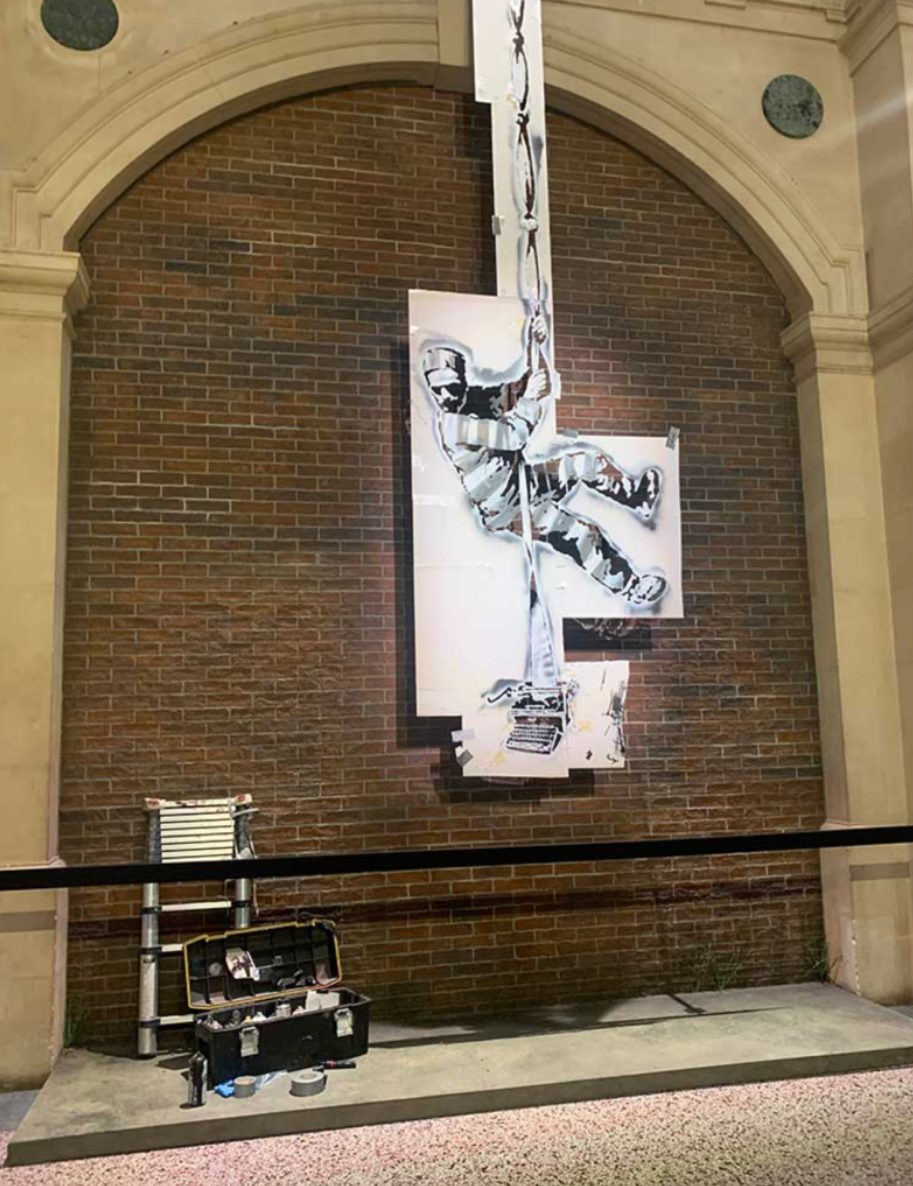
On 1 March 2021, a new Banksy appeared on the exterior wall of the former Reading Gaol. A prisoner in striped uniform descends the high brick wall on a long improvised rope. At first glance, it resembles the familiar cinematic escape made from bedsheets tied together. Banksy replaces the sheets, however, with an enormous roll of paper emerging from a typewriter suspended at the bottom of the rope.
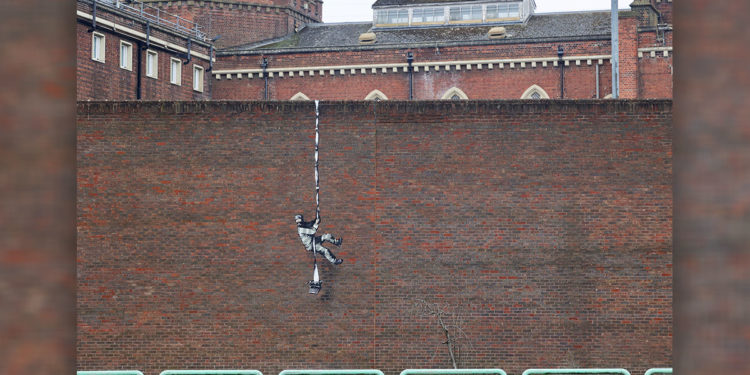
The location immediately gave the image its meaning. Reading Gaol's most famous prisoner was Oscar Wilde, incarcerated there from 1895 to 1897 after his conviction for “gross indecency” following the exposure of his relationship with Lord Alfred Douglas. Wilde endured two years of hard labour under a prison regime that profoundly damaged his health. His experience informed De Profundis, written during his imprisonment, and The Ballad of Reading Gaol, published after his release.
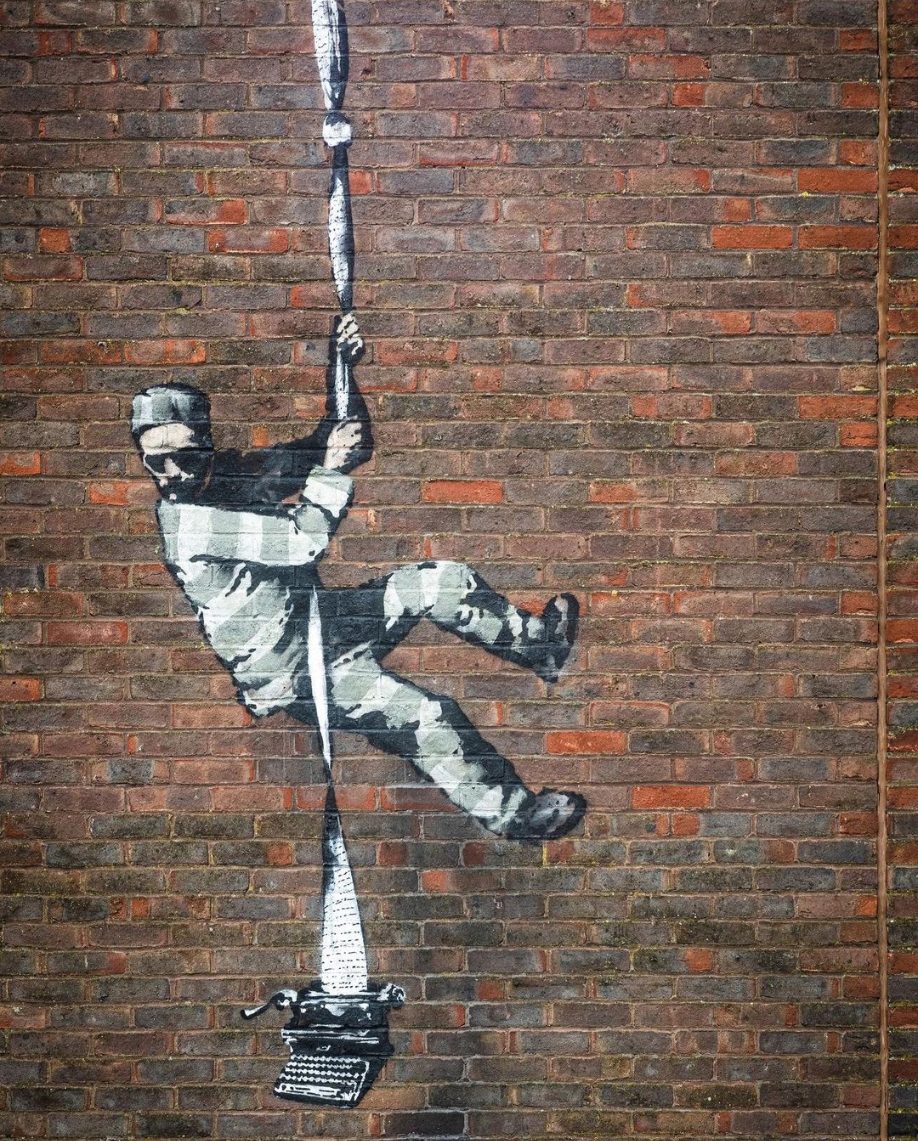
Banksy never needed to paint Wilde's name. The typewriter identifies the escaping figure through literature: the prisoner escapes through writing.
Create Escape
Banksy confirmed the mural on 4 March with a video entitled Create Escape. Rather than simply documenting the clandestine installation, he constructed the film as a parody of The Joy of Painting, using archival commentary by the famously gentle American television painter Bob Ross while footage shows Banksy arriving at night with a ladder, preparing his stencils and spraying the prison wall.
The contrast is quintessential Banksy. Ross's reassuring language of leisurely landscape painting accompanies an illegal nocturnal intervention on a former prison. Painting becomes both an act of trespass and an instrument of liberation.
The title sharpens the idea. Create Escape can be read as an instruction: creation itself provides the means of escape. The extraordinary length of paper connecting prisoner and typewriter turns writing into a physical route to freedom. In a place designed to confine the body, imagination becomes something architecture cannot contain.
Reading Gaol
The intervention arrived at a decisive moment in the history of the building. Reading Prison had closed in 2013 and the Grade II-listed site, owned by the Ministry of Justice, had been placed on the market. A campaign was already underway to prevent its redevelopment and transform the former prison into a centre for arts, culture and heritage.
There was already a precedent. In 2016, Artangel had staged Inside: Artists and Writers in Reading Prison, bringing artists including Ai Weiwei, Marlene Dumas, Nan Goldin and Steve McQueen into the abandoned institution while performers including Patti Smith and Ben Whishaw read Wilde's De Profundis.
Banksy's mural therefore did more than commemorate Wilde. It intervened directly in an argument about what the building should become. A structure once devoted to punishment could be transformed into a place devoted to creativity—the very reversal depicted on its wall.
The connection became explicit later that year. In December 2021, Banksy offered to raise £10 million towards acquiring the prison for an arts centre by selling the stencil used to create the mural. Explaining his support, he described Wilde as “the patron saint of smashing two contrasting ideas together to create magic” and argued that transforming the institution that had destroyed him into a refuge for art was an irresistible proposition.
The Wall Fights Back
Less than three weeks after the mural appeared, it was attacked. Red paint was thrown across the typewriter and the words “Team Robbo” were added beneath it, apparently invoking King Robbo, the London graffiti writer whose celebrated conflict with Banksy had begun more than a decade earlier.
The vandalism introduced another characteristic Banksy paradox. Campaigners were demanding protection for an unauthorized work painted on a government-owned prison, while the intervention itself existed because Banksy had ignored the rules governing that wall.
Yet Create Escape ultimately reaches beyond the familiar argument about graffiti and preservation. Its power comes from the extraordinary appropriateness of image and place. Oscar Wilde entered Reading Gaol as a prisoner and emerged from the experience with some of the most enduring writing of his life. More than a century later, Banksy imagined the writer escaping from the same building by turning his words into a rope.
The prison confines the man. The typewriter provides the way out.
STAY INFORMED
Receive the latest news, exhibitions, artworks and market updates on Banksy.