DIEGO VELAZQUEZ
Painter to the King
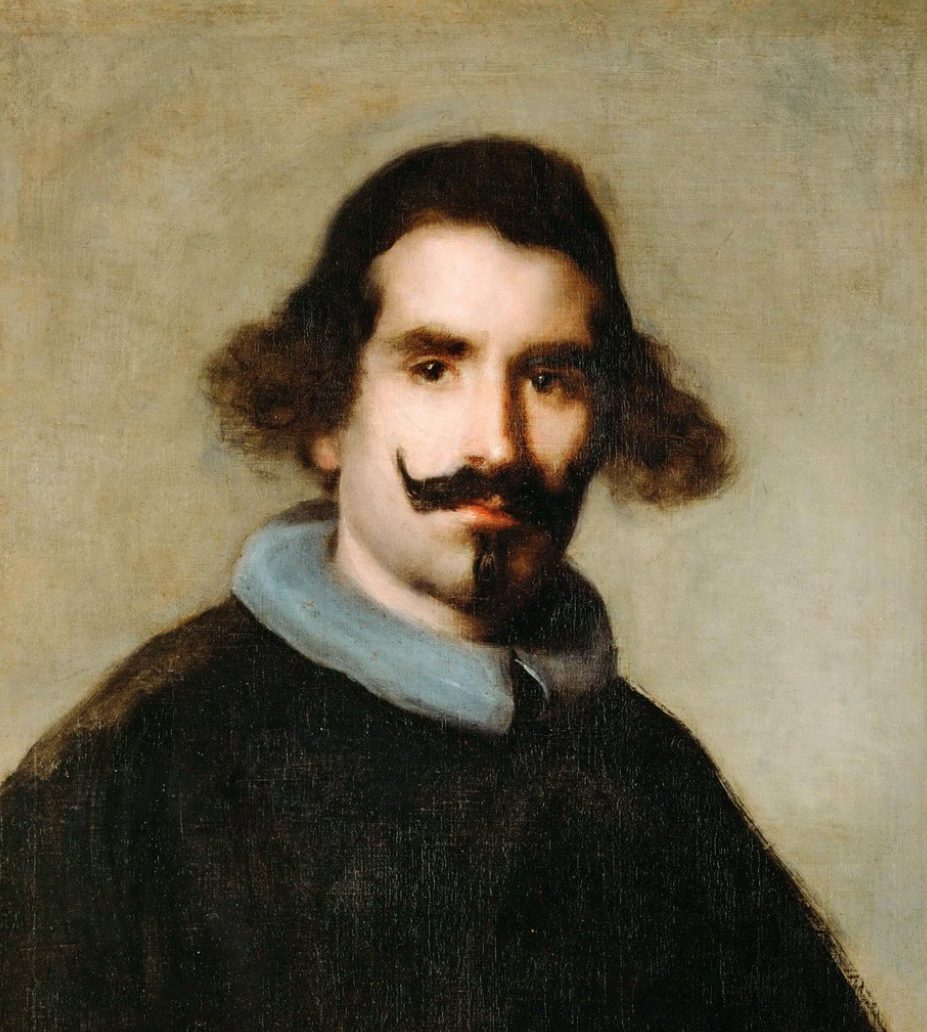
Diego Velázquez (1599–1660) was one of the great painters of the Spanish Golden Age and one of the most influential artists in Western art. Born in Seville, he moved to Madrid in his early twenties and became court painter to King Philip IV, producing remarkably natural portraits of the royal family, courtiers and figures surrounding the Spanish court.
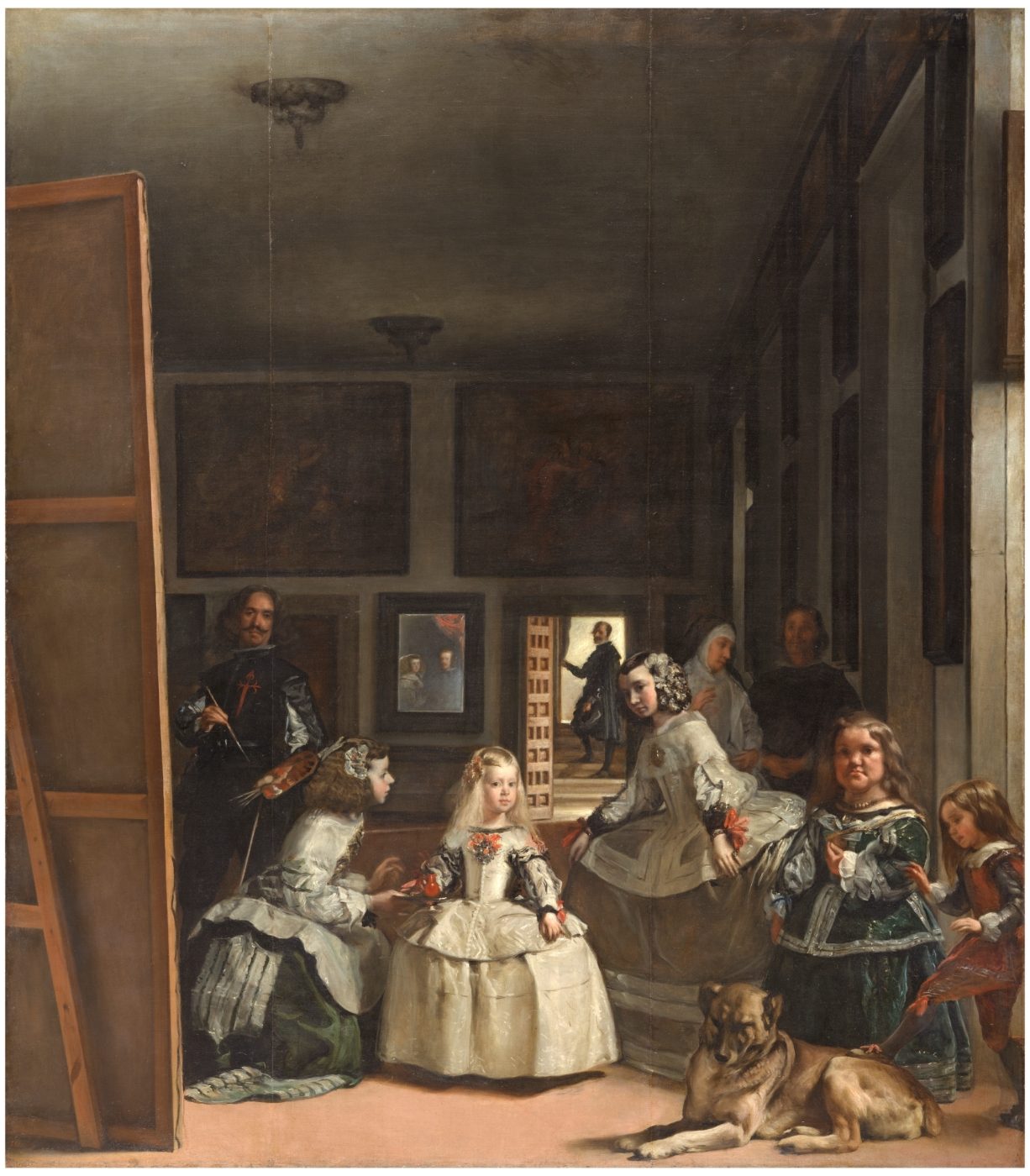
Discover Las Meninas in High Resolution at the Museo del Prado, Madrid
Velázquez is celebrated for the apparent effortlessness of his painting. Up close, his brushwork can appear surprisingly loose; from a distance, it resolves into extraordinarily convincing faces, fabrics, light and space. His masterpiece, Las Meninas (1656), remains one of the most discussed paintings in art history, a sophisticated game of looking in which the artist, his subjects, a mirror—and ultimately the viewer—all become part of the composition.
But it was another Velázquez masterpiece that attracted Banksy's attention.
The Rokeby Venus
Painted around 1647–51, The Toilet of Venus, better known as the Rokeby Venus, depicts Venus, the classical goddess of love and beauty, reclining with her back toward us while her son Cupid holds up a mirror.
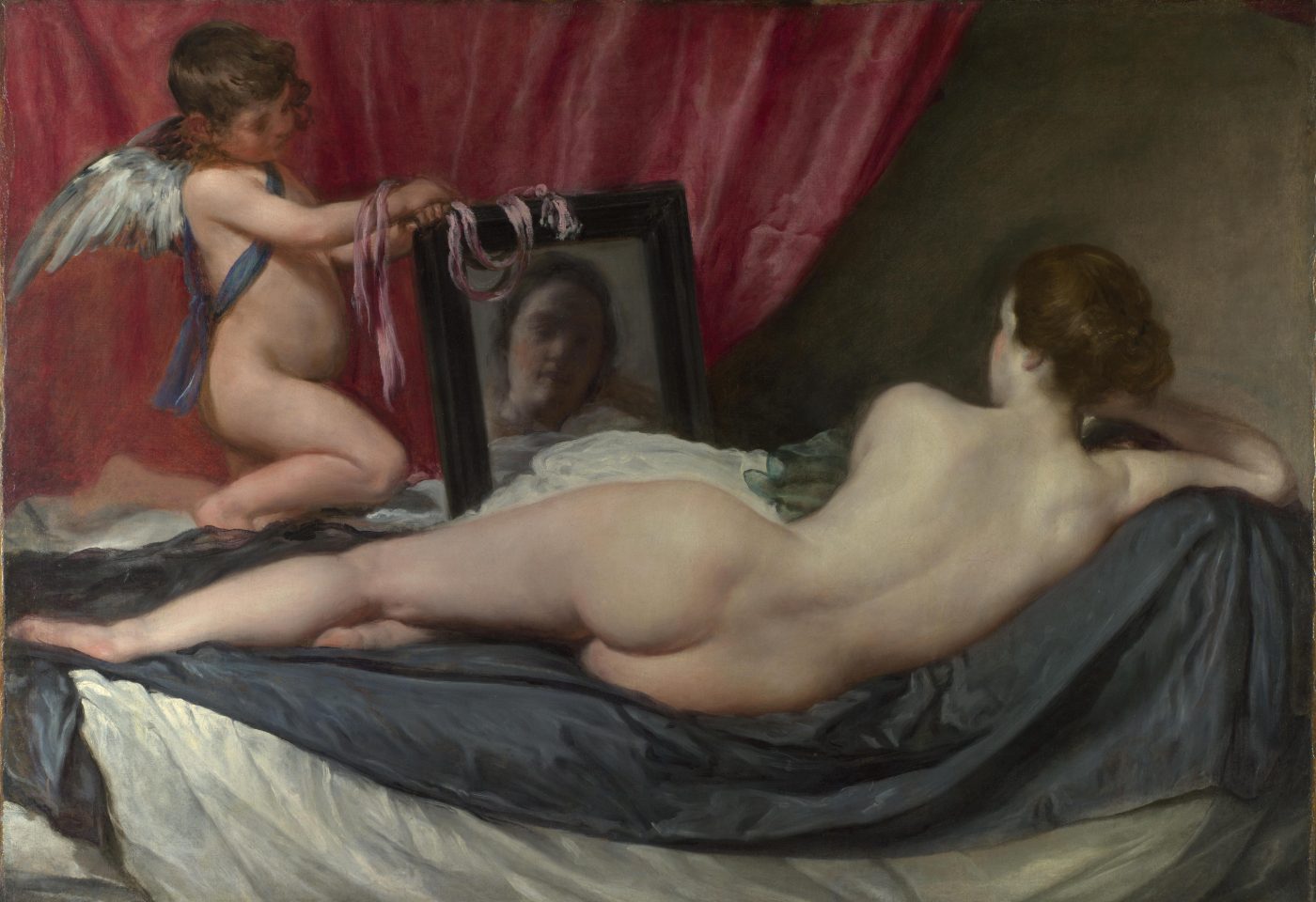
It is the only surviving female nude by Velázquez and an exceptional painting within seventeenth-century Spanish art. Venus's face appears only as a blurred reflection in the mirror, adding to the mystery of the composition. We can see her body clearly, yet her identity remains elusive.
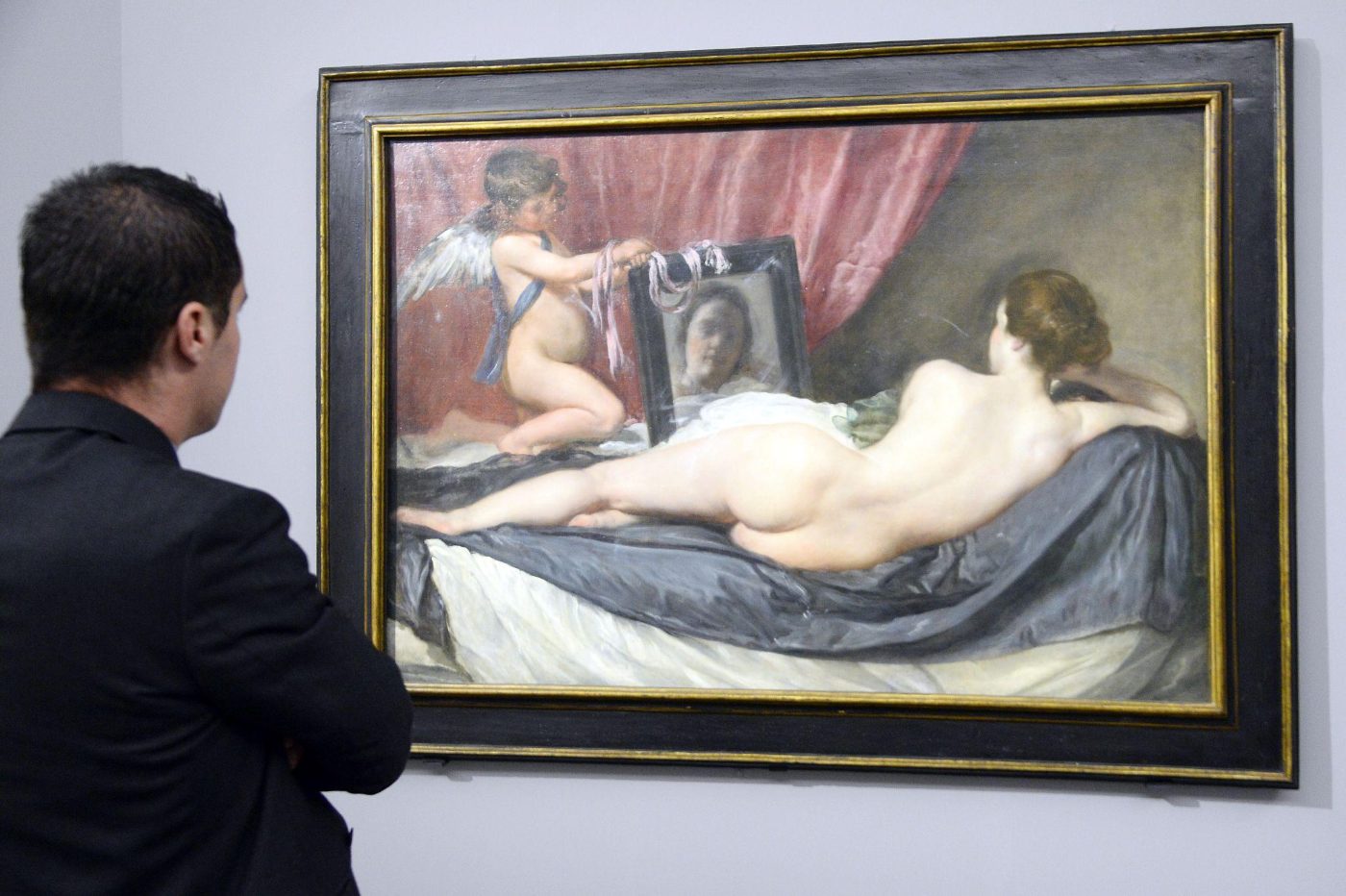
The painting has become one of the most celebrated images of female beauty in Western art. Today it hangs in the National Gallery in London.
More than 350 years after Velázquez painted it, Banksy decided that even Venus might need a little cosmetic work.
Banksy's Venus
Created in 2006, Banksy's Venus initially appears remarkably faithful to Velázquez's composition. Venus reclines before us, Cupid holds the mirror and the familiar folds of fabric surround the figures.
Then we notice her nose.
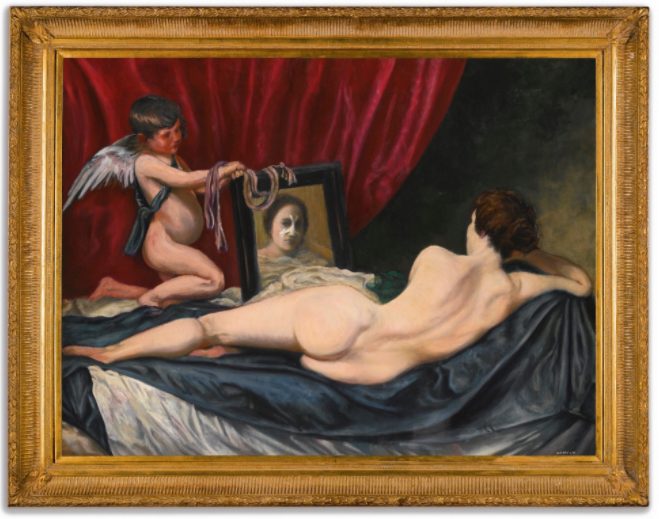
Banksy has added a small surgical bandage across its bridge, suggesting that the goddess of beauty has undergone cosmetic surgery.
It is an extraordinarily economical intervention. Venus is, by definition, the embodiment of ideal beauty. If even she feels the need to improve her appearance, what chance does everyone else have?
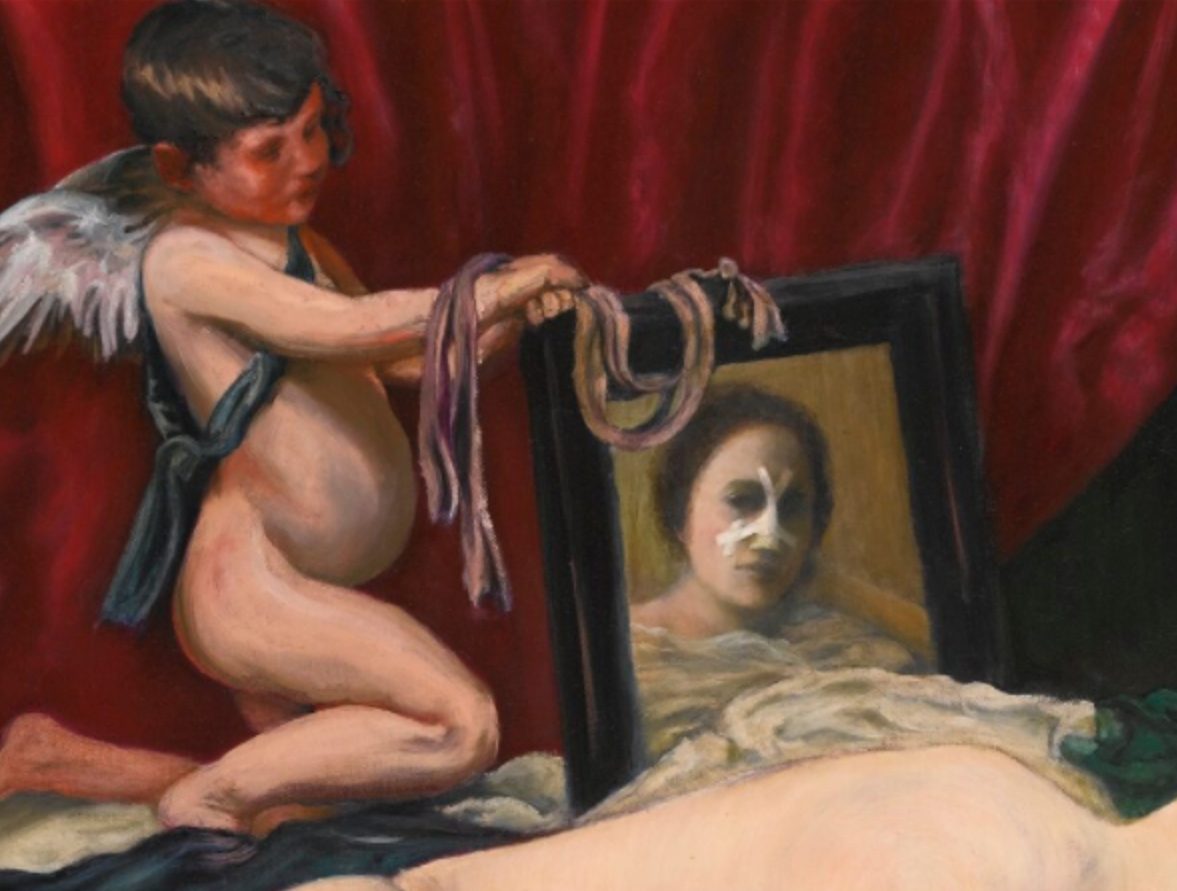
With one small bandage, Banksy moves Velázquez's seventeenth-century meditation on beauty into a contemporary world of cosmetic surgery, advertising, celebrity culture and the constant pressure to perfect the human body. The goddess becomes unexpectedly human: apparently even divine beauty is no longer good enough.
Beauty, Improved
The joke becomes particularly relevant in the context in which Banksy presented the work. Venus was exhibited at Barely Legal, his landmark Los Angeles exhibition in September 2006.

There could hardly have been a more appropriate city. Los Angeles is inseparable from the entertainment industry and the manufacture of celebrity image, making Banksy's cosmetically enhanced Venus feel perfectly at home.
The work also demonstrates something fundamental about Banksy's approach to art history. He does not need to radically alter the masterpiece he borrows. On the contrary, the original must remain recognizable for the joke to work.
Velázquez gives us the goddess of beauty. Banksy gives her a nose job.
STAY INFORMED
Receive the latest news, exhibitions, artworks and market updates on Banksy.