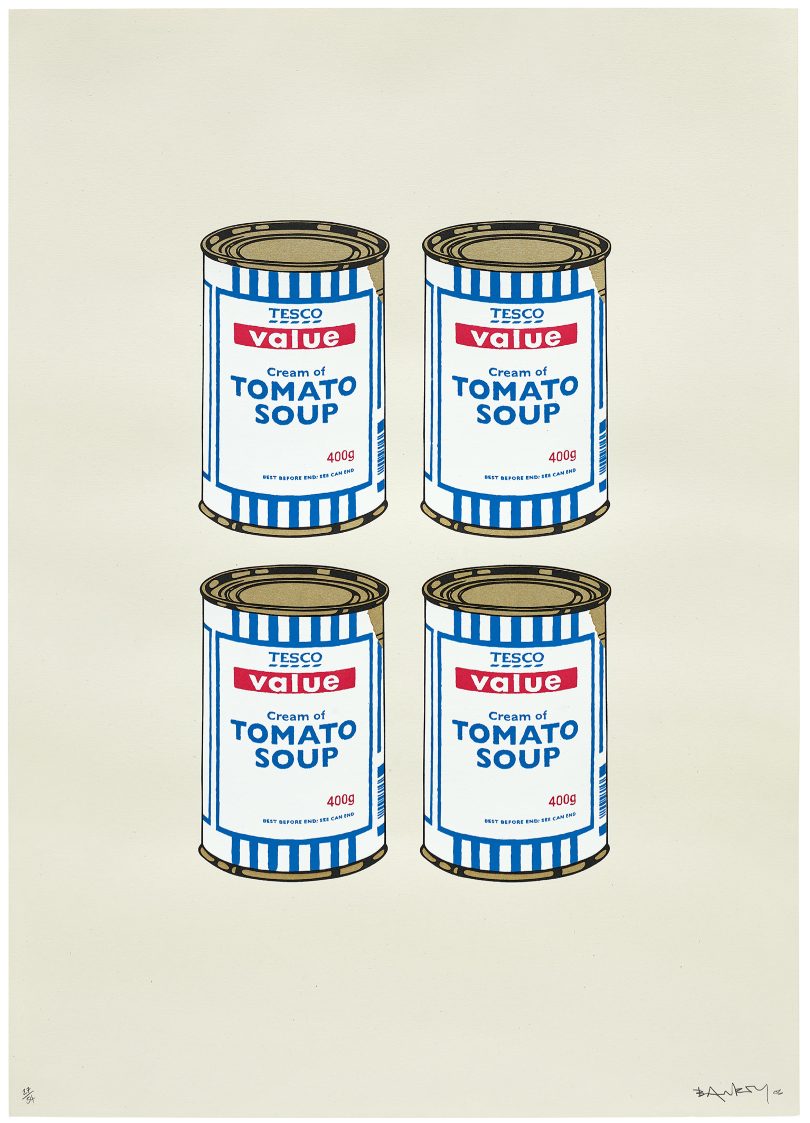
A Remix of a Remix
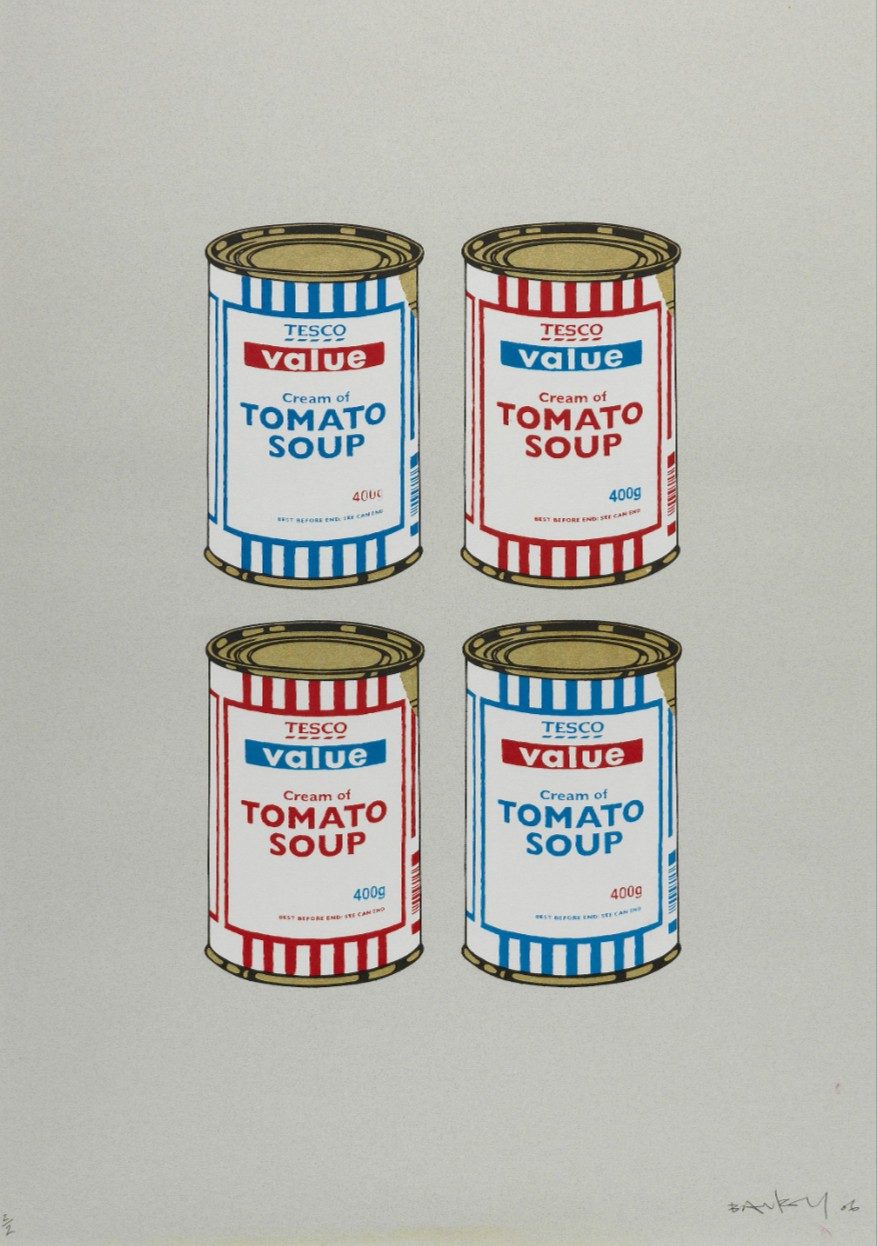
With Four Soup Cans, Banksy returns to the Tesco Value tomato soup he had introduced in his 2005 Soup Can and multiplies it into a perfectly ordered two-by-two grid. The shift from one can to four may appear simple, but it fundamentally changes the work. The single can is primarily a parody of Andy Warhol's Campbell's Soup Cans; four cans introduce repetition, seriality and variation—the very mechanisms through which Warhol transformed commercial imagery into Pop Art.
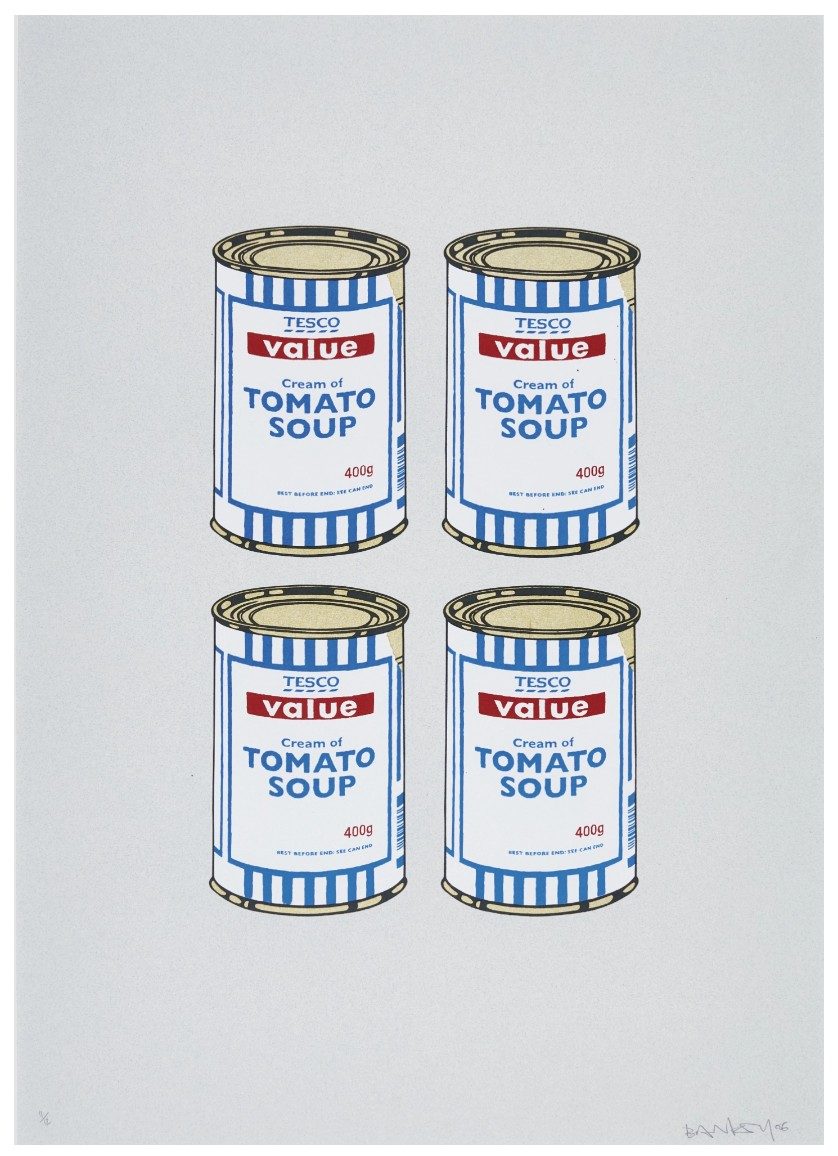
This makes Four Soup Cans something of a remix of a remix. Warhol appropriated the supermarket commodity and transformed it into art. Banksy appropriated Warhol's appropriation, replacing the iconic American Campbell's brand with Britain's resolutely unglamorous Tesco Value. He then returned to his own parody and treated it once again through the language of Warhol: repetition, multiplication and color.
From Soup Cans to Marilyn
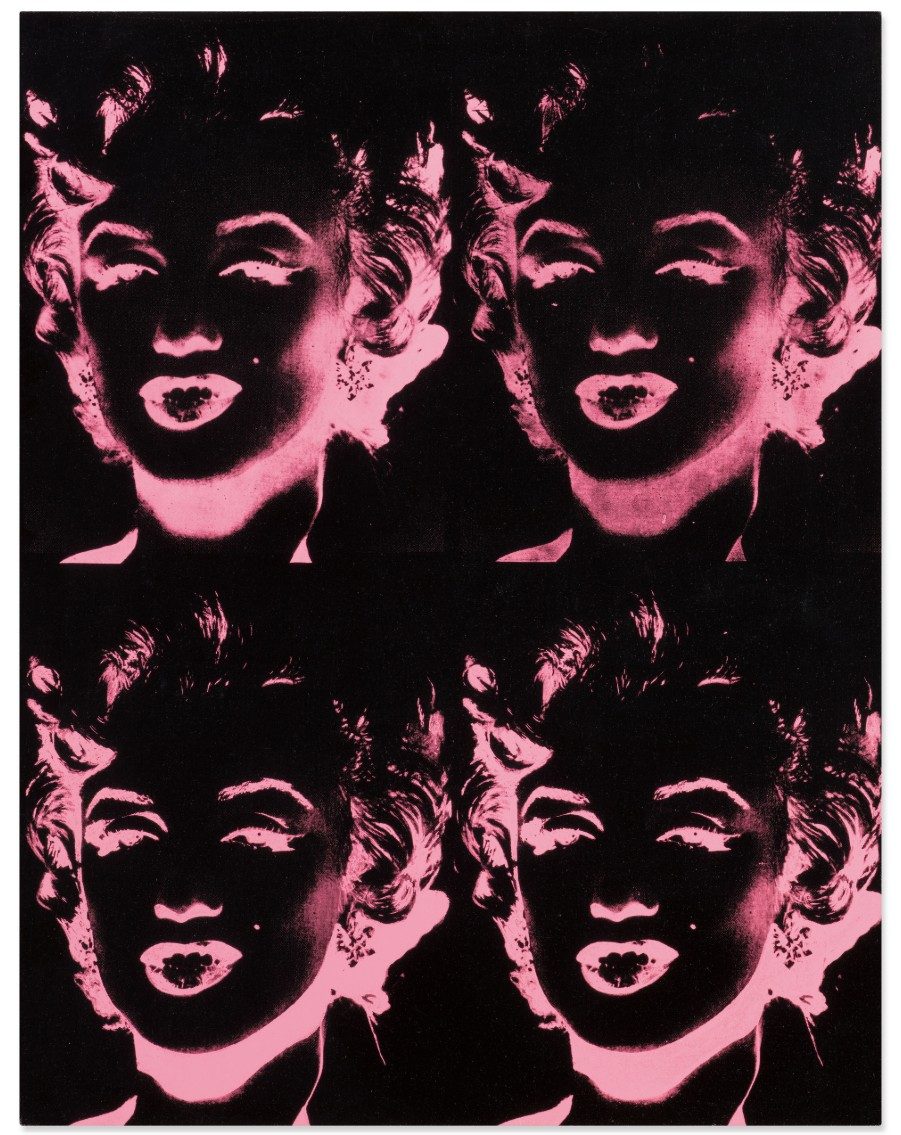
The four-can arrangement also brings the work into dialogue with Warhol's repeated portraits of Marilyn Monroe and his countless experiments with colour reversal. Warhol demonstrated that an identical image could acquire a radically different emotional and visual identity simply through changes in palette. Faces could become blue, yellow, pink or green while remaining unmistakably Marilyn. Banksy applies essentially the same logic to Tesco Value soup.
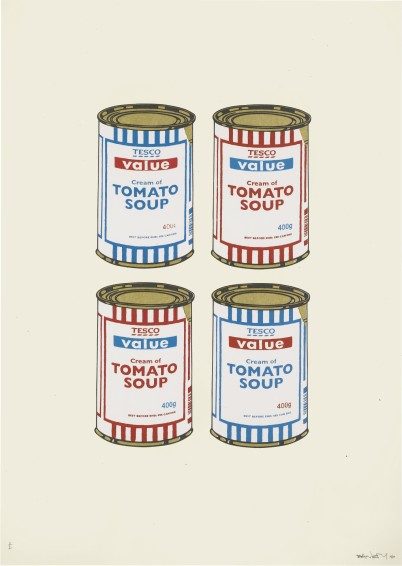
This is particularly evident in the Blue and Red variations. The cans remain identical, but their familiar corporate colours are reversed and redistributed diagonally across the composition. Blue answers blue and red answers red, creating a chromatic rhythm from four otherwise standardized objects. Like Warhol's Marilyns, the repeated image gradually becomes less about what it represents and more about repetition, colour and difference.
The Gold versions add another characteristically Banksy twist. Tesco Value packaging was deliberately designed to communicate cheapness, yet Banksy gives the cans golden lids and bases, lending Britain's discount soup an improbable touch of luxury. The irony becomes even sharper through the edition sizes: an image of a mass-produced product was issued in editions ranging from 54 examples to only two. Mass production has been transformed into artificial scarcity.
Four Soup Cans is therefore much more than four copies of Banksy's Soup Can. It completes a remarkable circle of appropriation. The supermarket inspired Warhol; Warhol inspired Banksy; Banksy transformed Campbell's into Tesco; and then Banksy returned to Warhol once again to multiply and recolor his own parody.
It is Pop Art recycled through Pop Art, with each successive transformation adding another layer to the joke about branding, originality and value. Warhol remixed the supermarket. Banksy remixed Warhol—and then remixed himself.
STAY INFORMED
Receive the latest news, exhibitions, artworks and market updates on Banksy.