GRAFFITI AREA
Description
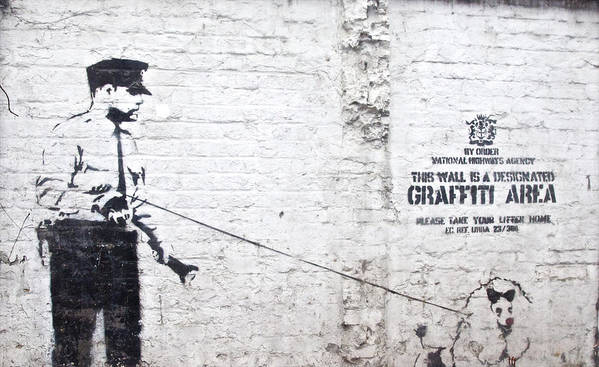
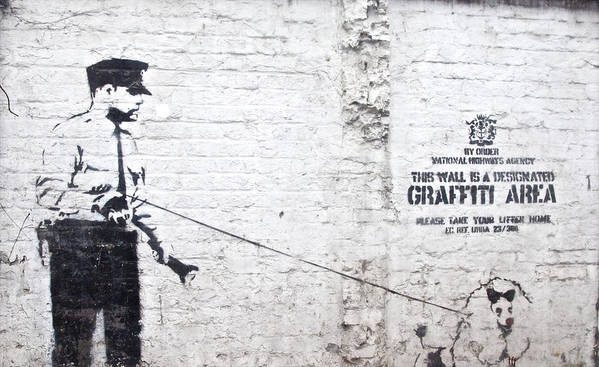
A uniformed security guard stands rigidly beside an improbably small, fluffy poodle. Next to them, Banksy has painted what appears to be an official notice declaring:
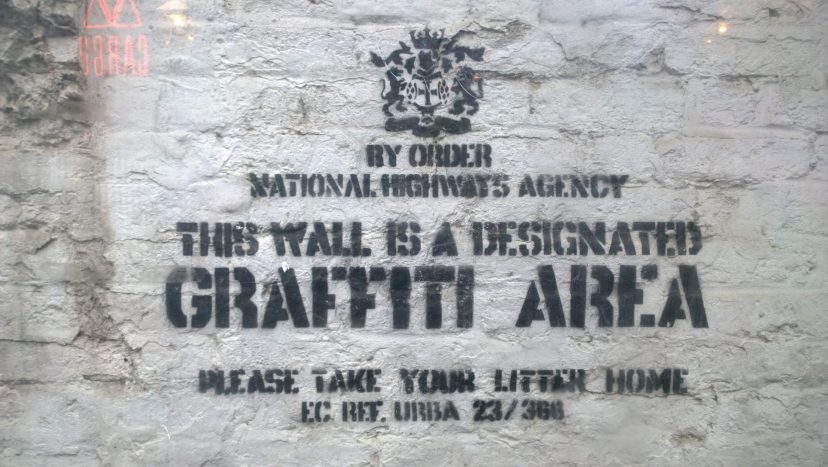
BY ORDER NATIONAL HIGHWAYS AGENCY THIS WALL IS A DESIGNATED GRAFFITI AREA PLEASE TAKE YOUR LITTER HOME
The juxtaposition is deliberately absurd. The imposing guard embodies authority and control, yet his tiny poodle undermines any sense of menace. Beside him, the bureaucratic-looking notice apparently gives official permission for precisely the activity such a figure might normally be expected to prevent.
A Designated Graffiti Area
The work was painted in the courtyard of Cargo on Rivington Street in Shoreditch, where another important early Banksy mural, His Master's Voice, also survives. Contemporary photographs document Graffiti Area there by 2004, while Banksy's use of the fictitious “National Highways Agency” notice was already well established by 2003.
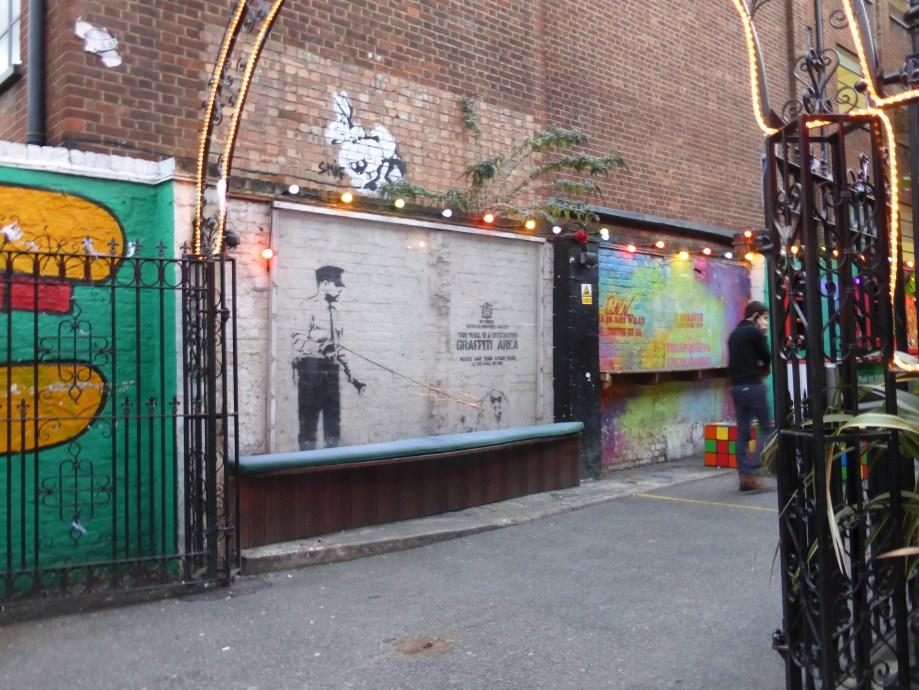
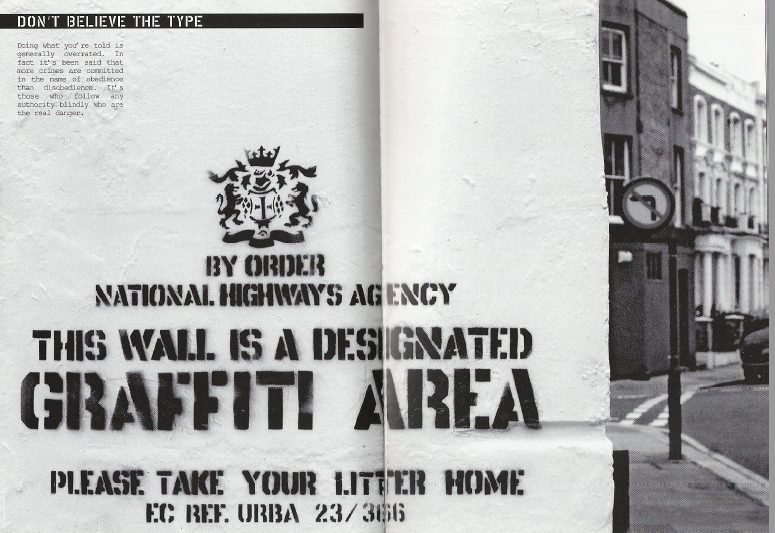
The joke depends upon Banksy's imitation of the visual language of public authority. The formal typography, official-sounding agency and regulatory wording resemble the signs through which governments determine what citizens may and may not do in public space. But the instruction reverses their normal function: instead of prohibiting graffiti, the supposed authority actively designates a place for it.
The final instruction—“Please Take Your Litter Home”—pushes the parody further. Graffiti has apparently been incorporated into civic administration so completely that even vandalism now comes with rules of etiquette.
Permission to Rebel
Graffiti Area touches upon a contradiction at the heart of street art: what happens to an activity based upon unauthorized intervention once it receives permission?
Banksy had already experimented with the idea through freestanding Designated Graffiti Area stencils placed around London. A 2003 example on the South Bank reportedly encouraged other writers to cover the supposedly authorized wall with their own tags. The fictional notice did not merely comment upon people's behavior; it could actually change it.
The concept was important enough to Banksy's early practice that a contemporary 2002 review of Banging Your Head Against a Brick Wall singled out the Designated Graffiti Area stencil and photographs showing how supposedly pristine walls became covered in graffiti after Banksy had “authorized” them.
At Cargo, the addition of the security guard and poodle gives the idea another dimension. Authority is physically present, but it has become ridiculous and ineffective. The guard watches over a wall on which graffiti has supposedly been officially approved. Banksy turns permission and prohibition into parts of the same joke.
From Graffiti to Protected Graffiti
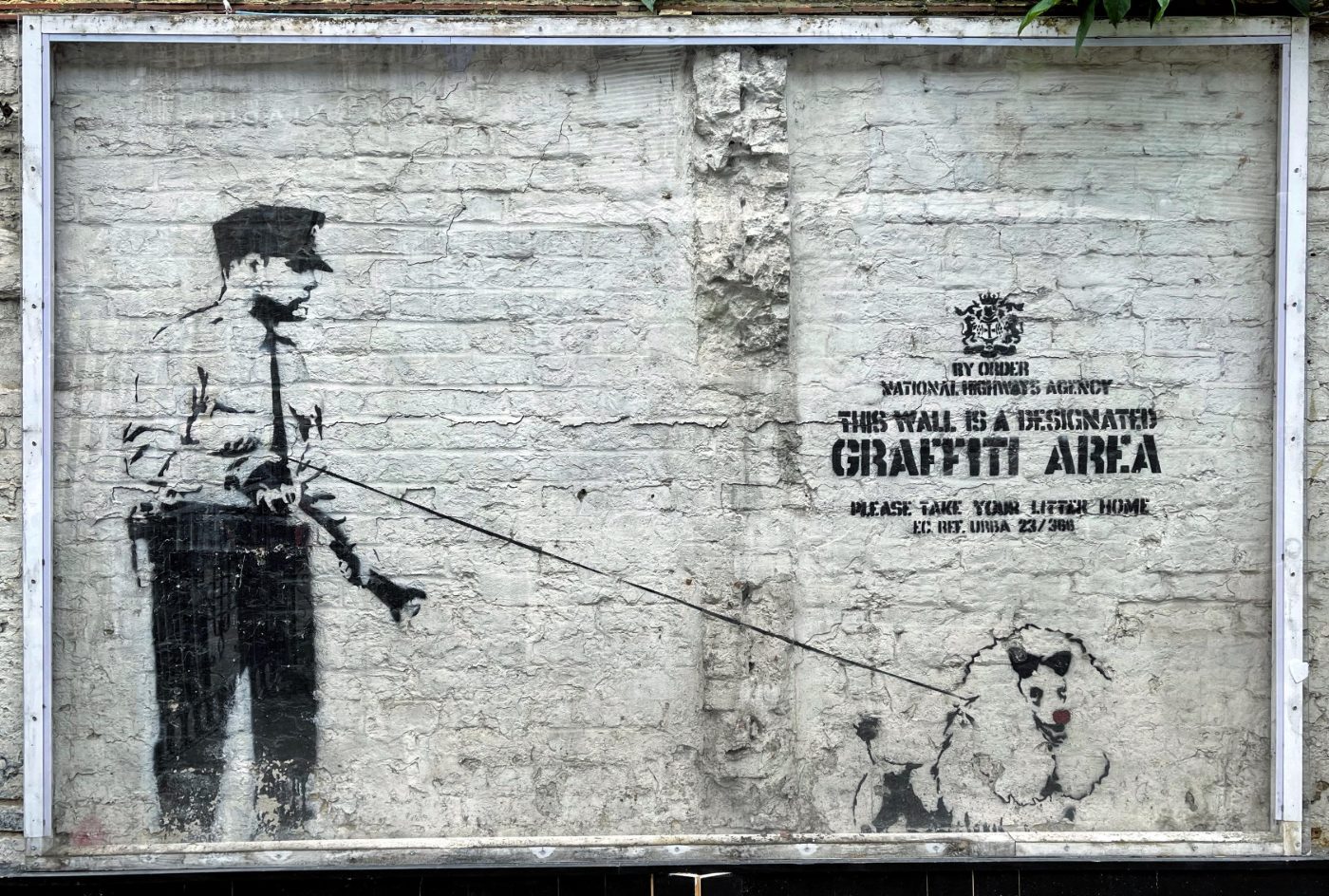
The subsequent history of the mural adds an irony Banksy could hardly have planned. The unauthorized work was eventually covered with Perspex to protect it from vandalism, removal and other graffiti. It remains visible in the Rivington Street courtyard more than two decades after it was created. Contemporary location records continue to document it in situ.
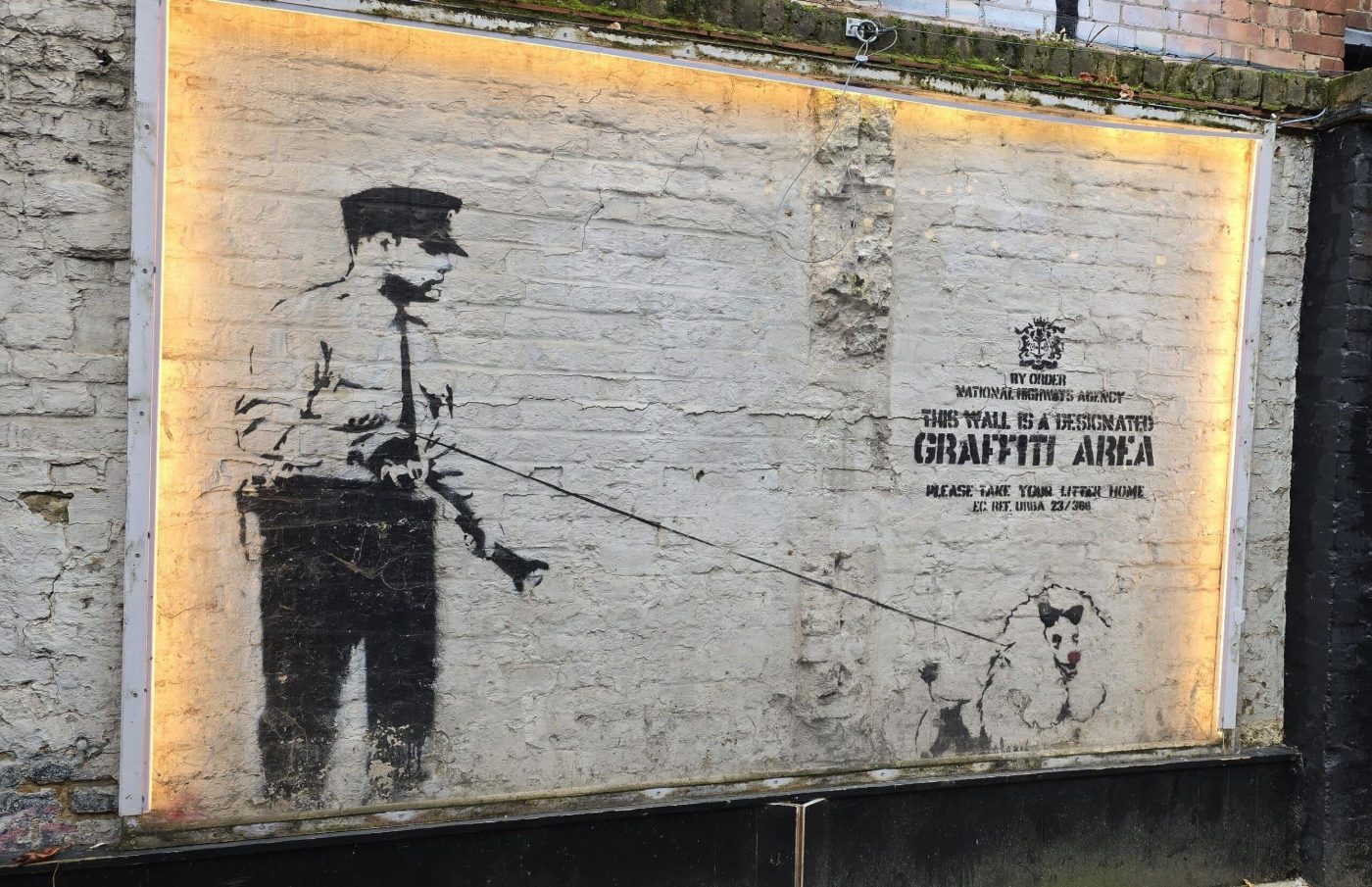
The transformation is remarkable. A work mocking the institutional regulation of graffiti has itself become regulated and protected. Other people are now effectively prevented from painting over a wall whose central message appears to grant them permission to do exactly that.
Banksy designated the wall for graffiti. Its eventual custodians designated the Banksy as something nobody else should touch.
STAY INFORMED
Receive the latest news, exhibitions, artworks and market updates on Banksy.