HAMMER BOY
The City as Part of the Work
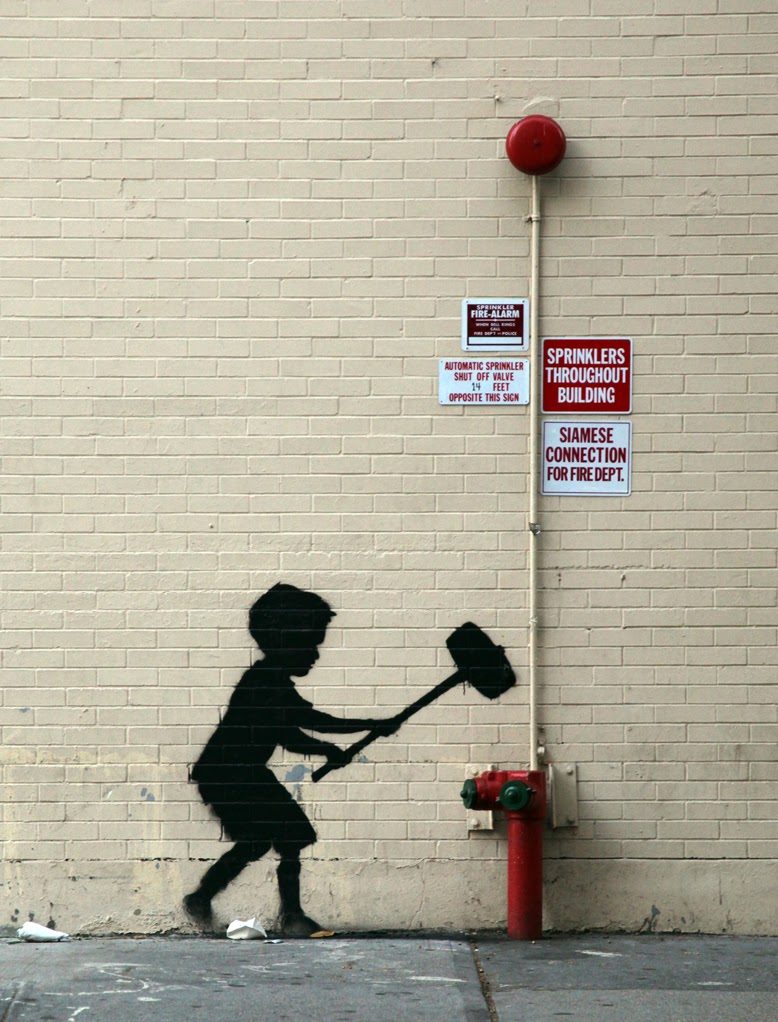
Created on 20 October 2013, during the twentieth day of Banksy's month-long New York residency Better Out Than In, Hammer Boy depicts a young boy raising an oversized sledgehammer above his head, apparently preparing to strike a red fire hydrant. Banksy painted the black-and-white stencil on the exterior wall at 233 West 79th Street, just east of Broadway, on Manhattan's Upper West Side.
The composition is constructed around elements that were already present at the site. The red fire hydrant and the vertical pipe rising immediately behind it transform the scene into something resembling a carnival high striker, the traditional fairground game in which a player swings a heavy hammer to propel a weight up a vertical tower. Banksy's painted figure therefore represents only one part of the work. The hydrant, pipe, signs, pavement and wall become components of the image, demonstrating the artist's ability to discover unexpected visual possibilities within ordinary urban infrastructure.
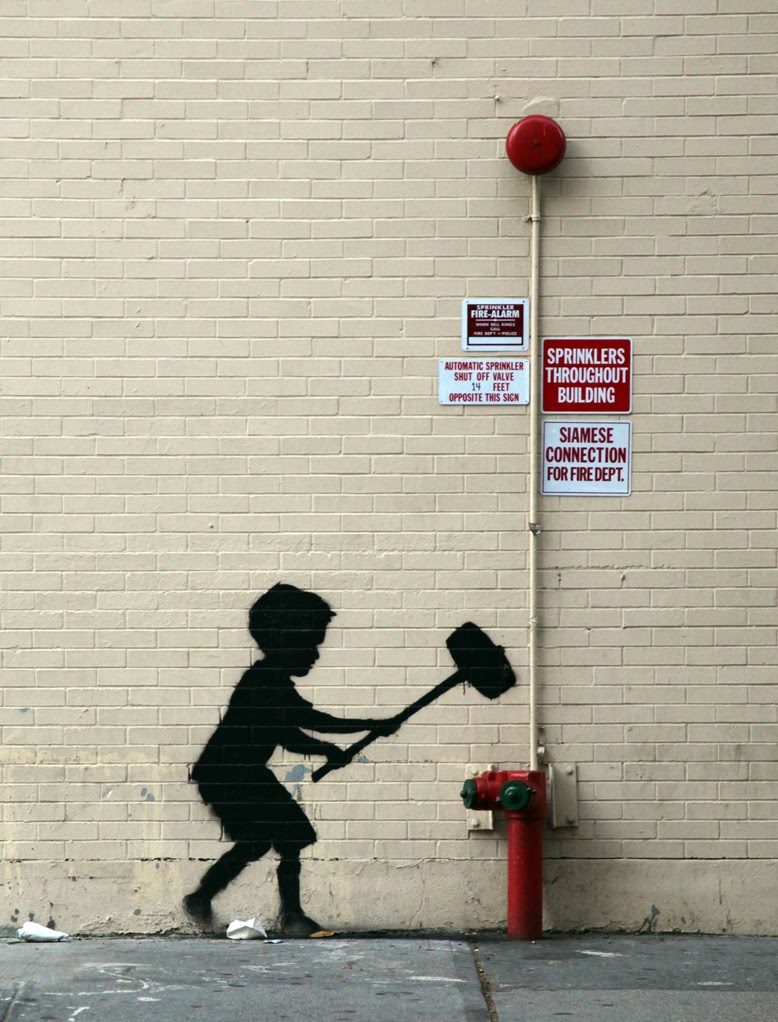
This relationship between image and location is fundamental to Hammer Boy. Banksy does not reproduce the hydrant in paint or disguise its practical function; he changes the narrative surrounding it. A piece of municipal equipment becomes part of a children's game through the addition of a single figure. The intervention exemplifies one of the defining characteristics of Banksy's street practice: the existing city is not simply the surface upon which the artwork appears, but frequently becomes part of the artwork itself.
Childhood and Imagination
Children have occupied a central position in Banksy's imagery since his earliest work. They can represent vulnerability and innocence, but they also frequently possess an imaginative freedom absent from the adult world around them. In Hammer Boy, the child is neither passive nor vulnerable. He is physically active and completely absorbed in an imaginary game created from the ordinary objects of the street.
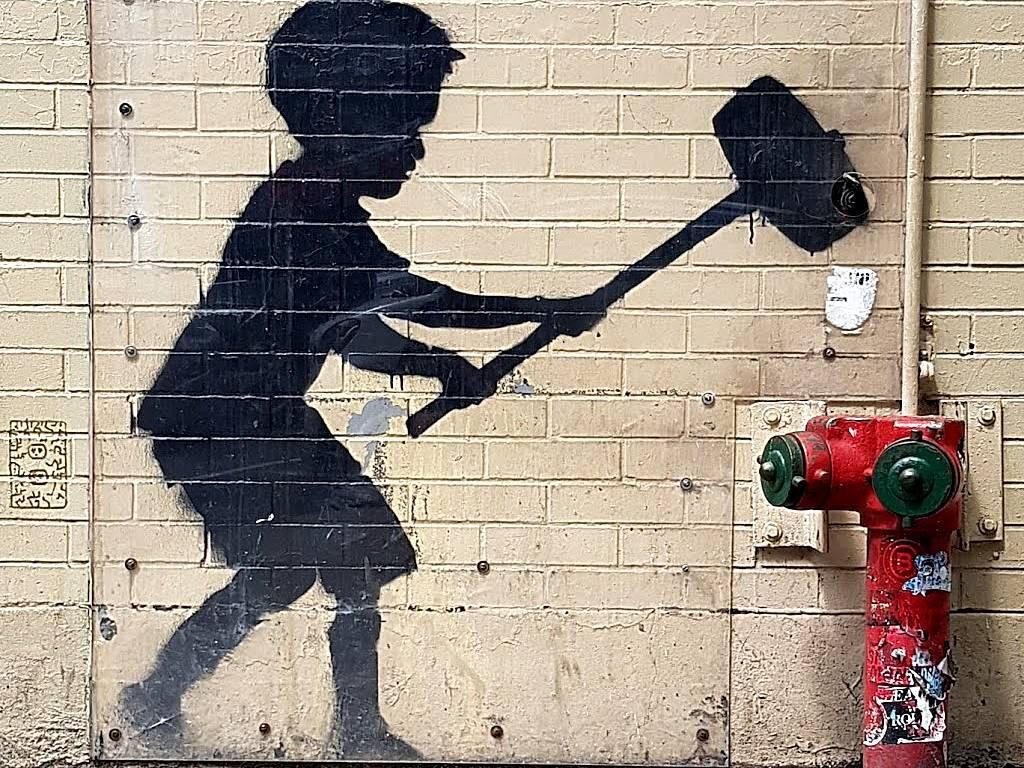
The enormous hammer inevitably introduces an element of aggression, yet the surrounding context redirects that violence toward play. The boy appears ready to strike municipal property, an action that might conventionally be understood as destructive or vandalistic, but Banksy recasts it as the innocent gesture of a child at a fairground attraction. The ambiguity is particularly appropriate for an artist whose own unauthorized interventions continually challenge the distinction between damage to property and culturally valued public art.
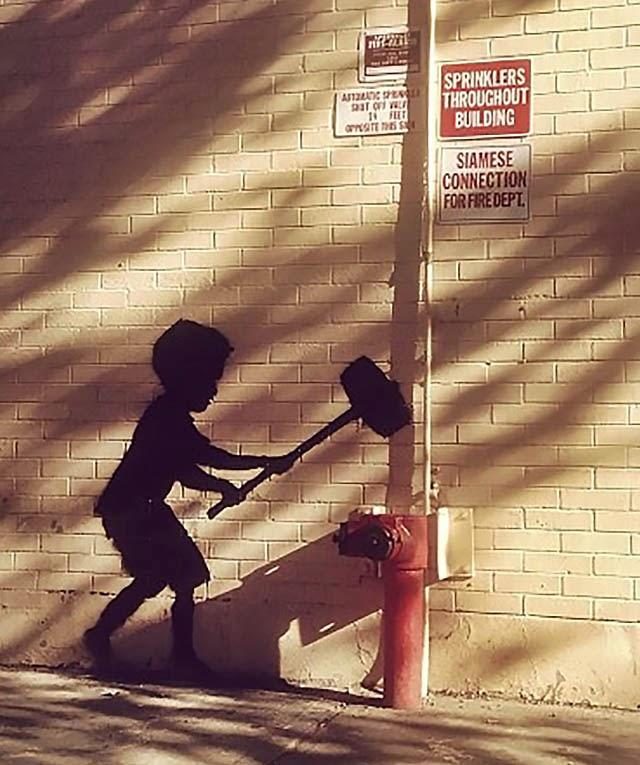
There is also a characteristic economy to the composition. Banksy requires no elaborate narrative and adds remarkably little to the existing environment. A single stencilled figure is sufficient to transform the meaning of objects passed every day by thousands of pedestrians. The work depends upon recognition: once the relationship between the hammer, hydrant and vertical pipe is perceived, an otherwise functional corner of the city becomes an imaginary playground.
Better Out Than In
Hammer Boy formed part of Better Out Than In, Banksy's ambitious month-long residency in New York during October 2013. Over thirty-one days, the artist introduced a succession of murals, sculptures, installations, performances and mobile interventions across the city, with new works announced through his website and social media. Rather than concentrating the project within a gallery, Banksy effectively transformed New York itself into a decentralized exhibition space.
The residency explored different ways in which art could inhabit and interact with the city. Existing walls, vehicles, vacant lots, street signs and architectural features repeatedly became components of individual works. Their presence in public space also exposed them to an unpredictable existence: some were rapidly defaced, others covered or removed, while crowds gathered around newly announced locations almost as soon as they were revealed.
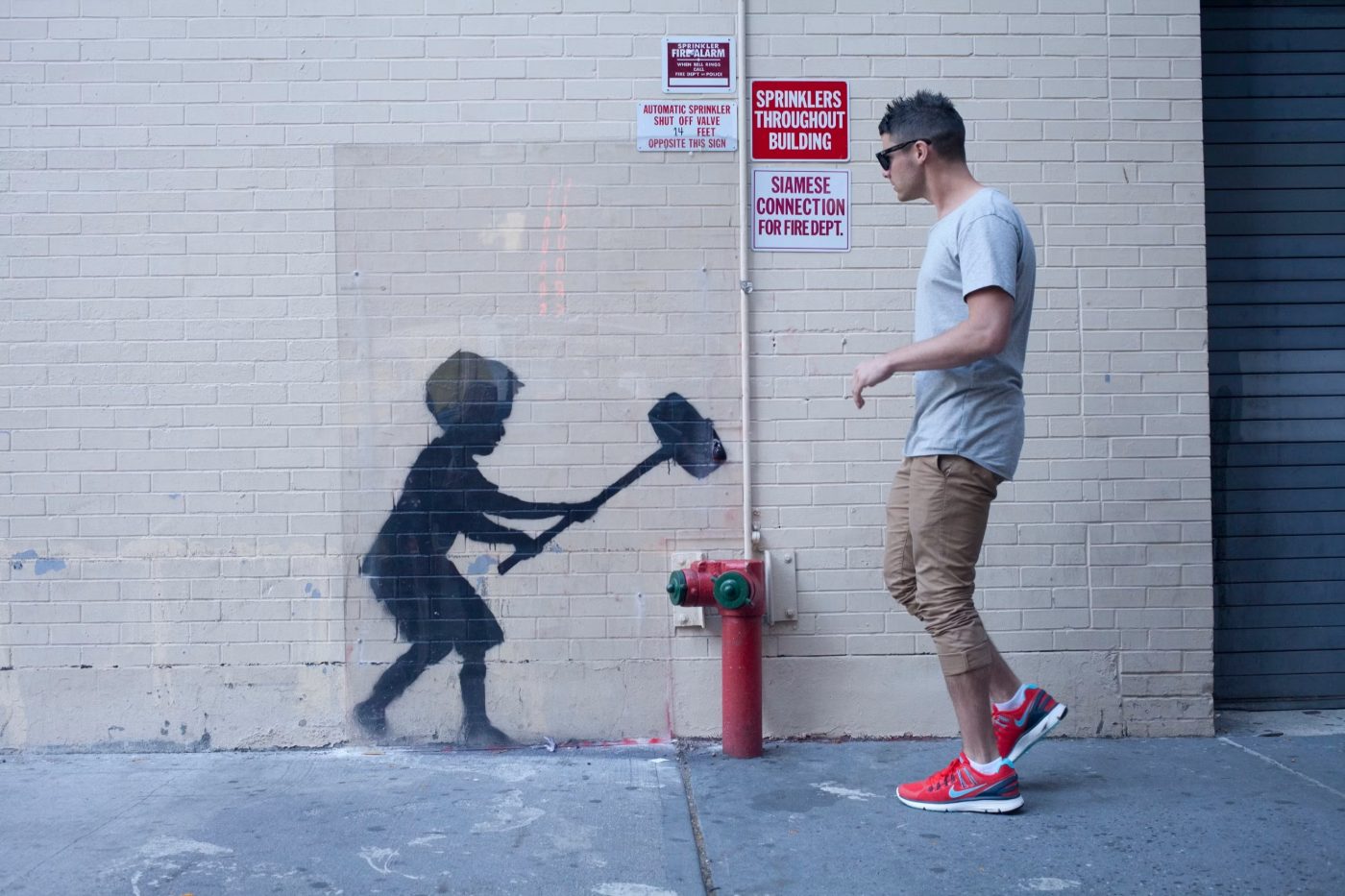
Within this broader project, Hammer Boy represents one of Banksy's most successful examples of genuinely site-specific intervention. The boy could theoretically be removed from the wall, but doing so would separate him from the hydrant and pipe that complete the visual idea. The work was conceived not simply for New York but for this particular few feet of West 79th Street.
Preservation
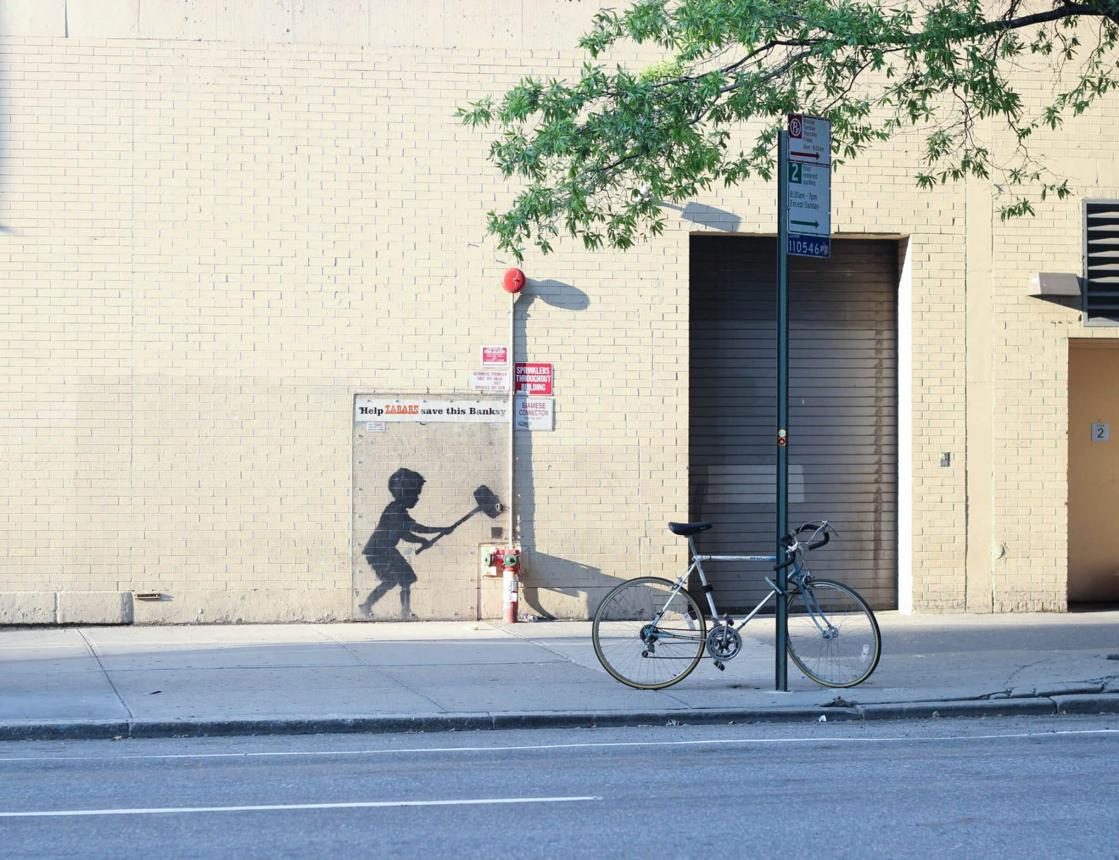
Unlike many works created during Better Out Than In, Hammer Boy survived at its original location. Shortly after its appearance, the stencil was protected behind transparent Plexiglas, an intervention associated with the Zabar family, whose well-known Upper West Side business is nearby. The protective covering quickly demonstrated its usefulness when later additions painted over the figure could be removed without damaging Banksy's original stencil.
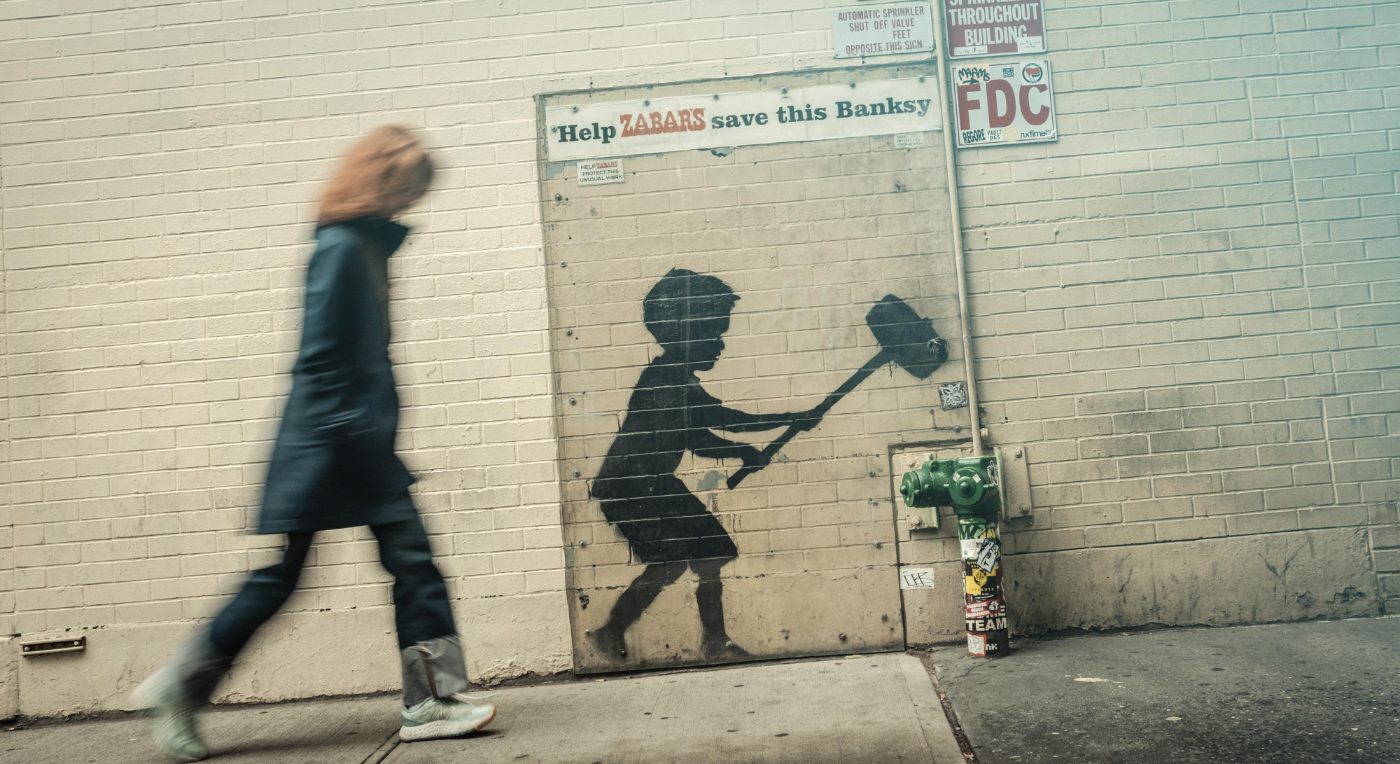
The decision to protect the mural created an interesting reversal. An unauthorized intervention on private property, produced within the inherently temporary conditions of street art, was almost immediately treated as an artwork requiring conservation. This tension between ephemerality and preservation has become increasingly important in Banksy's career as property owners, local authorities and collectors have attempted to protect—or physically remove—works that were originally created without permission.
Preservation is especially meaningful in the case of Hammer Boy because its physical context is integral to the composition. Removing the painted section of wall while leaving behind the hydrant and pipe would preserve Banksy's stencil but compromise the work itself. Its continued existence in situ allows the relationship between figure, architecture and street furniture to remain legible as Banksy originally conceived it.
A Landmark of Banksy's New York Residency
Hammer Boy has consequently become one of the most enduring works associated with Better Out Than In. Its significance does not depend upon an elaborate political message but upon the precision with which Banksy responds to a particular place. The mural demonstrates how his street practice can operate through observation as much as through image-making: the artist first recognizes an overlooked possibility within the existing city and then adds only what is necessary to reveal it.
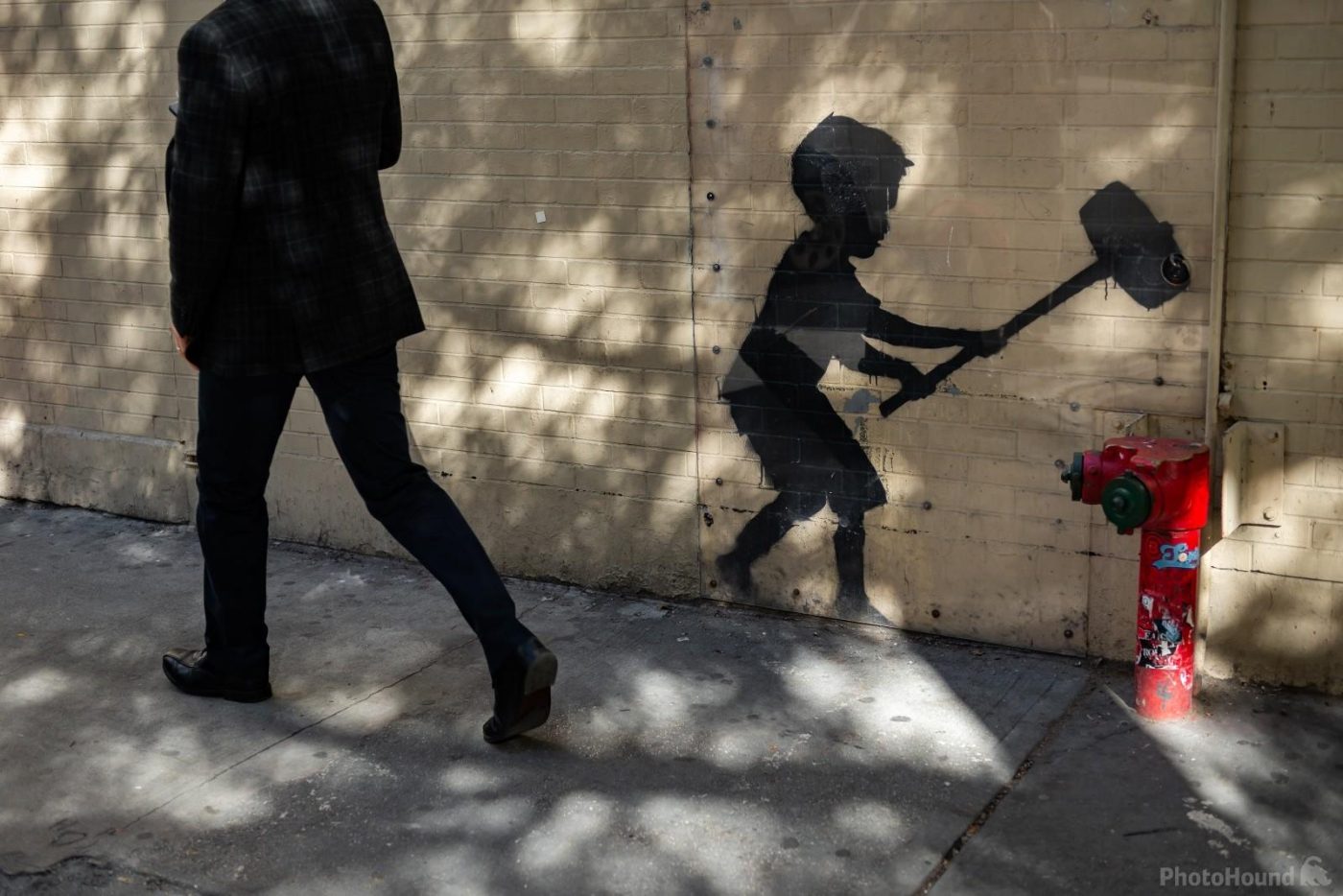
The work also encapsulates an important principle of the 2013 residency. Better Out Than In was not merely a conventional exhibition transferred outdoors; New York itself supplied much of its material. In Hammer Boy, Banksy alters almost nothing in the physical environment, yet the addition of a child and his hammer reorganizes everything around him. The hydrant becomes a target, the pipe a fairground apparatus and an ordinary Upper West Side wall the setting for an imagined game—an exceptionally concise example of Banksy's ability to make the city participate in the artwork.
STAY INFORMED
Receive the latest news, exhibitions, artworks and market updates on Banksy.