IF GRAFFITI CHANGED ANYTHING IT WOULD BE ILLEGAL
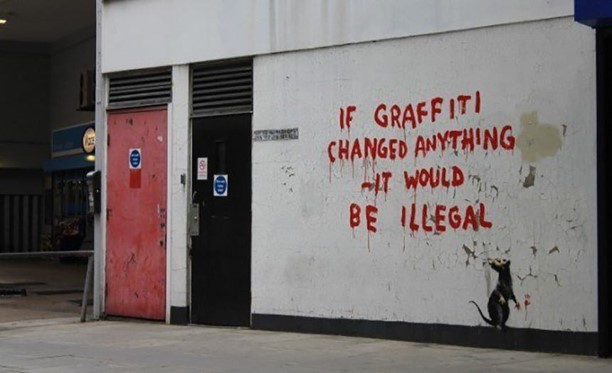
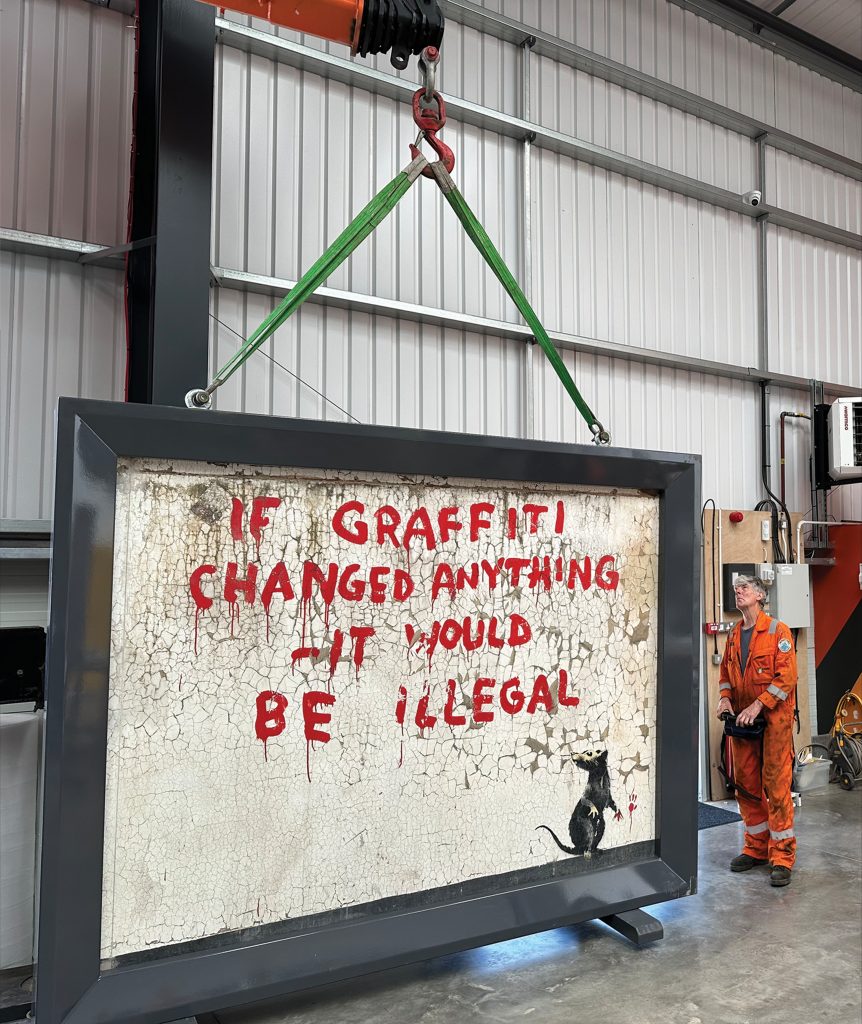
If Graffiti Changed Anything It Would Be Illegal mural is located on a wall on Clipstone Street, Fitzrovia and appeared overnight on Easter Monday in 2011. It depicts one of Banksy's iconic rats underneath the writing in red reading, “If graffiti changed anything, it would be illegal”.
Shortly after it appeared, a local campaign was launched to save the mural from removal by Westminster City Council. Today, it is protected by a layer of Perspex, even though much of it has been covered in tags and graffiti.
If Graffiti Changed Anything…
Few Banksy works state the argument for graffiti as directly as If Graffiti Changed Anything – It Would Be Illegal. Painted in London in 2011, the mural consists of a rat standing beneath the dripping red declaration: “IF GRAFFITI CHANGED ANYTHING – IT WOULD BE ILLEGAL.” The sentence is both joke and political proposition, turning the illegality of graffiti into evidence of its potential power.
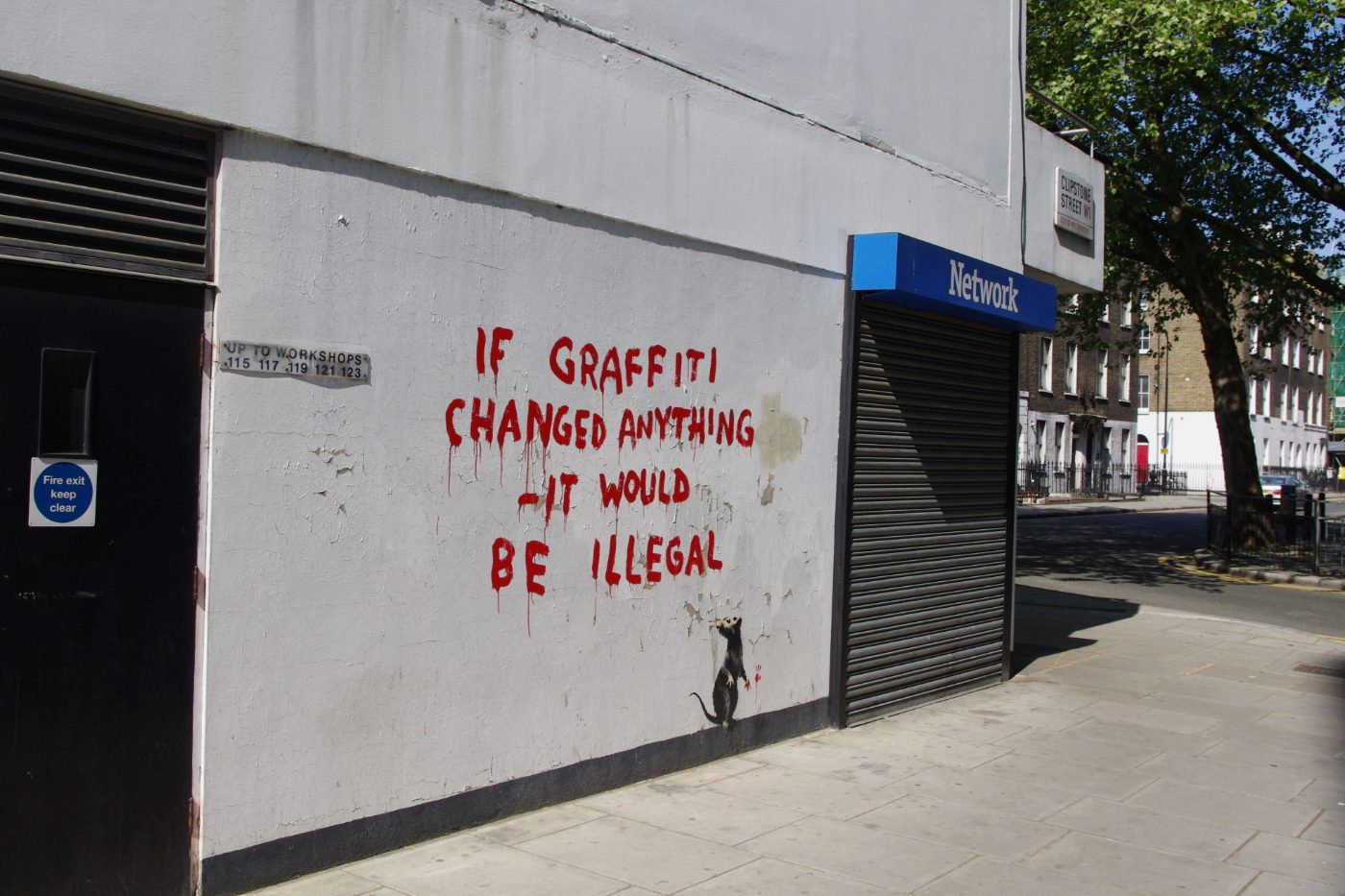
The phrase deliberately echoes the well-known political aphorism “If voting changed anything, they'd make it illegal,” commonly associated with anarchist Emma Goldman, although there is no reliable evidence that she actually said it. Banksy's substitution of “graffiti” for “voting” shifts the argument from electoral politics toward public expression. Graffiti matters, the work suggests, precisely because it occupies space without asking permission.
The Rat Signs His Manifesto
The rat underneath the text is essential. Banksy's rats have long represented those living at the edges of respectable society—the unwanted, persistent inhabitants of the city who survive despite repeated attempts to eliminate them. Here the rat becomes something more specific: the graffiti writer himself.
Its paw is stained red and beside it appears a small red paw print, visually connecting the animal to the freshly painted slogan above. The enormous political declaration therefore acquires an absurd author: a rat has apparently written a manifesto about the revolutionary potential of graffiti and then signed it with its own footprint.
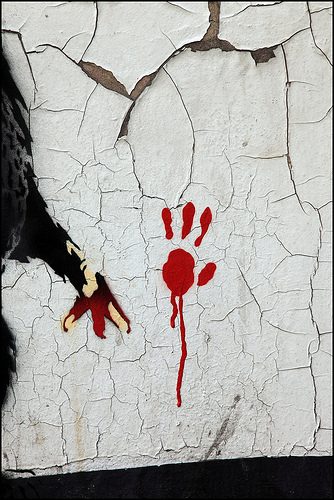
That small detail transforms the mural. Without the rat, the sentence could simply be political graffiti. With it, Banksy creates a complete little theatrical scene: statement, author and signature.
The Street Completes the Work
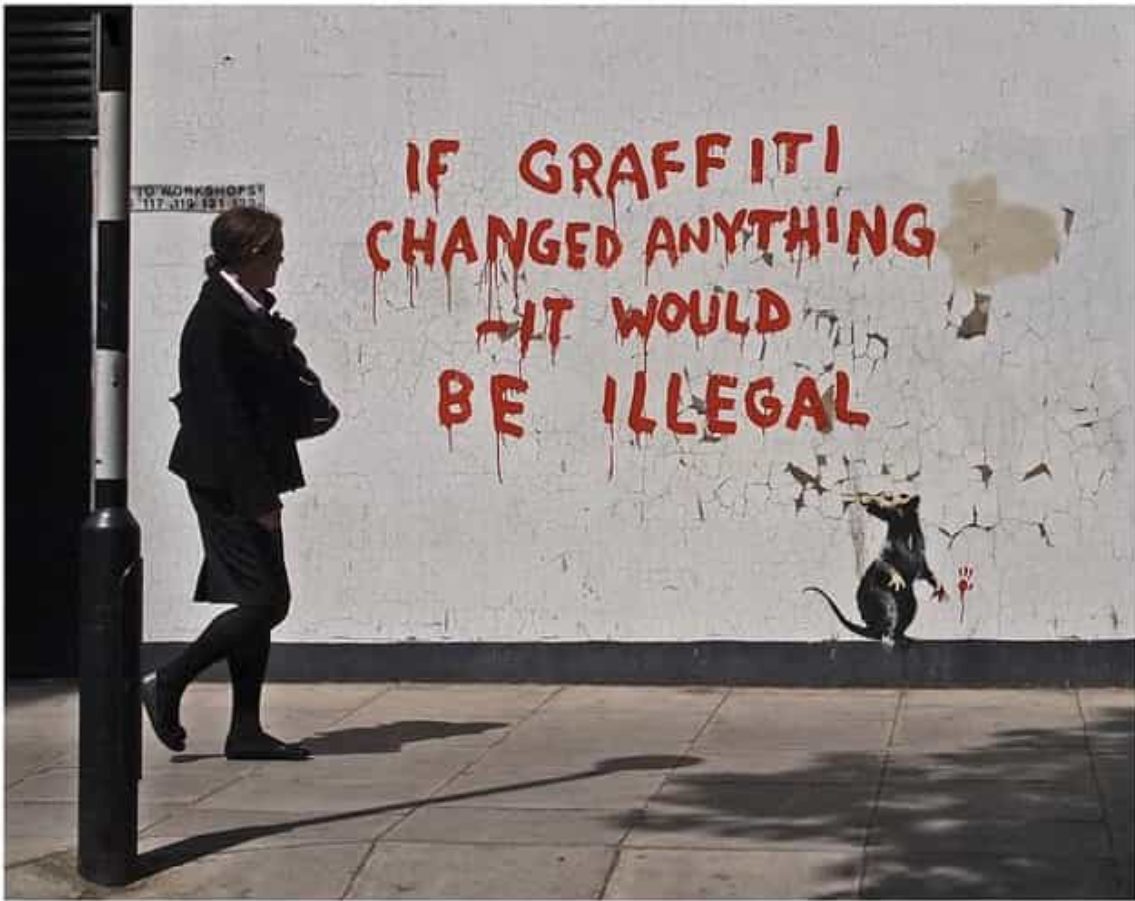
The photograph also demonstrates why Banksy's street works cannot always be understood simply by isolating their stencils. The cracked and scarred wall, pavement, lamppost and passing pedestrian become part of the composition. The businessman walking past is particularly fitting: respectable urban life passes directly beside the rat's declaration of resistance.
The red lettering is deliberately rough and dripping, in sharp contrast with the controlled black stencil of the rat. Banksy allows the words to retain the appearance of hurried vandalism. The message argues for graffiti while simultaneously performing graffiti.
The brilliance of If Graffiti Changed Anything lies in its circular logic. Graffiti is illegal because it challenges who has the right to speak on the surfaces of the city; Banksy then uses an illegal act of graffiti to announce precisely that argument.
And beneath all this political philosophy stands a rat with paint on its paw. Banksy doesn't ask whether graffiti can change anything. He leaves that question written illegally on somebody else's wall.
STAY INFORMED
Receive the latest news, exhibitions, artworks and market updates on Banksy.