IKEA PUNK
Description
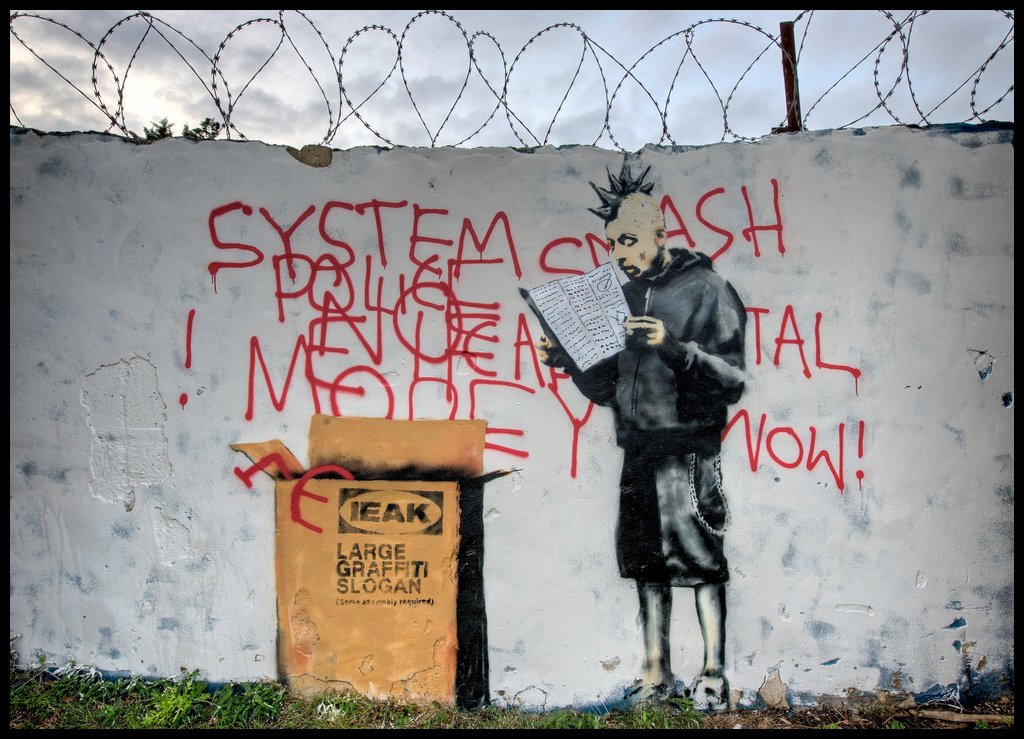
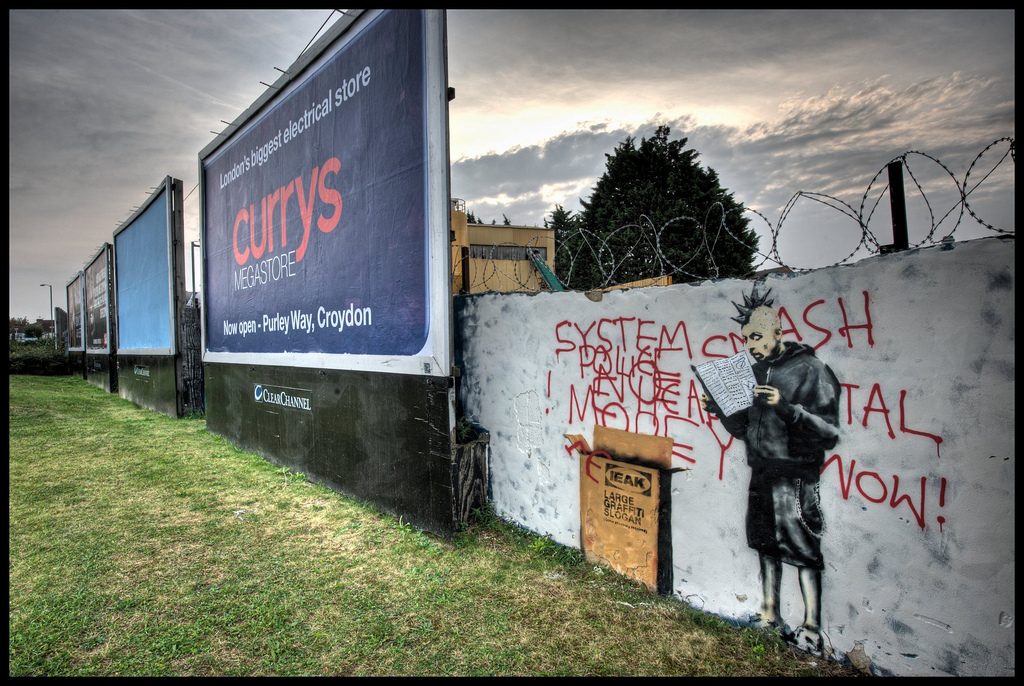
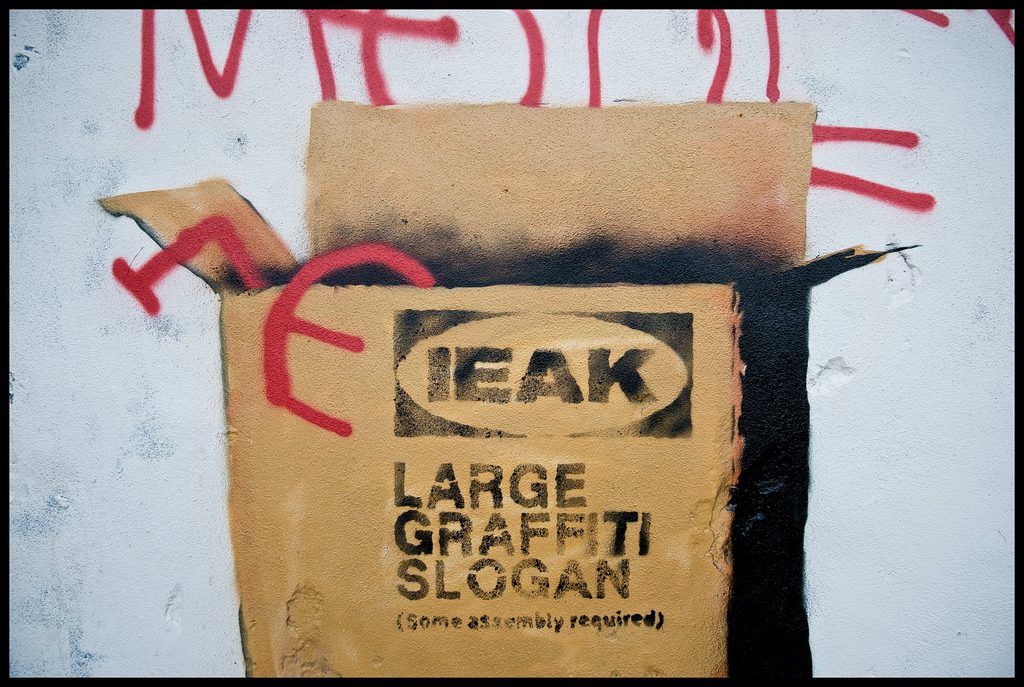
A young punk with an elaborate Mohican crouches beside an open flat-pack box, instruction sheet in hand, apparently struggling to assemble his own act of rebellion. Scattered across the wall are the components of a political graffiti slogan—words such as SYSTEM, SMASH and POLICE—waiting to be put together. The box is labelled “LARGE GRAFFITI SLOGAN (some assembly required)” and carries the deliberately scrambled brand name IEAK.
Banksy's joke is immediately legible: even anti-establishment protest has become a standardized consumer product, purchased in a box and assembled according to instructions. The punk looks rebellious, but his rebellion has arrived ready-made.
Flat-Pack Anarchy
The location made the satire considerably sharper. The mural appeared on Beddington Farm Road in Croydon, within sight of the distinctive towers of the nearby IKEA store. Contemporary photographs deliberately included the IKEA landmark behind Banksy's wall, confirming how carefully the intervention was positioned.
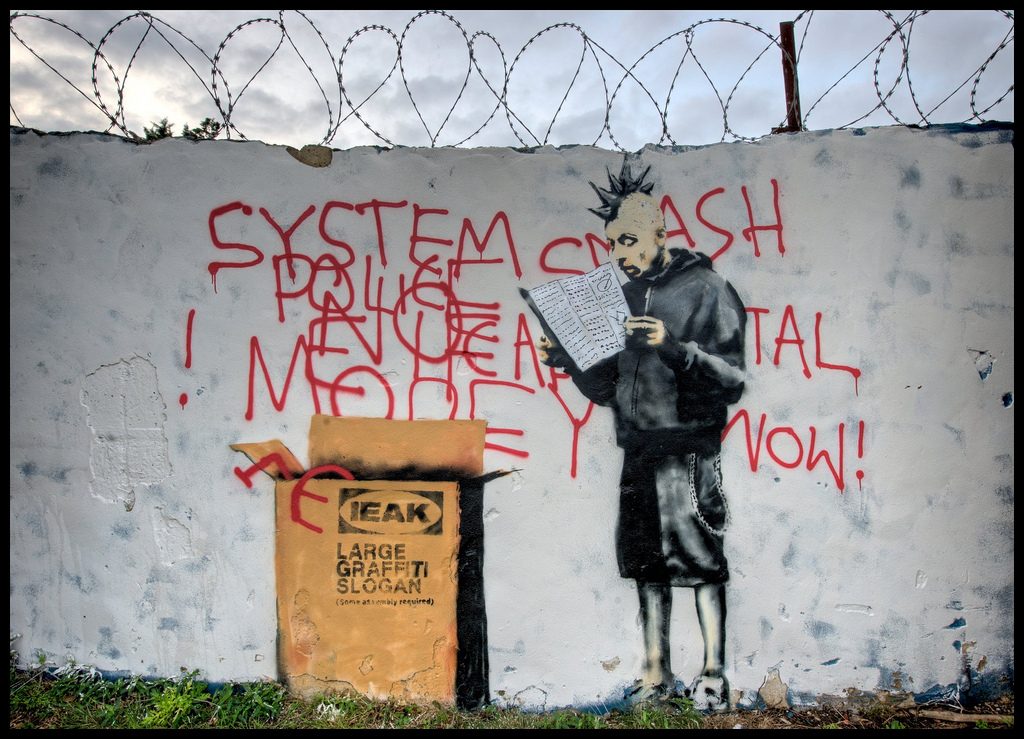
The work therefore turns IKEA's flat-pack model into a metaphor for packaged dissent. Punk historically presented itself as spontaneous, anti-commercial and resistant to conformity; Banksy's protagonist has instead become a consumer of rebellion. Even the language with which he intends to attack “the system” has been manufactured for him.
The figure was not entirely new. A closely related Mohican punk had appeared only months earlier in Banksy's major Banksy versus Bristol Museum exhibition, in the work commonly known as Don't Forget Your Scarf. Contemporary observers immediately recognized the connection when the Croydon mural appeared in September.
Capitalism and Consolation
Banksy associated the image with one of his typically contradictory observations about capitalism: “We can't do anything to change the world until capitalism crumbles.” He then suggested shopping as consolation in the meantime.
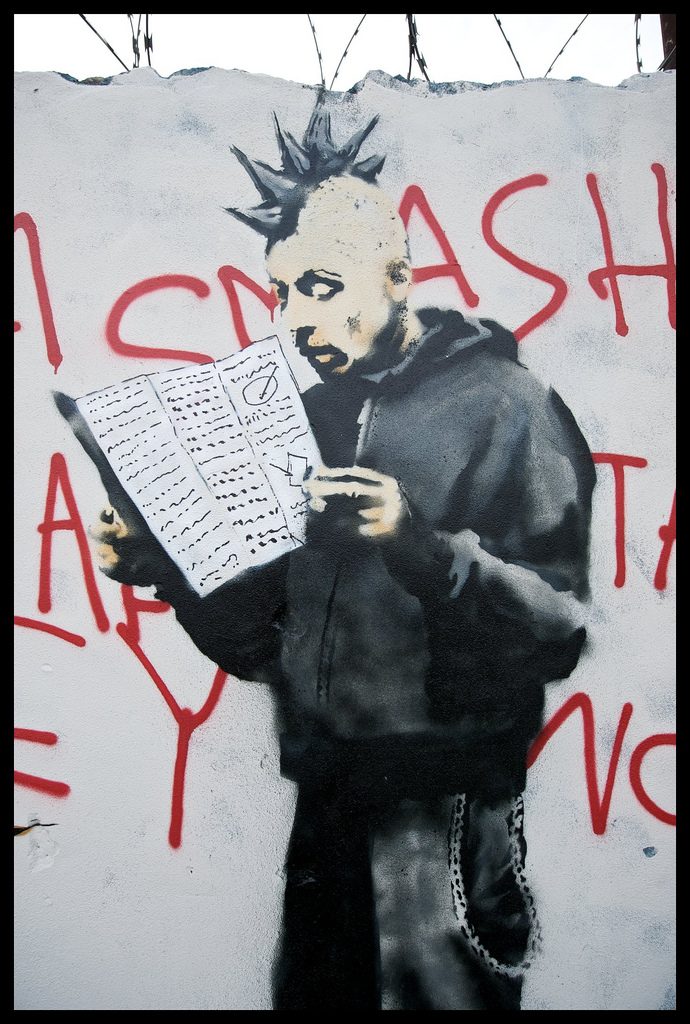
The contradiction is central to IKEA Punk. Banksy was himself, by 2009, caught within precisely this tension. His unauthorized street works criticized consumerism and institutional culture while Banksy's name had become an extraordinarily valuable commodity. The punk trying to assemble a mass-produced revolution is therefore not simply a joke at someone else's expense. It touches upon a contradiction running through Banksy's own position: how does rebellion remain rebellious once people want to buy it?
From Vandalism to Valuable Property
The mural's brief afterlife made that question unexpectedly literal. After it appeared, Sutton Council consulted the public over whether it should remain. According to contemporary reporting, around 90% voted for its preservation. Before that could be resolved, other graffiti was added over Banksy's image.
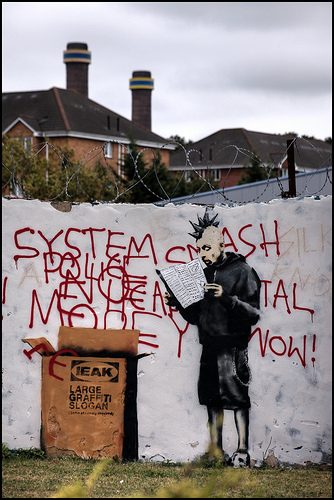
The wall belonged to construction-materials company Hanson Premix. Rather than allowing the mural to be destroyed, the company dismantled the wall in November 2009, intending to restore Banksy's image.
It was an almost perfect conclusion to Banksy's joke. A mural ridiculing the commercialization of rebellion had appeared without permission on an industrial wall; within weeks, public opinion had transformed it from unwanted graffiti into something sufficiently valuable that the wall itself was taken apart to preserve it.
An Unexpected Afterlife
The exchange between Banksy and IKEA acquired an unexpected postscript three years later. In 2012, IKEA installed People Make Design Come to Life, a street-marketing campaign in the Milan Metro in which black-and-white stencil figures interacted with the station's existing architecture.
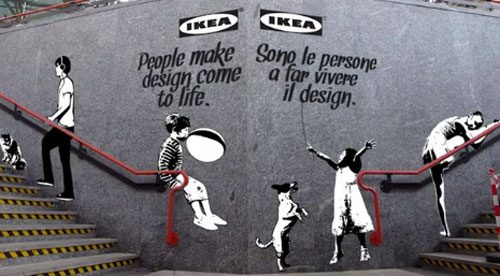
The campaign's visual language has subsequently been discussed by scholars specifically in relation to Banksy's influence on commercial advertising. The irony is difficult to miss: in 2009 Banksy had borrowed IKEA's corporate language to suggest that rebellion itself could be packaged and assembled; by 2012, IKEA was using the visual language of street art to sell design.
STAY INFORMED
Receive the latest news, exhibitions, artworks and market updates on Banksy.