KEITH HARING
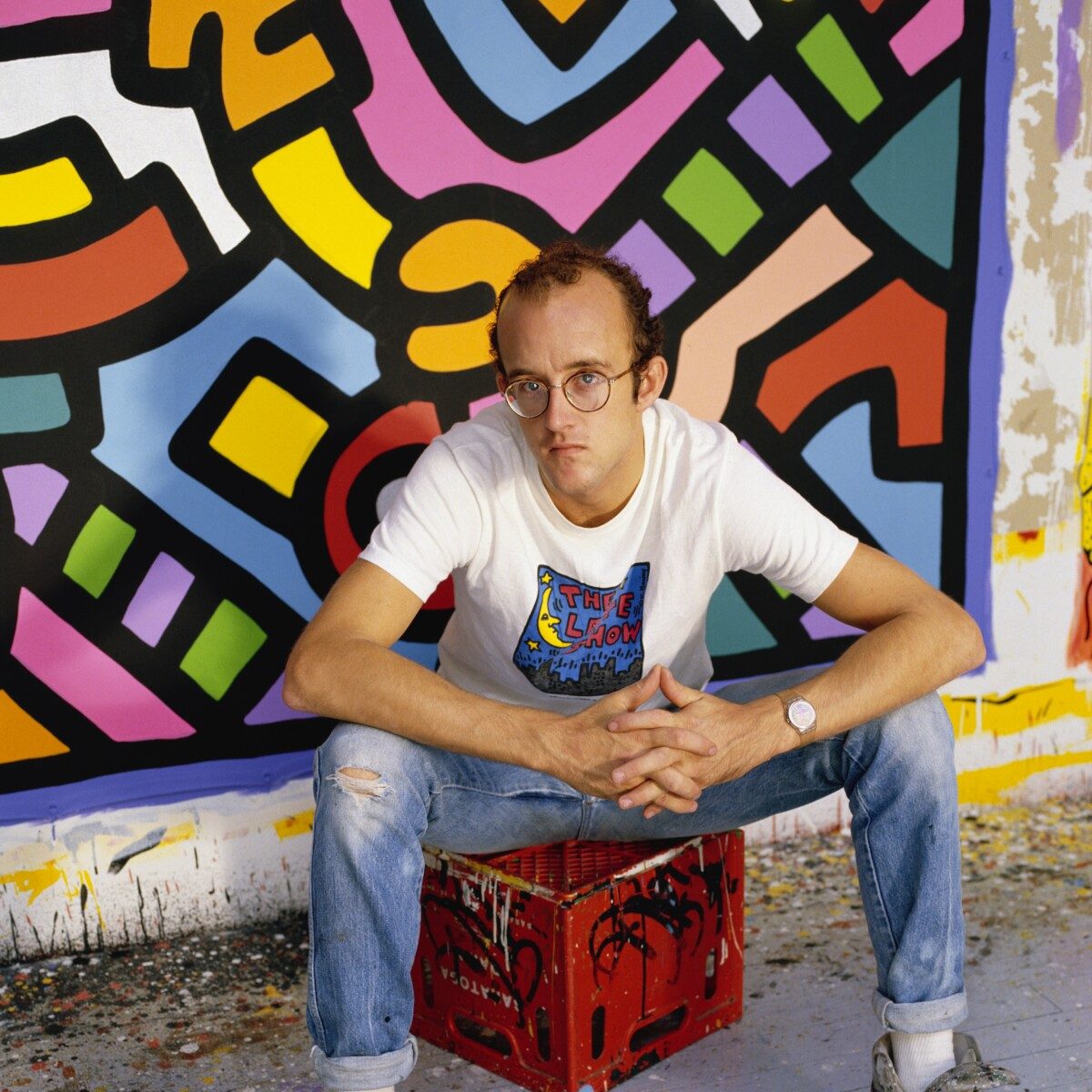
From the Subway to the Museum
Keith Haring (1958–1990) was one of the defining artists of 1980s New York and an essential link between street culture, Pop Art and contemporary art.
After moving to New York in 1978, Haring found his first great public canvas underground. Empty advertising spaces in subway stations were temporarily covered with sheets of matte black paper. Haring began drawing on them in white chalk, working quickly and publicly as commuters passed around him.
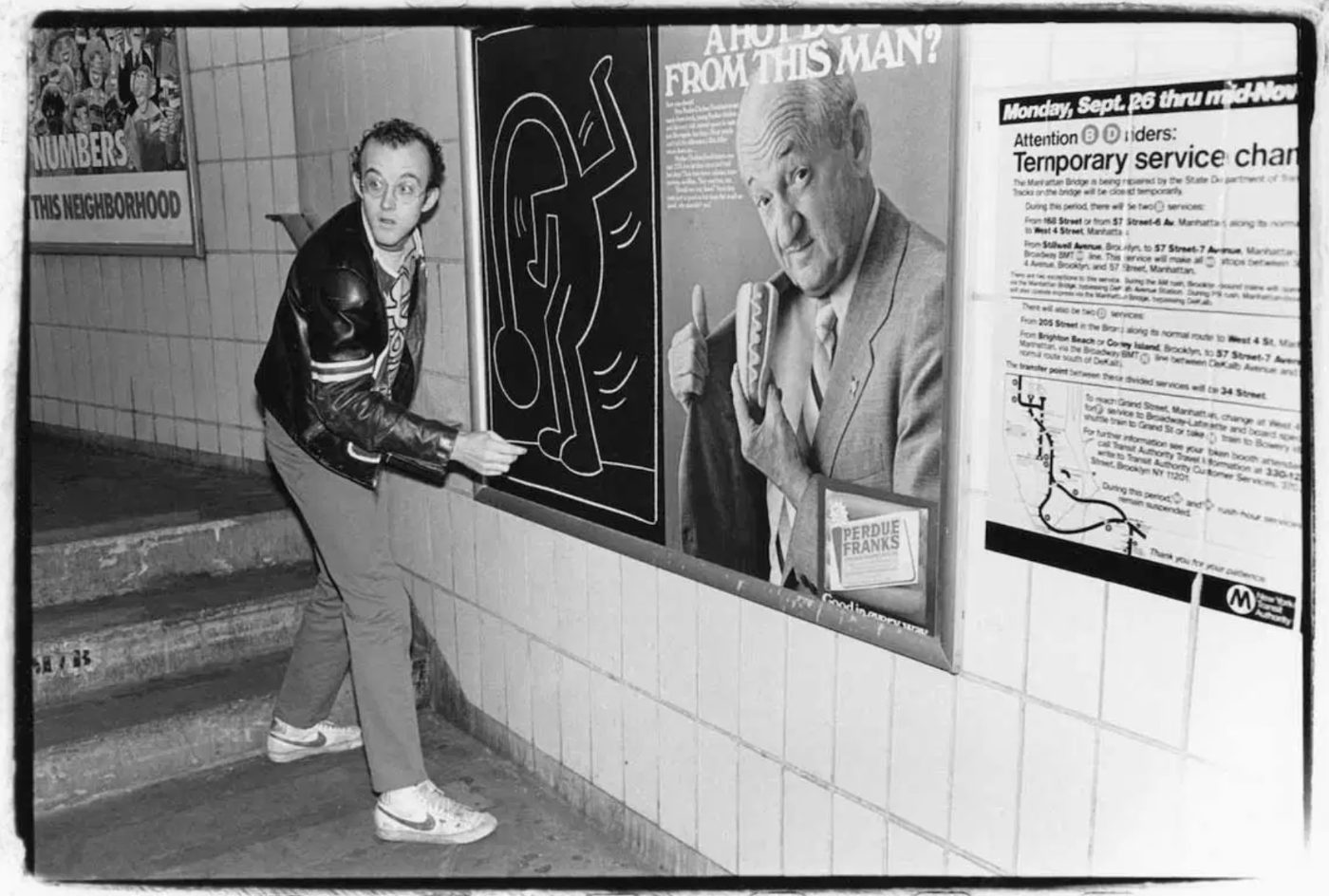
Between 1980 and 1985, he produced hundreds of these Subway Drawings, developing an instantly recognizable visual language of thick lines, simplified human figures, crawling babies, barking dogs and radiating marks suggesting movement and energy.
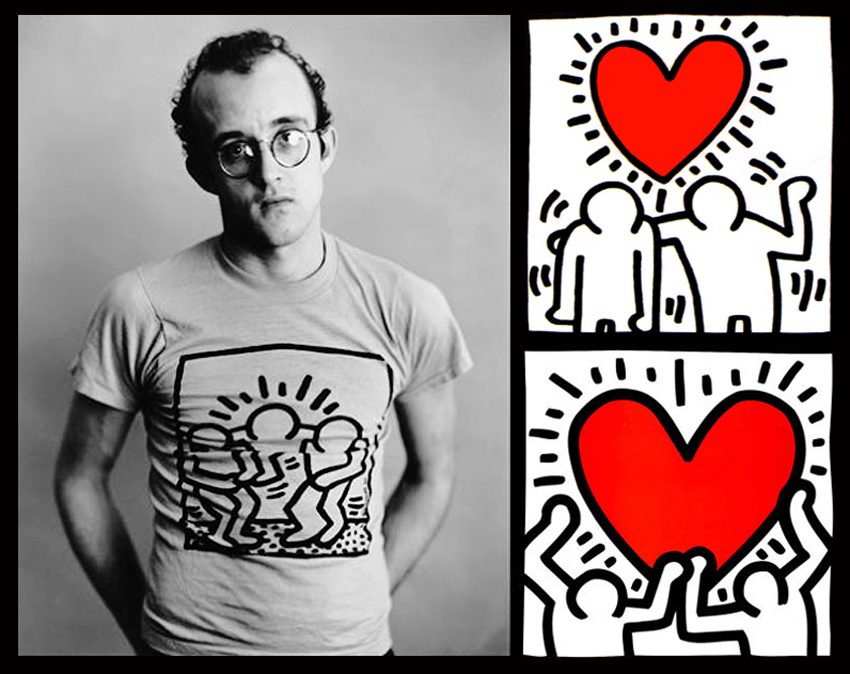
The drawings were accessible to everyone. No museum ticket was required, and no knowledge of art history was necessary to understand their extraordinary visual energy. Like Banksy two decades later, Haring discovered that the city itself could function as an exhibition space.
Radiant Babies, Barking Dogs and Dancing Figures
Rather than being associated with a single masterpiece, Haring became famous for an entire vocabulary of images.
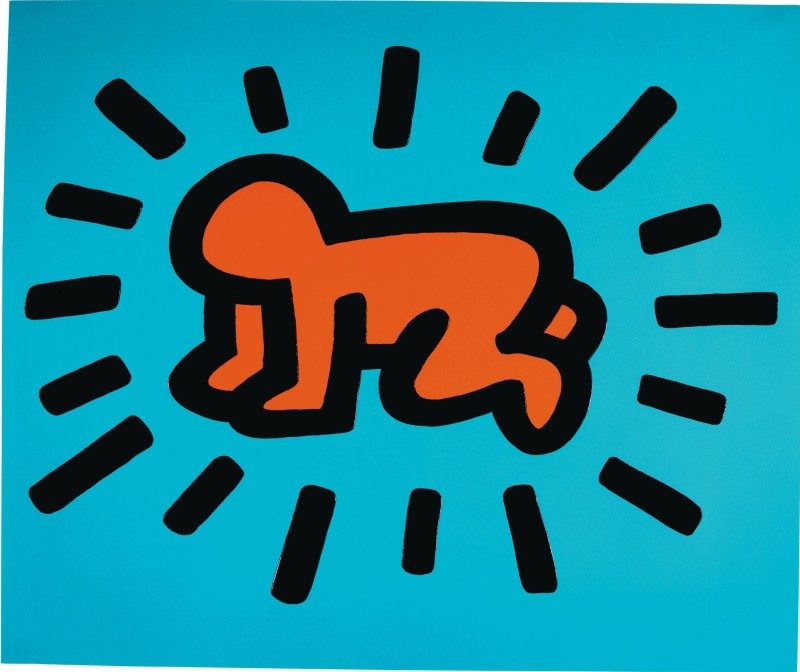
The Radiant Baby, a crawling infant surrounded by energetic lines, became perhaps his most recognizable personal symbol. The Barking Dog, dancing figures, hearts and other characters returned repeatedly across subway drawings, paintings, prints, sculptures and murals.
Their apparent simplicity could be deceptive. Haring used his accessible visual language to address increasingly serious subjects, including apartheid, nuclear weapons, drug addiction, sexuality and the AIDS crisis.
One of his best-known public works, Crack is Wack, was painted in 1986 on a handball-court wall in East Harlem as a warning against the devastating crack epidemic affecting New York. His later work became increasingly connected to AIDS awareness and safe sex after Haring himself was diagnosed with HIV in 1988.
Haring believed that art could communicate beyond the traditional art world. In 1986 he opened the Pop Shop in New York, selling inexpensive T-shirts, posters, badges and other objects carrying his imagery. The project deliberately challenged the idea that art should be available only to museums and wealthy collectors.
Banksy Chooses His Weapon
Banksy's most explicit homage to Haring appears in Choose Your Weapon.
Created as a street work in London in 2010 and subsequently developed into one of Banksy's best-known print editions, the composition depicts a hooded young man holding a dog on a leash. The man belongs unmistakably to Banksy's stencil world. The dog does not. It is Keith Haring's Barking Dog.
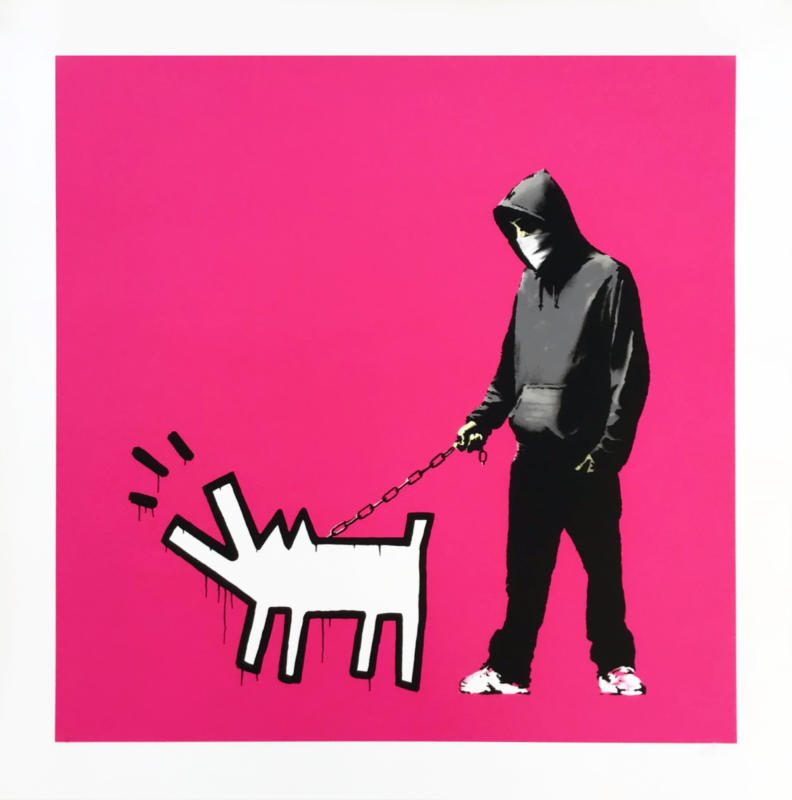
Banksy reproduces the animal in Haring's unmistakable graphic language, creating a deliberate collision between two generations of street art. Haring's flat, cartoon-like dog appears almost like a pictogram beside the comparatively realistic stencil of Banksy's hooded figure.
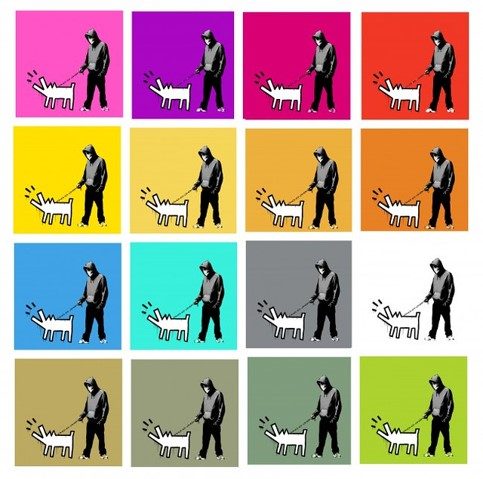
The title transforms the animal into something more threatening. Choose Your Weapon suggests the aggressive dogs sometimes used as symbols of intimidation and status, particularly within urban youth and gang culture. Yet Banksy's chosen “weapon” is simultaneously a piece of art history.
The visual joke therefore operates on several levels. The young man holds a dog; Banksy holds a Haring.
The Barking Dog
Haring's Barking Dog had appeared throughout his career, including in his early subway drawings. Its open mouth, angular body and radiating lines reduce the idea of a barking animal to a handful of instantly readable marks.
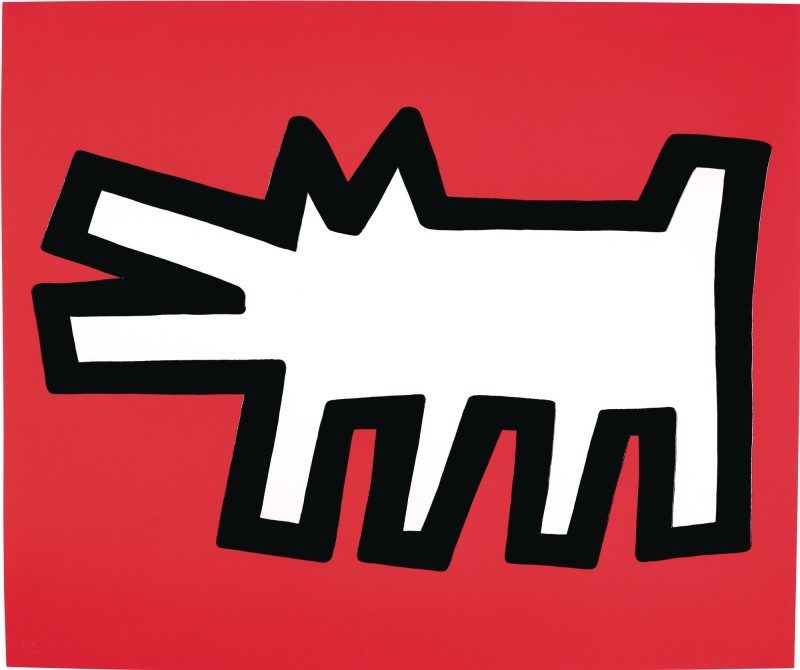
The dog could assume different meanings depending upon its context. It might appear playful in one composition and aggressive or authoritative in another. This flexibility was fundamental to Haring's visual language: simple symbols could acquire new meanings through their relationship with surrounding figures.
Banksy exploits precisely that ambiguity in Choose Your Weapon. Removed from Haring's colorful universe and attached by a leash to a hooded figure, the familiar dog suddenly becomes more menacing.
The homage works because Banksy does not imitate Haring's entire style. He imports one unmistakable Haring symbol directly into his own visual world.
Banksquiat and the Subway
Banksy returned to Haring much more subtly in Banksquiat.
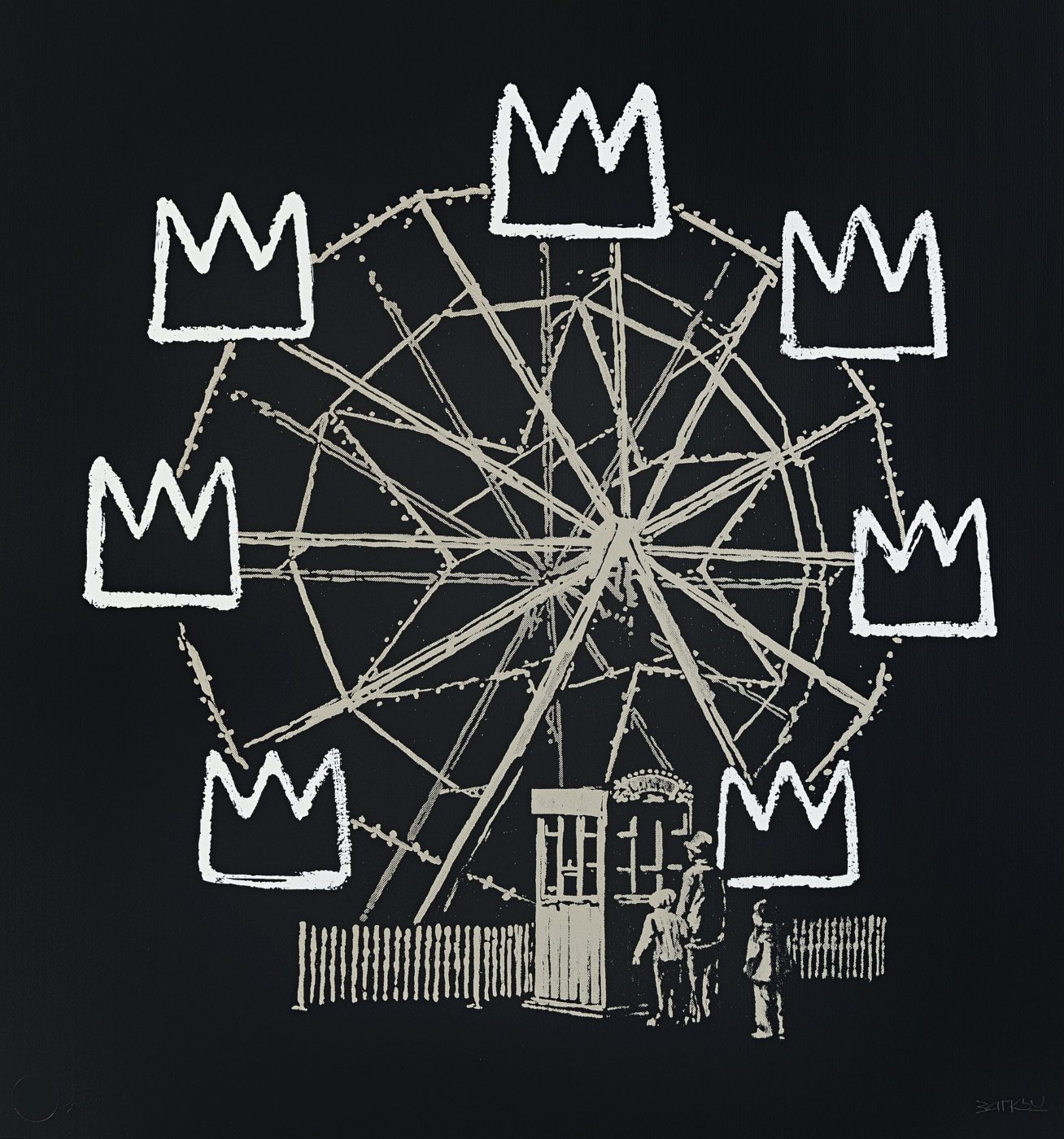
The work primarily references Jean-Michel Basquiat, using the crown that became one of Basquiat's most recognizable symbols. Yet Banksy's presentation introduces another important figure from the same extraordinary period of New York street culture.
The crown is rendered in chalky white against a dark ground, recalling the appearance of Haring's Subway Drawings on the black advertising panels of the New York subway.
The connection is particularly appropriate. Basquiat and Haring both emerged from the extraordinary creative environment of downtown New York around the beginning of the 1980s. Their work moved rapidly from streets, clubs and alternative spaces into galleries, museums and the international art market. Banksy belongs to a later chapter of that same history.
Haring and Banksy
The relationship between Keith Haring and Banksy extends beyond the appearance of a barking dog.
Both developed visual languages capable of being recognized almost instantly. Both understood the power of repetition. Both brought art directly into public space and used apparently simple imagery to communicate ideas about politics, society and power to audiences far beyond the traditional art world.
There are important differences. Haring frequently worked spontaneously and freehand, while Banksy's stencil technique depends upon preparation and reproducibility. Haring's imagery often radiates exuberance and optimism even when addressing difficult subjects; Banksy's humor tends to be darker, more satirical and confrontational.
But perhaps their strongest connection lies in their understanding of accessibility.
Haring drew in subway stations because everyone passed through them. He created murals in public places and opened the Pop Shop because he wanted his imagery to circulate beyond galleries and museums. Banksy would later use streets, walls, prints, books and the internet to achieve a similarly extraordinary reach.
When Banksy puts Haring's Barking Dog on a leash in Choose Your Weapon, he is therefore doing considerably more than borrowing a famous image. He is acknowledging one of the artists who helped establish the street as a legitimate place to make—and encounter—art.
STAY INFORMED
Receive the latest news, exhibitions, artworks and market updates on Banksy.