KID ROLLING A BURNING TIRE
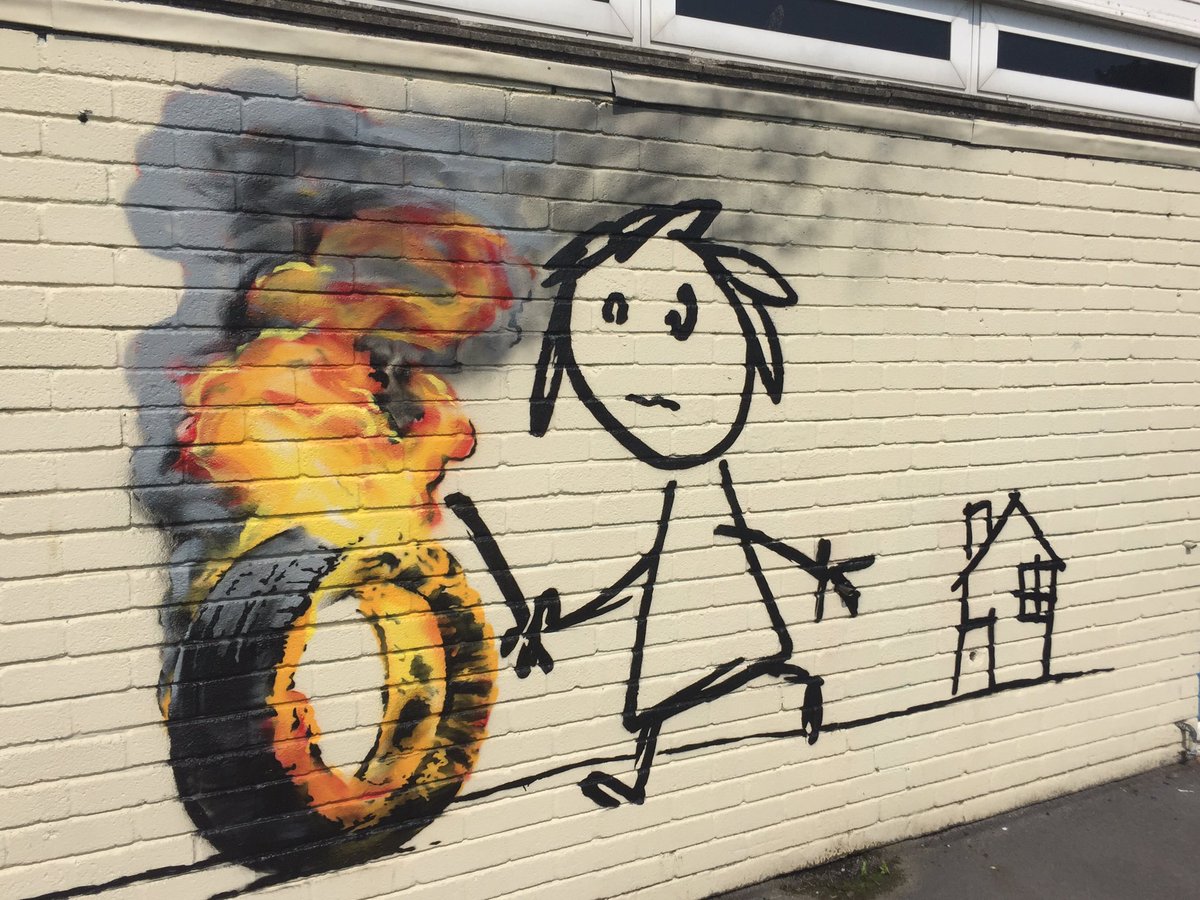
Kid Rolling a Burning Tire
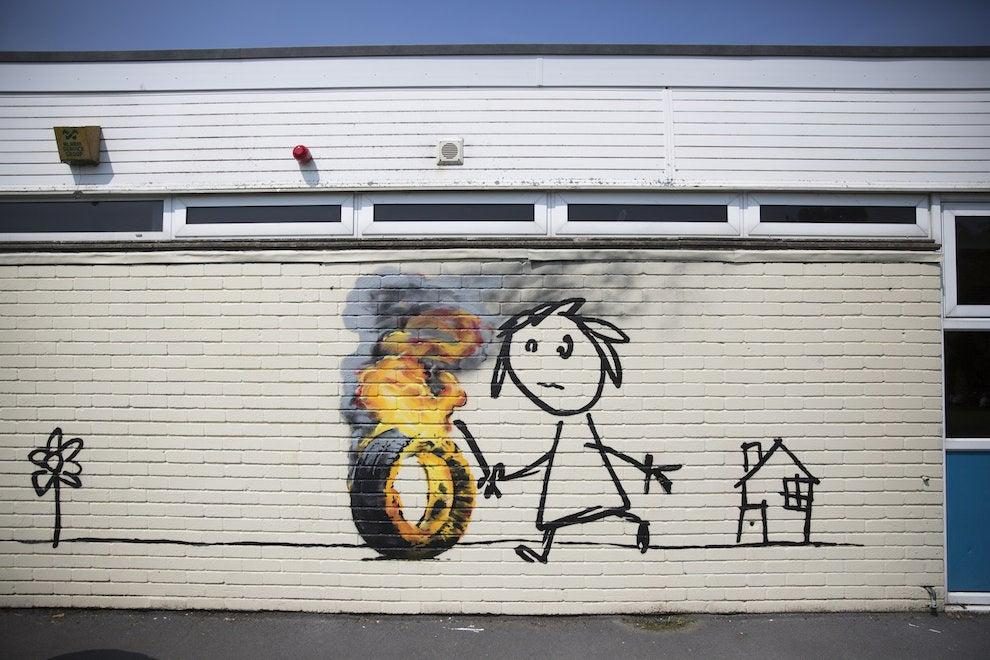
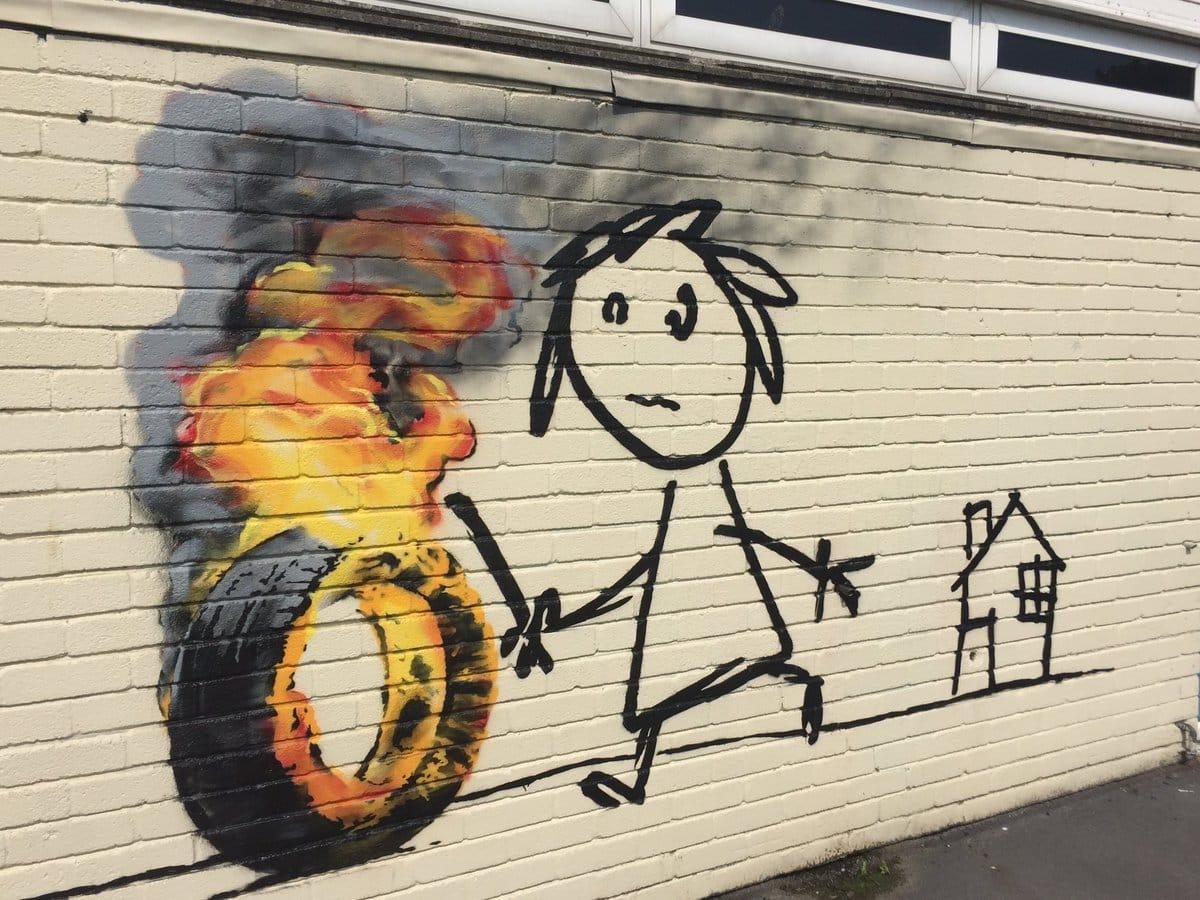
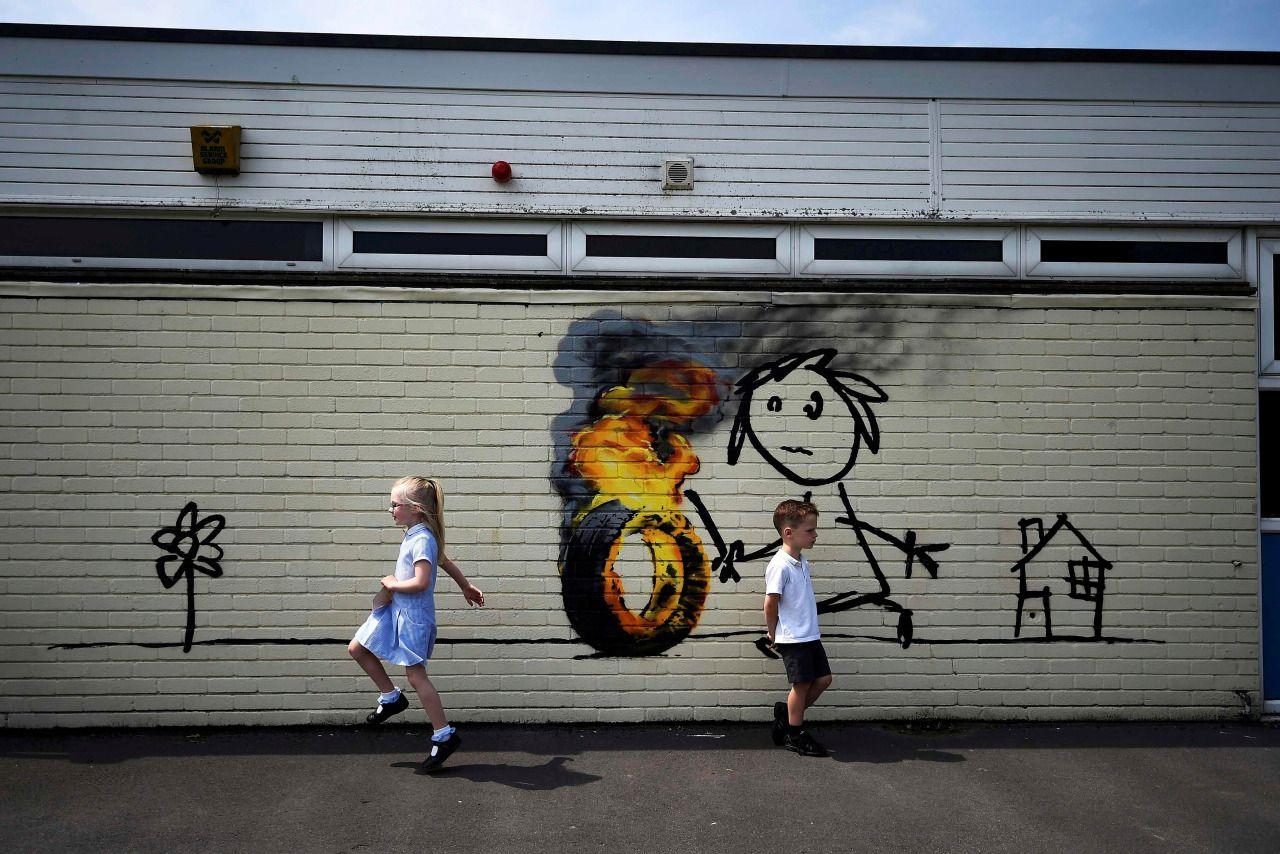
Stretching across approximately fourteen feet of a school wall, the mural depicts a child rendered in a deliberately loose, almost crayon-like style, using a stick to roll a realistically rendered burning tyre. Nearby, a simple house and small flower complete the scene. The contrast is striking: the visual language of a child's drawing is interrupted by an object associated with fire, disorder and street protest.
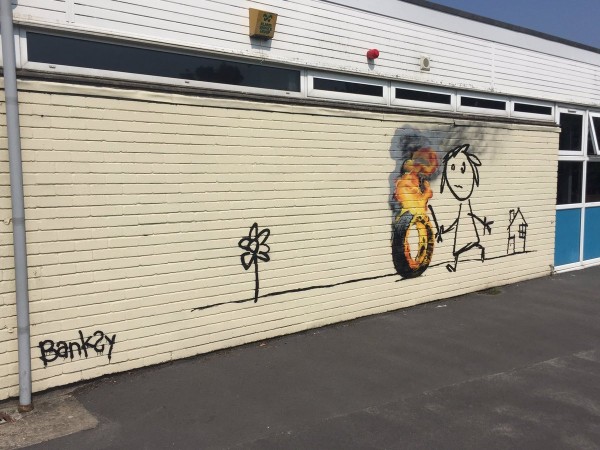
The burning tyre can therefore be read in several ways. It introduces the adult world of conflict into the imaginative universe of childhood, but the child appears neither frightened nor violent. Instead, the tyre has become something to play with—a dark transformation of the traditional children's game of hoop rolling. Banksy leaves the tension unresolved rather than imposing a single political interpretation.
A Gift to a Bristol School
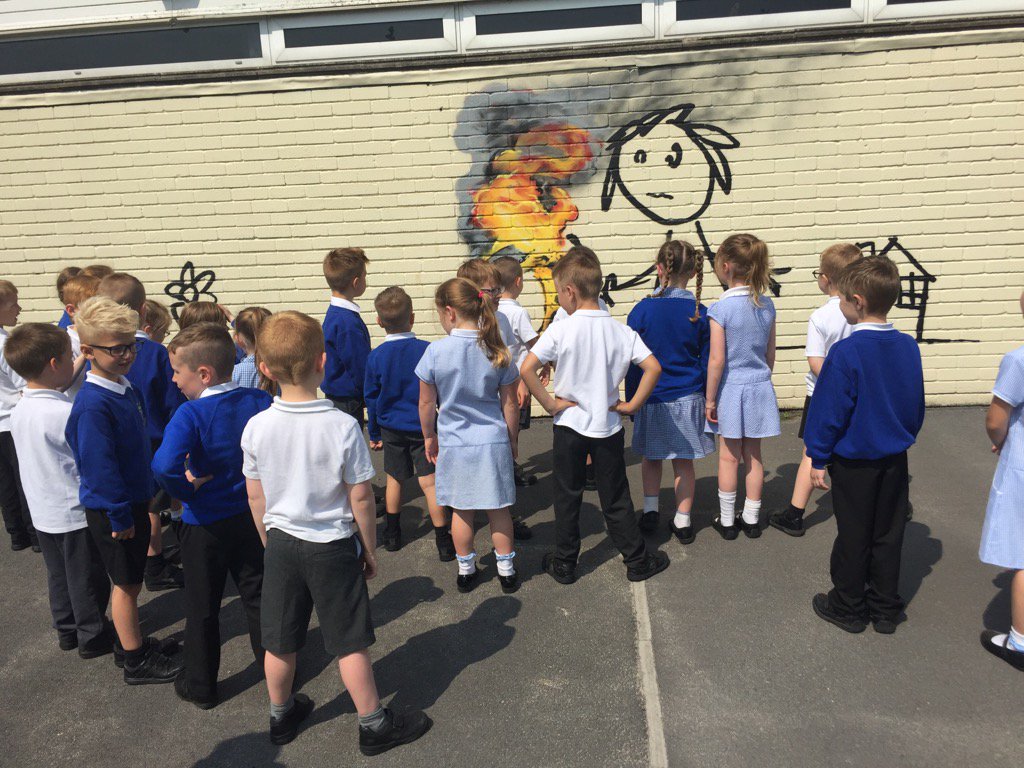
The circumstances of the mural are unusually well documented. Bridge Farm Primary had held a competition to rename its four school houses after notable Bristol figures, eventually choosing Isambard Kingdom Brunel, Blackbeard, John Cabot and Banksy. The pupils wrote to Banksy to tell him about the decision. During the May–June half-term holiday, Banksy secretly entered the school grounds and painted the mural on the side of a classroom. Staff discovered it at 6:55 a.m. on Monday, 6 June 2016, when they returned to school.
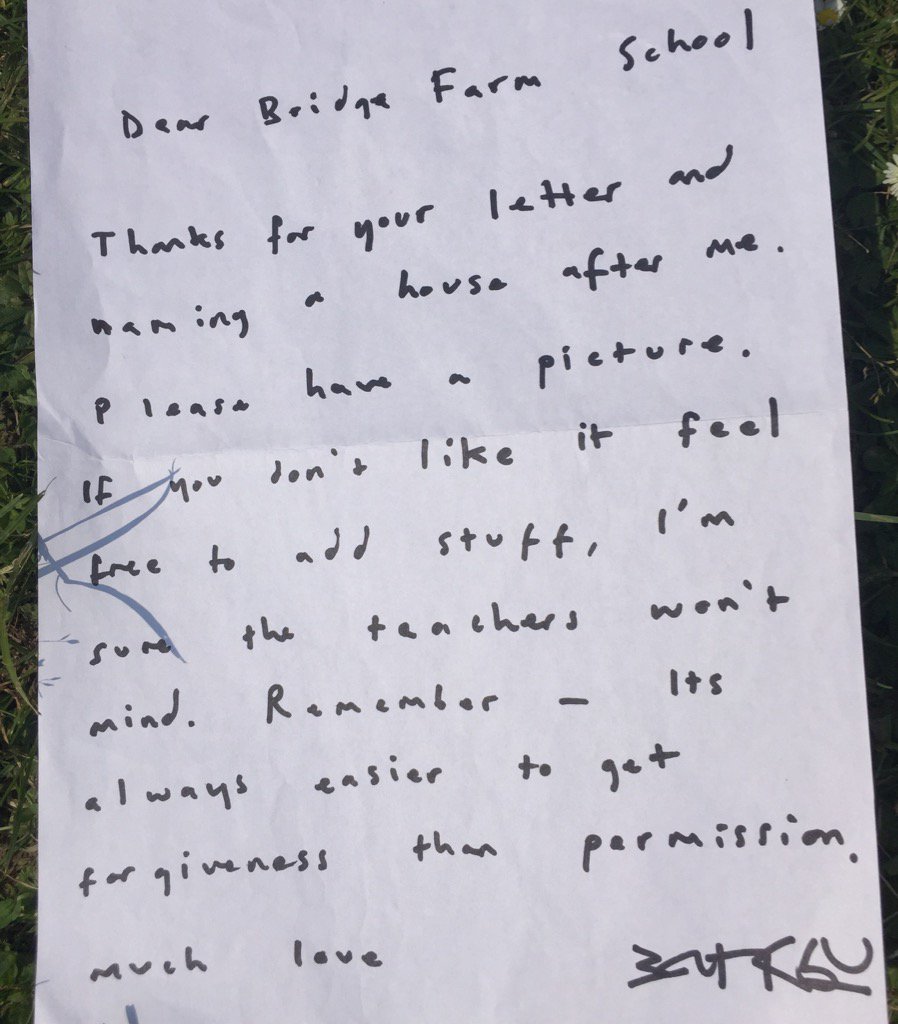
Banksy left a handwritten letter thanking the children for naming a house after him. More unusually, he explicitly invited them to alter the work if they wished, adding his characteristically subversive advice that “it’s always easier to get forgiveness than permission.”
That invitation is central to the work. Rather than presenting the mural as an untouchable Banksy to be passively admired, he offered it to children as something they could continue themselves. For an artist whose career was built upon making images without first asking permission, the message was particularly appropriate.
From Graffiti to School Lesson
There is a wonderful contradiction in Banksy painting on a primary school. The same act that elsewhere might be classified as vandalism becomes, in this setting, an educational gift. Even the caretaker initially thought the new graffiti would have to be removed before noticing Banksy's signature. The school subsequently decided to preserve the mural and protect it rather than sell it.
The work consequently reverses the normal relationship between children, schools and graffiti. Instead of teachers instructing pupils not to draw on walls, one of Bristol's most celebrated artists leaves them a drawing on their classroom—and effectively gives them permission to draw over his.
STAY INFORMED
Receive the latest news, exhibitions, artworks and market updates on Banksy.