LONDON’S UNDERGROUND UNDERGOES DEEP CLEAN, JULY 2020
If You Don’t Mask, You Don’t Get
On 14 July 2020, in the midst of the Covid-19 pandemic, Banksy released a short video showing a figure disguised as a London Underground cleaner entering a Circle Line train and covering the carriage with a new family of rats. Wearing a white protective suit, mask, goggles, gloves and a high-visibility vest marked “stay safe,” the artist carried cleaning equipment that concealed his stencils and spray paint. Passengers remained aboard while he worked.
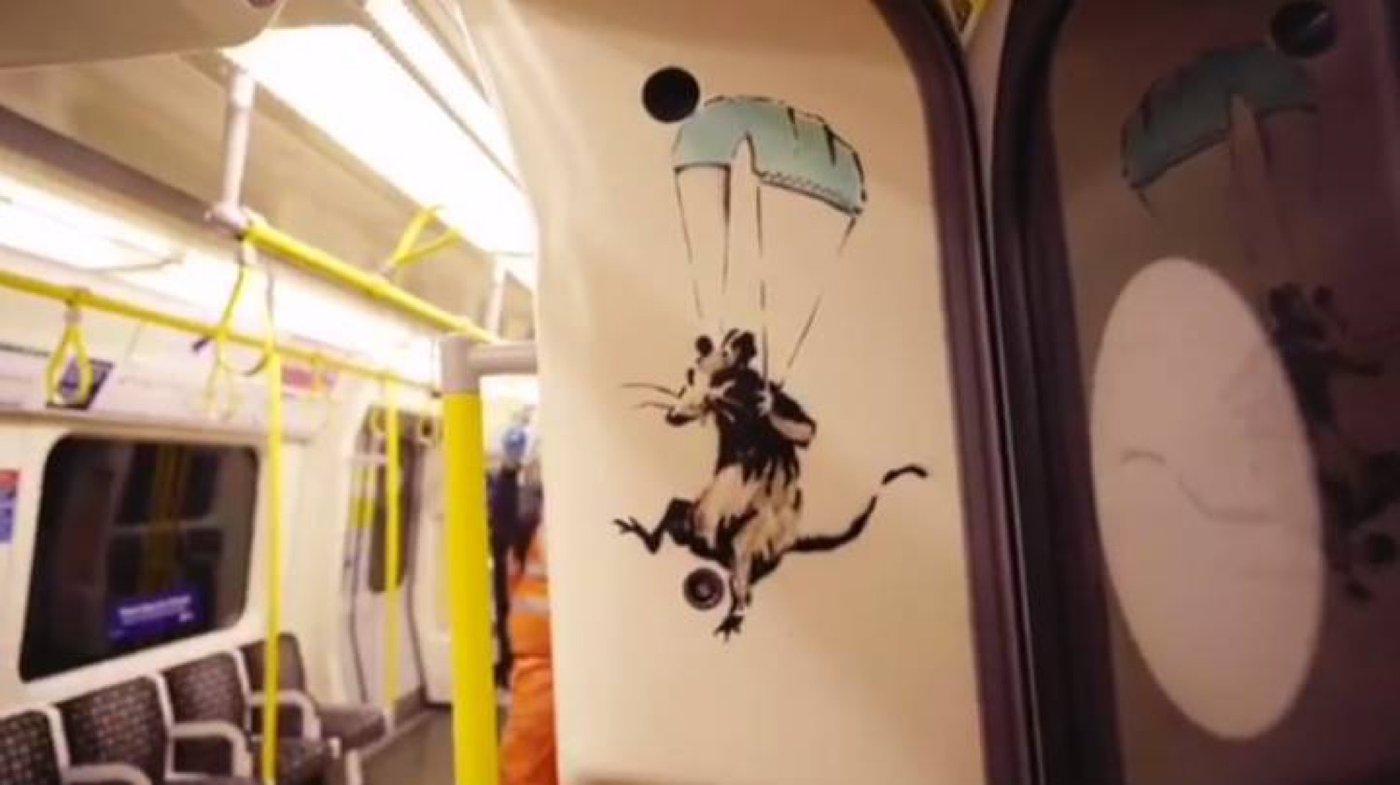
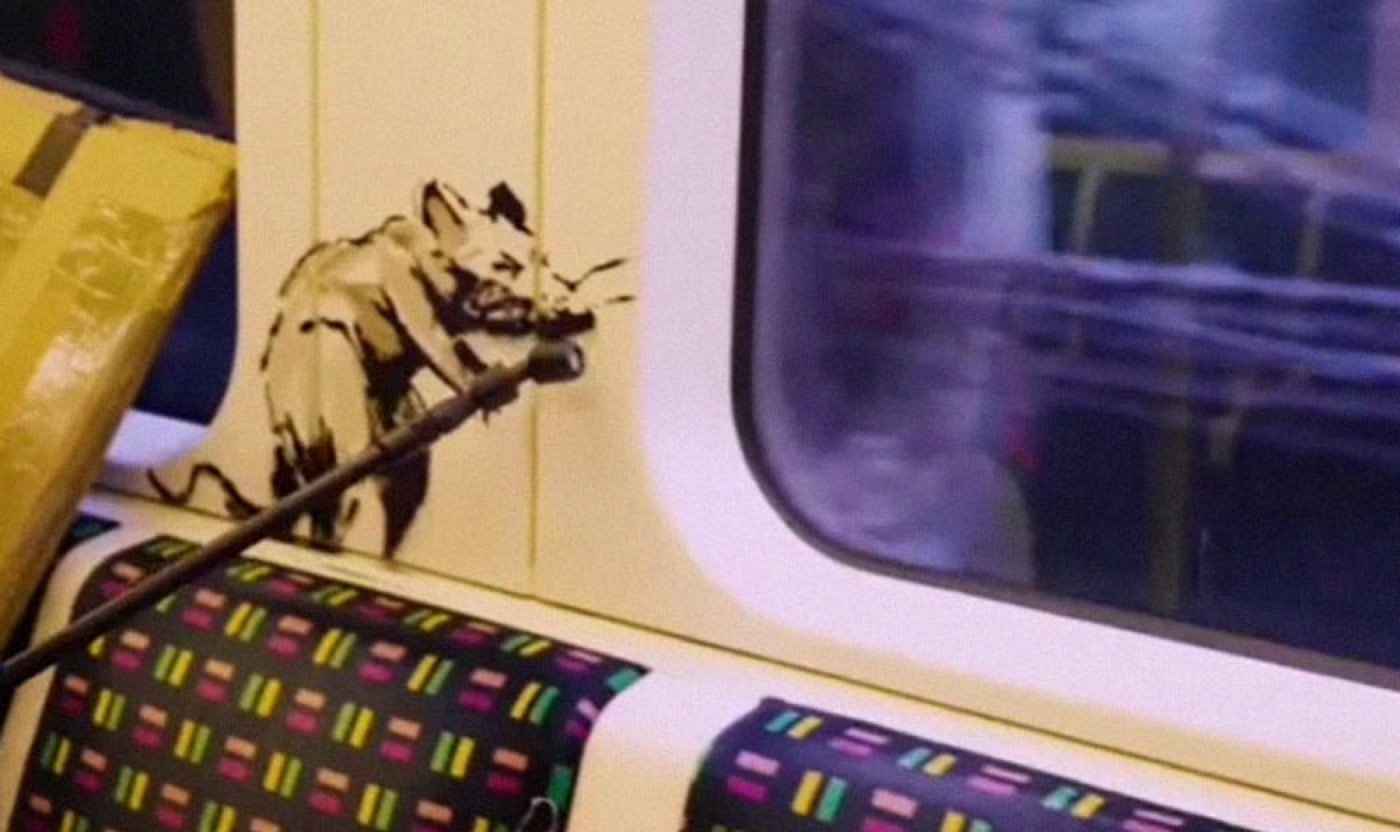
The intervention transformed the interior of the train into a miniature pandemic narrative. One rat sneezes violently across a window, its expelled droplets rendered as a long spray of colored paint. Another struggles with a face covering, while a rat descending by parachute uses a surgical mask as its canopy. Elsewhere, another carries hand sanitizer. Banksy accompanied the film with the caption “If you don’t mask – you don’t get,” making the encouragement to wear face coverings explicit.
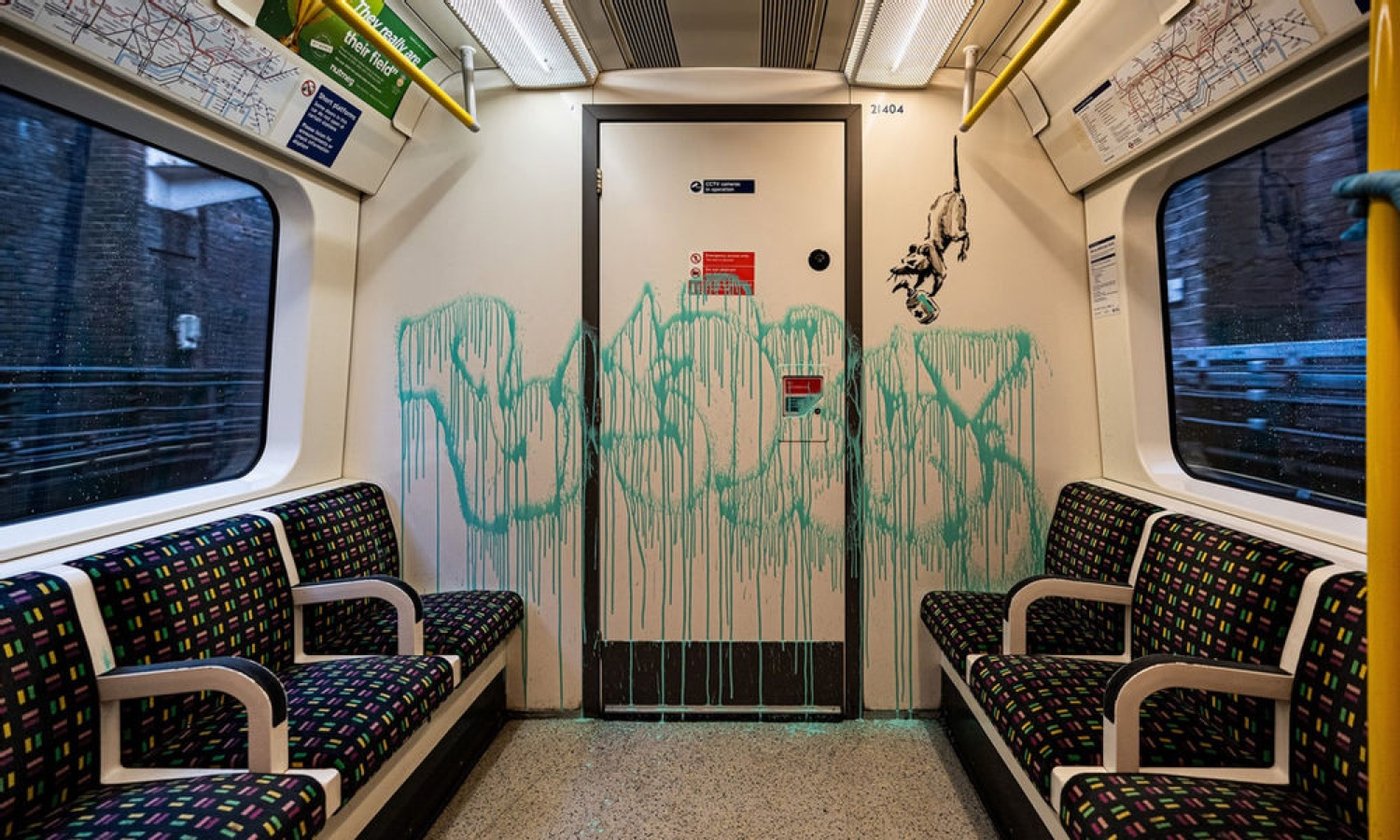
The rats were particularly well chosen. For two decades they had represented one of Banksy’s most persistent populations: ingenious, unwanted urban creatures living alongside humans and flourishing in spaces designed to exclude them. During the pandemic they acquired another association, recalling the long cultural history connecting rats with contagion and disease. Here, however, they behave very much like Londoners themselves, attempting—with varying degrees of success—to adapt to the new rules of public life.
The Underground Undergoes a Deep Clean
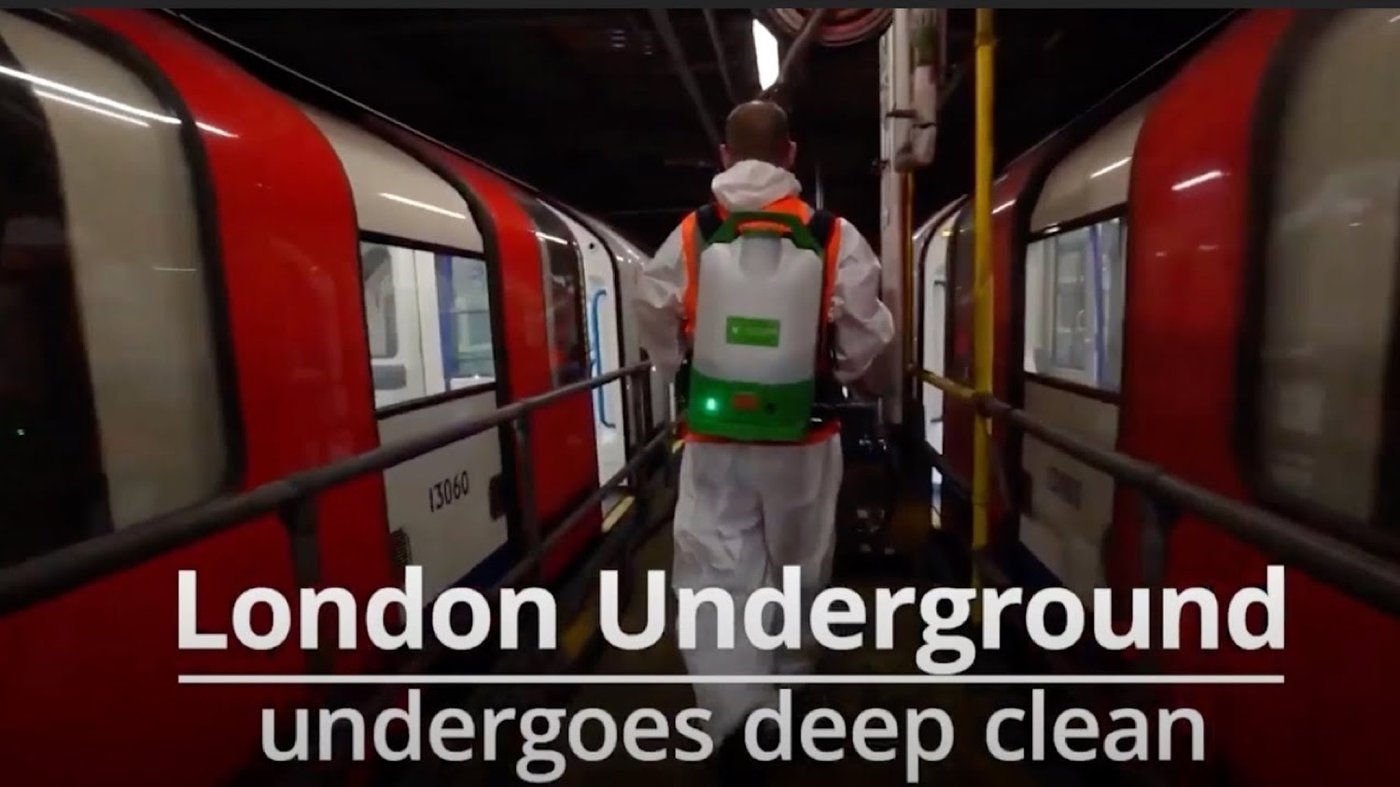
The performance was built around disguise. At a moment when transport systems were undergoing unprecedented cleaning regimes, Banksy was able to enter the Underground dressed as precisely the kind of worker passengers had become accustomed to seeing. The protective clothing that concealed his identity was also entirely appropriate to the public-health emergency he was addressing.
The film begins with footage of the Underground being disinfected before cutting to Banksy apparently conducting his own version of a “deep clean.” Instead of removing marks from the carriage, the supposed cleaner creates them. The reversal is characteristic of Banksy: sanitation becomes vandalism, cleaning equipment conceals spray paint, and the person apparently responsible for keeping the train spotless is actually covering it with rats.
At the end of the film, the intervention expands beyond the rats. Banksy sprays “I GET LOCKDOWN” on the station wall; as the train doors close, the words “BUT I GET UP AGAIN” complete the joke, while Chumbawamba’s 1997 anthem Tubthumping plays on the soundtrack. The familiar lyric about being knocked down and getting up again is transformed into a compact expression of pandemic resilience.
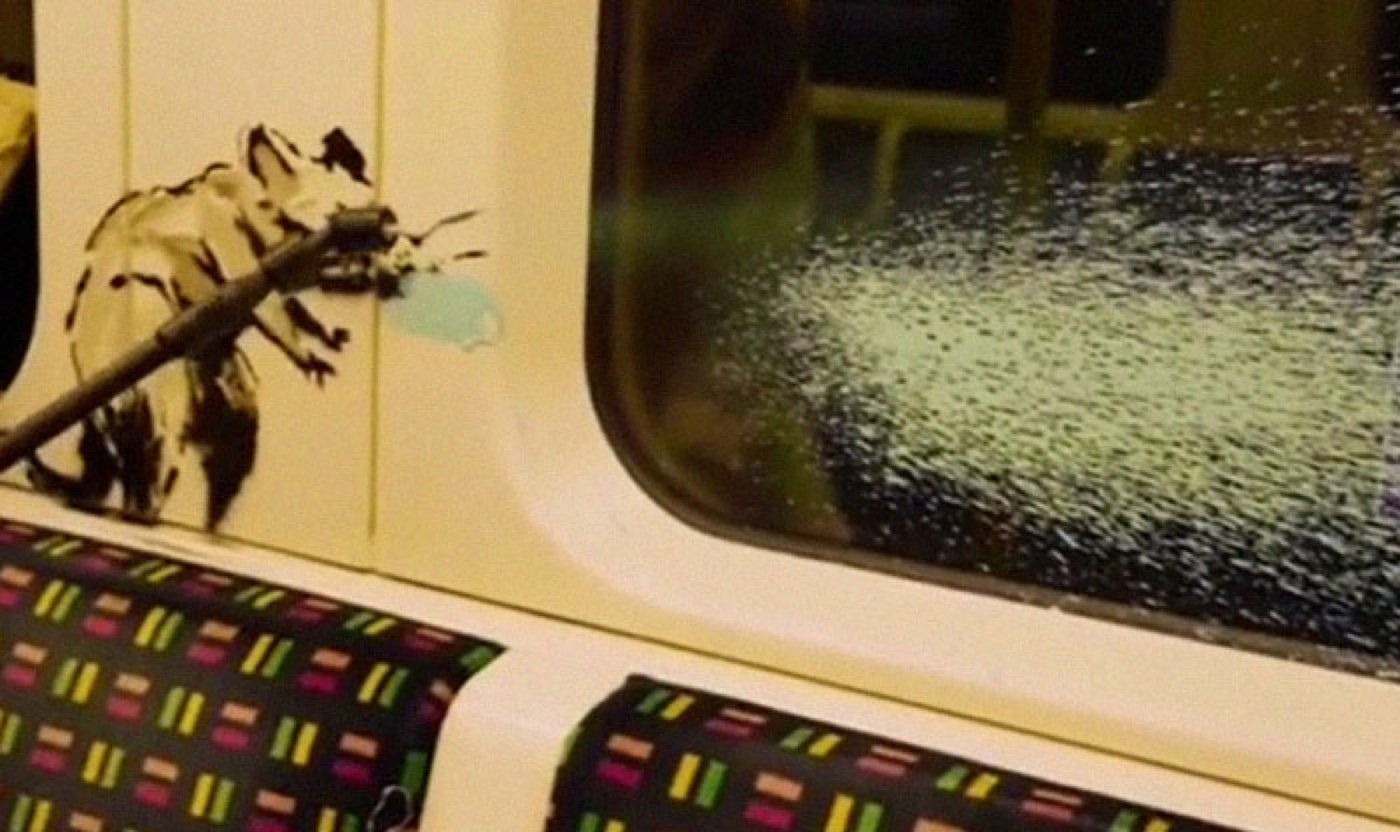
The timing gave the intervention additional relevance. Face coverings had already become compulsory on public transport in England in June, and on the same day Banksy released his video the government confirmed that they would also become mandatory in shops and supermarkets from 24 July. The work therefore appeared in the middle of an active national debate over masks, individual behavior and collective responsibility.
Cleaned Before Anyone Knew
The prank acquired its final irony before Banksy had even revealed it. Transport for London cleaners had already removed the rats from the carriage under the network’s strict anti-graffiti policy. TfL later explained that it appreciated the message encouraging passengers to wear face coverings and offered Banksy the opportunity to recreate it in a “suitable location.”
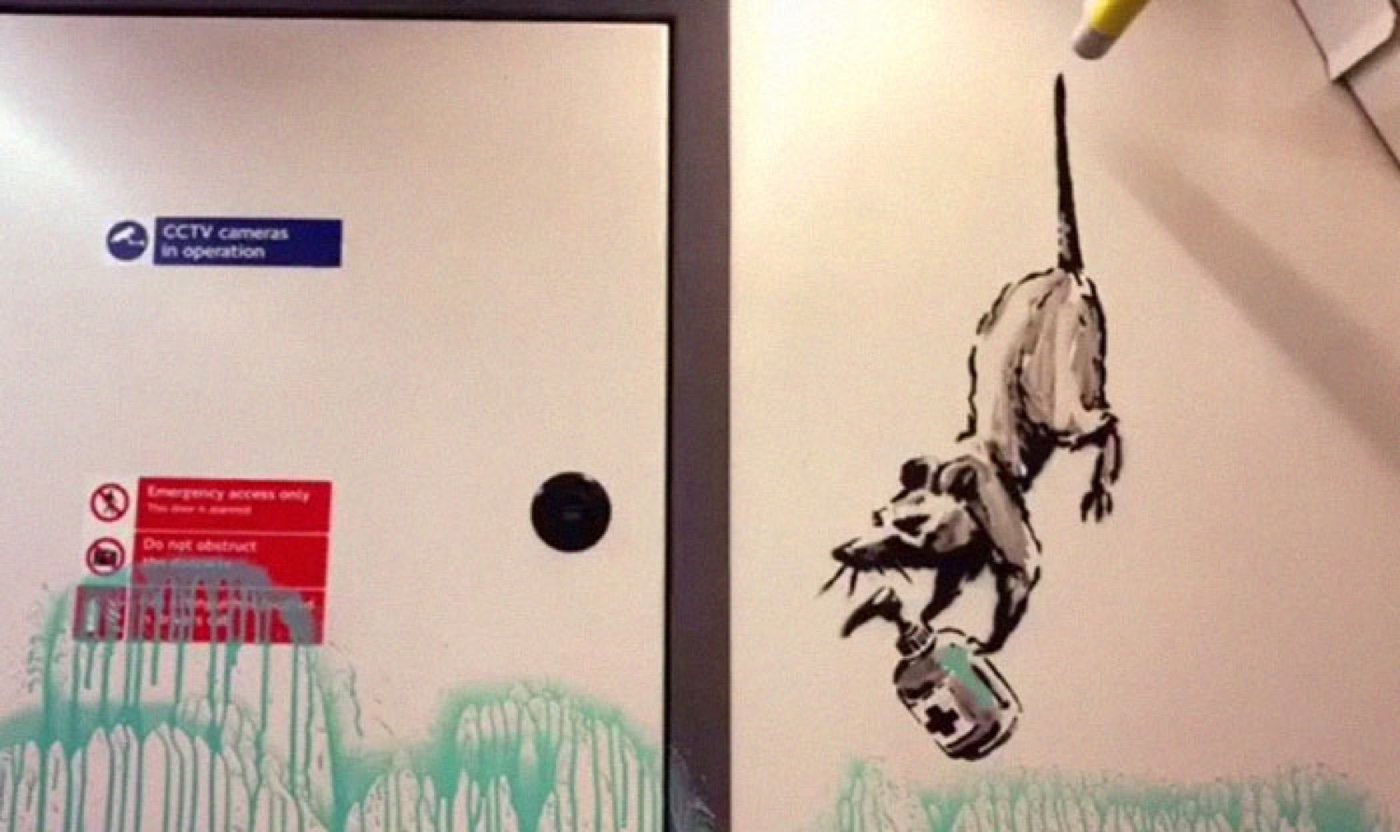
A subsequent Freedom of Information request established that there had been no communication between Banksy and TfL concerning the intervention, confirming its unauthorized character. The cleaners therefore had no reason to distinguish the images from other graffiti encountered on the network.
That sequence makes the removal an unusually appropriate conclusion. Banksy had disguised himself as a cleaner to cover an Underground carriage with graffiti while making a film about a “deep clean”; actual cleaners subsequently arrived and cleaned away what the fake cleaner had painted.
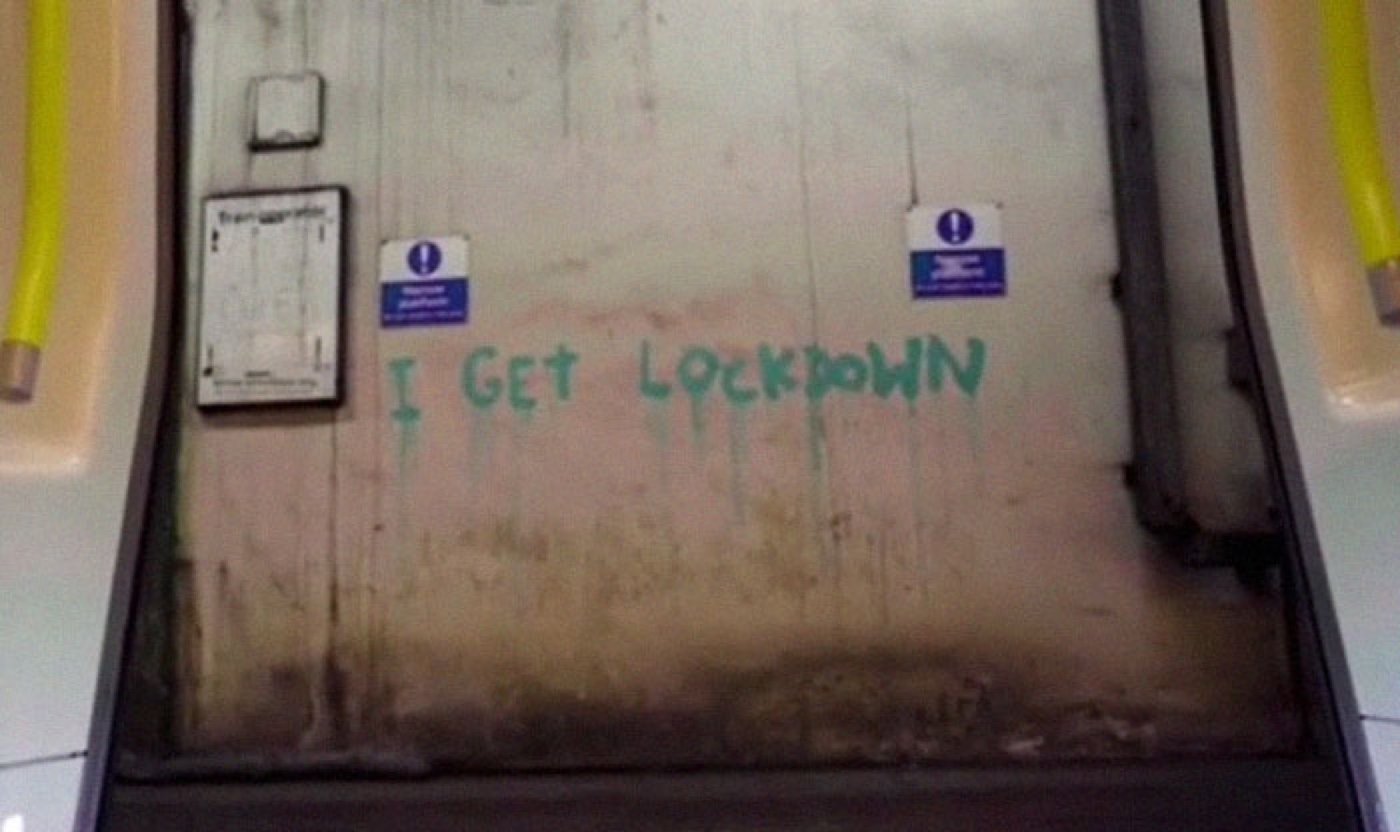
The incident also reproduced one of the central contradictions running throughout Banksy’s career. Once his authorship is known, an unauthorized mark can become something institutions protect and the public travels to see. Before that recognition occurs, it remains vulnerable to precisely the systems designed to remove graffiti. In this instance, TfL’s cleaners encountered the work before the art world did and simply performed the job Banksy had been pretending to perform.
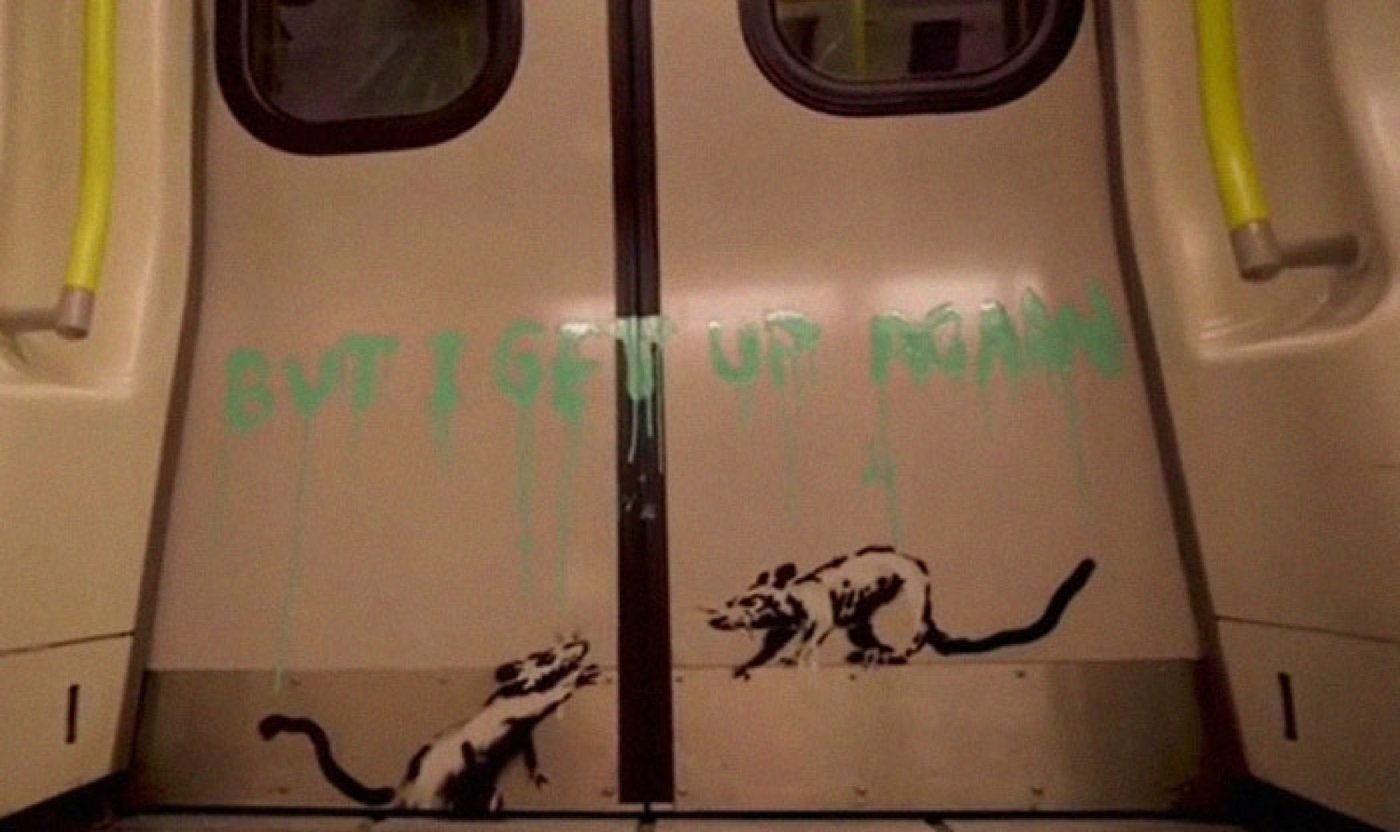
London Underground Undergoes Deep Clean consequently worked as much as a performance as a collection of stencils. The disguise, passengers, moving train, rats, pandemic restrictions, subsequent cleaning and online film were all parts of the intervention. The physical artwork lasted only briefly, but its disappearance completed Banksy’s joke with an efficiency he could scarcely have planned himself.
STAY INFORMED
Receive the latest news, exhibitions, artworks and market updates on Banksy.