MIGRANT'S SOUP KITCHEN
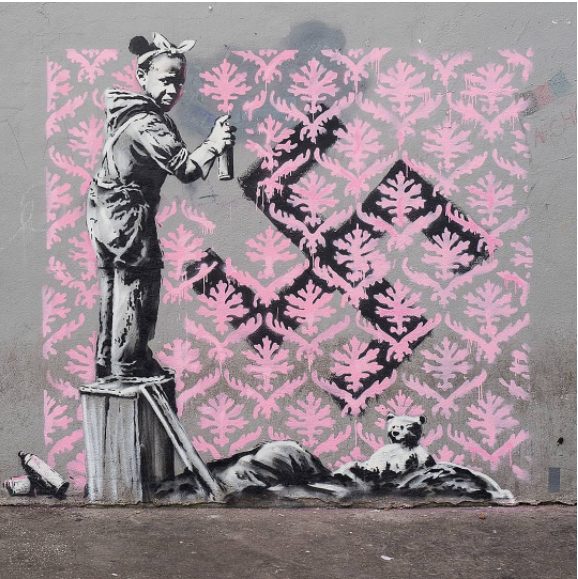
Migrant’s Soup Kitchen
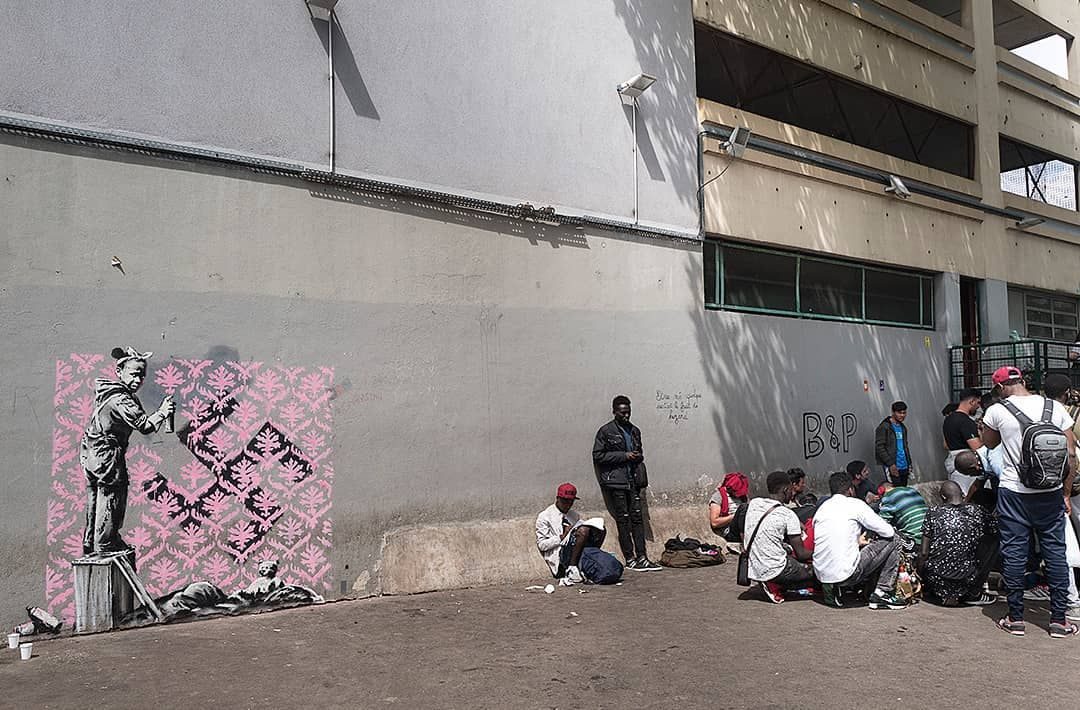
On 20 June 2018, World Refugee Day, the first of a group of new Banksy works began appearing across Paris. At Porte de la Chapelle, a young Black girl stands beside a large pink swastika, holding a paint roller and a roll of patterned wallpaper. Rather than simply painting over the Nazi symbol, she is covering it with an elegant pink damask pattern, transforming an emblem of hatred into domestic decoration.
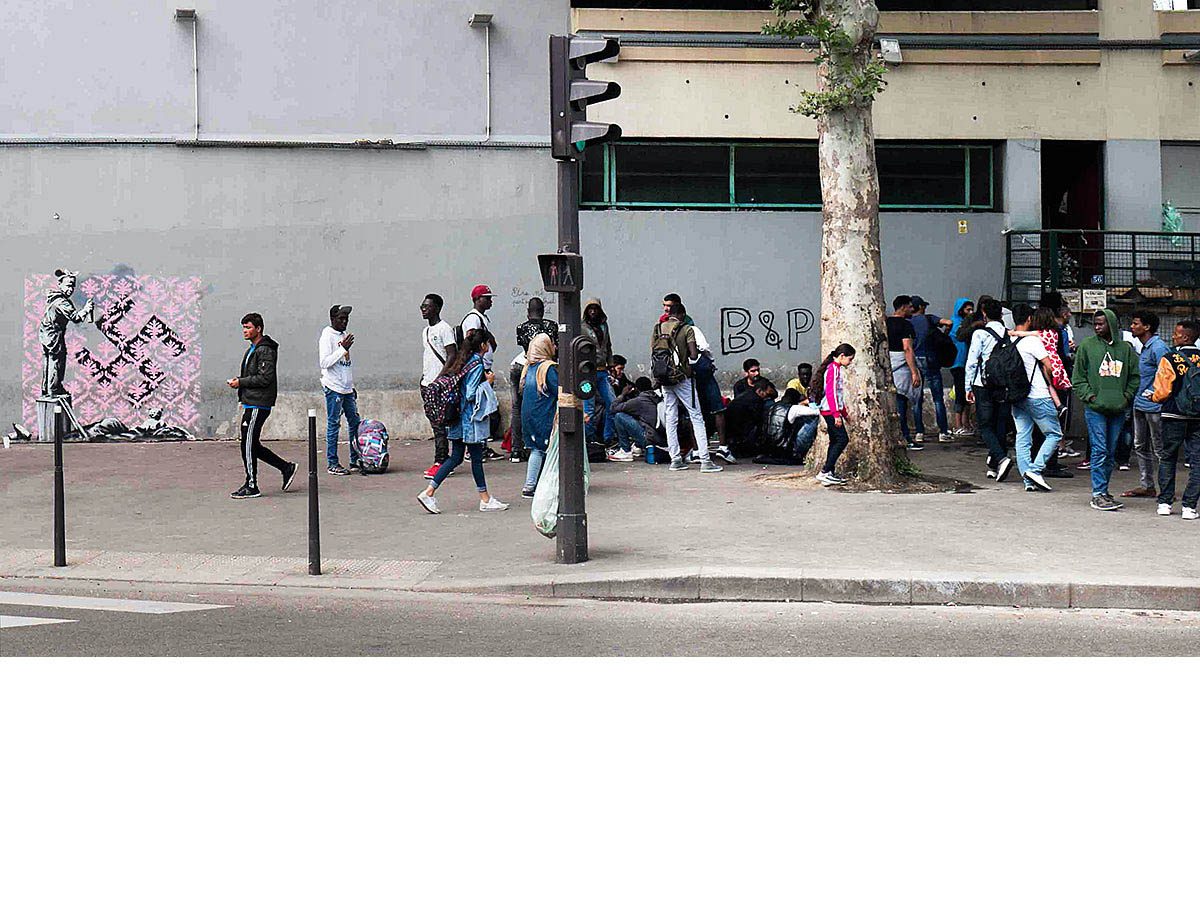
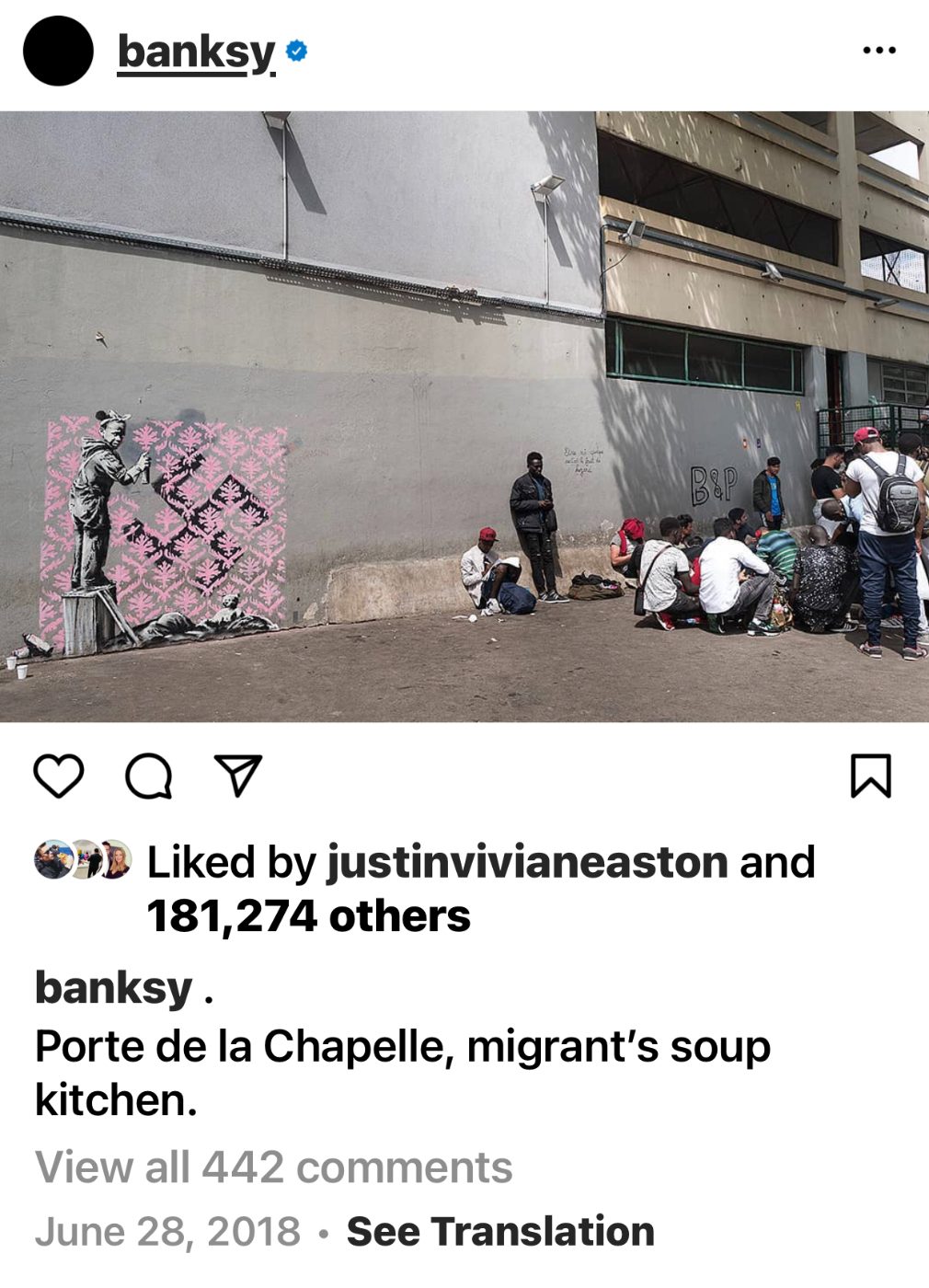
The location was crucial. Porte de la Chapelle had become one of the most visible sites of the Paris migrant and refugee crisis, with makeshift camps repeatedly forming around the area following the closure of larger camps elsewhere in the city. The mural appeared close to a former refugee reception centre only days after hundreds of migrants had again been evacuated from camps in northern Paris.
Covering Hatred
The image is deceptively gentle. A child performs the ordinary domestic task of hanging wallpaper, yet what she is covering is one of the twentieth century's most recognizable symbols of racial hatred and persecution. Banksy does not show her violently destroying it. Instead, she patiently replaces it with something decorative.
There is an ambiguity to the gesture. Wallpaper conceals what lies underneath without necessarily removing it. The swastika remains present beneath the new surface. The work can therefore be read both as an image of hope—the next generation covering hatred with something better—and as a warning about societies that merely paper over racism without eliminating it.
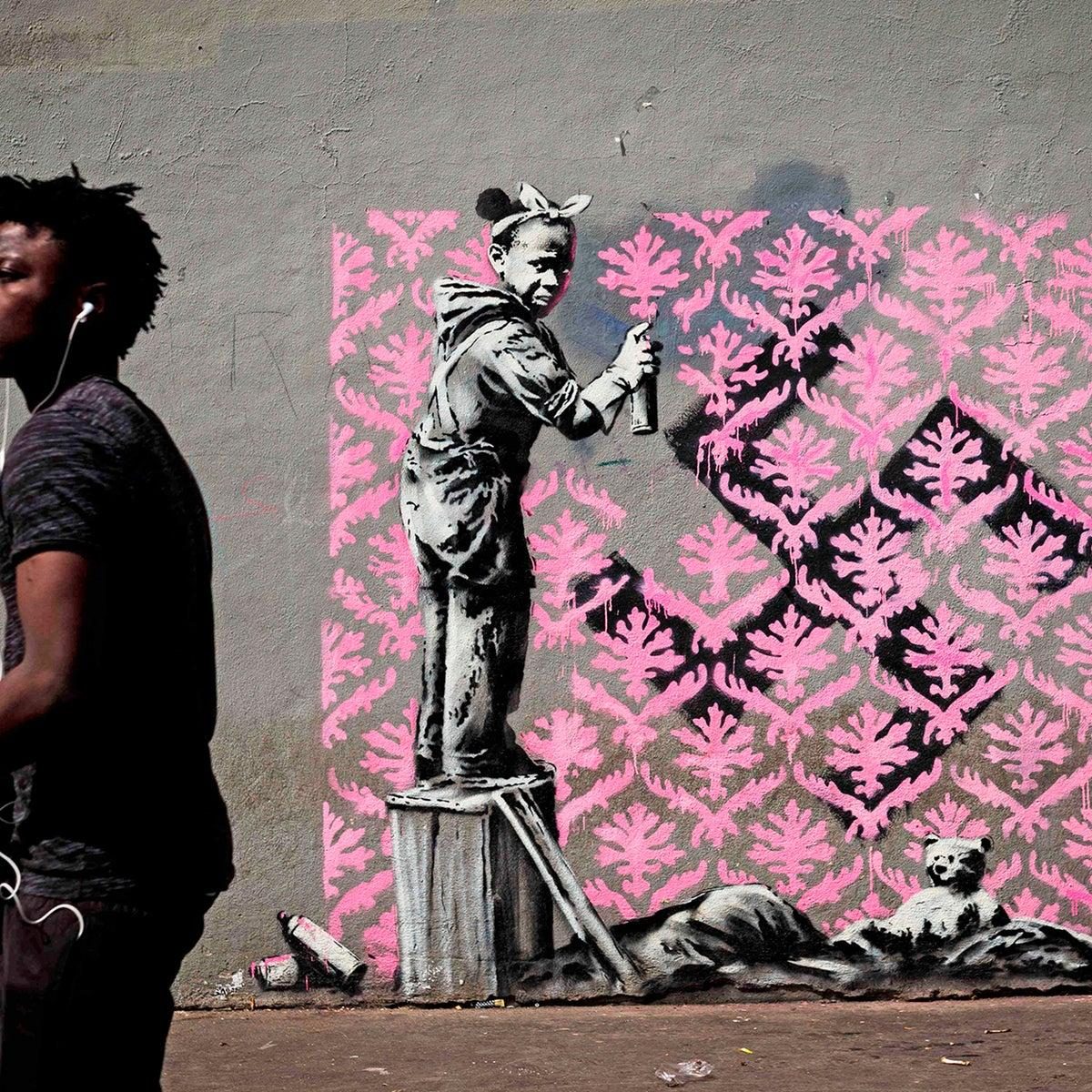
The girl's ethnicity and the location beside one of Paris's principal migrant encampments make that tension impossible to separate from contemporary immigration politics. Banksy's intervention addressed not an abstract historical racism, but the treatment of displaced people arriving in Europe in the present.
Banksy in Paris
The mural marked the beginning of an extraordinary sequence of interventions that appeared around Paris during the following days. Banksy subsequently confirmed the works on 26 June, posting the Porte de la Chapelle image with the words “50 years since the uprising in Paris 1968. The birthplace of modern stencil art.”
The reference connected two moments in Parisian history. May 1968 had transformed the city's walls into instruments of political communication through posters, slogans and rapidly reproducible stencil imagery. Fifty years later, Banksy returned to those same techniques to address migration, racism, capitalism and political power.
The mural's simplicity gives it its force. Banksy's child cannot erase what has already been painted on the wall. She can only decide what to put over it.
STAY INFORMED
Receive the latest news, exhibitions, artworks and market updates on Banksy.