MY WIFE HATES IT WHEN I WORK FROM HOME, APRIL 2020
Banksy in Lockdown
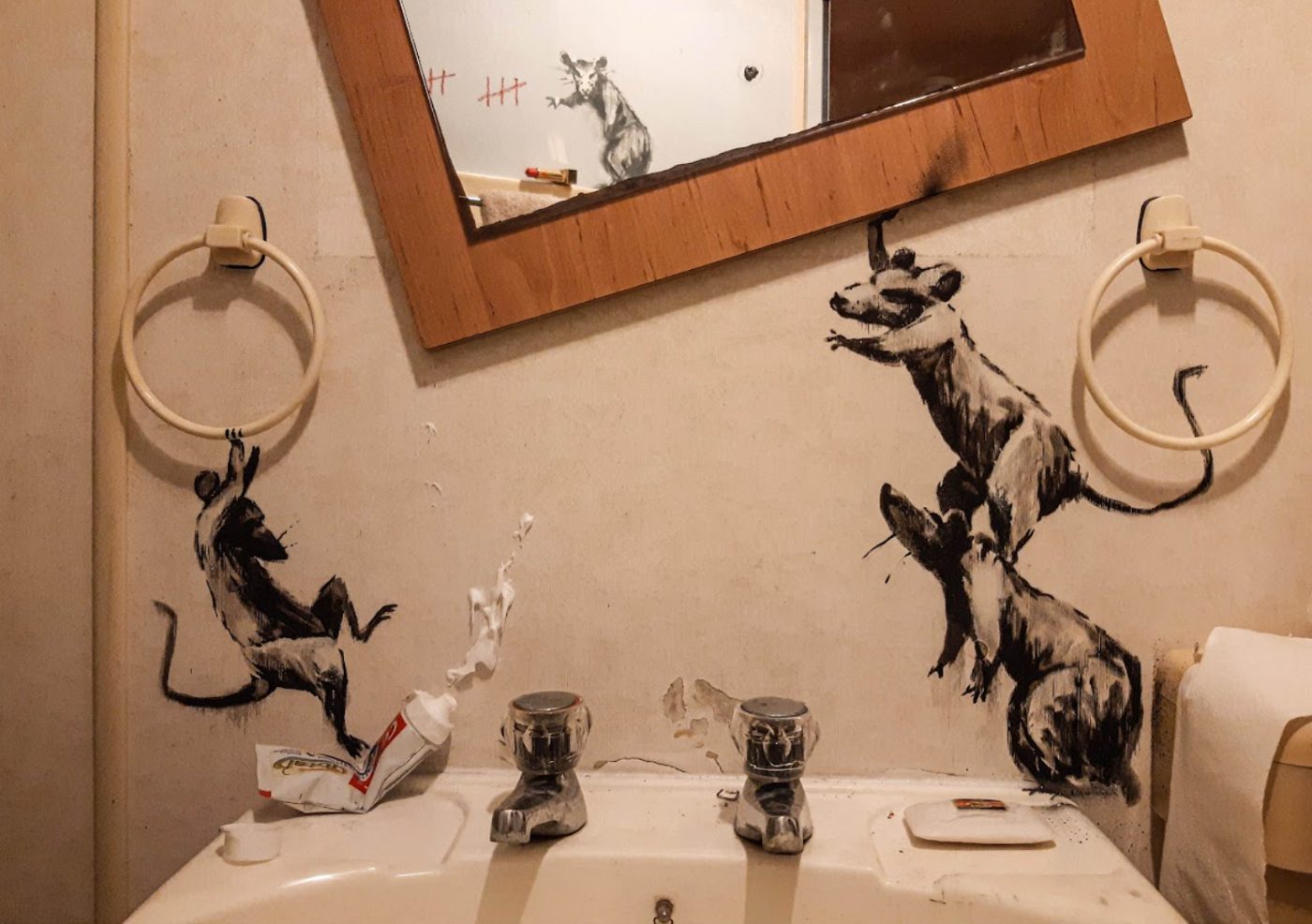
On 15 April 2020, less than a month after Britain entered its first national Covid-19 lockdown, Banksy revealed an unexpected new work. Unable—or at least officially discouraged—from working in the streets, the artist turned instead to a bathroom, covering the small domestic space with a colony of rats engaged in increasingly destructive activities.
“My wife hates it when I work from home.”
The joke responded immediately to one of the defining experiences of the first lockdown. Millions of people had suddenly been confined to their homes and were attempting to transform bedrooms, kitchens and dining tables into workplaces. Banksy, whose practice depended upon moving anonymously through public space and painting other people's walls, presented his own version of working remotely: if he could not go out to vandalize the city, he would vandalize the bathroom instead.
When the Rats Take Over
The installation spreads across virtually every part of the room. Nine rats climb, swing, run and misbehave among the bathroom fittings. One urinates against the toilet seat; another runs along a roll of toilet paper, unraveling it across the floor. A rat squeezes toothpaste violently from a crushed tube, while another leaps towards toothbrushes on a shelf. Others hang from towel rings, climb around the mirror and occupy spaces that appear almost inaccessible. Reflected in the tilted mirror, another rat marks the passing days on the wall in red lipstick.
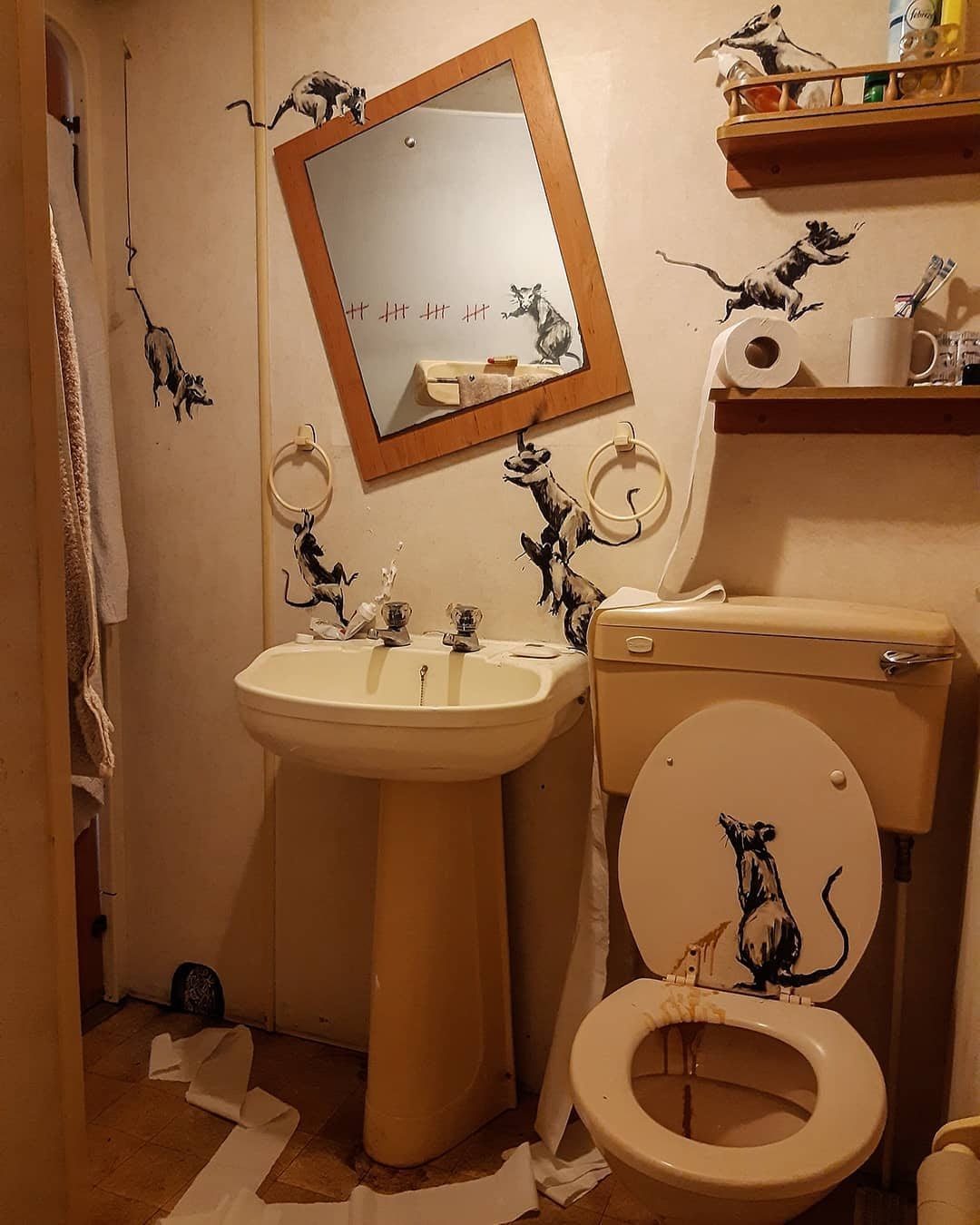
Banksy carefully integrates the painted animals with real objects. The rats do not simply sit on the walls as independent stencils: their actions appear to explain the physical disorder of the bathroom. Toilet paper spills onto the floor because a rat has been running across it; toothpaste erupts from its tube because another rat is using the towel ring as a swing; the mirror hangs crooked because rats appear to have disturbed it. Paint, objects and architecture operate together as a single comic environment.
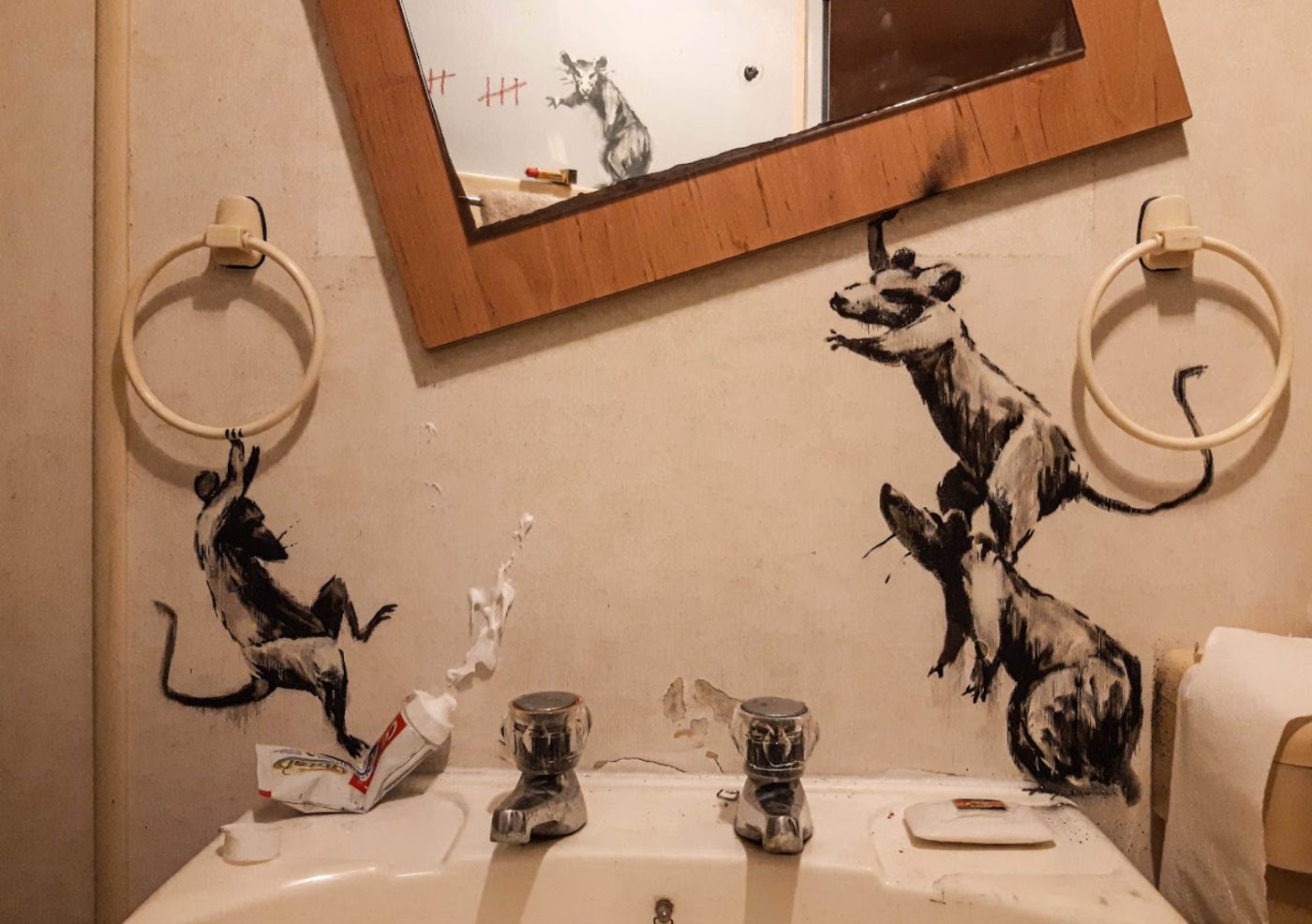
The photographs are therefore fundamental to the work. Banksy controls the angles from which the installation is encountered, allowing each image to reveal another piece of the infestation before the wider view exposes the scale of the chaos. The bathroom becomes a miniature stage on which his familiar rats have temporarily taken control.
Rats in Quarantine
Rats had been central to Banksy's vocabulary since the earliest years of his career. Resourceful, unwanted and almost impossible to eliminate, they offered an obvious surrogate for graffiti writers: creatures living within the city while refusing to respect the systems created to control them. Banksy once acknowledged the debt these images owed to the French stencil pioneer Blek le Rat, while developing the animal into one of his most recognizable recurring characters.
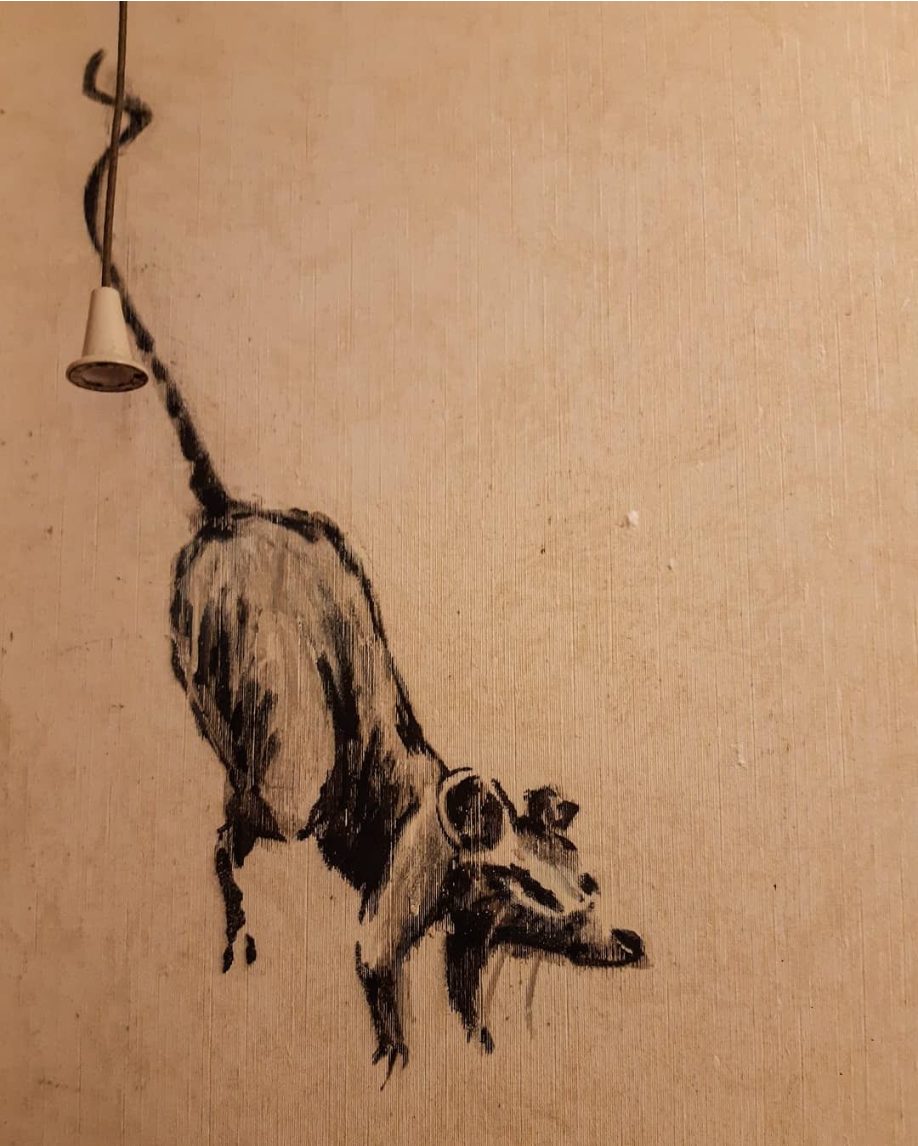
In April 2020, however, the rats acquired a new resonance. Human beings were confined indoors while streets across Britain stood unusually empty. Banksy's urban outsiders had moved inside as well, but rather than submitting quietly to confinement they responded with manic activity. The result resembles a household succumbing to cabin fever.
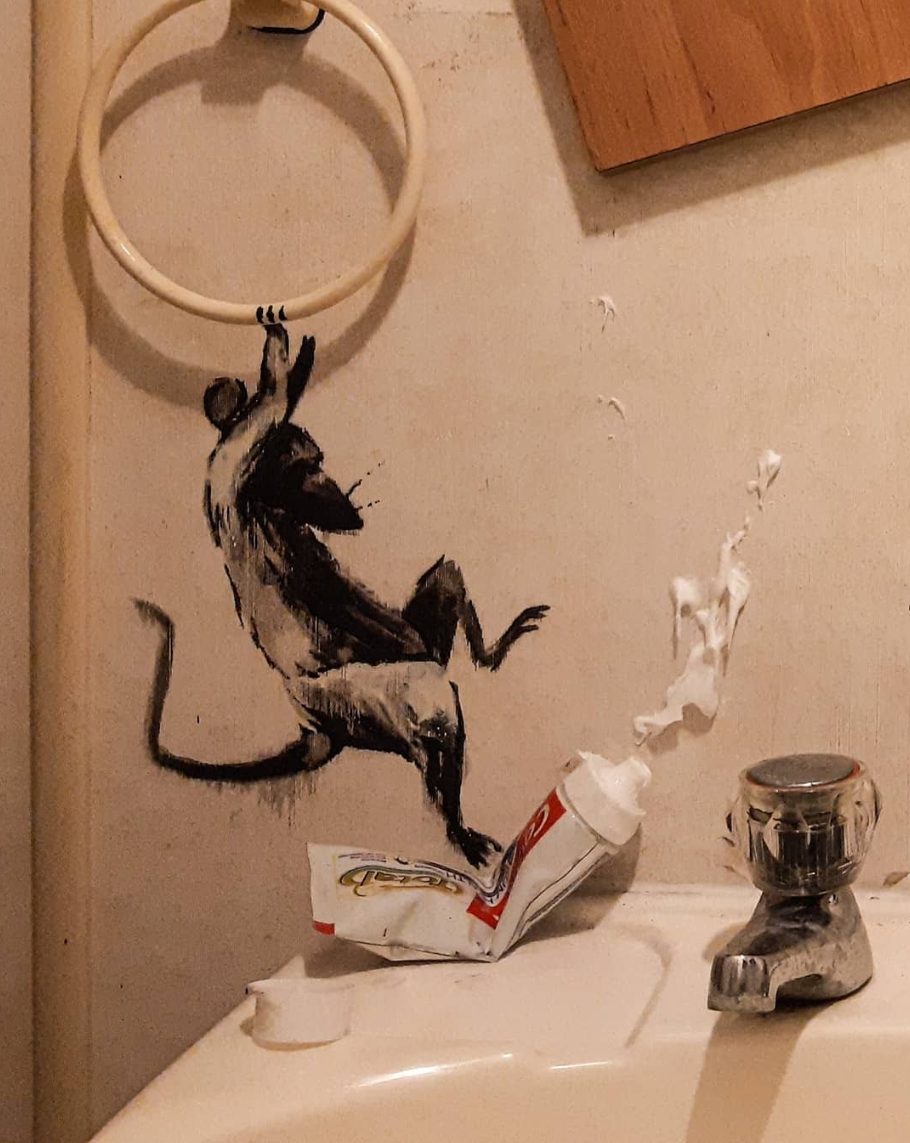
Several details also belonged unmistakably to the early pandemic. The rat counting days on the wall evokes the strange suspension of time experienced during lockdown, while the extravagant waste of toilet paper carried particular comic force after panic buying had emptied supermarket shelves of the product during the first weeks of the crisis. Contemporary coverage immediately recognized both references.
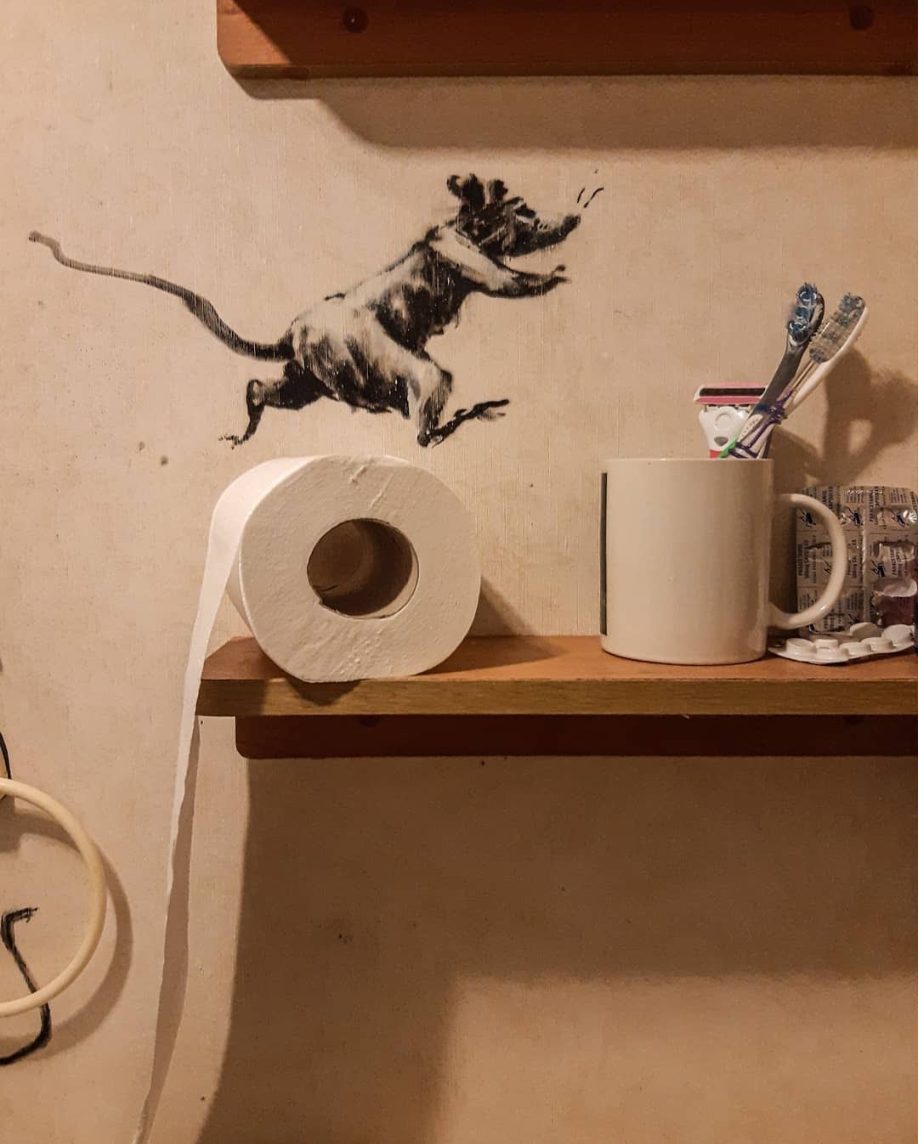
Yet the work avoids treating the pandemic itself as a joke. There are no images of illness, hospitals or death. Banksy instead focuses on the absurd domestic consequences of confinement: boredom, disorder, irritation and the difficulty of living and working continuously within the same limited space.
From the Street to the Bathroom
The setting also produced an unusual reversal in Banksy's practice. His street works normally introduce private artistic decisions into public space without permission. Here, the same visual language was transferred into what Banksy presented as the most private of environments. A bathroom became a temporary piece of street art turned inside out.
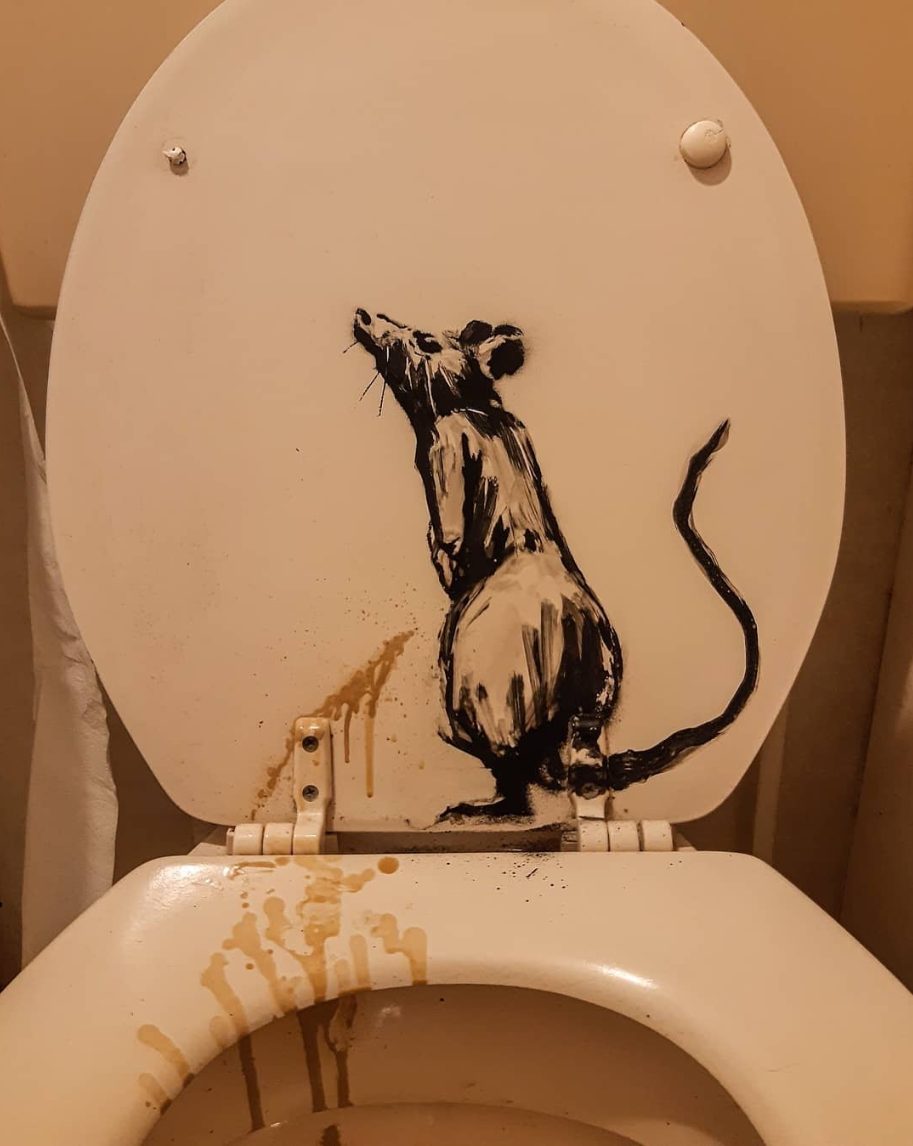
Even the caption plays with Banksy's carefully maintained anonymity. The casual reference to “my wife” offers an apparently intimate glimpse into a private life about which almost nothing is publicly confirmed, while simultaneously sounding so perfectly constructed as a joke that it reveals virtually nothing at all. Contemporary reporting accordingly treated the statement with caution rather than as biographical confirmation.
The installation ultimately demonstrated how readily Banksy's practice could survive the loss of the street. The essential mechanism remained unchanged: identify an existing environment, introduce a handful of precisely positioned images, and allow the physical surroundings to complete the joke. Only the territory had changed. During a period when much of the world had been instructed to stay home, Banksy's rats followed him indoors and turned the bathroom into their street.
STAY INFORMED
Receive the latest news, exhibitions, artworks and market updates on Banksy.