NICOLAS POUSSIN
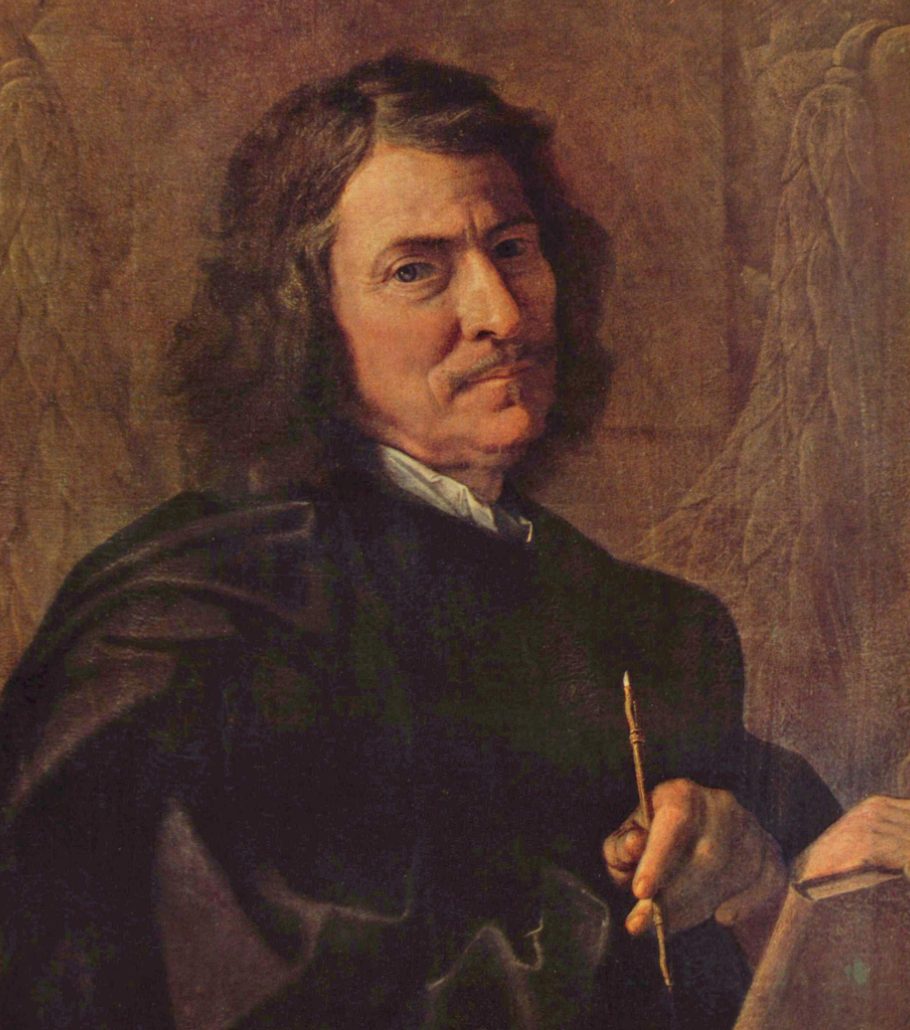
The Master of French Classicism
Nicolas Poussin (1594–1665) was one of the most important French painters of the seventeenth century and a central figure in the development of European classical painting. Although French, he spent most of his working life in Rome, where he immersed himself in the art, architecture and literature of antiquity and the Renaissance.
Poussin believed that painting should appeal to the mind as much as to the eye. His carefully constructed compositions drew upon history, mythology and the Bible, with figures arranged almost as actors upon a stage. Landscape also became increasingly important in his work, providing an idealized and harmonious setting for stories concerned with human nature, morality and fate.
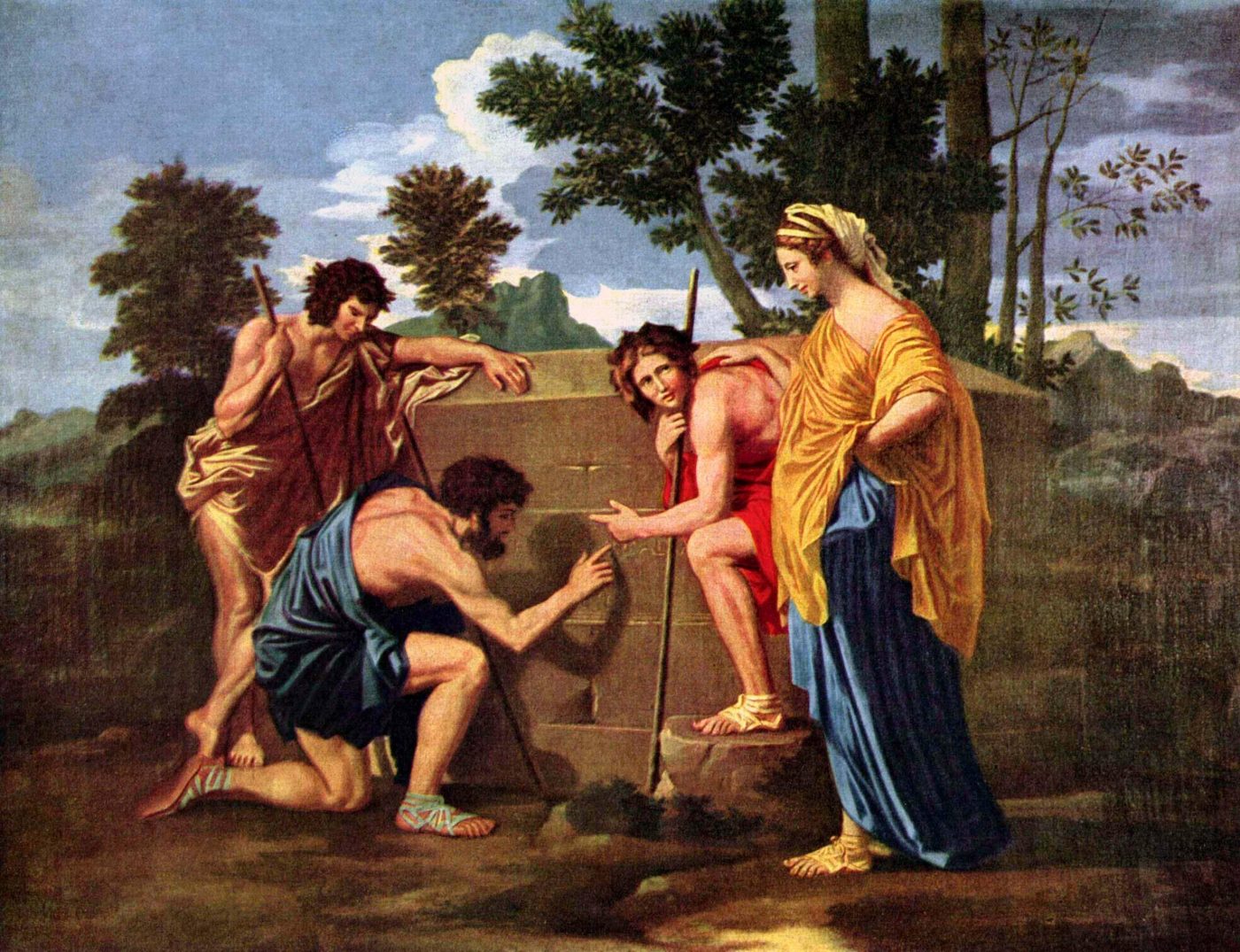
His most famous masterpiece is Et in Arcadia Ego, also known as Les Bergers d'Arcadie, painted around 1637–38 and now in the Louvre. Four figures gathered in an idyllic landscape contemplate a tomb inscribed with the mysterious Latin phrase Et in Arcadia ego. The painting is generally understood as a meditation on mortality: even in Arcadia, the mythical land of pastoral happiness, death is present.
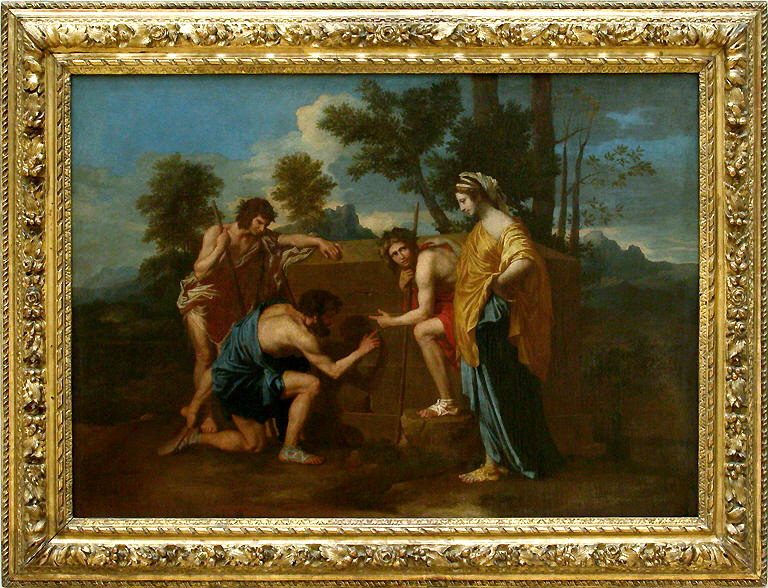
Discover Les Bergers d'Arcadie at the Musee du Louvre
It perfectly encapsulates Poussin's art—beautiful, controlled and classical on the surface, but filled with ideas underneath.
The Flight into Egypt
It was another of Poussin's paintings, however, that would attract Banksy's attention more than three centuries later.
The Flight into Egypt, painted around 1657–58 and today in the Musée des Beaux-Arts de Lyon, illustrates an episode from the Gospel of Matthew. After the birth of Jesus, Joseph is warned in a dream that King Herod intends to kill the child. He takes Mary and the infant Jesus and flees with them to Egypt, where they remain until the danger has passed.
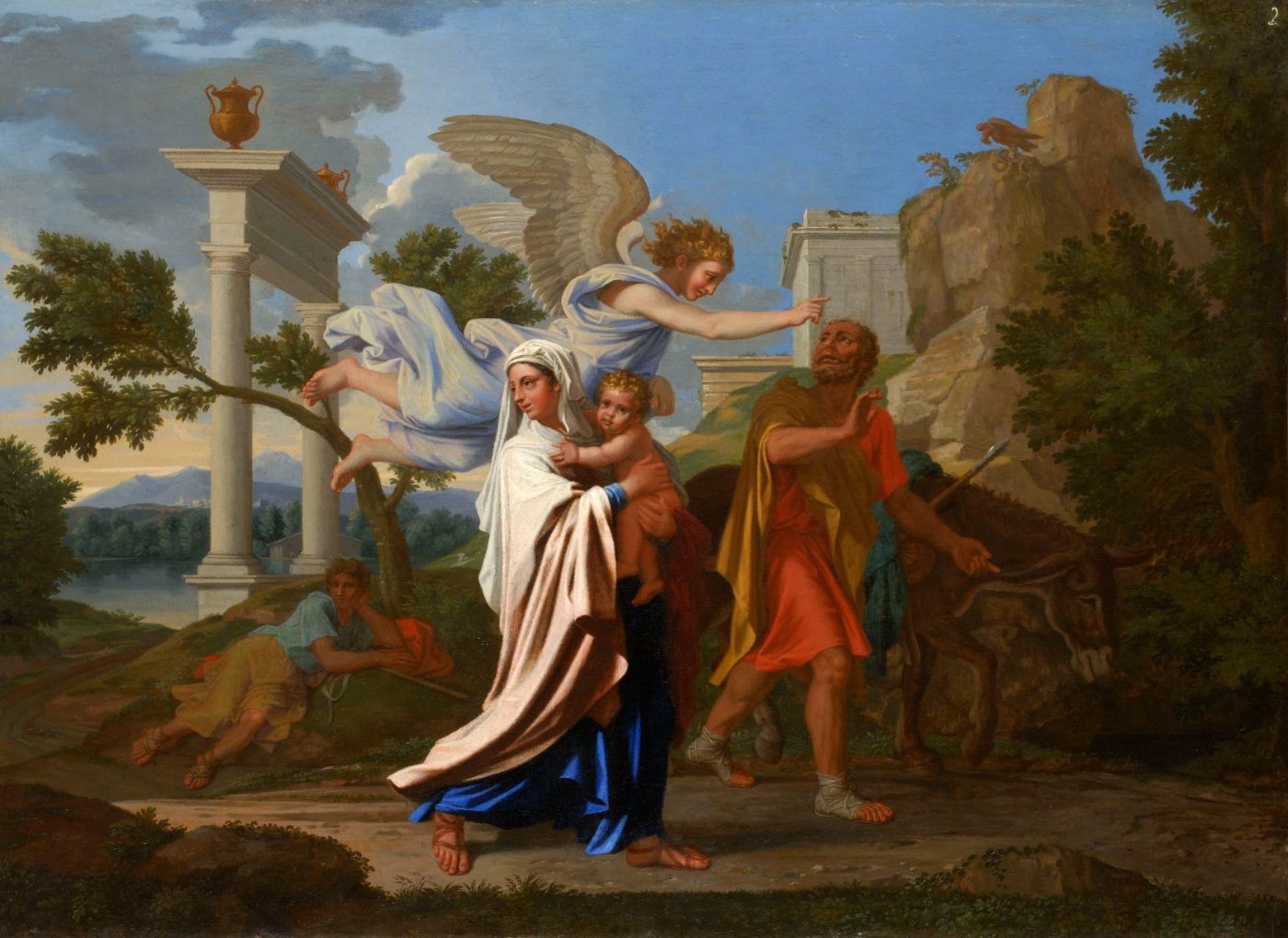
The subject became one of the great recurring themes of Christian art. Behind the apparently peaceful image of a family travelling through a landscape lies a story of persecution and forced migration: Mary, Joseph and Jesus are fleeing their home to save the life of their child.
Discover La Fuite en Egypte in Musee des Beaux-Arts de Lyon
Poussin places this dramatic story within an expansive classical landscape. The Holy Family appears relatively small within a larger, carefully ordered world of trees, architecture and distant space. More than three centuries later, Banksy introduced something Poussin could hardly have anticipated. An easyJet billboard.
Banksy's Low-Cost Flight
In Flight into Egypt (Low Cost), created in 2009, Banksy inserts a large orange easyJet advertisement into Poussin's seventeenth-century landscape. A worker stands on a ladder installing the billboard while the biblical journey continues behind it.
The intervention is wonderfully simple. A sacred story about a family fleeing persecution suddenly shares its landscape with the language of cheap commercial air travel.
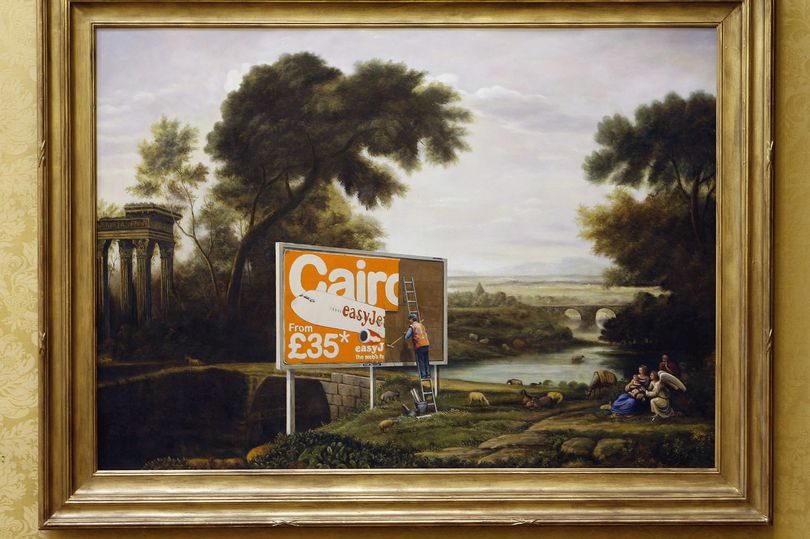
The word “flight” now carries two completely different meanings. For the Holy Family, flight means escape from danger. In the world of the advertisement, it means booking an inexpensive journey. That contrast is at the heart of Banksy's reinterpretation.
Refugees and Tourists
Banksy's intervention introduces a distinctly contemporary distinction between two kinds of travel. The modern tourist chooses to leave home, selects a destination and buys a ticket. The Holy Family has no such choice. Their journey is dictated by fear and necessity.
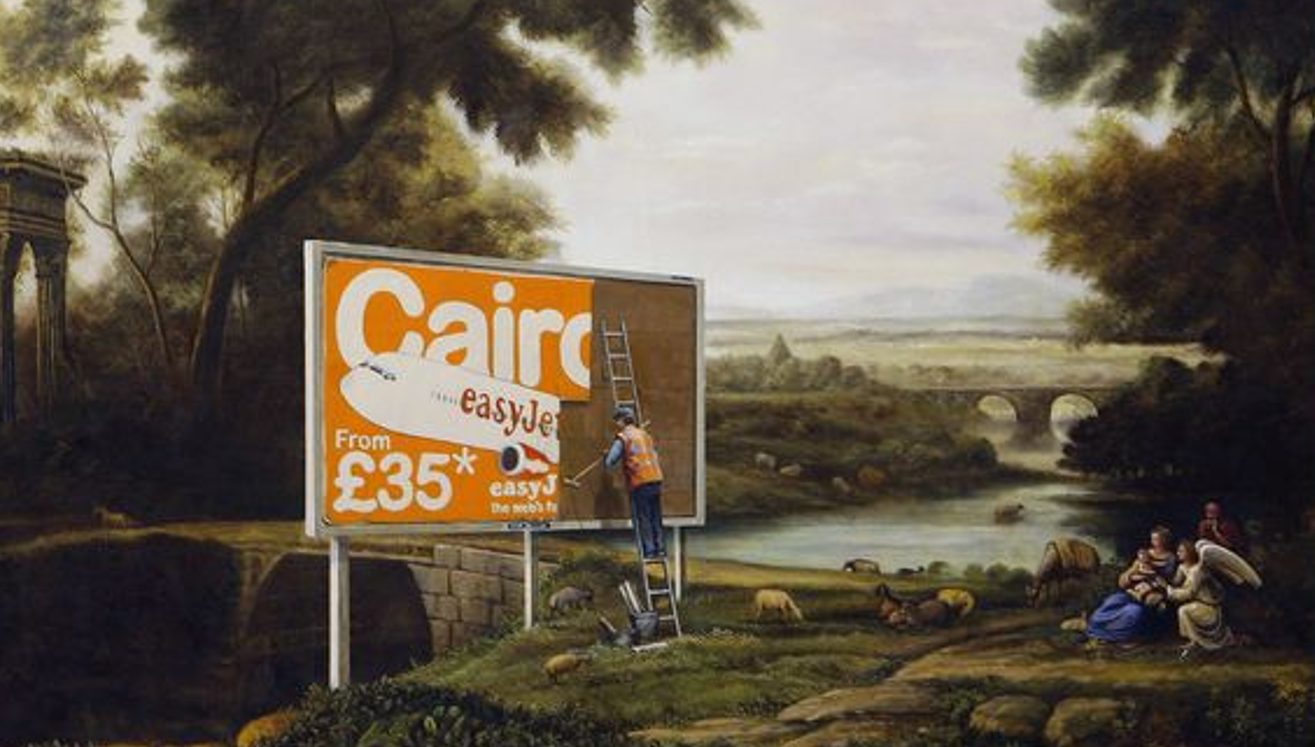
By placing low-cost tourism beside one of Christianity's most famous stories of displacement, Banksy transforms Poussin's historical painting into a contemporary meditation on migration. The biblical figures can suddenly be viewed not simply as Mary, Joseph and Jesus, but as a family of refugees.
At the same time, the enormous billboard literally intrudes upon Poussin's landscape. Advertising has entered the Old Master painting just as it occupies motorways, cities, airports and almost every other part of modern visual life.
When Advertising Invades Art History
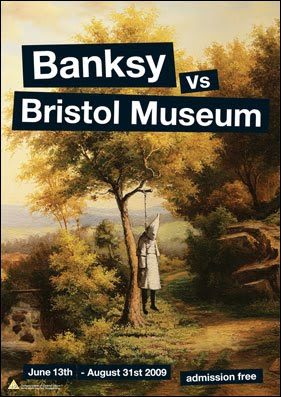
Banksy's Flight into Egypt (Low Cost) was exhibited in 2009 at Banksy vs Bristol Museum, an exhibition built around precisely this kind of collision between established cultural institutions and Banksy's irreverent interventions.
Poussin supplies Banksy with a seventeenth-century landscape, a biblical story and more than three hundred years of art history. Banksy needs only to introduce one unmistakably contemporary object to change the way we read all three.
The result is funny at first glance, but considerably less frivolous once we understand the original story. Poussin painted a family escaping persecution. Banksy places an advertisement for cheap flights directly in their path.
Suddenly, the journey from Bethlehem to Egypt has become a very different kind of low-cost flight.
STAY INFORMED
Receive the latest news, exhibitions, artworks and market updates on Banksy.