PARISIAN RATS, JUNE 2018
Return to the Source
When Banksy arrived in Paris in June 2018, the rat was returning to a city with a particular place in the history of stencil graffiti. During the early 1980s, the French artist Blek le Rat had begun placing stencilled rats across the streets of Paris, establishing an urban vocabulary that would profoundly influence the development of stencil art—and Banksy himself.
Banksy has never concealed that debt. He has repeatedly acknowledged Blek's influence, joking that whenever he believed he had invented something new, he would discover that Blek le Rat had already done it twenty years earlier. The appearance of a new population of Banksy rats in Paris therefore carried an inevitable art-historical resonance: one of his most recognizable characters had returned to the city where its most important predecessor had first emerged.
But the timing gave these rats another meaning. Banksy's visit coincided with the fiftieth anniversary of May 1968, when student demonstrations in Paris developed into a nationwide movement of occupations and strikes involving millions of workers. For several extraordinary weeks, universities and factories were occupied, barricades returned to the streets and established political and social authority was openly challenged.
For Banksy, whose rats have always represented the unwanted, the marginal and the insubordinate, Paris in 2018 provided a natural habitat.
The Spirit of May '68
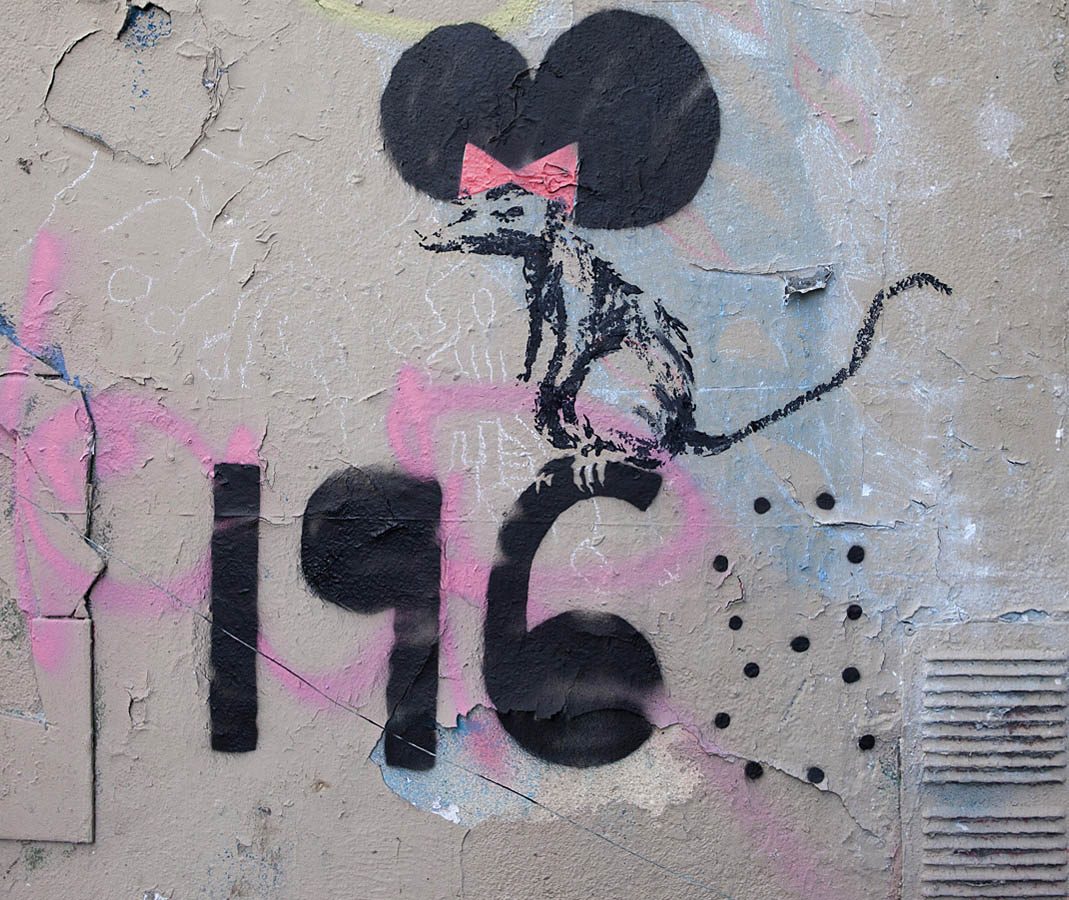
Banksy made the connection explicit with one of the most ingenious rats of the group. Beside the inscription “Mai 1968,” the final figure eight appears to have been removed from the date and transformed into a pair of oversized circular ears worn by the rat. A red-and-white polka-dot bow completes the transformation, turning the revolutionary rodent into an improbable version of Minnie Mouse.
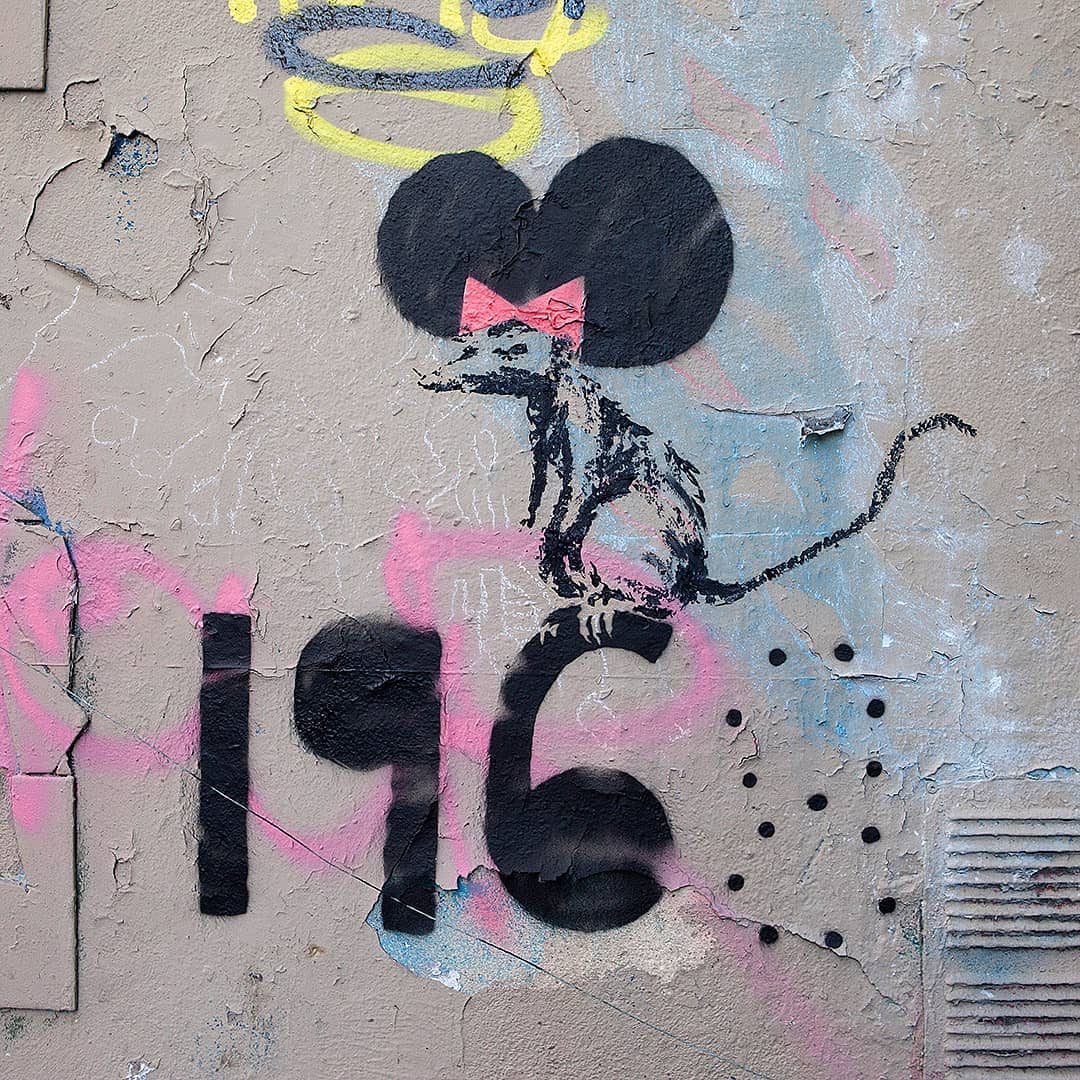
The joke compresses radically different cultural references into a single image. May 1968—the great French uprising against authority, capitalism and established social structures—collides with one of the most recognizable characters produced by global mass entertainment. Revolution meets Disney.
The contradiction is characteristically Banksy. The ideals of rebellion and resistance associated with May '68 are not presented reverentially; they are subjected to the same culture of consumption and spectacle that the protests themselves once challenged. Fifty years later, revolution has become history, imagery and, potentially, merchandise.
Champagne Rats
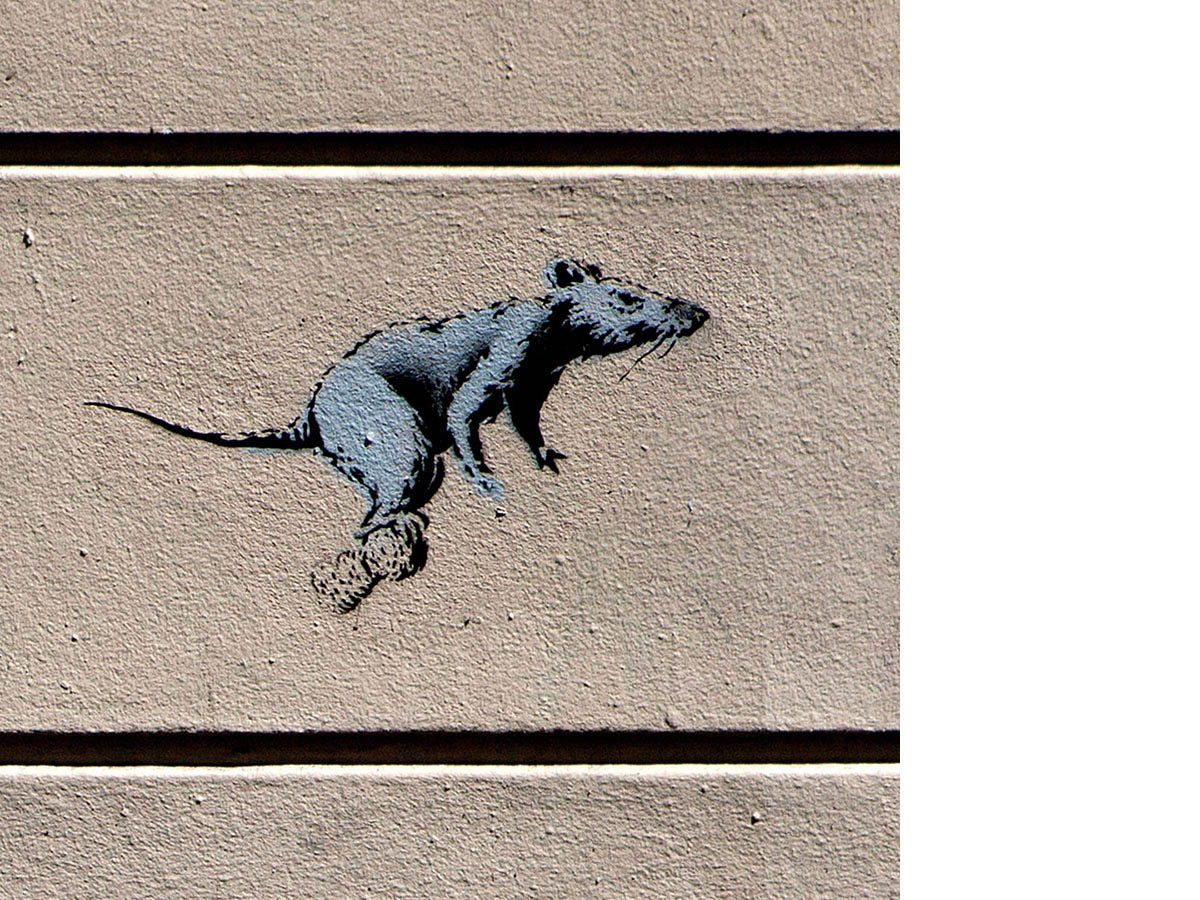
Elsewhere in Paris, Banksy sent rats flying through the city astride exploding champagne corks. Versions appeared in different locations, including Montmartre, where one occupied the steps of the rue du Mont-Cenis.
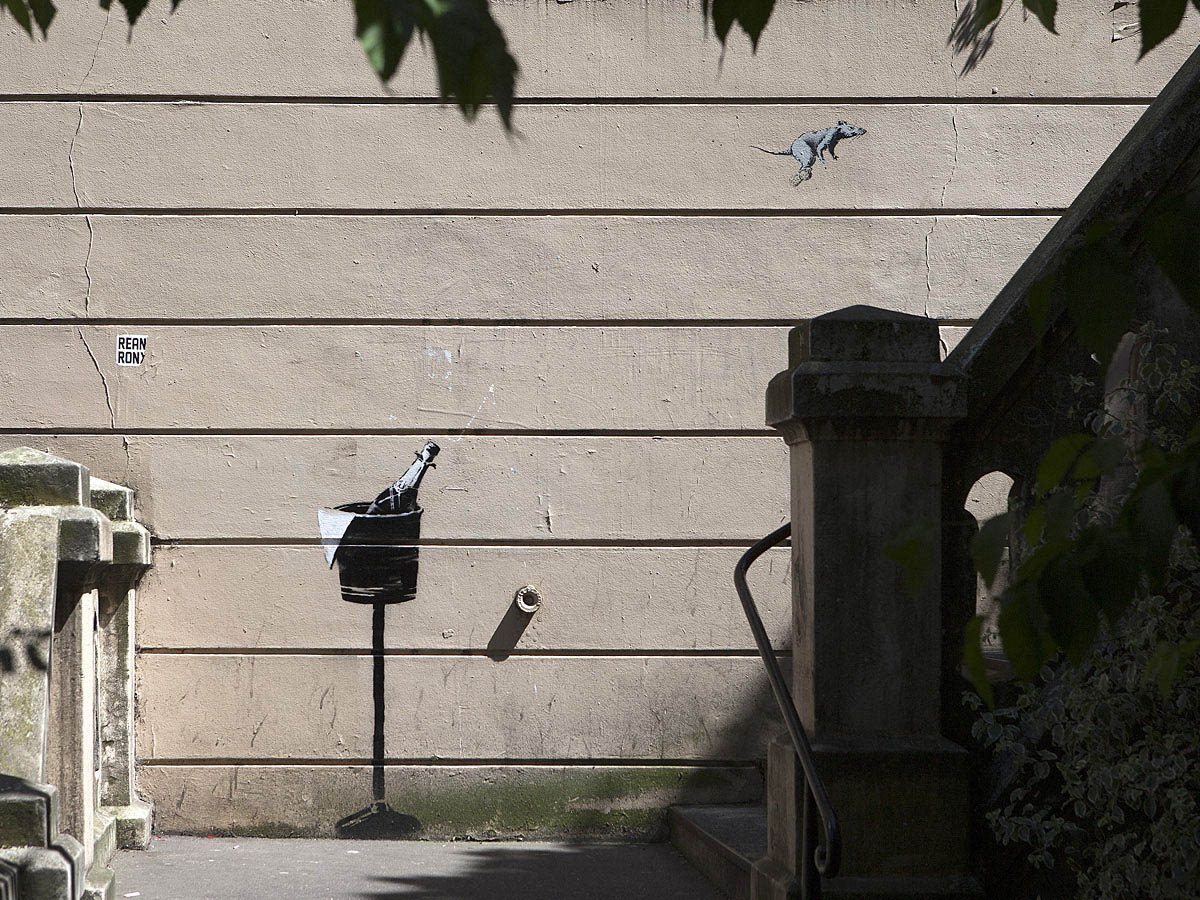
The image is wonderfully absurd: an animal associated with sewers, poverty and urban survival is propelled into the air by one of the most recognizable symbols of luxury and celebration. Banksy's lowliest inhabitant has quite literally hijacked the apparatus of privilege.
The timing added another possible layer to the joke. Banksy's Paris intervention coincided with Paris Fashion Week, when the city was filled with the international fashion industry and collaborations between luxury houses and contemporary artists. Against that backdrop, the champagne rats offered their own irreverent celebration: street art crashing the party.
One of the rats disappeared almost immediately after its appearance, cut directly from the wall. The fate was particularly appropriate for an image built around the collision between an outlaw creature and luxury culture. Banksy's rat had barely arrived before the street itself became an object of possession.
Pompidou Rat
The most confrontational of the Parisian rats appeared near the Centre Pompidou, one of France's principal institutions of modern and contemporary art. Wearing a mask across its face, the rat brandishes a large blade as though preparing to cut into its surroundings.
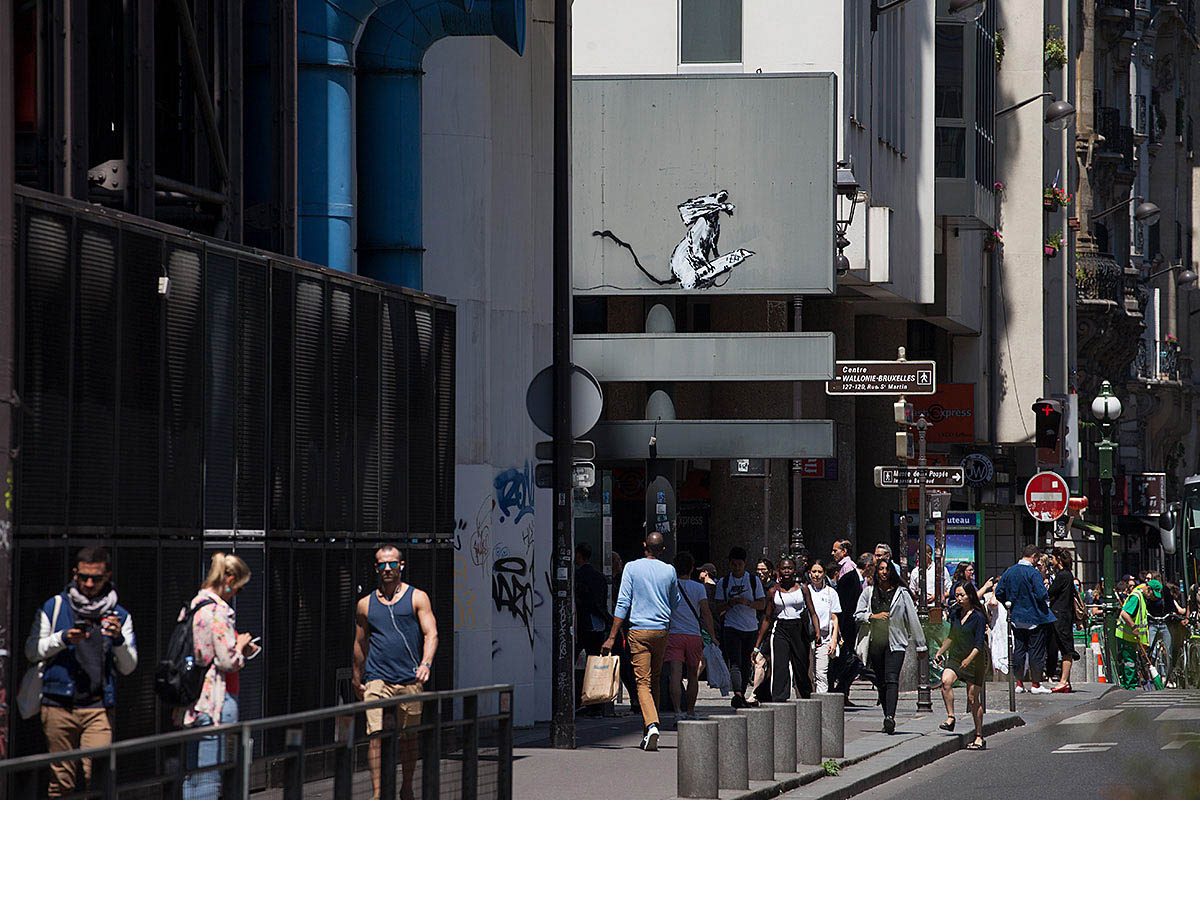
The location was significant. Banksy's work has always existed in an uneasy relationship with the institutions of contemporary art: operating outside them, mocking them and yet inevitably becoming absorbed by them. Placing one of his archetypal rats beside the Centre Pompidou brought that contradiction directly to the museum's doorstep.
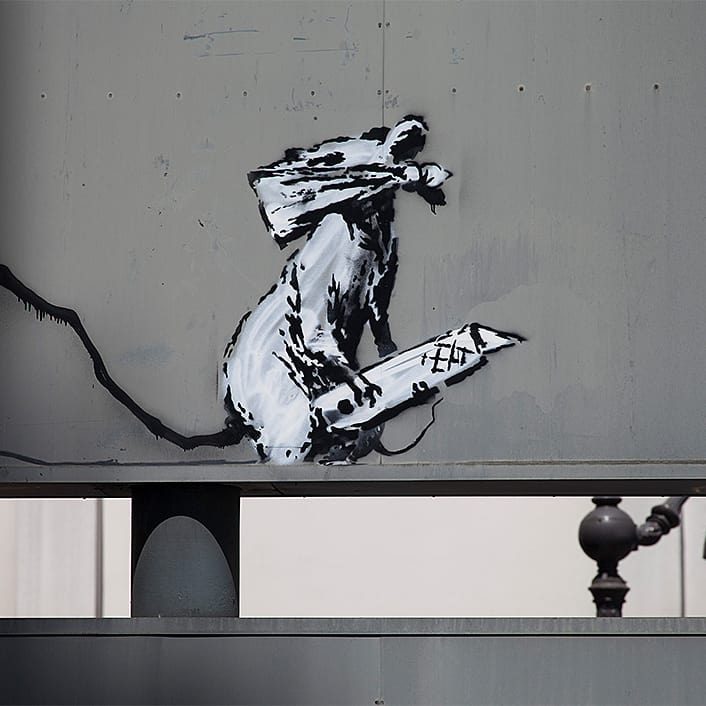
The blade adds a particularly effective metaphor. Rather than entering the institution through its official doors, the rat appears equipped to cut its own way in. It is the unauthorized artist in miniature: masked, anonymous and armed with the means to alter the surface of the city.
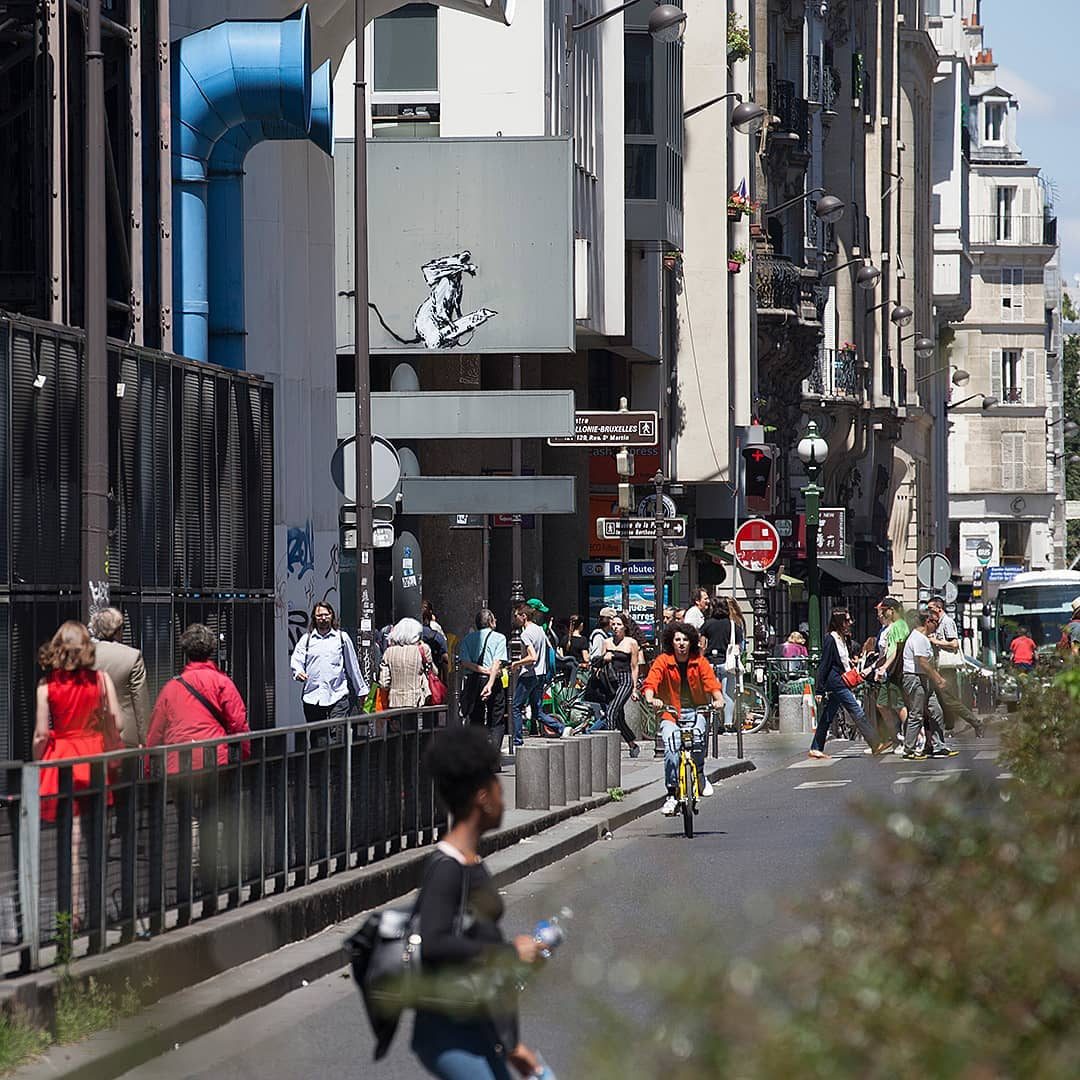
The work itself would eventually become the victim of precisely such an intervention. In September 2019, the stencil was cut from its location and disappeared, turning an image about unauthorized occupation into another example of the vulnerability of street art once cultural and financial value attaches itself to the wall.
Rat Couple by the Eiffel Tower
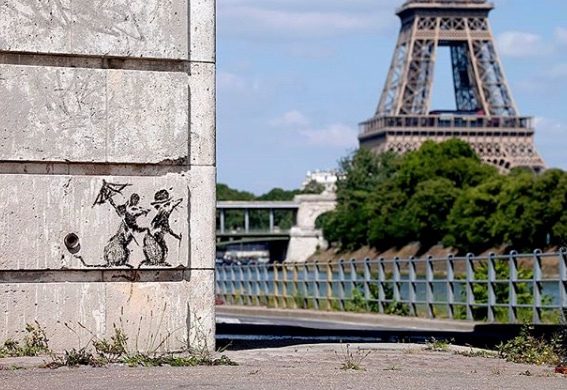
Two rats appear together on a wall overlooking the Seine, with the Eiffel Tower visible through the opening immediately beside them. More than the precise action of the figures, it is the placement that gives the work its particular character. Banksy's perennial urban outsiders occupy a rough, neglected surface while one of the world's most recognizable monuments rises perfectly framed in the distance.
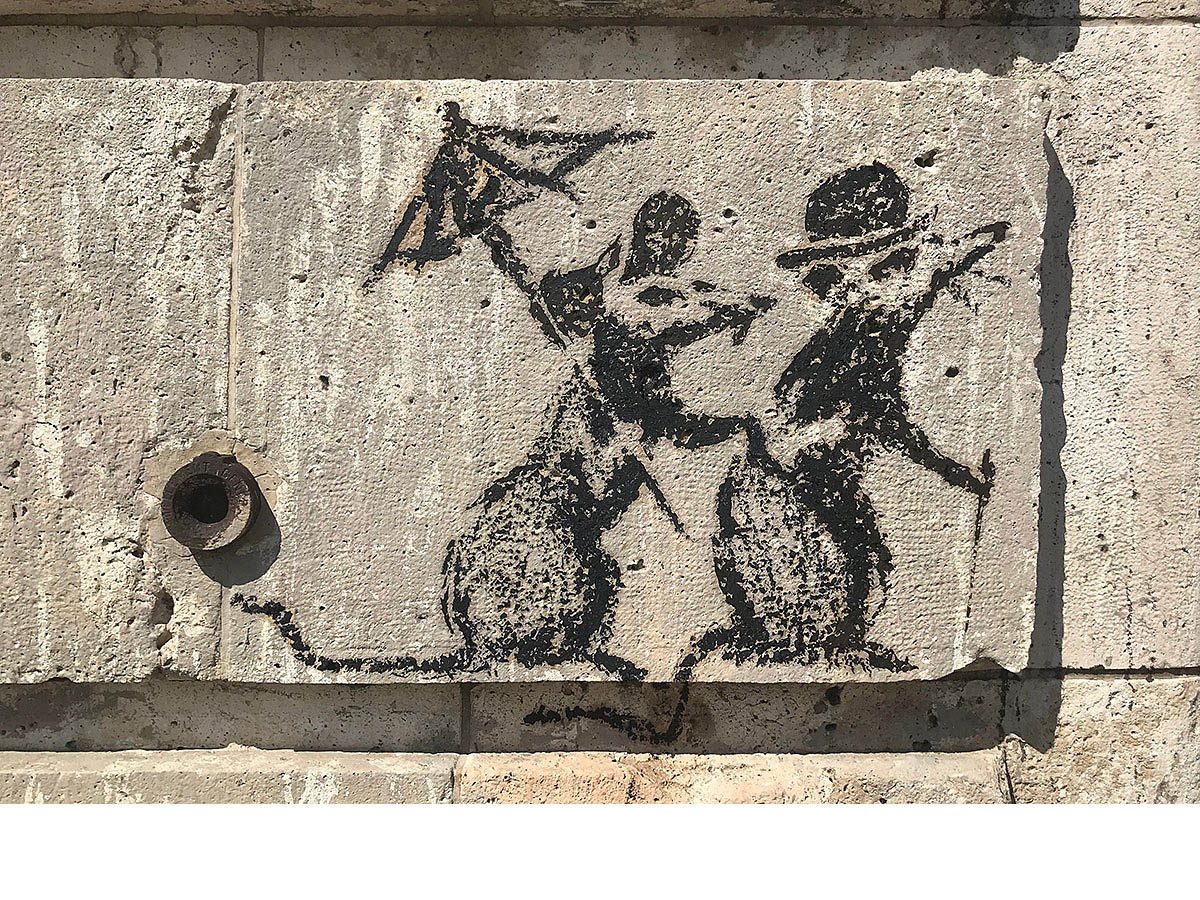
The juxtaposition compresses two versions of Paris into a single view: the monumental city of postcards and tourism, and the marginal city of walls, tunnels and graffiti inhabited by Banksy's rats. As elsewhere in the June 2018 intervention, the location is not simply a backdrop. The view of Paris completes the image.
Rats Take Paris
The Parisian rats belong to a lineage extending across Banksy's career. Since his earliest years in Bristol, rats have functioned as alter egos for graffiti writers and other inhabitants of the urban margins: intelligent, persistent, unwanted and capable of surviving beneath the structures created to exclude them.
In Paris, however, that familiar character acquired unusually specific associations. Blek le Rat provided the artistic ancestry; May 1968 supplied the revolutionary history; the Centre Pompidou represented the cultural establishment; and champagne and Disney introduced the languages of luxury, entertainment and consumer culture.
The result was not simply another appearance of Banksy's most persistent motif. For a few days in June 2018, the rats seemed perfectly at home in Paris—celebrating, vandalizing, remembering a revolution and quietly reclaiming the city from below.
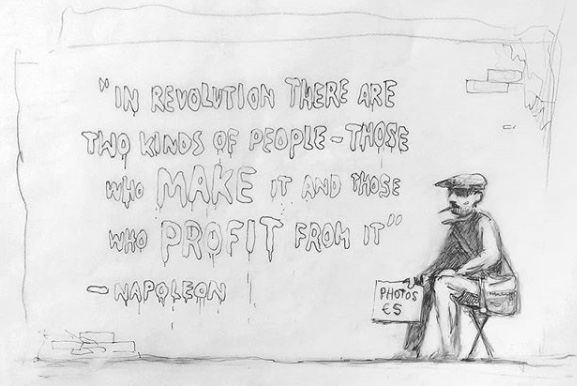
I had planned to paint this on a wall, but ended up thinking it was more of a cartoon. So here it is – as a cartoon.
STAY INFORMED
Receive the latest news, exhibitions, artworks and market updates on Banksy.