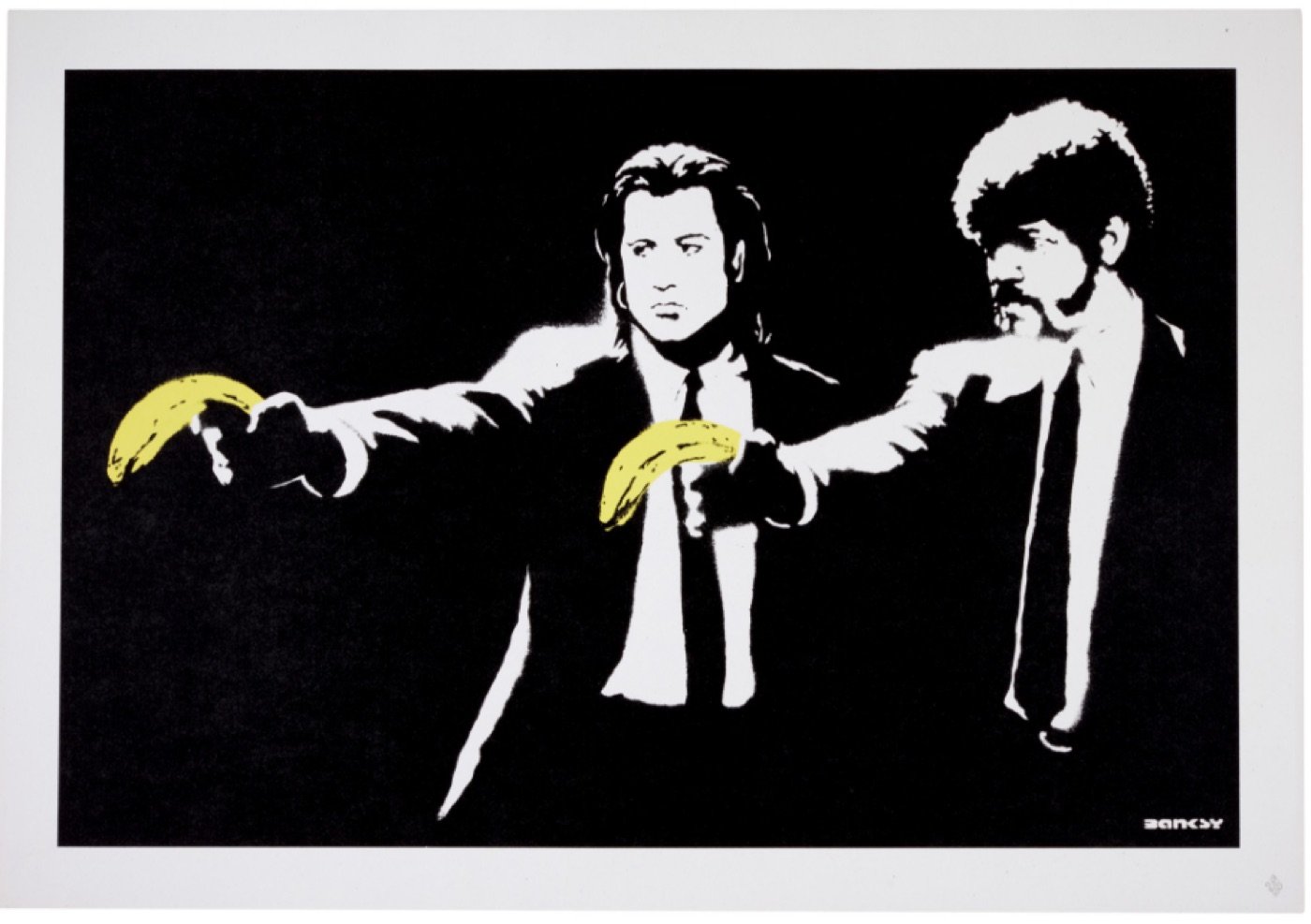
We are not sure if it's actually legal to call this print “Pulp Fiction”, but I guess we'll find out soon enough.
Icons Disarmed
Pulp Fiction depicts two suited figures standing side by side, arms extended in a confrontational stance. Instantly recognizable as Vincent Vega and Jules Winnfield from Pulp Fiction, the composition is drawn from one of the most iconic scenes in contemporary cinema. In the original film, both characters hold guns, poised for violence. In Banksy's version, however, the weapons have been replaced with bananas.
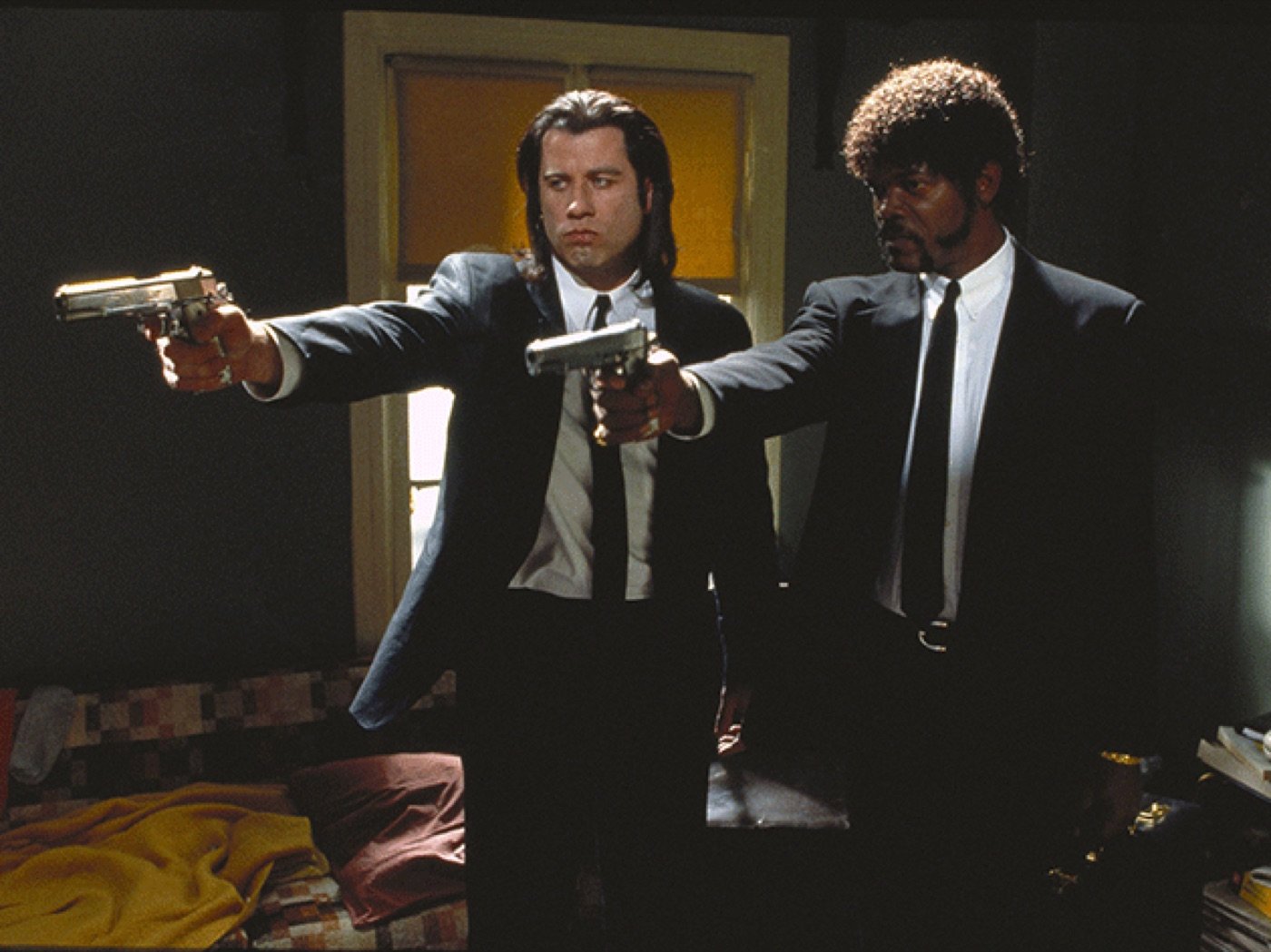
This simple substitution transforms the entire image. The tension of the scene remains but the threat has been disarmed, replaced by something absurd, fragile, and unexpectedly referential. Banksy appropriates a moment deeply embedded in popular culture and alters it with surgical precision. The figures remain unchanged in their stance and expression. Their authority, their cinematic weight, all persist. Yet the bananas disrupt the logic of the scene. The result is immediate. What once signified danger now becomes ambiguous. The gesture is humorous, but also disorienting, forcing the viewer to reconcile the seriousness of the pose with the absurdity of the objects.
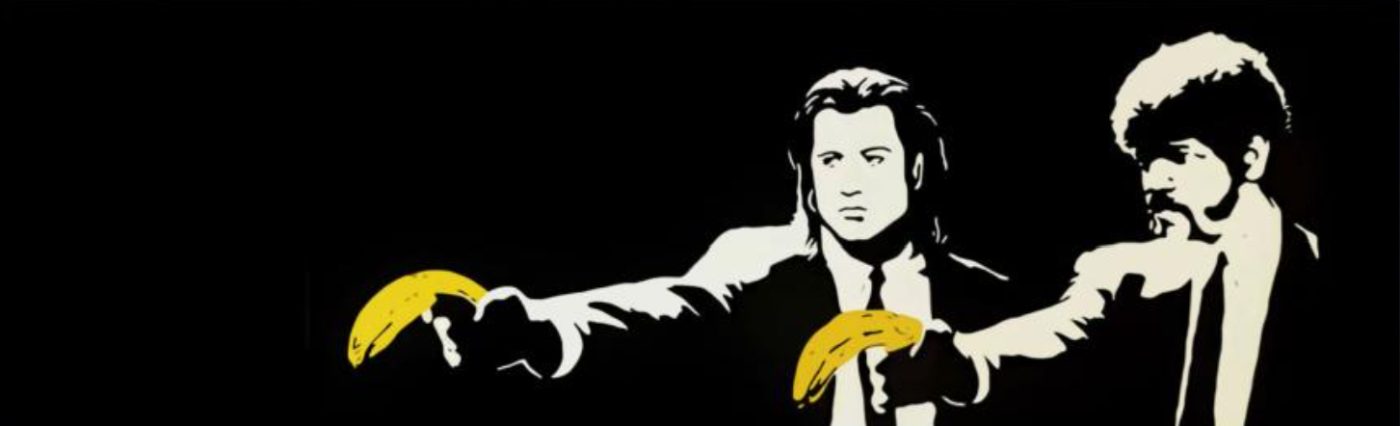
As with many of Banksy's works, Pulp Fiction functions as a lesson in visual language. A single substitution is enough to shift the meaning of an entire image. Symbols, no matter how powerful, remain unstable. The banana becomes a tool of disruption, but also of translation, moving the image from cinema into the realm of art history, and from violence into irony. The humor is immediate, yet highly controlled. The banana introduces a form of visual absurdity that disarms the scene without neutralizing its tension. This duality is essential. The viewer is caught between recognition and reinterpretation, between laughter and unease. The image does not resolve: it lingers in that instability.
From Violence to Pop
The banana is not an arbitrary replacement. It inevitably recalls the iconic imagery of Andy Warhol, whose use of the fruit, most famously on the cover of The Velvet Underground & Nico, transformed it into a symbol of pop culture itself. In 1967, Warhol designed the now-iconic cover for the album, produced under his guidance. The image, a bright yellow banana set against a stark white background, was accompanied in its original pressing by the provocative instruction “Peel slowly and see.” Beneath the removable skin, a pink, flesh-toned banana was revealed, introducing a subtle but unmistakable erotic undertone. What appeared at first as a simple fruit became an object charged with ambiguity, oscillating between the everyday and the suggestive.
Warhol's banana functions as a perfect embodiment of Pop Art's ambition: to elevate the banal into the realm of the iconic. Like his soup cans or Coca-Cola bottles, the banana is immediately recognizable, stripped of narrative yet saturated with cultural meaning. It is at once commercial, playful, and quietly subversive. Through repetition and presentation, Warhol transformed a disposable image into a lasting symbol: one that would extend far beyond the album itself into the broader history of contemporary art.
The connection to The Velvet Underground further amplifies this tension. The band, known for its raw sound and uncompromising exploration of marginal themes, stood in stark contrast to the polished optimism of mainstream 1960s culture. Warhol's banana, much like the music it accompanied, operates on a double register: visually simple, yet conceptually loaded. It is both accessible and transgressive, inviting interpretation while resisting closure.
When the banana reappears in Banksy's Pulp Fiction, it carries this entire lineage with it. It is no longer just a humorous replacement or an absurd prop. It becomes a reference, almost a shorthand, for a moment in art history when everyday imagery was redefined as a site of meaning. By inserting bananas into a scene defined by violence, Banksy creates a layered substitution. Guns are replaced not simply by something harmless, but by something deeply embedded in the history of art and mass culture. The work shifts from a cinematic reference to a dialogue between pop art and street art.
Mural and Urban Intervention
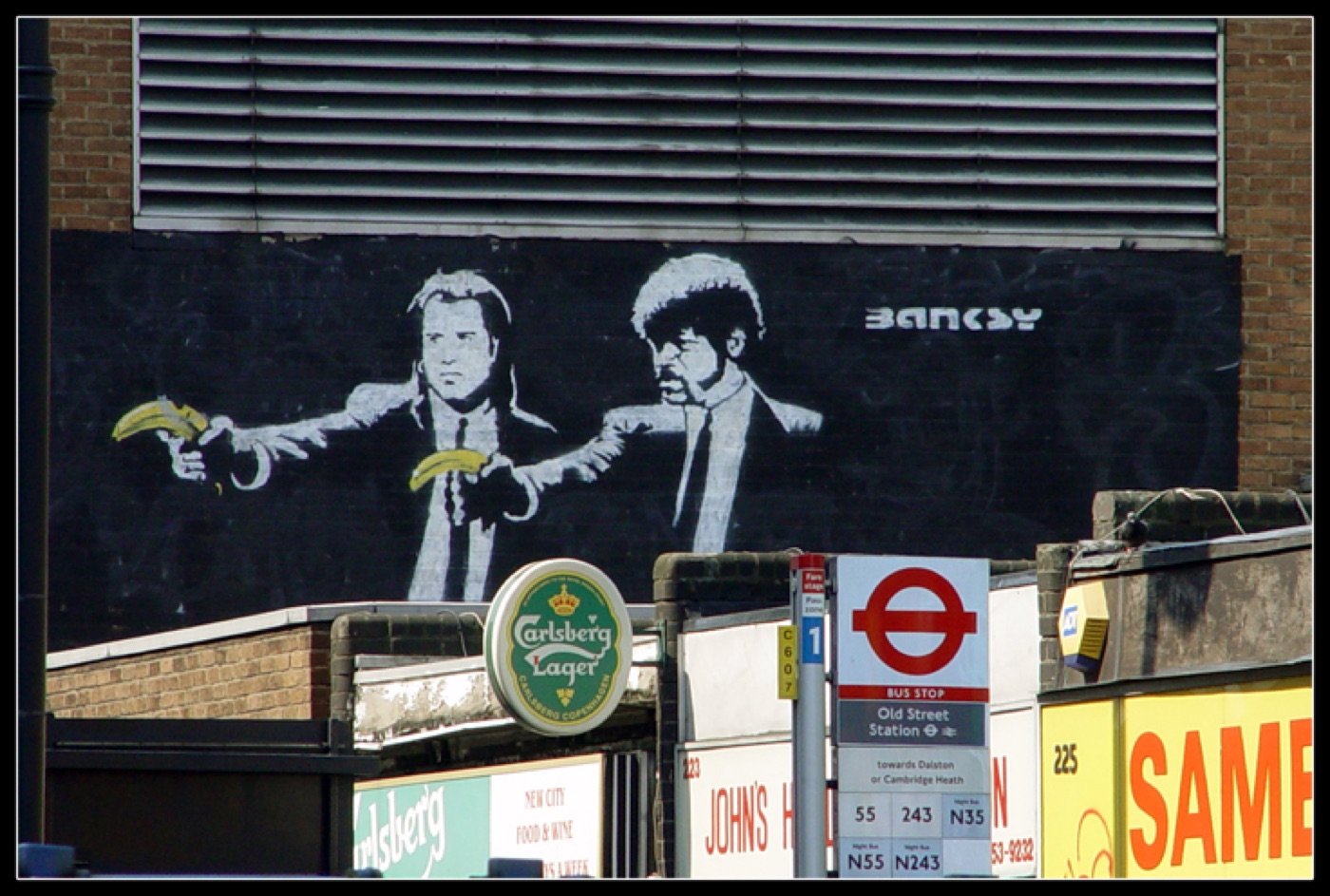
Encountered unexpectedly, the image would have immediately resonated with viewers familiar with the film, while simultaneously disrupting their expectations. In the street, the work operates both as homage and critique, bridging cinema, art history, and urban culture in a single, direct intervention. Pulp Fiction exemplifies Banksy's ability to operate within shared cultural imagery while subtly undermining it. The intervention is minimal, yet expansive in its implications.
Pulp Fiction: The Movie
Released in 1994, Pulp Fiction quickly established itself as one of the most influential films of its generation. Directed by Quentin Tarantino, the film departs from traditional narrative structure, unfolding through a series of interwoven stories presented out of chronological order. This fragmented composition, combined with sharp dialogue and stylized violence, redefined the possibilities of contemporary cinema and marked a decisive shift toward a more self-aware, referential filmmaking.
At the center of the film are characters who have since become cultural archetypes, notably Vincent Vega and Jules Winnfield, portrayed as contract killers navigating a world where brutality coexists with banality. Their now-iconic stance—guns drawn, bodies slightly angled, poised in a moment of imminent violence—has transcended the film itself, becoming one of the most recognizable images in modern visual culture. It is precisely this scene that Banksy appropriates, relying on its immediate recognizability to anchor his intervention.
Beyond its visual legacy, Pulp Fiction occupies a pivotal place in the evolution of cinema through its blending of genres and its embrace of pop culture as both subject and language. References to music, television, pulp magazines, and earlier films are woven seamlessly into its fabric, creating a layered work that is at once entertaining and deeply constructed. The film does not merely depict culture—it reflects on it, reshapes it, and ultimately becomes part of it.
STAY INFORMED
Receive the latest news, exhibitions, artworks and market updates on Banksy.