REMBRANDT
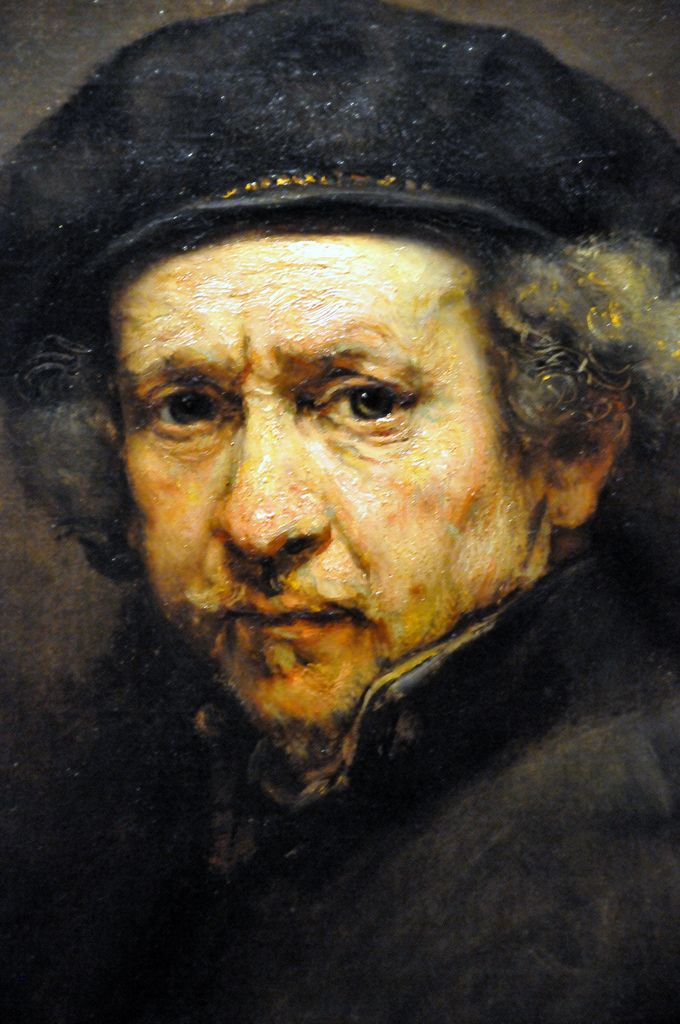
The Master of the Self-Portrait
Rembrandt van Rijn (1606–1669) was one of the greatest painters of the Dutch Golden Age and remains one of the most influential artists in Western art. A brilliant painter, draftsman and printmaker, he explored subjects ranging from biblical and historical scenes to intimate portraits, but he is perhaps most fascinating when he turned his attention upon himself.
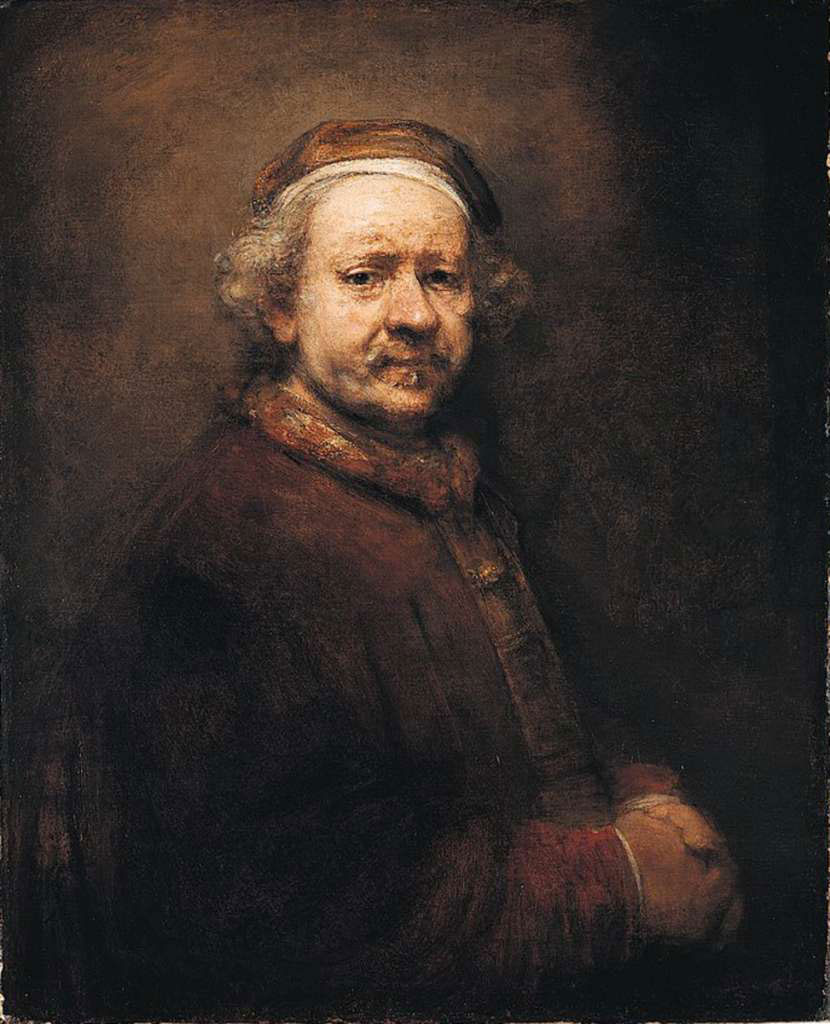
Throughout his life, Rembrandt produced an extraordinary sequence of self-portraits, recording his face from ambitious young artist to ageing master. Rather than idealizing himself, he increasingly allowed age, experience and vulnerability to become visible.
One of the most powerful is Self-Portrait at the Age of 63, painted in 1669, the year of his death and now in the National Gallery in London. Rembrandt looks directly toward us with extraordinary psychological presence. His face is ageing, but his expression remains calm, dignified and remarkably alive.
More than three centuries later, Banksy gave him googly eyes.
Banksy Meets Rembrandt
In Rembrandt with Googly Eyes (2009), Banksy recreates the famous late self-portrait and makes one wonderfully simple intervention: he places a pair of ridiculous googly eyes over Rembrandt's famously expressive gaze.
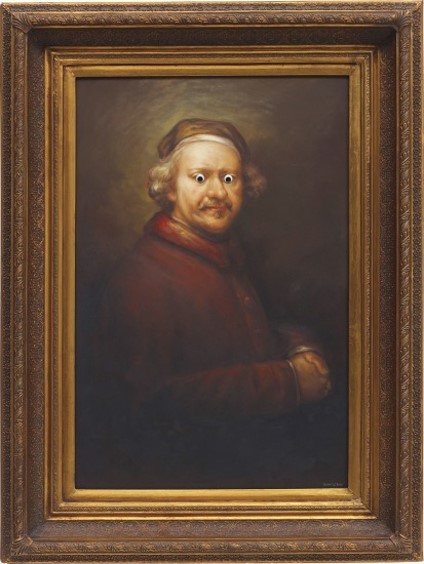
The transformation is immediate. One of the most psychologically complex portraits in art history suddenly becomes absurd.
But the joke works precisely because of what Banksy is interfering with. Rembrandt's ability to communicate character through the human face—and particularly through the eyes—is central to the power of his portraiture. Banksy chooses the most expressive part of the painting and replaces it with something purchased from the visual language of children's crafts.
It is difficult not to laugh. It is also difficult not to look.
High Art, Low Art
Behind the joke lies a question Banksy has explored throughout his career: who decides what deserves to be called art?
Rembrandt occupies the highest reaches of the traditional art-historical canon. Banksy emerged from graffiti, a culture whose works have routinely been dismissed as vandalism. By applying something as deliberately cheap and silly as googly eyes to the image of an Old Master, Banksy collapses that hierarchy for a moment.
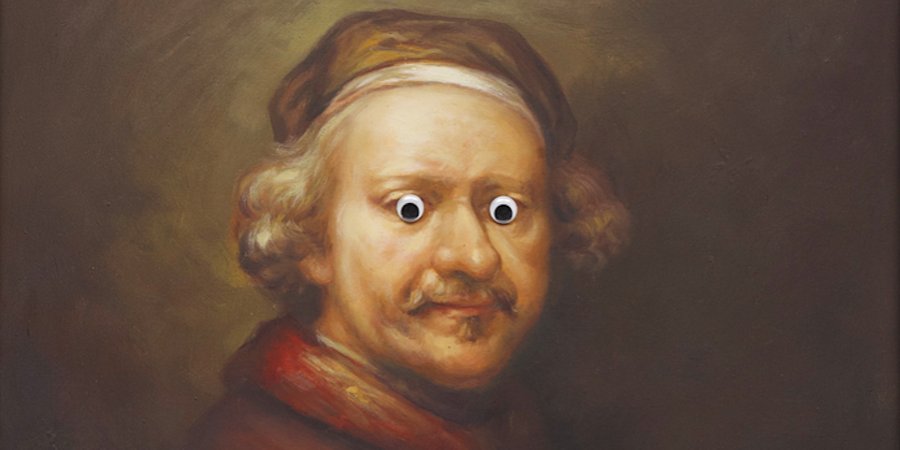
The gesture also resembles what graffiti itself does to the city. Banksy takes an existing image carrying cultural authority and intervenes upon it without respecting the reverence normally surrounding it. The original remains recognizable, but its meaning has been disrupted.
That is the beauty of Rembrandt with Googly Eyes. Banksy doesn't need to destroy an Old Master to challenge our relationship with it. Two plastic eyes are enough.
STAY INFORMED
Receive the latest news, exhibitions, artworks and market updates on Banksy.