SANDCASTLE GIRL / CHILD WITH CROWBAR
Building a Sandcastle
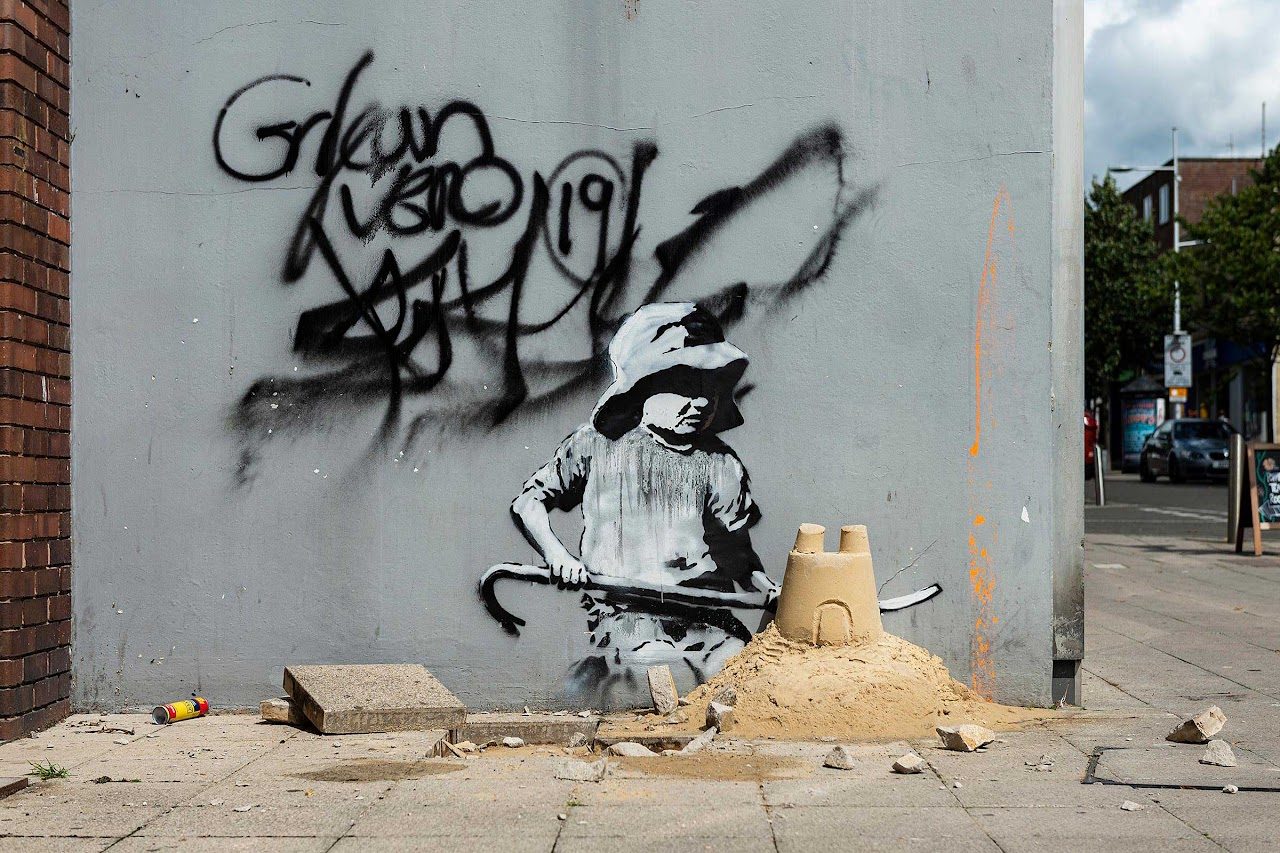
A young girl crouches beside a small pile of sand, apparently engaged in one of the most innocent rituals of a British seaside holiday. In her hands, however, she holds not a bucket and spade but a crowbar. Beside her, a paving stone has been lifted from the ground, while the sand underneath it has been gathered into a tiny castle.
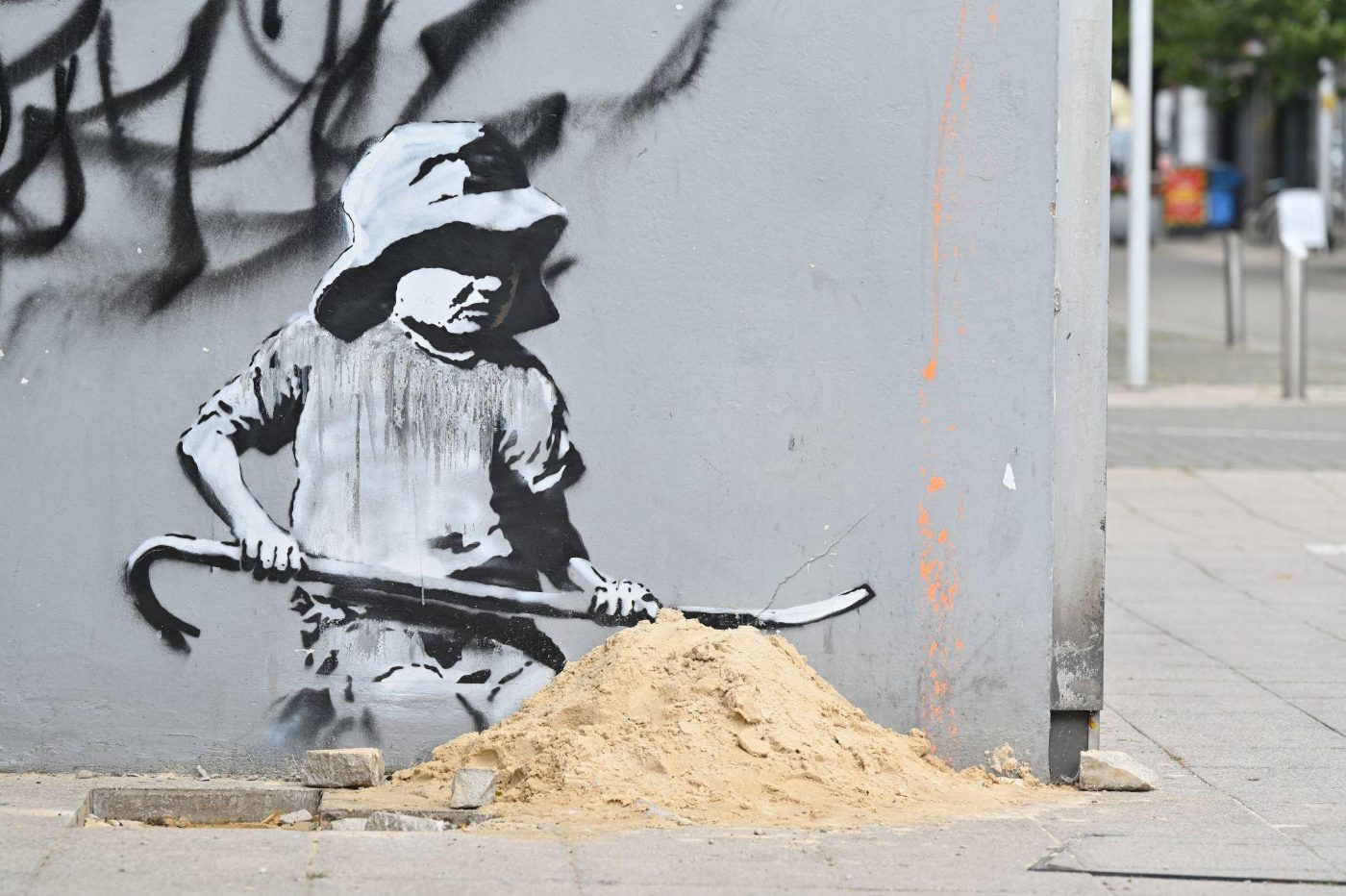
As with many of the works Banksy created during A Great British Spraycation, the physical location completes the image. The child is rendered in stencil, but her materials belong to the street itself: the pavement supplies both the sand and the displaced slab. Banksy transforms an act of vandalism into an act of play.
The work was one of several interventions Banksy created around Lowestoft during his journey through the Norfolk and Suffolk coast in August 2021. Its authorship was confirmed on 13 August, when Banksy released the film A Great British Spraycation, showing the artist travelling between seaside towns in a camper van and creating the works along the way.
A Different Kind of Seaside Holiday
The image encapsulates the larger logic of Spraycation. Banksy repeatedly takes familiar imagery associated with the British seaside—boats, gulls, deckchairs, amusement arcades and sandcastles—and introduces something slightly wrong.
Here, childhood ingenuity and destruction become almost indistinguishable. The girl wants to build a sandcastle but has been given no beach, so she creates one from whatever she can find. She breaks into the pavement to reach the sand concealed beneath it.
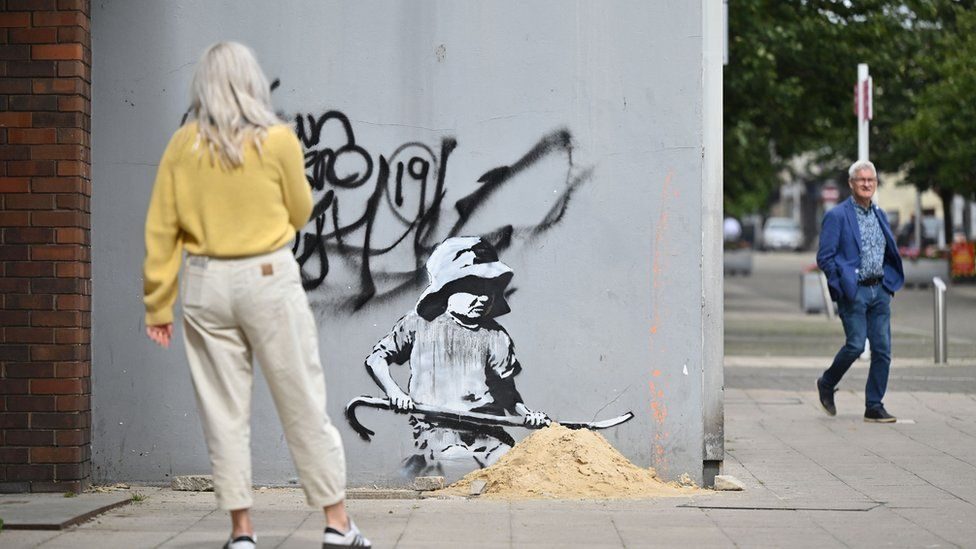
There is humour in the disproportion between her ambition and her methods: an industrial crowbar deployed to produce the smallest possible seaside castle. But there is also something characteristically Banksy about a child refusing to accept the environment she has been given. Rather than waiting to be provided with somewhere to play, she physically alters the city to create it herself.
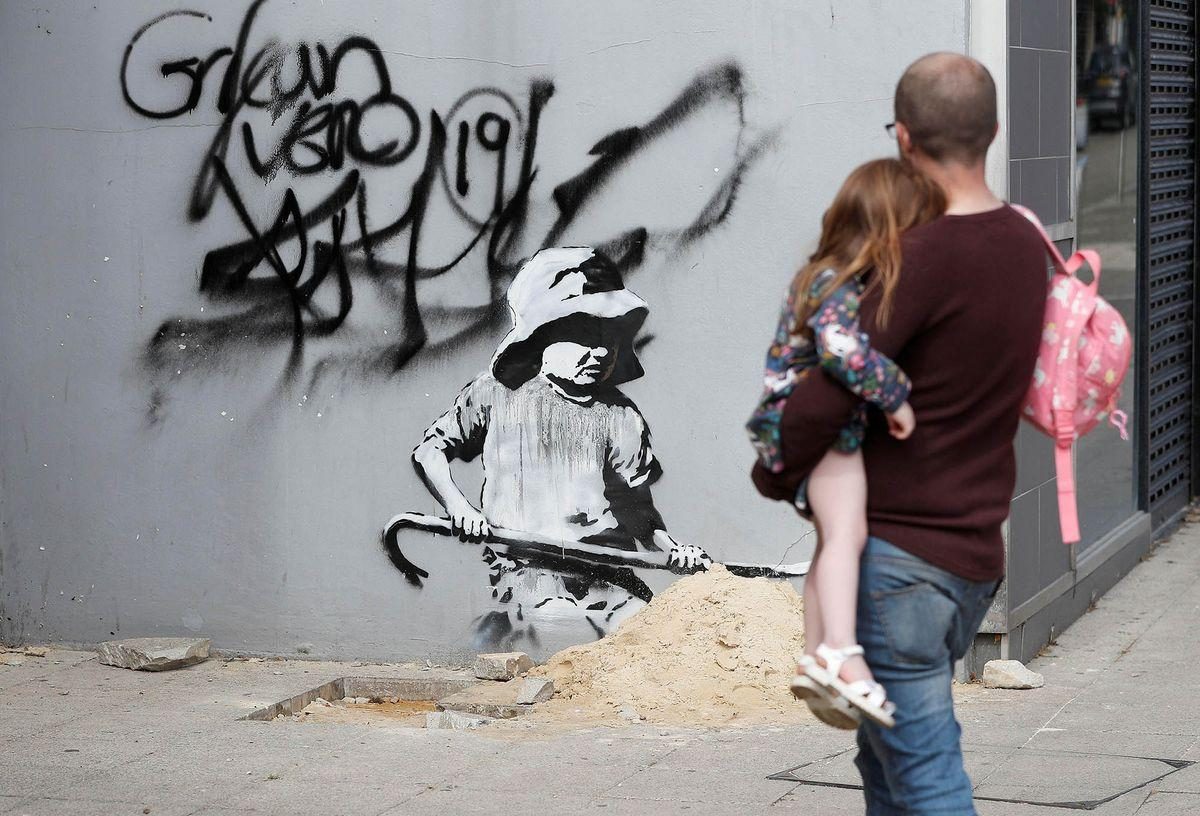
That idea has an obvious parallel with graffiti. Banksy, too, takes an existing urban surface without permission, interferes with it and produces something that others may subsequently decide is worth protecting.
From Pavement to Artwork
The work's relationship with its surroundings made its subsequent history particularly significant. The mural was quickly protected after Banksy confirmed the Spraycation works, but the property was later sold and the section of wall bearing the stencil was removed in November 2021, only a few months after its creation. The operation involved cutting the artwork from the building for preservation and potential sale.
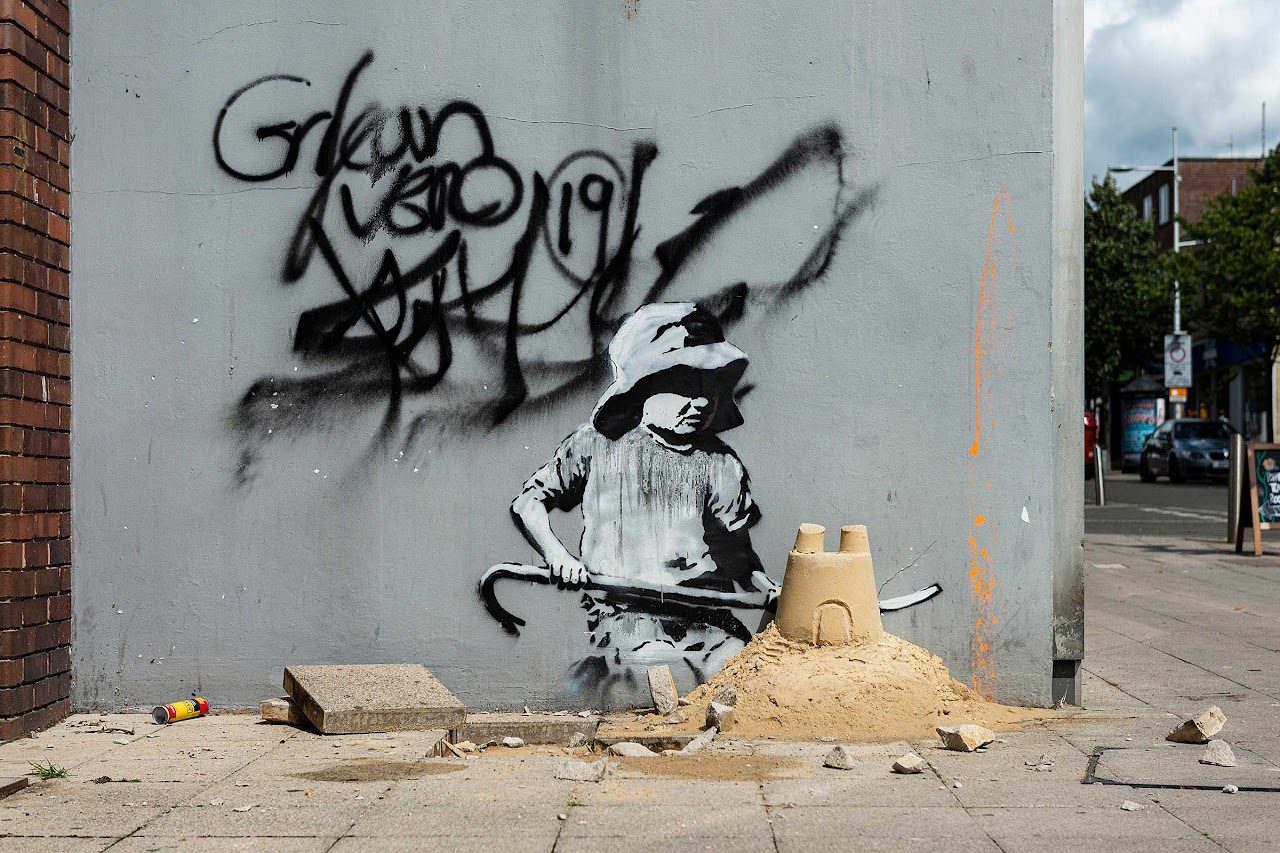
Its removal inevitably changed the work. Sandcastle Girl had depended upon the relationship between painted child, real crowbar, pavement, lifted slab and the material beneath the street. Once detached from that environment, the stencil could survive as an object, but part of the visual joke—and much of its site-specific character—was lost.
That tension runs through the subsequent history of many Banksy street works. The more culturally and financially valuable the image becomes, the greater the incentive to protect or remove it; yet removing it can destroy precisely the relationship with place that made it significant.
Sandcastle Girl began with a child breaking apart the pavement to make something new. Within months, adults were breaking apart the building to preserve what she had made.
STAY INFORMED
Receive the latest news, exhibitions, artworks and market updates on Banksy.