SEAL WITH BALL
BALANCING WHAT WAS ALREADY THERE
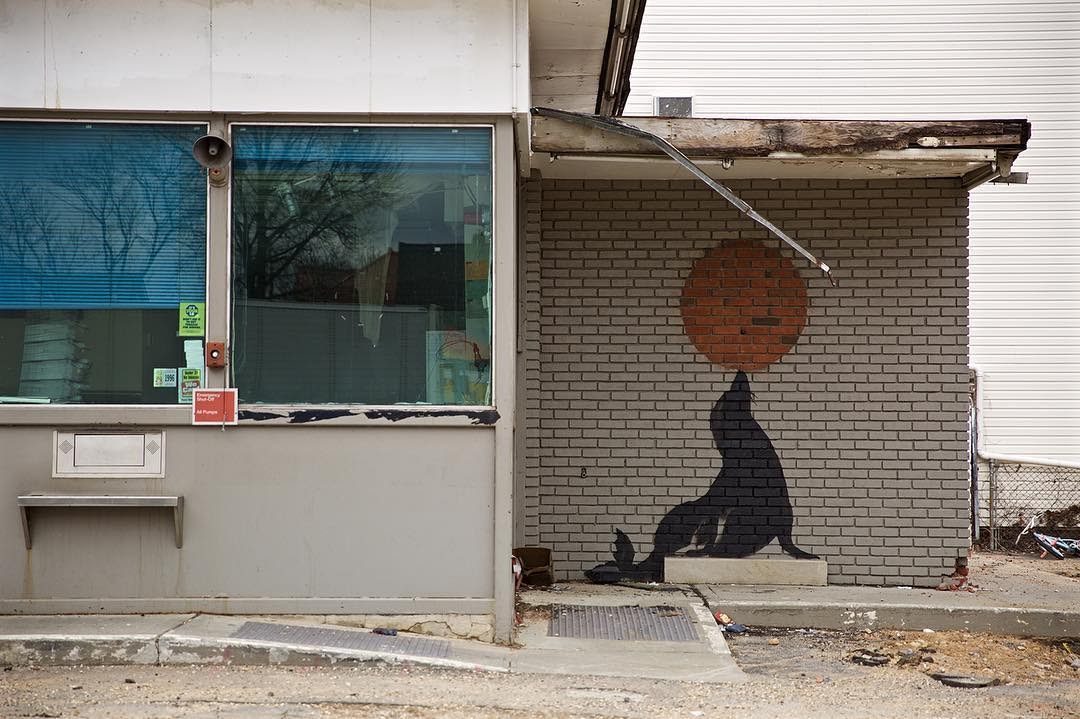
During Banksy's brief return to New York in March 2018, a small black seal appeared on the exterior of the abandoned Mobil gas and service station at 1249 Coney Island Avenue, close to the much larger The Whip. Local witnesses reported that both works may have appeared as early as 10 March, although Banksy did not publicly confirm the seal as his until 20 March 2018, one day after confirming the neighboring mural.
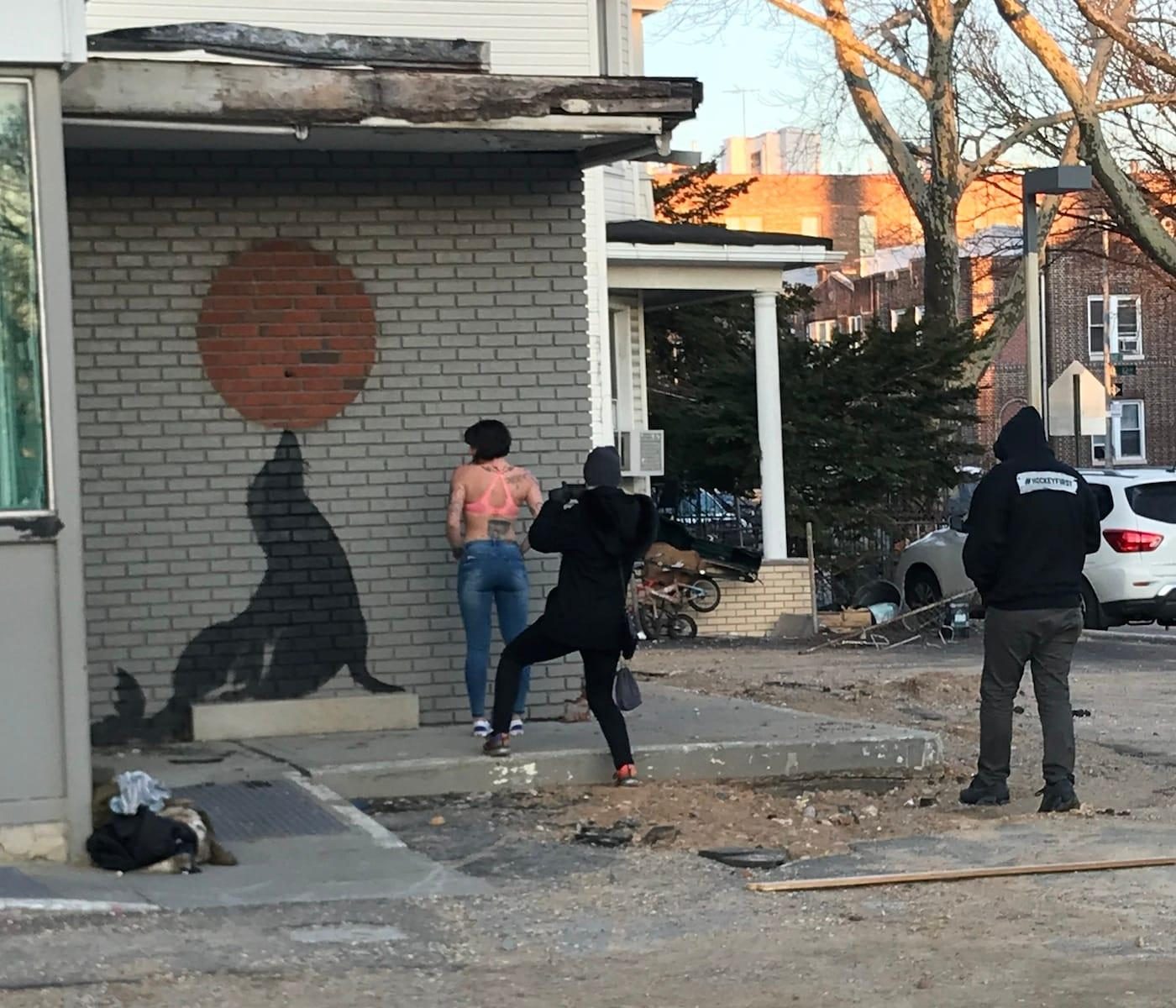
The intervention is among the simplest of Banksy's New York works. A seal is shown balancing a large circular object on the tip of its nose. Banksy, however, did not paint the ball. He positioned the animal directly beneath the circular trace left on the façade by a removed sign, allowing the architecture to complete the image. Contemporary accounts identify the building as a former Mobil station and connect the circular remnant to its former signage.
THE ART OF SEEING SOMETHING THAT IS ALREADY THERE
Unlike The Whip, which presents an explicit critique of development and displacement, Seal with Ball does not require an elaborate political interpretation. Its strength lies principally in the act of observation. Thousands of people could have passed the abandoned service station and seen nothing more than the discolored circular mark left by a missing sign. Banksy saw a ball and added the smallest element necessary to make everyone else see it too.
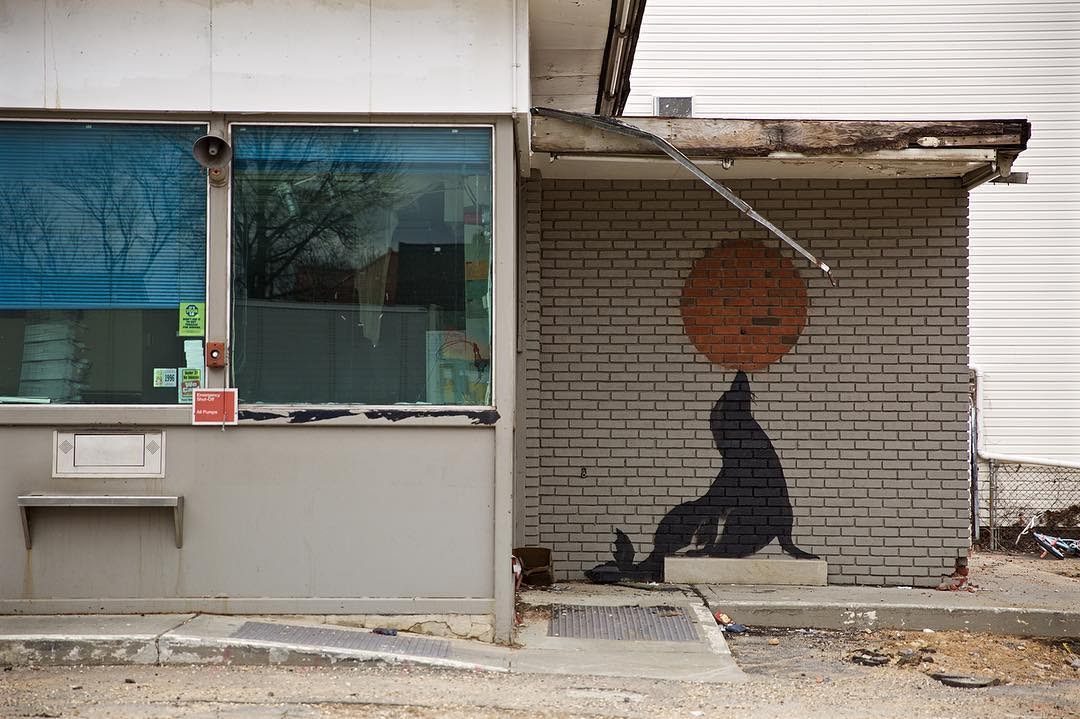
This approach belongs to an important strand of Banksy's street practice in which the existing city becomes part of the artwork. Pipes become tree trunks, street furniture becomes playground equipment, signs become props, holes become passages and architectural scars acquire entirely new meanings. The stencil is therefore only part of Seal with Ball. The removed sign, weathered façade and history of the former gas station are equally important components of the composition.
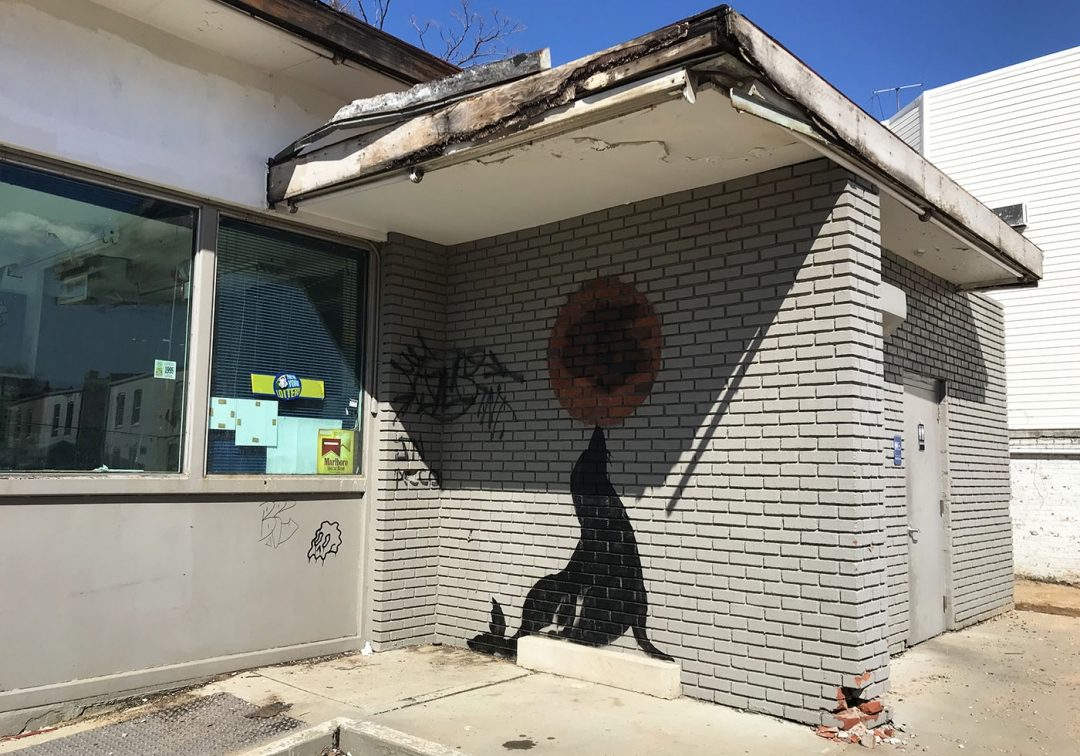
There is an appealing absurdity to the transformation. A remnant of commercial signage—a trace of the building's former function—is converted into a circus prop balanced effortlessly by an animal. The abandoned gas station briefly becomes a stage. Banksy's intervention does not conceal the deterioration of the building; it uses that deterioration as its raw material.
THE COMPANION TO THE WHIP
The relationship with The Whip is nevertheless significant. The two works occupied the same redevelopment site but approached it in radically different ways. The Whip transformed a rising financial graph into an instrument driving a community from the land, directly addressing the economics of redevelopment. Seal with Ball, only a short distance away, responded instead to a physical trace left by the site's previous commercial life.
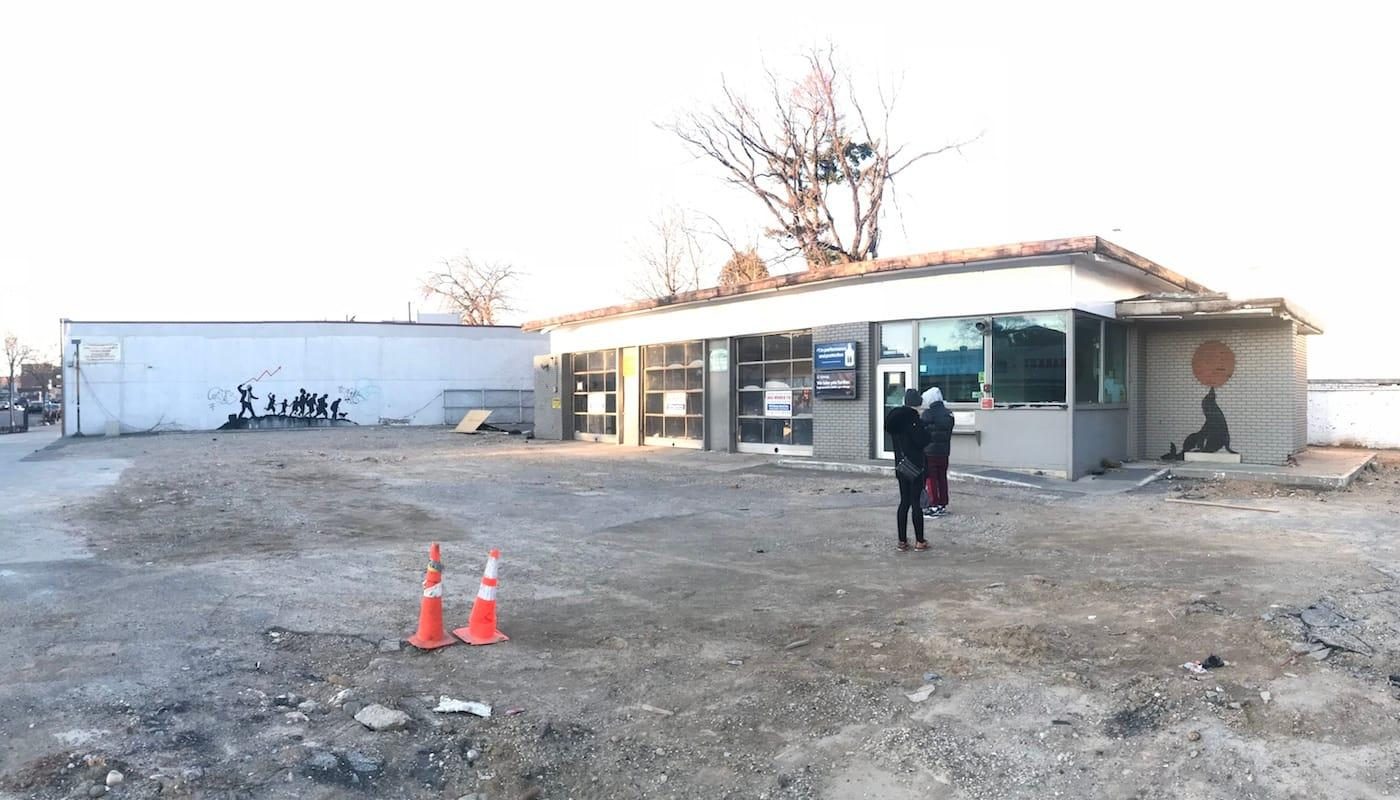
Together they demonstrate the remarkable range of Banksy's street language. One is an expansive political allegory populated by a procession of figures; the other consists essentially of a single animal and a circle Banksy did not even paint. Yet both depend upon their precise locations. Removed from the redevelopment site, The Whip loses part of its political context; separated from the former Mobil building, the seal loses the found architectural element that generated the joke.
SAVING THE SEAL
The future of the work quickly became uncertain. The former gas station was already scheduled for demolition to make way for a four-story self-storage development, meaning that Banksy had effectively created the mural on a building with an expiration date. By April 2018, efforts were underway to determine whether the section of wall carrying the seal could be physically extracted before demolition.
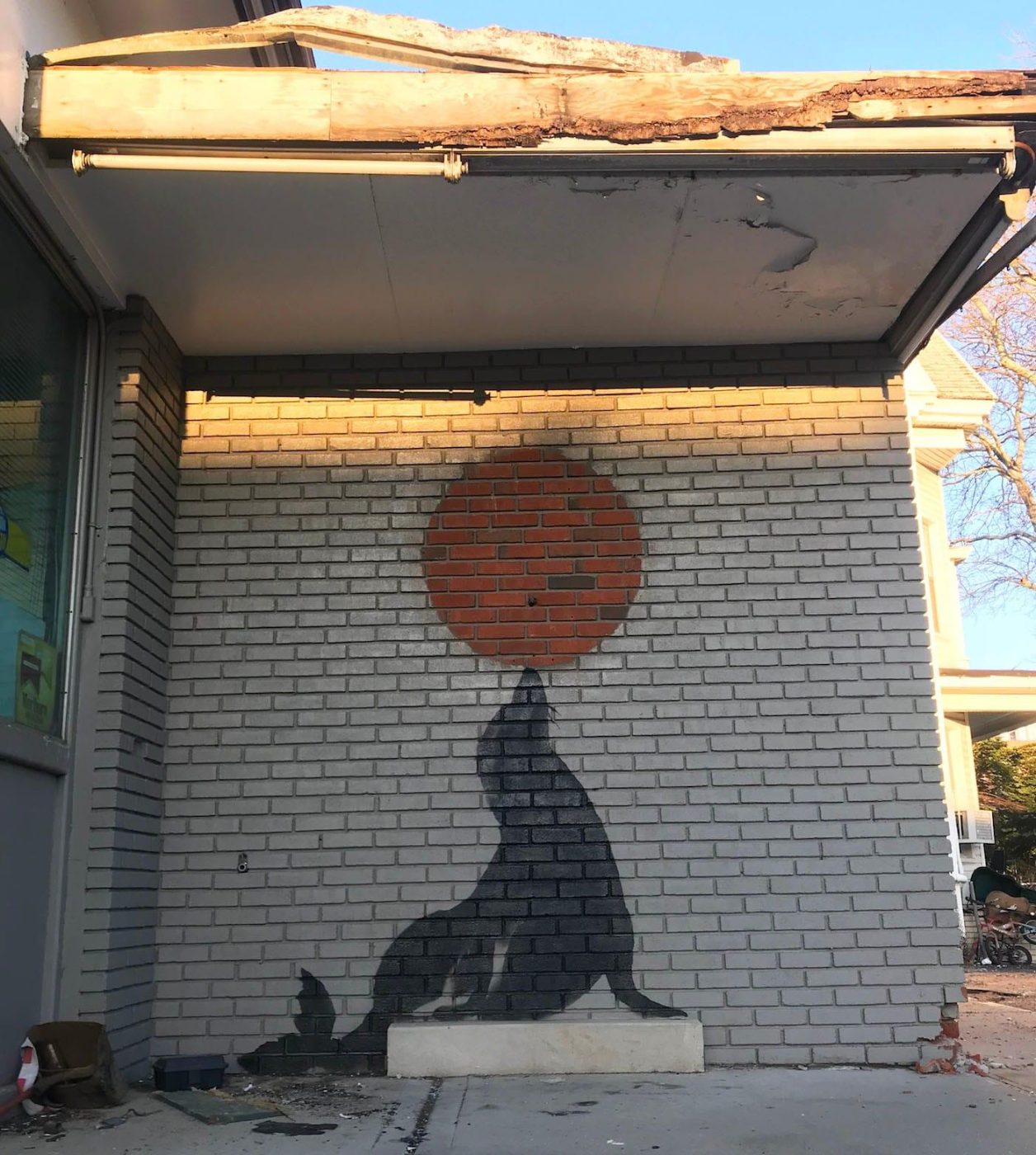
The wall was ultimately removed and preserved, transforming a fleeting site-specific intervention into a transportable object. It was subsequently exhibited in New York, including at Taglialatella Galleries' Banksy: Beyond the Wall exhibition in 2019. The preservation raises a familiar question surrounding Banksy's street works: what exactly survives when a mural whose meaning depends upon a particular building is cut from that building and relocated?
In this instance the paradox is especially pronounced. Seal with Ball was conceived through Banksy's observation of an accidental mark left by the history of one particular façade. Preserving the wall saved the physical components of the image—the seal and its “ball”—but inevitably changed the experience of encountering an apparently abandoned gas station and suddenly realizing that one of its architectural scars had become an artwork. That moment of discovery was fundamental to the original intervention.
STAY INFORMED
Receive the latest news, exhibitions, artworks and market updates on Banksy.