THE OUTLAWS: CHRISTOPHER WALKEN DESTROYS A BANKSY, 2021
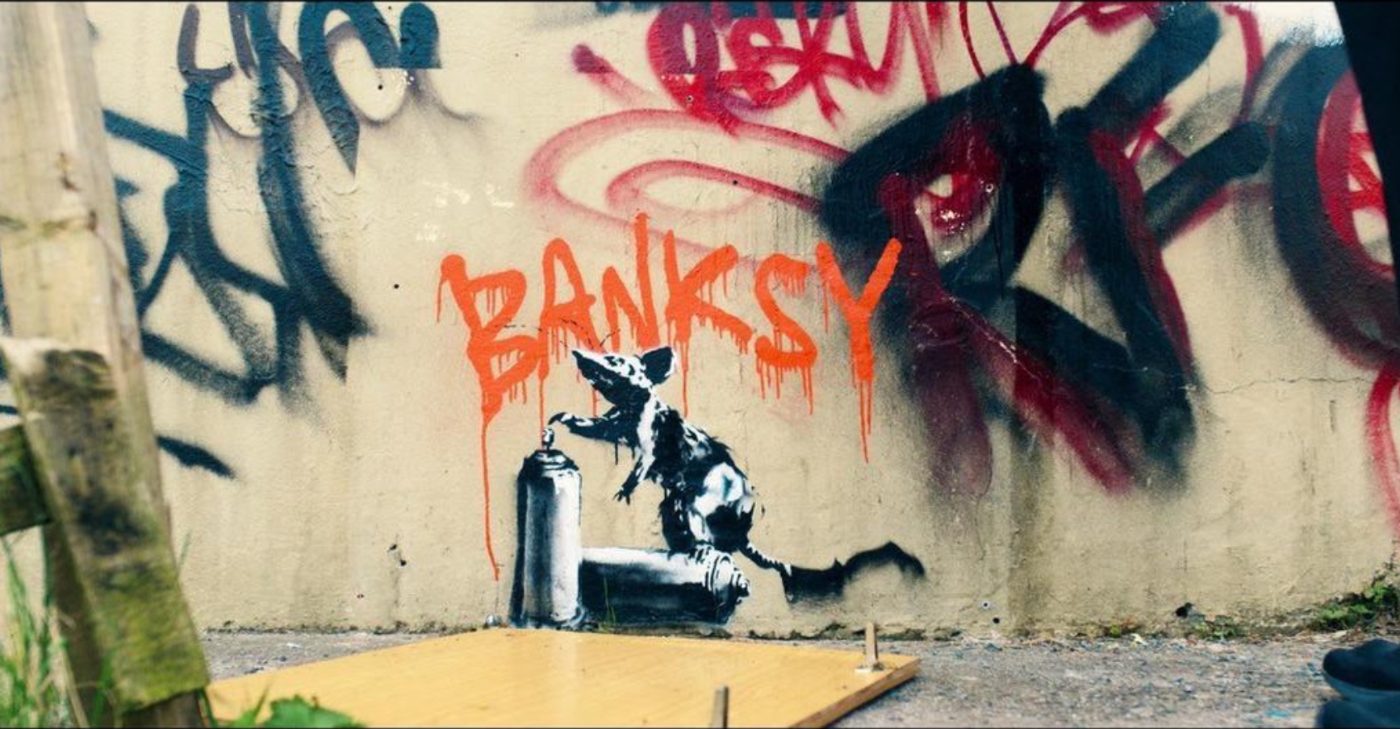
A Banksy Made to Be Destroyed
In November 2021, the final episode of the first series of Stephen Merchant’s BBC comedy-drama The Outlaws contained an extraordinary cameo: an original Banksy created specifically to be destroyed on screen by Christopher Walken.
The series follows seven strangers completing community service in Bristol. During the final episode, the group is tasked with painting over graffiti. Walken’s character, Frank, moves a wooden board leaning against a wall and discovers a small black-and-white rat perched beside two spray cans. Behind it, BANKSY has been written in large, dripping orange letters. Frank pauses and asks his supervisor whether he should really paint over it. Without looking closely at the image, she reminds him that their instructions are to cover all the graffiti. Frank obeys and rolls paint directly across the work.
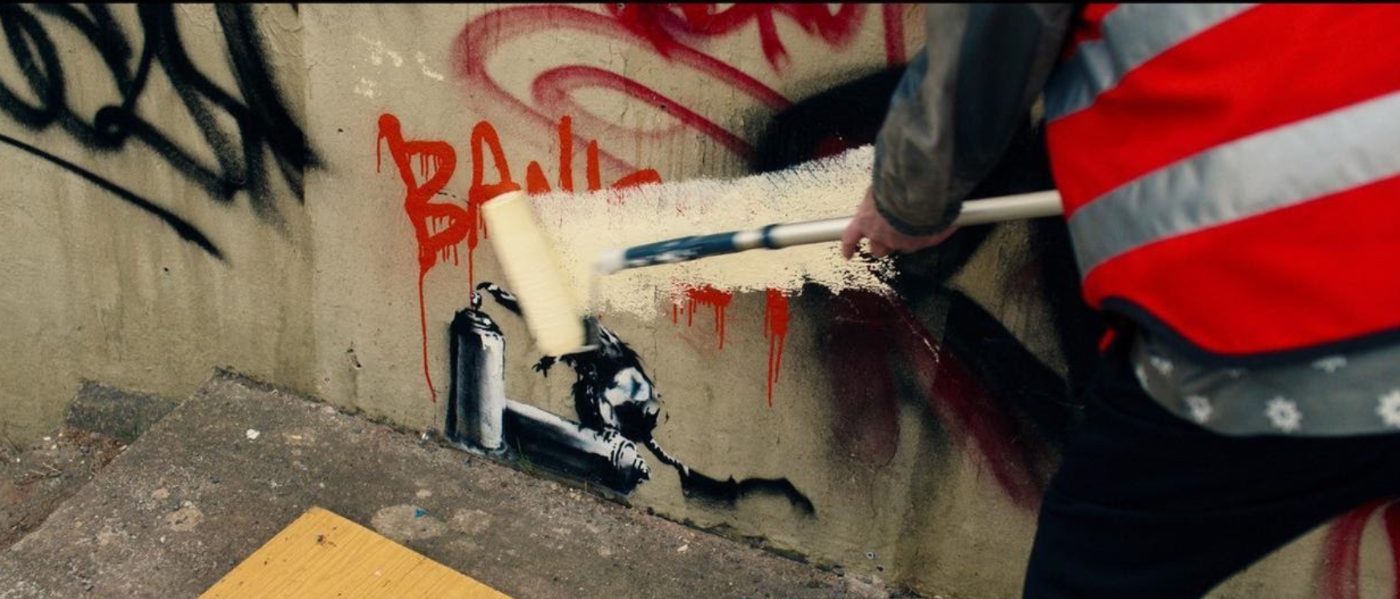
The scene initially appeared to be a clever fictional joke about Banksy’s relationship with his hometown. The BBC subsequently confirmed that the artwork was genuine and that Walken had actually painted over an original Banksy during filming.
Banksy on the Set
The intervention originated with Stephen Merchant, himself from Bristol, who approached Banksy while developing the series. Merchant later explained that he proposed an unusual collaboration: Banksy would create an original work on the set, Christopher Walken would destroy it, and the artwork would therefore survive principally through its appearance in the television programme.
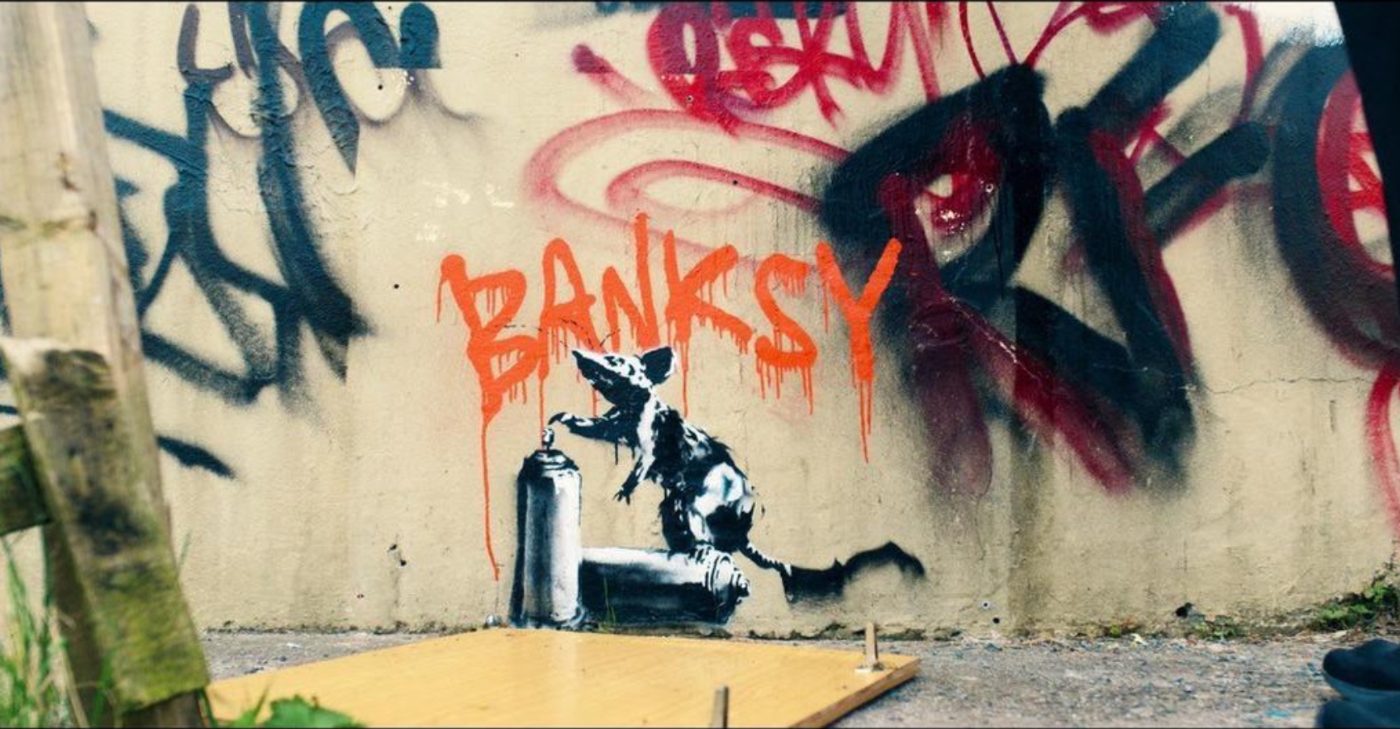
Banksy agreed, but maintained the secrecy characteristic of his practice. Merchant provided the location without knowing when the artist would arrive. According to Merchant’s account, Banksy entered the set by climbing over a fence and painted the work without being observed. When the production team discovered it, Merchant concealed the mural behind a wooden board so that it would remain hidden until the scene was filmed.
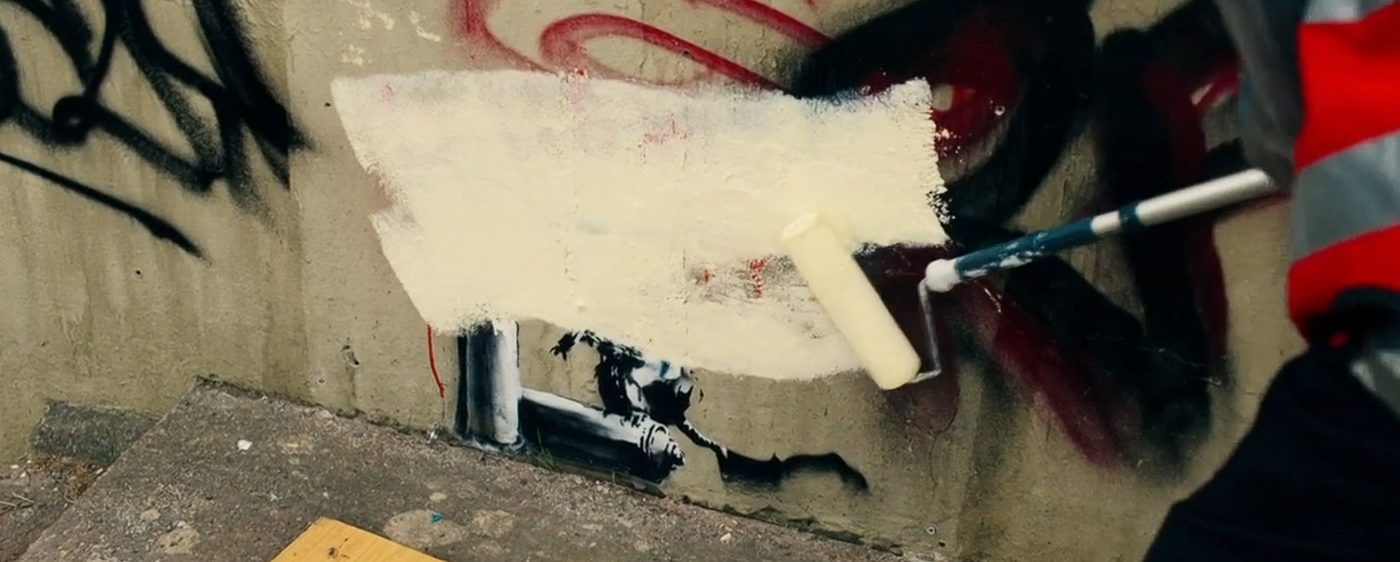
Christopher Walken was eventually told that the stencil was authentic and agreed to paint over it as required by the script. The destruction was therefore neither accidental nor simulated. The physical Banksy was deliberately sacrificed as part of the conception of the work.
When Is Graffiti Worth Saving?
The choice of a rat was particularly appropriate. Rats belong to Banksy’s earliest and most persistent vocabulary, functioning as resourceful urban outsiders that occupy spaces society would rather keep clean. They have also frequently served as surrogates for graffiti writers themselves: unwanted, difficult to eradicate and capable of flourishing in the margins of the city.
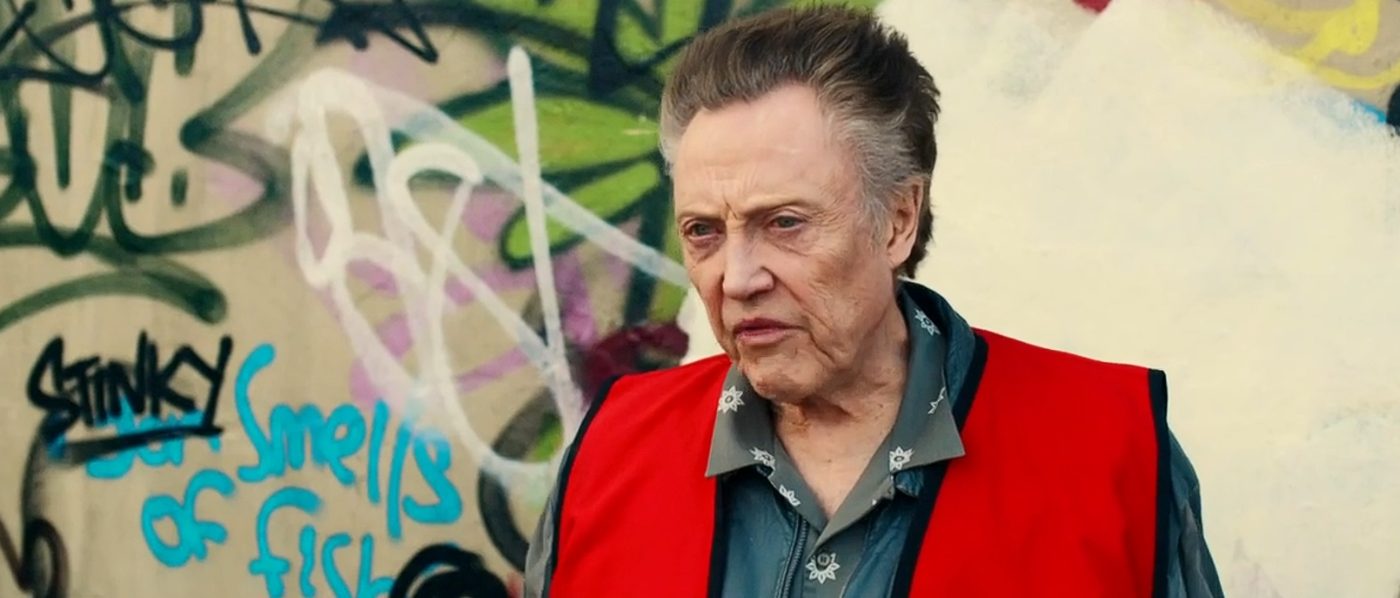
In The Outlaws, however, the rat appears beside Banksy’s own name. That signature changes everything. An anonymous stencil encountered during a community-service clean-up would normally be treated as precisely what Frank has been instructed to remove. Once identified as a Banksy, the same unauthorized mark potentially becomes an artwork of considerable cultural and financial value.
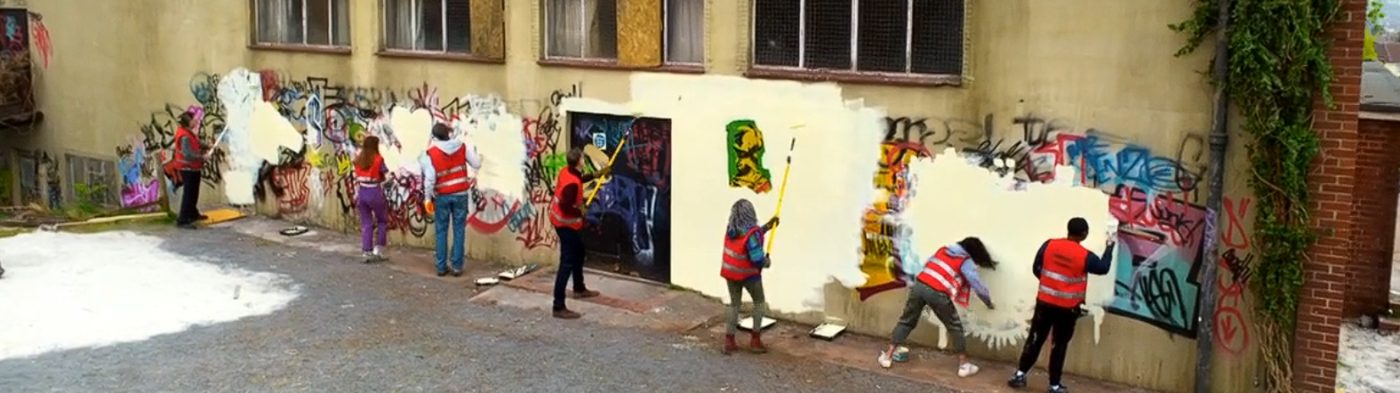
The scene turns that contradiction into comedy without needing to explain it. Frank senses that the image might be worth preserving, while the bureaucracy surrounding him continues to classify it simply as graffiti. His supervisor’s instruction is perfectly reasonable within the logic of the job, yet absurd once the audience knows what is being destroyed.
Banksy had explored the same institutional contradiction throughout his career. Unauthorized works have been removed by councils while others have been protected behind Perspex once their authorship became known. Walls bearing his murals have been dismantled and sold, transforming the physical fabric of streets into commodities. Here the distinction between vandalism and valuable art is compressed into a few seconds of television: the artwork is valuable because it is a Banksy, but within the fictional world of the scene it remains graffiti that must be painted over.
Destruction as Part of the Work
The intervention also belongs to Banksy’s longstanding fascination with the destruction, alteration and disappearance of art. Most famously, in 2018 a framed Girl with Balloon partially shredded itself immediately after selling at Sotheby’s, becoming Love Is in the Bin. The Outlaws intervention reverses the spectacle. Instead of destroying an artwork at the moment the market assigns it an enormous value, Banksy allows an original work to disappear before it can ever properly enter that market.
There is an important difference between a Banksy mural subsequently being destroyed and what happened here. Street works routinely disappear through redevelopment, vandalism or municipal cleaning, but those events generally occur after Banksy has relinquished control of them. In The Outlaws, destruction was incorporated into the work from the outset. The mural was created in order for its obliteration to be filmed.
That makes the television recording fundamental to the intervention. The physical object disappeared beneath Walken’s roller, but the sequence preserves its creation, discovery and destruction as a reproducible image. What might have become a removable and saleable Banksy wall instead became an ephemeral performance involving an artist who never appears, one of the world’s most recognizable actors, and a fictional community-service worker following instructions.
The humor lies in how casually all of this occurs. There is no auction room, ceremonial destruction or dramatic revelation within the scene itself. Frank notices the Banksy, wonders briefly whether it should be preserved, receives an instruction and continues doing his job. A potentially valuable artwork disappears because, according to the rules governing that particular wall, it is still graffiti.
In creating a Banksy specifically for Christopher Walken to paint over, the artist transformed destruction from an accident threatening the artwork into the condition that completed it. The mural lasted only briefly on a wall in Bristol, while the moment of its disappearance became the work that millions of viewers were ultimately meant to see.
STAY INFORMED
Receive the latest news, exhibitions, artworks and market updates on Banksy.