THE STREET IS IN PLAY
Day One in New York
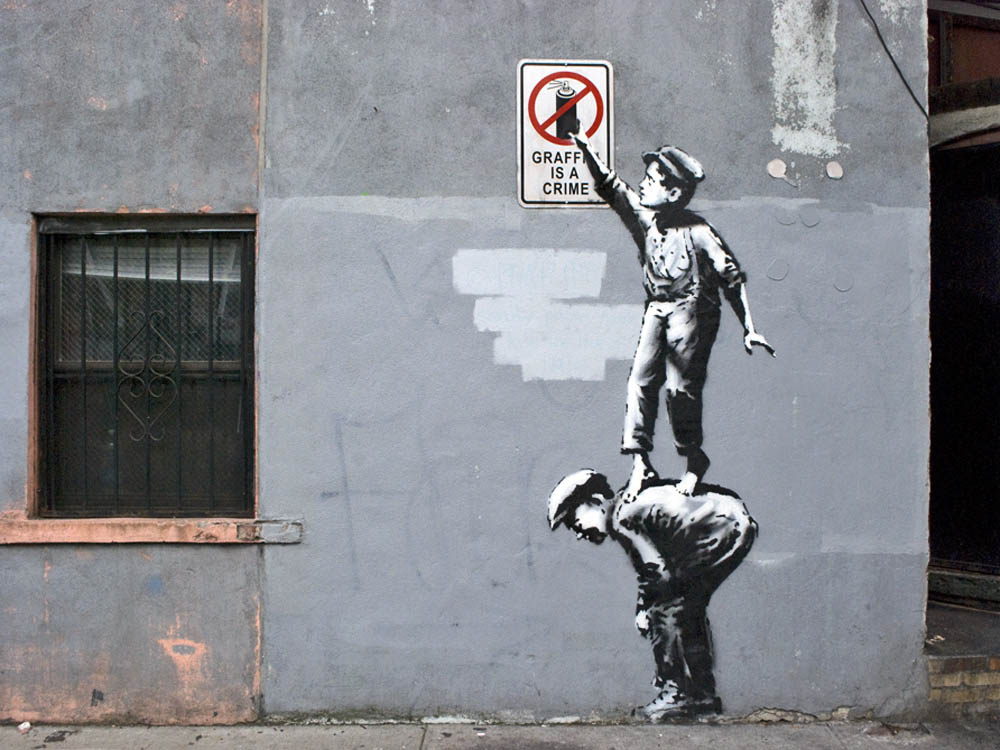
On 1 October 2013, Banksy began his month-long New York residency Better Out Than In with an intervention on Allen Street in Manhattan’s Lower East Side. For the next thirty-one days, the artist would use New York as an open-air exhibition, unveiling a new mural, installation, performance or intervention almost every day. The Street Is in Play was the opening statement.
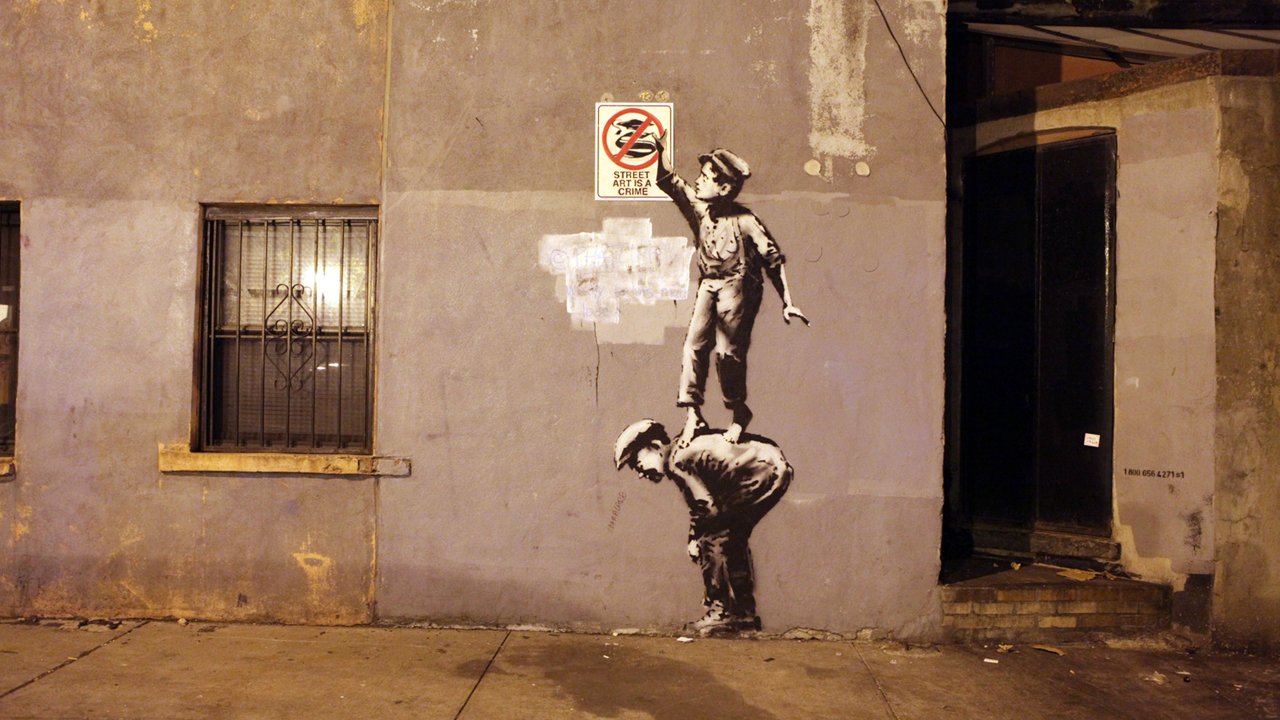
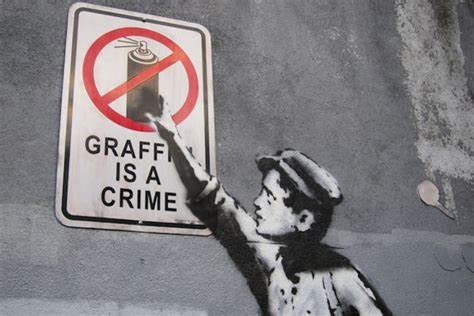
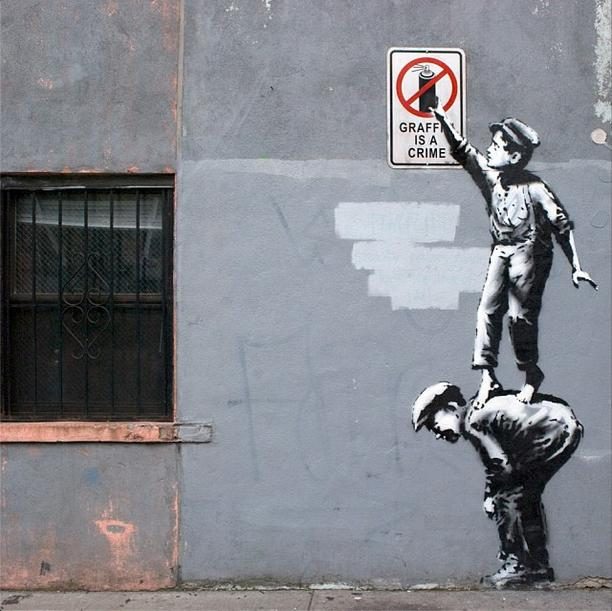
The composition was deceptively simple. Two stencilled boys reach upwards towards a red spray can depicted inside an existing municipal-style sign reading “Graffiti Is a Crime.” Banksy incorporated the physical sign directly into the work, transforming a piece of street infrastructure into part of the composition.
The children appear excited rather than threatening. Stretching towards the spray can like children reaching for something just beyond their grasp, they turn an object associated with vandalism into a forbidden toy.
Graffiti Is a Crime
The central joke is built around the relationship between the painted figures and the sign. An object designed to discourage graffiti becomes indispensable to a piece of graffiti.
Banksy had explored similar contradictions before, notably in works such as Designated Graffiti Area, where the visual language of official authority was manipulated to authorize the activity it normally prohibited. Here, however, the idea is reduced to an exceptionally economical interaction between image, object and location.
The sign says graffiti is a crime; the children want the spray can anyway. More importantly, Banksy has already committed the prohibited act around the warning itself.
The work therefore asks a familiar Banksy question: at what point does an unauthorized mark stop being vandalism and become art? In New York during October 2013, that question would acquire increasingly complicated answers.
The Street Becomes the Gallery
The title was perfectly chosen. The Street Is in Play borrows the language of games and sport to announce that the ordinary urban environment is now active territory. Walls, vehicles, doors, signs, bridges and abandoned objects could all become part of the exhibition.
Banksy reinforced the concept by providing a telephone audio guide, mimicking the interpretative systems of museums and galleries. Visitors could encounter an unauthorized artwork on a New York street and then listen to an institutional-style commentary about it on their phones. Contemporary reporting noted that the residency was accompanied by a dedicated website and social-media accounts, allowing the physical exhibition to unfold simultaneously across the city and online.
It was an important shift. Better Out Than In would not simply consist of thirty-one separate Banksy works. New York itself was the exhibition space, while discovery, photography, social media, vandalism, municipal removal and public reaction all became part of the experience.
Gone Within a Day
The first work immediately demonstrated how that experiment would operate.
Within hours, the sign that formed an integral part of the composition was reportedly stolen. By the following day, the remaining stencil had been painted over. Contemporary coverage recorded that Banksy’s opening work had disappeared after barely twenty-four hours.
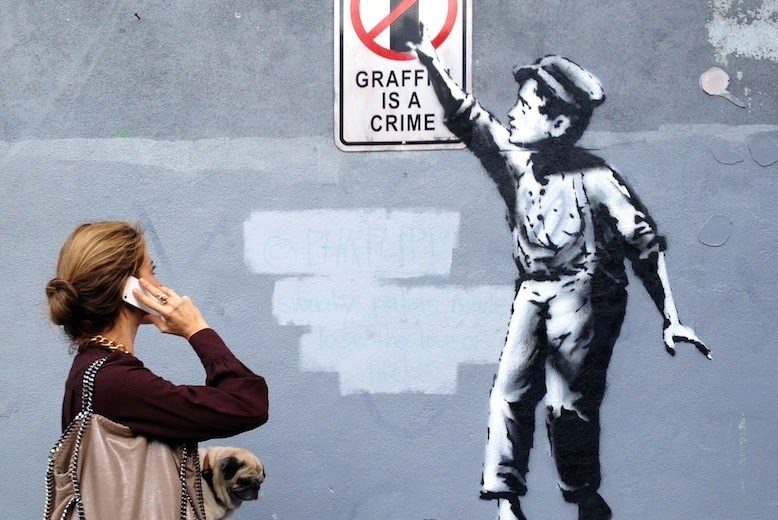
Its destruction could hardly have provided a more appropriate beginning to the residency. Banksy had created an artwork about the criminalization of graffiti using a sign declaring graffiti illegal; the sign was stolen, and the graffiti was then erased by the city.
What would have been a disastrous opening for a conventional exhibition instead demonstrated precisely why Banksy had chosen the street.
Unlike a museum, the street offered no guarantee of preservation, ownership or even survival. Anyone could encounter the work, but anyone could also alter, steal or destroy it. That instability would become one of the defining characteristics of Better Out Than In.
On the first day of Banksy’s New York exhibition, the street was put in play. By the second, it had already made its move.
STAY INFORMED
Receive the latest news, exhibitions, artworks and market updates on Banksy.