The original Thug. Immortalized here is the moment turf was placed on the statue of the big man during London's May Day riots. Arguably the best piece of vandalism this country has seen in over a decade.
Authority, Defaced
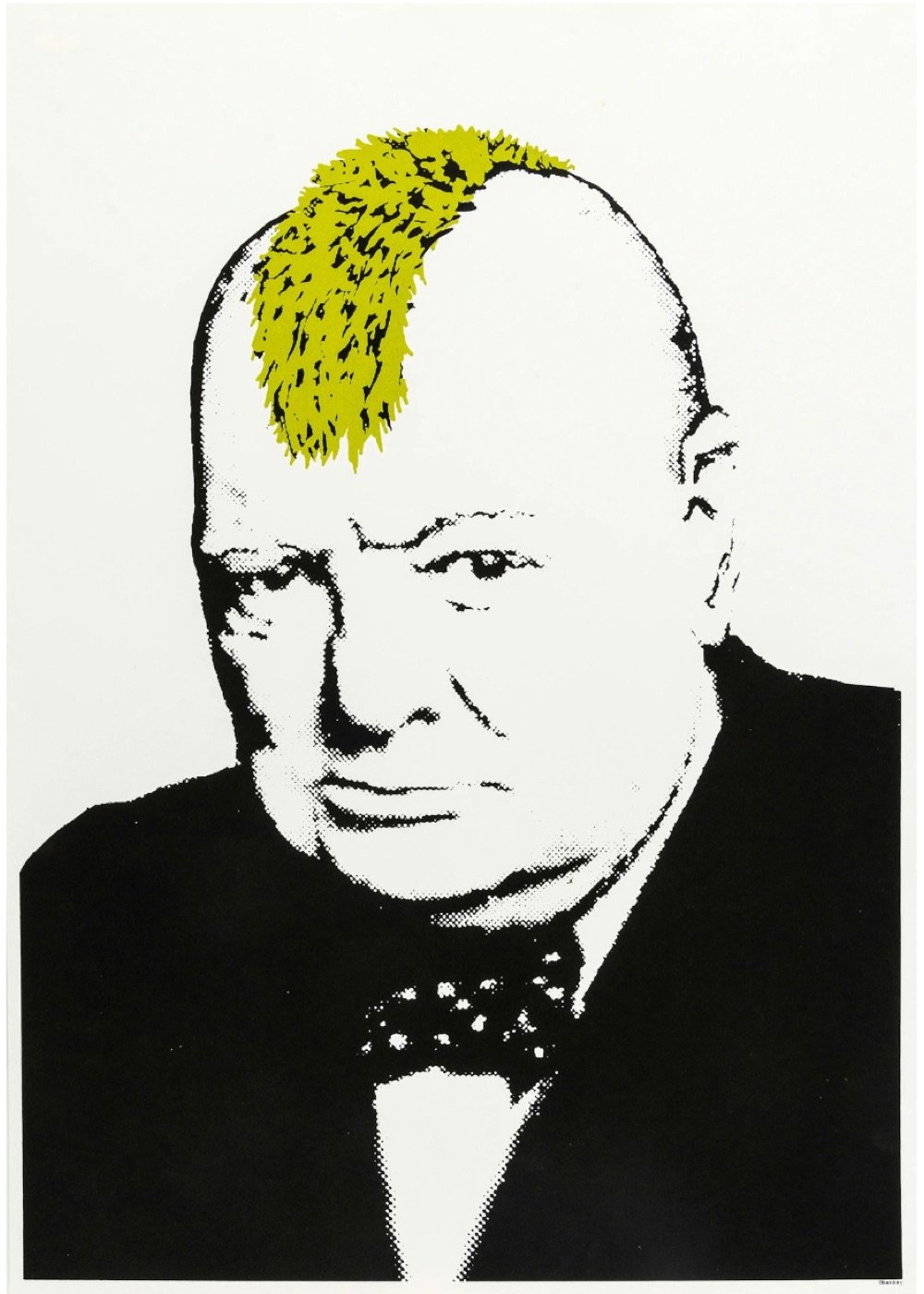
Turf War depicts a monumental image of Winston Churchill, one of Britain's most iconic political figures, rendered in Banksy's stark stencil style. The portrait, immediately recognizable, draws from historical imagery that has long contributed to Churchill's status as a symbol of strength, leadership, and national identity. Yet in Banksy's version, this authoritative figure is given a bright green mohawk.
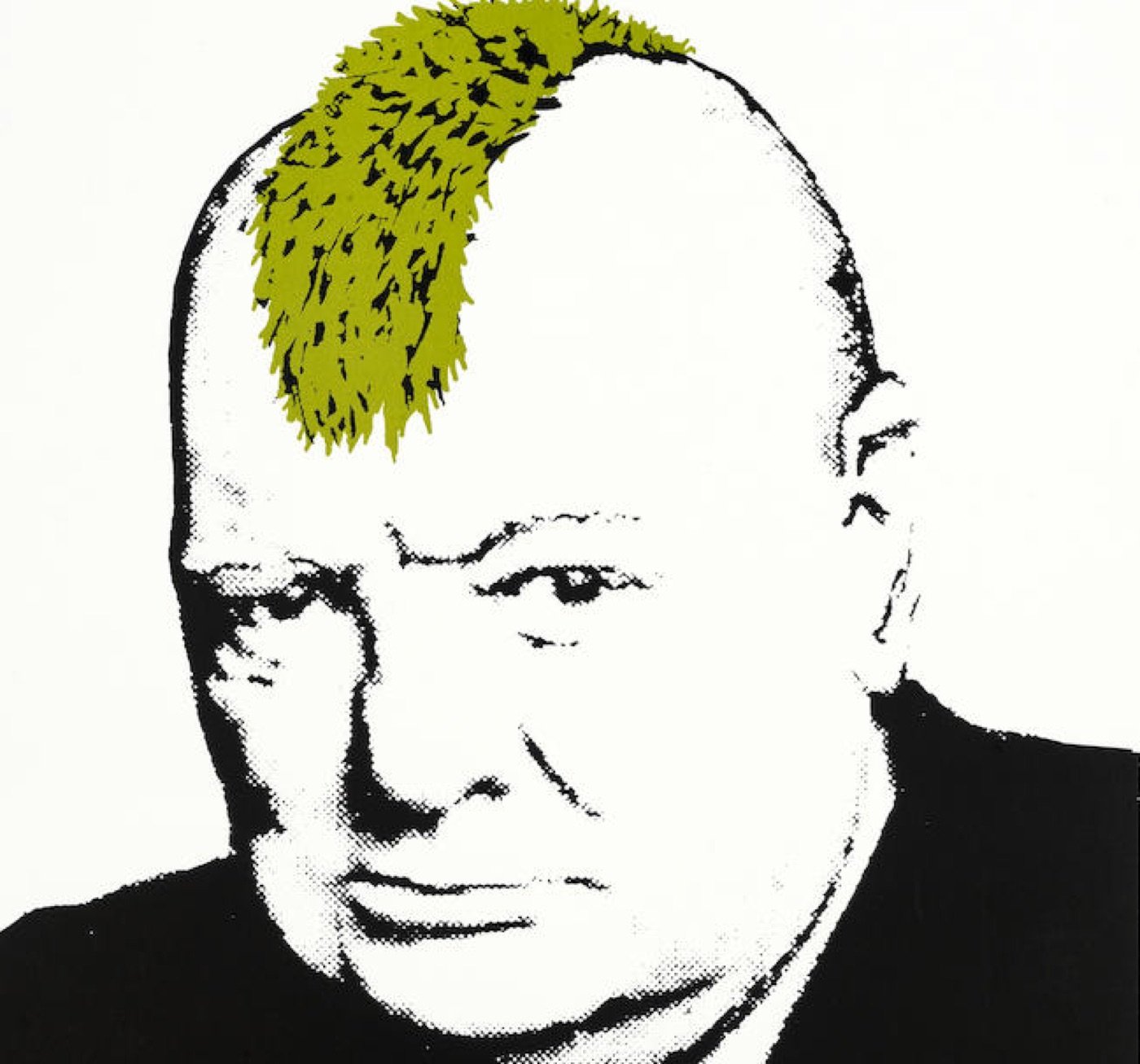
This single gesture transforms the image entirely. What was once a symbol of establishment power becomes something unstable, even absurd. The dignity of the statesman is not erased but challenged, reframed through the visual language of rebellion.
Lessons in Power and Image
Considered one of the most significant political figures of the 20th century, Churchill is widely remembered for his leadership during World War II, often celebrated for resilience and determination, while more complex aspects of his legacy remain contested. Banksy's intervention is immediate and disarming. The addition of the mohawk—bright, aggressive, and unmistakably linked to punk culture—disrupts the solemnity of the original image.
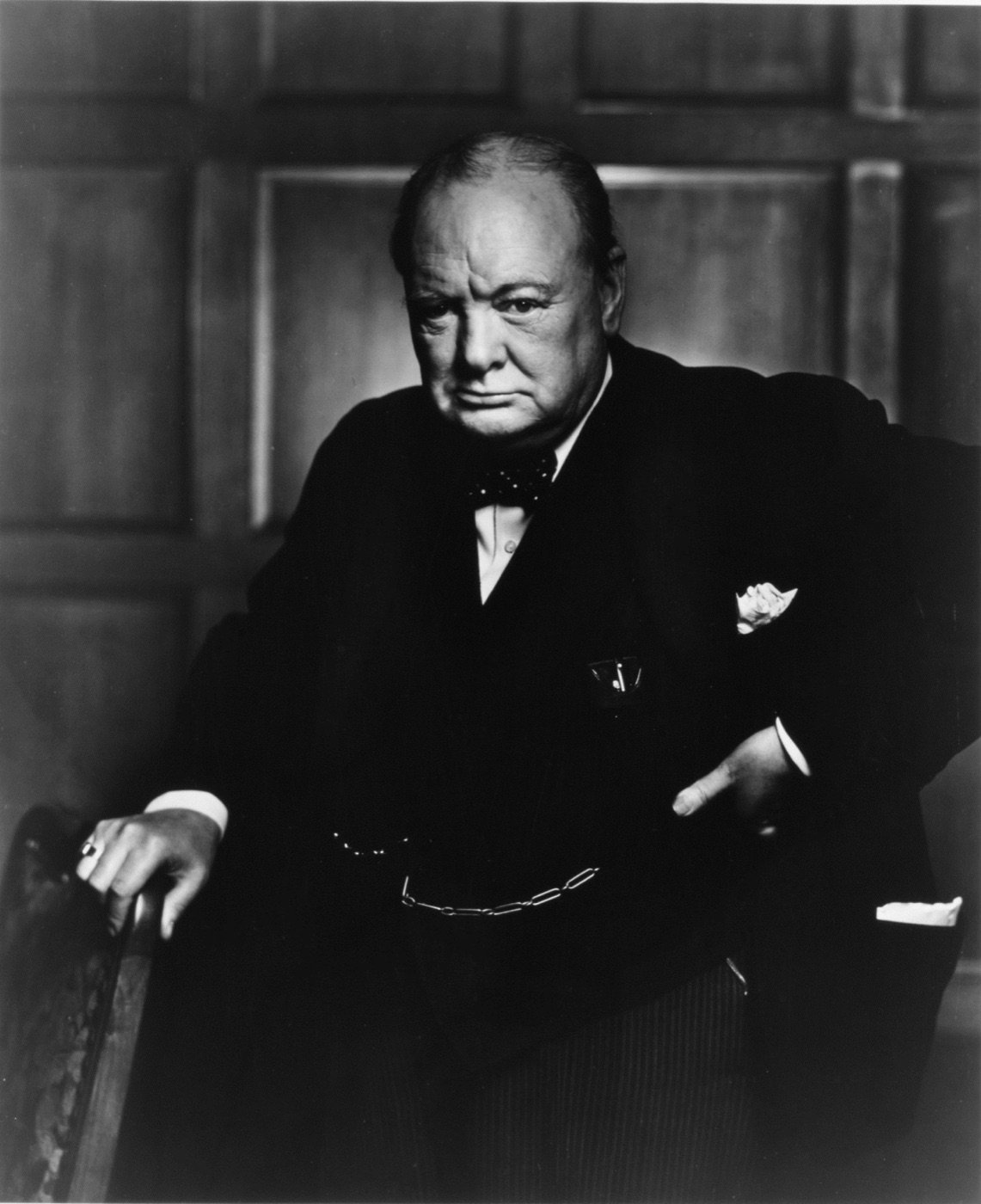
Rather than recreating Churchill, Banksy appropriates him. The portrait remains intact, its historical weight fully preserved, yet its meaning is altered through a single, deliberate act. The mohawk does not obscure Churchill's identity, it reframes it. The effect is both humorous and confrontational. The viewer recognizes the image instantly, but is forced to reassess it.
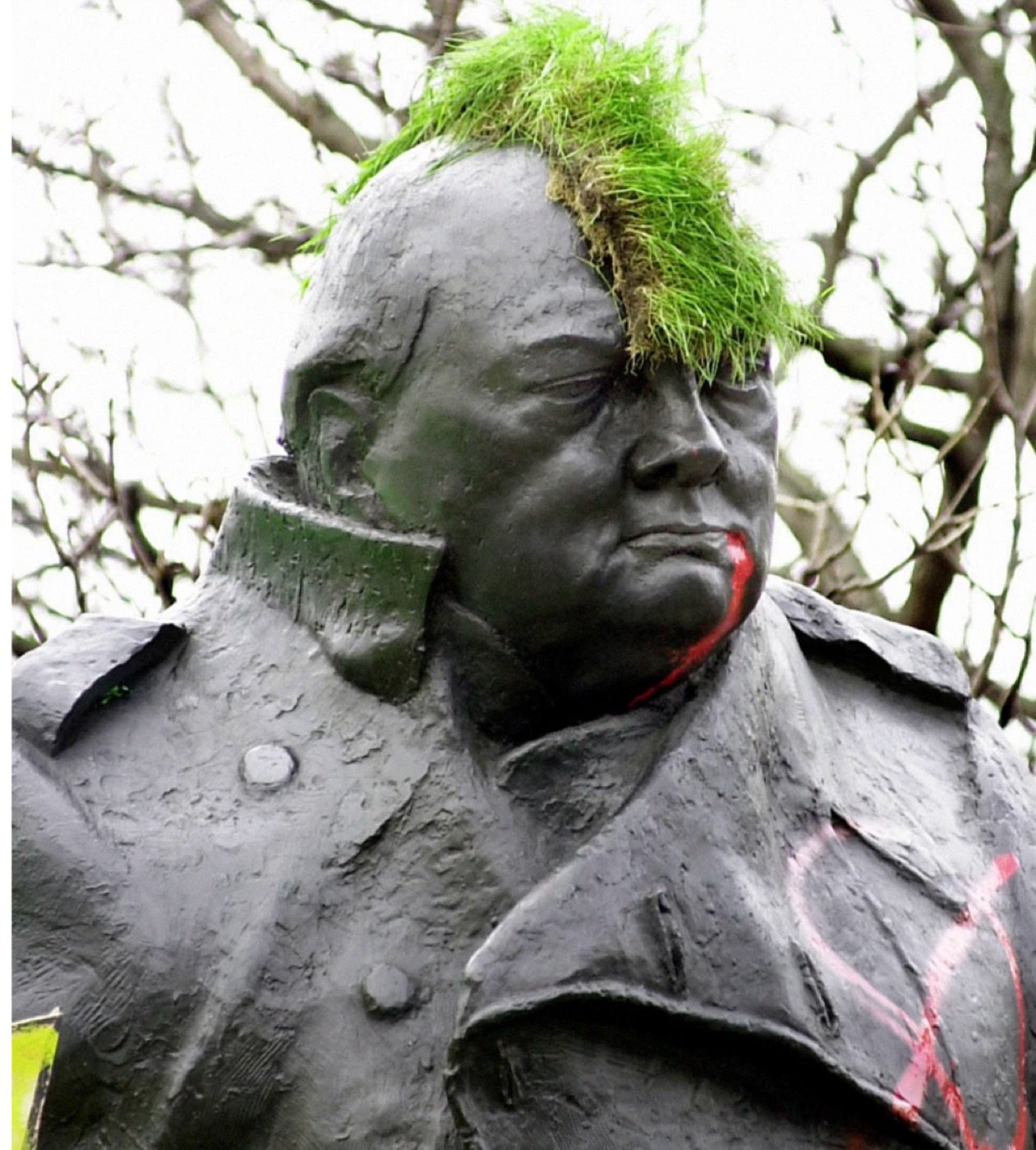
At the core of Turf War lies a collision between two visual languages. On one side, the carefully constructed image of a wartime leader, embedded in institutional narratives and national pride. On the other, the raw, anti-establishment energy of punk culture. The green mohawk acts as a visual intrusion, refusing to integrate smoothly into the portrait. The tension is unresolved.
As with many of Banksy's works, Turf War offers a reflection on how power is constructed through imagery. Historical figures are not only remembered through actions, but through carefully curated representations: photographs, monuments, portraits. By altering one of the most iconic representations of Churchill, Banksy exposes the fragility of that construction.
The act of adding the mohawk echoes the language of graffiti itself. To deface is not only to damage, but to reclaim, to challenge ownership, and to assert presence. In this sense, Turf War operates as more than an image. It becomes an action. Banksy symbolically reclaims a national icon, placing it back into a contested space where meaning is no longer controlled solely by institutions.
The Turf War Exhibition
The image is closely tied to Banksy's 2003 exhibition Turf War, a pivotal moment in his early career where his practice began to shift from purely street-based interventions toward more formalized presentations within gallery contexts. The original painting for Turf War was suspended from the ceiling.
Within this framework, the altered Churchill takes on additional significance. Removed from the street and presented as an object, the work engages not only with political imagery but also with the structures of the art world itself. Original works and related pieces from this period carry a particular importance, marking a transition in Banksy's trajectory.
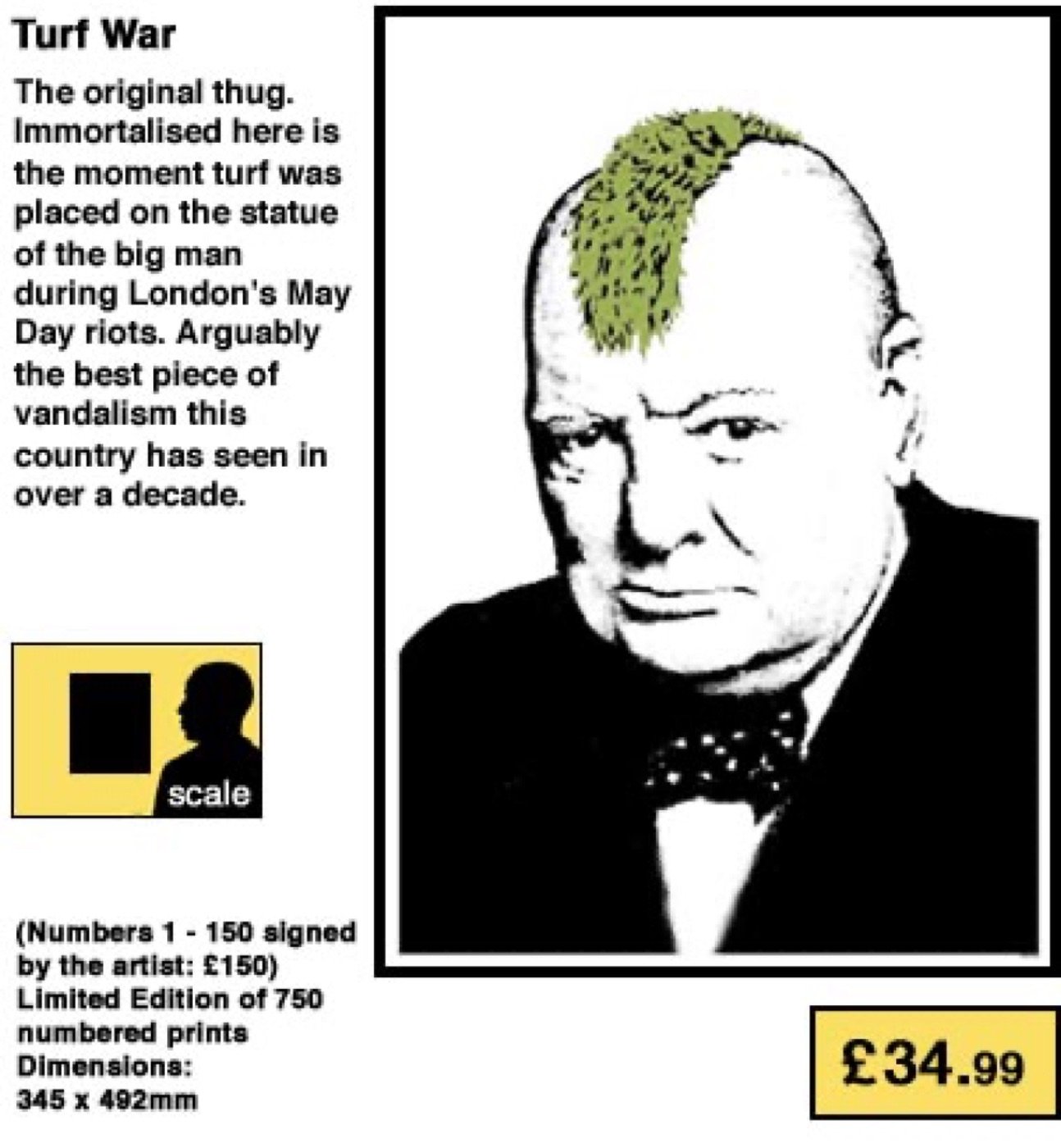
Today, Turf War stands as one of Banksy's most iconic early images. It encapsulates his ability to merge humor with critique, accessibility with depth, and irreverence with sharp cultural insight. The image remains instantly recognizable yet continues to provoke reflection. In altering one of Britain's most enduring figures, Banksy does not erase history: he reopens it.
STAY INFORMED
Receive the latest news, exhibitions, artworks and market updates on Banksy.