ABRAHAM LINCOLN
Lincoln on the Streets of New Orleans
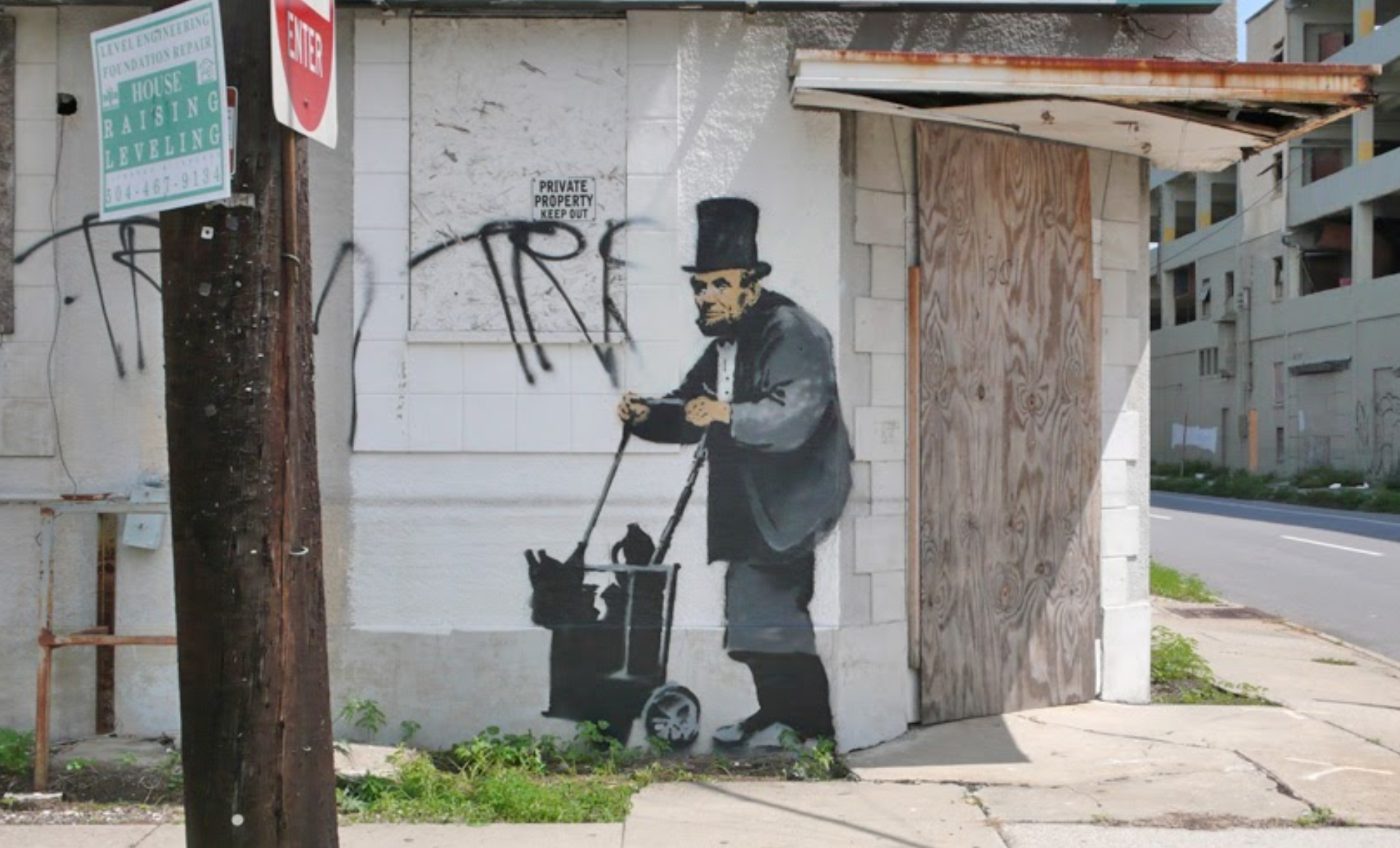
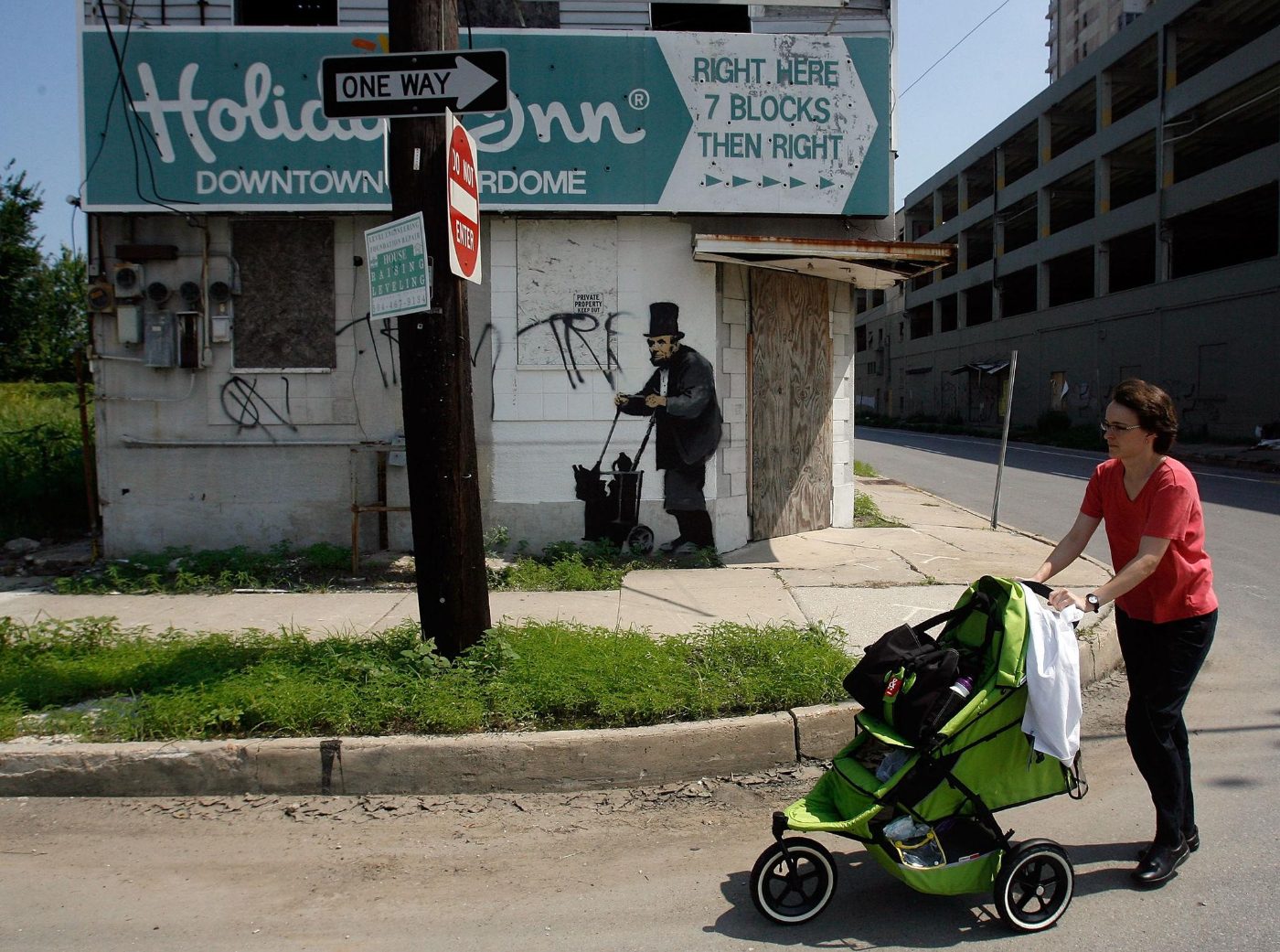
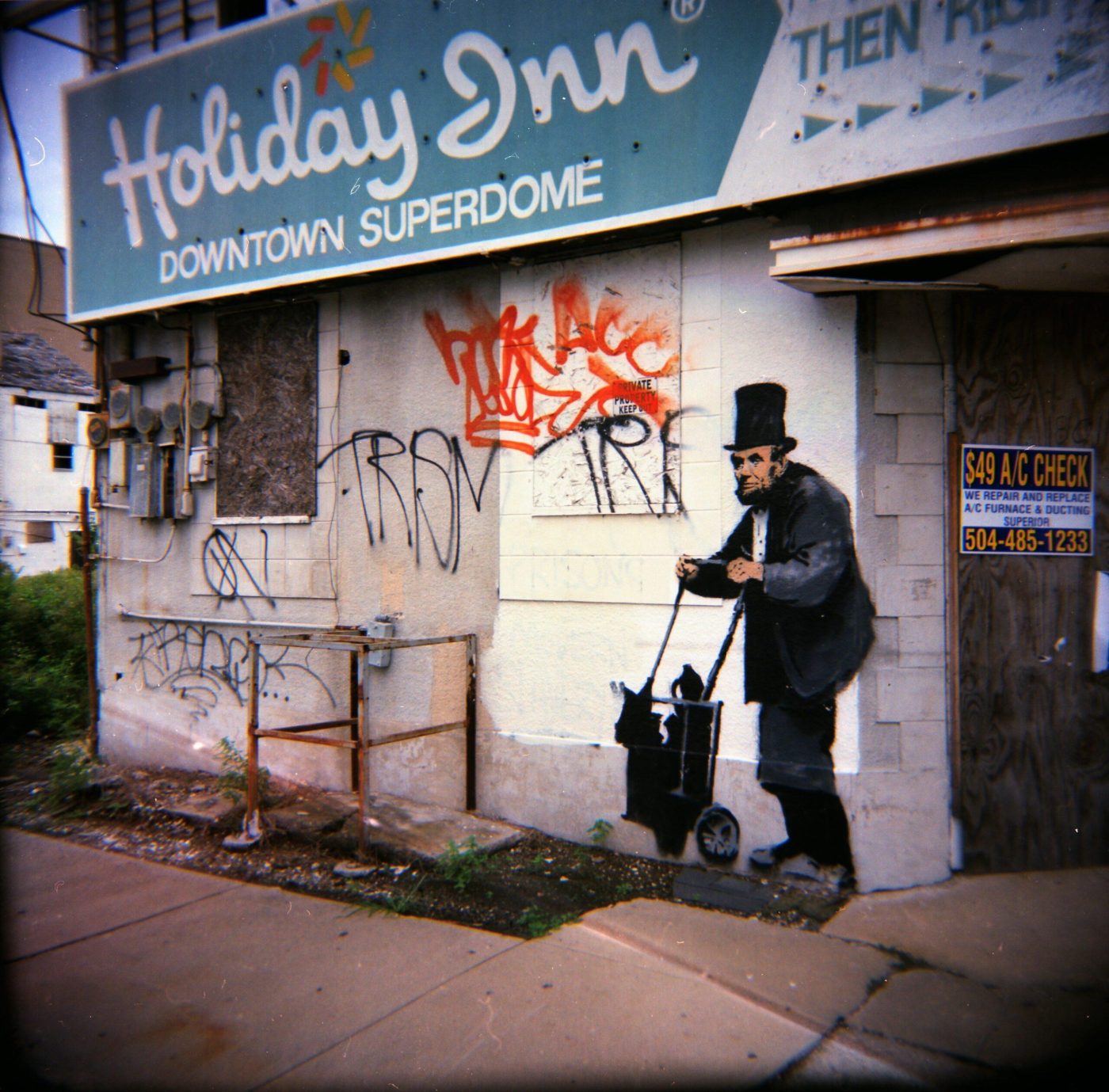
In late August 2008, around the third anniversary of Hurricane Katrina, Banksy painted an unexpected portrait of Abraham Lincoln on the wall of a damaged building near Canal Street in New Orleans. Rather than presenting the sixteenth President of the United States in the monumental pose familiar from statues, banknotes and history books, Banksy transformed him into a displaced man pushing a shopping cart loaded with his possessions. Contemporary reporting identified it as one of more than a dozen works Banksy created across the city during the intervention.
The transformation is deliberately unsettling because Lincoln remains instantly recognizable. His characteristic beard, dark suit and solemn nineteenth-century appearance survive, but the circumstances surrounding him have changed completely. Removed from the symbolic architecture of presidential power, he wanders through the damaged streets with everything he owns apparently contained in a cart.
Banksy does not caricature homelessness itself. Instead, he takes one of the most revered figures in American political history and subjects him to the vulnerability experienced by thousands of ordinary people displaced by Katrina.
Emancipation and Abandonment
The choice of Lincoln gives the image a specifically American historical dimension. As president during the Civil War and the figure most closely associated with the Emancipation Proclamation, Lincoln had become inseparable from the national narrative of emancipation and the abolition of slavery. Banksy's decision to place him in New Orleans—a city whose history is deeply entangled with slavery and racial inequality—makes that legacy impossible to ignore.
Katrina had exposed profound disparities in American society. The storm itself did not discriminate, but vulnerability to the disaster and the ability to escape or recover from it were heavily conditioned by poverty, race and geography. Three years later, Banksy encountered a city in which the physical evidence of displacement and inadequate reconstruction remained visible. His stated purpose was to highlight the condition of the clean-up operation, while several of the murals addressed the social consequences of the disaster more broadly.
Against that background, Lincoln becomes an uncomfortable measure of the distance between American ideals and American reality. The president associated with liberation is himself rendered dispossessed, while the descendants of those whose emancipation he helped initiate continued to experience profound social and economic inequality. Phillips, discussing Banksy's related Lincoln paintings, similarly connects the New Orleans image to the racial and class divisions made particularly visible by Katrina.
The work need not be reduced to a direct accusation against a particular administration. Its force is broader. Banksy takes a monumental figure from the American national story and places him among people who appear to have been left behind by that story.
Dismantling an Icon
Lincoln was especially suited to Banksy's method because his face had long since become an image as much as a historical person. Nineteenth-century photography helped establish an extraordinarily recognizable public portrait, subsequently repeated through monuments, currency, textbooks and popular culture. Banksy could therefore alter Lincoln's circumstances while barely altering the man himself.
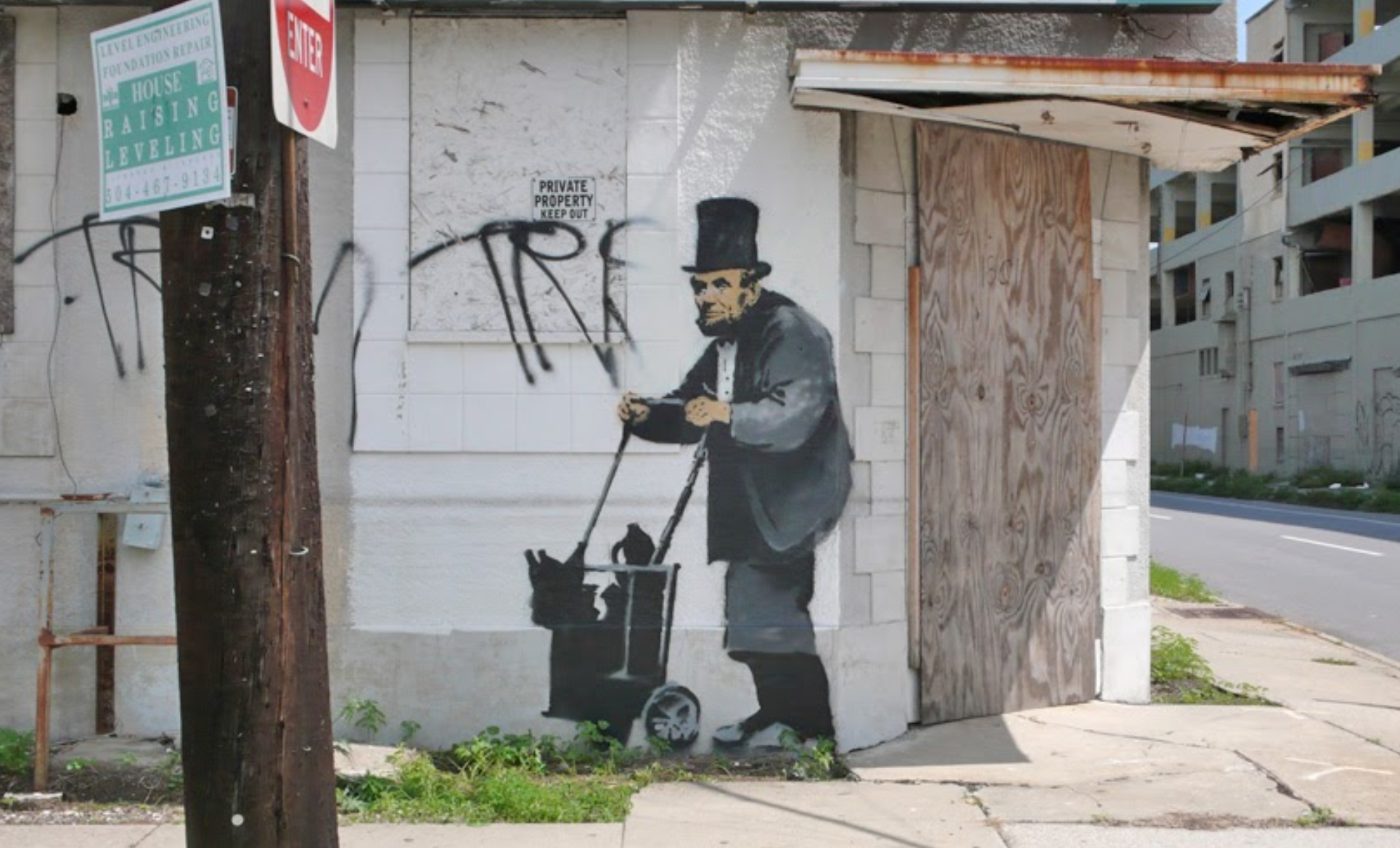
That strategy recurs throughout Banksy's work: familiar cultural images are retained just long enough to be recognized before one unexpected element destabilizes their meaning. Here the shopping cart performs that function. The dignity of the presidential portrait collides with an object associated with homelessness and precarious survival.
The physical surroundings intensified the effect. Banksy's Lincoln did not inhabit a gallery or pristine wall but the damaged urban fabric of post-Katrina New Orleans. The deteriorating building became part of the image, collapsing the historical distance between the nineteenth-century president and the contemporary city around him.
From the Wall to the Studio
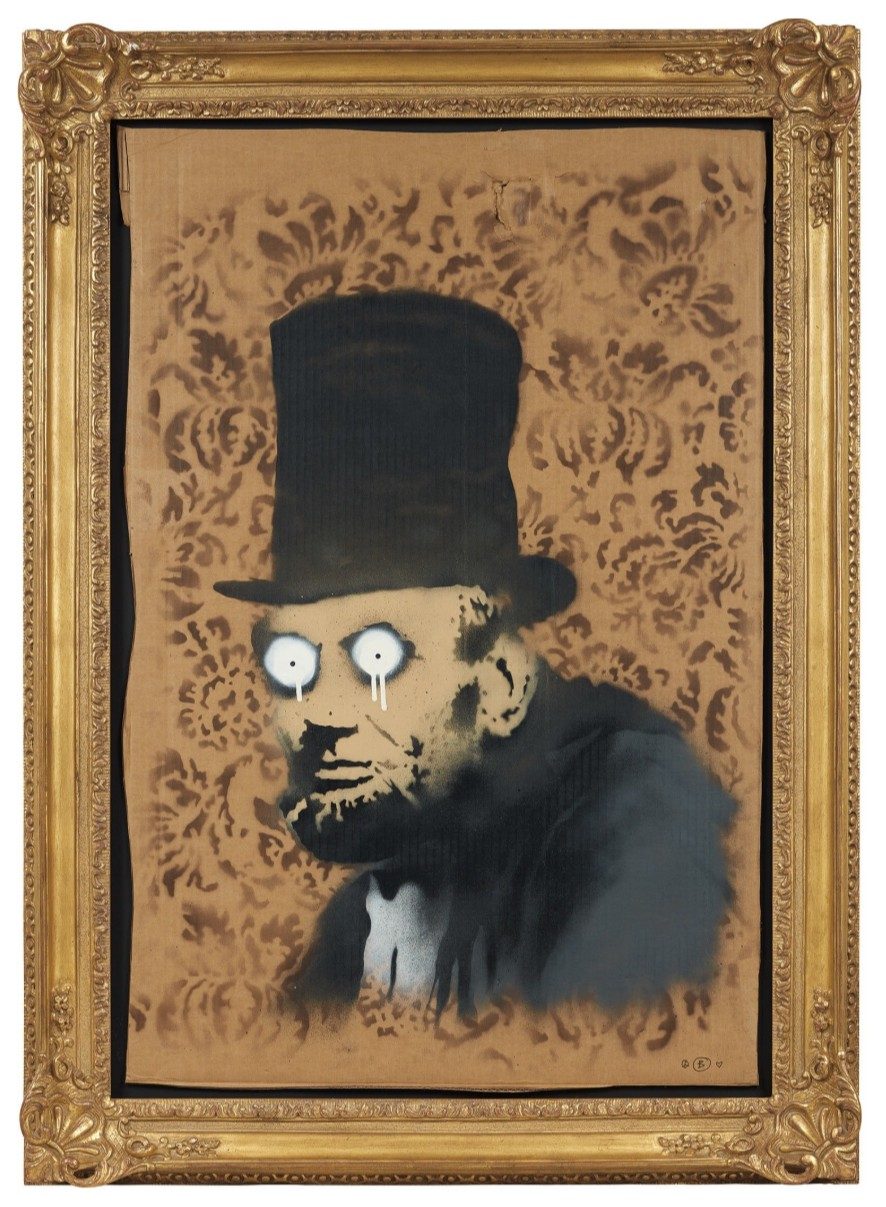
Banksy also used the same Lincoln stencil for a very small group of works on cardboard created in 2008. Phillips records a series of only three, in which Lincoln's familiar features were further distorted through brightly patterned backgrounds and deliberately strange eyes. In one version his eyes protrude almost comically from his face; in another they acquire a spectral glow.
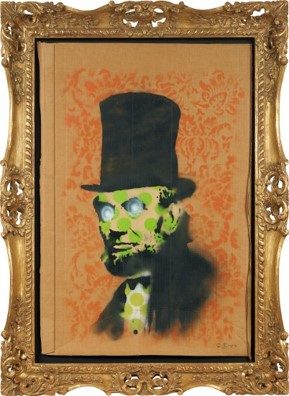
These studio works demonstrate that Lincoln was more than a one-off New Orleans street image. Banksy was interested in destabilizing the reverential visual language surrounding the president, shifting him between historical icon, homeless wanderer and almost ghost-like apparition. Unlike Nola, however, the image was not developed into a regular screenprint edition.
The original New Orleans mural did not survive. The building on South Derbigny Street was subsequently demolished to make way for a healthcare facility, taking Banksy's Lincoln with it.
Its disappearance is particularly resonant for an image conceived around displacement. Banksy temporarily removed Lincoln from the monument and placed him back on the street, pushing his possessions through a city still struggling to rebuild itself. The wall eventually vanished, but the inversion remains: one of America's most monumental political figures had been transformed into someone with no secure place to call home.
STAY INFORMED
Receive the latest news, exhibitions, artworks and market updates on Banksy.