ARMORED DOVE
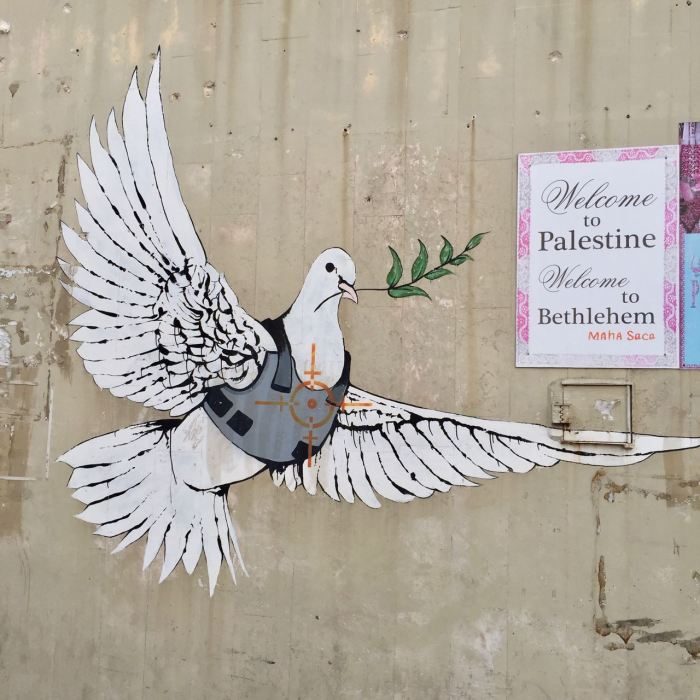
PEACE IN THE CROSSHAIRS
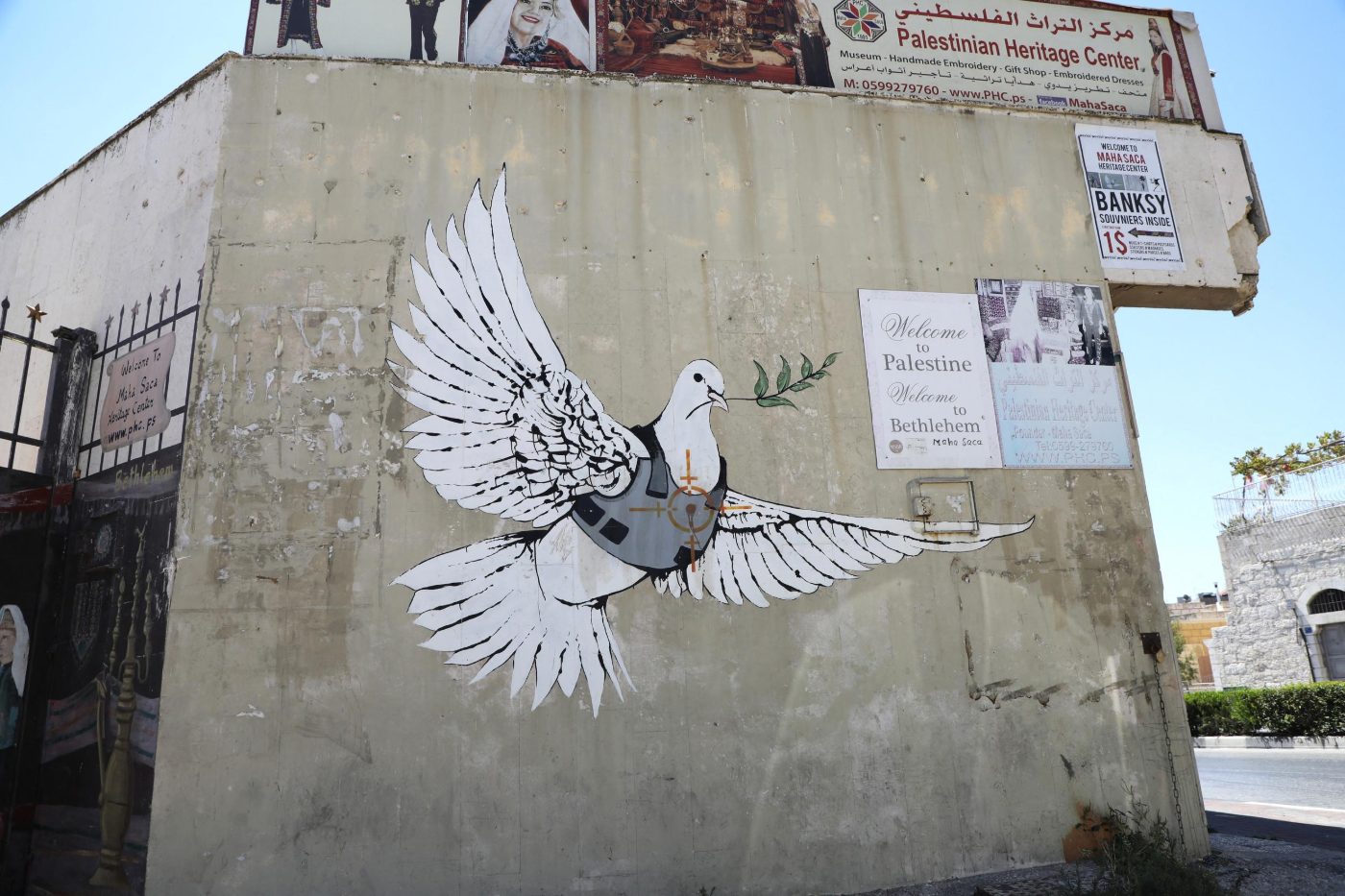
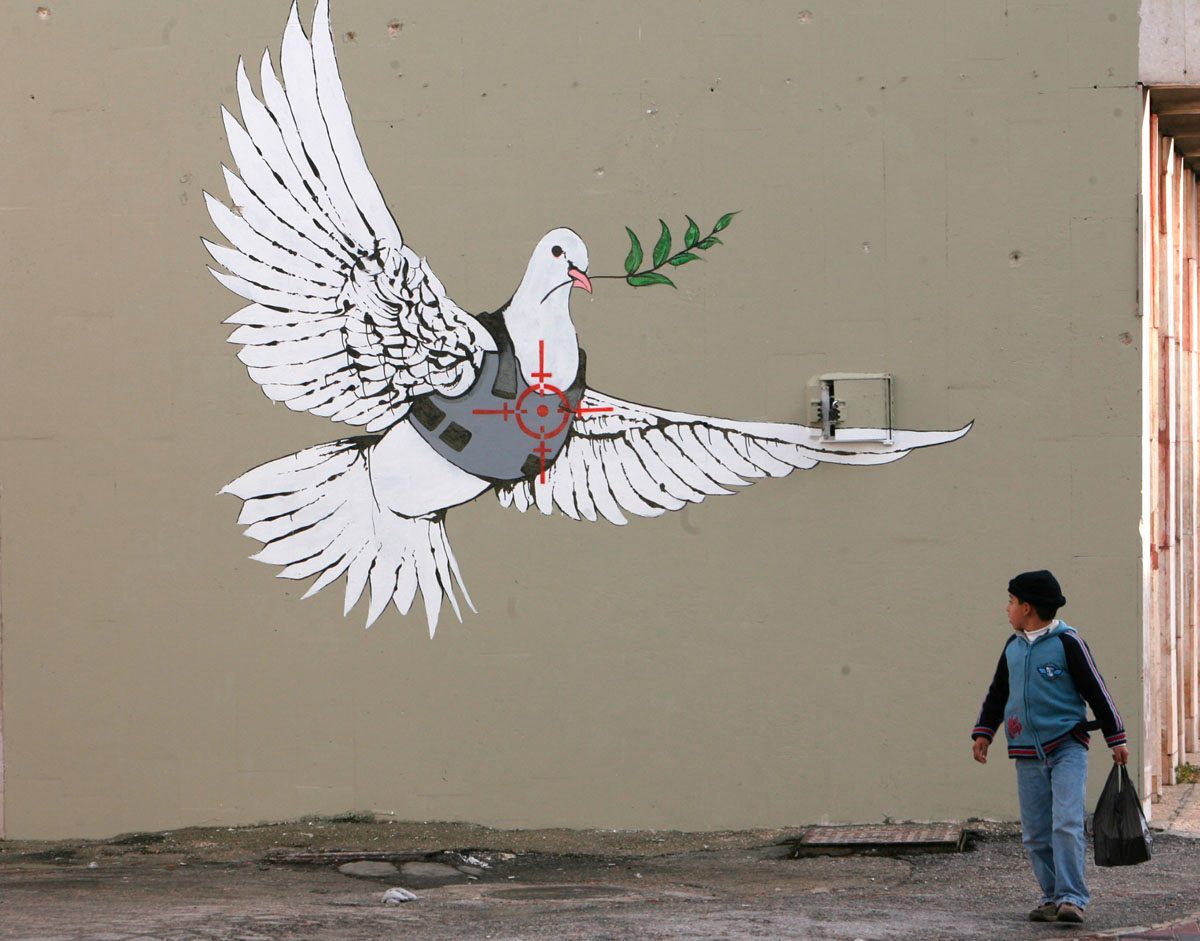
Banksy painted Armored Dove in Bethlehem in December 2007, during his return to the West Bank for the final edition of Santa’s Ghetto. The monumental stencil occupies an exterior wall of the Palestinian Heritage Center on Manger Street, close to the separation barrier and the checkpoint controlling one of the principal approaches to Bethlehem. Unlike Banksy's 2005 interventions painted directly on the barrier, Armored Dove was executed on the Heritage Center building, making the relationship between image and surrounding political landscape particularly important.
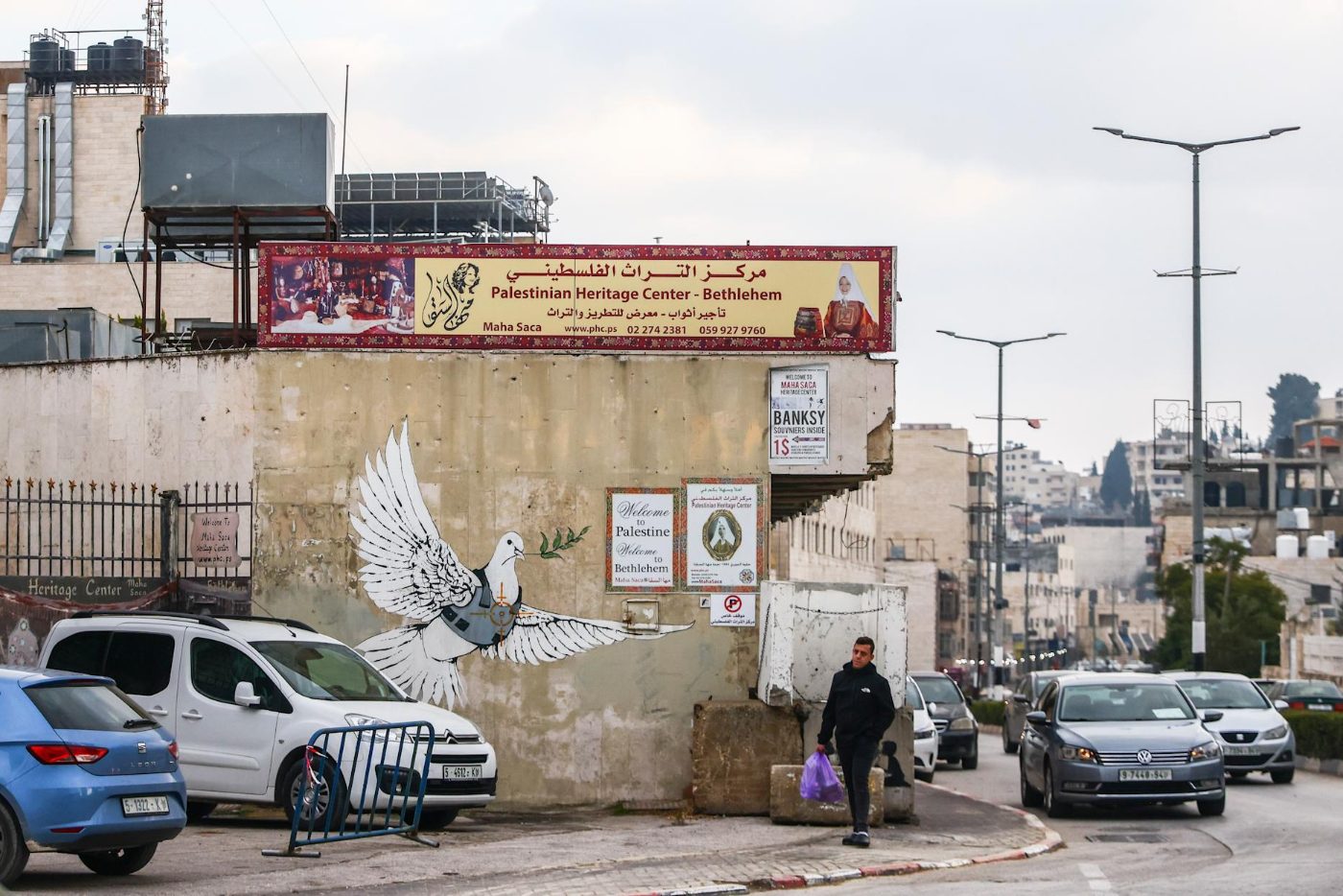
A large white dove flies across the wall with its wings fully extended and a green olive branch held in its beak. Yet Banksy has equipped this traditional symbol of peace with a dark bulletproof vest, while an orange-red sniper's sight is trained directly upon its chest. The image depends upon the collision of three immediately recognizable signs—the dove, the olive branch and the crosshairs—whose meanings are normally irreconcilable. Peace is present, but it requires protection and remains a target.
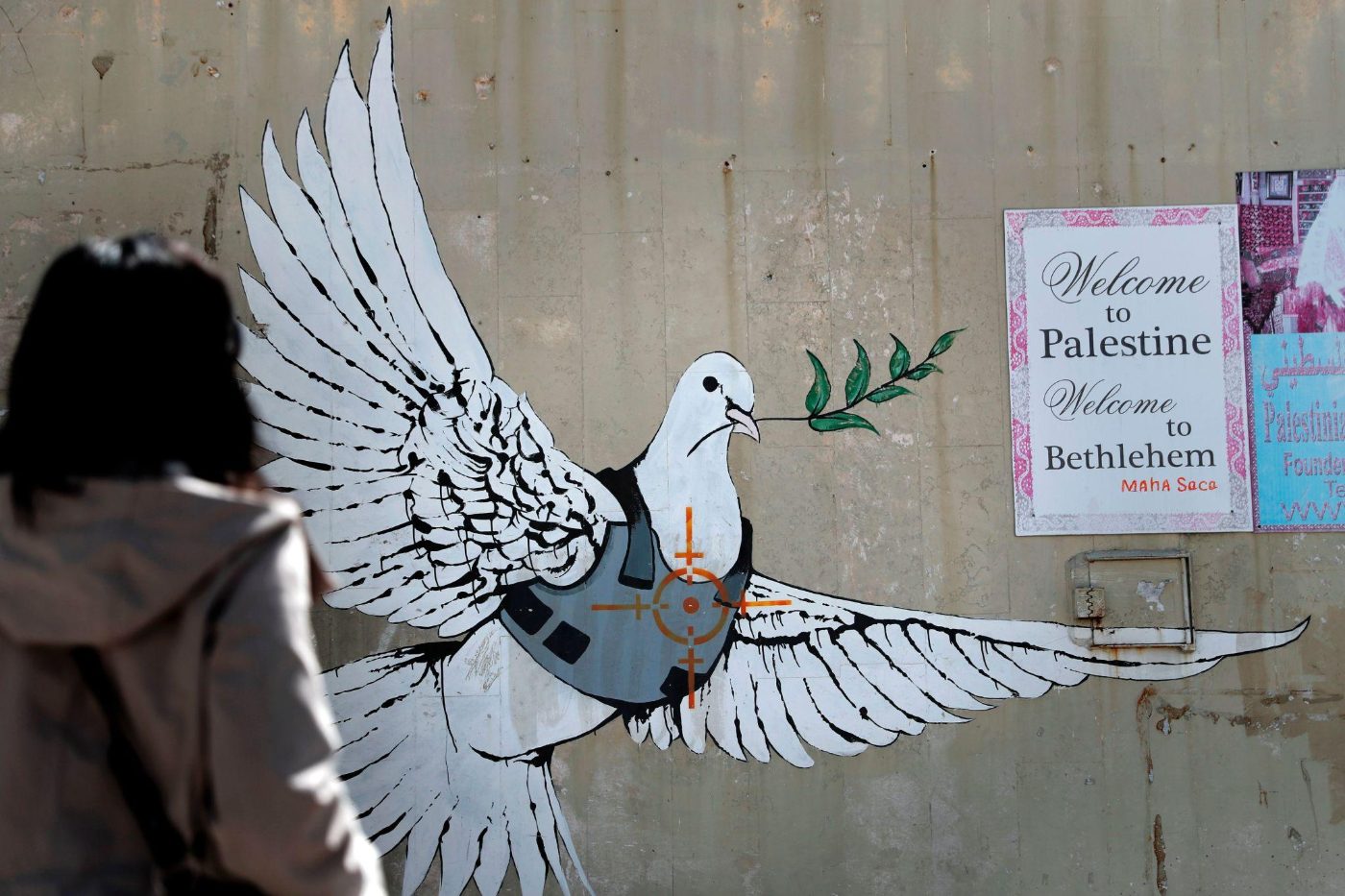
The mural's scale contributes considerably to its effect. Rather than producing one of the small stencils characteristic of his earlier street practice, Banksy allows the bird's wings to extend dramatically across the architecture. The pale concrete becomes an almost empty field around the figure, while the restricted use of color—the green branch and red-orange sight—directs attention toward the opposing possibilities of reconciliation and violence.
THE DOVE AS A SYMBOL OF PEACE
The dove and olive branch belong to an exceptionally long visual tradition. Their association with peace reaches back through Christian and Jewish iconography to the biblical story of Noah, in which a dove returns to the Ark carrying an olive leaf, signalling the retreat of the flood and the possibility of renewal. In the twentieth century, the dove became an increasingly secular and international emblem of peace, notably through Pablo Picasso's celebrated dove imagery for the post-war peace movement.
Banksy retains that familiar symbolism but refuses the security normally associated with it. His dove has not arrived in a world ready to receive peace; it enters an environment in which peace itself appears endangered. The bulletproof vest acknowledges the expectation of violence, while the crosshair makes the threat immediate. The contradiction gives the image its force without requiring a written slogan: the very fact that a peace dove needs body armour exposes the fragility of what it represents.
BETHLEHEM, 2007
Banksy's return to Bethlehem came two years after his celebrated 2005 Palestine interventions, when he painted a series of images on and around the newly constructed separation barrier. Those earlier works frequently imagined ways of escaping or visually dissolving the concrete structure—children opening passages through it, windows revealing idyllic landscapes, curtains being pulled aside and figures apparently crossing beyond its physical limits.
The 2007 works were created in a different context. Banksy brought the final edition of Santa's Ghetto from London to Bethlehem, working with other artists and establishing a temporary exhibition intended to attract attention and visitors to the West Bank. Banksy Explained's existing history of Santa's Ghetto records four Banksy stencils from the Bethlehem project, with Armoured Dove becoming perhaps the most recognizable.
The choice of Bethlehem carried an additional resonance in December. A city internationally associated with the Christian narrative of Christ's birth and the language of peace was simultaneously marked by checkpoints, military infrastructure and the separation barrier. Banksy's dove compresses that contradiction into a single image: the universal aspiration toward peace exists alongside the mechanisms designed for conflict.
THE LOCATION AS PART OF THE WORK
The precise placement makes Armored Dove considerably more than a portable political image. The mural stands on the Palestinian Heritage Center, between Hebron Road and Manger Street, within sight of the infrastructure surrounding the barrier. The Center's founder, Maha Saca, later recalled that Banksy approached her before painting the building. According to her account, his initial proposal involved an Israeli soldier; she rejected the idea because she already saw enough soldiers and asked for something gentler. Banksy proposed the dove instead.
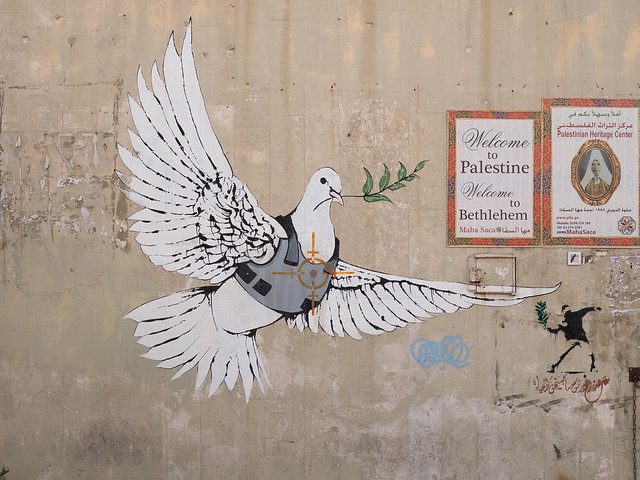
That recollection gives the apparently universal symbolism of the mural a particularly local history. The dove was not simply imposed upon an anonymous wall but emerged, according to Saca, from a conversation with the person responsible for the building. The resulting image remains confrontational, but its confrontation is achieved through contradiction rather than through the direct representation of a soldier.
There is another striking relationship between the mural and its surroundings. Academic analysis has noted that the trajectory implied by the red sight can be read against the actual security infrastructure across Manger Street, making the sniper's crosshair feel less like an abstract graphic device than an extension of the environment in which the work was painted. Whether or not Banksy intended such a precise sightline, the physical proximity of the barrier and its surveillance architecture inevitably affects the way the mural is experienced in situ.
FROM 2005 TO THE WALLED OFF HOTEL
Armored Dove occupies an important position in the chronology of Banksy's sustained engagement with Bethlehem. The 2005 interventions had transformed the separation barrier itself into a pictorial surface, repeatedly imagining openings through an architecture designed to prevent passage. The 2007 works expanded that intervention into the surrounding city, while Santa's Ghetto attempted to draw international visitors and economic activity toward Bethlehem.
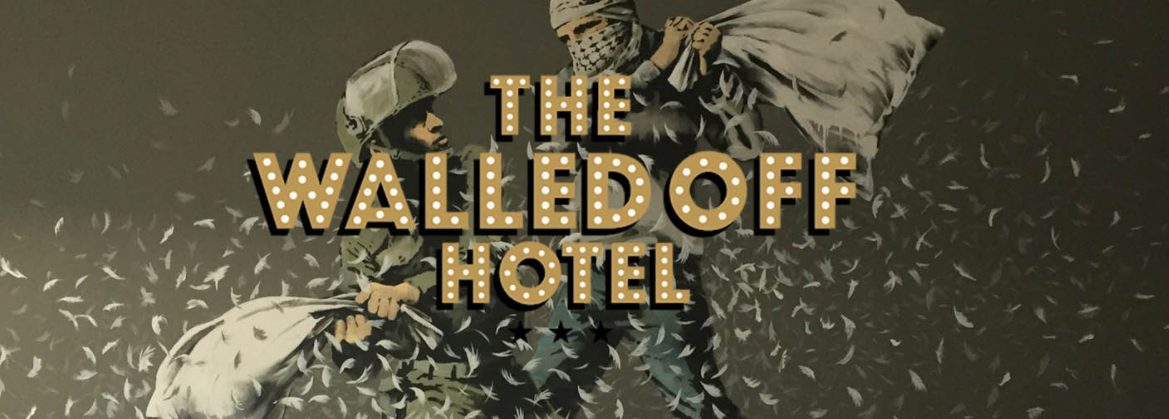
A decade later, Banksy returned to the same landscape on a much more ambitious scale with The Walled Off Hotel in 2017. The hotel converted the experience of living beside the barrier into an immersive architectural, artistic and political project, incorporating a museum, gallery and numerous original works. Seen within that longer history, Armoured Dove provides an important bridge between the relatively clandestine interventions of 2005 and Banksy's increasingly elaborate site-specific projects in Bethlehem.
AN ENDURING BETHLEHEM MURAL
Unlike many of Banksy's street works, Armored Dove has survived at its original location and has become one of the most recognizable landmarks associated with Banksy in Bethlehem. Over time, signs advertising the Palestinian Heritage Center and welcoming visitors to Palestine and Bethlehem have appeared beside the mural. These signs are not part of Banksy's original composition, although their presence in later photographs creates an interesting additional dialogue with the image.
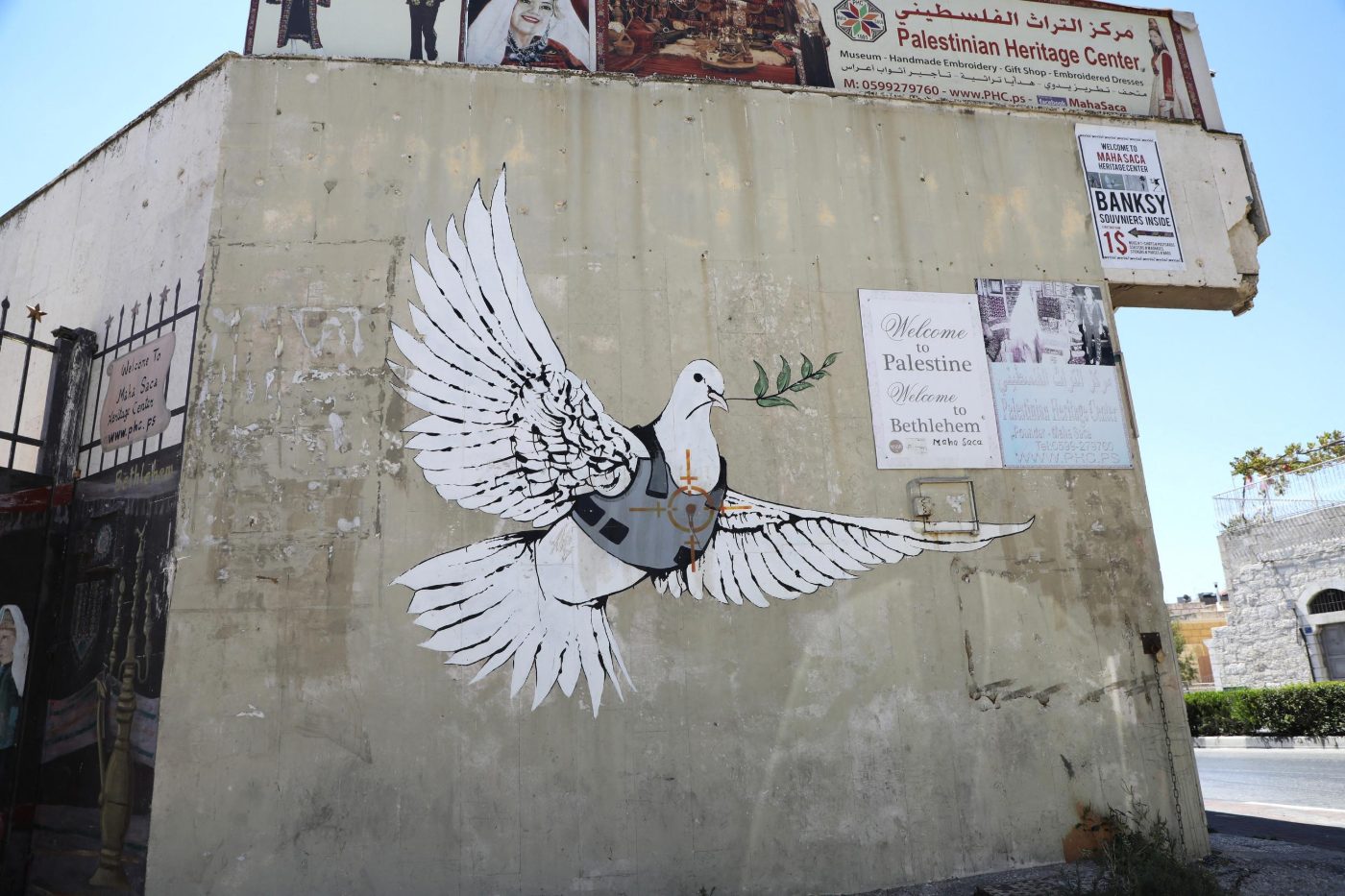
The work remains unusually concise despite the complexity of its setting. Banksy does not attempt to describe the Israeli-Palestinian conflict or assign its history to a single image. Instead, he takes one of the most universal visual symbols of reconciliation and asks what that symbol looks like when placed within an environment structured by conflict. The answer is a dove that continues to carry its olive branch while simultaneously wearing armour and remaining in someone's sights.
STAY INFORMED
Receive the latest news, exhibitions, artworks and market updates on Banksy.