JUDO BOY
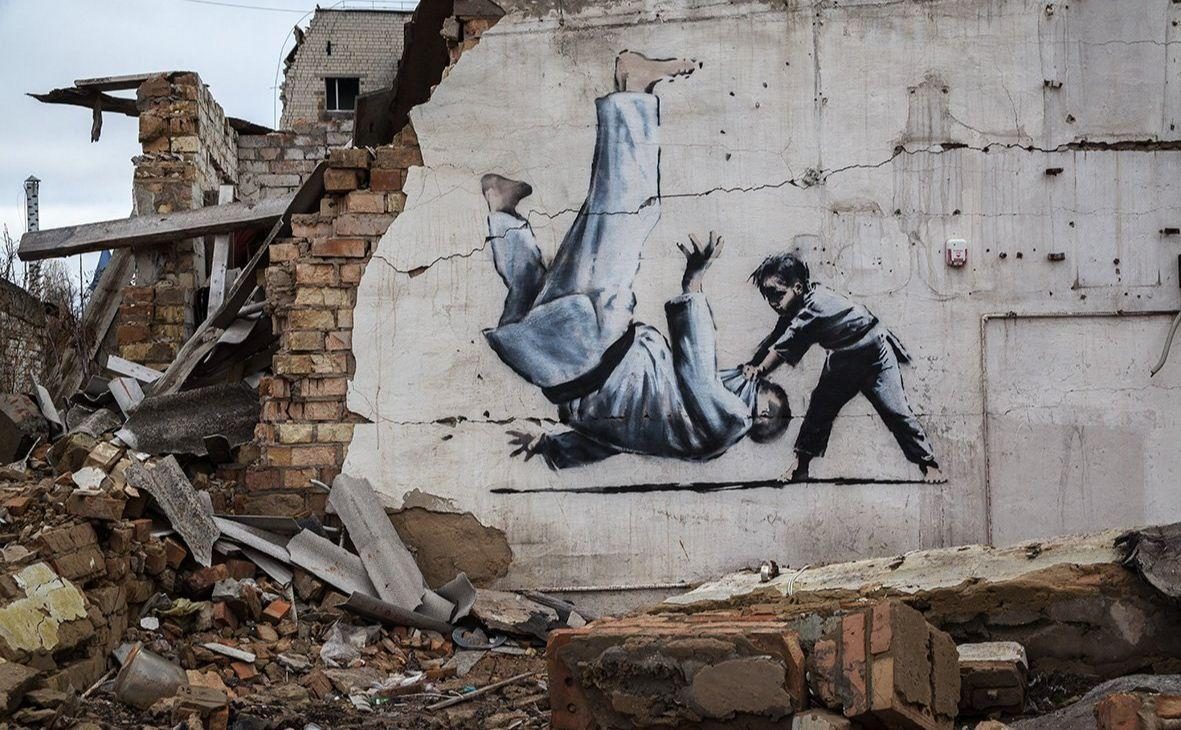
David and Goliath in Borodyanka
Among Banksy's seven works created in Ukraine in November 2022, Judo Boy became perhaps the most immediately political. Painted on the ruined fabric of Borodyanka, it depicts a small boy in a judo uniform throwing a much larger adult opponent onto his back. The child remains upright and composed while the heavier man is caught at the moment of impact, his legs thrown helplessly into the air.
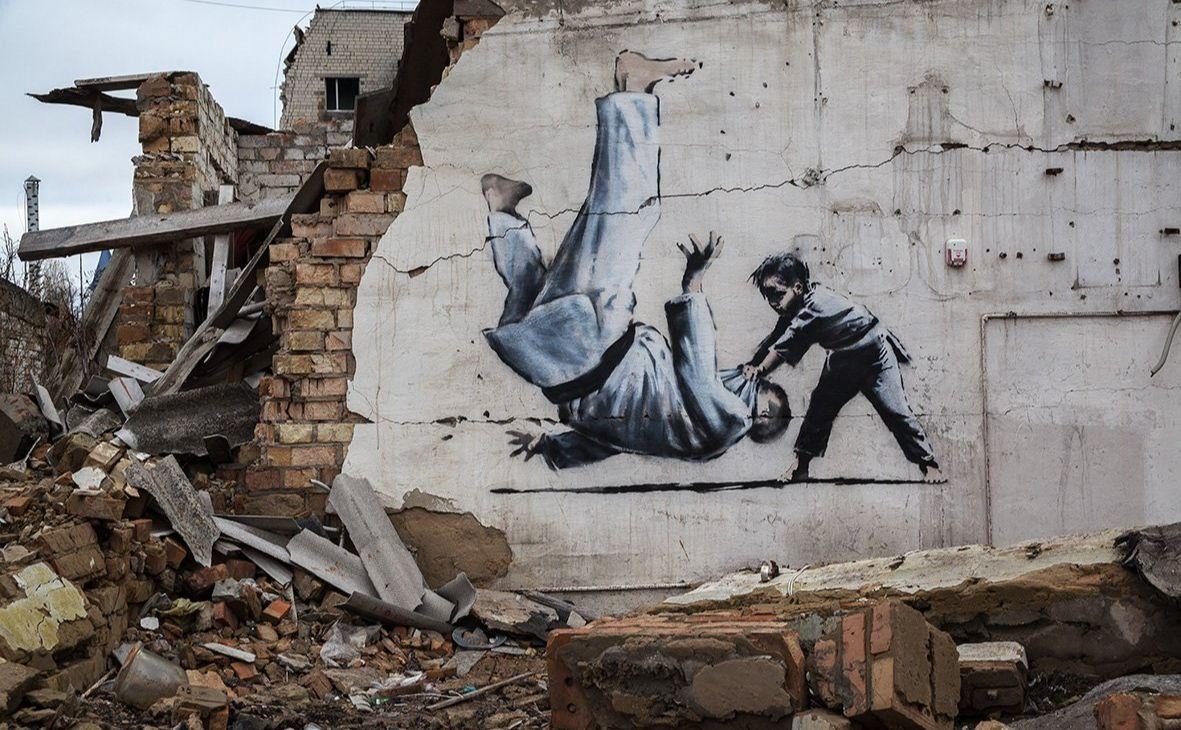
The visual metaphor is simple: physical size does not necessarily determine the outcome of a fight. In the context of Ukraine's resistance to the Russian invasion, the smaller combatant could readily be understood as Ukraine confronting its vastly larger neighbor. The ancient David-and-Goliath structure of the image required no explanatory text.
The choice of judo, however, makes the work considerably more pointed. Vladimir Putin cultivated a public association with the sport for decades and held a high judo rank; following Russia's invasion of Ukraine, the International Judo Federation suspended his honorary presidency and ambassador status. Against this background, Banksy's image turns one of Putin's carefully constructed symbols of physical strength against him: the larger judoka is defeated using the very martial art with which the Russian president had so closely identified himself.
The Ruins as Arena
As with the nearby Gymnast Balancing on Rubble, location is fundamental. Borodyanka had suffered severe Russian bombardment during the opening phase of the invasion, leaving residential buildings collapsed or extensively damaged. Banksy placed his judokas directly onto this wounded architecture rather than representing the destruction pictorially.
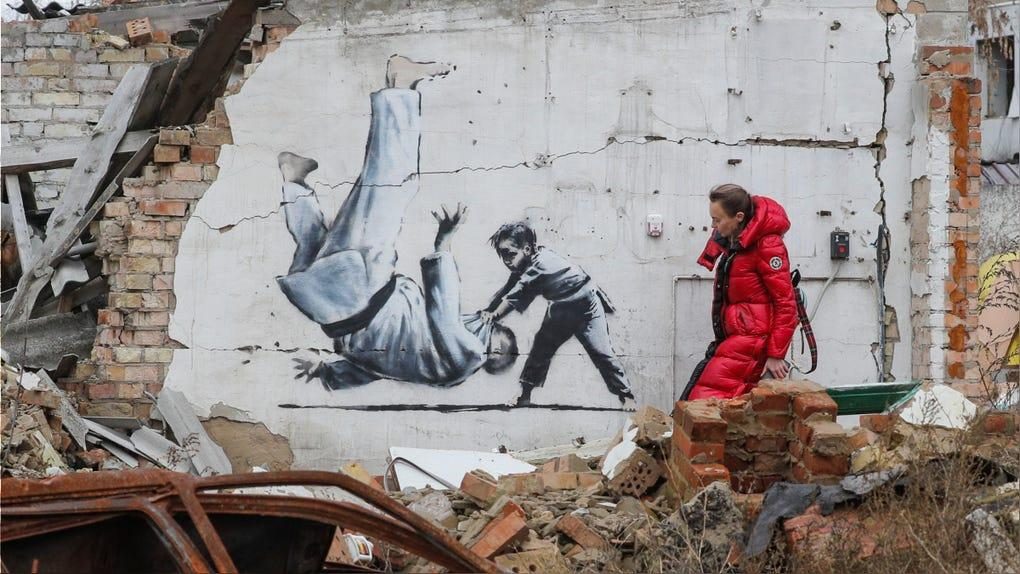
The result transforms the wall into an arena. There is no conventional background, audience or sporting environment. The two figures fight against the exposed material evidence of an actual war.
There is also an important difference between the two Borodyanka murals. The gymnast responds to destruction through balance and physical control; Judo Boy introduces confrontation. Here resilience becomes counterattack. The smaller figure does not simply survive the stronger opponent—he uses technique, timing and the opponent's own momentum to bring him down.
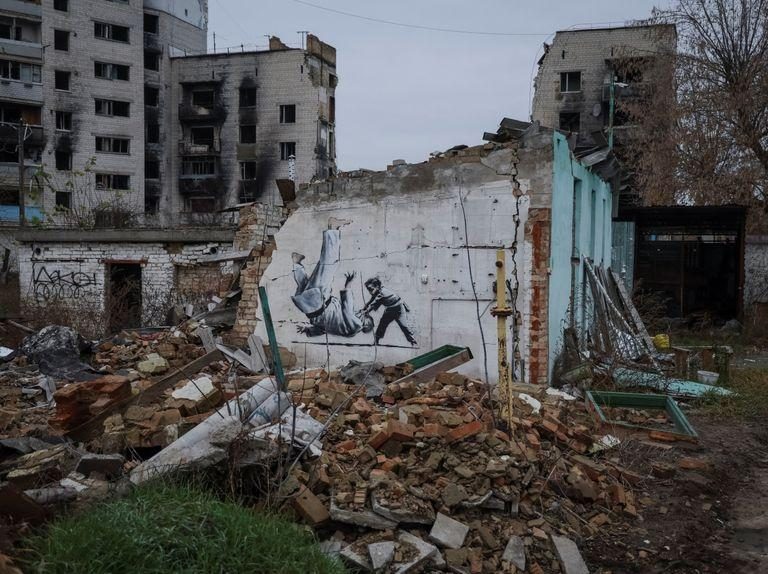
That is particularly appropriate to judo, a discipline in which leverage and balance can allow a smaller fighter to overcome a physically stronger adversary. Banksy therefore chose a sport whose underlying mechanics reinforce the political metaphor.
From an Illegal Mural to an Official Stamp
The image acquired an extraordinary second life on 24 February 2023, exactly one year after the beginning of Russia's full-scale invasion. Ukraine's national postal service, Ukrposhta, issued a postage stamp based upon Banksy's Borodyanka mural. The release was titled “ПТН ПНХ!”, an abbreviated Ukrainian anti-Putin slogan. The stamp reproduced the young judoka throwing his adult opponent, while the accompanying design explicitly connected Banksy's image with Ukrainian resistance.
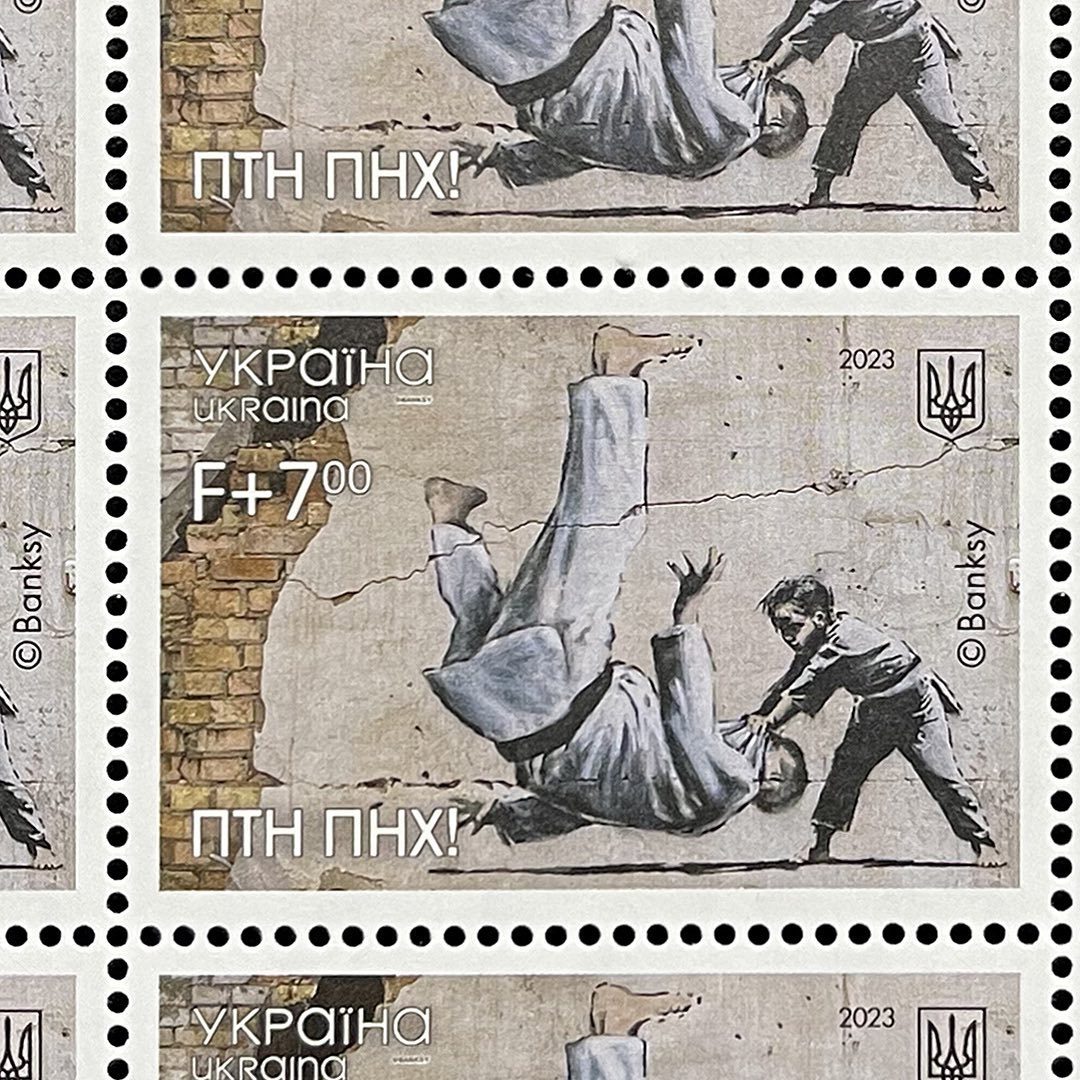
The transformation is remarkable. Banksy's original was an unauthorized image painted anonymously onto the remains of a damaged building. Only months later, essentially the same image was reproduced by a national postal service and circulated across Ukraine and internationally as an official object.
Its meaning also became more explicit in the process. Banksy's mural contains neither Putin's name nor the Ukrainian flag. The political identification depends upon context and association. Ukrposhta removed much of that ambiguity. Through the date of issue, accompanying inscription and official presentation, the postal service effectively converted Banksy's metaphor into an overt declaration of Ukrainian defiance.
The stamp consequently belongs to the history of the work rather than merely its merchandising afterlife. An image born on a bomb-damaged wall had entered the official visual culture of the country whose resistance it appeared to celebrate.
An Image of Resistance
Judo Boy demonstrates how rapidly the meaning of street art can move beyond its original location. In Borodyanka, the damaged building was essential: the unequal contest unfolded amid the physical consequences of Russian military power. On the postage stamp, that architecture disappeared, allowing the two fighters to become a more universal emblem of the conflict.
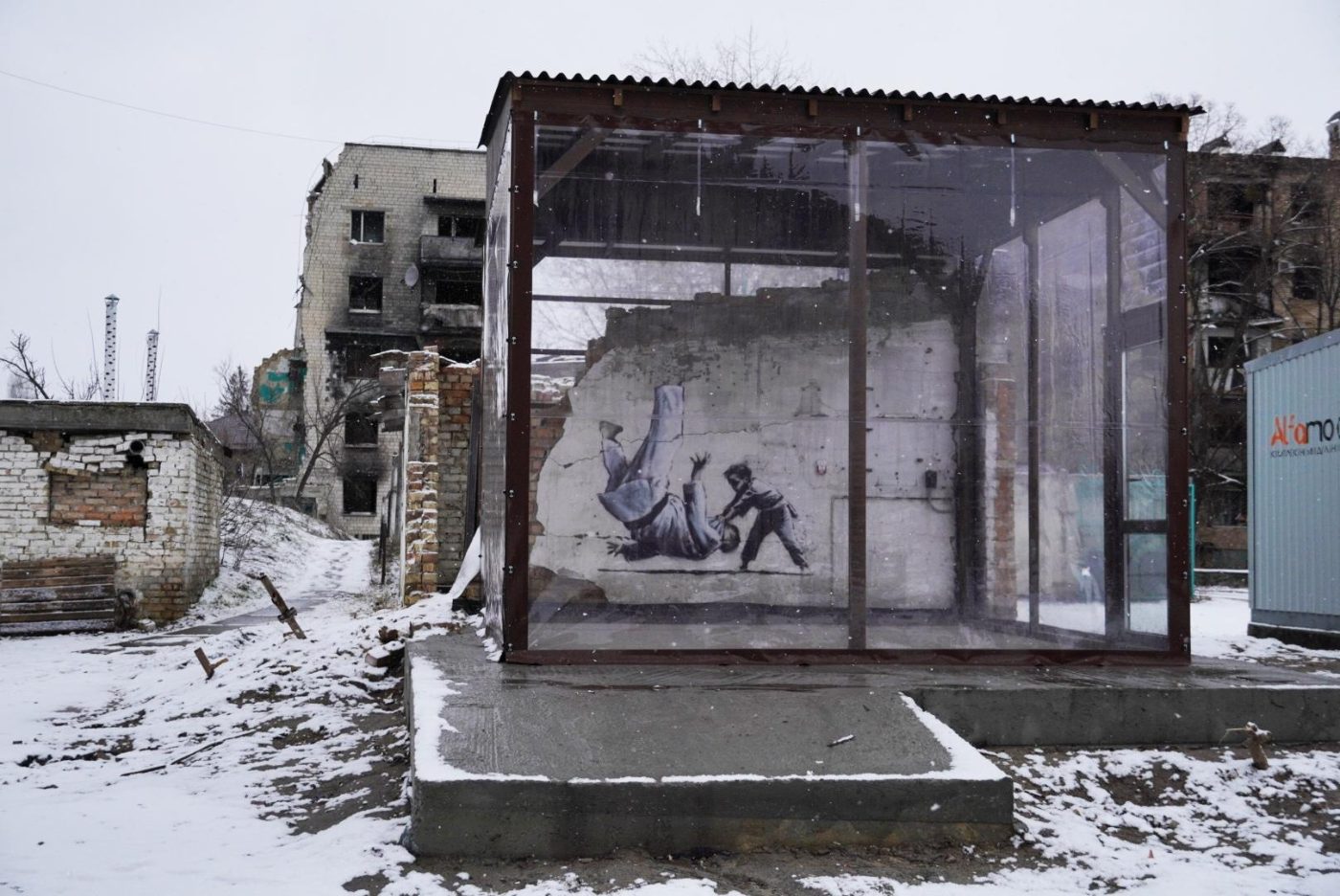
Yet something fundamental survived the transition. Banksy's joke depends upon reversal. The apparently dominant figure is suddenly powerless; the apparently vulnerable child controls the encounter.
That reversal helped make Judo Boy one of the defining images of Banksy's Ukrainian intervention. The mural began as a stencil on the ruins of Borodyanka. Within three months, Ukraine had placed it on a postage stamp and sent the smaller fighter around the world.
STAY INFORMED
Receive the latest news, exhibitions, artworks and market updates on Banksy.