BANKSY IN UKRAINE: ART AMONG THE RUINS, NOVEMBER 2022

Art in a War Zone
In November 2022, nine months after Russia launched its full-scale invasion of Ukraine, a series of stencilled works began appearing among damaged buildings in and around Kyiv. Their imagery, technique and use of the surrounding architecture immediately prompted speculation that Banksy had travelled to the country. The artist subsequently confirmed the intervention, revealing a group of seven murals created across Kyiv and several of the towns that had suffered heavily during the opening months of the war.
Banksy's presence in Ukraine represented one of the most consequential site-specific interventions of his career. War had appeared throughout his work before, from armed soldiers and military helicopters to his interventions on the separation wall in Palestine. In Ukraine, however, Banksy was working within the physical landscape of an ongoing conflict. The damaged buildings, rubble and defensive infrastructure he encountered were not representations of war: they were its material remains.
Seven Murals, One Intervention
The seven works form a remarkably coherent group. Children, gymnasts and ordinary civilians inhabit a landscape transformed by violence, while military objects and damaged architecture are incorporated directly into the compositions. Rather than depicting combat itself, Banksy concentrated largely on what surrounds it: vulnerability, disrupted childhood, domestic life and the strange persistence of ordinary human behaviour amid destruction.
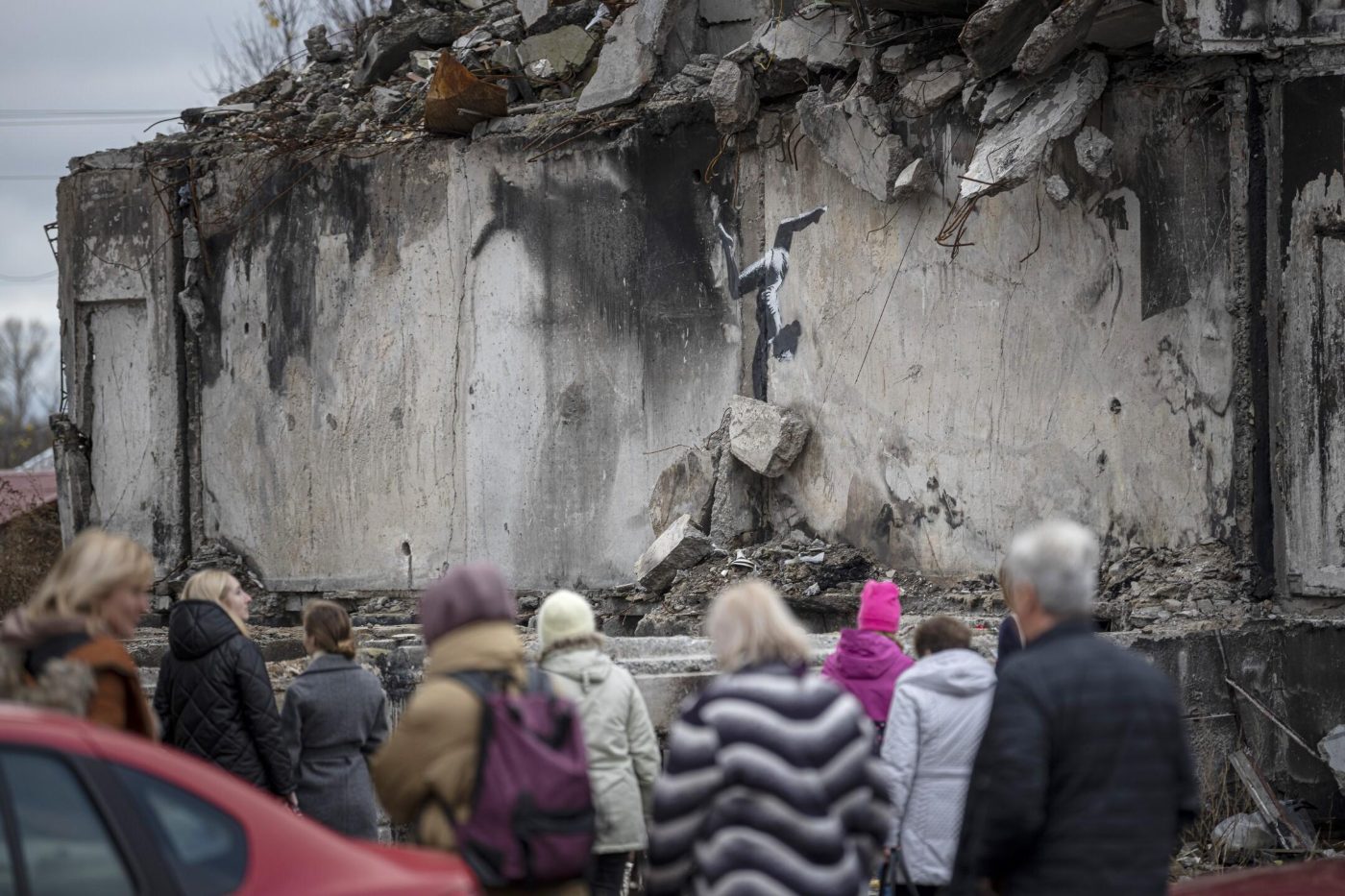
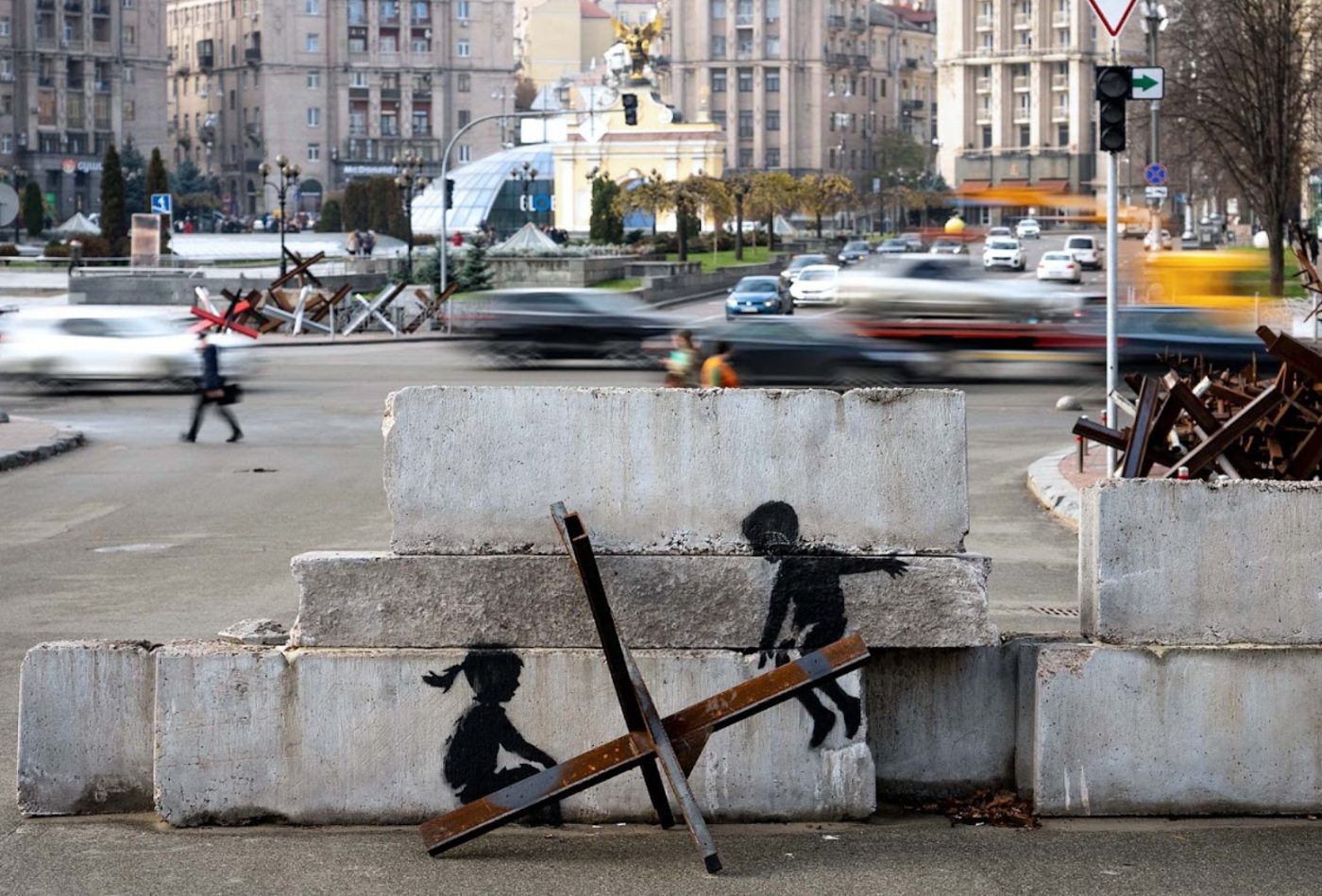
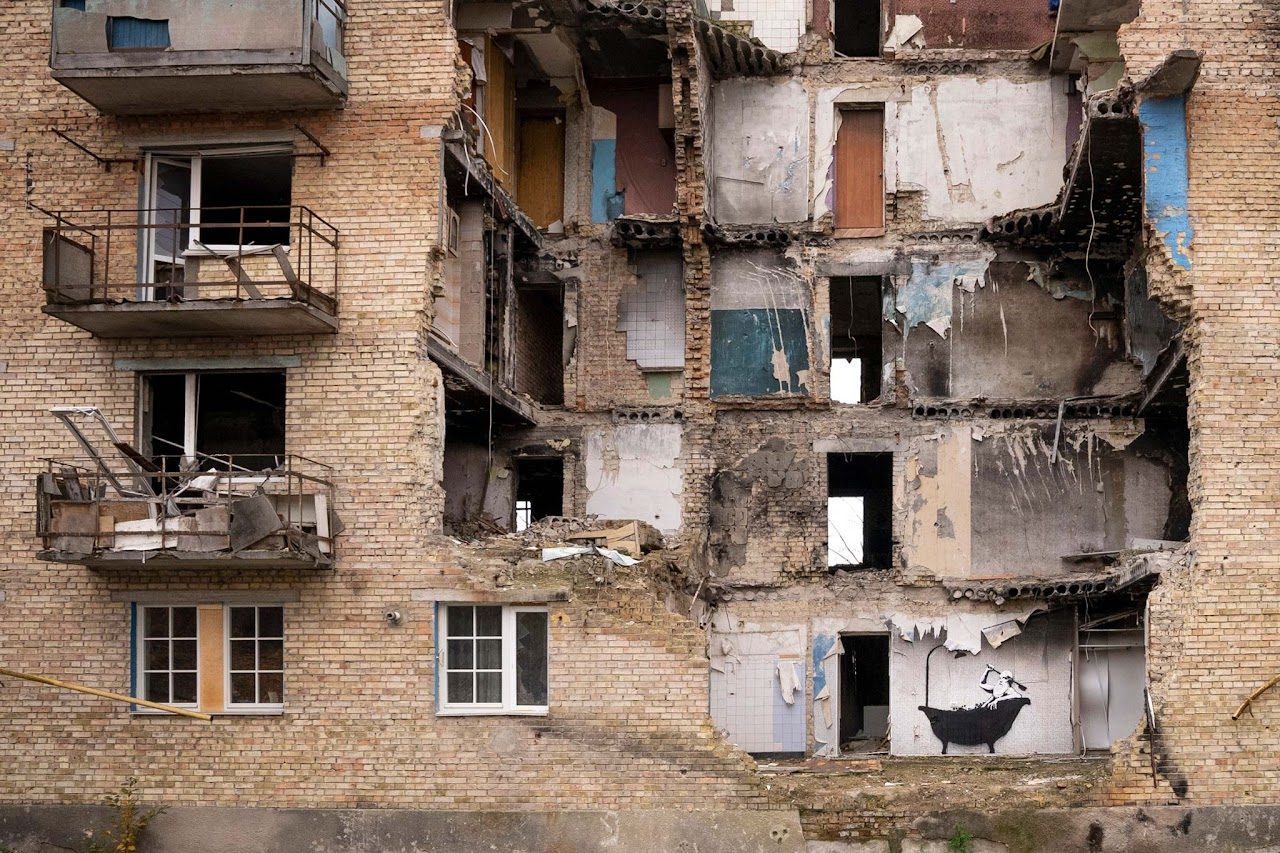
This approach is particularly evident in the way the works use their locations. In Borodyanka, a gymnast appears to balance upon the rubble of a bomb-damaged building. In Kyiv, two children turn a steel anti-tank obstacle into a seesaw. At Horenka, the exposed wall of a destroyed building becomes the setting for a man bathing. Banksy did not simply place images upon the ruins: the ruins became part of the images.
When Spray Paint Becomes Witness
Banksy's Ukraine campaign belongs to a long tradition within his work of intervening directly in politically charged environments, but the circumstances gave these murals an unusual immediacy. They were created not as retrospective commentary on a conflict but while that conflict was continuing, on buildings whose destruction was itself recent evidence of the invasion.
The works also demonstrate one of the defining principles of Banksy's street practice: the ability to make an existing environment carry part of an image's meaning. A crack, architectural feature or discarded object can become an essential component of a composition. In Ukraine, that familiar strategy acquired considerably greater weight. Rubble became a balance beam; an anti-tank obstacle became a children's toy; the exposed interior of a destroyed home became a bathroom.
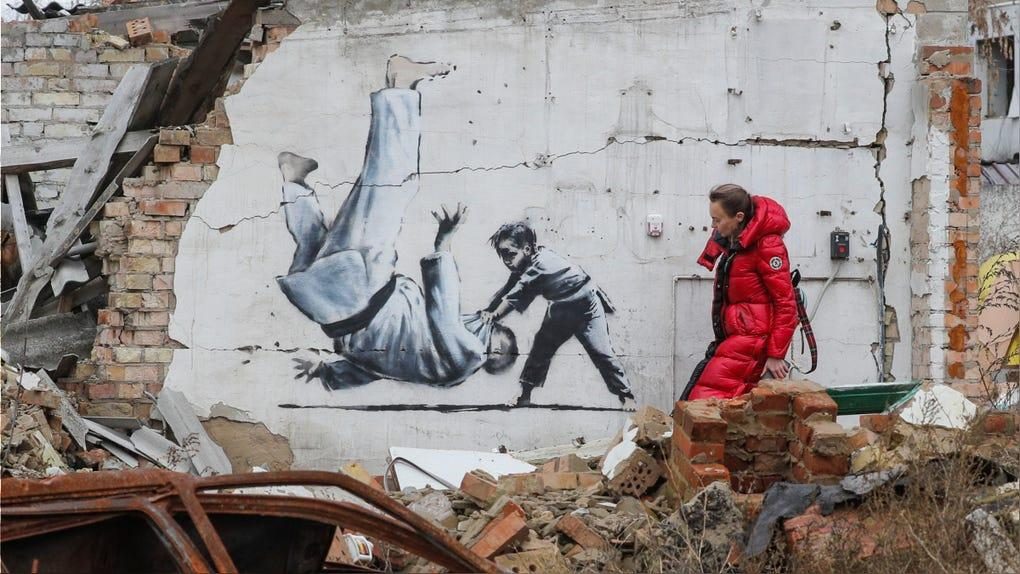
The murals quickly assumed lives beyond the circumstances of their creation. They became objects of preservation, attempted removal and public debate, while the Judo image was adopted by Ukraine's postal service to mark the first anniversary of the invasion. What began as a series of anonymous interventions in damaged towns had become part of the visual record of the war.
Banksy's seven Ukrainian murals ultimately derive their power from this relationship between image and place. They do not attempt to illustrate the scale of the conflict. Instead, they insert small human gestures—playing, bathing, exercising, balancing—into its physical aftermath. War provides the setting; ordinary life stubbornly occupies it.
Banksy's visit to Ukraine was not an anonymous vacation into geopolitics—it was an act of witnessing. His murals are not just art; they are evidence. Each one engages with the debris of war but finds, within it, metaphors for endurance, irony, hope, and protest. Unlike museum-bound masterpieces, these works breathe in the open air—where real people, in real time, must confront destruction and rebuild lives. They serve as artistic signposts for history: silent, urgent, and impossible to ignore.
The Ukraine Murals
1. Gymnast Balancing on Rubble
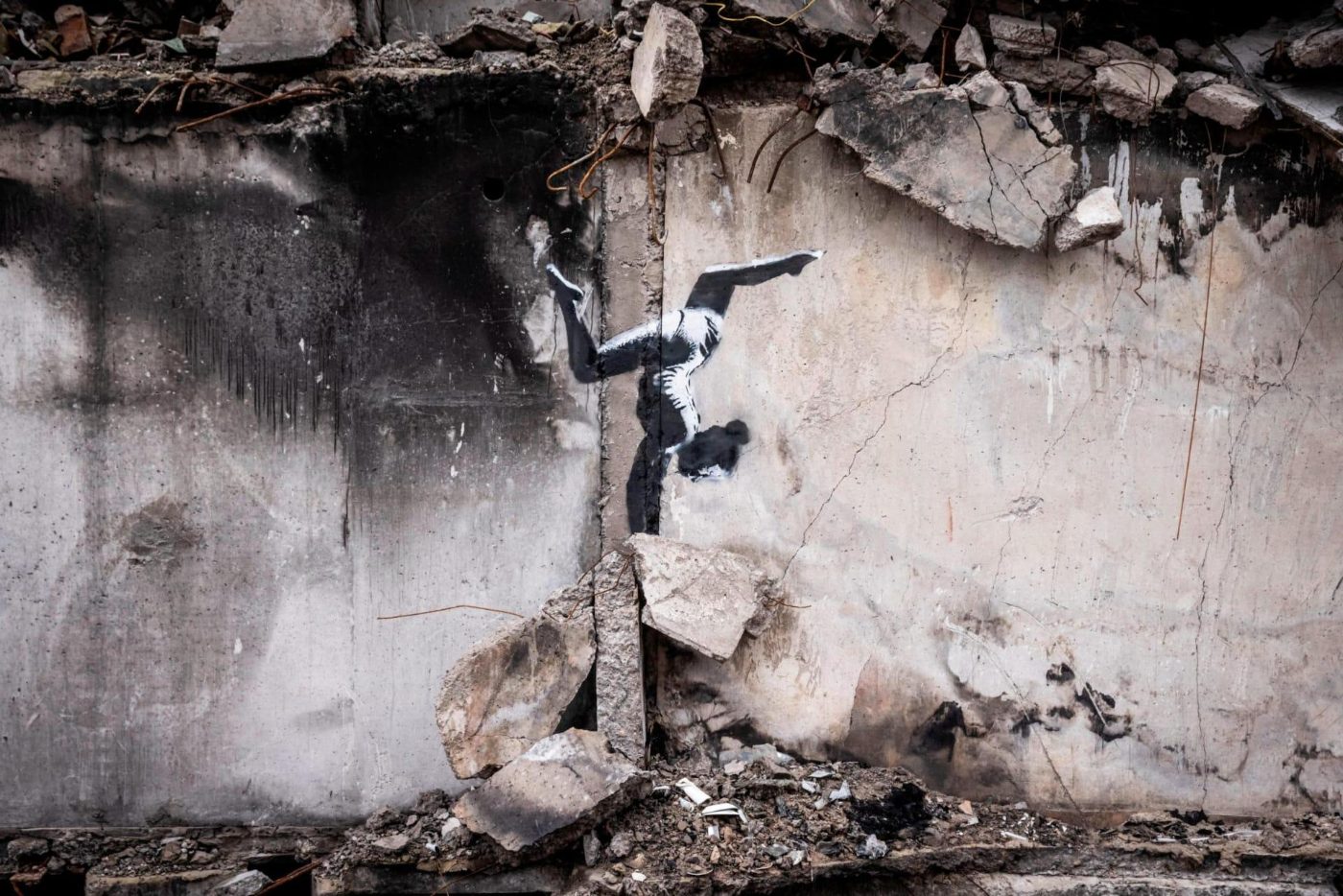
A female gymnast performs a handstand against the wall of a heavily damaged building, appearing to balance upon the debris below.
2. Judo Boy
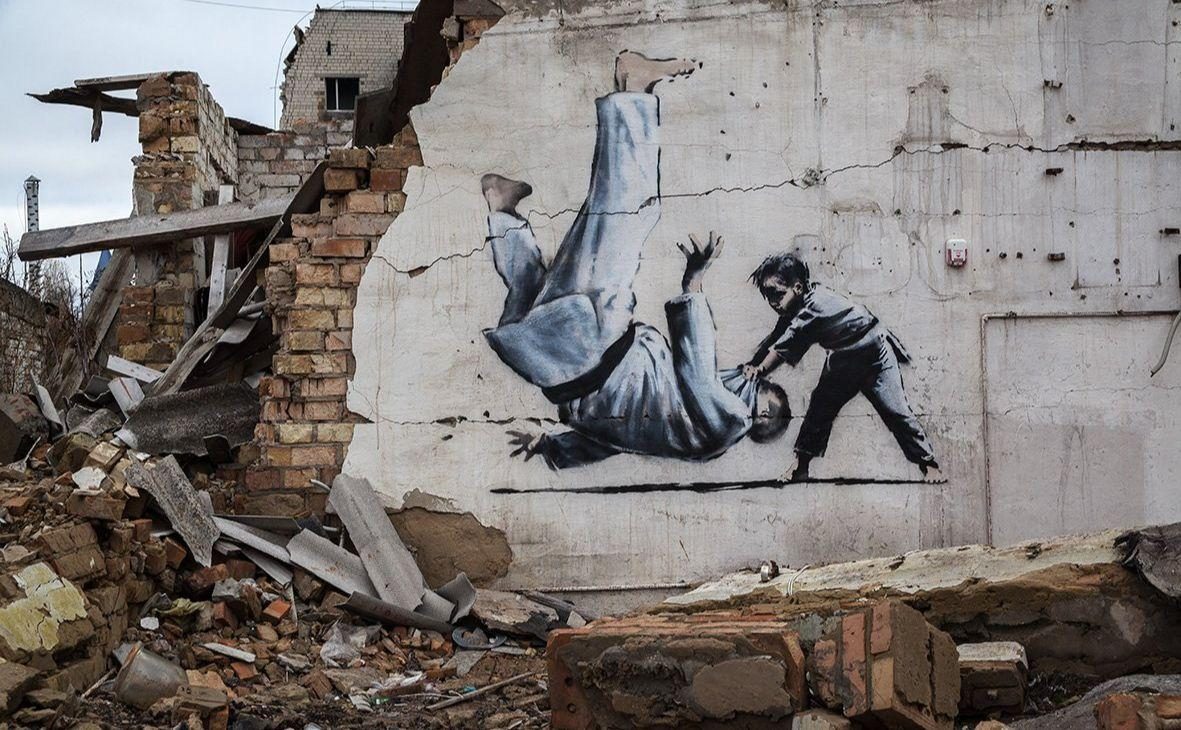
A small boy throws a much larger opponent, widely interpreted as Russian president Vladimir Putin, whose association with judo gives the image its unmistakable political resonance. The work was subsequently reproduced on a Ukrainian postage stamp.
3. Children on a Tank Trap
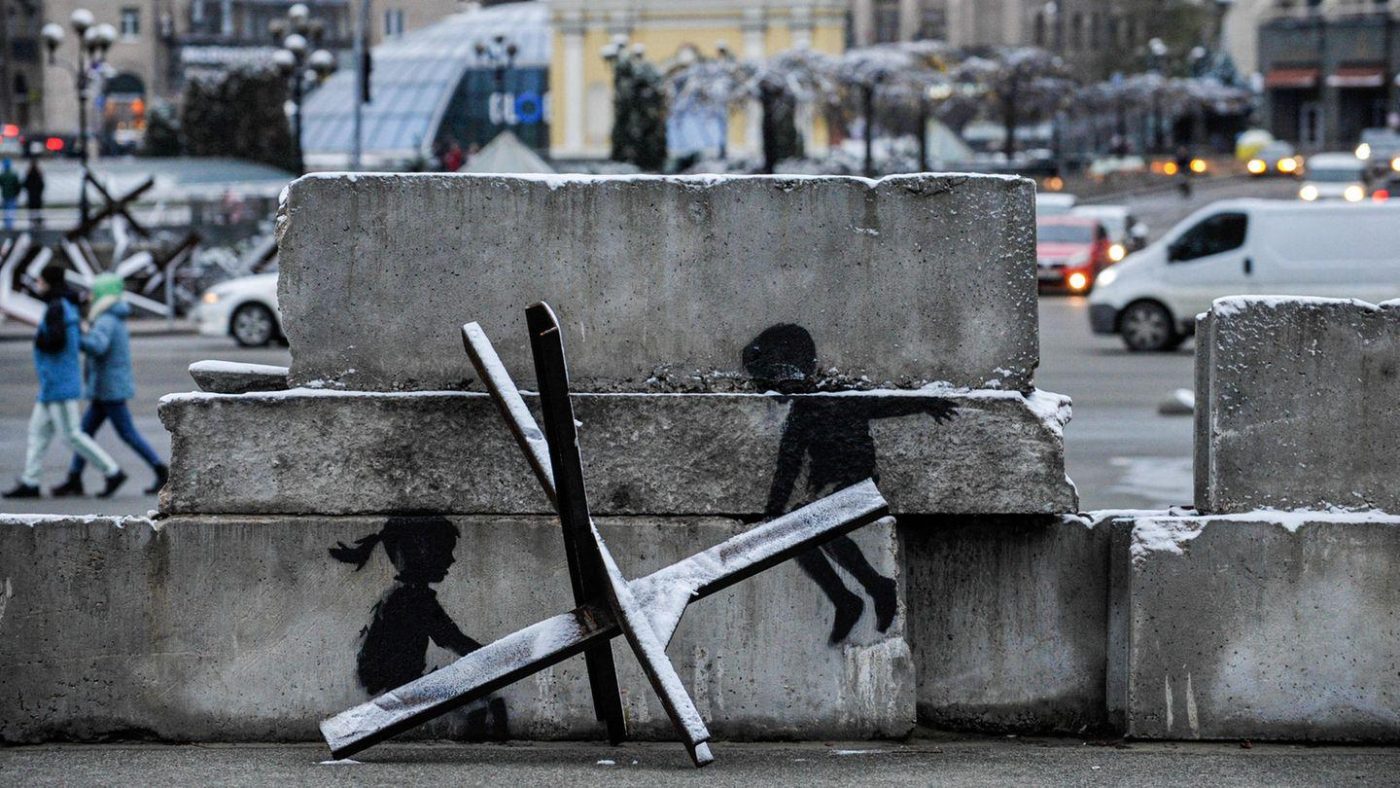
Two children appear to use a Czech hedgehog—the steel obstacle designed to stop tanks—as a seesaw, transforming an instrument of military defense into playground equipment.
4. Man in a Bathtub
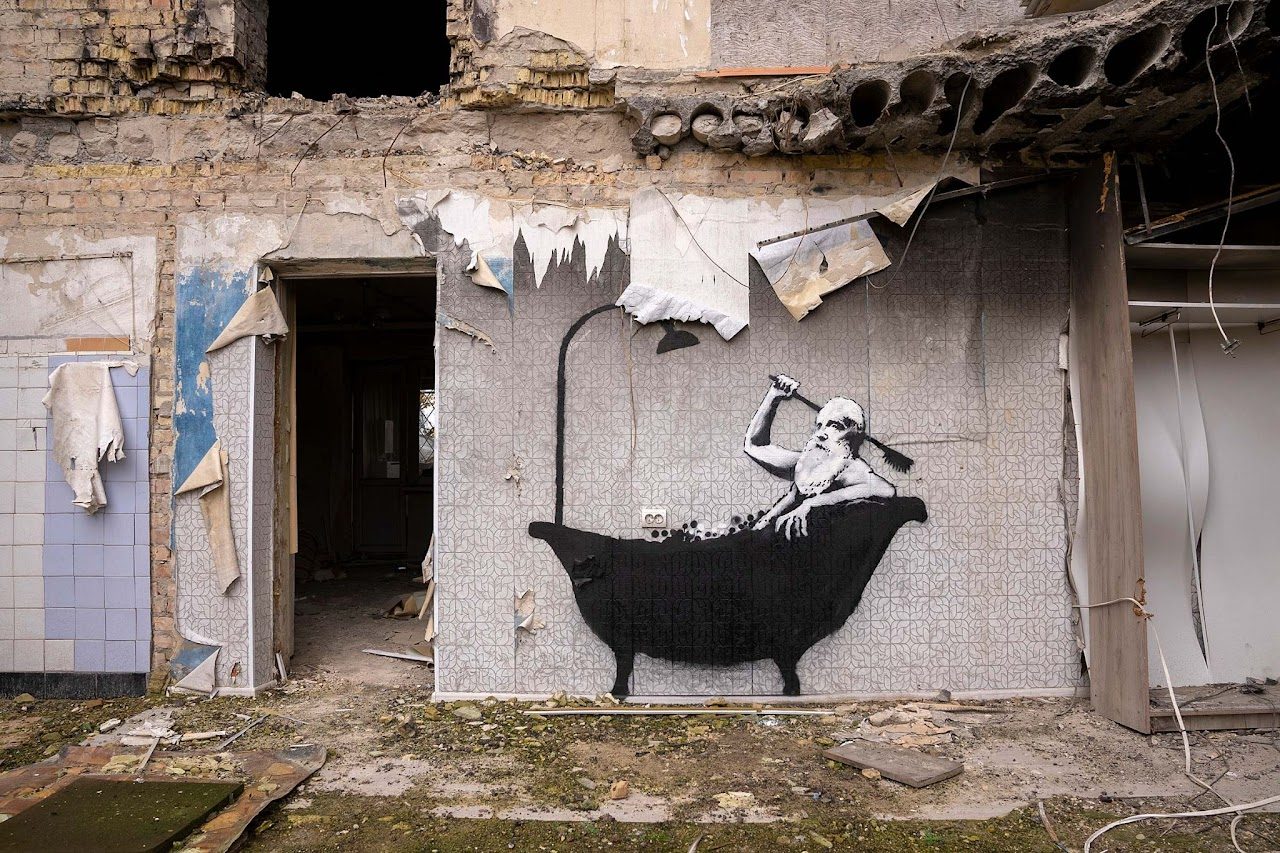
A man washes himself in a bathtub within the exposed remains of a damaged building, turning an ordinary domestic activity into an image of civilian life continuing amid devastation.
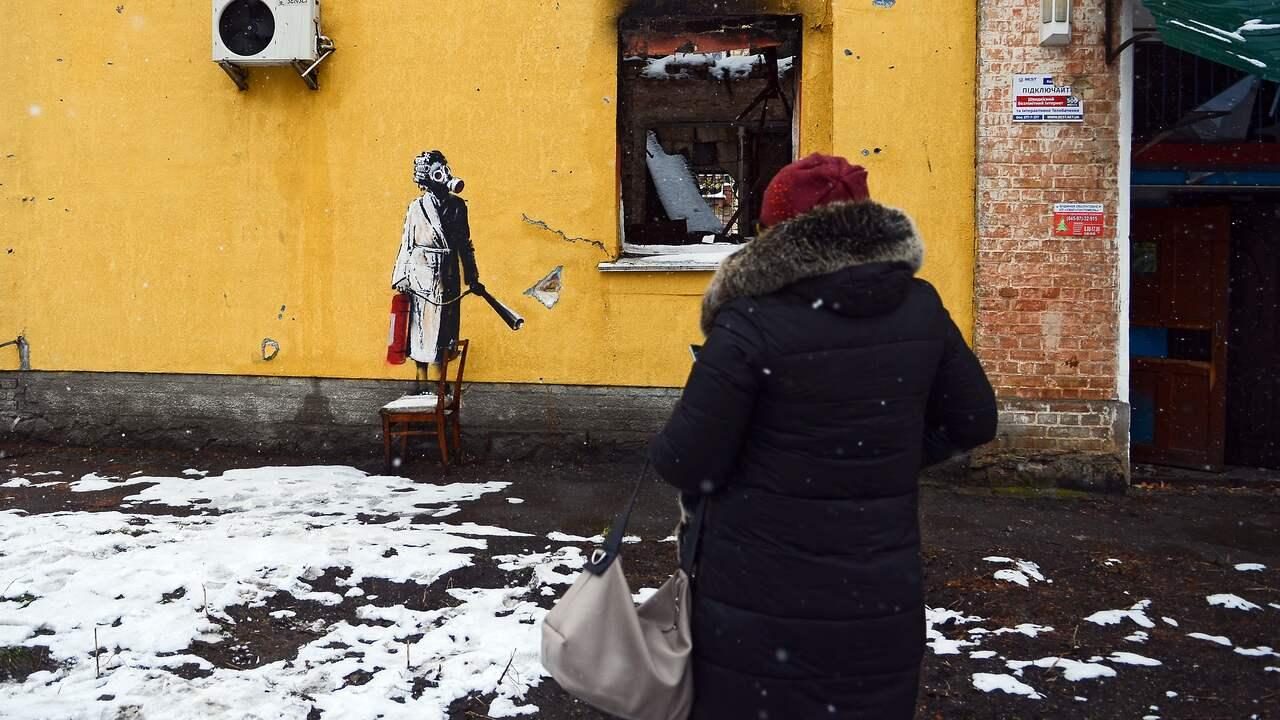
5. Woman in a Gas Mask
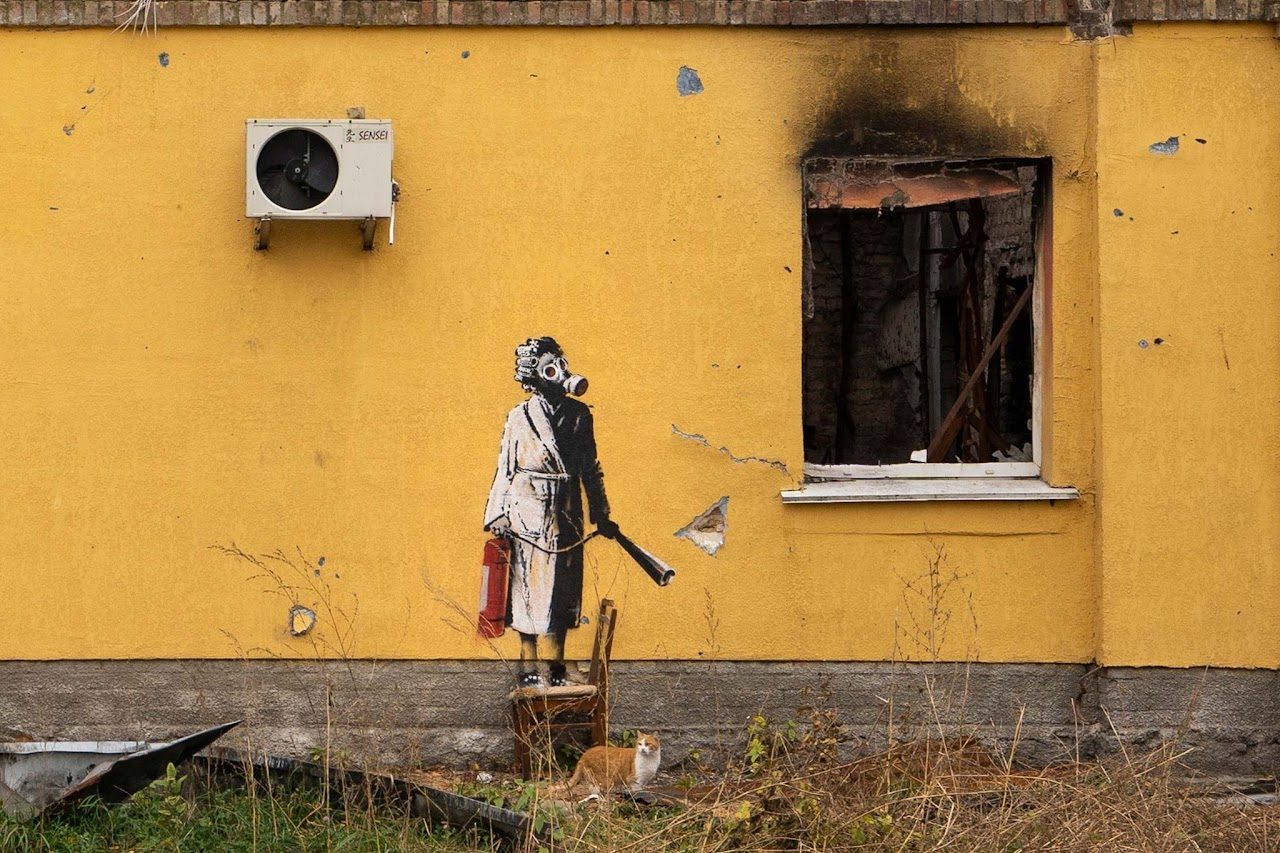
A woman wearing a dressing gown, curlers and a gas mask stands on a chair holding a fire extinguisher. The work was later targeted for unauthorized removal before Ukrainian authorities intervened.
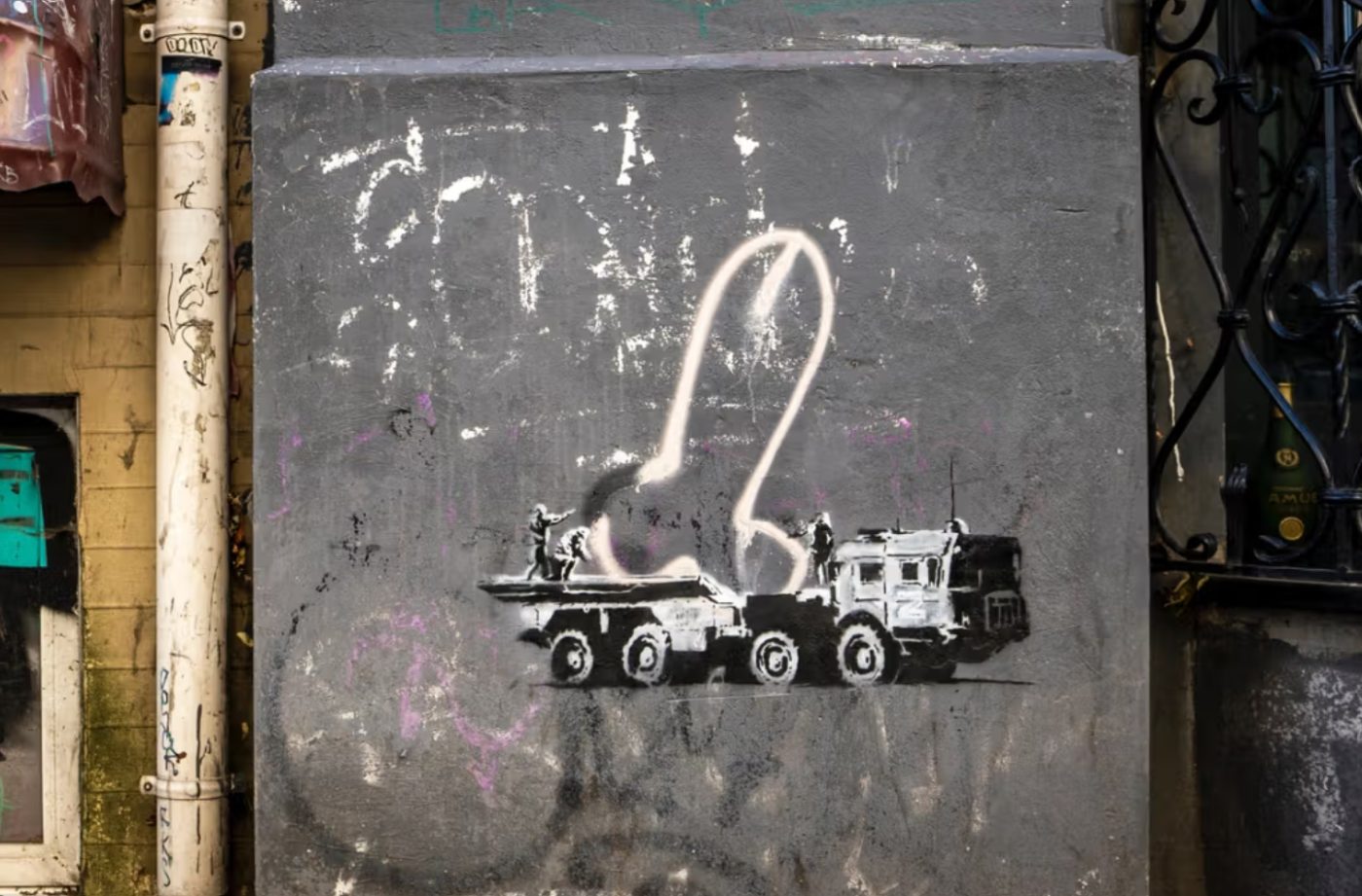
6. Missile Truck
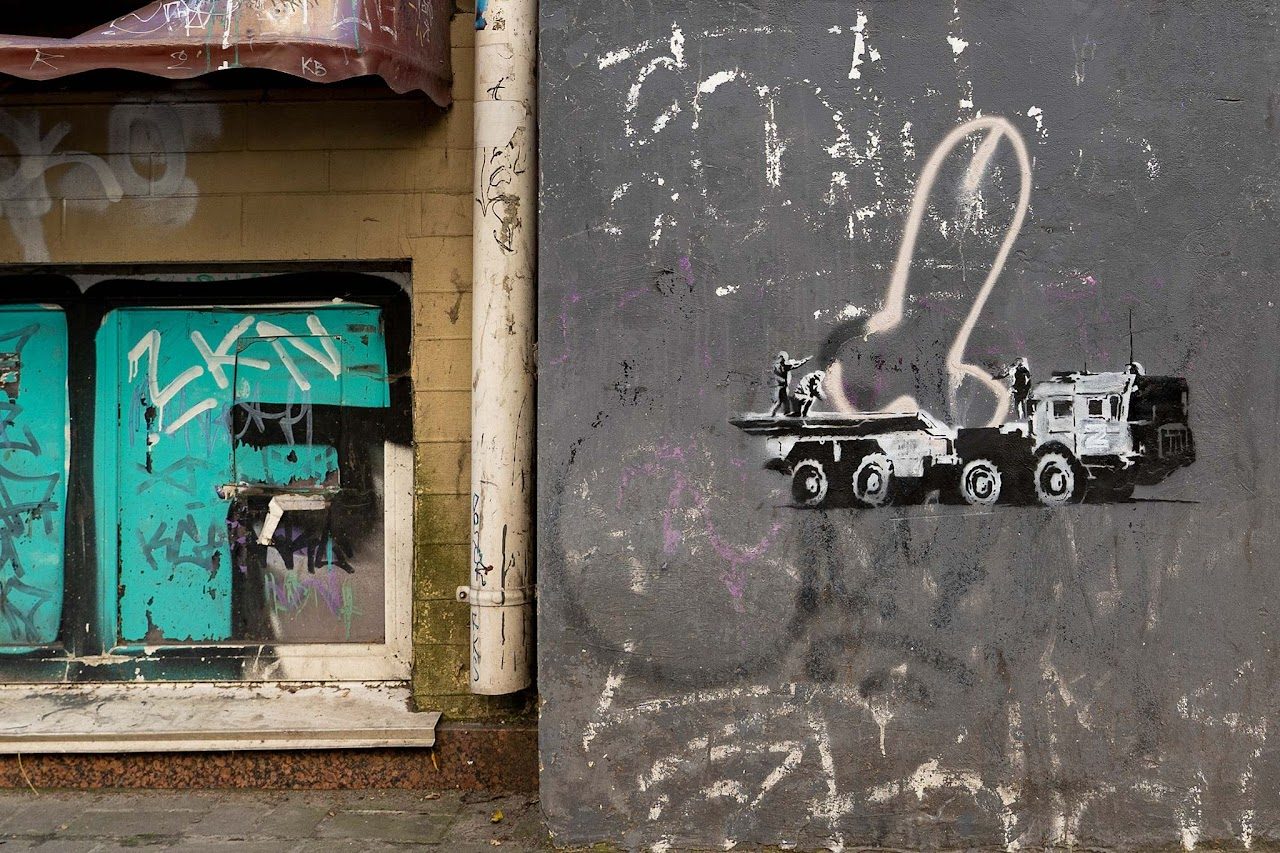
In one of the campaign's most overtly satirical interventions, Banksy incorporated existing graffiti into the image of a military vehicle carrying a missile marked with the letter “Z,” a symbol closely associated with Russia's invasion.
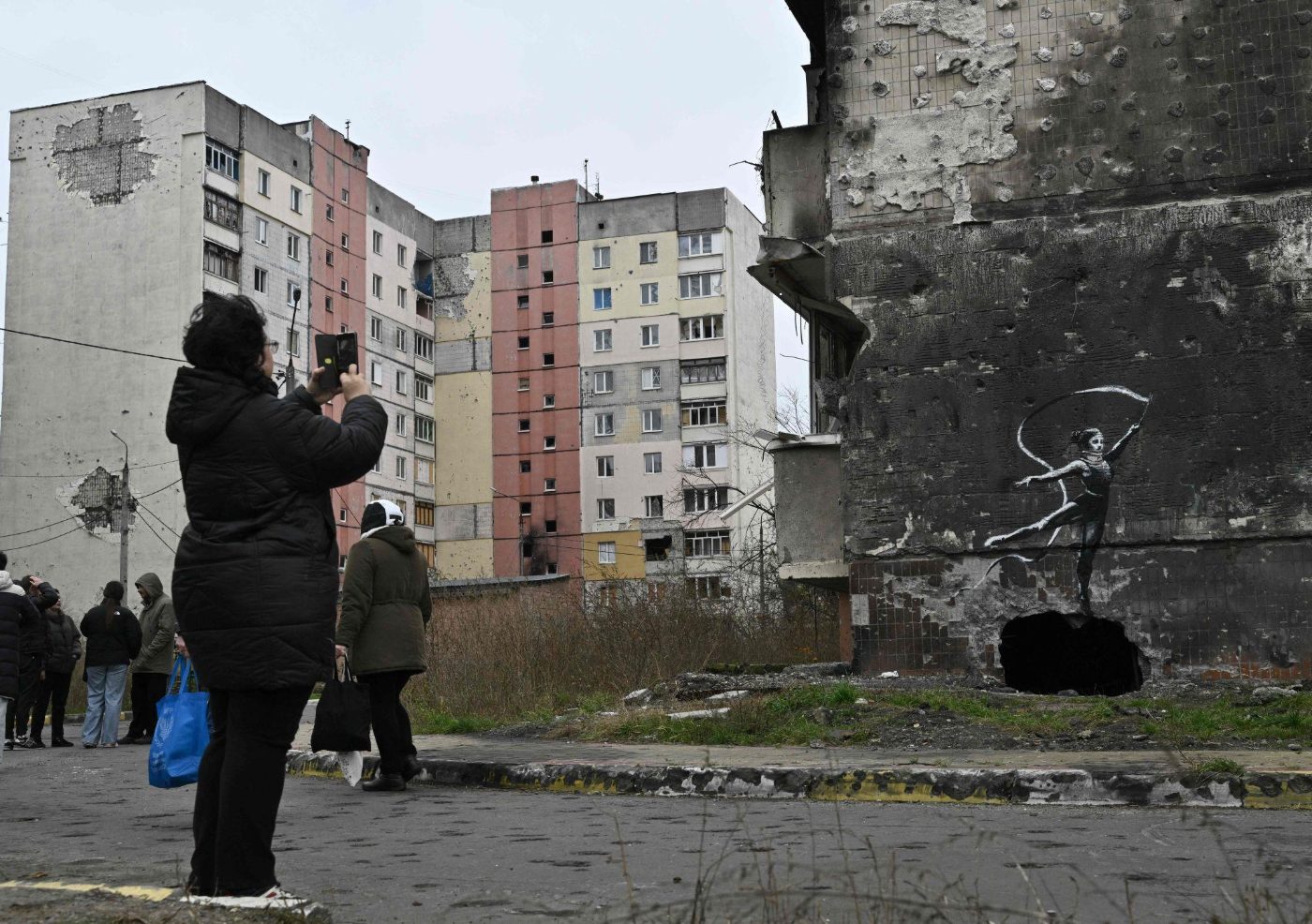
7. Gymnast with Ribbon
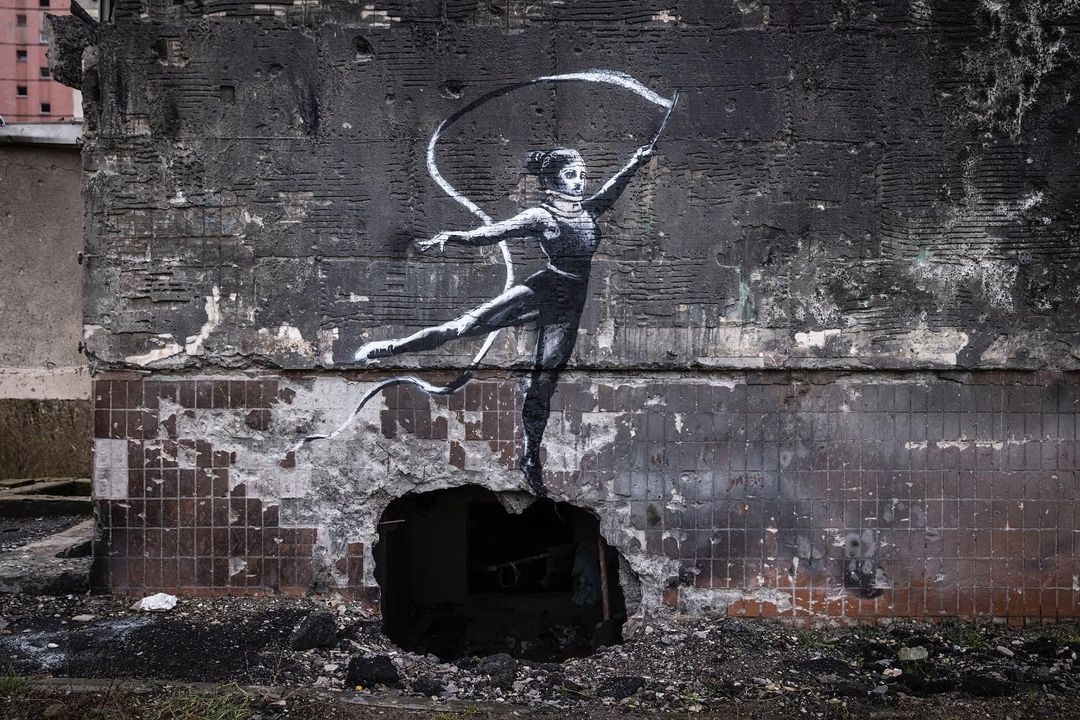
A young rhythmic gymnast wearing a neck brace performs with a ribbon against the remains of a damaged building, combining physical vulnerability with extraordinary poise.
AGILE: FROM THE WALLS OF UKRAINE TO AID
Banksy's engagement with Ukraine did not end with the seven murals. In December 2022, the artist released AGILE, a limited edition of 50 unique screenprints created to raise funds for the Legacy of War Foundation and its work supporting civilians affected by the conflict.
"I’ve made 50 of these screenprints with all proceeds going to our friends in Ukraine."
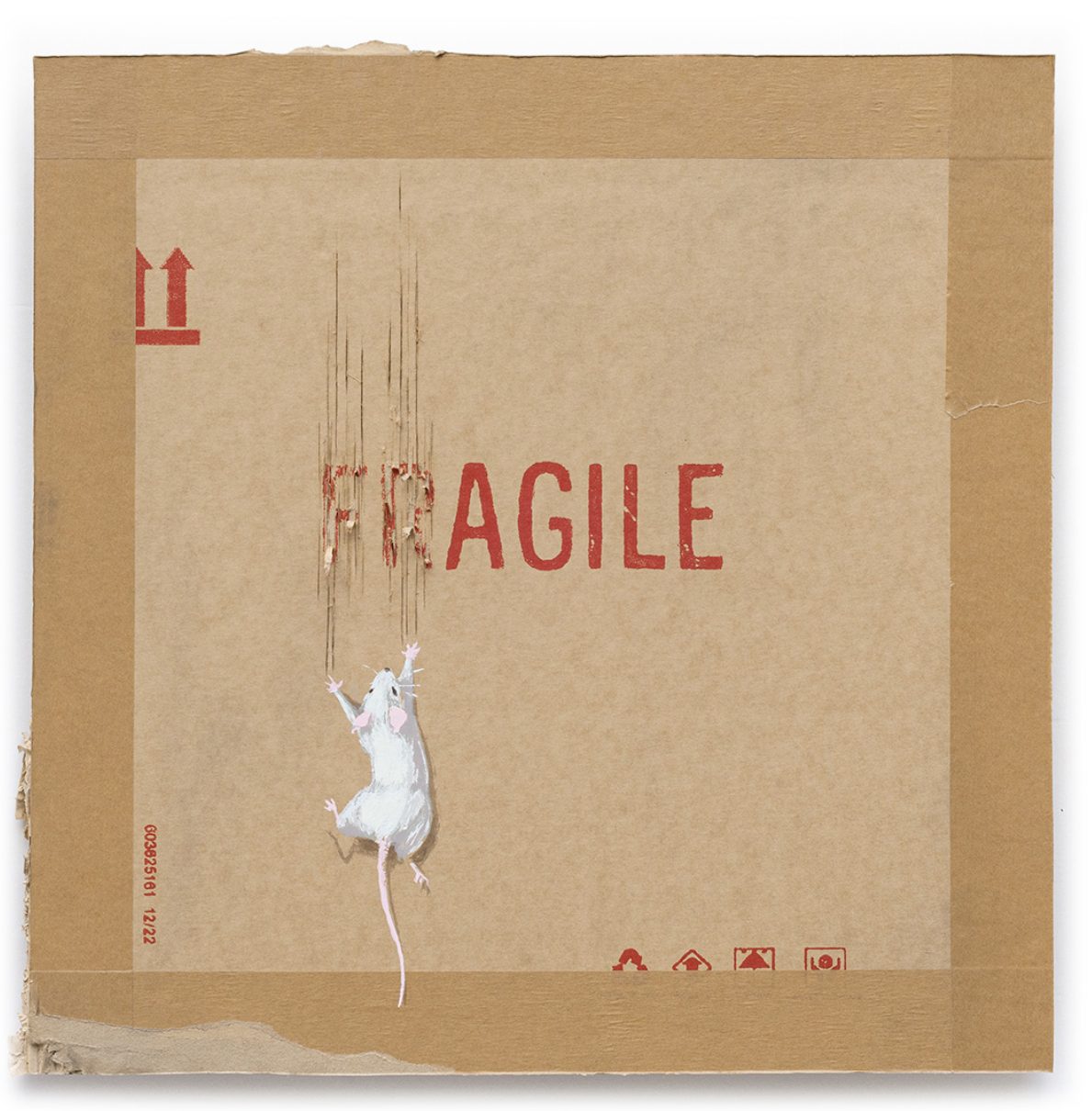
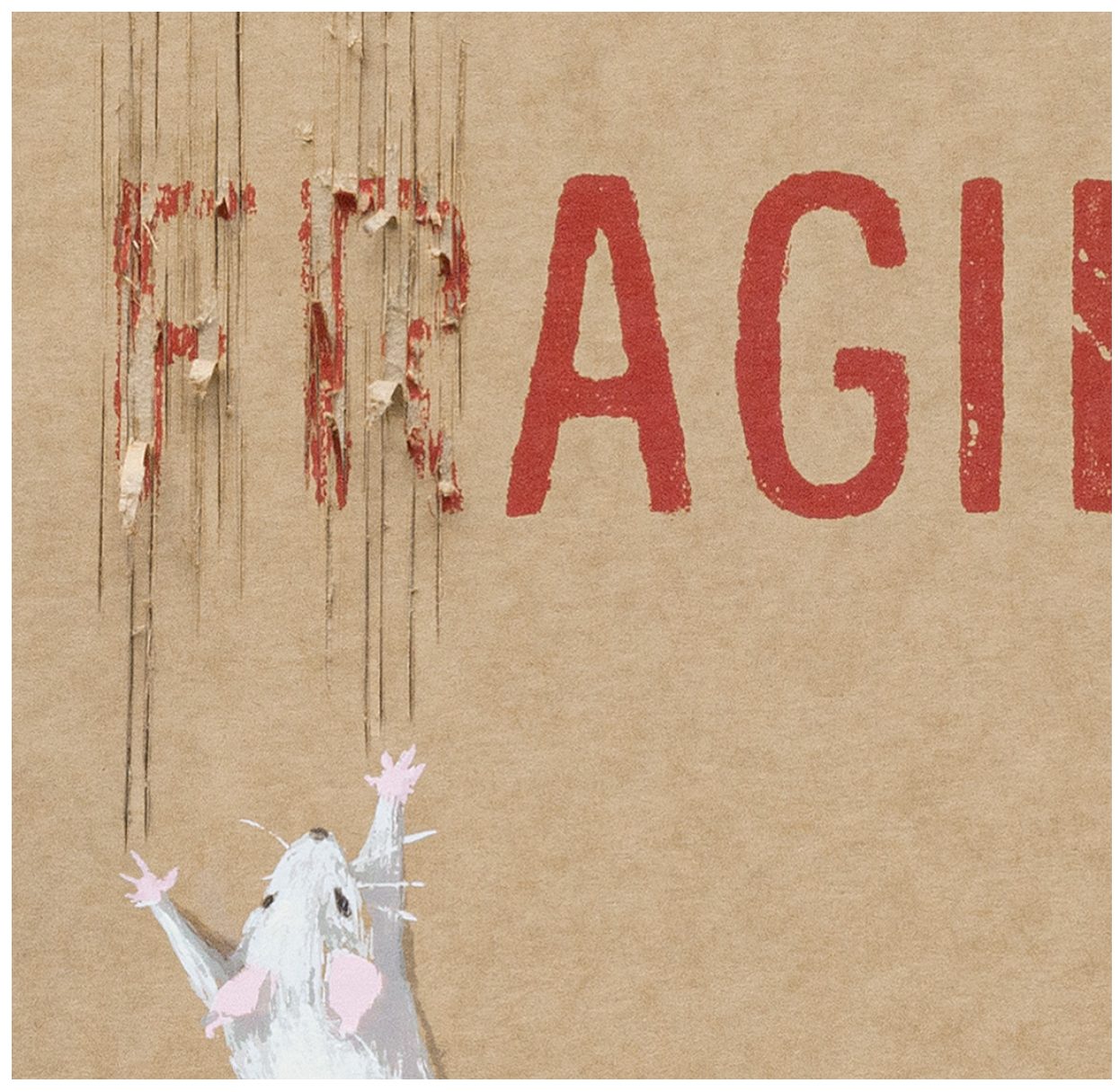
The image depicts a rat sliding down the side of a cardboard box, its claws appearing to tear through the surface as it descends. Each work was printed on a different reclaimed cardboard box, making every example unique and preserving the labels, markings and traces of the packaging's previous life. The edition takes its name from the word “AGILE,” printed prominently on the cardboard used for one of the works and adopted as the title for the series.
"In Ukraine I saw a Legacy of War team sweep in and provide medical attention, heaters, fresh water and a friendly face to some very desperate people in a bombed out building. They also lent me one of their ambulances to work from, which turned out to be extremely useful when an angry babushka found me painting on her building and called the Police. I feel the least I should do is raise enough money to replace the number plates on the ambulance I hotted up.."
Offered through an online lottery at £5,000 each, the works raised £250,000 directly from their sale, with Banksy also donating additional funds to the charity. The project extended the Ukraine intervention beyond the walls on which the murals had been painted, transforming an edition into a direct fundraising initiative for people living through the war.
In this sense, AGILE provides a fitting epilogue to Banksy's Ukraine campaign. The seven murals responded to the physical landscape of the conflict; AGILE converted that response into material assistance. As with the murals themselves, an ordinary and discarded object—in this case a cardboard box—became the support for an artwork whose meaning was inseparable from the circumstances in which it was created.
STAY INFORMED
Receive the latest news, exhibitions, artworks and market updates on Banksy.