NOLA (UMBRELLA GIRL)
The Umbrella That Fails
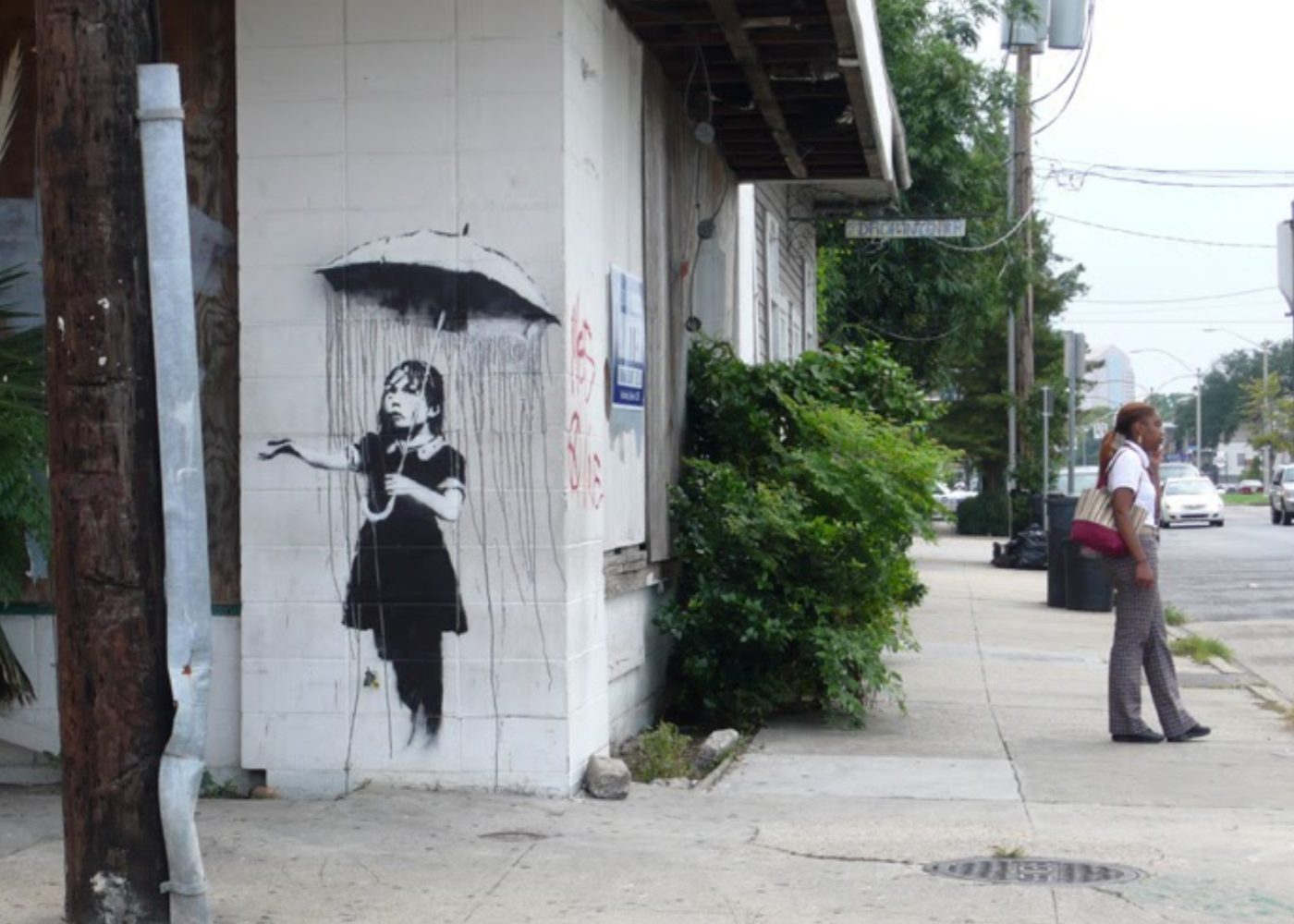
In late summer 2008, around the third anniversary of Hurricane Katrina, Banksy travelled to New Orleans and created a group of approximately fourteen street works across the city. The best known was Nola, also called Umbrella Girl, painted on the side of a building at 1428 North Rampart Street. Banksy described the broader intervention as an attempt to draw attention to the continuing state of the city's recovery three years after the disaster.
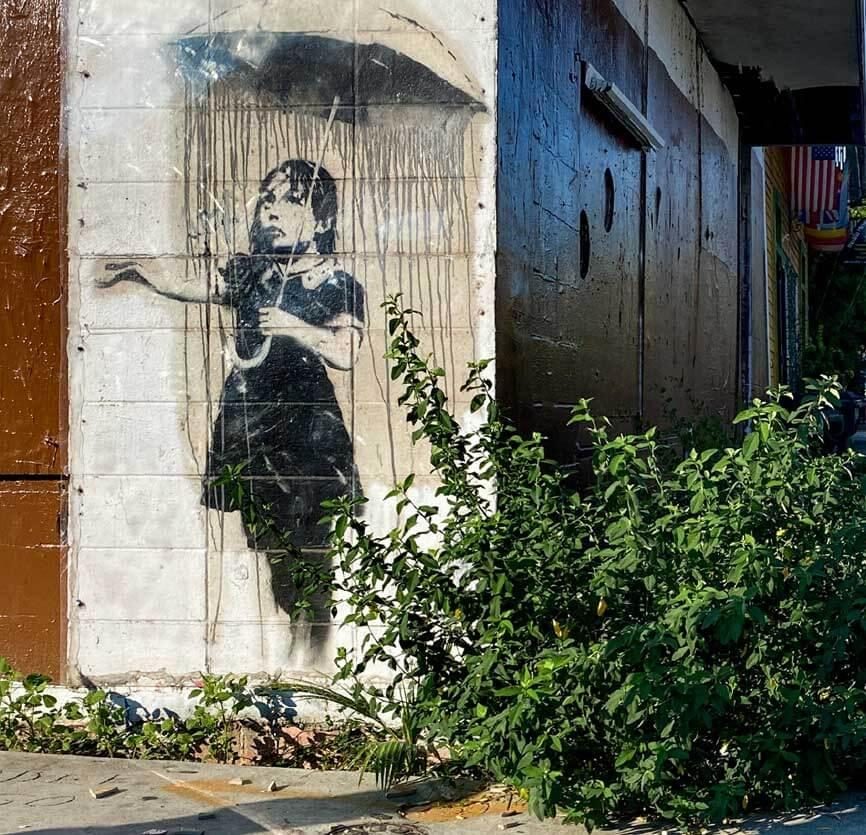
The image is exceptionally economical. A young girl stands beneath a large black umbrella, extending one hand beyond its edge to test the weather. Outside the umbrella there is no rain. Instead, water pours down from its underside, drenching the very person it is supposed to protect.
Banksy reverses the function of one ordinary object and allows that contradiction to carry the entire work. The umbrella is not merely failing to provide shelter; the instrument of protection has itself become the source of the danger.
New Orleans After Katrina
The location and timing make the metaphor unmistakable. Hurricane Katrina struck the Gulf Coast on 29 August 2005, but much of the catastrophic flooding of New Orleans resulted from failures in the city's levees and floodwalls. Three years later, recovery remained incomplete and the institutional response to the disaster continued to be fiercely criticized.
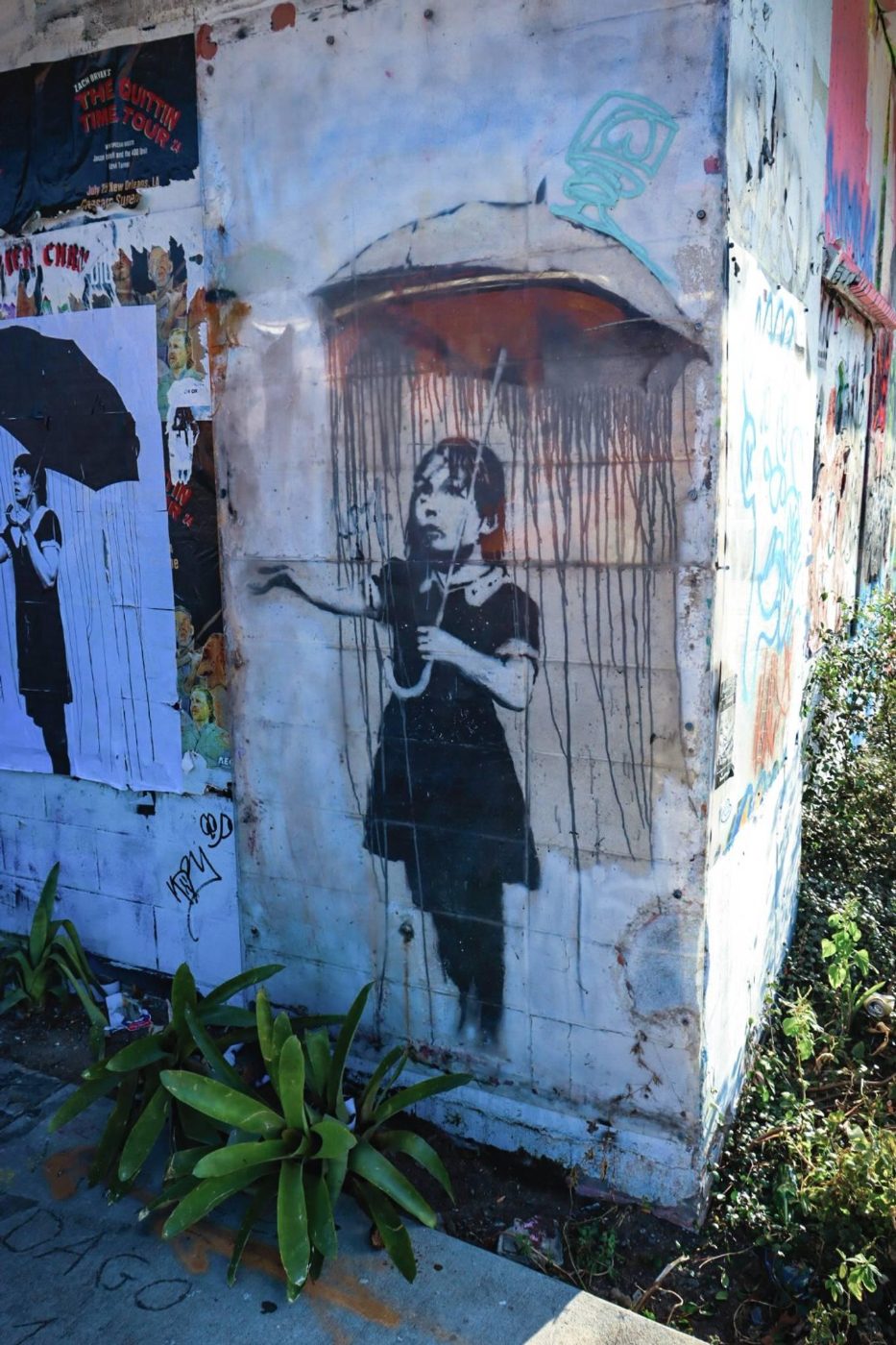
Banksy's New Orleans intervention addressed precisely this aftermath. On his website he explained that he wanted to highlight the state of the clean-up operation three years after Katrina, while joking that covering damaged buildings with graffiti was perhaps an inefficient way of helping it along.
Nola turns that criticism into an image without depicting the hurricane itself. There are no ruined houses, floodwaters or rescue workers. Instead, Banksy focuses on the idea of failed protection. Like the levees and institutions upon which residents had depended, the umbrella exists specifically to keep danger out. Its failure would already be troubling; the suggestion that it produces the rain makes the accusation considerably sharper. Christie’s similarly describes the image as an allusion to flood defences that failed to protect New Orleans from rising water.
The girl's gesture adds an important detail. She reaches beyond the umbrella and discovers that the world outside it is dry. The realization changes the image from one of simple vulnerability into one of discovery: the threat is not coming from the storm around her but from the system under which she has sought shelter.
An Icon of New Orleans
The title Nola derives from the familiar abbreviation for New Orleans, Louisiana, tying the figure directly to the city. Although Banksy's New Orleans works addressed several subjects—including the devastation left by Katrina and his confrontation with the anti-graffiti campaigner known as the Gray Ghost—Umbrella Girl became the enduring image of the project.
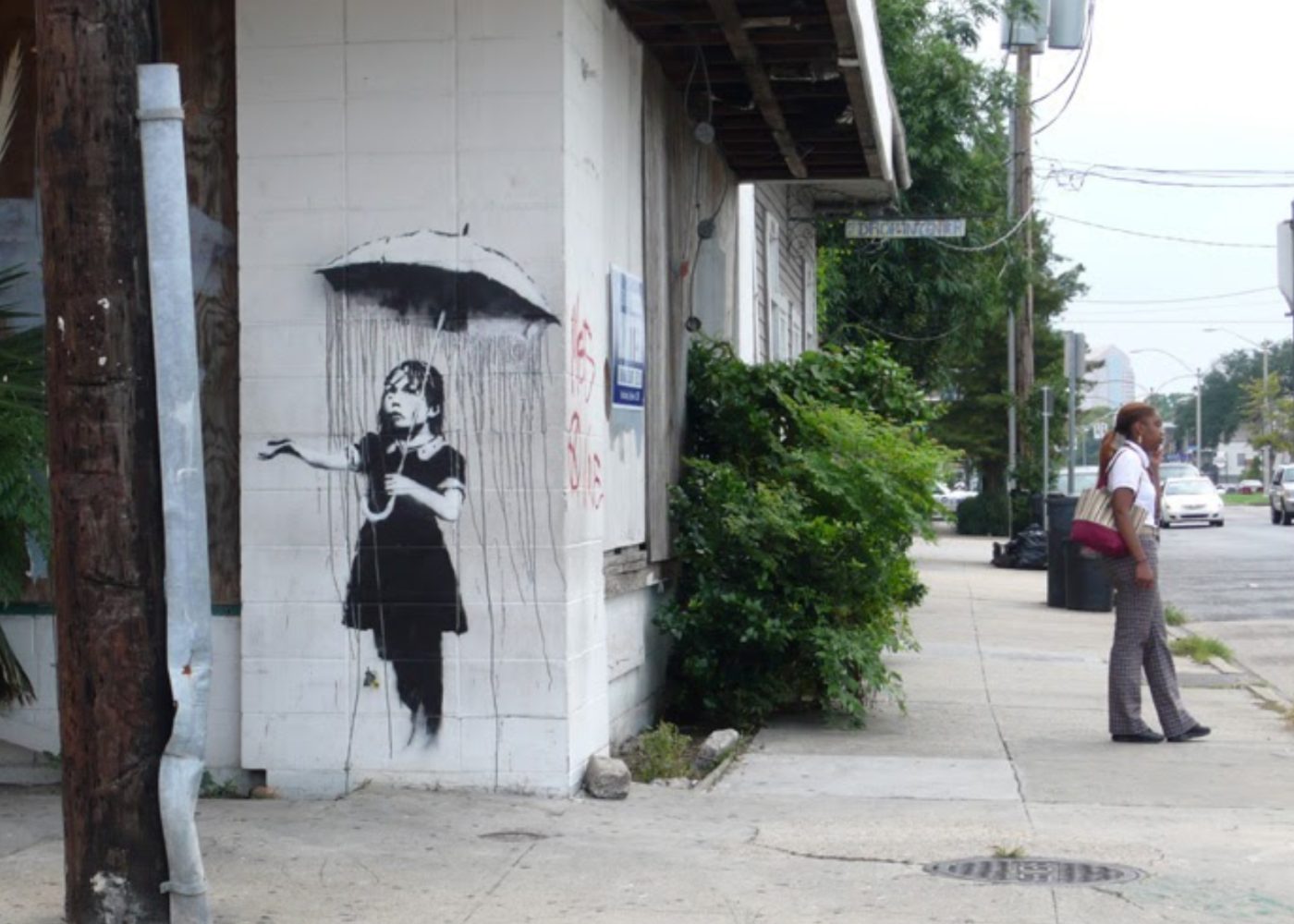
Its formal simplicity helps explain that longevity. The composition uses the visual language that had already made images such as Girl with Balloon so effective: a solitary child, an immediately recognizable object, a largely monochrome palette and a single visual disruption that transforms an apparently sentimental scene into something more unsettling. Here the girl's innocence contrasts with the failure of the structures surrounding her. The image remains accessible without knowledge of Katrina, while its New Orleans context gives the metaphor considerably greater political weight.
Banksy subsequently translated the image into a major screenprint edition in 2008. Different versions altered the colour of the falling rain while retaining the essential composition, allowing an image conceived for one specific New Orleans wall to circulate internationally.
From New Orleans to the Print
The importance of Nola extended well beyond the original New Orleans wall. Later in 2008, Banksy translated the image into a screenprint, transforming the site-specific Umbrella Girl into one of the most recognizable editions of the period. The composition remained essentially unchanged: the young girl shelters beneath her umbrella while reaching one hand into the apparently dry space beyond it, unaware—or perhaps only beginning to realize—that the rain is falling from inside the umbrella itself.
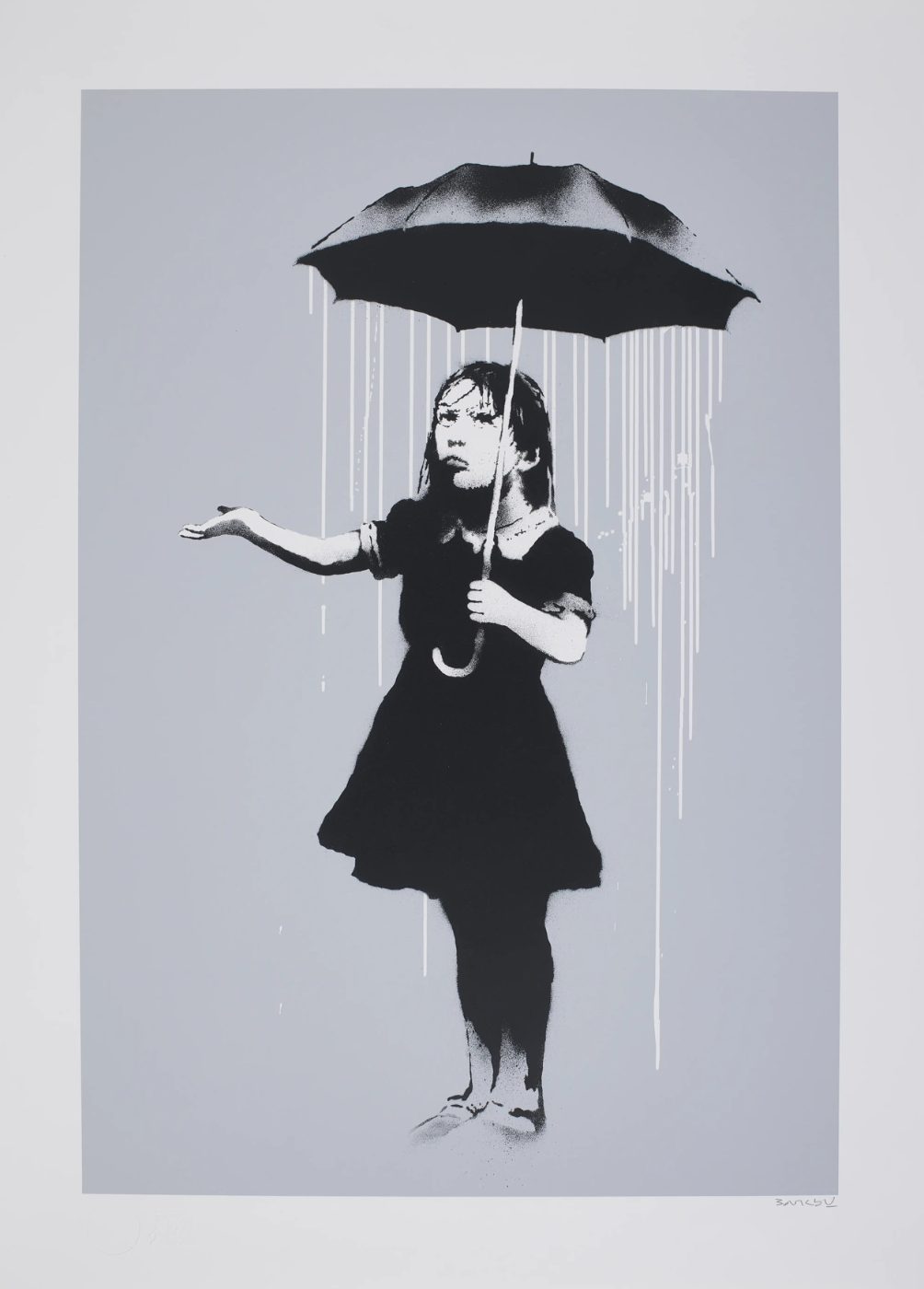
The standard edition was produced in white rain, comprising 289 signed prints. Banksy also created a series of rarer color variants in which the rain was printed in grey, orange, yellow, and various color variations, generally in small editions. These colorways have become among the most sought-after versions of the image and underline the unusual importance Banksy gave to the motif within his printmaking practice.
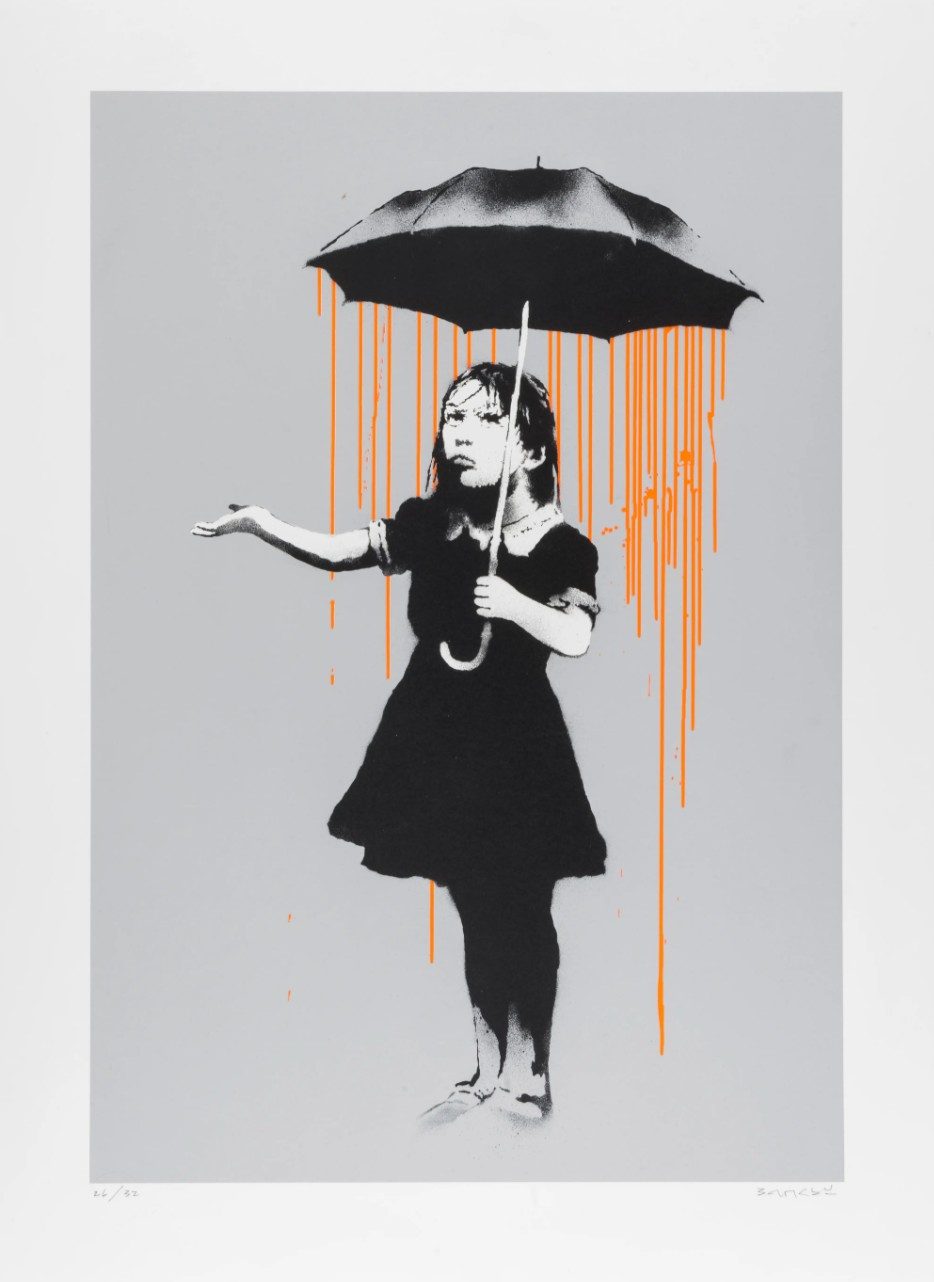
Transferring the mural to paper inevitably changed its relationship with New Orleans. On North Rampart Street, the image was inseparable from the third anniversary of Hurricane Katrina and from a city still confronting the consequences of failed flood protection. As a print, that immediate geographical context receded and the central metaphor became more universal. The umbrella could stand for any institution, authority or system intended to provide security but capable instead of exposing those who depend upon it to harm.
Yet the print never entirely loses its origins. Even its title preserves them: NOLA, the familiar abbreviation for New Orleans, Louisiana. Unlike many Banksy images that migrated between streets, canvases and prints without retaining a specific geographical identity, this one continued to carry the name of the city for which it had originally been conceived. The editions therefore helped turn a mural responding to a particular historical moment into an internationally recognized Banksy image while preserving its connection to New Orleans.
Survival
Many of Banksy's New Orleans murals disappeared relatively quickly, whether through redevelopment, deterioration or deliberate overpainting. Nola was treated differently. The work was covered with a transparent protective screen soon after its appearance, preserving it on the wall at North Rampart Street. A photograph taken in early 2009 already records the mural behind Plexiglas.
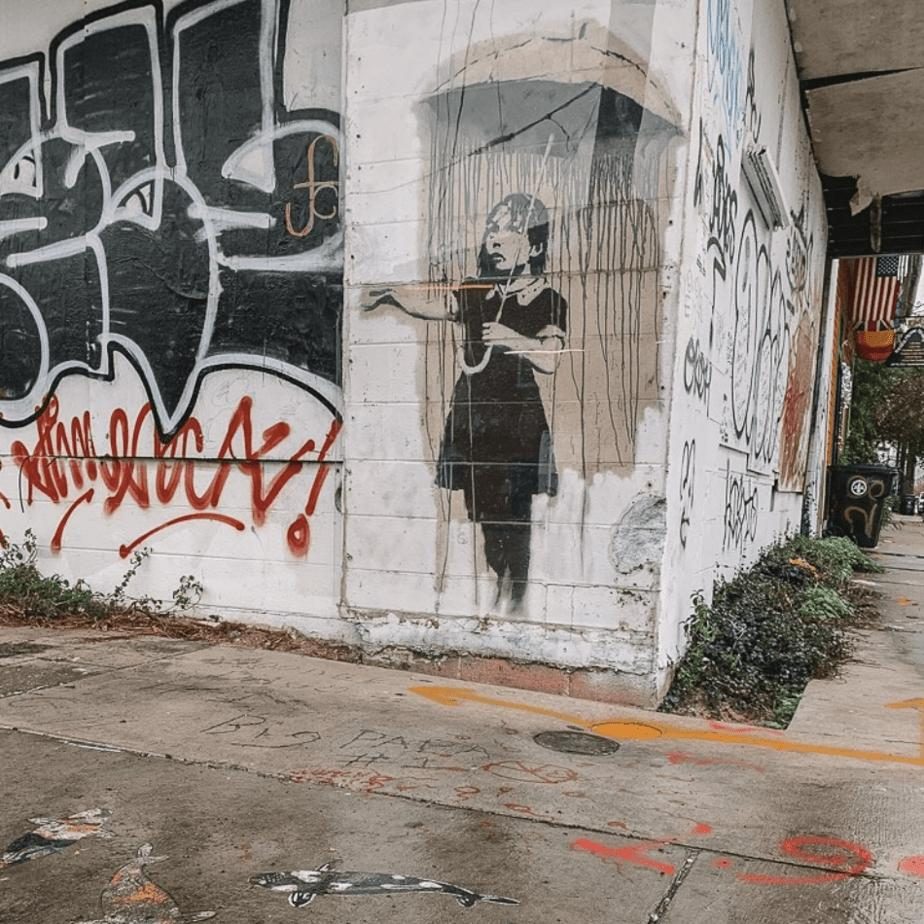
Its survival is particularly significant in a project concerned with destruction and recovery. Banksy arrived in a city where the physical traces of catastrophe remained visible three years after Katrina and created an image about the failure of systems intended to provide security. Of the many works he left behind, Nola became both the most recognizable and one of the few to remain associated with its original architectural setting.
The enduring power of the image comes from the precision of its reversal. Banksy does not show a child caught unprotected in a storm. He shows something more troubling: a child who has found protection, trusted it, and discovered that the danger is coming from inside.
STAY INFORMED
Receive the latest news, exhibitions, artworks and market updates on Banksy.