VINCENT VAN GOGH
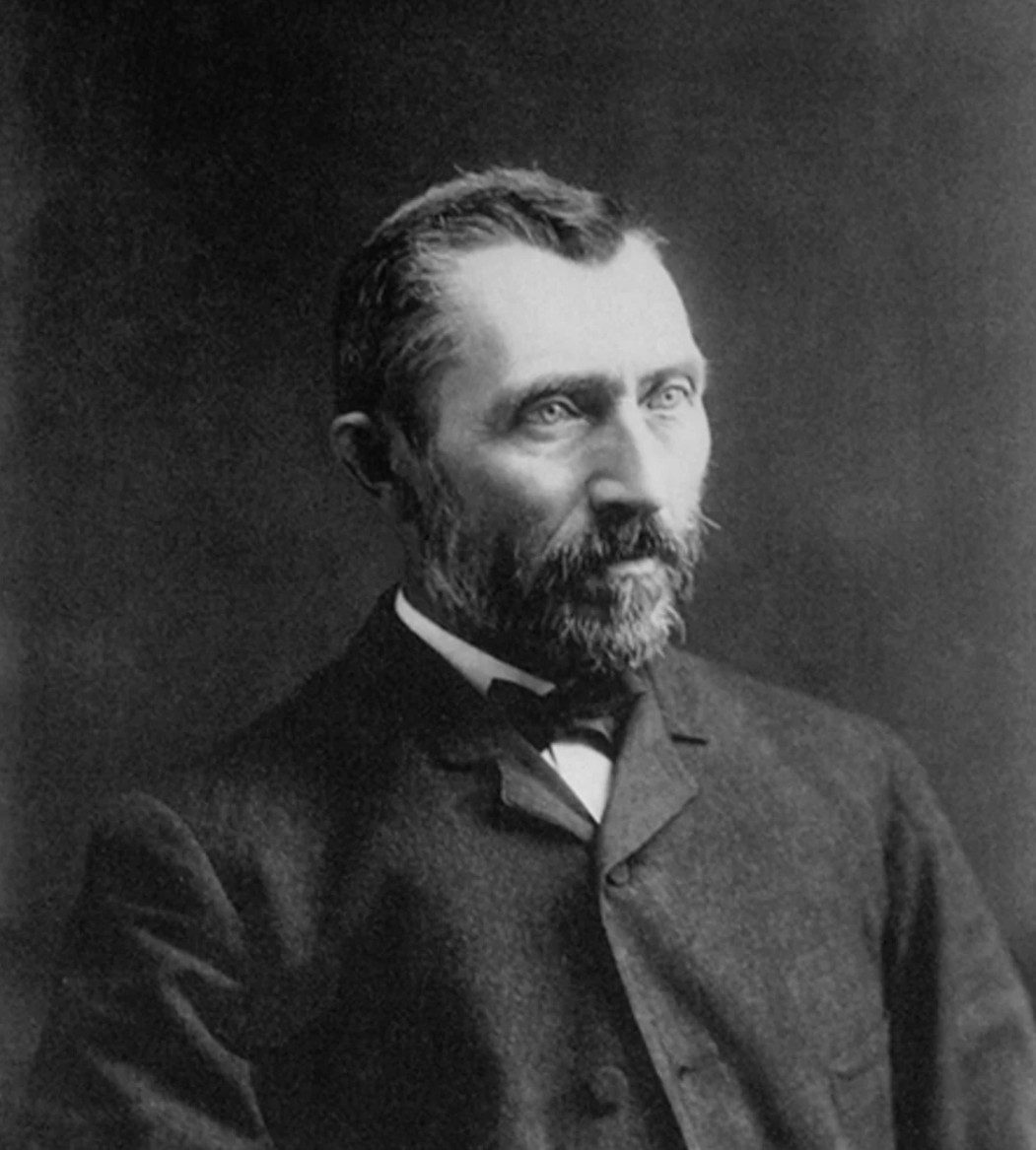
Vincent Willem van Gogh (1853-1889) was a Dutch post-impressionist painter who posthumously became one of the most famous and influential figures in the history of Western Art. In a decade, he created about 2,100 artworks, including around 860 oil paintings, most of which date from the last two years of his life. They include landscapes, still lifes, portraits and self-portraits. His work is characterized by bold colors and dramatic, impulsive, and expressive brushstrokes that contributed to the foundations of Modern Art.
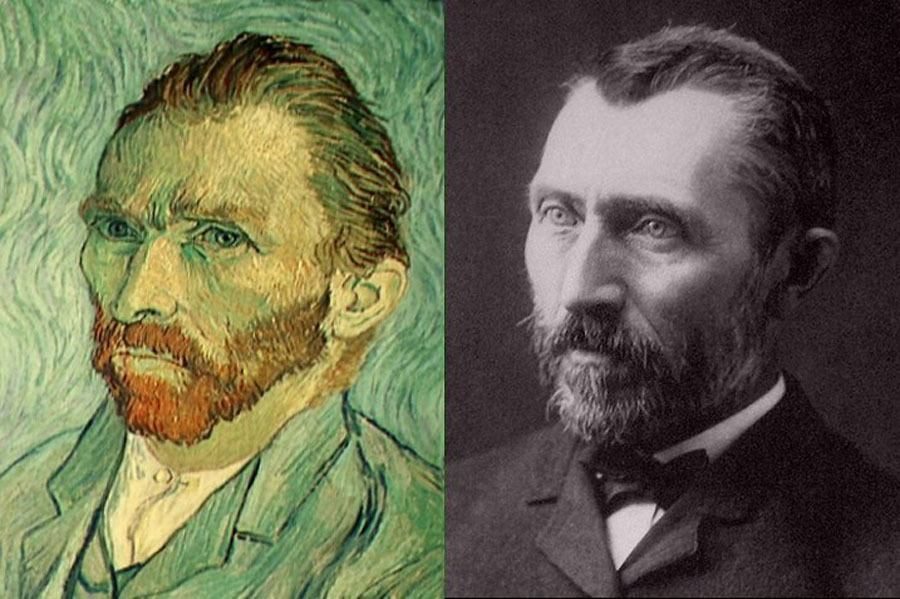
Sunflowers (in its original title, in French, Tournesols) is the name of two series of still lifes painted by Vincent van Gogh. Those paintings are widely considered some of the most important paintings of still life in art history. The first series, executed in Paris in 1887, depicts the flowers lying on the ground, while the second set, made a year later in Arles, shows a bouquet of sunflowers in a vase.
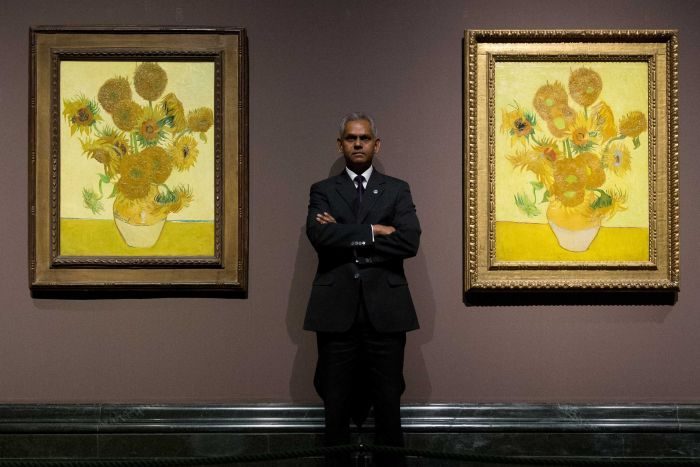
The flowers in the painting are seen at various stages of the plant's life cycle, symbolic to the cycle of human life. This subject was very significant for the artist as sunflowers represent devotion and loyalty, and the color yellow was a symbol of happiness for the artist.
Sunflowers from Petrol Station
Sunflowers from Petrol Station is an icon within Banksy’s oeuvre. Witty, irreverent and subversive, it offers a wry reimagining of Vincent Van Gogh’s celebrated Sunflowers, transforming the Dutch master’s radiant yellow blooms into a cluster of dried, wilted stems. Against a backdrop of thickly-wrought impasto, dead petals accumulate around the base of the vase, which bears the artist’s name—in place of Van Gogh’s—in blue lettering.
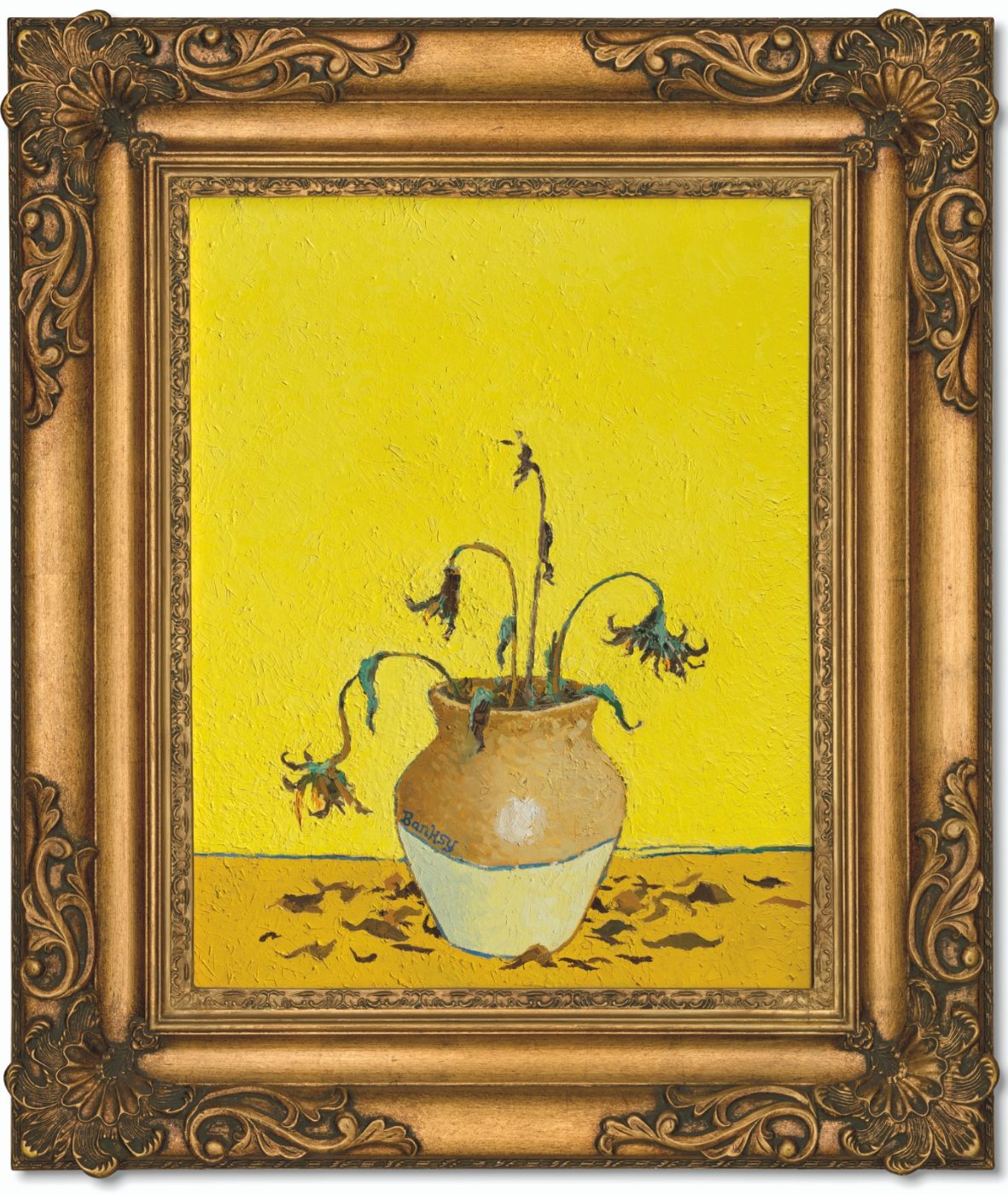
Saturated with humor and dark irony, Sunflowers from Petrol Station draws together some of Banksy’s most important concerns. Underpinning his practice is a conviction that art should be for the people: by closeting it away in museums, he believes, we smother its potential to change the world. The vandalizing impulse of his work—whether spray painting a street wall or defacing a masterpiece—ultimately serves as a mirror: we are quick to condemn such acts, he suggests, yet fail to recognize the numerous other ways in which we stifle our own society and culture.
By taking one of the most iconic creations in the Western canon—the five prime examples of which reside in major museums in London, Philadelphia, Munich, Amsterdam and Tokyo—Banksy warns against the perils of institutional elitism and reverence. At the same time, the image implicates wider notions of pollution—another of Banksy’s central themes: while Van Gogh’s original canvases depicted sunflowers at various points in their life cycle, the present work envisages a dystopian world in which the only available subjects were old, dead specimens. The wry, familiar comedy of the flowers’ petrol station provenance is underlined by a more disarming thought: that one day, the sole remnants of the natural world might be offered up for sale by oil and gas companies.
Morons
On 30 March 1987, Japanese insurance magnate Yasuo Goto paid the equivalent of USD 39,921,750 for van Gogh's Still Life: Vase with Fifteen Sunflowers at auction at Christie's in London, at the time a record-setting amount for a work of art. The price was over three times the previous record of about $12 million paid for Andrea Mantegna's Adoration of the Magi in 1985.
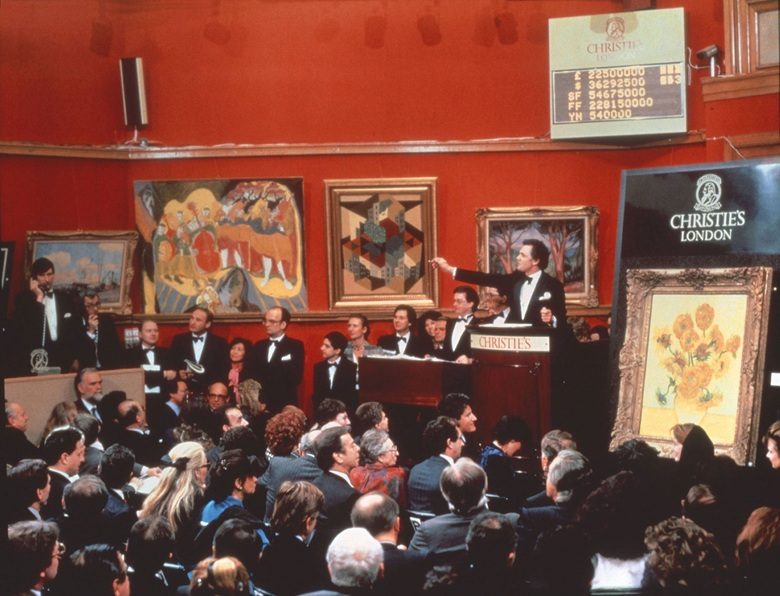
This famous picture from Christie's is actually the subject of one of Banksy's most iconic prints, entitled Morons. Morons stands as one of Banksy's most iconic and self-aware images: a work that openly mocks the very system in which it circulates. Released shortly after his Los Angeles exhibition Barely Legal, the print captures a paradox at the heart of contemporary art: the commercialization of dissent. At once humorous and razor-sharp, Morons is not simply a critique of the market: it is a work fully embedded within it.
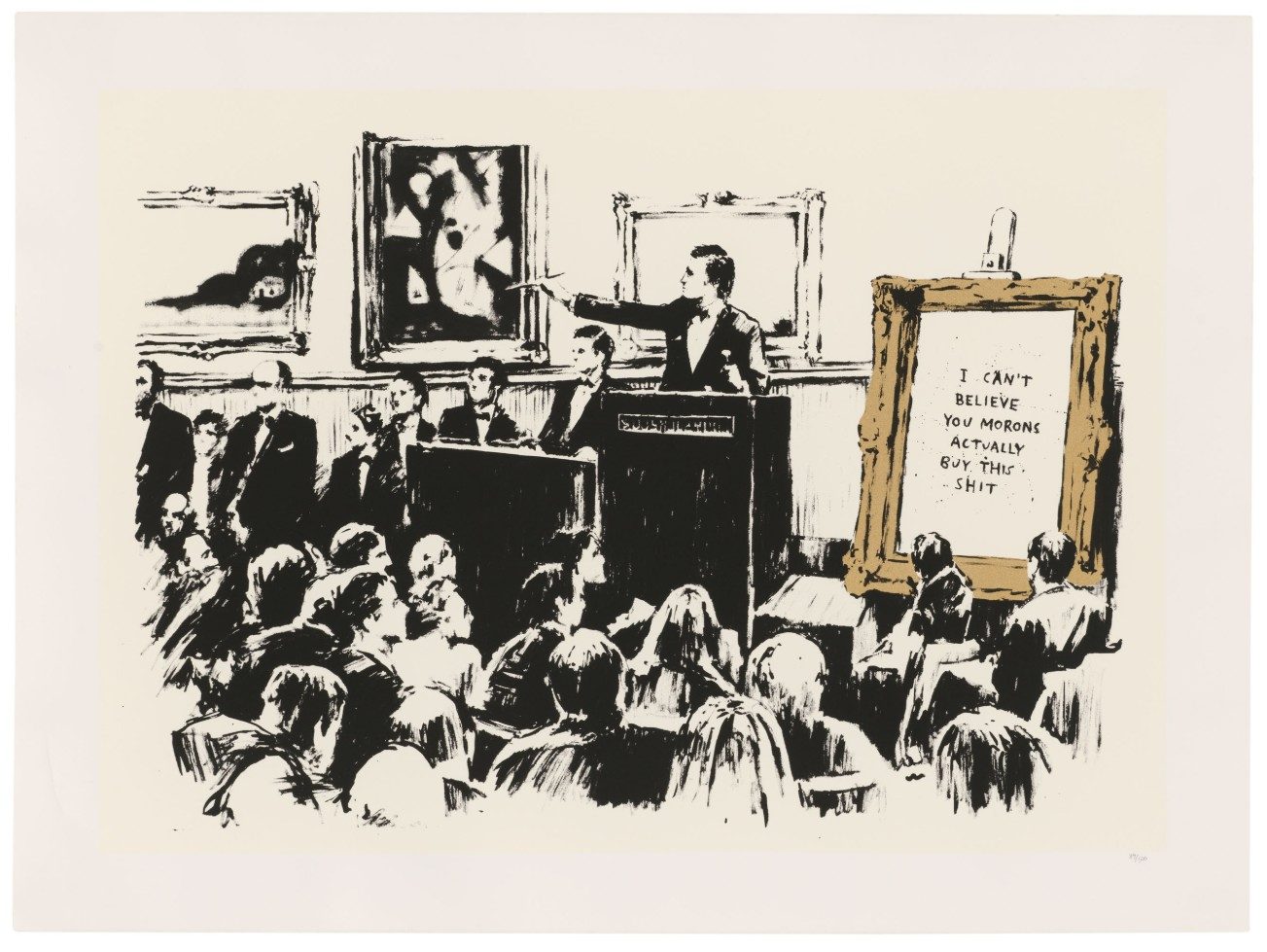
The composition depicts a crowded auction room, rendered in Banksy's characteristic stencil style. Rows of seated bidders face a rostrum where an auctioneer presides over the sale. At the center of the image, a framed canvas is presented to the audience. But instead of the Sunflowers, on it, in bold capital letters, the now-famous inscription reads: I CAN'T BELIEVE YOU MORONS ACTUALLY BUY THIS SHIT...
STAY INFORMED
Receive the latest news, exhibitions, artworks and market updates on Banksy.