CRUDE OILS AND VANDALIZED OILS
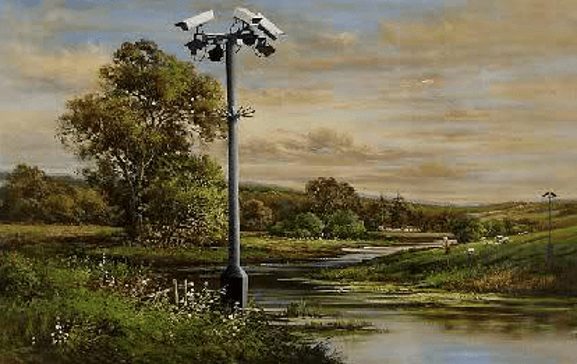
“If you want to survive as a graffiti writer when you go indoors I figured your only option is to carry on painting over things that don’t belong to you there either.” — Banksy
Banksy's Dialogue with Art History
Few artists have entered into a dialogue with art history quite like Banksy. While his street works transformed walls, bridges and buildings into spaces for political and social commentary, another, quieter form of intervention began to emerge around 2000. Banksy started working with existing paintings—often inexpensive landscapes and portraits acquired second-hand—and introducing into them the visual language of his own time. Military helicopters appeared above peaceful valleys; surveillance cameras watched over idyllic countryside; crashed cars interrupted pastoral scenes; aristocratic portraits acquired masks, gestures or other incongruous details.
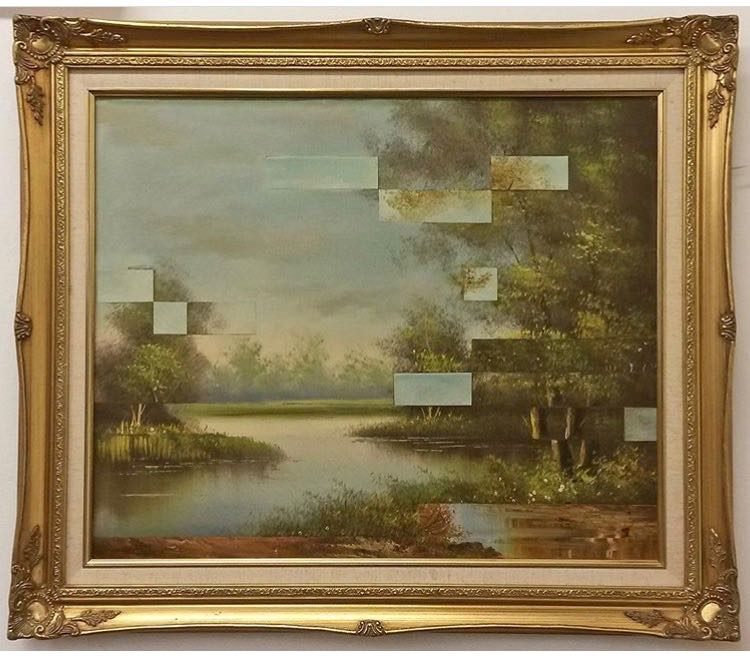
The principle was deceptively simple. Banksy did not need to destroy the original painting, nor even substantially alter it. A single foreign element could be enough to collapse the distance between two worlds. The nostalgic landscape remained visible, but could no longer be viewed innocently. What had once offered escape from contemporary life was suddenly invaded by it.
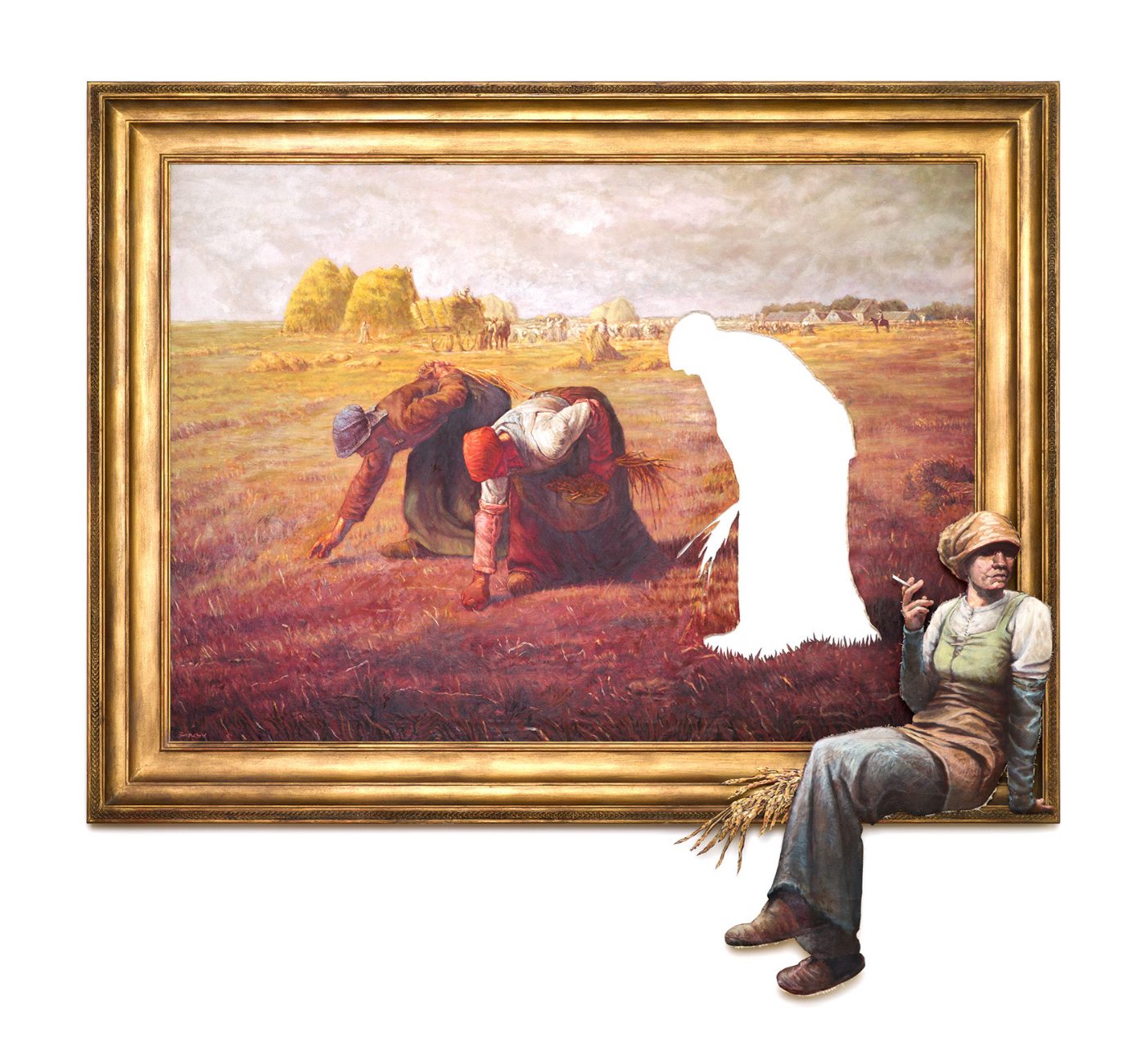
Alongside these found paintings, Banksy began producing more ambitious hand-painted reinterpretations of recognised masterpieces and familiar images from art history. Monet, Van Gogh, Hopper, Millet, Rembrandt, Velázquez, Poussin, Warhol and Jack Vettriano became participants in an expanding conversation about authorship, cultural authority and the changing meaning of images. In Show Me the Monet, shopping trolleys and a traffic cone contaminate Monet's celebrated garden. In Sunflowers from Petrol Station, Van Gogh's flowers have withered. In The Gleaners, one of Millet's labourers has simply abandoned the painting and taken a cigarette break on its frame.
These works have variously been described as Crude Oils, Corrupted Oils, Vandalized Oils and modified paintings. The terminology is less important than the artistic principle that connects them. Across more than a decade, Banksy repeatedly returned to existing images and asked what happens when the past is forced to accommodate the present.
Far from constituting an attack on art history, these works reveal a sustained fascination with it. Banksy does not erase the paintings he appropriates; he needs them. Their serenity, conventions, cultural associations and sometimes their very anonymity provide the conditions against which his interventions acquire meaning. The resulting works exist between preservation and vandalism, homage and parody, old and new. They constitute one of the richest and most intellectually revealing strands of Banksy's practice.
Rewriting Art History
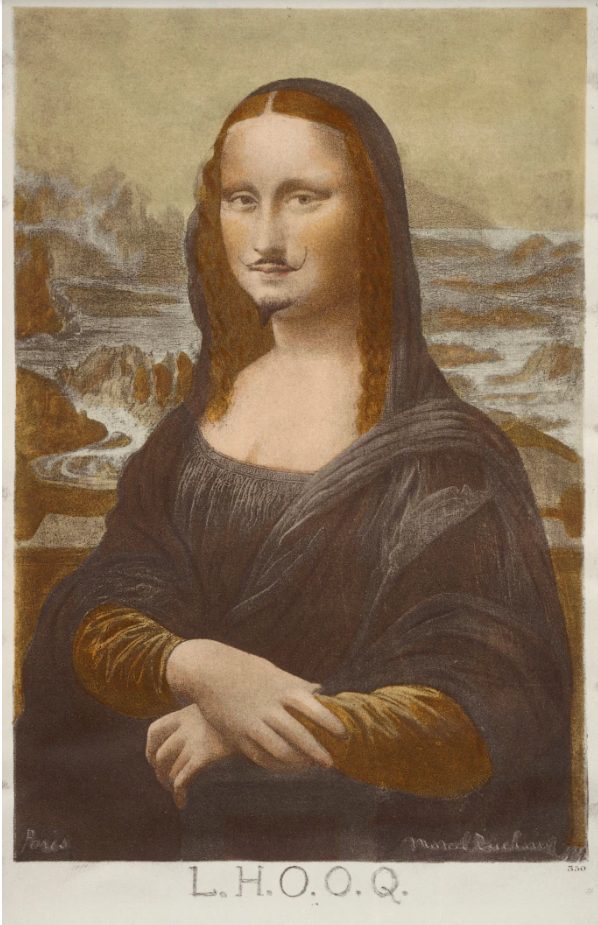
Banksy's decision to paint over existing pictures belongs to a much longer history of appropriation. Marcel Duchamp famously added a moustache and goatee to a reproduction of Leonardo's Mona Lisa in L.H.O.O.Q. in 1919. Robert Rauschenberg later created Erased de Kooning Drawing by removing rather than adding to another artist's work. Particularly close to Banksy's practice are Asger Jorn's Modifications: second-hand paintings acquired from flea markets and altered through deliberately disruptive interventions.
Yet Banksy's relationship with his source material is distinctive. The found painting is not simply a surface on which another image happens to be placed. It supplies half of the argument. The anonymous pastoral landscape promises tranquillity; Banksy supplies the attack helicopter. The picturesque countryside evokes escape; Banksy erects the CCTV camera. The dignified portrait asserts status and decorum; Banksy introduces a gimp mask or an extended middle finger.
Meaning arises from the collision.
This also explains why the modest origins of many of these paintings are important. Banksy frequently worked not with valuable Old Masters but with forgotten decorative pictures—the kind of landscapes and portraits that had lost almost all cultural and economic significance. His intervention radically changed their status. A painting that had become virtually invisible could suddenly command attention precisely because something did not belong.
There is a characteristic irony here. The graffiti artist accused of vandalising other people's property entered the art world and continued doing essentially the same thing. Only now the walls had frames around them.
Crude Oils: London, 2005
The ideas Banksy had been developing since around 2000 reached their most concentrated public expression in October 2005 with Crude Oils: A Gallery of Re-mixed Masterpieces, Vandalism and Vermin, staged in a disused shop at 100 Westbourne Grove in Notting Hill.
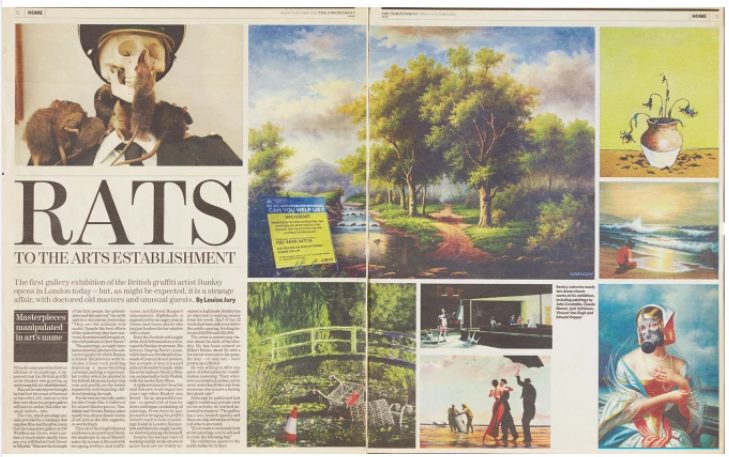
The exhibition brought together two related approaches. There were ambitious, fully painted reinterpretations of established images—including Show Me the Monet, Sunflowers from Petrol Station, Banksy's version of Edward Hopper's Nighthawks, and Crude Oil (Vettriano)—alongside found paintings that had been modified with Banksy's own contemporary iconography. Pastoral scenes were interrupted by police tape, burning vehicles and other signs of modern disorder; portraits were transformed by masks and unexpected interventions. Classical sculpture received similar treatment.
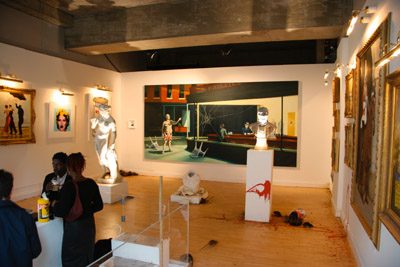
Banksy also populated the gallery with live rats, collapsing the distinction between exhibition and happening. The title itself neatly summarised the project: masterpieces had been “re-mixed,” paintings vandalised, and the supposedly controlled environment of the gallery invaded by vermin.
Yet Crude Oils should not be mistaken for the beginning of the story. It was instead the moment when an artistic strategy Banksy had already been developing for several years became a coherent exhibition. Nor was it its conclusion. Modified and reinterpreted paintings continued to appear afterwards, notably at Barely Legal in Los Angeles in 2006 and Banksy vs Bristol Museum in 2009.
The exhibition therefore occupies a pivotal rather than isolated position: the moment at which Banksy's experiments with found paintings, museum interventions and art-historical appropriation converged into a recognisable body of work.
Remixing the Masters
Some of Banksy's most ambitious paintings dispense with the anonymous flea-market canvas and confront recognisable images from art history directly.
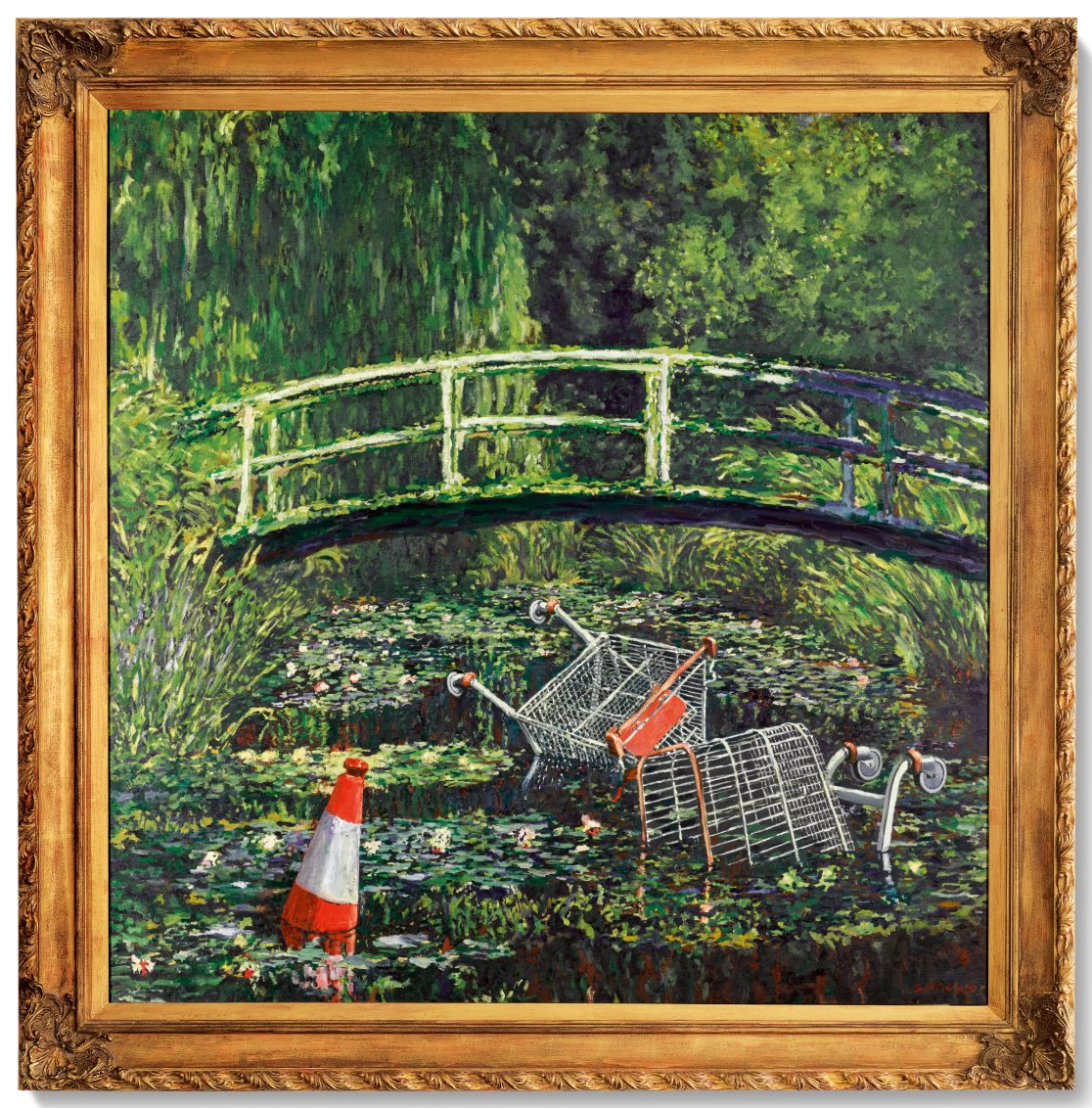
Show Me the Monet transforms Monet's celebrated Japanese bridge into a polluted contemporary landscape, with abandoned shopping trolleys and a traffic cone submerged in the water. The intervention is comic, but the joke carries an environmental argument: the supposedly timeless beauty of nature has become inseparable from the debris of consumer society.
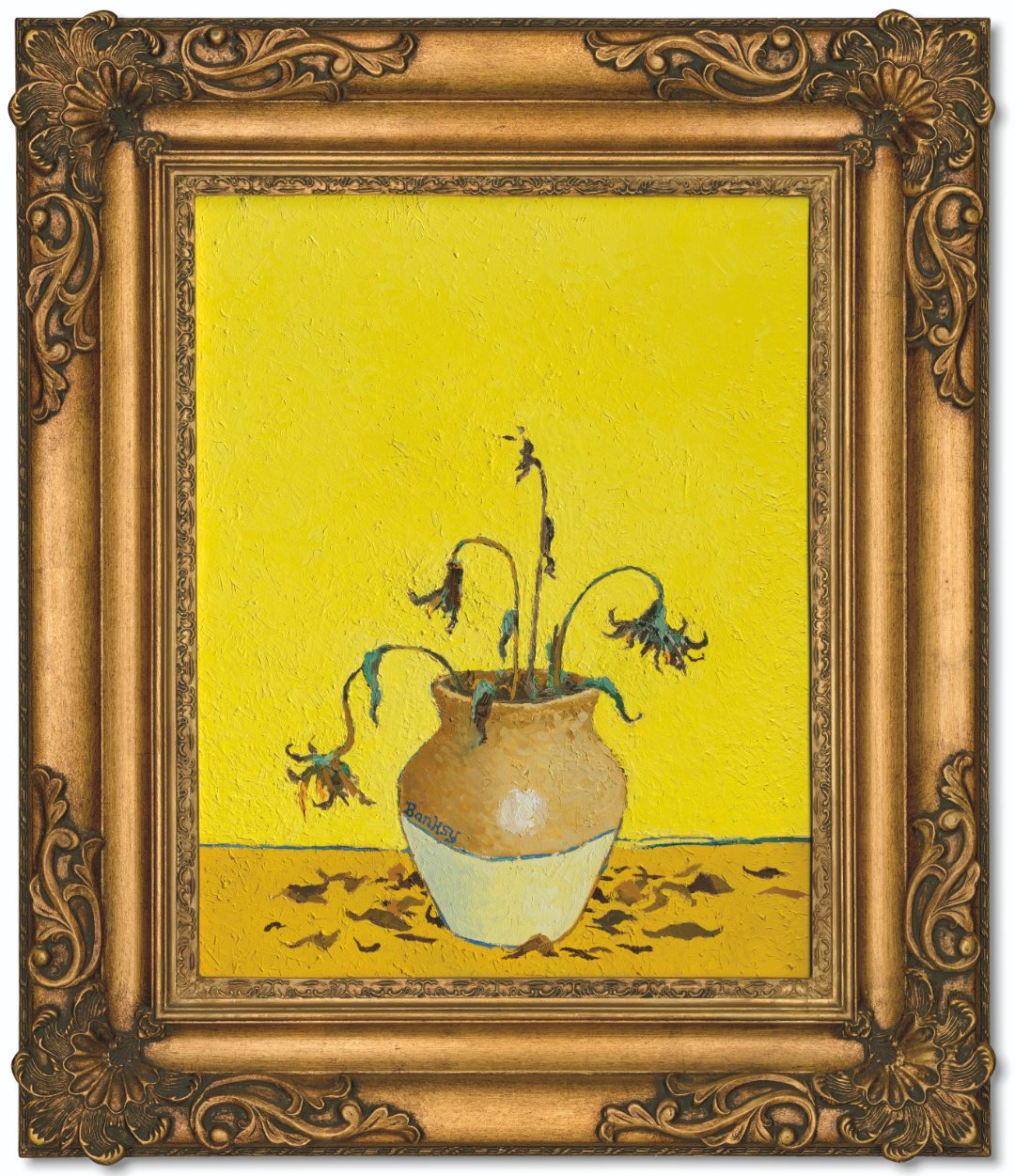
Sunflowers from Petrol Station performs a similarly economical transformation. Van Gogh's radiant flowers have become a dying petrol-station bouquet. Beauty has been commodified, purchased, exhausted and discarded. The traditional memento mori is recast through the banal language of modern consumption.
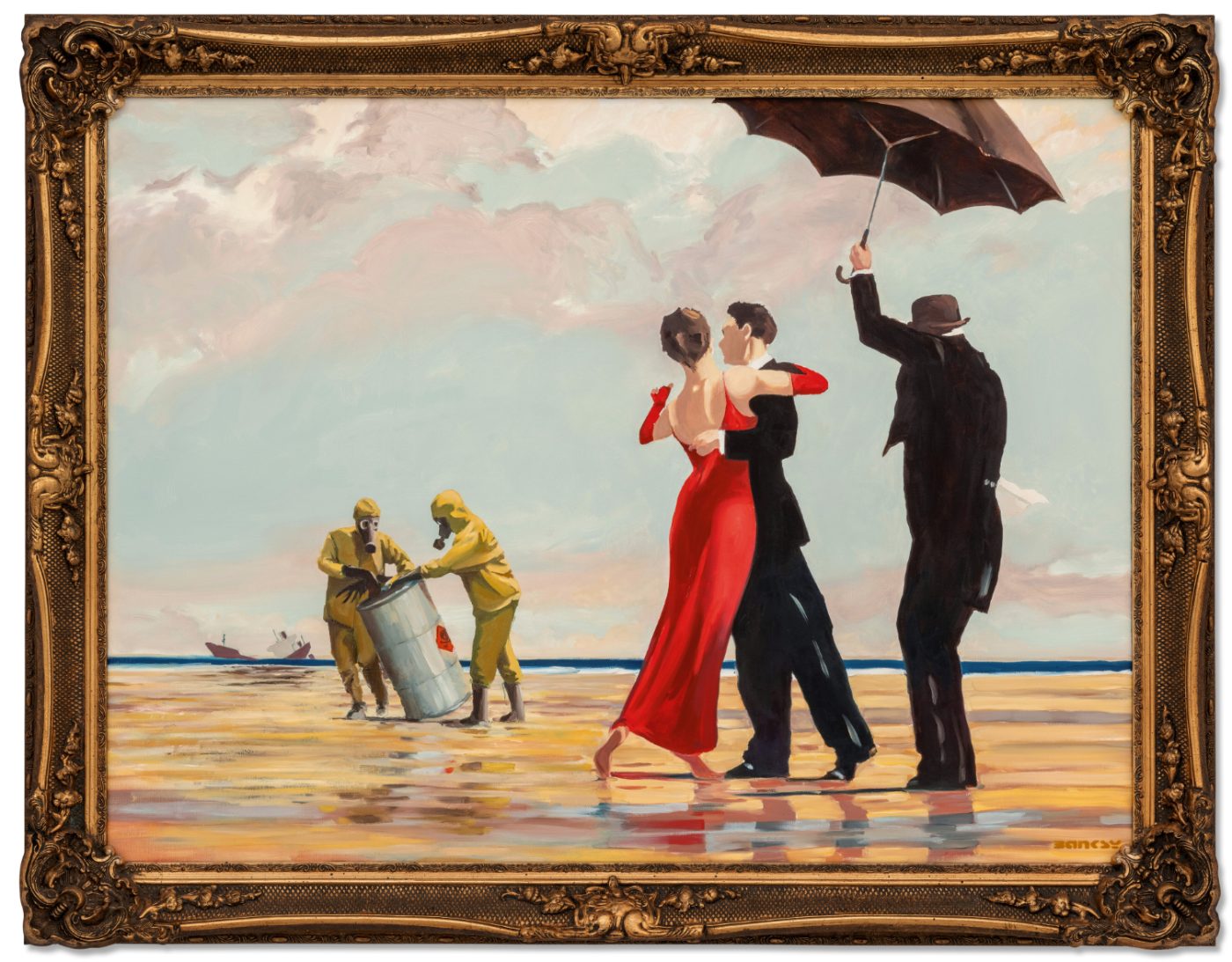
With Crude Oil (Vettriano), Banksy enters a different debate. Jack Vettriano's enormously popular The Singing Butler had achieved extraordinary public recognition while remaining controversial within institutional art circles. Banksy preserves the elegantly dressed couple dancing on the beach but surrounds their romantic fantasy with environmental disaster: a sinking vessel and figures in hazardous-material suits introduce the consequences that the original idyll excludes.
Banksy's choice of Vettriano alongside Monet, Van Gogh and Hopper is itself provocative. It quietly asks who determines the canon, why some enormously popular images are culturally legitimised while others are dismissed, and whether institutional approval is ultimately any more stable than popular taste.
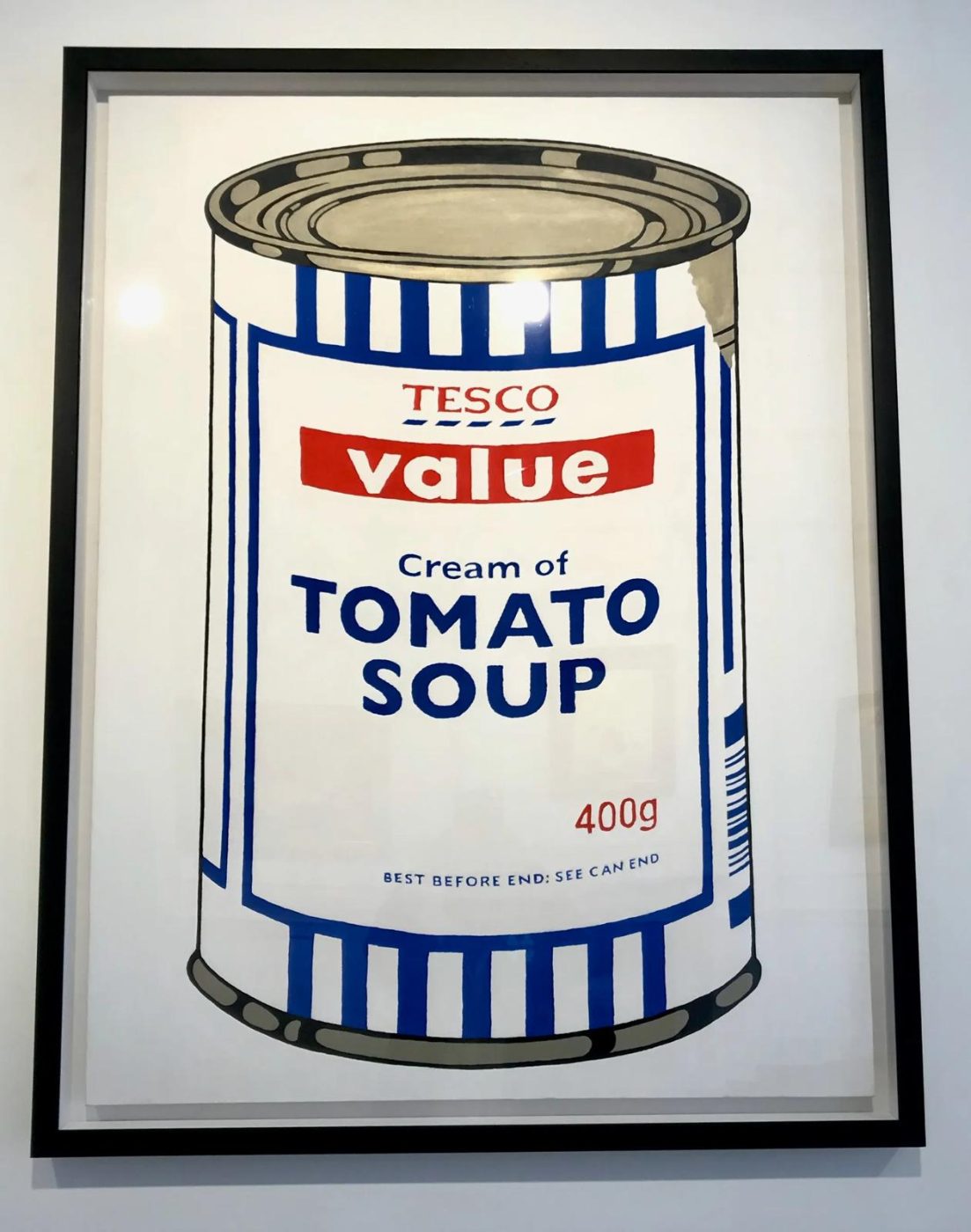
The same dialogue continues elsewhere. Warhol's Campbell's Soup becomes Tesco Value Soup Can. Velázquez's idealised Venus bears the traces of cosmetic intervention. Rembrandt receives googly eyes. Poussin's biblical landscape is invaded by an EasyJet billboard. Millet's exhausted gleaner walks out of her own masterpiece.
Banksy does not merely reproduce famous pictures with jokes added. He uses their familiarity as intellectual shorthand. Centuries of cultural meaning arrive with the original image; his intervention then redirects them toward the present.
Corrupted Landscapes
The landscape is perhaps the natural habitat of the Vandalized Oils.
Traditional landscape painting frequently offers an idealised world beyond the pressures of modern life: mountains, rivers, villages and forests seemingly protected from contemporary disorder. Banksy repeatedly violates that promise. His landscapes are watched, polluted, occupied, regulated, damaged or abandoned.
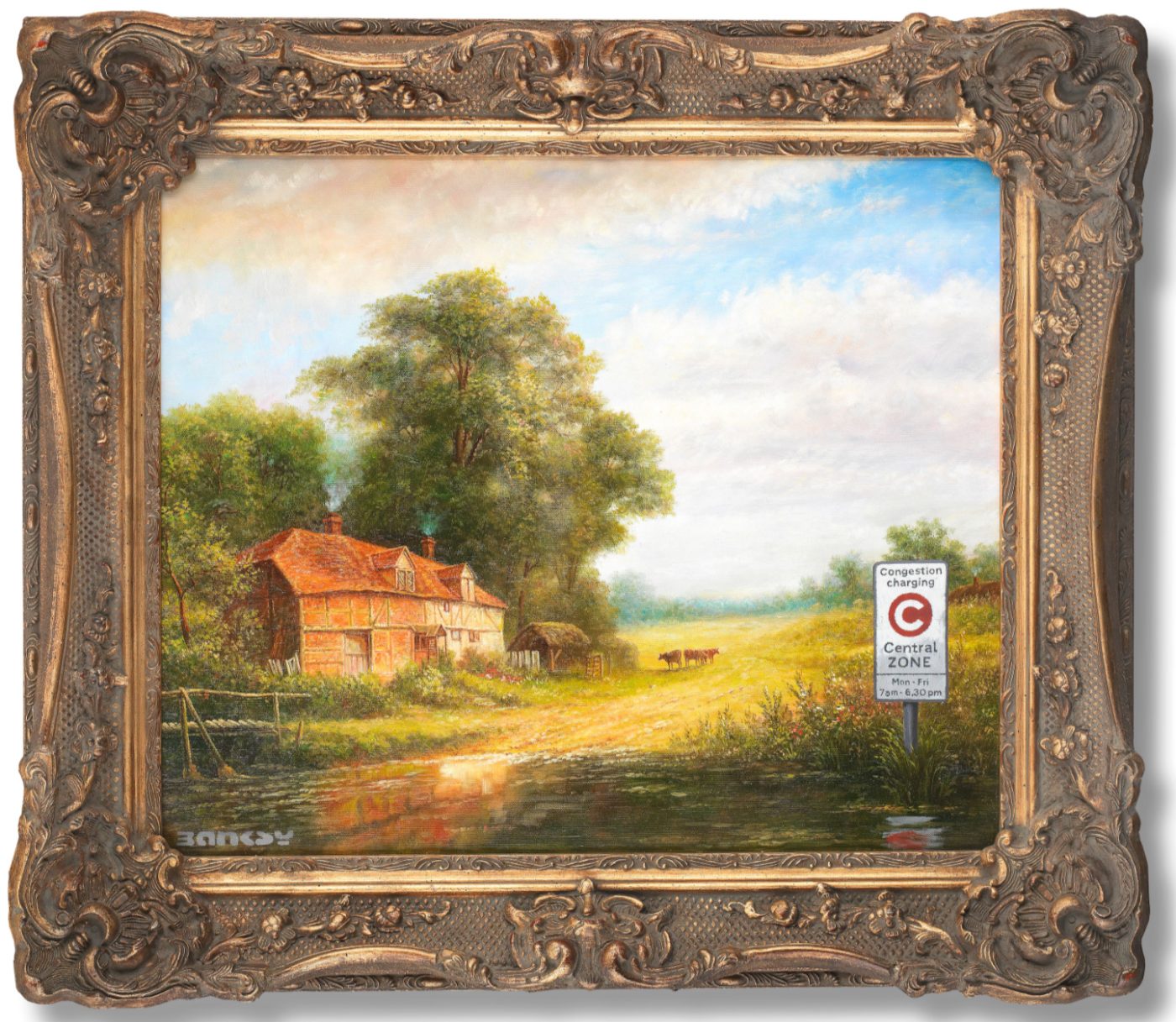
In Congestion Charge, the apparatus of urban regulation appears absurdly in an idyllic rural setting. In CCTV and Countryside CCTV, surveillance technology penetrates the very places to which one might retreat in order to escape it. Elsewhere, crashed or abandoned vehicles sit awkwardly within landscapes that seem to have existed for centuries before them and may survive for centuries afterwards.
These interventions are frequently remarkably small. That restraint is crucial. Banksy allows the original painting to retain its beauty because the tension depends upon it. A surveillance camera in an already dystopian landscape would tell us very little; a surveillance camera beside a tranquil river changes everything.
The works also reverse the traditional relationship between permanence and progress. Modern technology is supposed to represent advancement, yet Banksy's cars are wrecked, his machinery intrusive and his infrastructure frequently absurd. The landscape, meanwhile, simply persists. Modern civilisation enters these paintings loudly but does not necessarily appear built to last.
Corrupted Portraits
Where the landscapes allow Banksy to disturb ideas of nature and tranquillity, the portraits allow him to interfere with identity, authority and social convention.
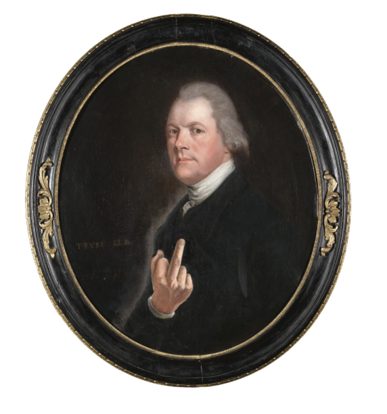
The strategy can be almost ridiculously economical. In The Rude Lord, an eighteenth-century gentleman retains his clothes, posture and aristocratic composure while calmly extending his middle finger. One gesture is enough to overturn the social codes upon which the original portrait depends. Centuries of decorum collapse without the sitter ever leaving his chair.
Fetish Lady operates through a similar collision, placing a black fetish mask over the face of an otherwise refined female sitter. The contrast exposes the assumptions attached to costume, class, sexuality and respectability. What initially appears to be vandalism becomes a mechanism for revealing how much meaning the viewer had already projected onto the original image.
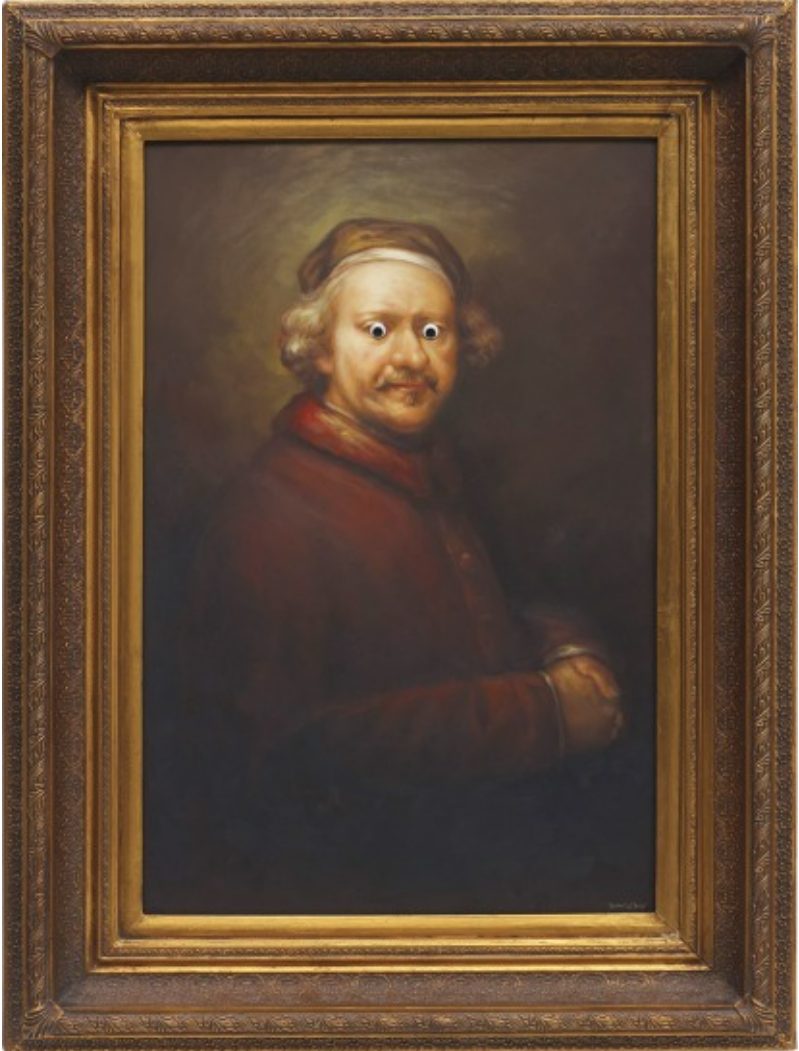
In Rembrandt, Banksy goes further by interfering with one of the defining instruments of portraiture itself: the gaze. Googly eyes transform the solemnity and psychological intensity associated with Rembrandt's self-portrait into absurdity. The intervention is almost childish, which is precisely why it is so effective. Cultural reverence meets the visual language of the practical joke.
Across these portraits, Banksy repeatedly demonstrates how fragile authority can be. Status, dignity and even beauty depend upon conventions that a tiny intervention can dismantle.
Humour as a Weapon
Humour is central to these paintings, but it should not be confused with superficiality. Banksy's jokes are often the mechanism through which more serious ideas become accessible.
The viewer laughs before fully understanding why.
A helicopter decorated with a bow is funny until one remembers what the helicopter is designed to do. A dignified aristocrat giving the finger is funny because centuries of social hierarchy have been compressed into a gesture understood immediately by almost everyone. A gleaner sitting on the frame smoking a cigarette is amusing until the viewer recognises that Banksy has liberated a worker from 150 years of perpetual labour.
Humour also allows Banksy to avoid the solemnity that often accompanies political art. He rarely lectures. Instead, he establishes a visual contradiction and leaves the viewer to resolve it.
The joke opens the door; the contradiction remains after the laughter has passed.
Choppers: Paradise Under Attack
Military helicopters constitute one of the earliest and most persistent motifs within Banksy's modified landscapes. Examples dating from around 2000 and 2001 demonstrate that the conceptual foundations of the series were established well before the Crude Oils exhibition.
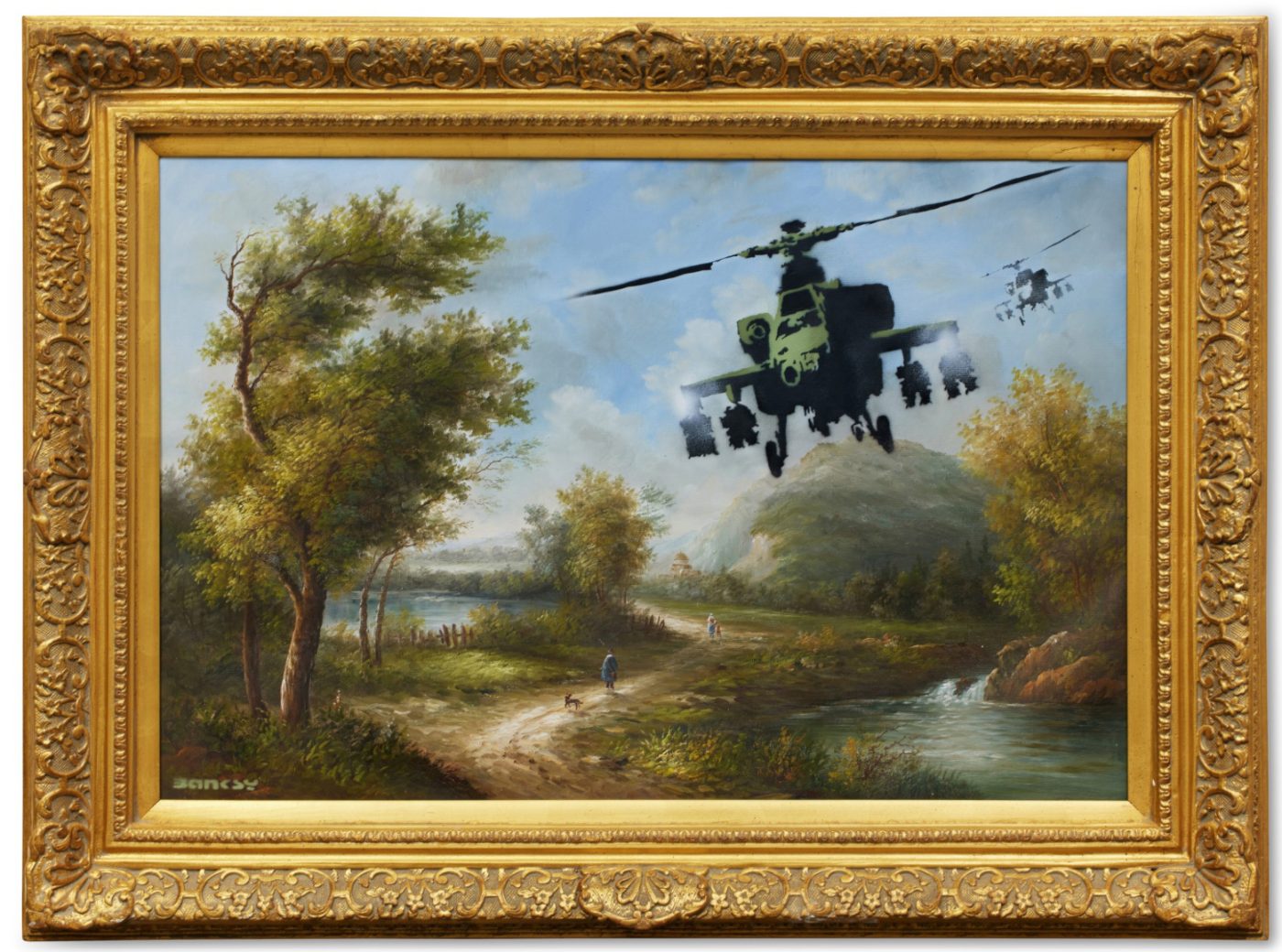
The formula is extraordinarily effective. An anonymous landscape provides an image of stability and peace; the helicopter introduces the machinery of contemporary warfare. Two incompatible visual languages occupy the same space.
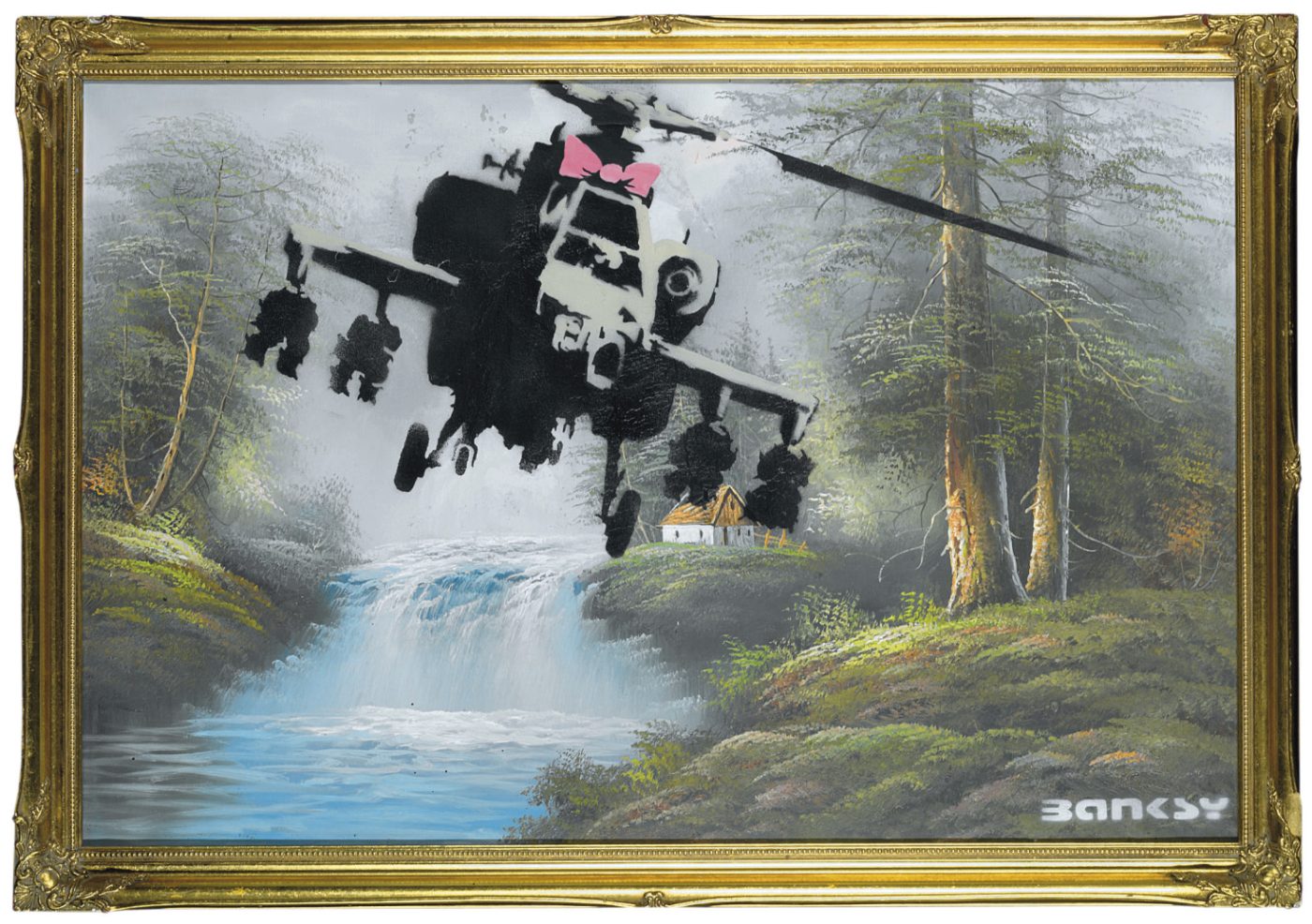
Sometimes Banksy complicates the image further. In Corrupted Oil, the attack helicopter carries a pink bow, combining aggression with an almost childish visual code. The device would later become familiar through Happy Choppers, but within the found landscape the contradiction becomes particularly pointed. War has entered paradise dressed as a toy.
The historical context matters. These works developed during a period in which military intervention, Afghanistan and Iraq increasingly dominated British political life. Banksy's helicopters therefore function not as abstract symbols of violence but as contemporary intrusions into inherited visions of security and permanence.
Corrupted Animals
Animals provide another recurring vocabulary through which Banksy destabilises the apparent innocence of traditional painting.
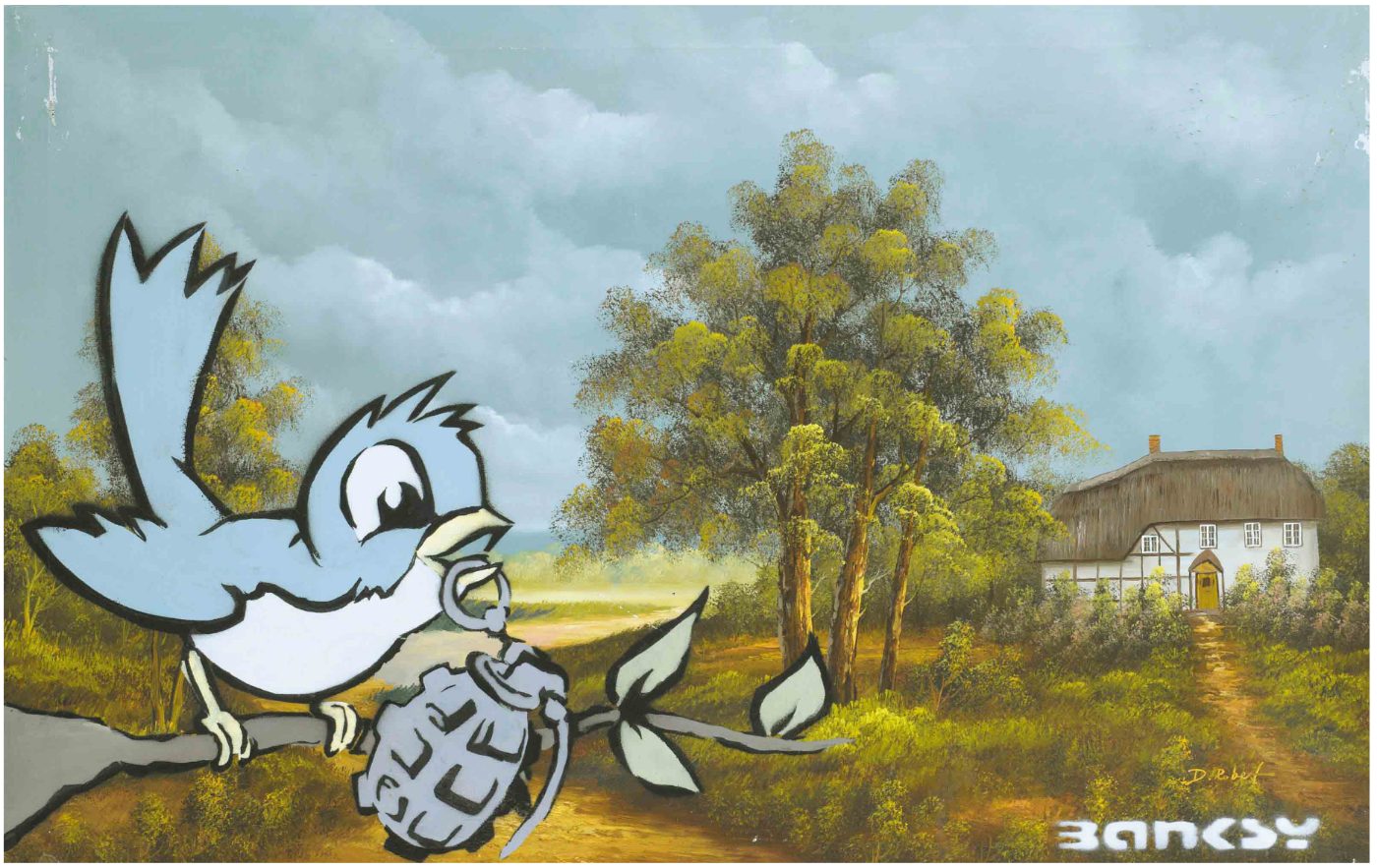
In Bird and Grenade, a cheerful blue bird holds the pin of a grenade suspended beneath its beak. The surrounding countryside remains perfectly tranquil. Peace has not yet been destroyed; it has simply become precarious.
The image encapsulates one of Banksy's most effective strategies. Threat does not always arrive through spectacle. Sometimes catastrophe is present but suspended, dependent upon the smallest movement. The landscape remains beautiful precisely because disaster has not happened—yet.
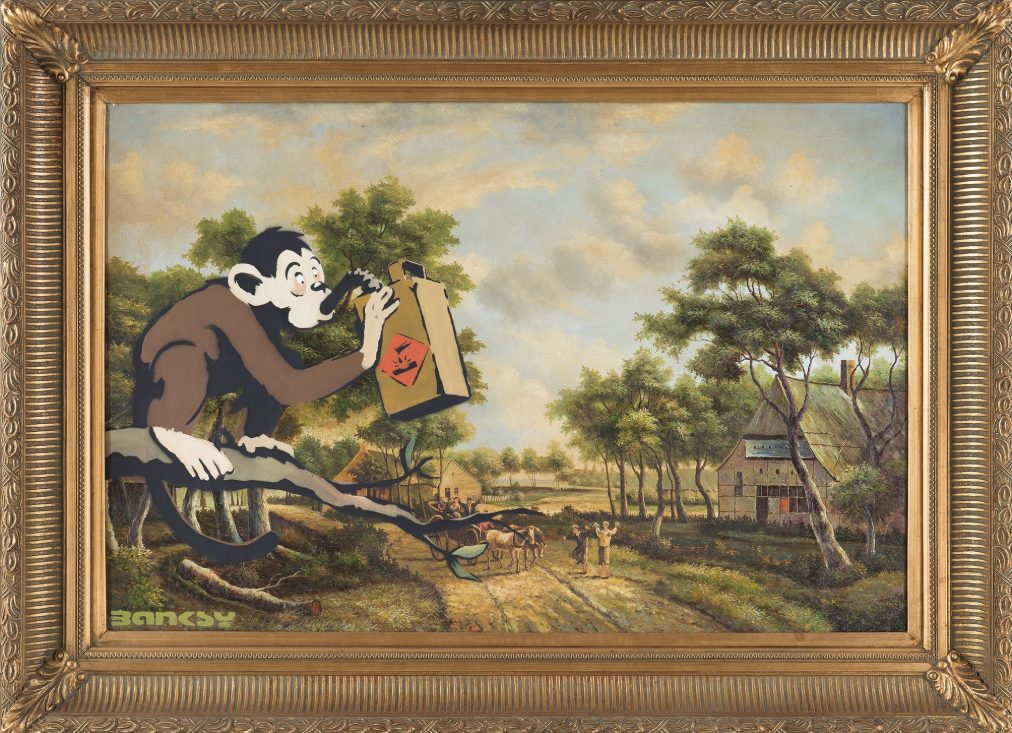
Elsewhere, monkeys and other animals enter these inherited environments carrying the political and social associations they possess throughout Banksy's wider oeuvre. The decorative landscape becomes a stage on which innocence and violence, nature and human behaviour can collide.
Subject to Availability: The Landscape Is No Longer Innocent
As the series developed, Banksy's treatment of landscape became increasingly explicit in its environmental concerns.
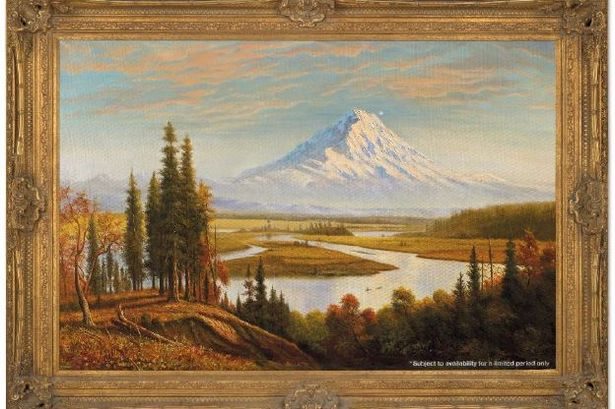
Works such as Subject to Availability, Home Sweet Home, This Is Not a Photo Opportunity and Sorry, The Lifestyle You Ordered Is Currently Out of Stock question the romantic idea of landscape as something permanent, pristine and available for our enjoyment. Nature becomes threatened, commodified or mediated by the language of tourism and consumption.
This theme provides one of the clearest explanations of the Vandalized Oils as a whole. Banksy once observed that these paintings reflect contemporary life precisely because we no longer inhabit the untouched world represented by traditional landscape painting. The pastoral image may survive on the wall, but the reality outside it has changed.
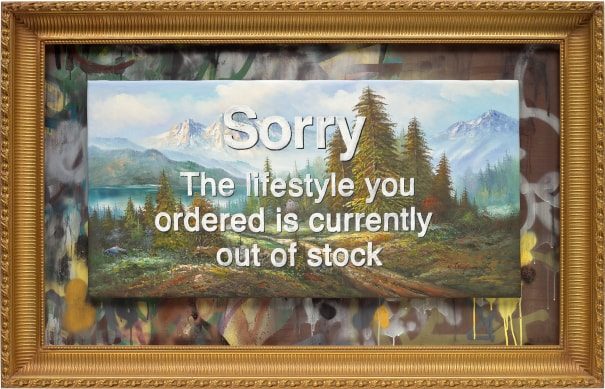
Banksy's vandalism therefore contains an uncomfortable reversal. The spray-painted intervention appears to damage the painting, but the real subject is frequently the damage already inflicted upon the world the painting represents.
From Vandalism to Conservation
There is a paradox at the heart of the entire series.
Banksy takes paintings that have often been forgotten, ignored or economically abandoned and vandalises them. Yet the act of vandalism preserves them.
The anonymous landscape that might have disappeared into a charity shop, attic or skip becomes an object of intense scrutiny. Its composition matters again. Viewers examine its trees, skies, figures and architecture because they are trying to understand Banksy's intervention. The original artist, even when unknown, becomes Banksy's collaborator across time.
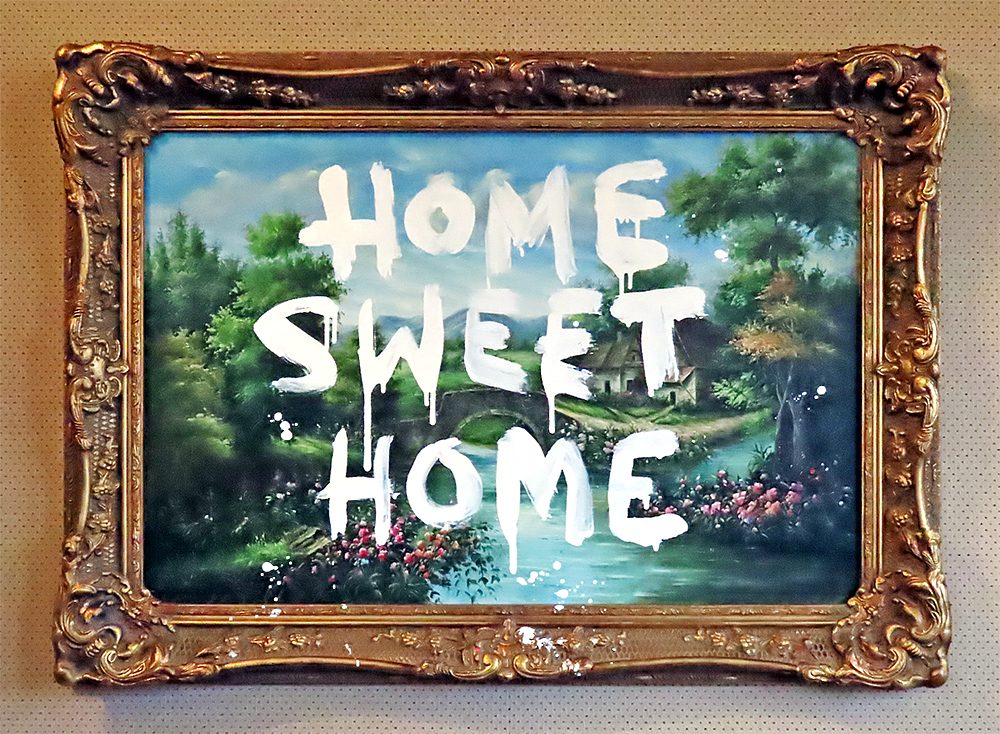
This is why the term vandalism is both accurate and inadequate. Banksy changes objects that do not belong to him aesthetically, just as the graffiti writer changes the architecture of the street. But once the intervention is complete, destruction and creation become difficult to separate.
The relationship becomes still more complicated when these works enter museums and major collections. Paintings created partly to ridicule institutional authority eventually require conservation, scholarship, provenance research and security. The vandalised flea-market painting becomes precisely the kind of protected cultural object whose authority Banksy originally questioned.
It is difficult to imagine a more Banksy-like contradiction.
An Open Catalogue
The Crude Oils and Vandalized Oils should not be understood as a closed series attached exclusively to the 2005 exhibition. They constitute a continuing method within Banksy's practice, visible from the earliest modified paintings around 2000 through the major reinterpretations of 2005, Barely Legal in 2006, Banksy vs Bristol Museum in 2009 and later works.
Nor do they conform to a single technique. Some are anonymous found paintings altered with stencil or spray paint. Others are sophisticated hand-painted reinterpretations of canonical works. Some attack landscape painting; others portraiture, religious imagery, consumer culture or the museum itself. What unites them is not their material construction but their method: an existing visual language is appropriated and forced to accommodate a new reality.
This catalogue is therefore necessarily provisional. Works continue to emerge from private collections, exhibition histories are reconstructed and titles themselves are sometimes inconsistent. Rather than imposing an artificial boundary, the purpose here is to document the works as they become known and to understand the relationships between them.
Taken together, they reveal something fundamental about Banksy's practice. His art has always depended upon context. A stencil on a wall means something because of the wall on which it appears. A modified oil painting works according to precisely the same principle. The difference is that the wall is now a landscape, a portrait or a masterpiece inherited from art history.
Banksy never really stopped being a graffiti writer when he went indoors. He simply discovered that art history offered him another wall to paint on.
STAY INFORMED
Receive the latest news, exhibitions, artworks and market updates on Banksy.