CRUDE OILS, LONDON, 2005
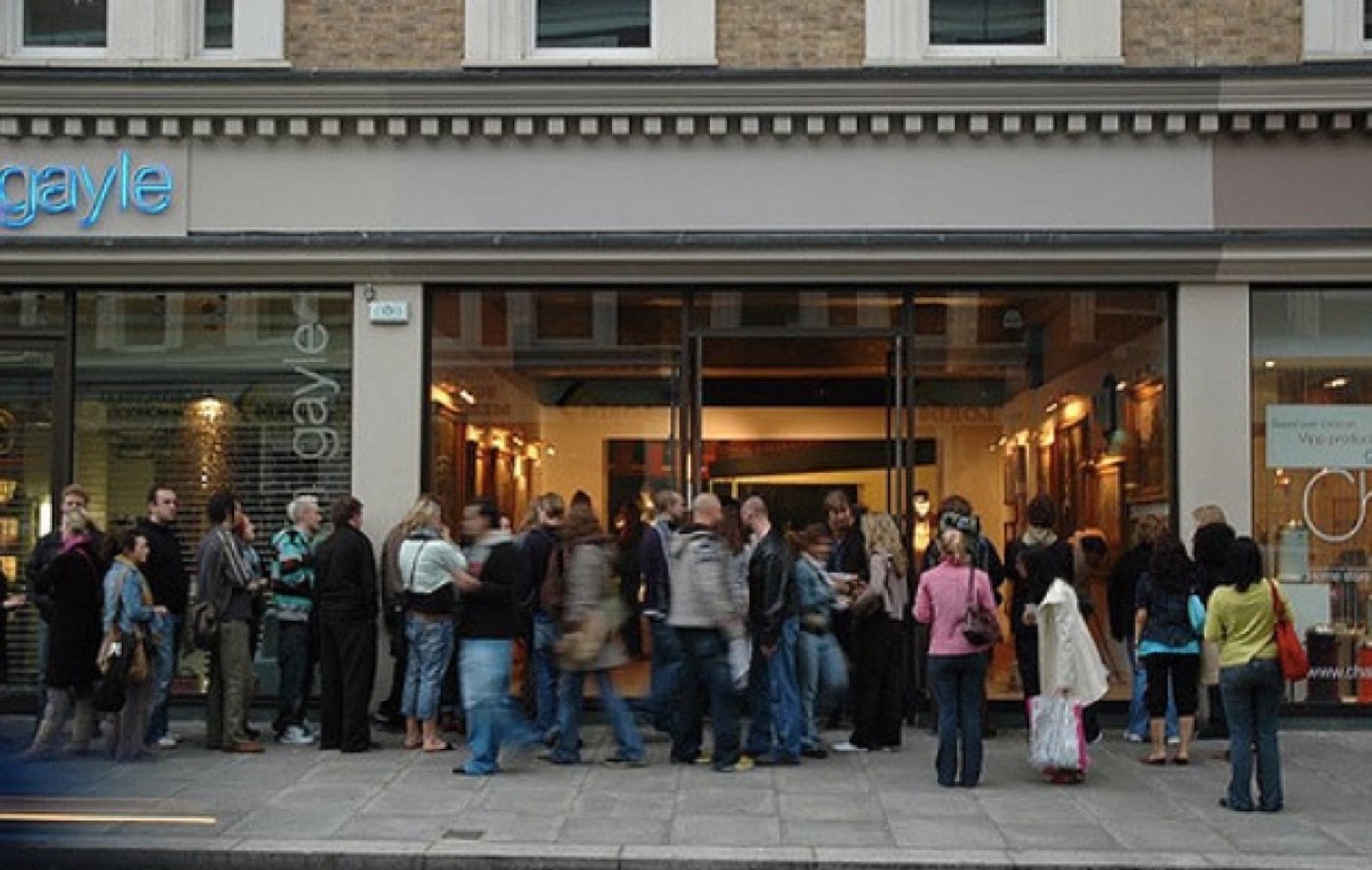
A Gallery of Re-Mixed Master-Pieces, Vandalism, and Vermin
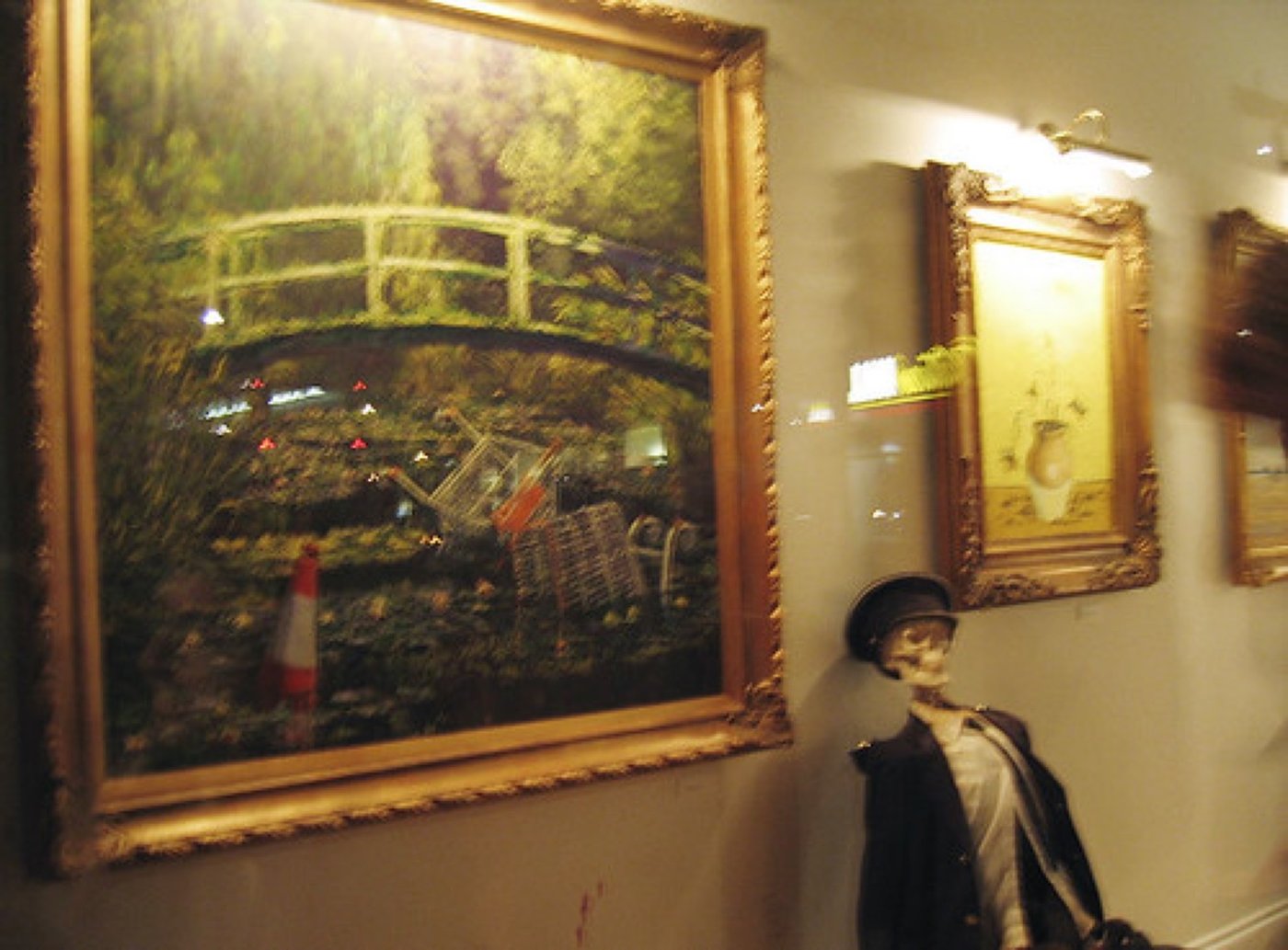
In 2005, Banksy staged his first conventional gallery exhibition, the now seminal Crude Oils: A Gallery of Re-mixed Masterpieces, Vandalism and Vermin, a radical intervention in the traditional exhibition format that remains a defining moment in his career. Held in a disused shop on Westbourne Grove in Notting Hill, the show marked Banksy’s transition into a more formal gallery setting while maintaining the subversive ethos of his antics in the streets.
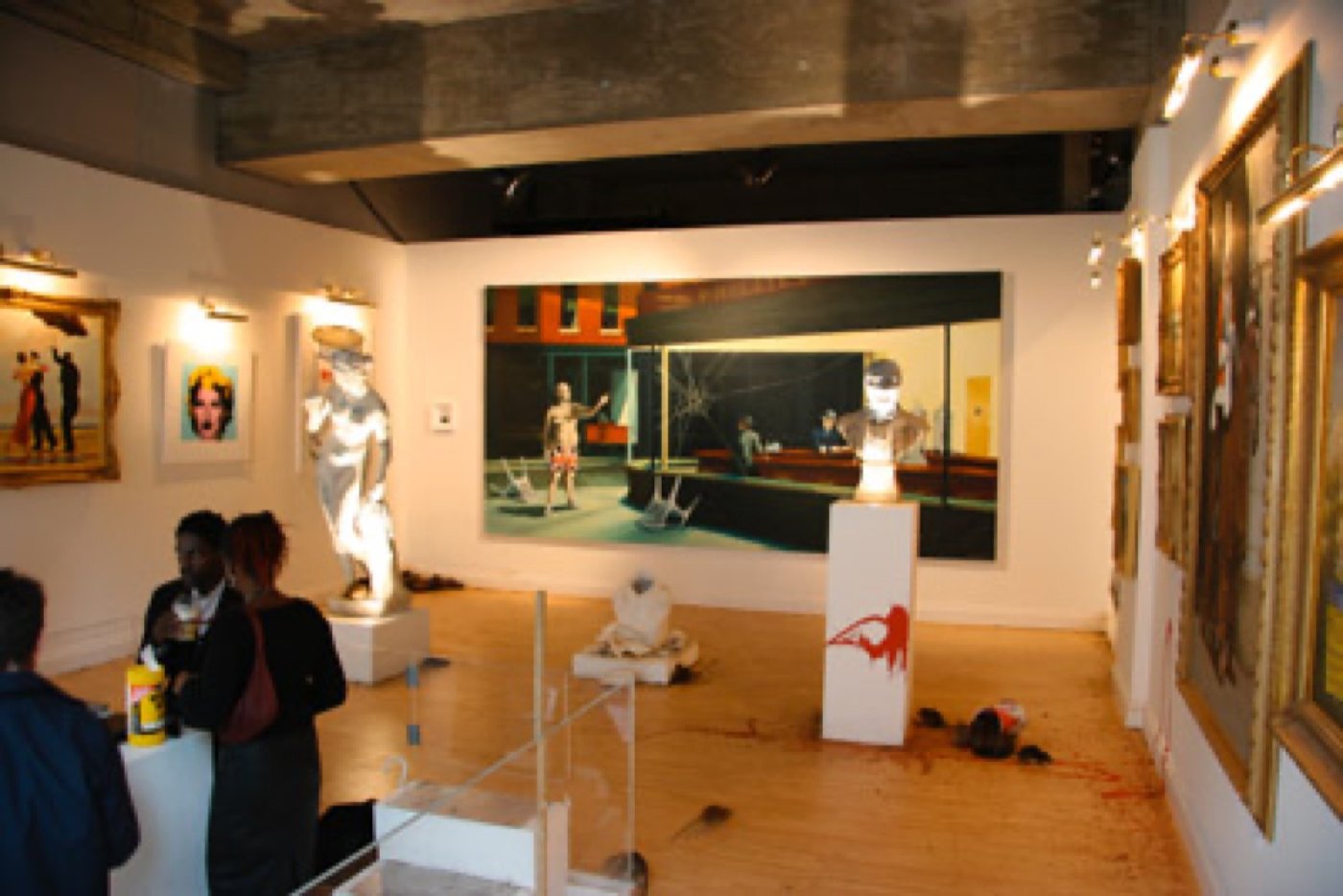
Crude Oils featured 20 versions of classical oil paintings, re-invented by the artist. The show was also populated by around 200 live rats and featured some unique accompanying sculptures. This “Gallery of re-mixed masterpieces, vandalism and vermin” ran for around a week in a small shop in Notting Hill, located at 100 Westbourne Grove.
Environmental health officers came out and inspected the facility to find everything to be safe and in order despite the protests from other businesses nearby.
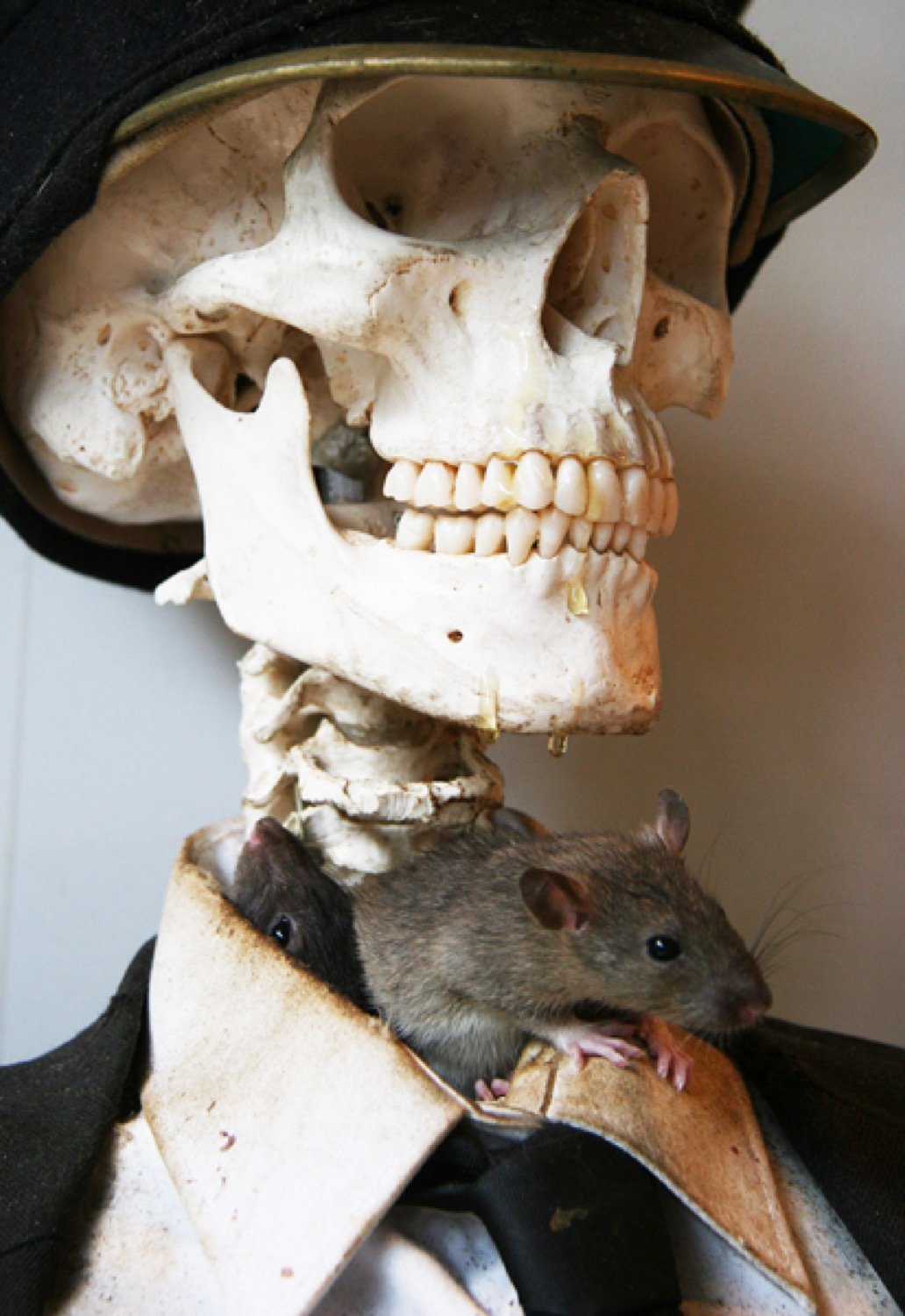
In addition to these hand-painted works on canvas, the show also featured a number of “vandalized” classical sculptures: a Venus with a traffic-cone over her head sporting full-body tattoos while a portrait bust wears a khaki balaclava. Animating the whole event, however, and further underscoring the anti-establishment tone of Banksy’s first “conventional” show, was a live interactive element: the inclusion of 164 live rats set loose within the gallery space.
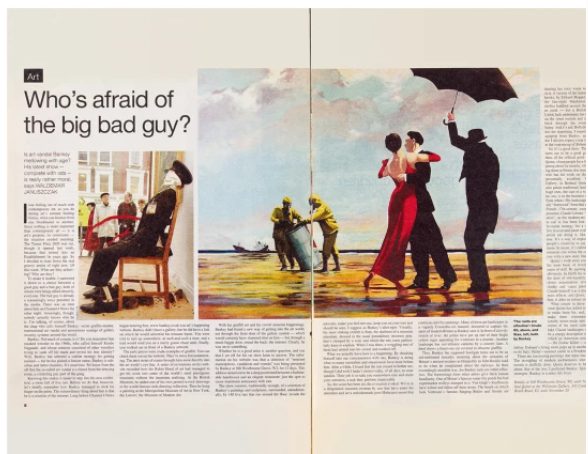
In his Sunday Times Culture review of the 2005 exhibition, Waldemar Januszsak compared Banksy’s Crude Oils to a Surrealist or situationist happening, describing the production as an elaborate and engaging mise en scene: “So, the scene has been set, the evocation evoked. We’re in a dilapidated museum overrun by rats that have eaten the attendant and set a melodramatic post-Holocaust mood that continues into the paintings”
RE-MIXED MASTER-WORKS
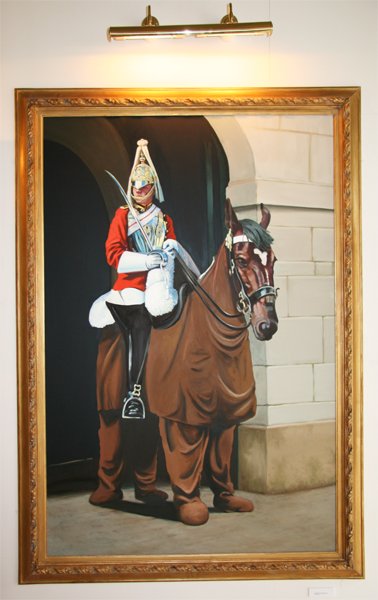
One of the highlights of Crude Oils was a series of 20 classical oil paintings, including some iconic artworks from art history re-invented by Banksy, from van Gogh, Monet, Hopper, and Warhol.
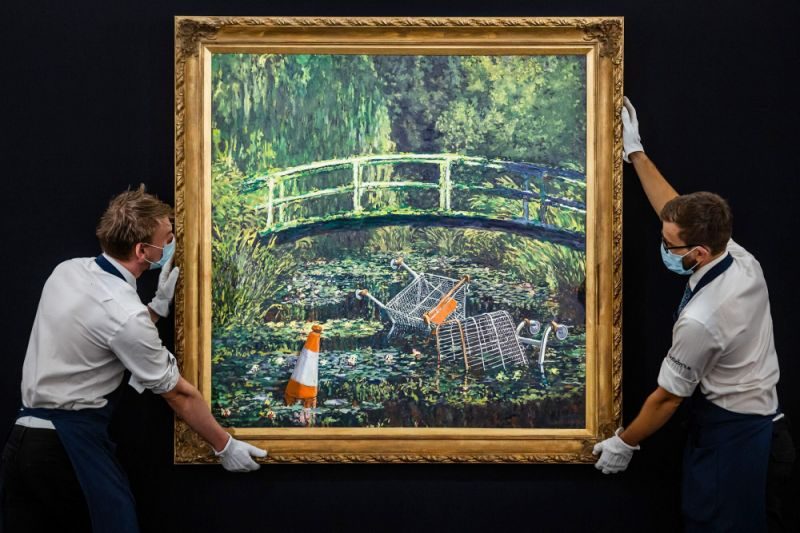
Show me the Monet was displayed at the street-facing end of the shop-turned-gallery. On prominent view to those passing on the street, this painting set the tone for the exhibition, an event that some 15 years later is now recognized as a milestone in the artist’s career.
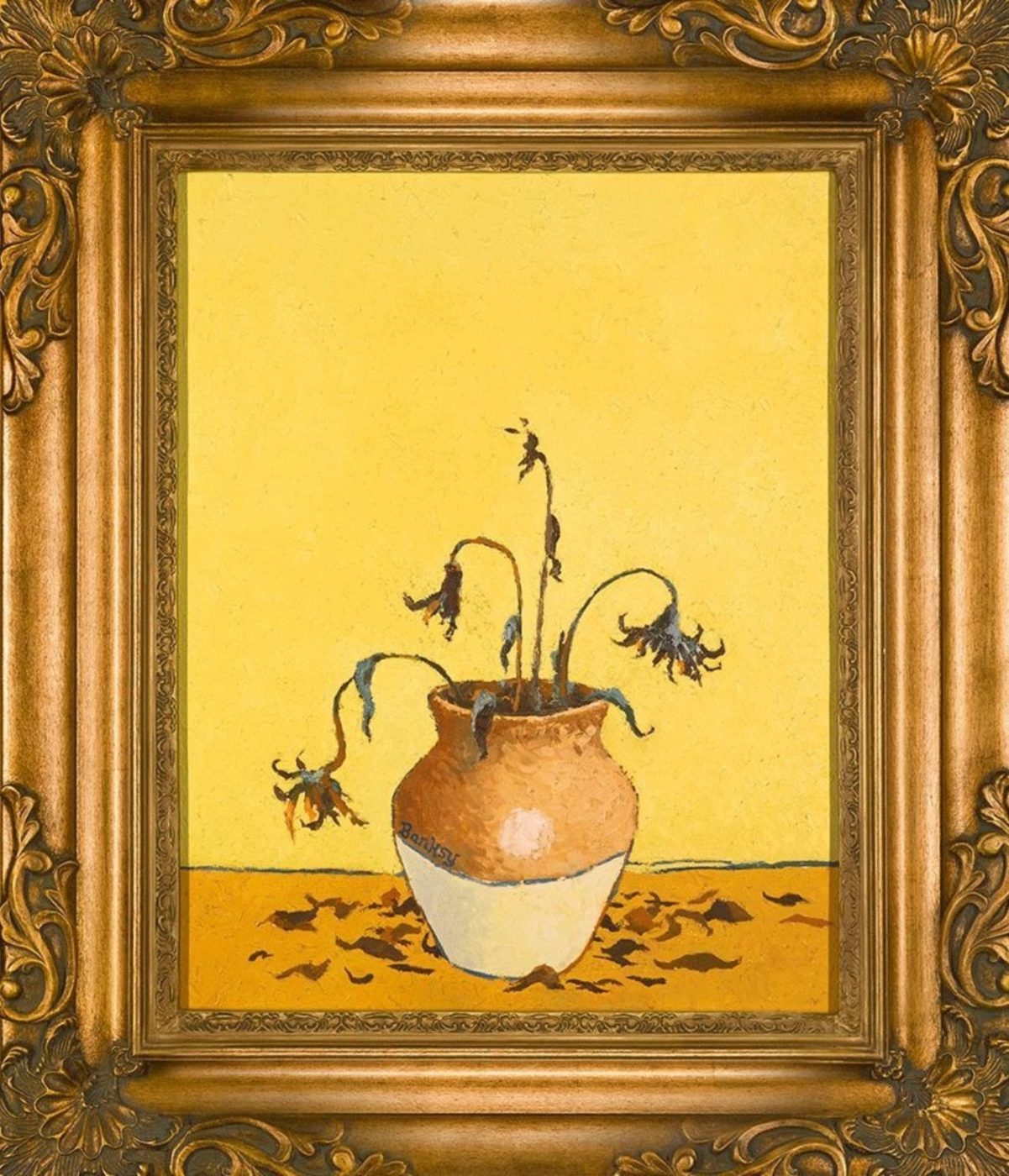
Show Me the Monet joined three other fully painted “remixes” of canonical works of art. Installed along the same wall and across the back of the gallery space, Banksy’s re-imagined Monet accompanied a wilted, bloomless version of van Gogh’s Sunflowers; and a take on Edward Hopper’s Nighthawks in which a topless Union Jack boxer-wearing man has smashed the late-night bar’s glass window.
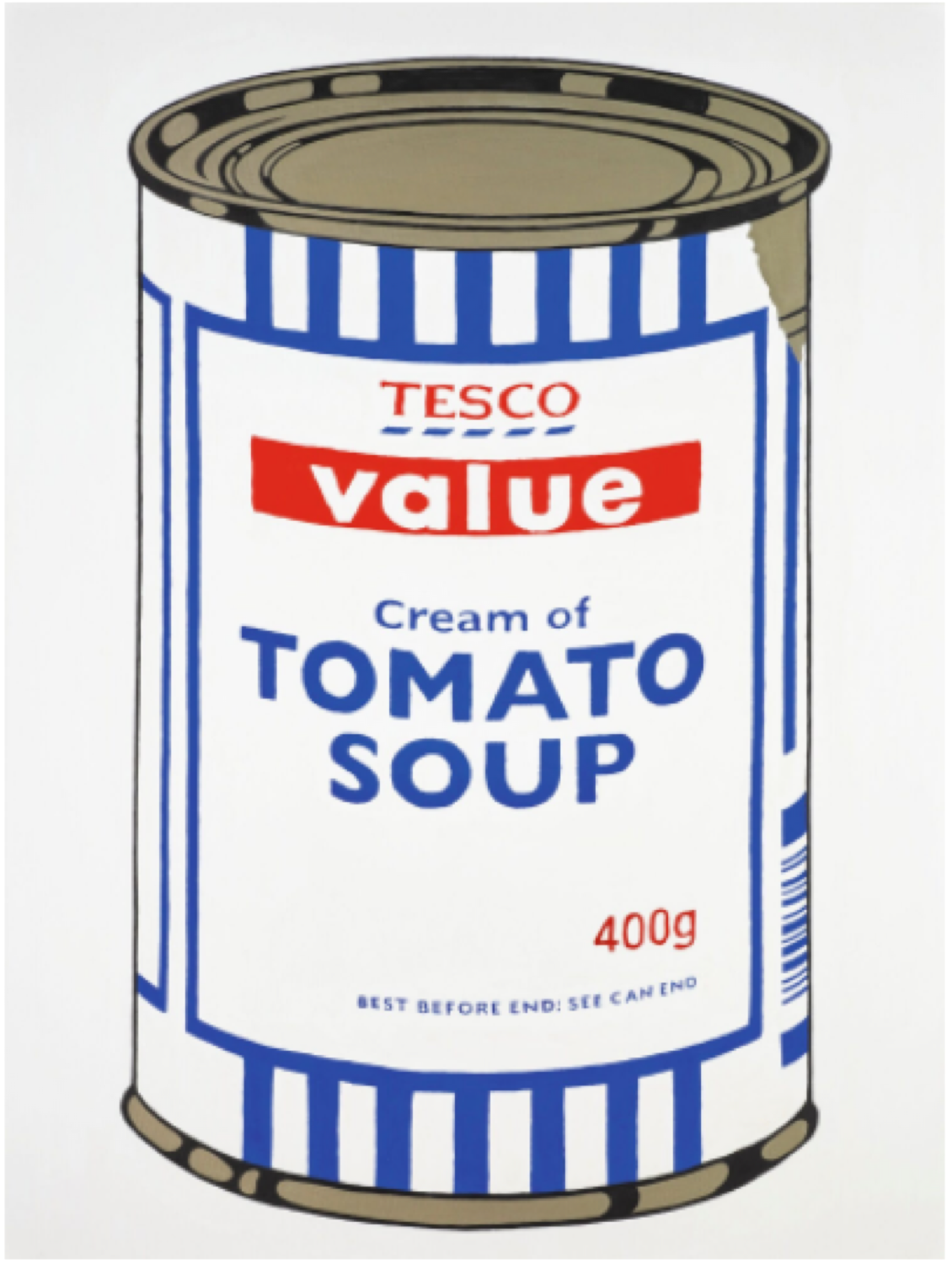
Tesco Value Soup Can (after Andy Warhol)
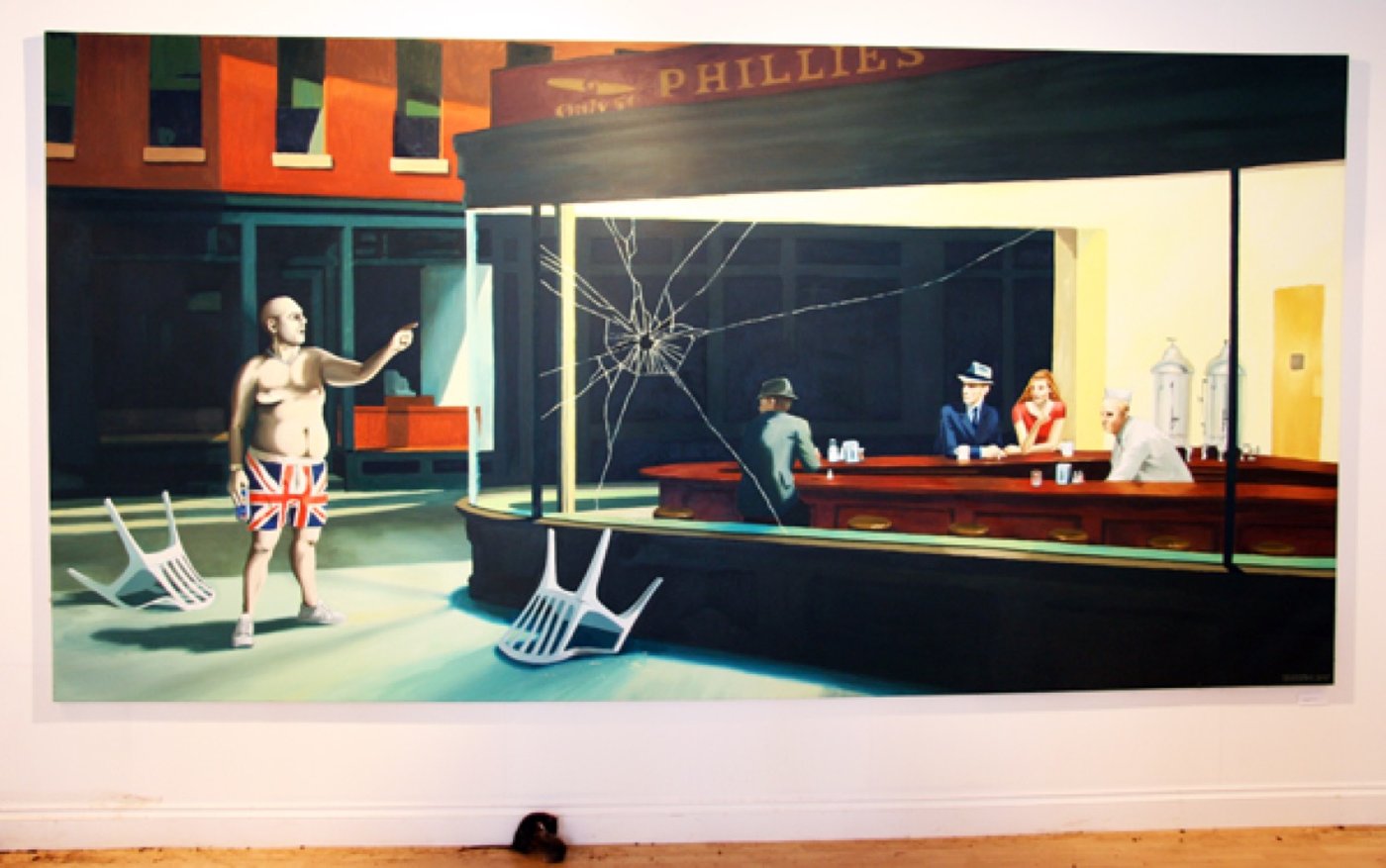
Are You Using That Chair (after Edward Hopper)
Jack Vettriano’s popular Singing Butler featuring a sinking oil liner and two men in hazmat suits wheeling a barrel of toxic waste.
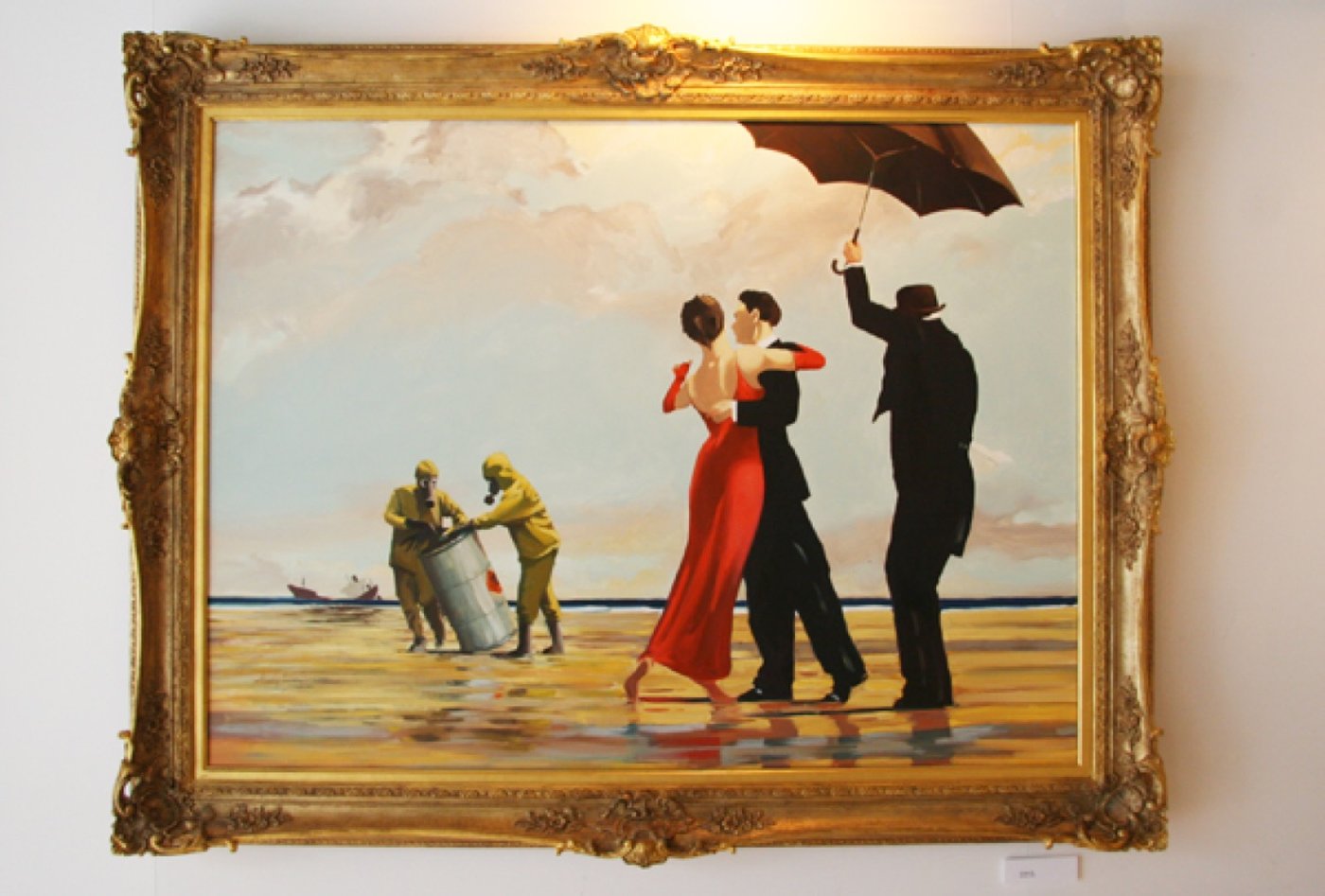
Toxic Beach (after Jack Vettriano)
MODIFIED OILS
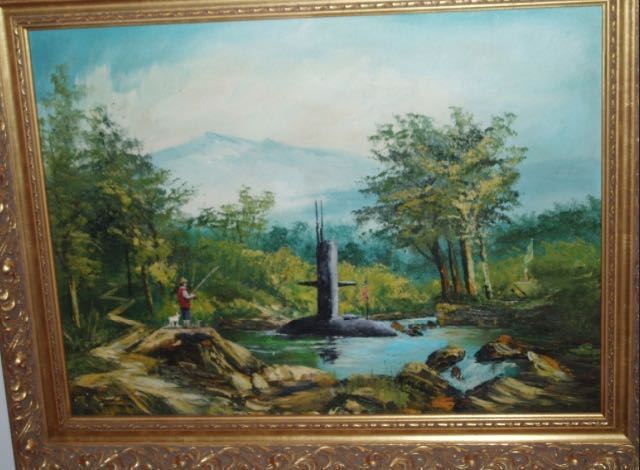
Facing these works on the wall opposite were a number of modified oil paintings.
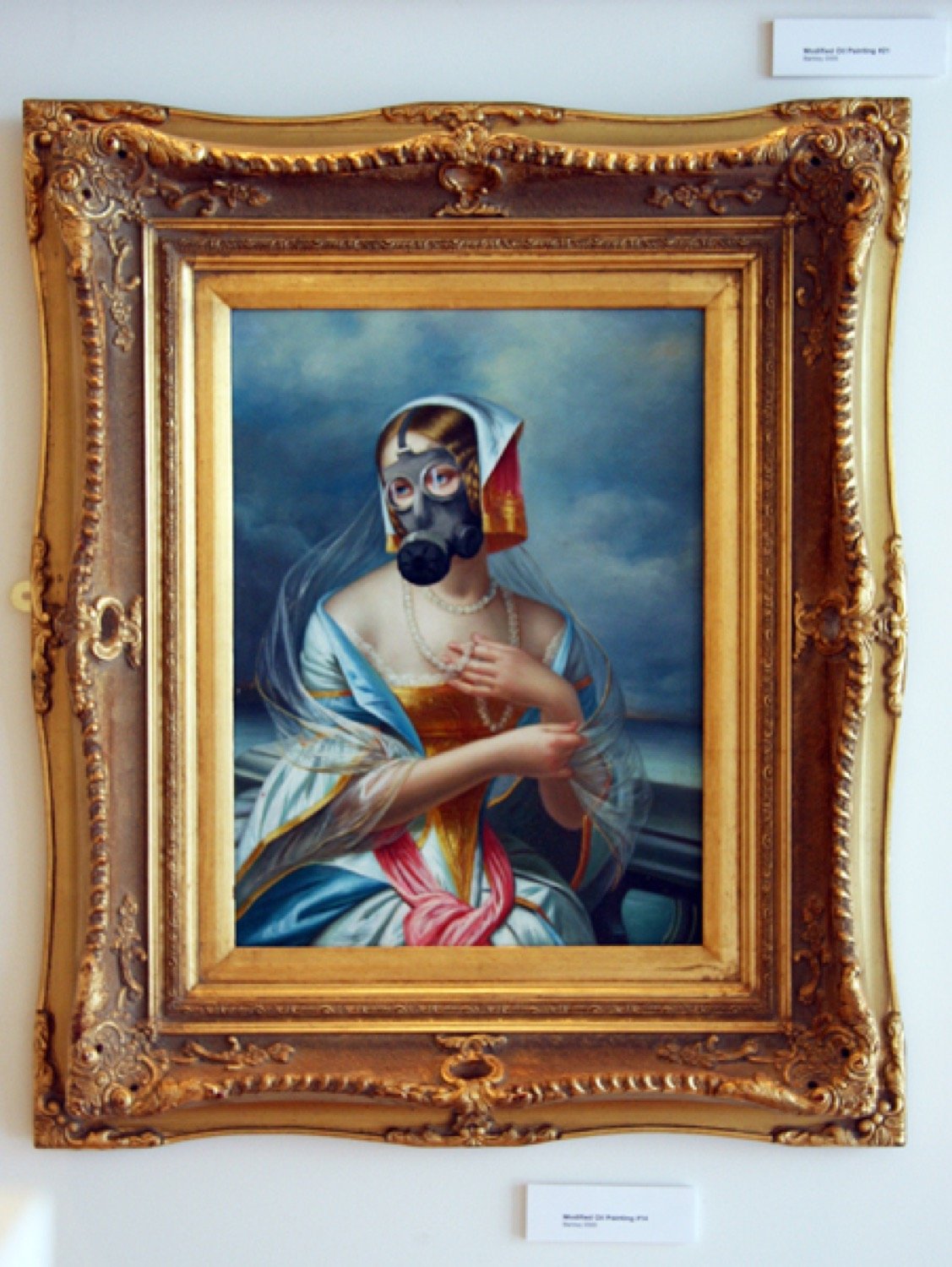
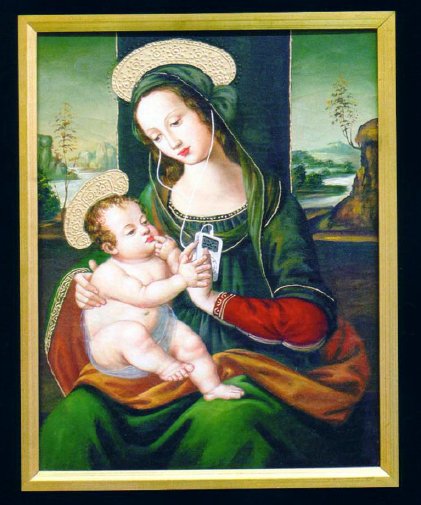
Those works were traditional oils on canvas bought at flea markets around London that feature various Banksy-modifications: added motifs that evoke the fallout of present-day social decline. Chocolate-box landscapes are interrupted by burnt-out cars or police incident signs, a Renaissance Virgin and Christ child listen to an iPod, while traditional portrait subjects are transformed into gas mask wearing sitters.
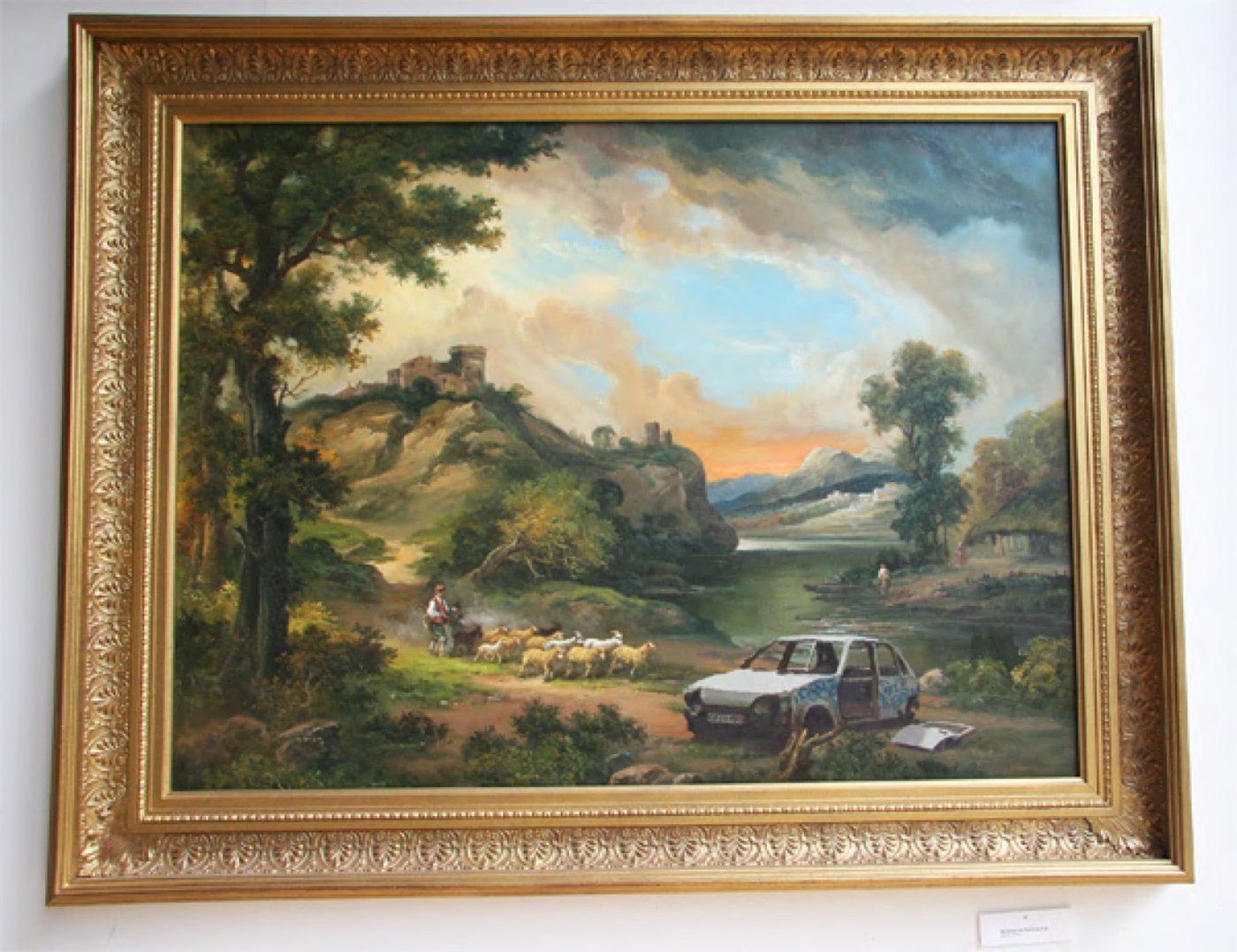
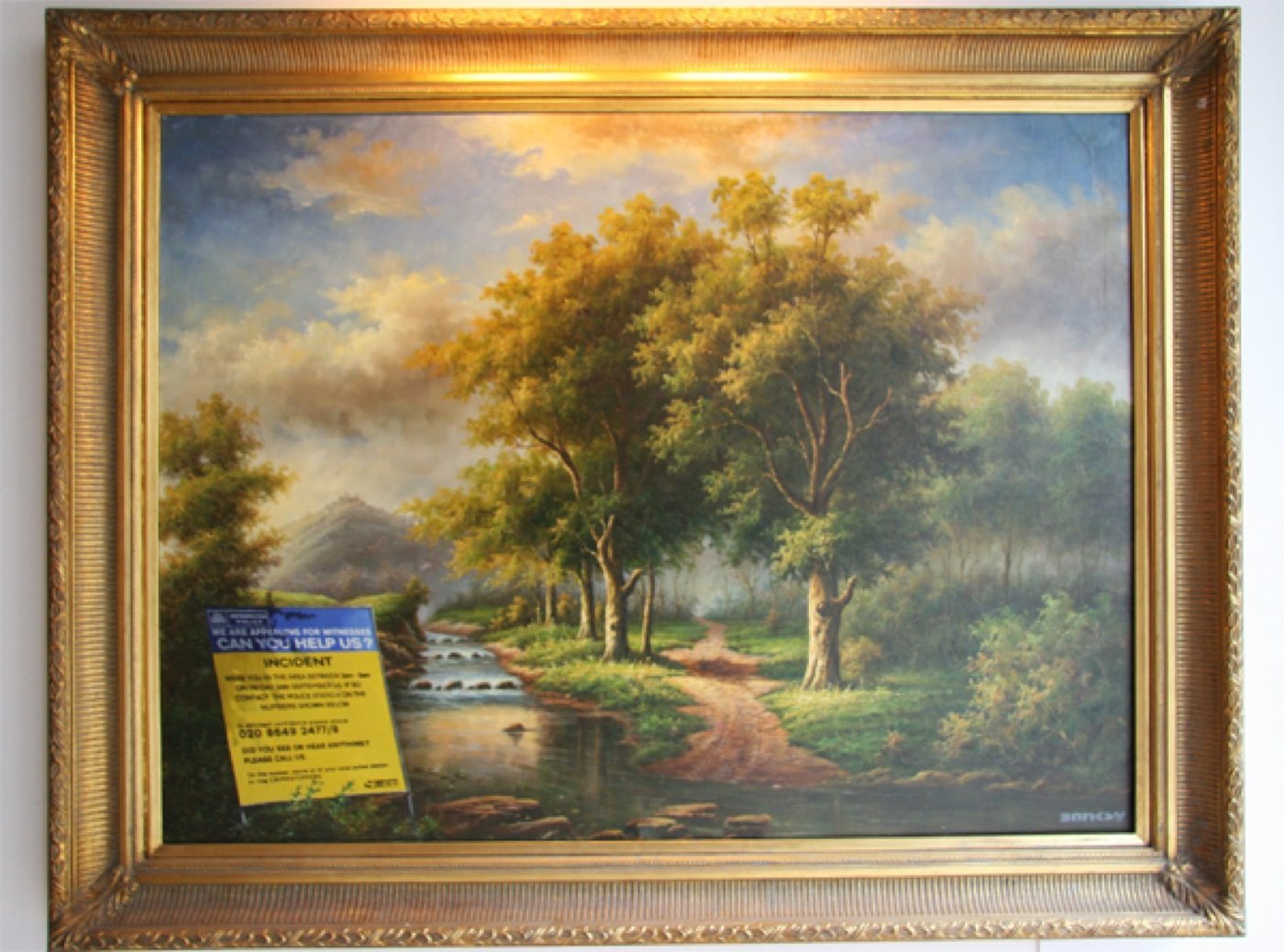
Modified Oil Painting #7 Incident Board
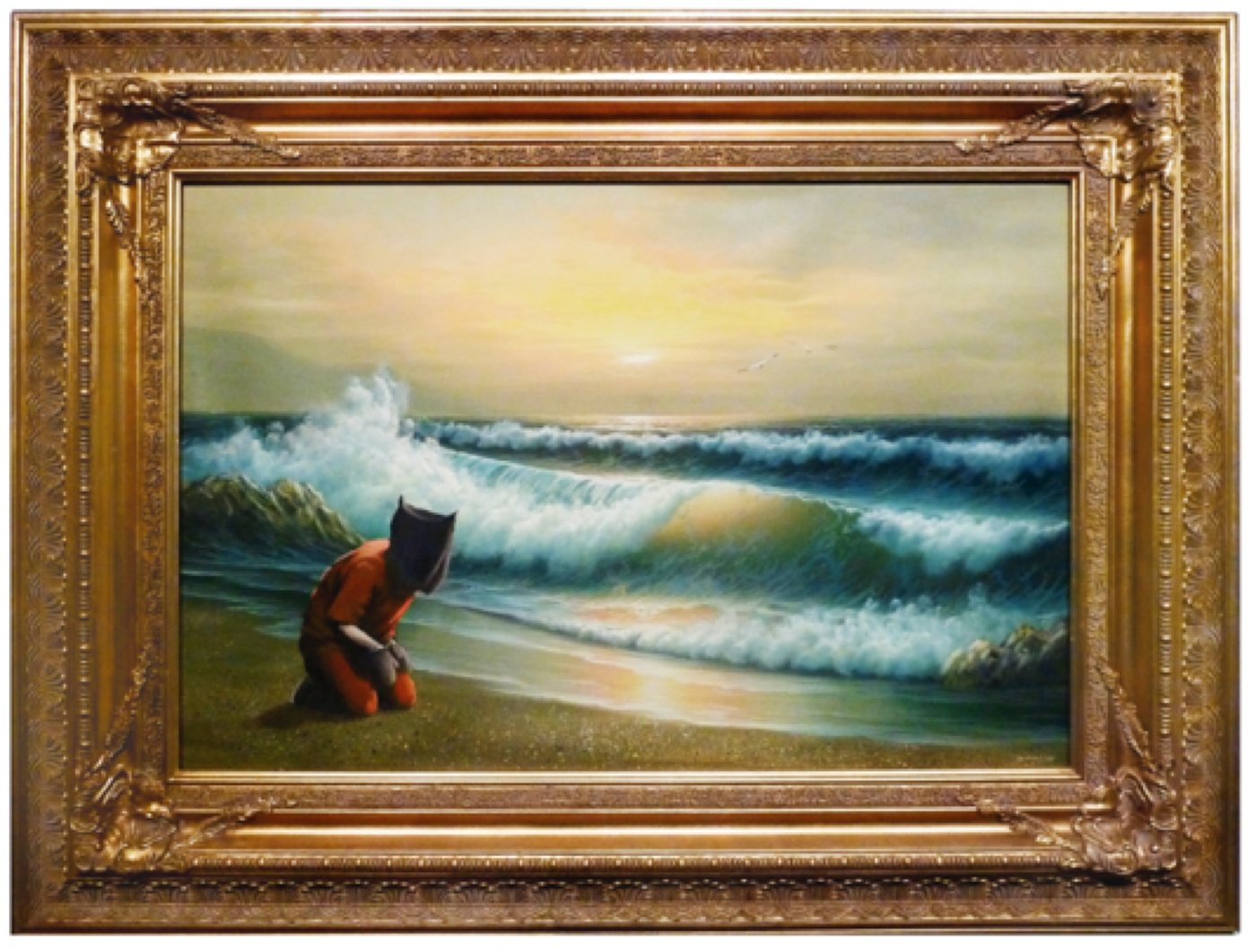
Modified Oil #21 Guantanamo Bay
STAY INFORMED
Receive the latest news, exhibitions, artworks and market updates on Banksy.