BANKSY:
A Complete Timeline of His Life, Art and Career
“Graffiti is one of the few tools you have if you have almost nothing. And even if you don’t come up with a picture to cure world poverty, you can make someone smile while they’re having a piss.”
Introduction
Few contemporary artists have transformed the cultural landscape as profoundly as Banksy. Emerging anonymously from the graffiti scene of Bristol in the early 1990s, he has evolved from an elusive street artist into one of the most influential and commercially successful figures in contemporary art. His works have appeared on walls from London to Bethlehem, from New York to Kyiv, while his exhibitions, public interventions and conceptual projects have challenged not only the conventions of art itself but also the institutions, markets and political systems that surround it.

Yet Banksy’s story cannot be reduced to a succession of murals, exhibitions or spectacular pranks. His career is better understood as the gradual construction of an artistic philosophy—one that constantly questions authority, exposes contradiction, ridicules power and invites public participation. Every new project expands the definition of what an artwork can be. Sometimes it takes the form of a stencil sprayed overnight onto a forgotten wall. At other times it becomes an amusement park, a functioning hotel, a counterfeit banknote, a self-destructing painting, or an online shop deliberately created to mock consumer culture while simultaneously participating in it.
What distinguishes Banksy from most artists is not simply his anonymity, but his extraordinary capacity for reinvention. Few creators have remained so consistently relevant over more than three decades while refusing to repeat themselves. Each new chapter of his career builds upon the previous one while opening entirely new avenues of artistic inquiry. Graffiti became conceptual art. Street interventions became global media events. Prints became democratic works of art collected around the world. Museums became targets, auction houses became stages, and the art market itself became one of his favorite materials.
Throughout this remarkable journey, Banksy has remained surprisingly difficult to define. He has been described as a graffiti writer, street artist, activist, prankster, political commentator, conceptual artist, filmmaker, entrepreneur and cultural icon. Each description captures part of the truth, yet none fully encompasses the breadth of his practice. His work draws effortlessly from popular culture, art history, political satire, advertising, philosophy and comedy, creating images whose apparent simplicity conceals remarkable intellectual complexity.
This timeline does not seek to catalogue every mural or document every exhibition. Instead, it follows the defining milestones that shaped Banksy’s artistic evolution and explains why each of them matters. More than a chronology, it is the story of how an anonymous artist from Bristol fundamentally altered the relationship between art and the public, demonstrating that the most powerful galleries are sometimes city streets, that the most memorable exhibitions can exist outside museums, and that an artwork can be as much an idea as an object.
Understanding Banksy’s career also means understanding the remarkable consistency beneath its constant reinvention. The subjects may change—from consumerism and war to surveillance, migration, environmental concerns or the absurdities of the art market—but the underlying question remains remarkably stable. Who holds power, who challenges it, and how can a simple image expose truths that entire political speeches often fail to articulate?
More than thirty years after his first works appeared on the streets of Bristol, Banksy continues to surprise audiences, provoke debate and redefine the possibilities of contemporary art. His greatest achievement may not be any individual mural or record-breaking auction result, but the creation of a body of work that has permanently changed the way millions of people look at walls, cities and the very nature of artistic expression.
Bristol: The Making of an Artist (1974–1999)
Every artistic revolution begins somewhere. For Banksy, it began in Bristol, a city whose unique combination of social diversity, political activism, underground music and vibrant graffiti culture created the perfect environment for one of contemporary art’s most distinctive voices to emerge. Long before his works attracted international headlines or sold for millions at auction, Banksy was simply one among many young artists exploring abandoned buildings, railway lines and neglected urban spaces with spray cans in hand.
During the 1980s and early 1990s, Bristol occupied a singular position within British culture. It was a city shaped by immigration, industrial decline and creative experimentation, where punk, reggae, hip-hop and electronic music blended into an atmosphere of constant innovation. The same streets that gave rise to pioneering musical groups such as Massive Attack, Portishead and Tricky also nurtured one of Britain’s most dynamic graffiti communities. Here, street art was not yet celebrated as public art or collected by museums. It remained an illegal, ephemeral form of expression driven by reputation, speed and ingenuity.
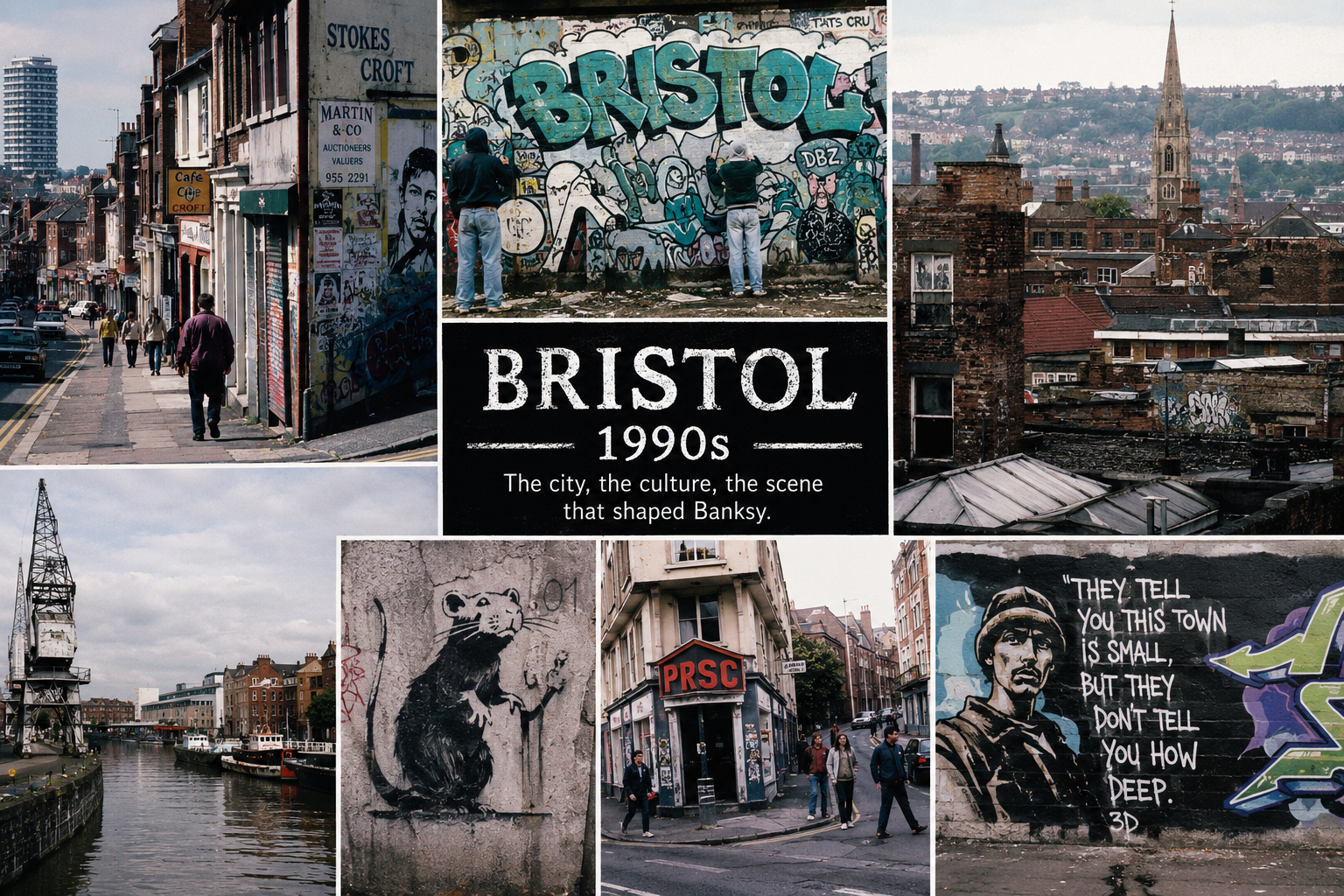
Banksy entered this environment as a young graffiti writer, reportedly becoming involved in Bristol’s underground scene during his teenage years. Like countless graffiti artists before him, he learned by painting walls rather than studying in academies. His earliest works reflected the conventions of traditional graffiti, relying on freehand lettering and increasingly ambitious compositions. Yet even at this early stage, there are indications that his interests extended beyond technical prowess. He appeared less concerned with stylistic competition than with communicating ideas, using public space as a platform for visual storytelling rather than simply marking territory.
One of the formative influences frequently associated with Banksy’s development is the French street artist Blek le Rat, whose pioneering use of stencils across Paris during the 1980s demonstrated that speed and precision could coexist with sophisticated imagery. While Banksy has always acknowledged the debt owed to Blek, he transformed the stencil into something altogether different. Rather than employing it merely as a practical solution, he elevated it into a distinctive artistic language capable of combining humor, political commentary and instantly recognizable visual clarity.
According to Banksy’s own account, the transition from freehand graffiti to stencil work occurred almost by accident. Hiding beneath a rubbish lorry while evading the police after painting a train, he noticed the stenciled serial numbers sprayed onto the vehicle. The experience reportedly revealed a simple but revolutionary insight: if industrial manufacturers could use stencils to reproduce complex information rapidly and consistently, artists could do the same. Whether partly embellished or entirely factual, the anecdote perfectly encapsulates Banksy’s ability to transform everyday observations into artistic innovation.
The adoption of the stencil fundamentally altered both his working methods and his visual identity. Complex compositions that previously required considerable time could now be executed within minutes, dramatically reducing the risk of arrest while allowing greater attention to be devoted to composition, symbolism and wit. More importantly, the crisp graphic quality of the stencil made his images immediately legible to passers-by. They did not require specialist knowledge of graffiti culture to be understood. A child, a commuter and an art historian could all grasp the central joke within seconds, even if each interpreted its deeper meaning differently.
During these formative years Banksy also became associated with Bristol’s DryBreadZ Crew (DBZ), one of several graffiti collectives active within the city. While details remain deliberately obscure, the collaborative nature of the graffiti scene undoubtedly contributed to his artistic development. Graffiti is rarely an isolated practice. Ideas circulate collectively, techniques evolve through shared experience, and reputations are built through mutual recognition. Even an artist whose career would later become synonymous with anonymity emerged from a community rather than in isolation.
Banksy Early Murals


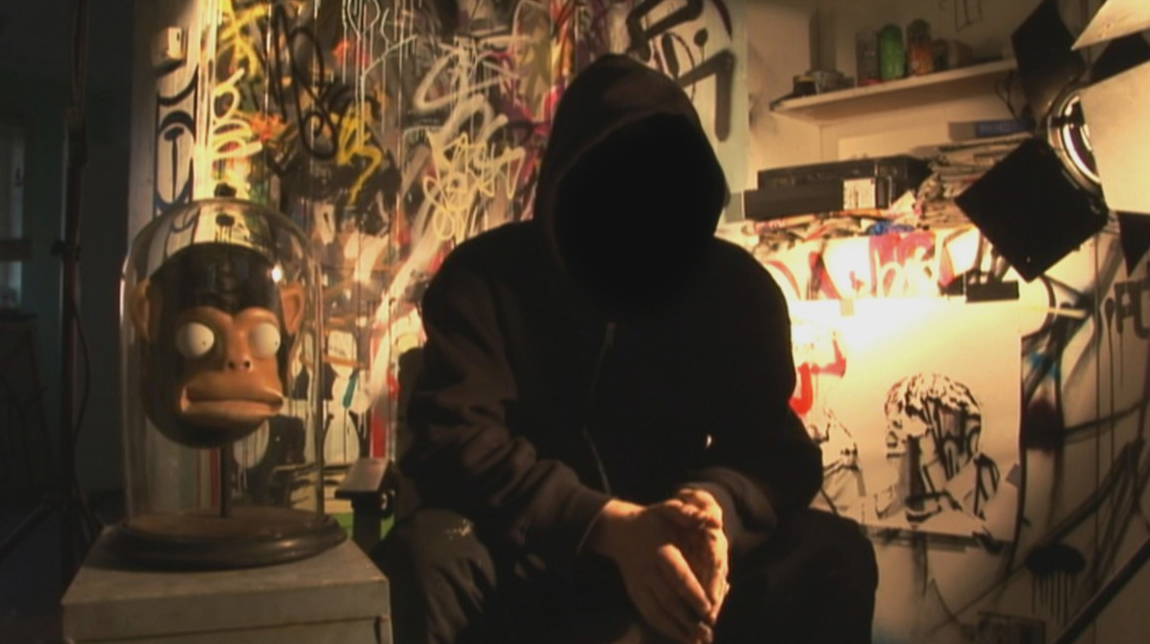
It is also during this period that one of the enduring mysteries surrounding Banksy begins to take shape. His true identity has never been conclusively established, despite decades of speculation. The name Robin Gunningham has become the most widely accepted candidate following extensive journalistic investigations, while others have proposed alternative theories linking Banksy to Robert Del Naja of Massive Attack or suggesting that the name represents a collective rather than an individual. None of these hypotheses has ever been confirmed, and perhaps that uncertainty has become inseparable from the artwork itself. Anonymity is not merely a means of avoiding prosecution; it is one of Banksy’s greatest conceptual achievements. By removing the artist from the foreground, attention is redirected towards the image, its message and its public reception.
By the late 1990s, Banksy had developed many of the characteristics that would later define his international success. His images had become cleaner, sharper and more immediate. Humor increasingly replaced aggression, irony became his preferred weapon, and ordinary walls were transformed into stages upon which contemporary society could be gently, yet devastatingly, satirized. Rats, policemen, children, monkeys and soldiers—figures that would later become synonymous with his work—were already beginning to populate his visual universe.
Although his audience remained largely local, the essential foundations of his artistic language were already complete. The anonymity, the stencils, the visual economy, the political edge and the irresistible humor had all emerged before the end of the twentieth century. Everything that followed—the exhibitions, the museum interventions, the counterfeit banknotes, the global fame and the extraordinary market success—would grow from these formative years spent painting the streets of Bristol.


Looking back, it becomes clear that Bristol did far more than provide Banksy with walls on which to paint. It offered him a laboratory in which to experiment with ideas, a community that valued creative independence, and an urban landscape that taught him the importance of speaking directly to ordinary people rather than exclusively to the art establishment. The city shaped not only his artistic vocabulary but also his conviction that art could exist outside institutions without sacrificing intellectual ambition.
The Birth of a Visual Language
(2000–2004)
The dawn of the new millennium marked a decisive turning point in Banksy’s career. Having spent much of the previous decade refining his technique on the streets of Bristol, he now began to expand both his artistic ambition and his geographical reach. The early 2000s witnessed the emergence of the Banksy that the world would come to recognize: an anonymous artist whose deceptively simple stencils combined political commentary, visual humor and remarkable technical precision. More importantly, these years established the central themes that would define his entire oeuvre over the following decades.
Unlike many graffiti writers whose work remained rooted in lettering and stylistic competition, Banksy increasingly abandoned the conventions of traditional graffiti in favor of figurative imagery. His compositions became cleaner, more theatrical and immediately accessible. Rats, monkeys, policemen, soldiers, children and members of the British establishment replaced elaborate letterforms, transforming walls into visual essays on power, authority, consumerism and human behavior. Each image could be understood within seconds yet often rewarded prolonged reflection with layers of irony and ambiguity.
The stencil, initially adopted as a practical necessity, evolved into an artistic language of extraordinary effectiveness. Its sharp contrasts and graphic clarity allowed Banksy to communicate with an audience far beyond graffiti culture. One did not need to understand tagging or street art traditions to appreciate the humor of a monkey carrying a protest sign or a policeman caught in an absurd situation. In many respects, Banksy democratized contemporary art by removing the barriers that often-separated artistic discourse from everyday life.
2000: The Mild Mild West
Among the earliest surviving masterpieces of this period is The Mild Mild West, painted in Bristol in 2000. Located on the side of a former solicitor’s office in Stokes Croft, the mural depicts a teddy bear calmly throwing a Molotov cocktail towards three riot police officers.

At first glance, the composition appears almost playful. Yet beneath its apparent simplicity lies one of Banksy’s earliest and most sophisticated political statements. Created in response to repeated confrontations between the police and organizers of illegal outdoor rave parties, the mural transforms a familiar childhood symbol into an unexpected figure of resistance. The innocent teddy bear stands in deliberate contrast to the heavily equipped officers, subtly reversing conventional notions of power and vulnerability.
More than two decades later, The Mild Mild West remains one of Banksy’s most celebrated public works and is widely regarded as the unofficial emblem of Bristol. It also reveals several characteristics that would become hallmarks of his mature style: visual economy, dark humor, political engagement and the ability to condense complex social tensions into a single unforgettable image.
Perhaps more importantly, the mural demonstrates Banksy’s remarkable instinct for creating works that belong inseparably to the communities in which they appear. Rather than imposing an external message upon the city, The Mild Mild West emerged directly from Bristol’s own cultural identity, ensuring its lasting relevance long after the immediate political circumstances had faded.
2000: Severnshed & Rivington Street tunnel
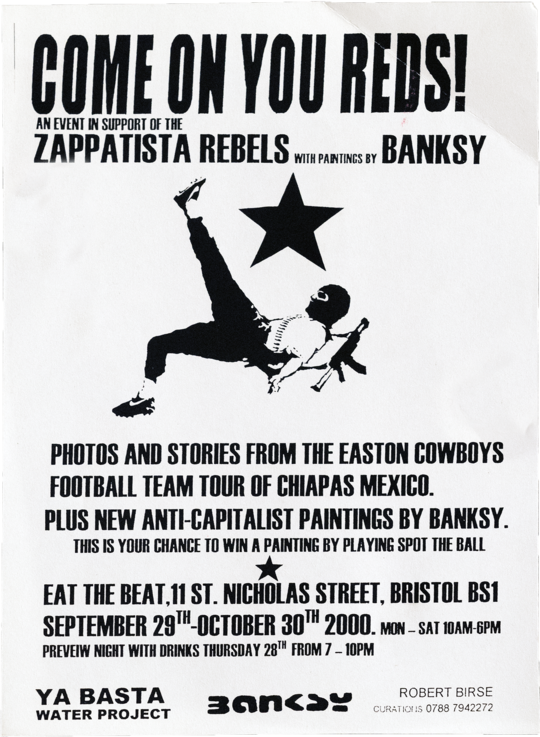
Banksy organized his first two exhibits in 2000. The first one, known as Severnshed, was held in a restaurant in Bristol, the Seven Shed bar and restaurant. He exhibited some of his early originals for the first time including the first versions he created of Avon and Somerset Constabulary, Playmate of the Month, and Simple Intelligence Testing which broke a spectacular auction record a few years down the road.
Banksy’s second exhibit, deemed as an Illicit Outdoor Gallery Experience, was held on Leake Street in London, on 31 May 2000.
2002: Pictures on Walls and the Print Revolution
While murals continued to attract headlines, another quieter revolution was taking place. Through Pictures on Walls, Banksy continued releasing editions that fundamentally challenged conventional assumptions about printmaking. Rather than limiting ownership to a privileged few, he deliberately produced editions that remained comparatively affordable while maintaining exceptional artistic quality.
Works such as Bomb Love, Girl with Balloon, Morons, Flying Copper and Napalm rapidly became icons of contemporary printmaking, circulating internationally and introducing Banksy’s imagery into thousands of private collections. This publishing model demonstrated that accessibility and exclusivity need not be mutually incompatible. Ironically, editions originally conceived as democratic works of art would eventually become among the most sought-after prints in the contemporary market.

Banksy, Existencilism, May 2002
Rather than treating prints as secondary reproductions of original works, POW introduced a radically different philosophy. Limited editions were produced in relatively large numbers and sold at prices that remained accessible to ordinary collectors, often for only a few hundred pounds. Banksy repeatedly insisted that art should not become the exclusive preserve of wealthy collectors and institutions, a conviction perfectly reflected in this publishing model.
This democratic approach would eventually help establish one of the most influential print markets in contemporary art while allowing thousands of collectors to acquire original works directly from the artist. Long before online direct-to-collector sales became commonplace, Pictures on Walls demonstrated that artists could bypass many of the traditional mechanisms of the commercial gallery system.


2002: Laugh Now
If The Mild Mild West established Banksy’s public voice, Laugh Now introduced one of his most enduring visual symbols. Originally commissioned for a Brighton nightclub, the mural depicts a forlorn monkey wearing a sandwich board bearing the words:
“Laugh now, but one day we’ll be in charge.”
The image perfectly illustrates Banksy’s extraordinary ability to combine humor with unease. The monkey appears ridiculous, almost pitiful, yet simultaneously prophetic. Is it a joke, a warning, or an allegory for humanity itself? Like many of Banksy’s finest works, it refuses a single interpretation.
The monkey would become one of the artist’s recurring protagonists, reappearing in numerous murals, paintings and editions over the following years. Frequently replacing human figures with primates, Banksy exposes the absurdity of social hierarchies while inviting uncomfortable comparisons between civilization and instinct. His monkeys are often more rational than the humans around them, reminding viewers that the line separating intelligence from folly is remarkably thin.
Laugh Now also marked an important evolution in Banksy’s artistic confidence. Rather than reacting to specific political events, the work addressed universal questions of power, domination and historical change. It remains one of the defining images of his career and one of the most iconic editions ever released through Pictures on Walls.
2002: Existencilism
2002-2004: Girl with Balloon

2003: Love Is In The Air

2003: Turf War
By 2003, Banksy had become sufficiently established to mount his first major exhibition, Turf War, in East London. If earlier projects had challenged the boundaries between graffiti and contemporary art, Turf War questioned the conventions of the exhibition itself. The show featured paintings, installations and live animals, including cows painted with decorative motifs. Predictably, it generated widespread media attention and fierce criticism from animal rights organizations.
Yet the controversy was entirely characteristic of Banksy’s approach. Rather than seeking scandal for its own sake, Turf War explored the arbitrary distinctions society draws between acceptable and unacceptable artistic practices. Why should paintings of animals be admired while painted animals provoke outrage? Where exactly does artistic legitimacy begin and end?

The exhibition also demonstrated Banksy’s growing fascination with appropriating familiar cultural symbols—from the Union Jack to portraits of Winston Churchill—and subtly destabilizing their meaning through irony and juxtaposition.
Santa’s Ghetto
Later that same year, Banksy launched what would become another recurring institution within his career: Santa’s Ghetto. Presented as an alternative Christmas exhibition, Santa’s Ghetto combined works by emerging street artists with political commentary and charitable initiatives. It challenged the increasingly commercial nature of both Christmas and the contemporary art market, while simultaneously creating opportunities for young artists to reach new audiences.
Over subsequent years, Santa’s Ghetto would evolve into far more than an exhibition. It became a platform through which Banksy could blend activism, satire and artistic collaboration, reinforcing his belief that art could remain socially engaged without sacrificing humor or accessibility.
2004: Di-Faced Tenners
Few projects better illustrate Banksy’s conceptual brilliance than the counterfeit banknotes known as Di-Faced Tenners.
“It’s going to take one very special lady,
or a whole load of average ones to get over you.”

At first glance, they appeared to be ordinary Bank of England ten-pound notes. Closer inspection revealed that Queen Elizabeth II had been replaced by Diana, Princess of Wales, while the words “Bank of England” had become “Banksy of England.”
Thousands of these notes were produced and, according to Banksy, many entered public circulation after being thrown into crowds during festivals and public events. Whether entirely true or partly mythologized, the story itself became inseparable from the artwork.
The project brilliantly blurred the boundaries between sculpture, conceptual art, political satire and performance. More importantly, it questioned one of the central themes running throughout Banksy’s career: value itself. Money, after all, possesses worth only because society collectively agrees that it does. Art functions according to remarkably similar principles. By transforming counterfeit currency into highly desirable collectibles, Banksy exposed the curious mechanisms through which objects acquire both financial and cultural value.
Looking back, Di-Faced Tenners anticipated many of the artist’s later interventions, from Gross Domestic Product to the self-destruction of Girl with Balloon at auction. Long before he directly confronted the art market, Banksy was already demonstrating that value is often little more than a carefully sustained social fiction.
Between 2000 and 2004, Banksy ceased to be merely an exceptionally talented graffiti artist. He became an artist with a coherent philosophy, a recognizable visual language and an increasingly international audience. The foundations of his mature practice were now firmly established: humor became a vehicle for political critique, public space became his preferred gallery, and simple stencil images acquired an extraordinary capacity to communicate complex ideas.
Most importantly, these years revealed a defining characteristic that would shape every subsequent chapter of his career. Banksy was never interested simply in creating memorable images. He sought to challenge assumptions—about authority, ownership, value and the role of art itself. Each mural, exhibition or intervention invited viewers not merely to look, but to think. In doing so, Banksy transformed the street from a backdrop into a forum for public debate, laying the groundwork for the international phenomenon he would soon become.
From Street Artist to Global Phenomenon
(2005–2009)
By 2005, Banksy had outgrown the boundaries of Britain’s street art scene. What had begun as an anonymous practice rooted in the walls of Bristol and London was rapidly becoming an international cultural phenomenon. His images travelled across continents, his exhibitions attracted unprecedented public attention, and newspapers that had once dismissed graffiti as vandalism now devoted front pages to his latest interventions. During these remarkable five years, Banksy ceased to be simply a successful street artist and became one of the most recognizable figures in contemporary art.
Yet fame was never pursued for its own sake. Each new project represented a carefully conceived experiment exploring the relationship between art, politics, media and public participation. Rather than adapting to the expectations of galleries and museums, Banksy continually forced those institutions to adapt to him. Every intervention expanded the definition of artistic practice while demonstrating that the most powerful exhibitions sometimes occur far beyond the walls of traditional museums.
2005: The West Bank Separation Wall
Perhaps no project better illustrates Banksy’s growing international ambition than his interventions on the Israeli West Bank barrier in August 2005. Travelling to one of the world’s most politically charged landscapes, Banksy painted a series of monumental murals directly onto the concrete wall separating Israel from the Palestinian territories. Rather than producing overt political slogans, he adopted a far subtler visual strategy. Windows opening onto idyllic beaches, children digging through the wall towards distant horizons, and ladders apparently allowing escape transformed the imposing concrete structure into a surreal meditation on freedom, confinement and hope.

The location itself became inseparable from the artwork. The wall was no longer merely a physical barrier but an active participant in the artistic composition. Few contemporary artists have demonstrated such an ability to transform existing architecture into a conceptual medium.
The project also marked an important philosophical evolution. Banksy was no longer commenting primarily on British society but addressing questions of universal human significance: borders, displacement, conflict and the desire for freedom. These themes would remain central to his practice for decades, eventually culminating in the creation of the Walled Off Hotel in Bethlehem more than ten years later. The murals generated worldwide media attention while provoking sharply divided reactions from local communities, politicians and critics. That ambiguity was entirely characteristic of Banksy’s work. His objective was rarely to provide answers. Instead, he sought to create images capable of initiating conversations that extended far beyond the wall itself.

2005: Crude Oils
Only weeks after returning from Palestine, Banksy presented one of his most intellectually ambitious exhibitions: Crude Oils. Staged inside a converted Notting Hill shop, the exhibition featured altered versions of famous paintings by artists such as Claude Monet, Edward Hopper and Vincent van Gogh, alongside installations that included live rats wandering through the gallery.

By appropriating masterpieces of Western art history and subtly corrupting their imagery, Banksy questioned the reverence traditionally accorded to museum collections. Monet’s tranquil landscapes became polluted environmental disasters. Hopper’s lonely urban scenes acquired unexpected intruders. Familiar masterpieces were transformed into biting commentaries on modern society.
Far from mocking art history, Banksy entered into dialogue with it. He demonstrated that the great painters of previous centuries remained relevant precisely because their visual language could be reinterpreted to address contemporary concerns.

BANKSY – Show Me The Monet
The exhibition also reinforced one of Banksy’s central convictions: that humor and intellectual ambition need not be mutually exclusive. Visitors often laughed before recognizing the deeper social criticism concealed beneath the joke.
2006: Barely Legal
If Crude Oils established Banksy as a serious conceptual artist, Barely Legal transformed him into a media sensation. Held in a vast Los Angeles warehouse, the exhibition attracted celebrities, collectors, critics and curious members of the public in unprecedented numbers. Angelina Jolie, Brad Pitt, Jude Law and numerous other high-profile visitors helped propel Banksy into mainstream international consciousness.

The centerpiece of the exhibition was undoubtedly the live elephant painted with decorative wallpaper motifs matching the room itself. The installation immediately generated intense controversy, with animal welfare organizations condemning the work while Banksy insisted that the elephant symbolized society’s willingness to ignore obvious social problems—the proverbial “elephant in the room.”
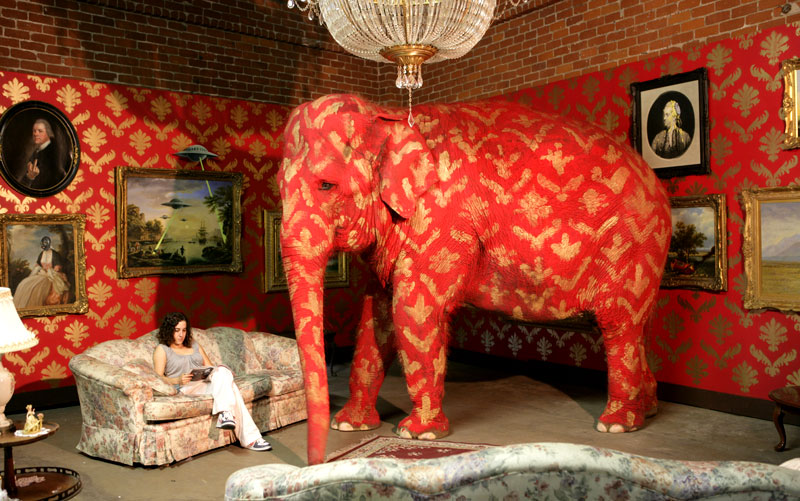
Beyond the controversy, Barely Legal represented a turning point in Banksy’s relationship with the American art world. His market expanded dramatically, his collector base became increasingly international, and his exhibitions acquired a scale previously reserved for established contemporary artists.
Ironically, the exhibition’s title perfectly captured Banksy’s position at the time. He remained simultaneously inside and outside the artistic establishment—embraced by collectors yet fundamentally skeptical of the mechanisms that conferred artistic legitimacy.
2007: Santa’s Ghetto Bethlehem
Banksy’s commitment to political engagement found renewed expression when Santa’s Ghetto relocated to Bethlehem.
Rather than organizing a conventional exhibition, Banksy invited international artists to work directly within one of the world’s most symbolically charged locations. The project combined artistic production, cultural exchange and humanitarian awareness, demonstrating that exhibitions themselves could become forms of political participation.
It also reinforced Banksy’s increasingly long-term relationship with Bethlehem—a city that would later host one of his most ambitious and enduring projects.
2008: The Cans Festival
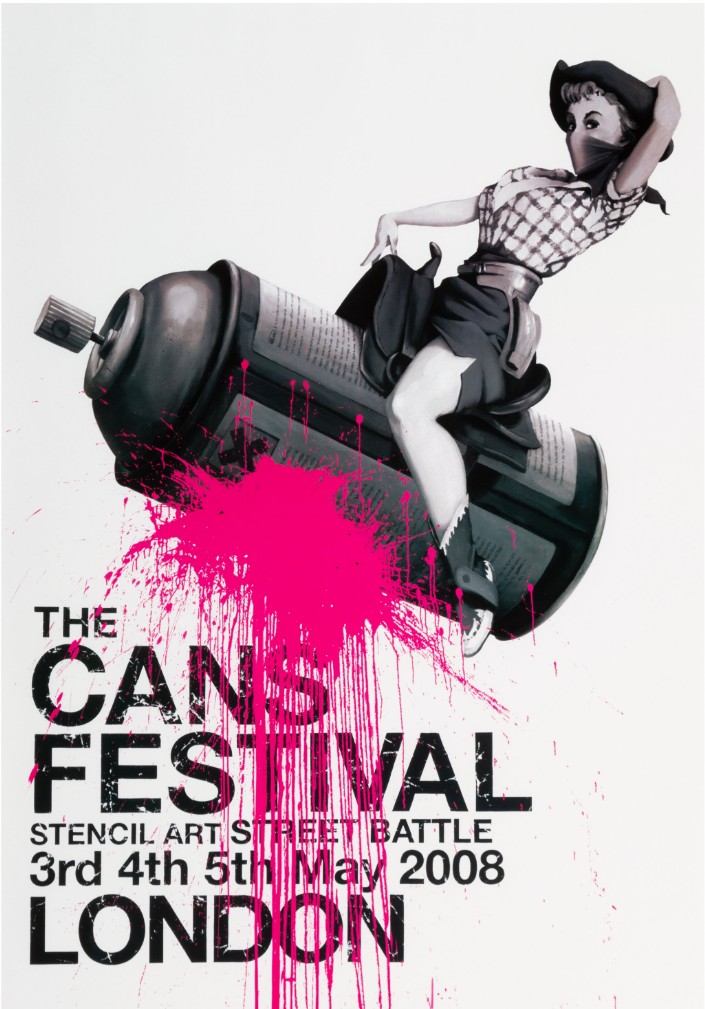
By 2008, stencil art had spread across the world, inspiring a new generation of urban artists. Rather than resisting this growing movement, Banksy celebrated it through The Cans Festival, held inside the disused Leake Street Tunnel beneath London’s Waterloo Station. For several days, the tunnel became one of the largest legal graffiti spaces ever created in Britain. More than one hundred artists from around the world participated, transforming an abandoned piece of urban infrastructure into a vibrant public gallery.

Yet the apparent contradiction concealed a deeper consistency. Banksy had never defended illegality as an end in itself. His objective had always been artistic freedom. If public authorities were finally willing to recognize graffiti as a legitimate cultural practice, then perhaps the movement itself had already achieved one of its greatest victories. Today, Leake Street Tunnel remains one of London’s most celebrated legal street art locations, serving as a lasting legacy of the festival.
2009: Banksy versus Bristol Museum
The decade concluded with what was, at the time, Banksy’s most ambitious exhibition.
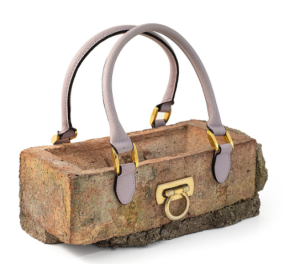
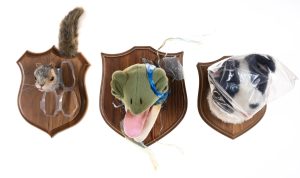
Without prior public announcement, the Bristol Museum and Art Gallery suddenly opened its doors to reveal more than one hundred Banksy works installed throughout its permanent collections. Paintings, sculptures, taxidermy, animatronics and altered historical artefacts coexisted with the museum’s own holdings, often so seamlessly that visitors initially struggled to distinguish Banksy’s interventions from genuine historical objects.
More than 300,000 visitors attended the exhibition during its twelve-week run, making it one of the most successful museum exhibitions ever held in Britain.
The exhibition represented the ultimate institutional irony. For years, museums had largely ignored Banksy. Now one of Britain’s oldest cultural institutions had effectively become his largest installation.

Rather than rejecting museums, Banksy had infiltrated them—not secretly, as he had done through earlier guerrilla interventions, but with the institution’s enthusiastic collaboration. It marked the moment when the establishment formally acknowledged what the public had recognized for years: Banksy had become one of the defining artists of his generation.
Between 2005 and 2009, Banksy’s career underwent a transformation unmatched in contemporary art. He crossed geographical borders, challenged political divisions, reinvented the exhibition format, democratized print collecting and entered major museums without relinquishing the independence that had defined his early years.


 |  |
| Ballerina with Action Man Parts, 2005 | Space Girl and Bird, 2003 |
| Sotheby’s London: 8 February 2007 GBP 96,000 | Bonhams London: 25 April 2007 GBP 288,000 |


2008: Nola

Banksy left Nola, also known as Umbrella Girl, and numerous other murals, including Abe Lincoln as a homeless.

2008: The Village Pet Store and Charcoal Grill
2009: Pest Control Office
2009 is a key transition year for Banksy. He parted ways with his long time agent, Steve Lazarides, and established Pest Control Office. It was at this time that he announced that Pest Control Office, the handling service who would act on his behalf, would be the only primary point of sale for any new works.

By the close of the decade, Banksy was no longer merely documenting contemporary society—he had become one of its central cultural protagonists. Every new mural, exhibition or intervention was now awaited as a public event, not simply because of its artistic merit, but because audiences had come to expect something increasingly rare in contemporary culture: genuine surprise. What is particularly striking in retrospect is that each success generated new opportunities for criticism rather than complacency. Greater fame became another medium to manipulate. Institutional recognition became another convention to question. Commercial success became another paradox to expose.
Reinventing the Rules of Art
(2010–2017)
If the previous decade established Banksy as one of the world’s most recognizable contemporary artists, the years that followed demonstrated something even more remarkable: his refusal to become predictable. Success has often tamed revolutionary artists, drawing them gradually towards the very institutions they once challenged. Banksy chose the opposite path. Rather than settling into the comfortable role of internationally celebrated artist, he continually reinvented both his practice and the expectations surrounding it.
Between 2010 and 2017, Banksy no longer limited himself to creating murals or exhibitions. Increasingly, he conceived complete experiences—projects that blurred the boundaries between installation, theatre, political activism, tourism, publishing and conceptual art. The artwork was no longer confined to an image on a wall; it encompassed the location, the audience, the media coverage and the public debate that followed. Each intervention became a carefully orchestrated cultural event whose impact extended far beyond its physical form.
During these years, Banksy also demonstrated an extraordinary ability to move effortlessly between the street and the museum, between illegal interventions and internationally acclaimed exhibitions, without ever allowing either world to define him. He remained simultaneously an insider and an outsider, accepted by the establishment while continuing to question its values.
2010: Choose Your Weapon




2010: Exit Through the Gift Shop
Few artists have made their cinematic debut with a work as enigmatic as Exit Through the Gift Shop. Released in 2010, the film ostensibly tells the story of Thierry Guetta, an eccentric French immigrant living in Los Angeles who becomes obsessed with documenting street artists before unexpectedly reinventing himself as the flamboyant artist “Mr. Brainwash.”

Whether documentary, mockumentary or elaborate performance, the film deliberately refuses to reveal where reality ends and fiction begins. That ambiguity is precisely its greatest strength. Rather than documenting the rise of street art, Banksy constructs a sophisticated meditation on authorship, authenticity, celebrity and the astonishing speed with which the contemporary art market can manufacture artistic legitimacy.
The film was nominated for the Academy Award for Best Documentary Feature, introducing Banksy to audiences far beyond the world of contemporary art. More importantly, it became one of the defining cultural documents of the street art movement, raising uncomfortable questions that remain unresolved today. Does artistic value arise from talent, originality, marketing or public perception? Can an artist be created almost overnight if enough people choose to believe?

Cameraman and Flower, Salt Lake City, 2010
In retrospect, Exit Through the Gift Shop anticipated many of the debates that would later surround social media, influencers and even NFTs. It remains one of Banksy’s most intellectually ambitious works—not despite its ambiguity, but because of it.
In April, to coincide with the premiere of Exit Through the Gift Shop in San Francisco, five of his works appeared in various parts of the city. Banksy reportedly paid the owner of a building in Chinatown in San Francisco $50 for the use of their wall for one of his stencils.

Follow Your Dreams – Cancelled, San Francisco, 2010
In May 2010, seven new Banksy works of art appeared in Toronto, Canada, though most have been subsequently painted over or removed.

Swing Girl, Los Angeles, 2010
2011–2012: Expanding the Language of Public Art
Although these years lacked a single defining spectacle, they were marked by an extraordinary consistency of production. New murals appeared across Britain and abroad, while Banksy’s editions continued to circulate among an ever-expanding international audience.
His visual language also evolved. Alongside the familiar rats, policemen and children, new works increasingly explored themes of surveillance, environmental degradation, consumer culture and digital society. Humor remained central, but the satire often acquired a quieter, more contemplative tone.


Falling Shopper, London, 2011

If Graffiti Changed Anything It Would Be Illegal, London, 2011
2013: Better Out Than In
In October 2013, Banksy transformed New York City into what he described as a month-long residency titled Better Out Than In. For thirty-one consecutive days, a new artwork appeared somewhere within the city. Murals, sculptures, installations, mobile performances and unexpected interventions turned New York itself into an open-air gallery. Visitors searched neighborhoods each morning hoping to discover the latest piece before crowds gathered, effectively transforming the city into an enormous treasure hunt.
Yet the project extended far beyond street art. Banksy established an online platform documenting each work, often accompanied by satirical audio guides that parodied the solemn language of traditional museums. He also created a temporary stall in Central Park where original signed canvases were anonymously offered for sixty dollars each. Most passers-by ignored them. Those who purchased them unknowingly acquired works later worth hundreds of thousands of dollars.

The gesture perfectly encapsulated one of Banksy’s recurring themes. Artistic value often depends less upon the object itself than upon context, reputation and collective belief. The canvases possessed the same artistic qualities before and after their authorship became known. Only public perception had changed.
Better Out Than In demonstrated that an entire city could become both exhibition space and audience, further dissolving the boundaries separating street art from institutional practice.
2015: Welcome To Gaza

2015: Dismaland
If Better Out Than In expanded the idea of the exhibition, Dismaland completely reinvented it.

Installed inside the abandoned Tropicana lido in Weston-super-Mare, Dismaland presented itself as “Bemusement Park”—a darkly comic parody of the modern theme park. Visitors encountered a crumbling fairy-tale castle, a distorted Cinderella carriage crash, grim security checkpoints, refugee boats, environmental catastrophes and numerous installations by more than fifty international artists.
At first glance, Dismaland appeared to mock Disney. In reality, its ambitions were considerably broader. The project questioned consumer culture, mass entertainment, political complacency and the growing tendency to transform even human suffering into spectacle.
Unlike a conventional exhibition, Dismaland required visitors to participate physically and emotionally. They queued, interacted with performers, navigated dysfunctional attractions and experienced a carefully choreographed atmosphere of absurdity, disappointment and reflection. Banksy had effectively transformed curating itself into an artistic medium.
More than 150,000 visitors attended during its five-week run, making it one of the most successful contemporary art events of the decade. Yet perhaps its most remarkable legacy emerged after its closure, when much of the construction material was dismantled and transported to Calais, France, where it was reused to build shelters for refugees living in the Jungle camp. Even after disappearing, Dismaland continued generating meaning.
2017: The Walled Off Hotel
Two years later, Banksy unveiled what may be his most ambitious and enduring project: The Walled Off Hotel in Bethlehem.

Described as offering “the worst view in the world,” the hotel overlooks the Israeli West Bank barrier, placing guests within meters of one of the most politically contested structures on earth. Combining functioning accommodation, museum, gallery, piano bar and political installation, the project blurs the distinction between hospitality and contemporary art.
Every aspect of the hotel contributes to the narrative. Guest rooms feature original works by Banksy, while historical displays explore the region’s complex political history. Local Palestinian artists are prominently represented alongside international contributors, ensuring that the project remains rooted in the community rather than functioning as an external artistic intervention.

Unlike a temporary exhibition, the Walled Off Hotel became a permanent institution—part artwork, part museum, part business and part platform for cultural dialogue. It exemplifies Banksy’s increasingly sophisticated understanding that art can shape not only public debate but also local economies, tourism and international awareness.
Between 2010 and 2017, Banksy fundamentally redefined what it meant to be a contemporary artist. Murals became films. Exhibitions became cities. Theme parks became political manifestos. Hotels became museums. The artwork itself increasingly extended beyond the object to encompass the entire experience surrounding it.
Looking back, this period reveals an artist operating on an entirely different scale from his contemporaries. Banksy no longer responded to cultural events—he created them. Every major project generated international headlines, not because of calculated publicity, but because each proposed an entirely new way of thinking about art and its place within society.
Perhaps most importantly, these years demonstrated that Banksy’s greatest medium was never spray paint alone. His true material was expectation itself. By constantly reinventing the format of his interventions, he ensured that audiences could never predict where, how or even in what form the next Banksy would appear. Few artists have maintained such creative unpredictability over so long a period, and it is this refusal to stand still that has secured Banksy’s place as one of the defining cultural figures of the twenty-first century.
The Making of a Legend (2018–Present)
By the late 2010s, Banksy occupied a unique position within contemporary culture. He was simultaneously one of the world’s most recognizable artists and one of its greatest mysteries. His works commanded record-breaking prices at auction, museums sought to exhibit his creations, cities competed to preserve his murals, and yet he remained fundamentally committed to the principles that had defined his earliest years on the streets of Bristol. Fame had altered his audience, but not his artistic instincts.
If the previous decade demonstrated Banksy’s ability to reinvent the exhibition, the years that followed revealed an artist increasingly interested in questioning the very mechanisms through which art circulates, acquires value and enters public consciousness. Murals continued to appear unexpectedly across the world, but each intervention now formed part of a broader reflection on politics, humanitarian crises, media attention and the role of the artist in an increasingly interconnected society.
Far from repeating past successes, Banksy entered one of the most inventive periods of his career.
2018: Love Is in the Bin
On 5 October 2018, moments after Girl with Balloon was sold at Sotheby’s in London for £1.04 million, the canvas unexpectedly began passing through a concealed shredder hidden inside its elaborate frame. The astonished audience witnessed what immediately became one of the most famous moments in the history of contemporary art.
Rather than being destroyed, however, the artwork was transformed. Approximately half of the canvas remained intact beneath the frame, creating a new work subsequently authenticated by Pest Control and renamed Love Is in the Bin.
The event instantly entered art history. It questioned authorship, permanence, ownership and the relationship between artistic creation and market value. In one extraordinary gesture, Banksy converted an auction sale into a live performance, demonstrating that the true artwork was not merely the physical object but the event itself.

Ironically, an intervention apparently intended to criticize the commercialization of art ultimately increased the work’s value dramatically. When Love Is in the Bin returned to Sotheby’s in 2021, it realized GBP 18.6 million, setting a new auction record for the artist. Few works have so perfectly illustrated one of Banksy’s recurring themes: the paradoxes through which the art market transforms criticism into value.
2018: Season’s Greetings

2019: Venice Biennale

2019: Gross Domestic Product

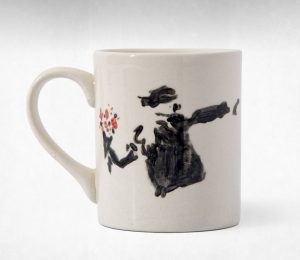
The following year, Banksy turned his attention towards commerce itself. Following a legal dispute concerning the use of his trademark, he launched Gross Domestic Product (GDP), a temporary homeware shop in Croydon whose display window remained permanently closed to the public. Customers could only purchase items through an online platform after submitting short written statements explaining why they wished to own them.

The products themselves—ranging from cushions and mugs to rugs, clocks and household objects—combined humor with biting political satire. Shopping became performance, while the purchasing process itself became part of the artwork.
Gross Domestic Product brilliantly exposed the contradictions surrounding branding, intellectual property and consumer culture. At the same time, it represented one of Banksy’s most democratic initiatives, making original creations available at prices accessible to a far wider audience than the traditional art market. Perhaps most significantly, GDP demonstrated Banksy’s extraordinary ability to transform even legal necessity into artistic opportunity. A trademark dispute became one of the most inventive conceptual projects of his career.
2020: The M.V. Louise Michel Rescue Lifeboat
‘Like Most People who make it in the art world, I bought a Yacht to cruise the Med. It’s a French Navy Vessel we converted into a lifeboat because EU Authorities deliberately ignore distress calls from non-Europeans.’

2020–2021: Art in a Time of Pandemic
The global pandemic inevitably influenced Banksy’s work, although characteristically he avoided direct sentimentality.
Murals celebrating healthcare workers, rats taking over domestic interiors and interventions reflecting lockdown life combined humor with expressions of gratitude and resilience. Among the most celebrated was Game Changer, donated to Southampton General Hospital before later raising more than £16 million for NHS charities.

“Thanks for all you’re doing.
I hope this brightens the place up a bit, even if it’s only black and white.”
These works revealed another important dimension of Banksy’s practice. Although often associated with satire and political criticism, his art has always contained an undercurrent of empathy. Moments of crisis frequently prompted images that emphasized solidarity rather than confrontation.
2022: Ukraine
In the aftermath of Russia’s invasion of Ukraine, Banksy travelled to several devastated towns around Kyiv, including Borodyanka, Irpin and Hostomel, where he created a series of murals directly upon bomb-damaged buildings. A gymnast balancing amid ruined architecture, children playing on anti-tank obstacles and a young judoka throwing an adult opponent became powerful symbols of resilience in the face of destruction.
The choice of location carried profound significance. Rather than commenting from afar, Banksy returned to one of the defining principles of his career: making art directly within places marked by political conflict. The murals immediately attracted worldwide attention while offering moments of hope to communities living amidst the realities of war. The project also echoed his earlier interventions on the Separation Wall, confirming that humanitarian concerns have remained one of the most consistent threads running throughout his work.
2023: Cut & Run
For the first time in his career, Banksy invited the public behind the scenes of his creative process. Presented at Glasgow’s Gallery of Modern Art, Cut & Run explored more than twenty-five years of stencil production, revealing the original templates used to create many of his most iconic works. Visitors encountered not only finished artworks but also the tools, techniques and stories behind them.
Rather than diminishing the mystery surrounding Banksy, the exhibition achieved precisely the opposite. It demonstrated that the apparent simplicity of his imagery conceals extraordinary technical precision and careful planning.
The exhibition also allowed Banksy to narrate his own history on his own terms, correcting misconceptions while reinforcing the central role that stencilling has played throughout his career. For scholars and collectors alike, Cut & Run became one of the most important exhibitions ever devoted to Banksy’s practice.
2024: The London Animals
In the summer of 2024, London awoke to discover a remarkable sequence of new Banksy murals appearing across the capital over several consecutive days. Goats, elephants, monkeys, wolves, pelicans, cats, piranhas and other animals unexpectedly emerged in different locations, generating widespread speculation regarding their meaning before Banksy gradually confirmed each work through his official Instagram account.
Unlike many earlier interventions, the series resisted any immediate political interpretation. Instead, the works appeared to celebrate surprise itself, transforming the city into a giant treasure hunt while reminding audiences that public art can still generate genuine collective excitement in an age dominated by instant digital communication.
The project also reaffirmed Banksy’s remarkable ability to command global attention through the simplest of gestures: an anonymous image appearing overnight on an ordinary wall.
The Best is Yet To Come…
Looking back across more than three decades, what emerges is not merely the career of an anonymous graffiti artist who achieved international fame, but the remarkable evolution of an artist who continually refused to accept the conventional limits of his profession.
Banksy has painted walls, infiltrated museums, published books, produced films, organized exhibitions, built a hotel, created an amusement park, challenged auction houses, founded a homeware brand and transformed entire cities into temporary galleries. Throughout each reinvention, however, one principle has remained remarkably constant: the belief that art should provoke curiosity before admiration, questions before certainty, and conversation before consensus.
His greatest achievement may ultimately lie not in any single mural, print or record-breaking auction result, but in permanently expanding our understanding of what art can be and where it can exist. He has demonstrated that a city wall may carry the same emotional and intellectual weight as a museum canvas, that humor can become a vehicle for profound political reflection, and that anonymity can sometimes amplify rather than diminish artistic influence.
For millions of people, Banksy has transformed the simple act of walking through a city into an act of possibility. Every blank wall now invites the same thought: Could this be the next Banksy? Few artists have altered the way we look at the urban landscape so fundamentally.
More than thirty years after his earliest works appeared on the streets of Bristol, Banksy remains as elusive, provocative and inventive as ever. His story is not complete, and perhaps that is precisely what makes it so compelling. Somewhere, on a wall not yet painted or an idea not yet imagined, the next chapter is already waiting to appear.