BANKSY (British, born 1975)
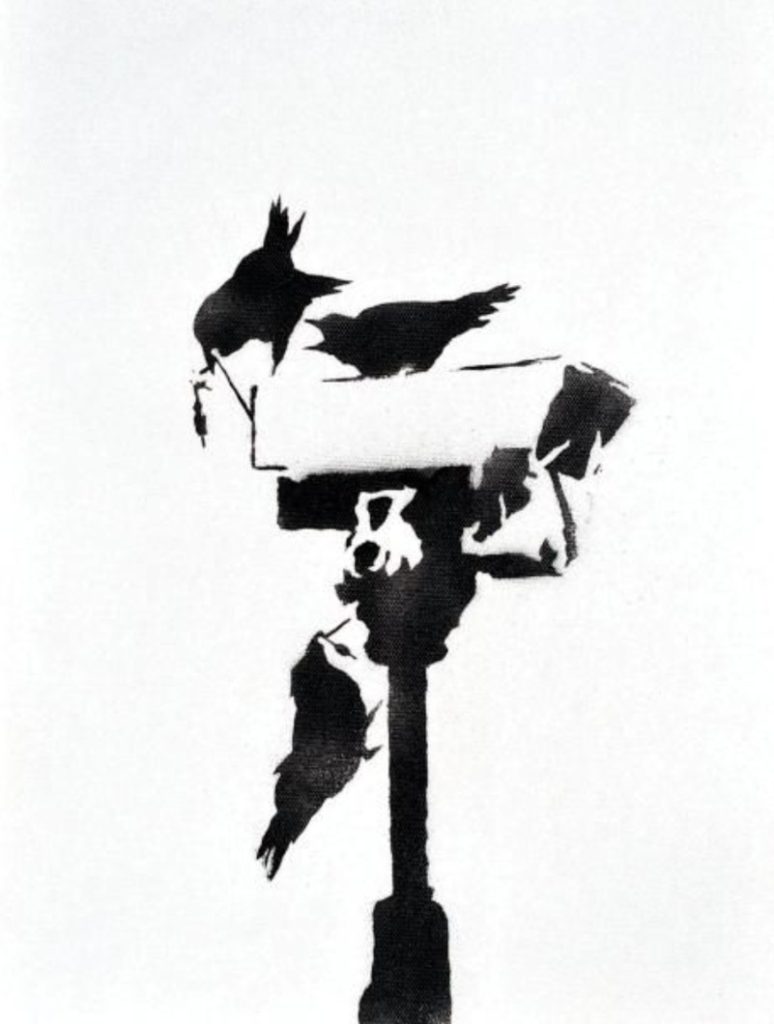
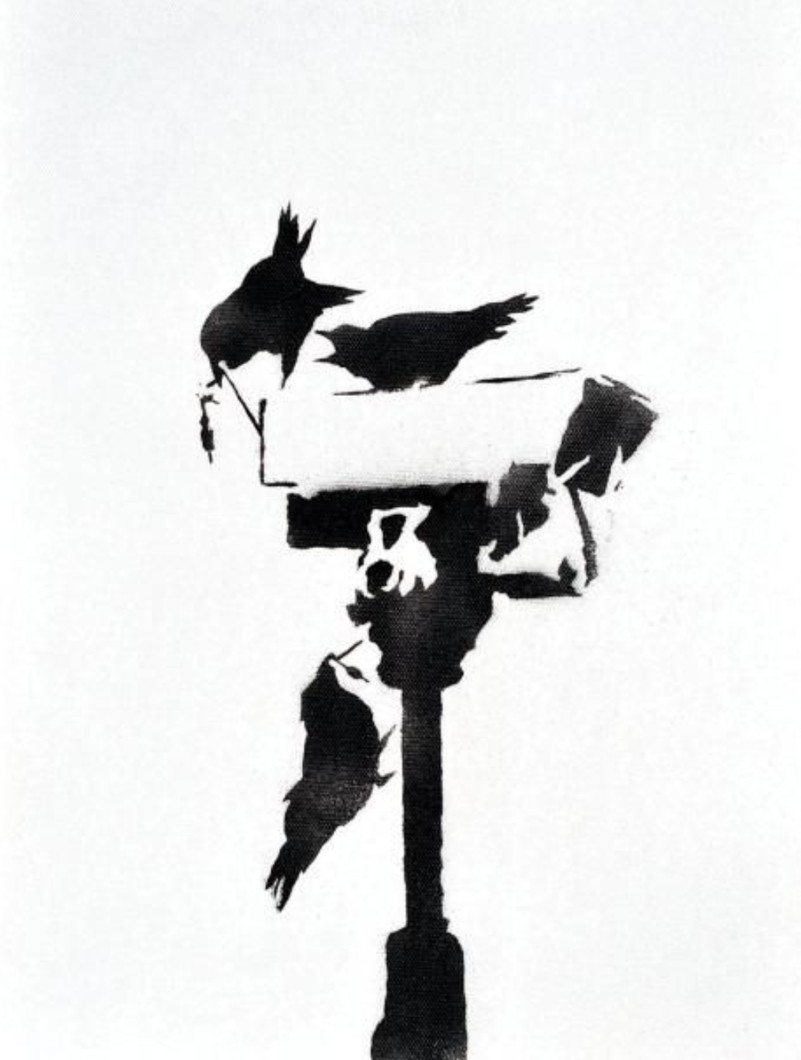
Angry Crows, 2003
Spray paint and stencil on canvas
40×30 cm (15-7/8 x 11-7/8 inches)
Signed with artist tag in red on overlap
Signed, dated and inscribed in black ink verso “Steve. Thanks a lot. You’d look good in a suit”
Provenance
Gift from the artist to Steve LAZARIDES
Collection JPB, 2011
Private Collection, London, 2012
Exhibited
Lazarides Gallery, Londres
Santa’s Ghetto, 2004
Auction History
| Digard Auctions 14 December 2014 Estimated: EUR 60,000 – 80,000 |
Price Realized |
Catalogue Note
Executed in 2003, Angry Crows is one of Banksy’s most poetic early works, demonstrating his remarkable ability to transform an ordinary urban object into a quietly subversive meditation on power, resistance and coexistence. A CCTV camera, emblematic of modern surveillance, becomes an unlikely perch for three crows whose presence subtly undermines its authority.
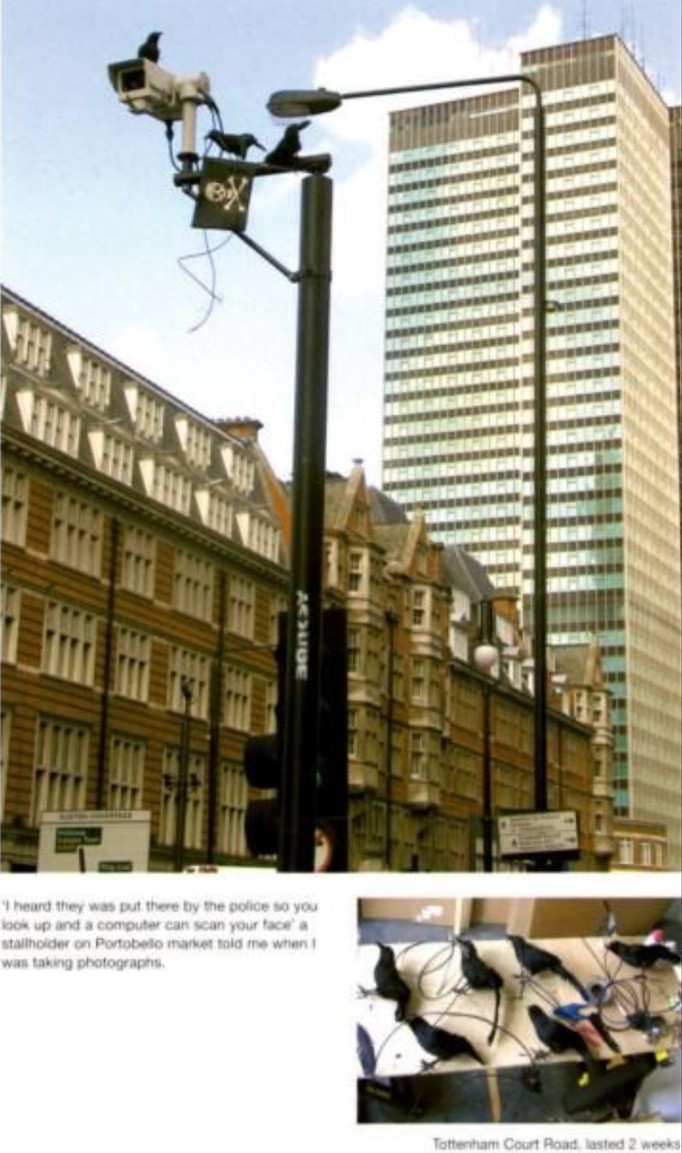
Rather than attacking or destroying the camera, the birds simply occupy it. One stands watch from above, another appears to caw defiantly, while a third hangs beneath the device, as though reclaiming the structure for the natural world. Their silhouettes animate an object designed to observe others, reversing its function: the watcher has itself become the watched.
Crows have long occupied an ambiguous place in mythology and literature. Associated with intelligence, adaptability and collective memory, they have also served as omens, tricksters and survivors. Banksy exploits this rich symbolism without ever becoming overly literal. Here, the birds seem almost indifferent to the camera’s authority, suggesting that nature ultimately remains beyond the reach of systems of control.
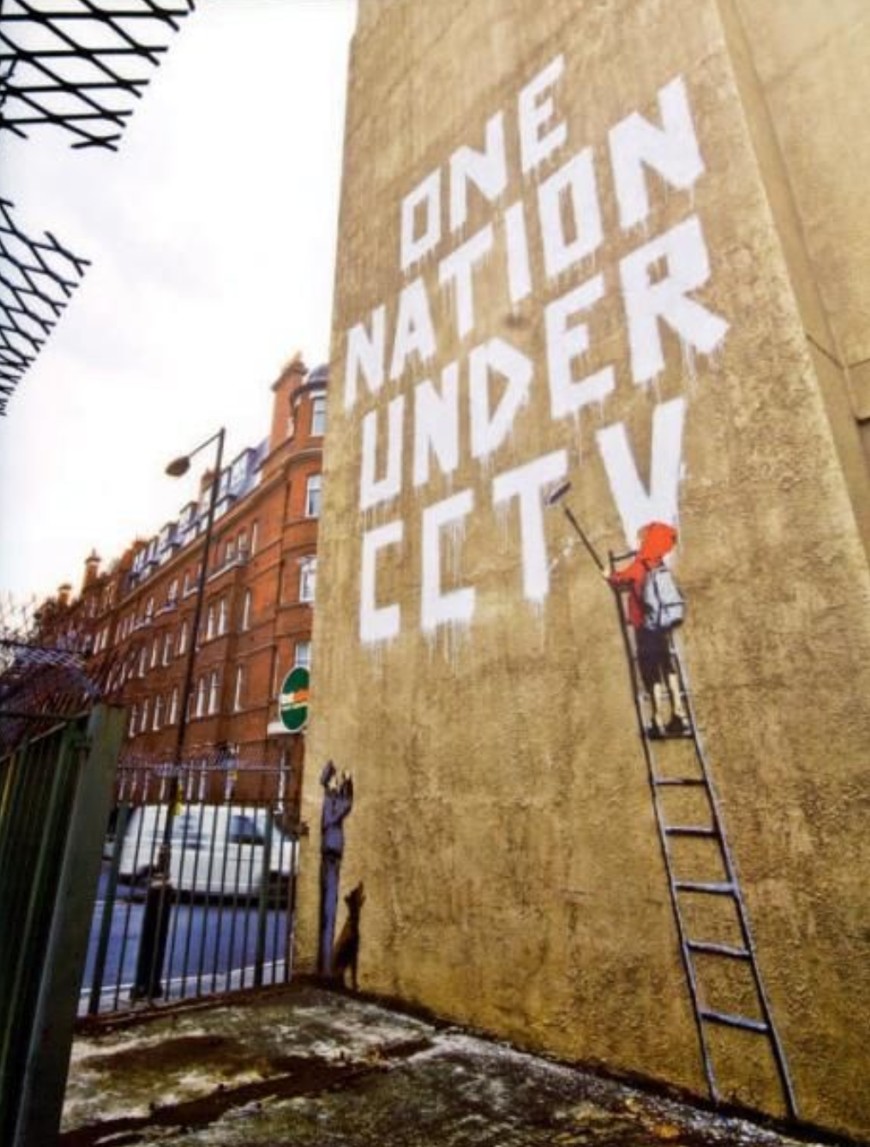
The composition also reflects one of Banksy’s recurring themes: the collision between the organic and the institutional. Throughout his career, rats invade city walls, monkeys parody politicians, elephants expose social blindness, and birds repeatedly emerge as fragile symbols of freedom confronting the machinery of modern life. In Angry Crows, that confrontation is remarkably understated. The camera remains functional, yet its intimidating presence has been quietly neutralized through occupation rather than confrontation.
Executed with Banksy’s characteristic economy of means, the work is almost entirely monochromatic. The stark contrast between black stencil and white ground strips the image to its essential forms, allowing the relationship between birds and machine to communicate instantly. Like the finest of Banksy’s early works, it requires no slogan. The visual metaphor speaks for itself.
Adding particular significance to this example is its exceptional provenance. Gifted by Banksy to Steve Lazarides and warmly inscribed on the reverse—“Steve. Thanks a lot. You’d look good in a suit.”—the work belongs to the intimate circle of artworks exchanged during the formative years of Banksy’s career. More than a simple dedication, the inscription captures the artist’s characteristic wit while anchoring the painting within the close creative partnership that helped shape his early rise.
Ultimately, Angry Crows is less about surveillance than about resilience. The institutions of control may watch endlessly, Banksy suggests, but life continues to perch upon them, adapt around them, and quietly rob them of their absolute authority. It is precisely this understated optimism, delivered through the simplest of images, that makes Angry Crows one of the most elegant and quietly profound works from Banksy’s early oeuvre.