BANKSY
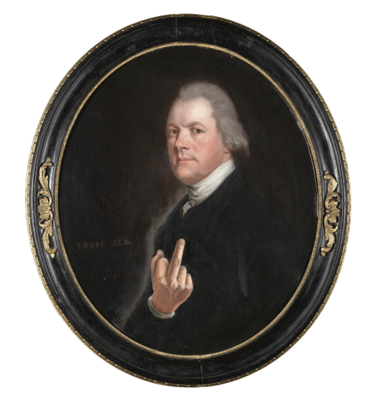
The Rude Lord, 2006
Oil on canvas in original artist’s frame
88.6 x 76.8 cm (35 x 30 1/4 inches)
Provenance
Lazarides Gallery, London
Acquired directly from the above by the present owner
Exhibited
Barely Legal, Los Angeles, 2006
Auction History
| Sotheby’s London 12 October 2007 Est.: GBP 150,000 – 200,000 | Price Realized GBP 322,900 / USD 654,555 (#9) Banksy |
Catalogue Note
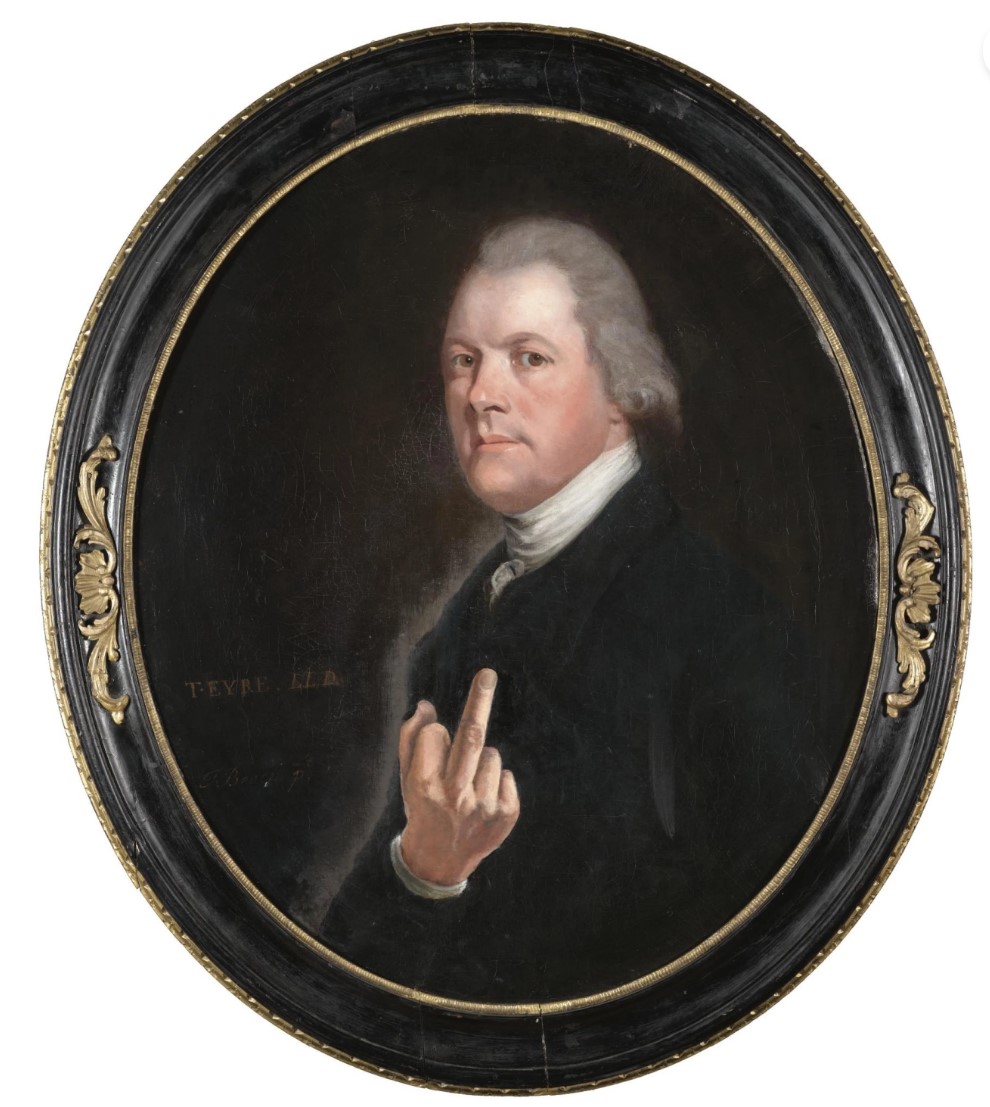
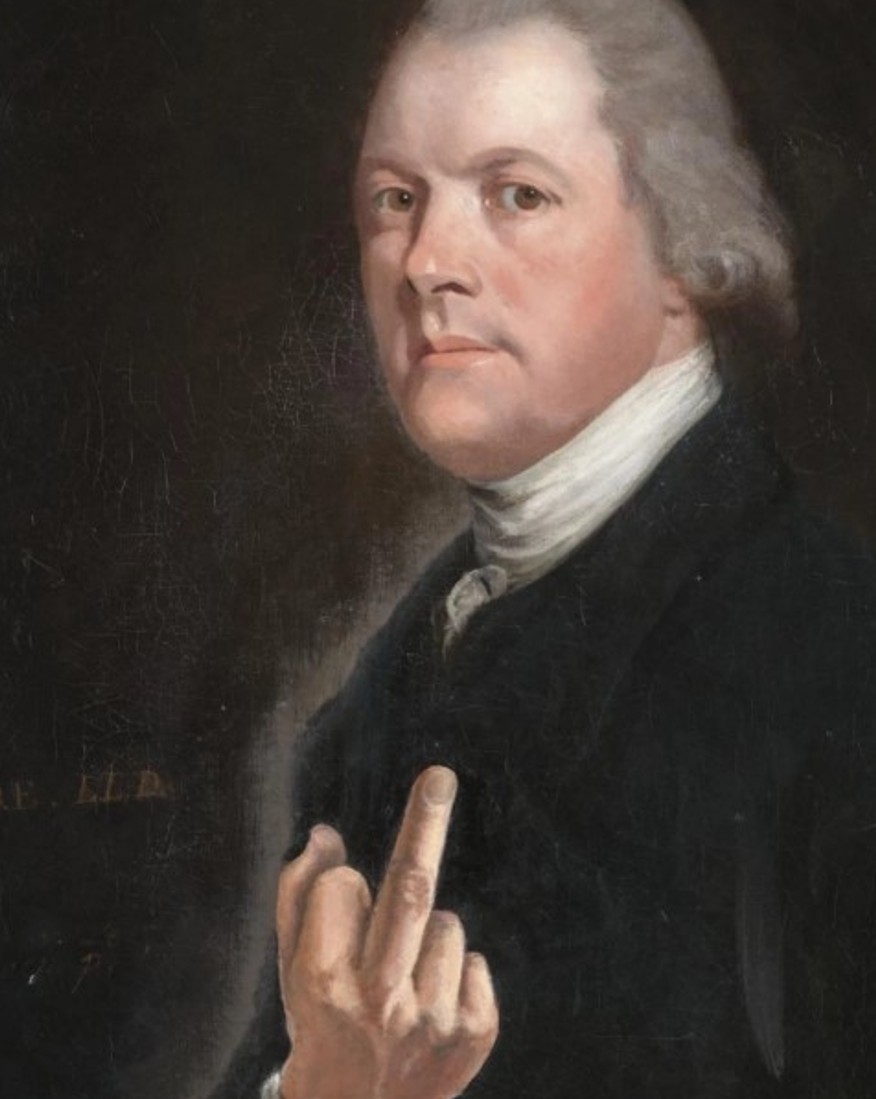
The Rude Lord is one of the clearest manifestations of Banksy’s audacious migration from the street into the museum. Based on an eighteenth-century portrait by the English painter Thomas Beach, the work was acquired by the artist before being irreverently transformed with a single painted intervention: the sitter calmly raises his middle finger. The modification is almost laughably minimal, yet it completely overturns more than two centuries of artistic convention. Banksy takes the air out of aristocratic pomp with one brutally simple gesture, turning a symbol of refinement into an act of gleeful rebellion.
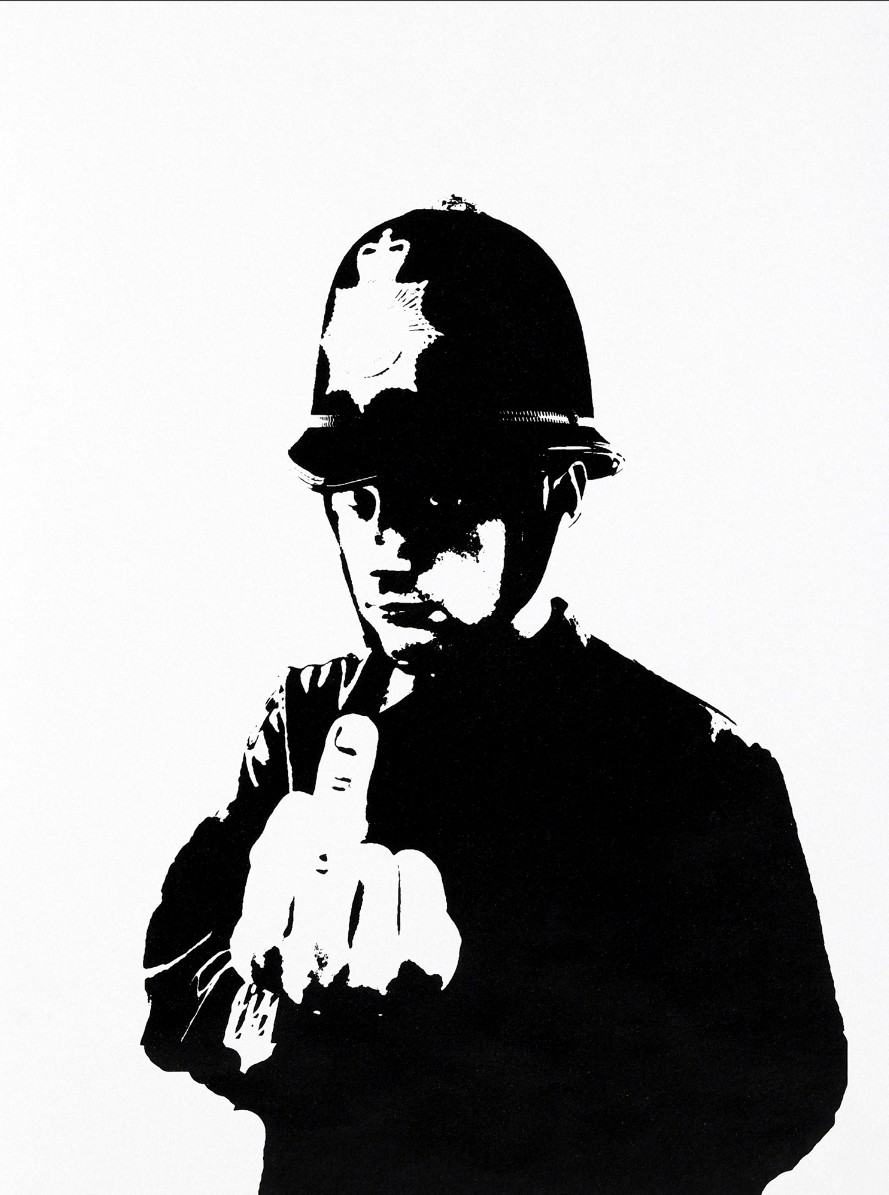
The Rude Lord also marks a decisive evolution within Banksy’s own career. Four years earlier, in Rude Copper (2002), the artist had already used the raised middle finger to ridicule authority through the image of a British policeman sprayed illegally onto city walls. By 2006, the same irreverent gesture had migrated from the street to the drawing room. Replacing the policeman with an eighteenth-century aristocrat, Banksy broadened his critique from contemporary authority to inherited privilege, social hierarchy and the cultural establishment itself. The rebellion had moved indoors. What was once executed anonymously on public walls was now painted directly onto an Old Master acquired at auction and exhibited before collectors in Los Angeles. In many respects, The Rude Lord mirrors Banksy’s own extraordinary social ascent: the graffiti writer from Bristol had entered the very world he once attacked, yet without abandoning the visual language or anti-establishment spirit that had made him famous.
“If you want to survive as a graffiti writer when you go indoors I figured your only option is to carry on painting over things that don’t belong to you there either.”
That statement serves as the manifesto for his celebrated Crude Oils and Barely Legal period. Rather than painting entirely new pictures, Banksy “tags” art history itself. The Old Master becomes his wall, the auction purchase replaces the city street, and the museum becomes another public space to be challenged. In doing so, he extends the very principles of graffiti—appropriation, intervention and irreverence—into the heart of the cultural establishment.
The brilliance of The Rude Lord lies in its remarkable economy. Nothing about the sitter’s composed expression changes. His elegant dress, refined posture and aristocratic dignity remain perfectly intact. Only the hand has been altered, yet that single vulgar gesture dismantles the entire hierarchy upon which the portrait was originally built. Respect becomes insolence; authority becomes ridicule. Banksy demonstrates that power often depends less on reality than on performance, and that a single visual interruption can cause an entire system of symbols to collapse.
Exhibited at Barely Legal in Los Angeles in 2006, the work belongs to the exhibition that transformed Banksy from Britain’s most notorious graffiti artist into an international contemporary art phenomenon. Hollywood collectors, celebrities and major patrons flocked to the warehouse exhibition, confirming that the artist who had once painted illegally under cover of darkness was now exhibiting works destined for museum collections and some of the world’s most influential private collections. The Rude Lord perfectly embodies that paradox. It is an act of vandalism presented as a masterpiece, proving that Banksy never truly left the street—he simply brought the street with him into the gallery.