BALCONY FAMILY
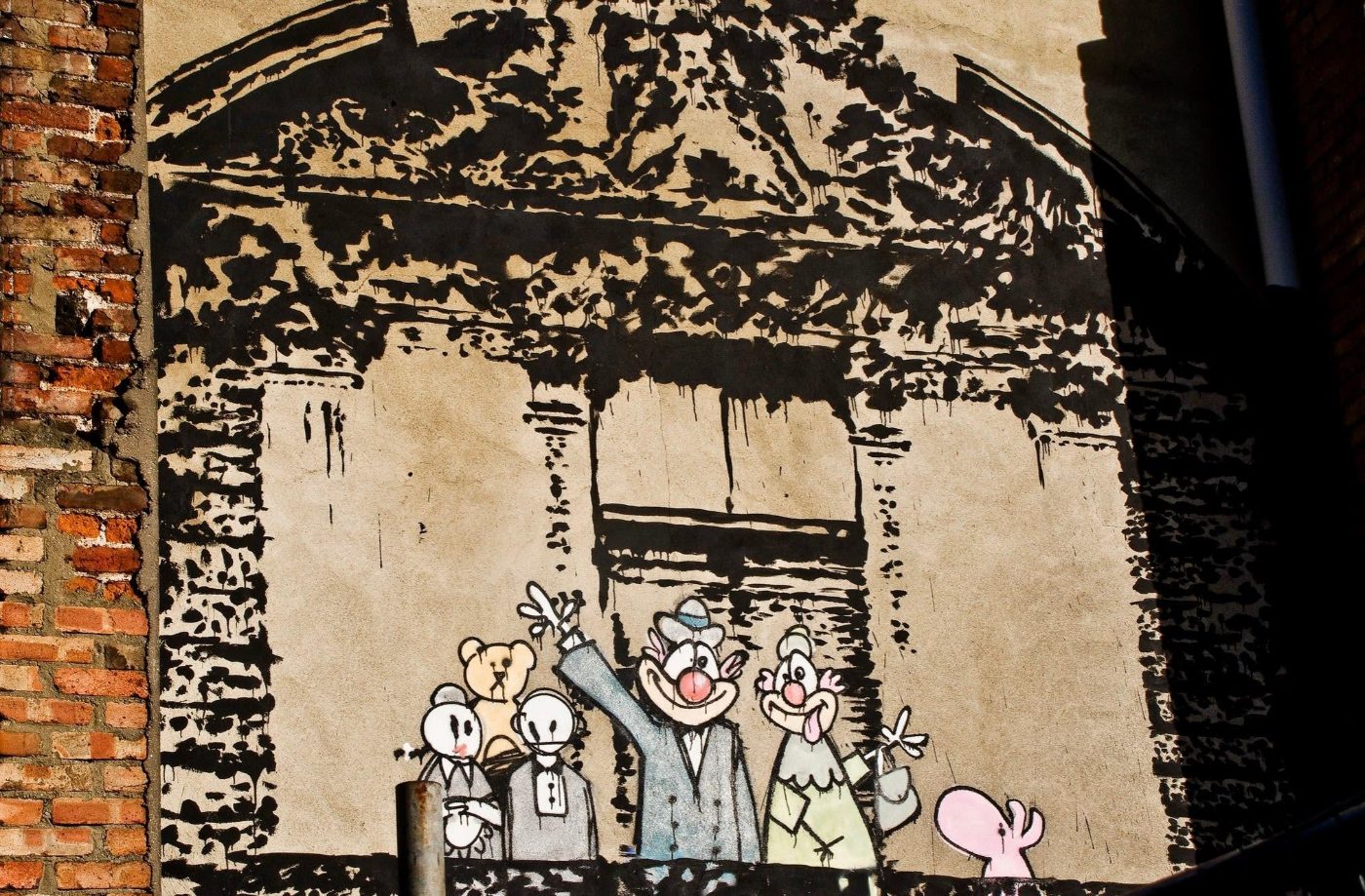
A Palace in Stoke Newington
Painted on the side of a building on Stoke Newington Church Street, Balcony Family belongs to an important period in 2003 when Banksy's increasingly ambitious London street works were beginning to intersect with popular culture. The original composition was considerably larger than the fragment that survives today. Banksy transformed an ordinary exterior wall into the façade of an elaborate palace, complete with architectural decoration and a balcony occupied by a grotesque, cartoon-like family waving to the street below. Contemporary photographs taken by Steve Lazarides document the work during its creation and confirm its 2003 date.
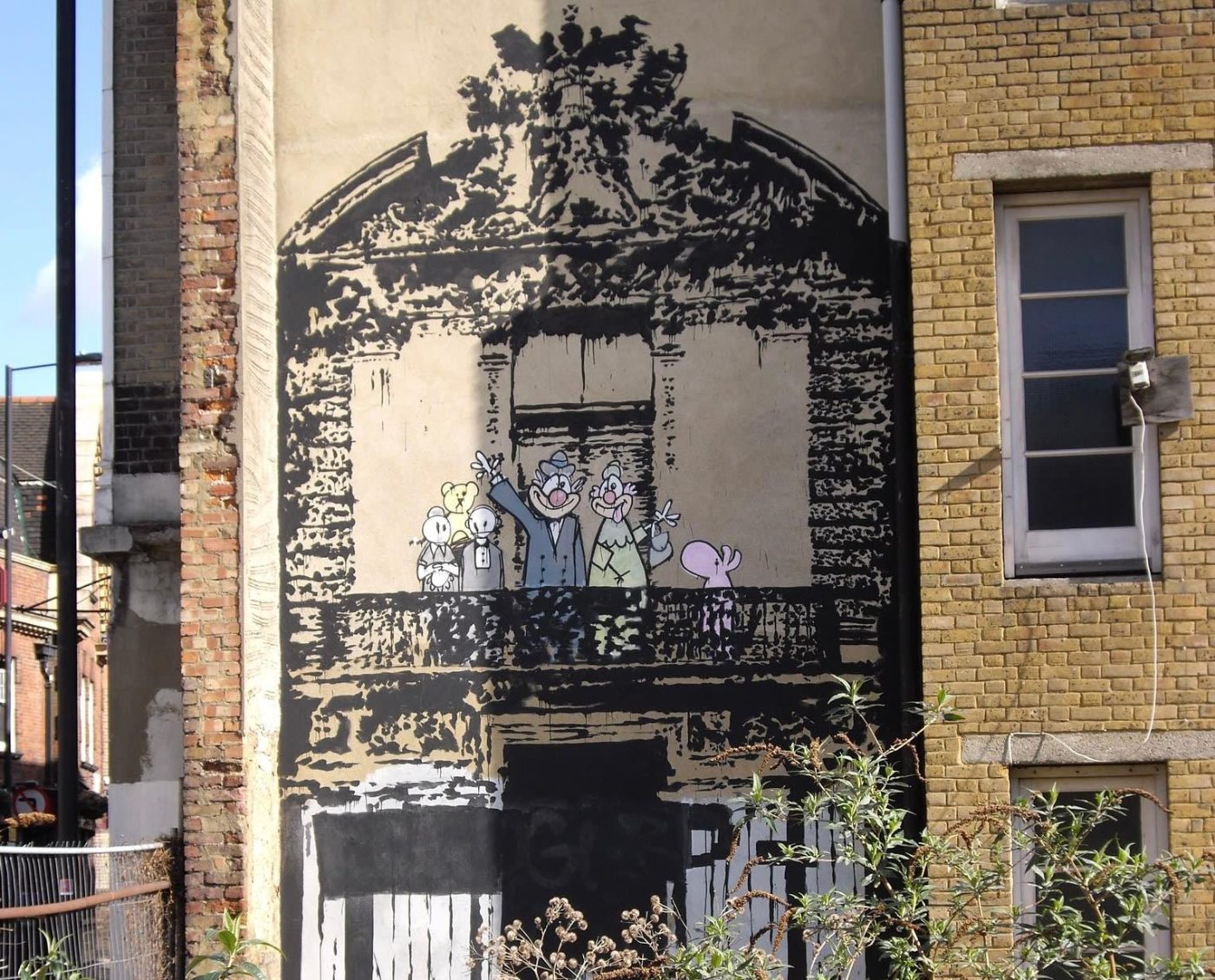
The scene unmistakably evokes the familiar spectacle of the British Royal Family appearing on the balcony of Buckingham Palace, but Banksy replaces ceremonial grandeur with caricature. The inhabitants of his imaginary palace are exaggerated and faintly absurd, turning one of the most carefully staged images of British public life into something closer to a dysfunctional family portrait.
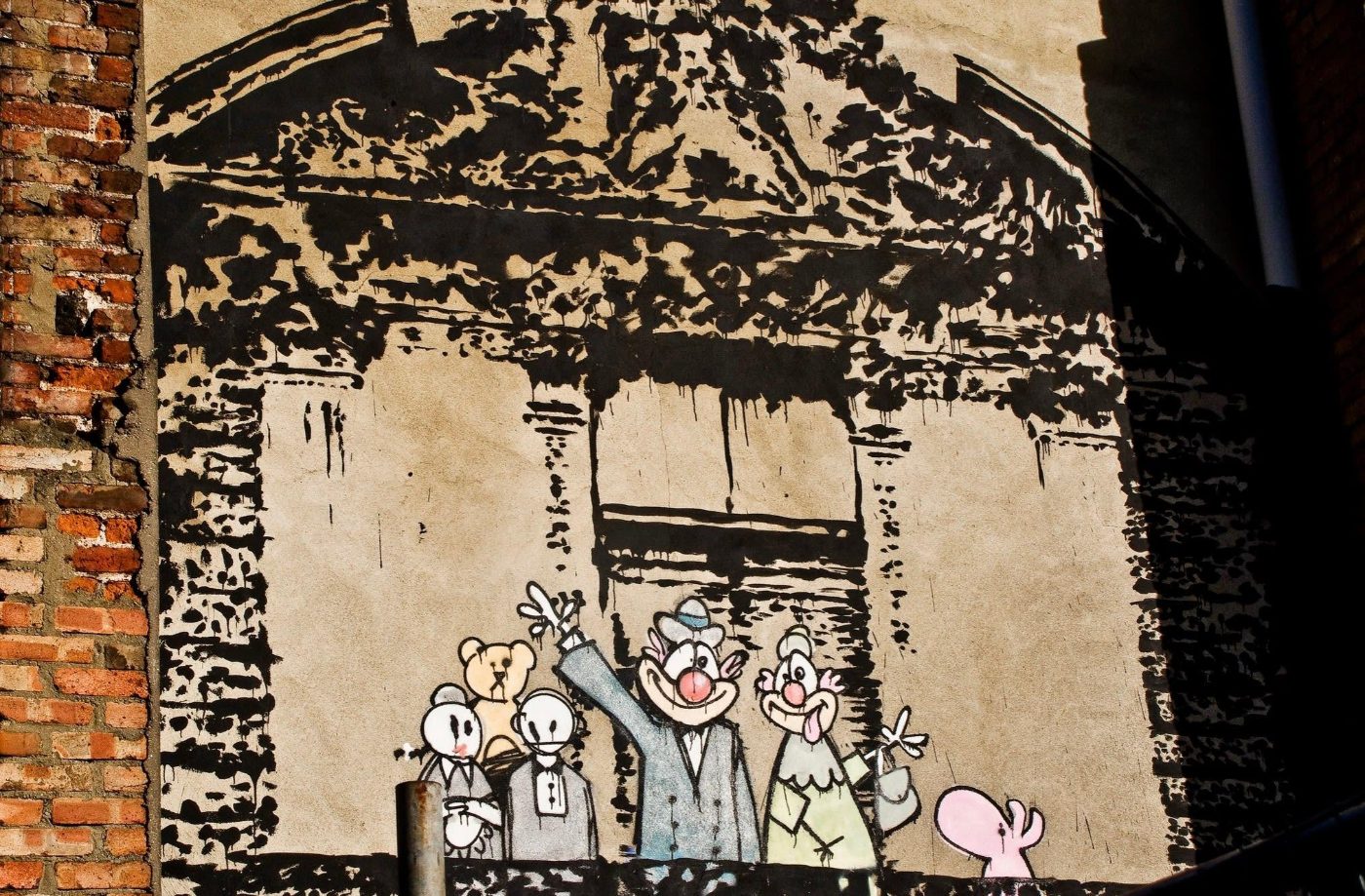
Its location was essential to the joke. Instead of Buckingham Palace, Banksy's balcony appeared halfway up an unremarkable building in Stoke Newington. The architecture of privilege had effectively been transplanted onto an ordinary London street.
Banksy, Blur and Crazy Beat
Balcony Family also belongs to Banksy's important 2003 collaboration with Blur. Banksy created the artwork for the band's album Think Tank and several related singles, including Out of Time, Good Song and Crazy Beat. The latter is particularly closely connected to the Stoke Newington mural: the Crazy Beat single artwork depicts similarly grotesque figures occupying a balcony. Scholarly research into Banksy's early work identifies the street mural itself as Crazy Beat, while noting that the figures used on the various single covers differ from those painted in Stoke Newington.
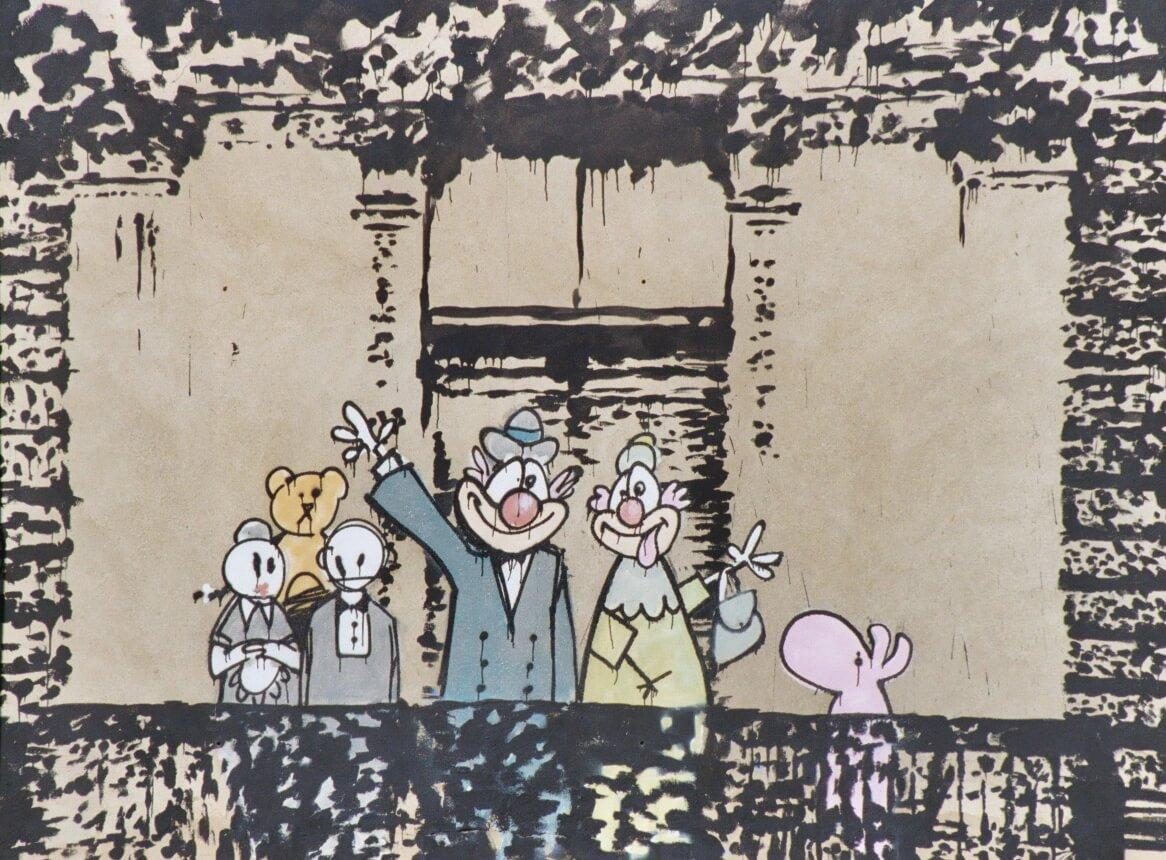
The connection is significant within Banksy's development. Images originating in the visual language of graffiti were now moving between walls, record sleeves and mass circulation. Yet the mural retained something the album artwork could not reproduce: its architectural joke depended upon finding a mock royal balcony unexpectedly embedded in the fabric of the city.
Saved from Erasure
The work survived relatively intact for several years before nearly disappearing in 2009, when Hackney Council contractors began covering it with black paint. Much of the elaborate architectural framework surrounding the figures was destroyed before local residents intervened and stopped the process.
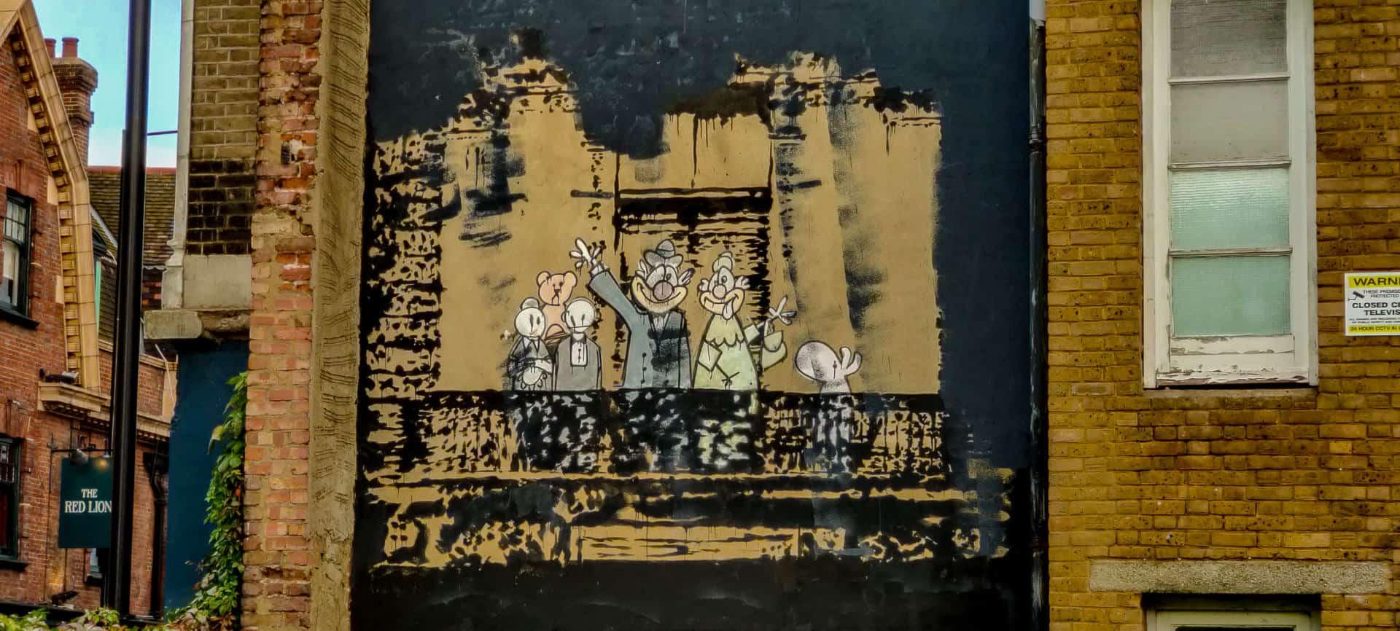
What remains today is consequently very different from Banksy's original composition. The palace has largely disappeared, leaving the surviving family strangely suspended against the blackened wall. Yet the central figures remain recognizable on Stoke Newington Church Street.
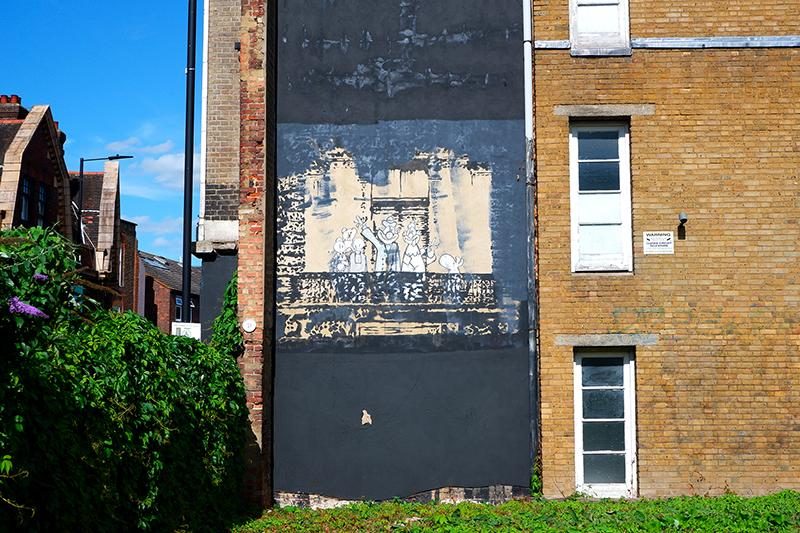
There is an unintended Banksy-like irony in its survival. A work parodying the pomp and permanence of royal spectacle ultimately lost its palace, while the family on the balcony refused to disappear.
STAY INFORMED
Receive the latest news, exhibitions, artworks and market updates on Banksy.