BANKSY™ SOFT TOYS

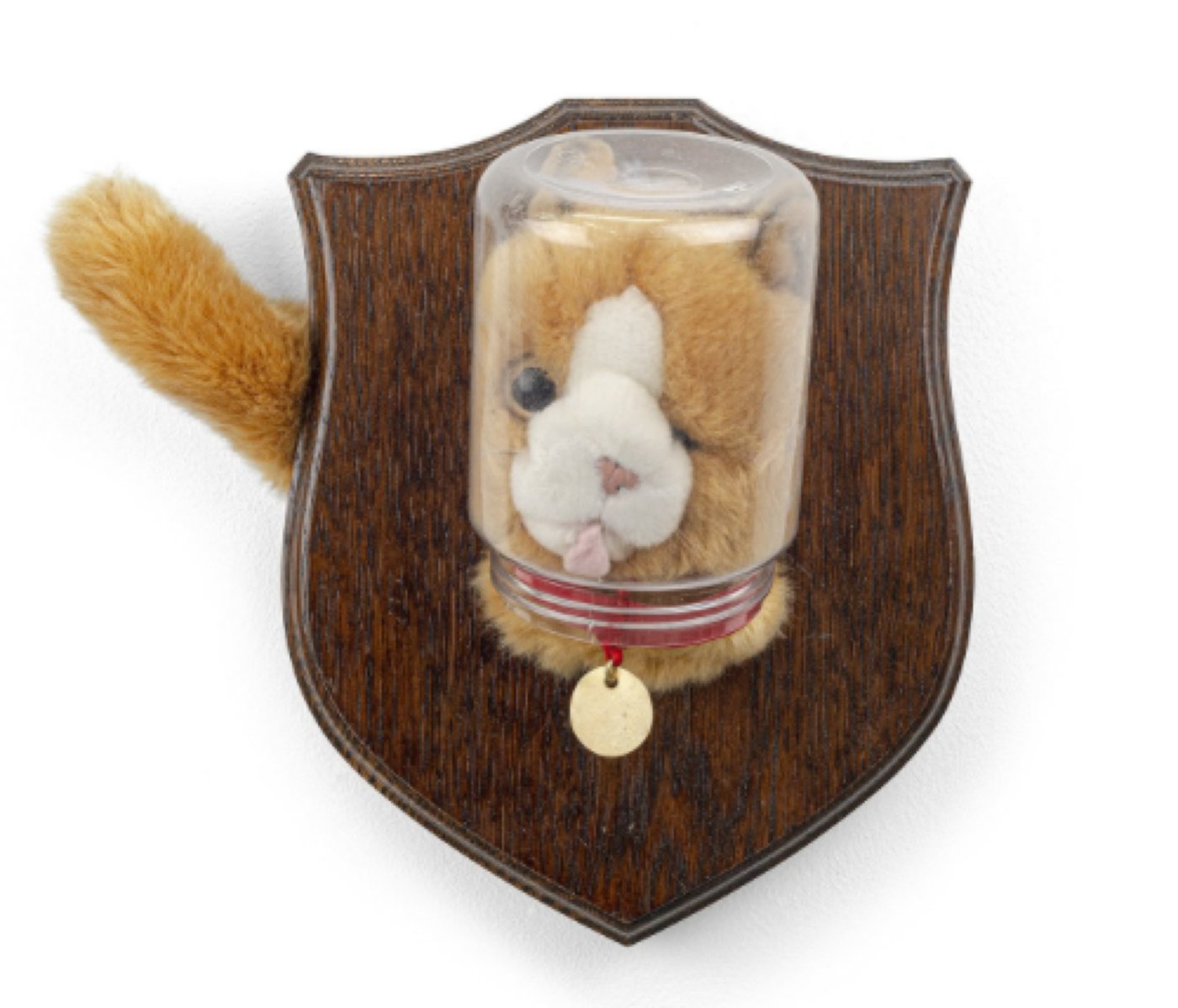
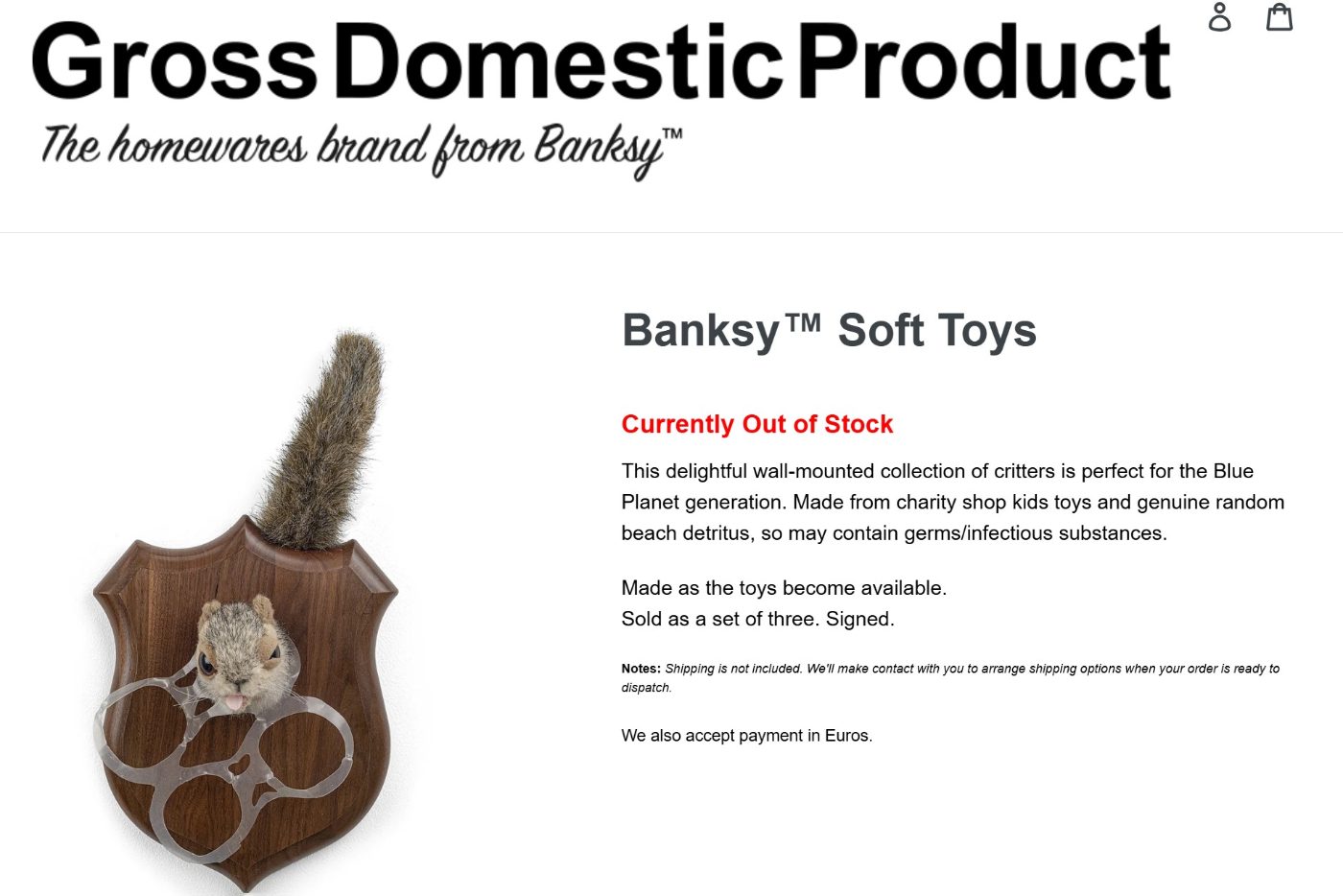
This delightful wall-mounted collection of critters is perfect for the Blue Planet generation. Made from charity shop kids toys and genuine, random beach detritus, so may contain germs/infectious substances. Made as the toys become available.
Catalogue Note
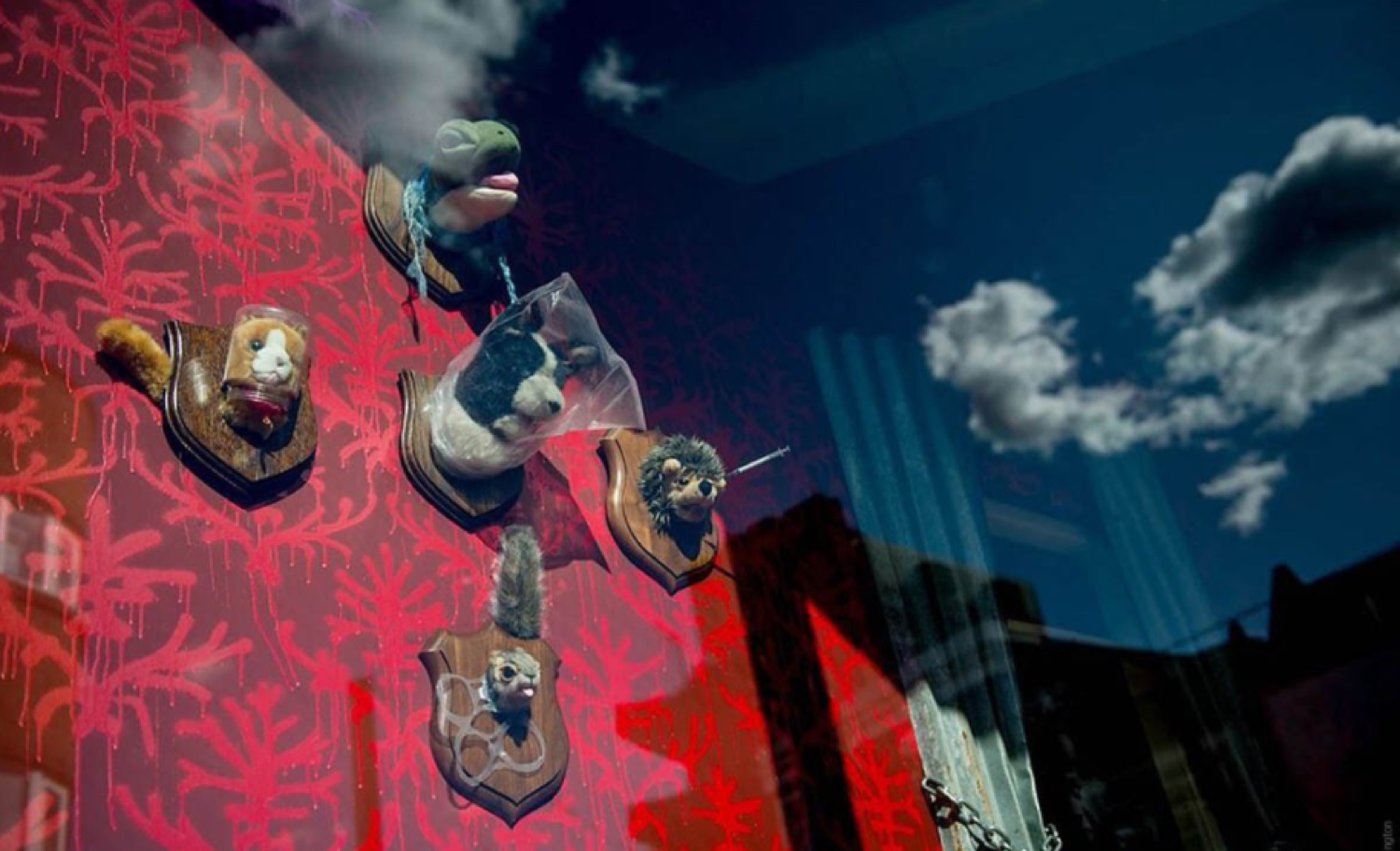
Created for Banksy's Gross Domestic Product project in 2019, Banksy™ Soft Toys is a wonderfully macabre collection of faux-taxidermy trophies in which discarded children's toys are transformed into victims of human cruelty and environmental neglect. Produced in an edition of only 15, each set comprises three individually assembled creatures mounted on traditional wooden hunting plaques and constructed from second-hand stuffed animals combined with debris collected from beaches. Because the materials were found and upcycled, no two examples are quite alike.
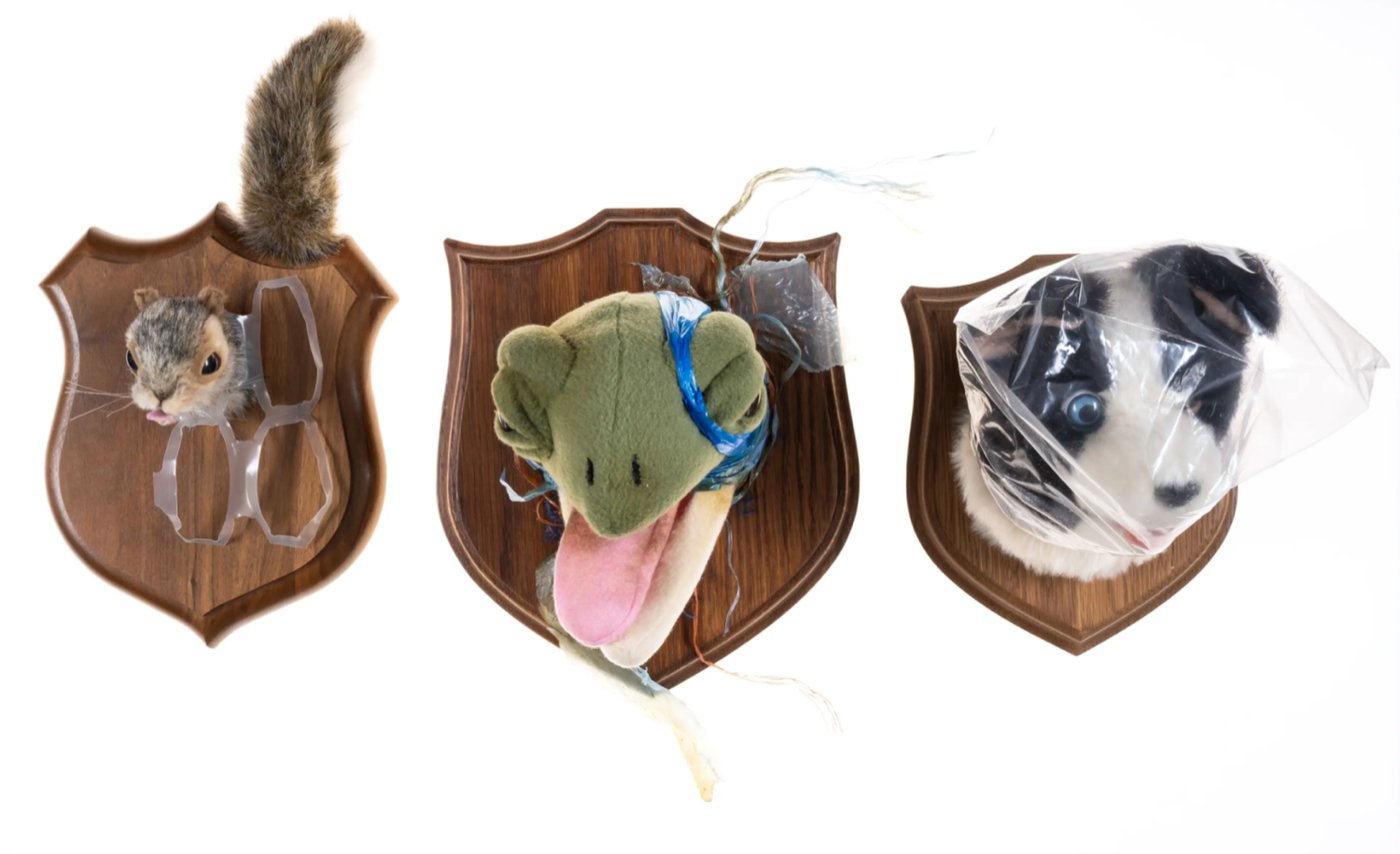
At first glance, the joke is unmistakable. The conventions of the grand hunting trophy, such as the wooden shield, the severed head, the proud display of conquest, have been recreated using cuddly toys. Yet Banksy immediately reverses their emotional register. These are not fearsome animals conquered by heroic hunters but pathetic, damaged remnants of childhood... A squirrel appears caught in plastic packaging, another creature is partially suffocated beneath a transparent bag, while others have been pierced, tangled or contaminated by the assorted detritus of contemporary life. The trophy has become an indictment of the person displaying it...
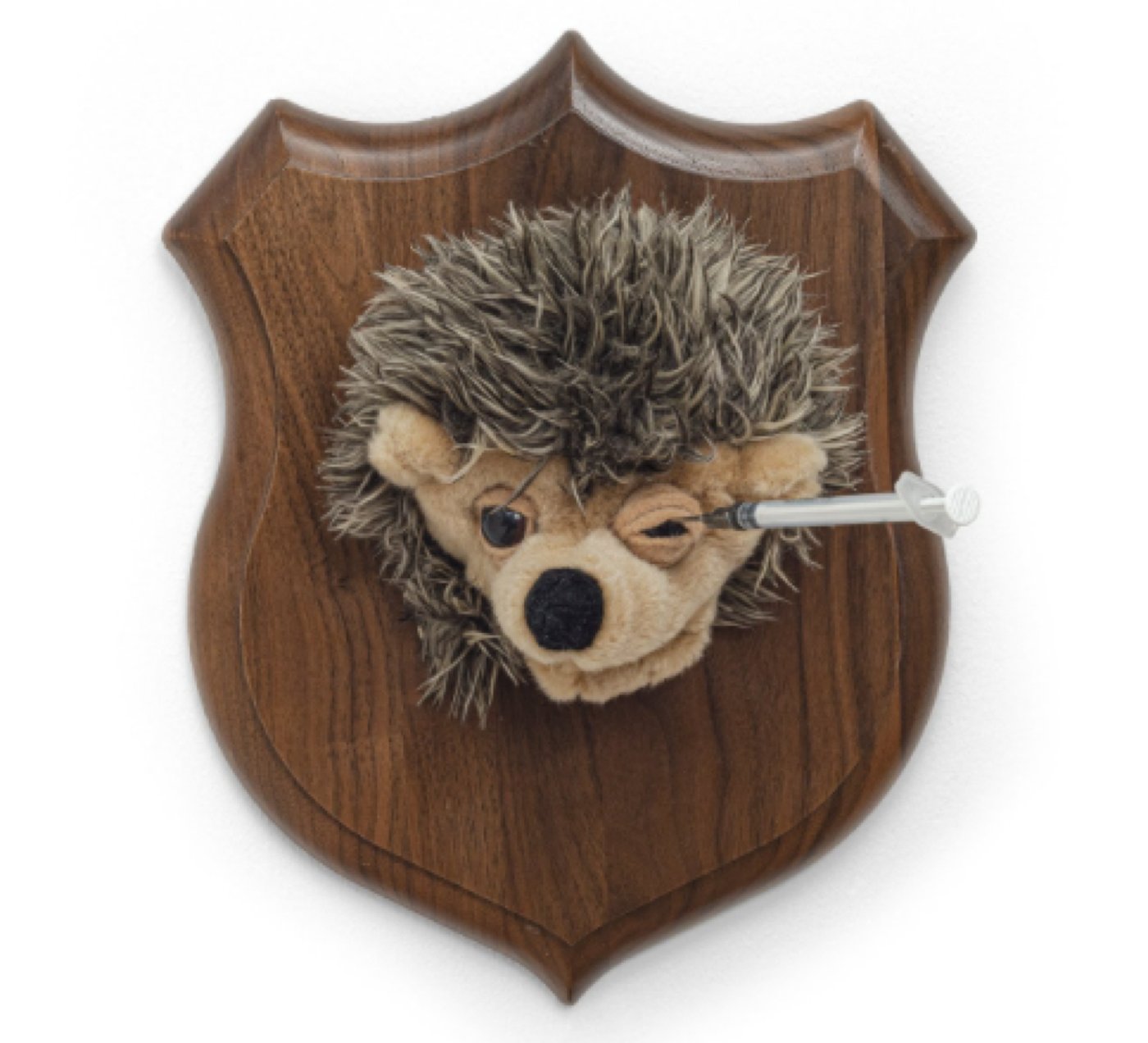
The materials are fundamental to the work. Banksy described the pieces as being made from "charity shop kids toys and genuine random beach detritus", adding the wonderfully alarming warning that they "may contain germs/infectious substances." It is classic GDP: part artwork, part product description, part ecological sermon and part joke at the purchaser's expense. Objects discarded by one consumer are recovered, combined with the physical consequences of mass consumption, transformed into art and then offered back to another consumer as a collectible luxury object. The circularity is almost perfect.

The imagery belongs to a much broader ecological and animal vocabulary running throughout Banksy's work. Animals frequently act as proxies for those without power: his rats occupy society's margins, his monkeys endure servitude before threatening to take control, while the leopard in Barcode escapes from a cage formed from the bars of a commercial barcode. In each case, humanity constructs the system from which the animal must either suffer or escape. Soft Toys offers no such escape. Here the damage has already been done.
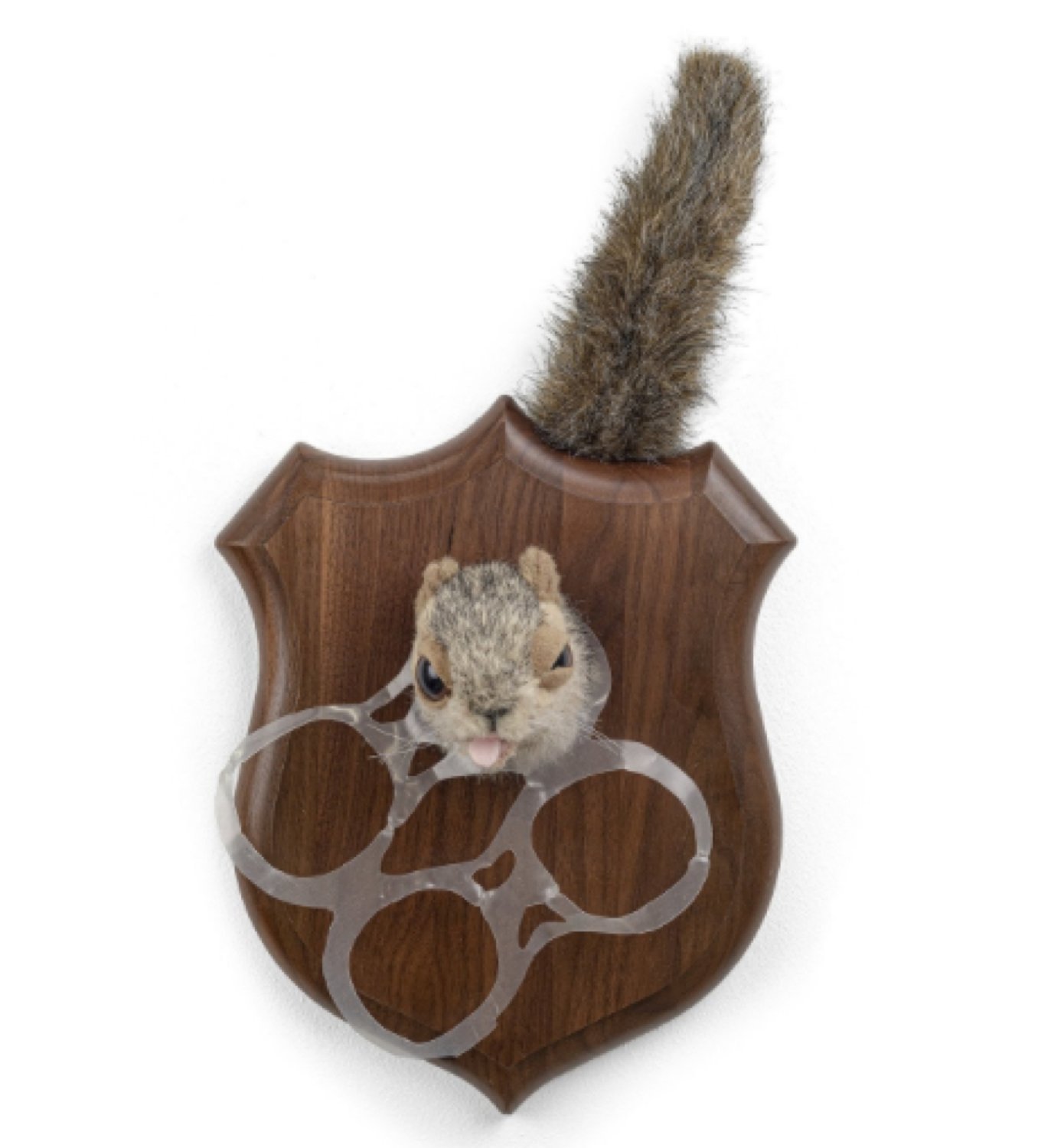
There is also a darker inversion at work. Traditional taxidermy preserves the body of an animal killed by a hunter and converts death into decoration. Banksy substitutes creatures that were manufactured specifically to provide children with affection and comfort, then subjects them to an imaginary second death. The result is deliberately ridiculous but unexpectedly disturbing. Childhood innocence has been hunted, mounted and contaminated by the waste of the adult world.
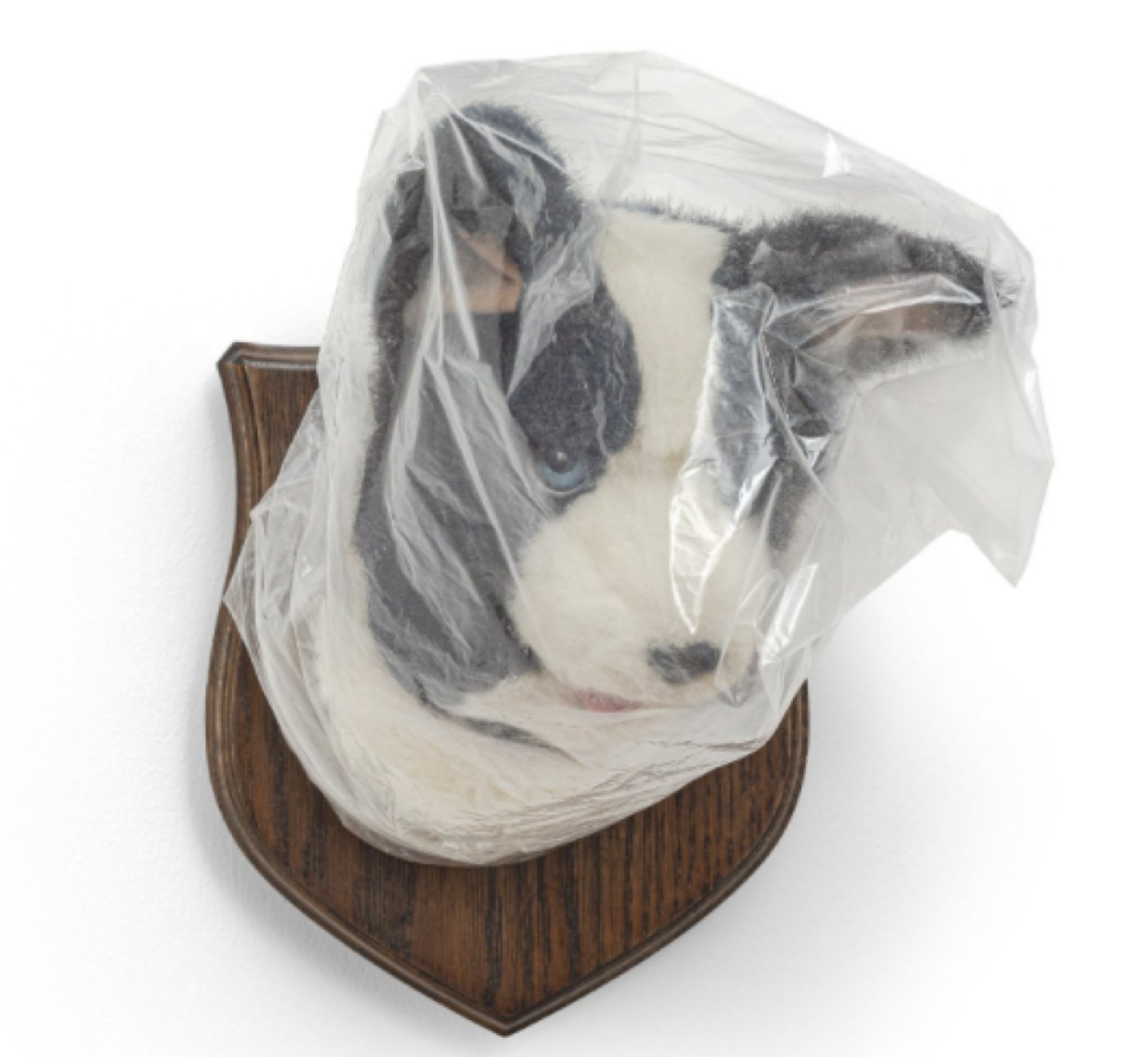
The work's environmental message becomes particularly sharp through the use of genuine beach debris. Plastic pollution is normally experienced abstractly: mostly through statistics, documentaries and distant photographs of oceans. Banksy makes it physical. A plastic bag wrapped around the head of a toy animal needs virtually no explanation: something designed to be used for minutes can remain in the environment for generations, where it becomes lethal to creatures that had nothing whatsoever to do with its production.
Yet Soft Toys is not merely an environmental morality tale. It is also very specifically a Gross Domestic Product object. Launched in Croydon in 2019, GDP presented Banksy's own peculiar answer to the commercialization of his name: a shop displaying objects that could initially only be viewed through its windows before being made available through an online sales system. The project deliberately blurred distinctions between artwork, merchandise, domestic furnishing and consumer product. A faux hunting trophy assembled from second-hand toys and rubbish was therefore perfectly at home among its deliberately dysfunctional "homewares."
Even the phrase Soft Toys operates on several levels. These creatures are literally stuffed toys, but "soft" also suggests vulnerability: harmless things inhabiting a decidedly un-soft world. They become trophies not because they have threatened us, but because we have threatened them.
That is perhaps the most uncomfortable joke contained within the work. The traditional hunter mounts an animal on the wall to commemorate his victory over nature. In Soft Toys, humanity can still claim the victory. The problem is that Banksy makes us wonder whether winning was such a good idea.
STAY INFORMED
Receive the latest news, exhibitions, artworks and market updates on Banksy.