BANKSY
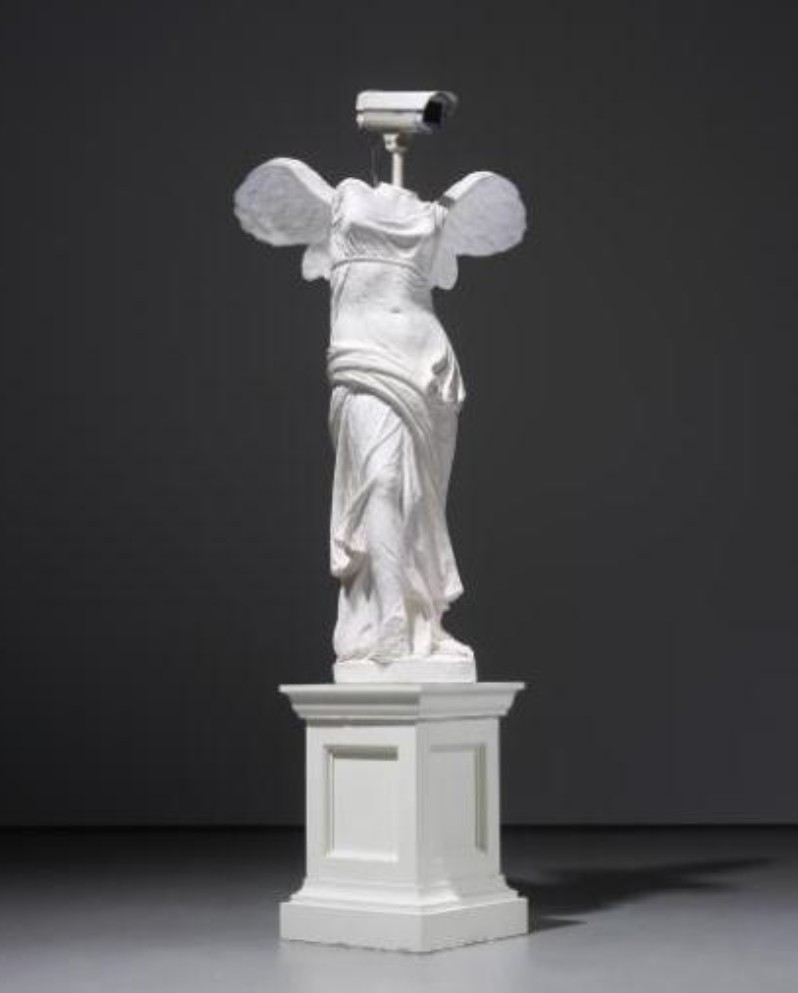
CCTV Angel, 2006
Cast jesmonite, household paint, concrete and surveillance camera
Sculpture: 236.4 x 91.4 x 77 cm (93 1/8 x 35 7/8 x 30 3/8 inches)
Figure: 167.4 x 91.4 x 77 cm (65 7/8 x 35 7/8 x 30 3/8 inches)
Plinth 69 x 48.6 x 48.6 cm (27 1/8 x 19 1/8 x 19 1/8 inches)
Exhibited
Barely Legal, Los Angeles, 2006
Catalogue Note
CCTV Angel stands among Banksy’s most intellectually ambitious sculptures, replacing the head of one of the Western world’s most celebrated classical statues—the Winged Victory of Samothrace—with an ordinary surveillance camera. The intervention is deceptively simple, yet profoundly unsettling. In a single gesture, Banksy collapses more than two thousand years of Western civilization, replacing divine transcendence with technological observation.
The original Winged Victory, created around 190 BC, celebrates military triumph while simultaneously embodying beauty, grace and spiritual elevation. Despite the loss of its head, the sculpture has become one of the defining masterpieces of Classical antiquity, admired for its extraordinary dynamism and sense of movement. Banksy preserves its majestic wings and flowing drapery but removes the final trace of humanity. Where viewers expect a face, they instead encounter the cold, mechanical eye of a surveillance camera.
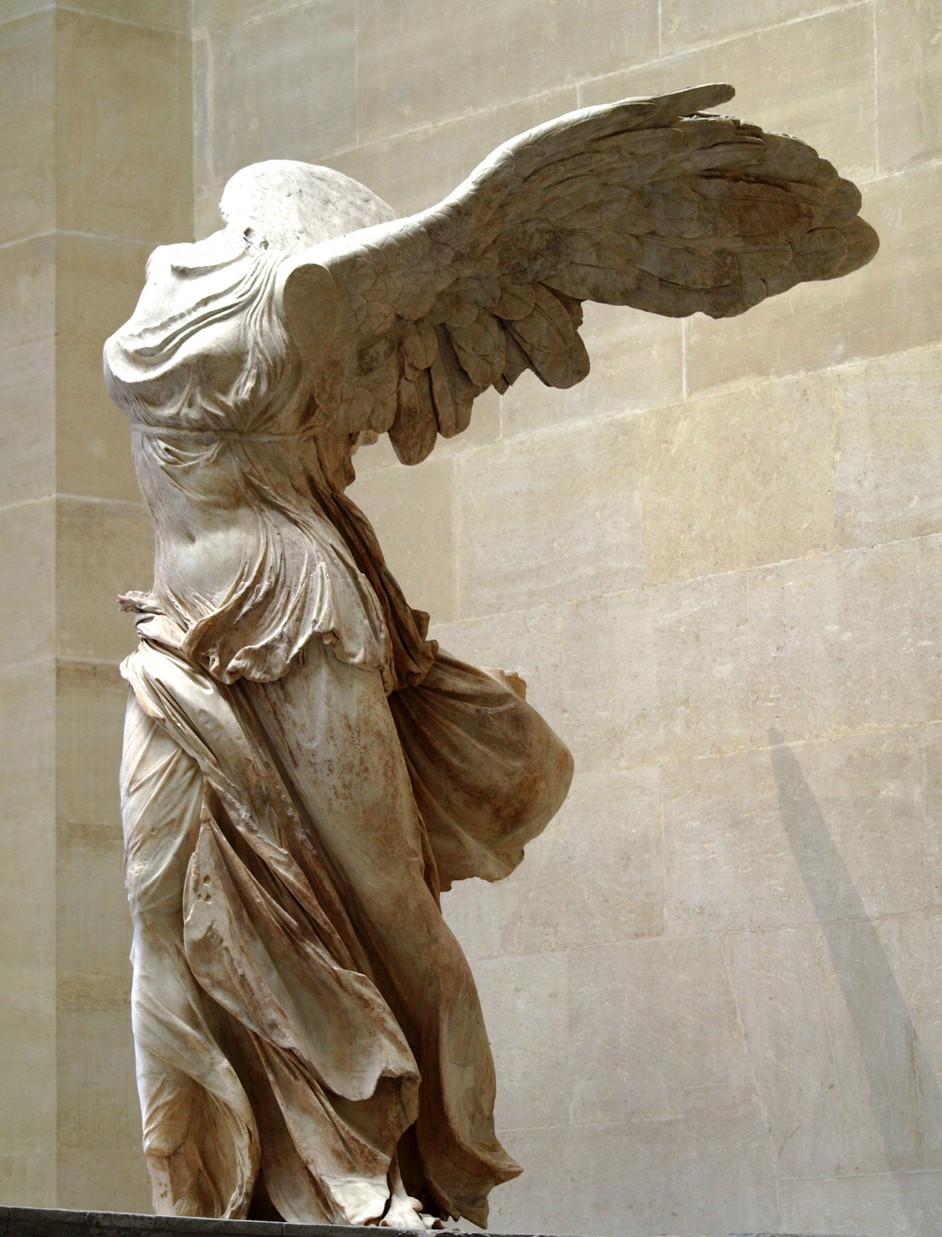
The substitution is both literal and symbolic. Throughout history, angels have served as divine messengers and celestial guardians, watching over humanity from above. Banksy quietly suggests that this ancient role has now been assumed by machines. The comforting gaze of the sacred has been replaced by the indifferent gaze of technology. Surveillance has become the new omniscience.
This idea runs throughout Banksy’s career. From the famous stencil What Are You Looking At?, to One Nation Under CCTV, Spy Booth, Modified Oil Painting #12 (CCTV Countryside), and numerous interventions questioning Britain’s expanding surveillance culture, Banksy repeatedly explored the uneasy relationship between security and freedom. CCTV Angel represents perhaps the most complete expression of that concern. Rather than merely depicting surveillance, Banksy elevates it to the status of a new religion.
The sculpture also demonstrates Banksy’s remarkable understanding of art history. Rather than vandalizing the classical masterpiece, he preserves almost every aspect of its original beauty. The elegant proportions, the graceful movement of the drapery and the majestic wings remain untouched. Only the head is altered. This extraordinary restraint allows the intervention to resonate all the more powerfully. The viewer’s eye instinctively searches for a human face before encountering the impersonal lens of the camera. The absence becomes the artwork.
Created for Barely Legal in 2006, the sculpture perfectly reflected the political climate of the period. In the years following the September 11 attacks, governments across Europe and the United States dramatically expanded public surveillance in the name of national security. Britain, in particular, rapidly became one of the most heavily monitored societies in the world. Banksy recognized that this transformation extended beyond politics. Surveillance was gradually becoming normalized, accepted as an invisible condition of modern life. CCTV Angel captures precisely that historical moment when observation ceased to be exceptional and became permanent.
The work also occupies an important place within Banksy’s evolving sculptural practice. Alongside Bullet Proof David and Bullet Hole Bust, it demonstrates his growing fascination with transforming universally recognized icons of Western art into contemporary political allegories. Rather than creating entirely new forms, Banksy rewrites familiar masterpieces, allowing centuries of cultural memory to amplify his interventions. The viewer simultaneously sees the ancient sculpture and its modern corruption.
There is also a subtle irony in Banksy’s choice of the Winged Victory. The original monument commemorated military conquest. By replacing its head with a surveillance camera, Banksy suggests that victory itself has changed. Modern power no longer depends solely upon armies or weapons. It increasingly rests upon information, monitoring and the continuous collection of data. Control has become invisible.
Viewed today, CCTV Angel appears remarkably prophetic. Since its creation, digital surveillance has expanded beyond public cameras to encompass smartphones, facial recognition, artificial intelligence and the vast collection of personal data through social media and online platforms. The sculpture anticipated a world in which observation no longer comes exclusively from governments, but from corporations, algorithms and the devices we willingly carry in our pockets.
Ultimately, CCTV Angel poses one of Banksy’s most profound philosophical questions. For centuries, humanity believed that an all-seeing eye belonged to God. Today, that omnipresent gaze belongs increasingly to technology. The sculpture leaves viewers to decide whether that represents progress—or simply a different kind of faith.