Chequebook Vandalism, 2003
Catalogue Note
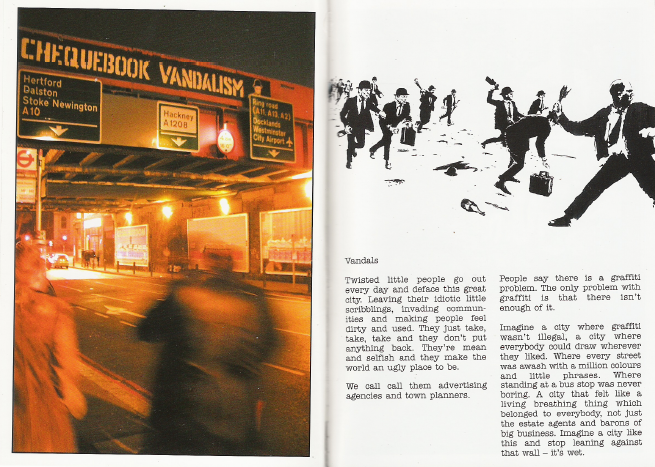
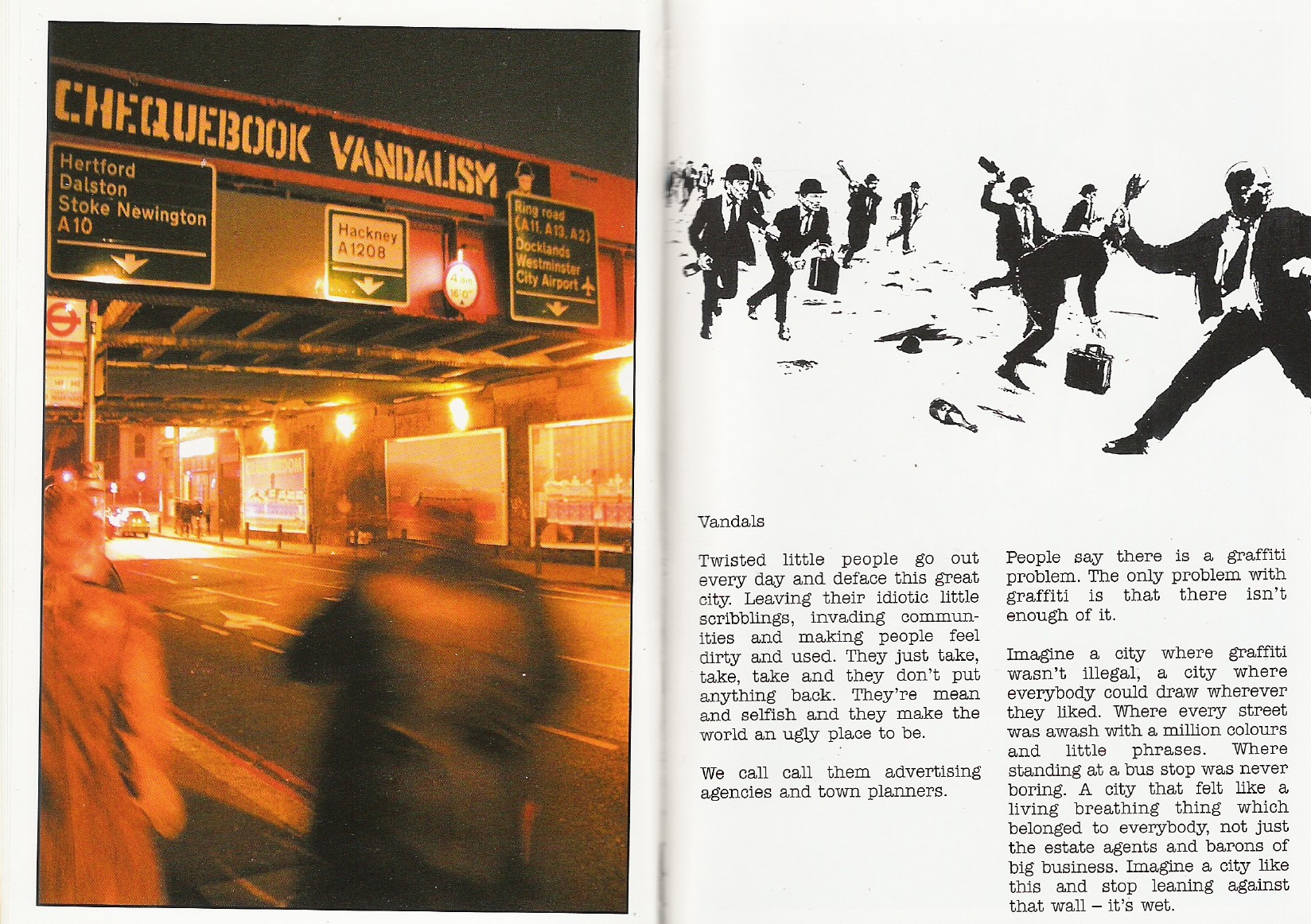
Executed in 2003, Chequebook Vandalism is one of Banksy’s earliest and most incisive critiques of modern capitalism, transforming the familiar image of the anonymous businessman into an absurd participant in a riot of his own making. Executed in stencil spray paint on card, the composition belongs to the formative period during which Banksy was refining the visual language that would later define many of his most celebrated works.
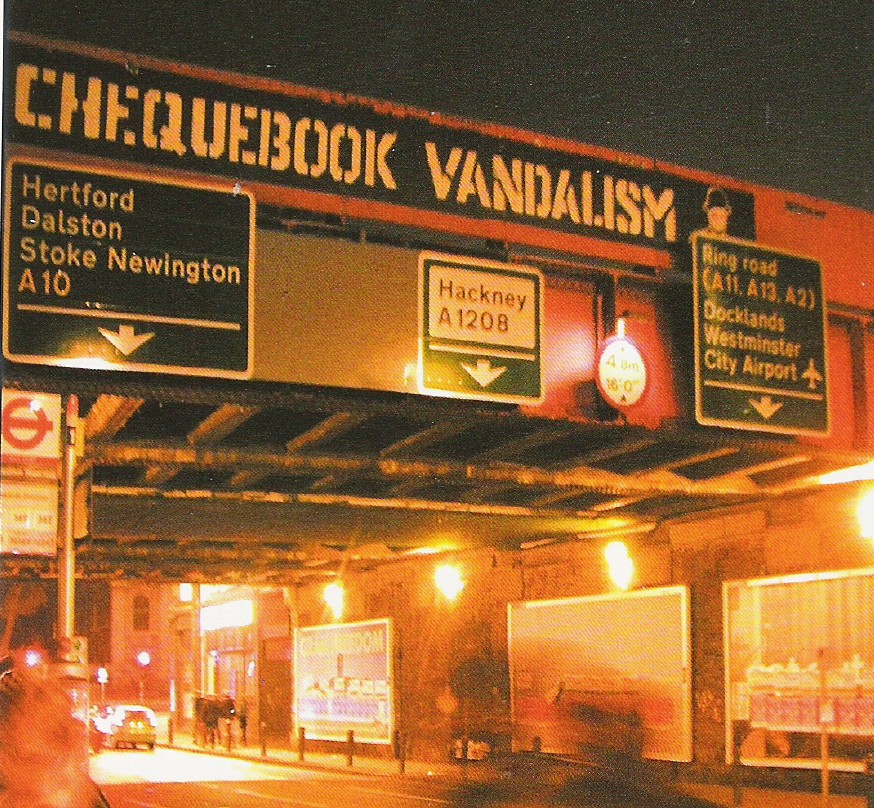
The scene depicts a crowd of identically dressed businessmen, clad in dark suits and bowler hats, engaged in what appears to be an outbreak of indiscriminate destruction. Armed not with ideological banners or political slogans but with umbrellas and briefcases, they vandalize the very environment through which they move. The title itself provides the key to the work’s interpretation. Rather than referring to conventional graffiti or civil unrest, Chequebook Vandalism suggests that the greatest acts of destruction are often committed not by society’s outsiders but by those operating comfortably within its economic and financial institutions.
Banksy brilliantly reverses conventional expectations. Throughout modern history, vandalism has generally been associated with social marginalization, political protest or youthful rebellion. Here, however, the perpetrators are respectable professionals—the very individuals traditionally associated with order, stability and economic success. Their immaculate appearance contrasts sharply with the senseless chaos unfolding around them, exposing the hypocrisy of a society that condemns visible acts of disorder while often ignoring the far greater damage inflicted through financial speculation, unchecked consumerism and corporate greed.
Banksy, Existencilism, May 2002
Visually, the work already demonstrates the remarkable economy that characterizes Banksy’s mature style. The businessmen are deliberately rendered as near-identical figures, stripped of individual identity until they become interchangeable symbols of institutional power. Their repeated silhouettes create an almost choreographed rhythm across the composition, reinforcing the notion that conformity itself has become a mechanism of destruction. There are no dramatic backgrounds or elaborate details to distract the viewer. Instead, Banksy relies upon repetition, gesture and movement to communicate his message with extraordinary clarity.
The choice of card as a support further reinforces the work’s conceptual framework. Humble, inexpensive and inherently fragile, the material stands in deliberate contrast to the financial world being satirized. Like much of Banksy’s early work on cardboard, plywood and found materials, the support preserves the raw immediacy of street art while subtly questioning conventional ideas of artistic value and permanence.