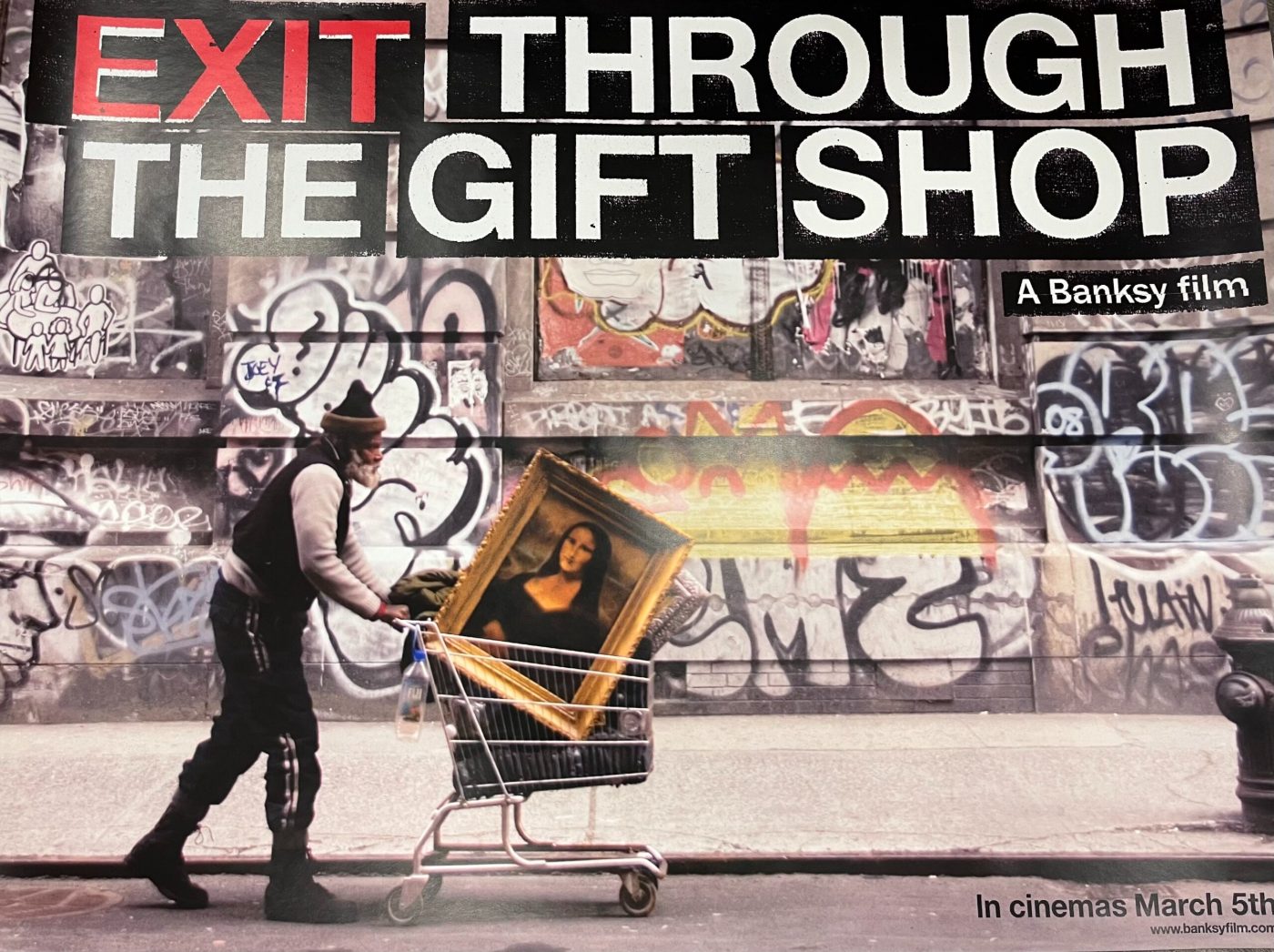
EXIT THROUGH THE GIFT SHOP, 2010
WHEN BANKSY TURNED THE CAMERA AROUND
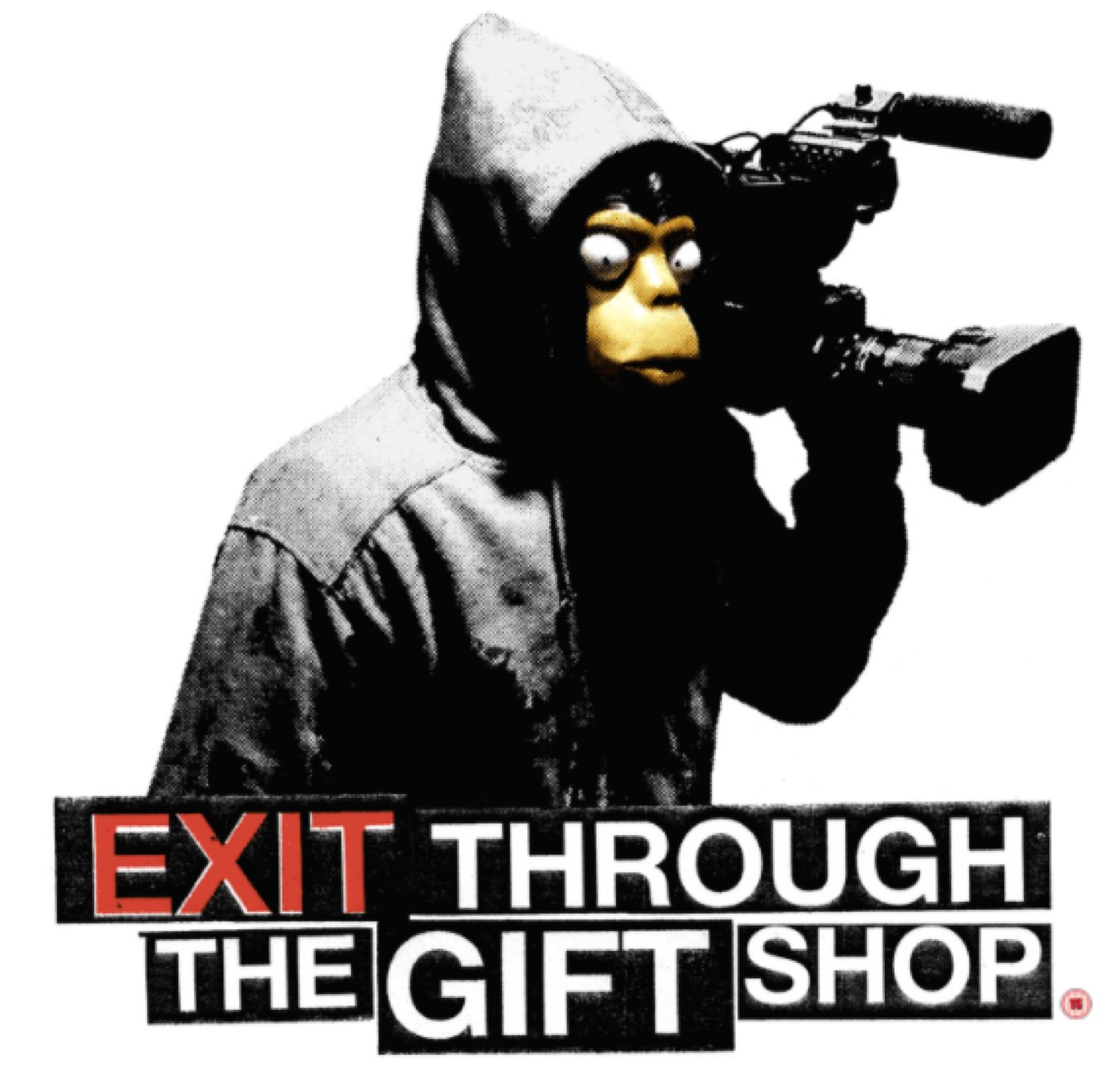
In January 2010, Banksy made an unexpected move from the street to the cinema with Exit Through the Gift Shop, his first feature film. Ostensibly a documentary about the rise of street art, the film gradually becomes something considerably stranger: a story about the transformation of an obsessive amateur filmmaker into a commercially successful artist, and an examination of how reputation, publicity and belief can manufacture artistic value.
The film premiered as a surprise selection at the Sundance Film Festival on 24 January 2010. Sundance described it as the story of an eccentric French shopkeeper and amateur filmmaker who attempts to find and befriend Banksy, only for Banksy eventually to turn the camera back upon him. The festival's director John Cooper called it a hybrid of reality and self-induced fiction, capturing the ambiguity that would surround the film from the moment it appeared.
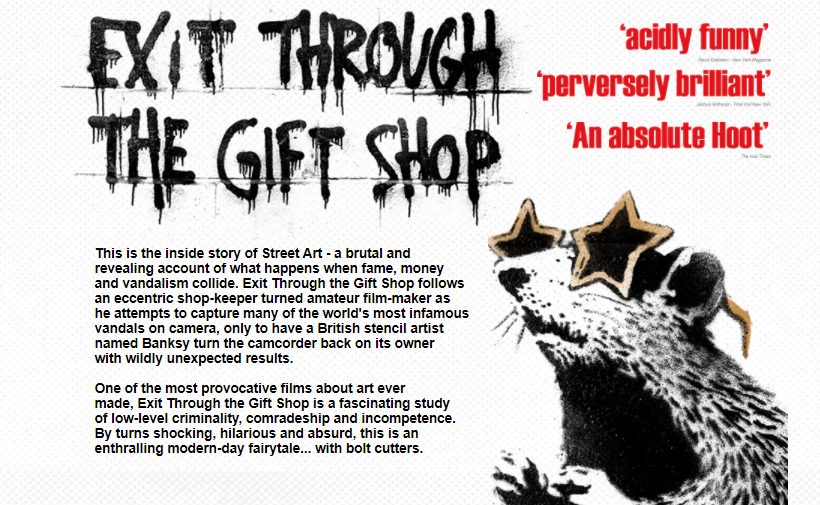
Narrated by Rhys Ifans, Exit Through the Gift Shop is nevertheless much more than a film about Banksy. Through extraordinary footage accumulated over several years, it records a period when street art was moving from an illegal and largely ephemeral subculture toward international recognition, galleries, auctions and an increasingly sophisticated commercial market. Invader, Shepard Fairey and other artists appear at work, while Banksy himself remains concealed, filmed principally from behind or in shadow with his voice altered.
THIERRY GUETTA AND THE CAMERA
At the center of the story is Thierry Guetta, a French-born vintage-clothing retailer living in Los Angeles who compulsively records his life with a video camera. During a visit to France, Guetta discovers that his cousin is the street artist Invader and begins accompanying him on nocturnal installations. Through Invader he enters the emerging international street-art community, eventually meeting Shepard Fairey and numerous other artists.
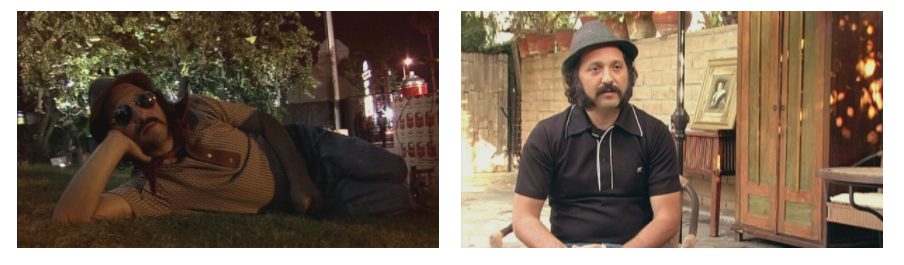
Guetta films obsessively but, according to the narrative presented in the film, has little idea what he intends to do with the thousands of hours of footage he accumulates. His ambition increasingly becomes to meet the one artist who appears inaccessible: Banksy. When Banksy travels to Los Angeles and needs someone familiar with the city, the two are eventually introduced. Guetta consequently gains an extraordinary degree of access to an artist whose anonymity has otherwise made sustained documentary footage exceptionally rare.
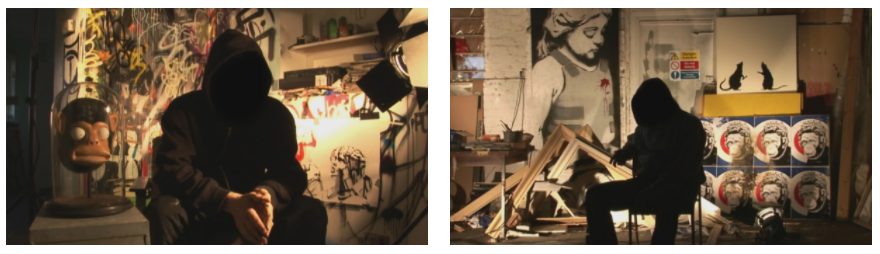
The resulting material gives Exit Through the Gift Shop considerable historical importance independent of its larger narrative. Banksy is shown preparing and installing works, operating with assistants and executing interventions that ordinarily existed only through photographs taken after their completion. The camera records not simply finished Banksy images but something much rarer: the practical, clandestine process through which some of them came into existence.
DISNEYLAND
Among the most remarkable sequences concerns Banksy's intervention at Disneyland in September 2006. Banksy entered the park carrying an inflatable figure dressed as a Guantánamo Bay detainee, complete with orange jumpsuit, hood and restraints. The figure was installed beside the Big Thunder Mountain Railroad attraction, introducing an image associated with detention and the War on Terror into the carefully controlled environment of the self-proclaimed happiest place on Earth.
Guetta accompanied Banksy and filmed the operation. After Disney security discovered the installation, Guetta was detained and questioned while Banksy escaped. The episode provides one of the film's clearest demonstrations of the importance of context within Banksy's practice: the intervention derives much of its power not simply from the object itself, but from its unauthorized insertion into a place constructed around entertainment, childhood fantasy and corporate control.
The juxtaposition also belongs to a broader strand in Banksy's work in which familiar symbols of American popular culture are confronted with images of political violence. His 2004 work Napalm, for example, places the terrified child from Nick Ut's famous Vietnam War photograph between Mickey Mouse and Ronald McDonald. Disneyland transforms a related collision between spectacle and political reality into a physical intervention.
THE FILM THAT WASN'T
Eventually Banksy asks Guetta to assemble his enormous archive into a documentary. The resulting film, entitled Life Remote Control, is presented in Exit Through the Gift Shop as an almost unwatchable torrent of images. Banksy nevertheless recognizes the exceptional value of the underlying footage and proposes an inversion of roles: Guetta should temporarily leave filmmaking behind and try making some art, while Banksy takes possession of the footage and becomes the filmmaker.
That reversal provides the structural key to Exit Through the Gift Shop. The man who began by trying to make a film about Banksy becomes the subject of Banksy's film. The observer becomes the observed, while the artist who has spent much of his career resisting conventional forms of visibility assumes control of the camera and the narrative.
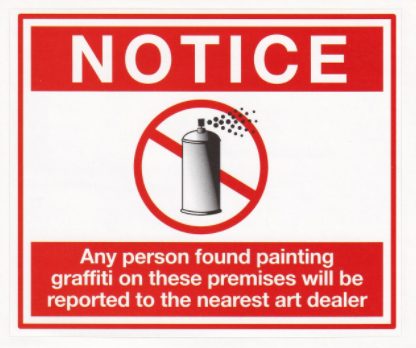
Guetta adopts the name Mr. Brainwash and begins producing work heavily indebted to the visual language of the artists he has spent years documenting. Banksy's stencils, Warhol's repetitions, pop imagery and the graphic strategies of contemporary street art are absorbed and recombined at extraordinary speed. What initially appears to be a secondary story gradually becomes the principal subject of the film.
LIFE IS BEAUTIFUL
Guetta's transformation culminates in the enormous Life Is Beautiful exhibition in Los Angeles in 2008. Rather than developing slowly through the conventional evolution of an artistic practice, Mr. Brainwash attempts to manufacture an artistic career almost instantaneously. A large production apparatus creates works and installations while Guetta concentrates heavily on publicity and the scale of the event.
The exhibition nevertheless becomes a sensation. Crowds arrive, the media responds and the work sells. The apparent absurdity of the outcome is central to the film because Exit Through the Gift Shop refuses to provide the viewer with a simple explanation for what has happened. If enough people believe someone is an important artist, if the press reports that importance and collectors begin paying substantial sums for the work, at what point does the distinction between manufactured reputation and genuine artistic success cease to matter?
Banksy is particularly well positioned to ask the question. By 2010, an artist who had developed his reputation through unauthorized interventions on walls was himself an established presence within museums, auction houses and the international art market. The story of Mr. Brainwash therefore operates partly as a distorted reflection of the mechanisms through which Banksy's own street practice had been transformed into a valuable cultural commodity.
DOCUMENTARY OR PRANK?
Almost immediately after its release, viewers began questioning whether Exit Through the Gift Shop was really a documentary. Could Thierry Guetta and his extraordinary transformation into Mr. Brainwash be part of an elaborate Banksy construction? Was the film documenting an improbable sequence of events, manipulating those events for cinematic effect, or deliberately testing how readily an audience will accept a convincing narrative?
Banksy has never provided the definitive answer that would resolve the debate, and the film is stronger for it. Contemporary critics compared its unstable relationship with truth to Orson Welles's F for Fake, another film concerned with authenticity, forgery and the authority through which something becomes accepted as genuine. The ambiguity is not incidental to Exit Through the Gift Shop; it reproduces in cinematic form many of the questions Banksy's art had already been asking about authorship, authenticity and institutional authority.
There are nevertheless good reasons not to reduce the entire film to a hoax. Guetta is a real figure who has continued to operate internationally as Mr. Brainwash, and subsequent legal proceedings involving his work provided further evidence that the artist and commercial practice depicted in the film were not simply fictional inventions. What remains uncertain is less whether the people and events existed than how Banksy selected, edited and framed them to construct his story.
LAMBETH PALACE
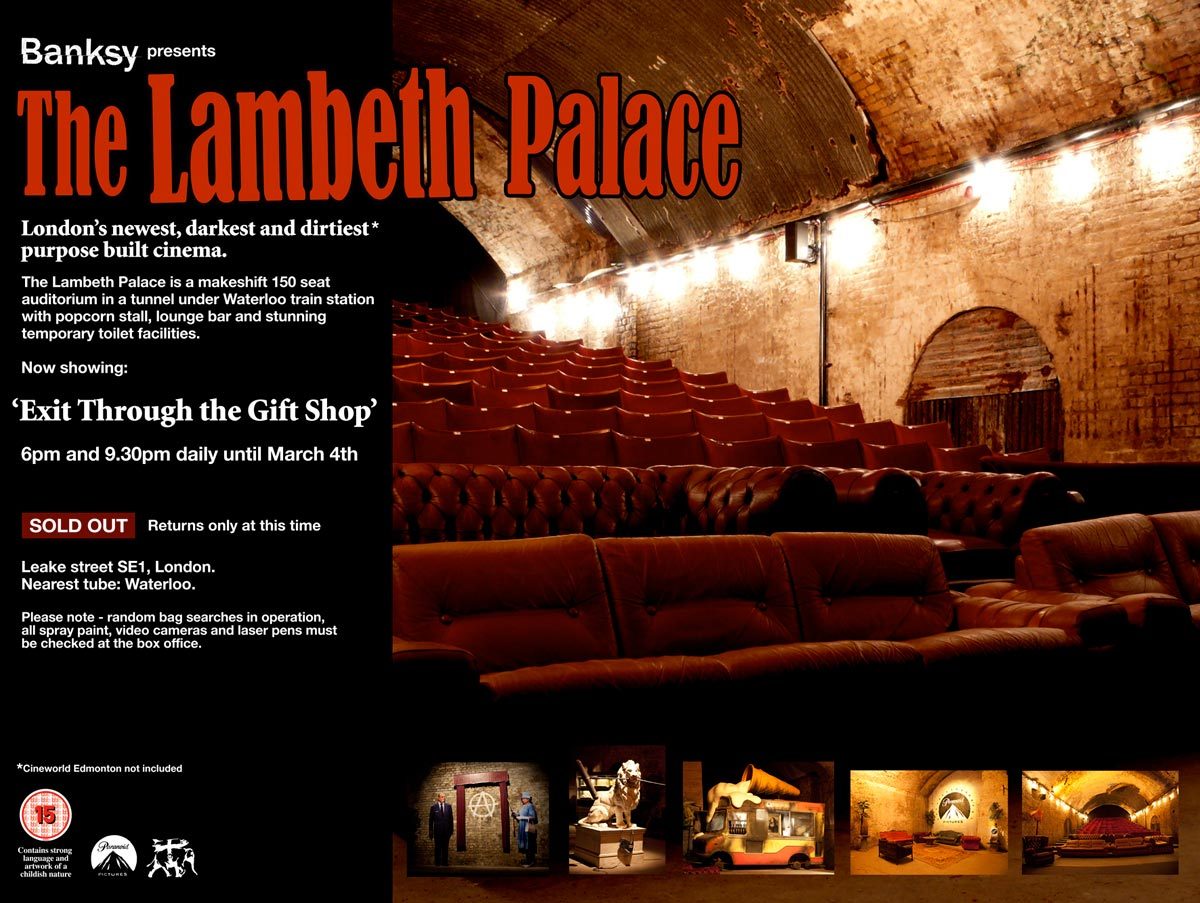
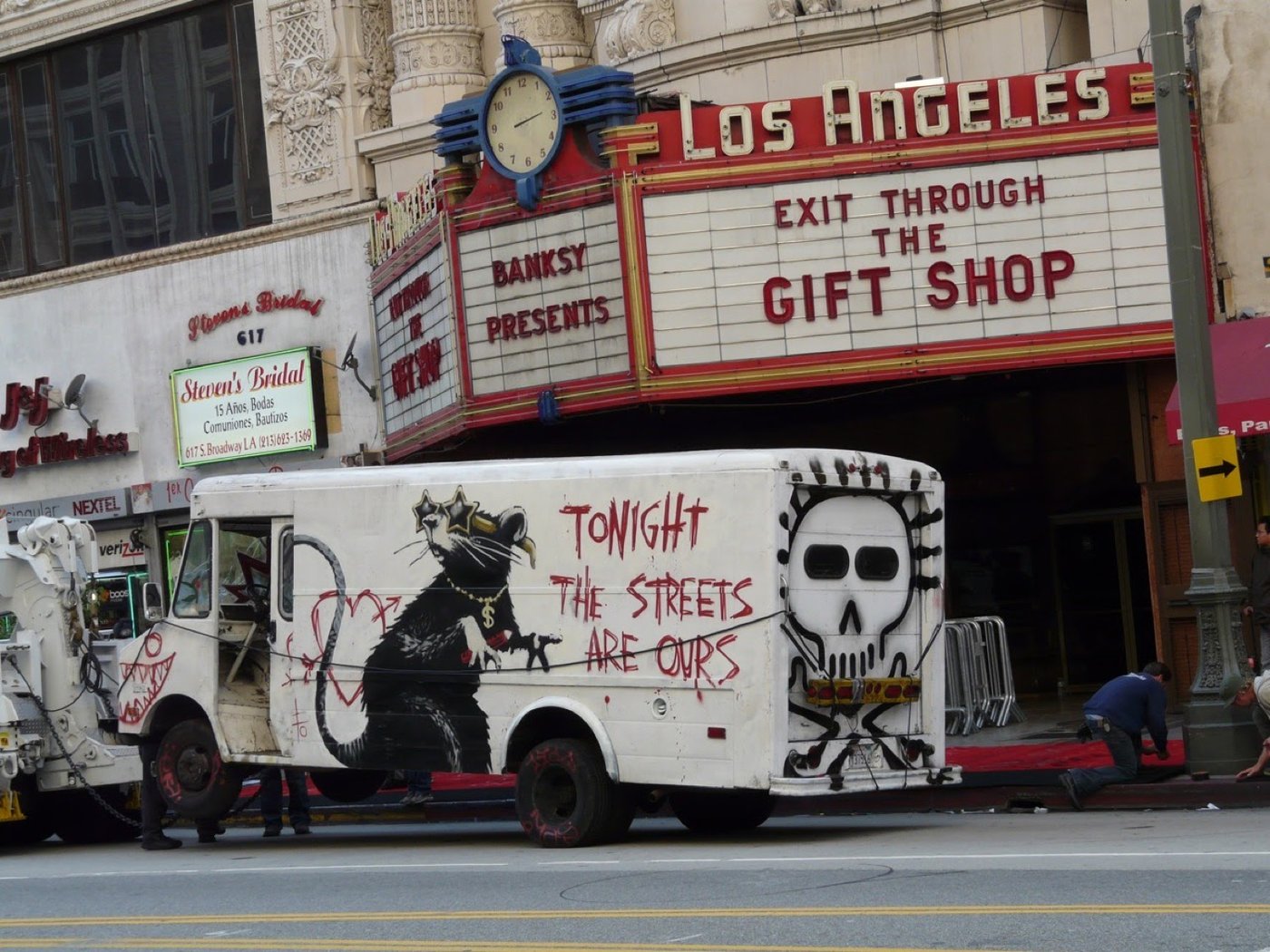
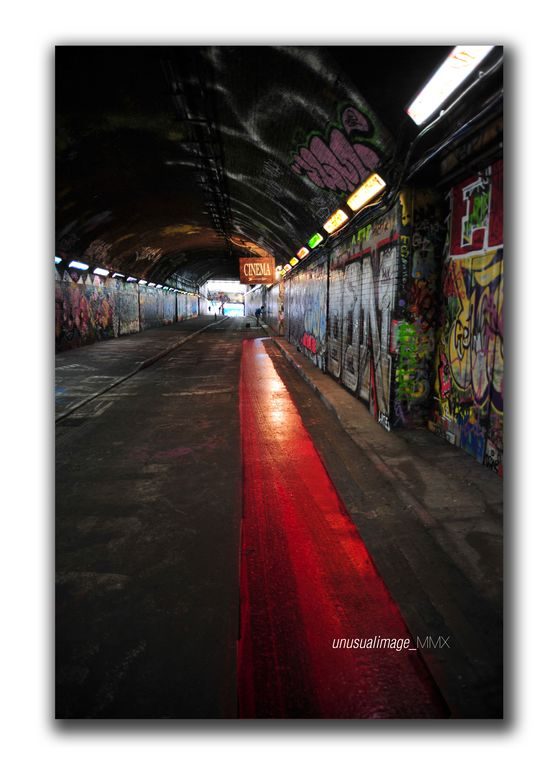
Banksy extended the film beyond the screen when it arrived in Britain. Following screenings at Sundance and Berlin, Exit Through the Gift Shop was presented in an improvised cinema beneath Waterloo Station in London, humorously named Lambeth Palace. The location was itself significant: the tunnels around Leake Street were closely associated with Banksy's Cans Festival, staged there in 2008.
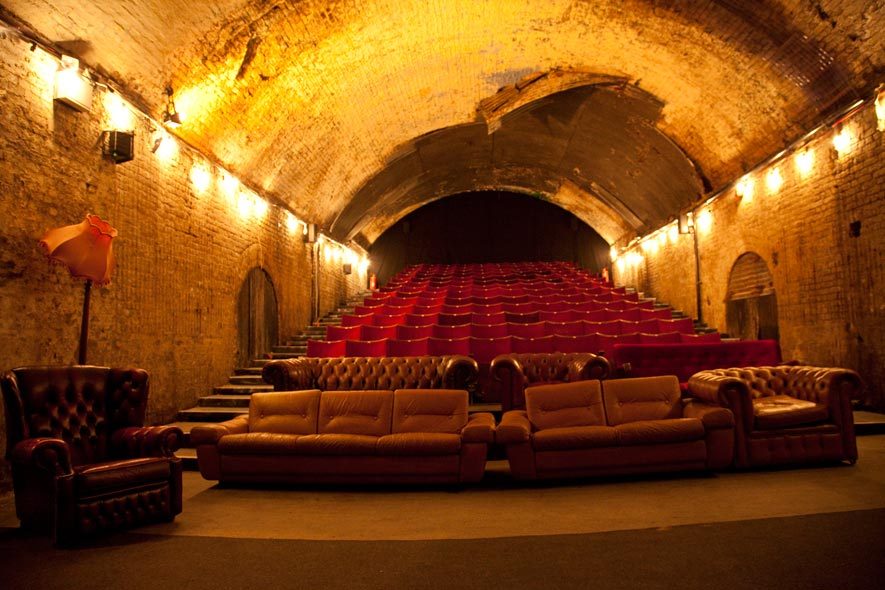
The temporary cinema transformed the screening into another Banksy environment. Visitors encountered a red carpet painted directly onto the ground, the fictitious Paranoid Pictures branding and installations incorporating elements familiar from previous Banksy projects, including material related to The Village Pet Store and Charcoal Grill and Banksy versus Bristol Museum. Rather than simply releasing a film through conventional cinemas, Banksy constructed an exhibition-like setting in which the architecture, installations and act of watching became part of the event. Contemporary reviews recorded the unusual Waterloo presentation as the film began its British release.
FROM THE STREET TO THE OSCARS

What began as an unlikely film by an anonymous graffiti artist ultimately reached one of cinema's most conventional institutions. Exit Through the Gift Shop was nominated for Best Documentary Feature at the 83rd Academy Awards in 2011, with Banksy and producer Jaimie D'Cruz named as nominees. It did not win—the award went to Inside Job—but the nomination represented an extraordinary transition for an artist whose career had been built substantially through unauthorized activity in public space.
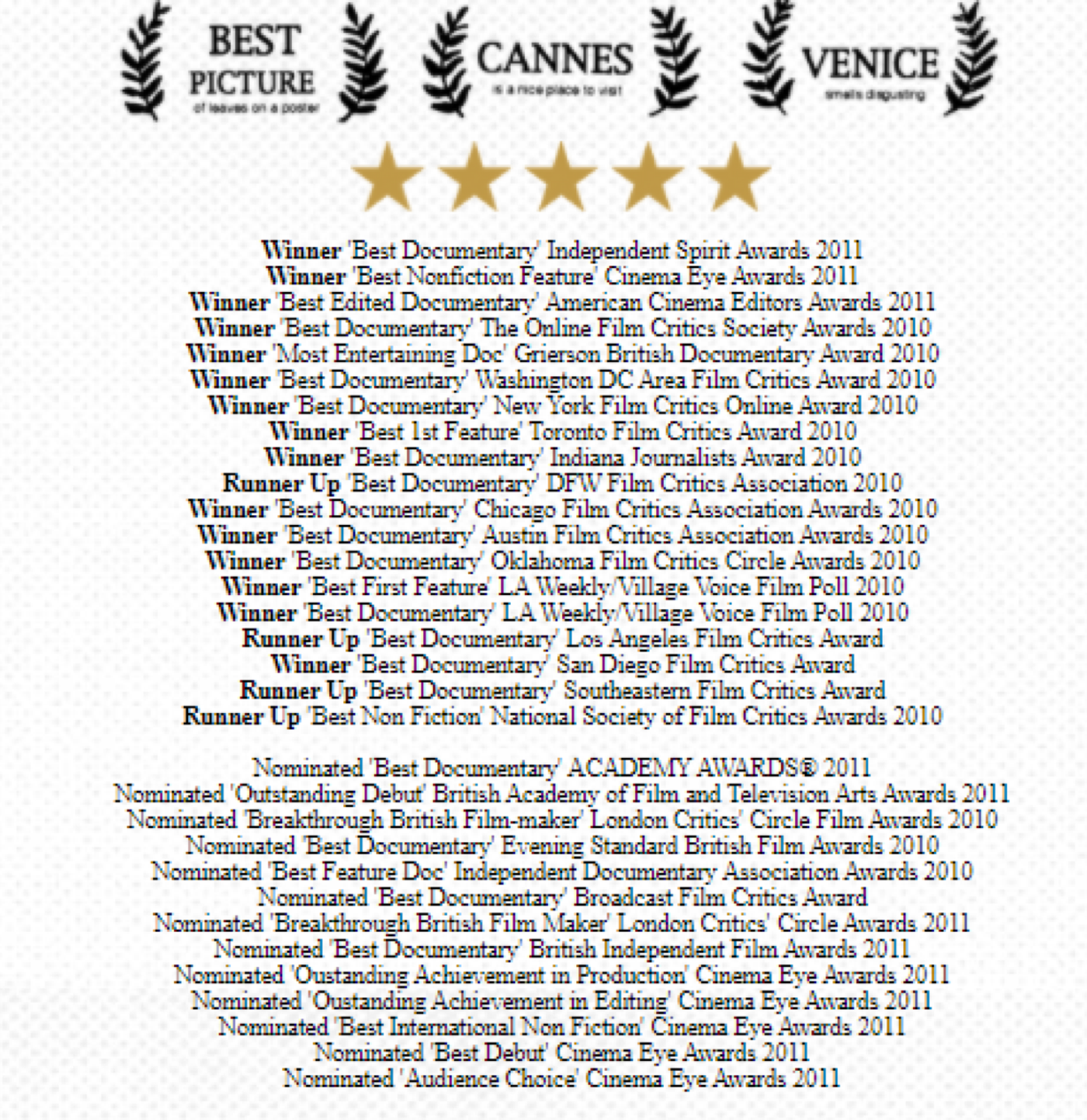
The irony was entirely appropriate. A film that questioned how cultural institutions determine legitimacy had itself been legitimized by the Academy. Yet Banksy's anonymity also complicated the conventional rituals surrounding an Oscar nomination: the artist who had directed one of the year's most acclaimed documentaries could not simply appear publicly and participate in celebrity culture without undermining one of the fundamental conditions of his practice.
BANKSY'S FILM ABOUT ART
Exit Through the Gift Shop occupies a distinctive place within Banksy's work because cinema allows him to explore ideas that a single stencil or installation could only suggest. The film concerns street art, but its deeper subjects are authorship, authenticity, celebrity, commodification and the construction of artistic value. Guetta's transformation from spectator to filmmaker, from filmmaker to artist and from artist to market phenomenon allows Banksy to examine an art world in which images, publicity and reputation increasingly circulate together.
It is also an invaluable historical document. Behind the ambiguity surrounding Mr. Brainwash lies extensive footage of a generation of street artists working before the movement became fully institutionalized. Walls are painted at night, works disappear, artists operate anonymously and images circulate through photographs and word of mouth. The film records the very culture whose transformation into a global market becomes its eventual subject.

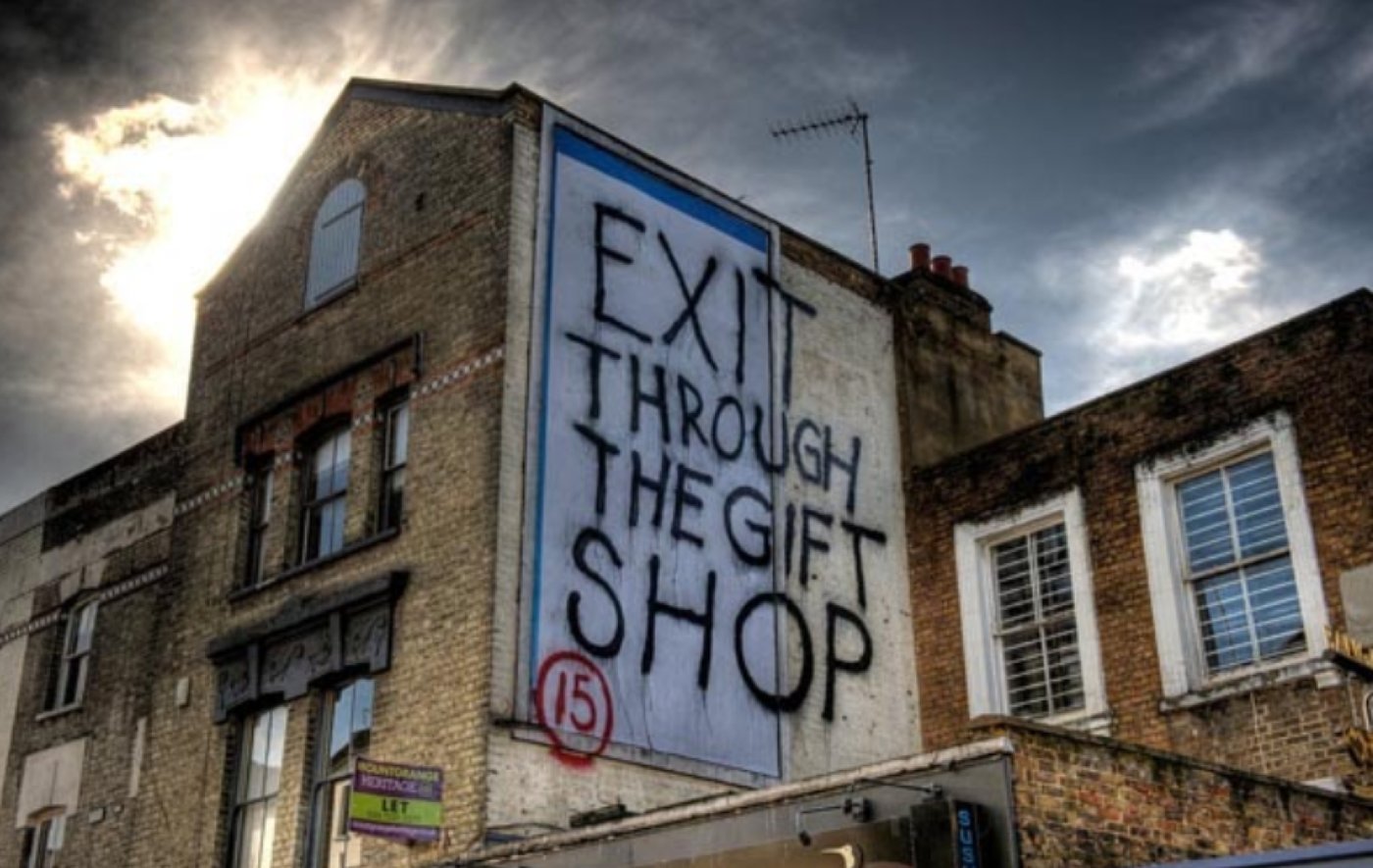
The title captures that contradiction particularly well. “Exit Through the Gift Shop” evokes the familiar route through which museums convert cultural experience into consumption: after encountering the artwork, the visitor leaves through a space where that experience can be purchased as merchandise. Banksy's film follows street art through a comparable journey—from unauthorized image to cultural phenomenon, from ephemeral wall to collectible commodity—without ever resolving whether that transformation represents recognition, corruption, or simply the inevitable consequence of success.

That ambiguity is precisely why the film remains one of Banksy's most important works. Exit Through the Gift Shop does not merely document the story of street art entering the mainstream; through its uncertain mixture of documentary, satire and manipulation, the film itself becomes part of that story.

This version also gives us a much stronger foundation for the individual 2010 San Francisco murals, because we can now link those entries back to the film and its American release rather than repeating the Exit Through the Gift Shop story in each mural entry.
STAY INFORMED
Receive the latest news, exhibitions, artworks and market updates on Banksy.