BANKSY(British, 1974)
Gangsta Rat – Live, circa 2004
Aerosol on metal door mounted in an acrylic shadowbox frame
Dimensions: 87×66 cm (34×26 inches)
Auction History
| Julien’s Auctions February 2026 Est.: USD 100,000 – 150,000 | Price Realized USD 160,000 (Hammer) USD 204,800 Banksy | “Gangsta Rat – Live” |
Catalogue Note
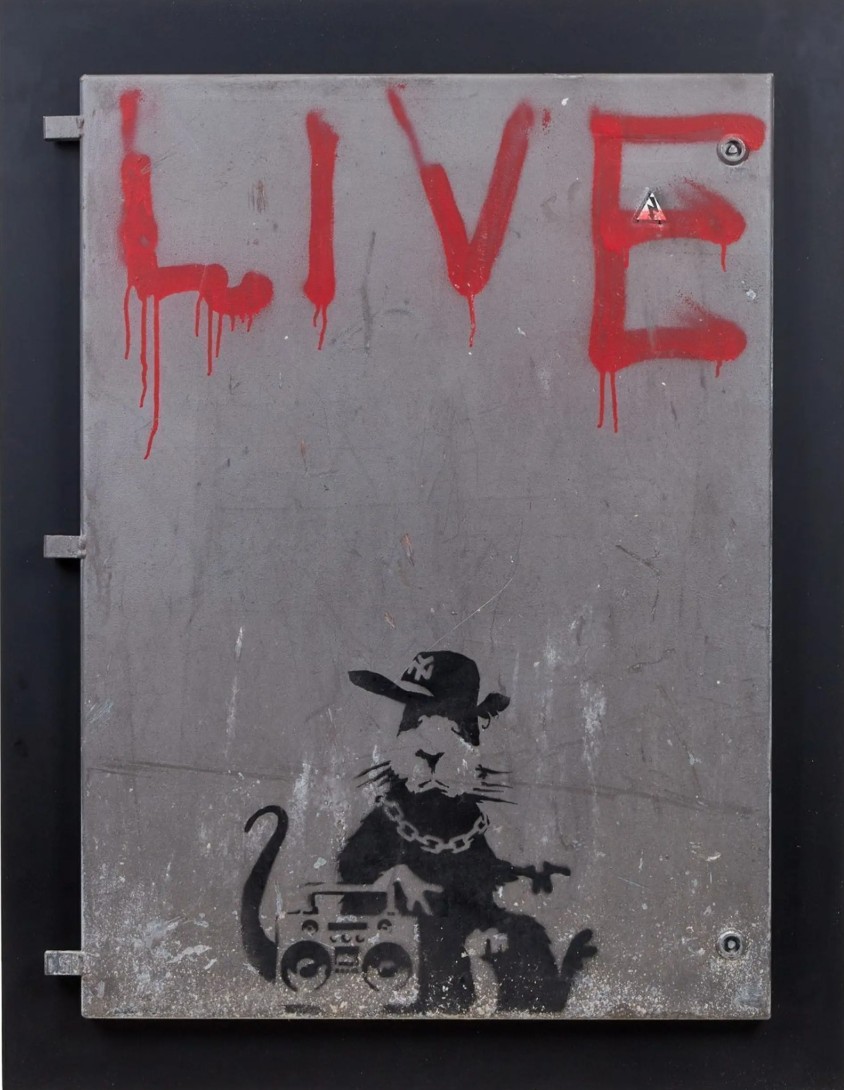
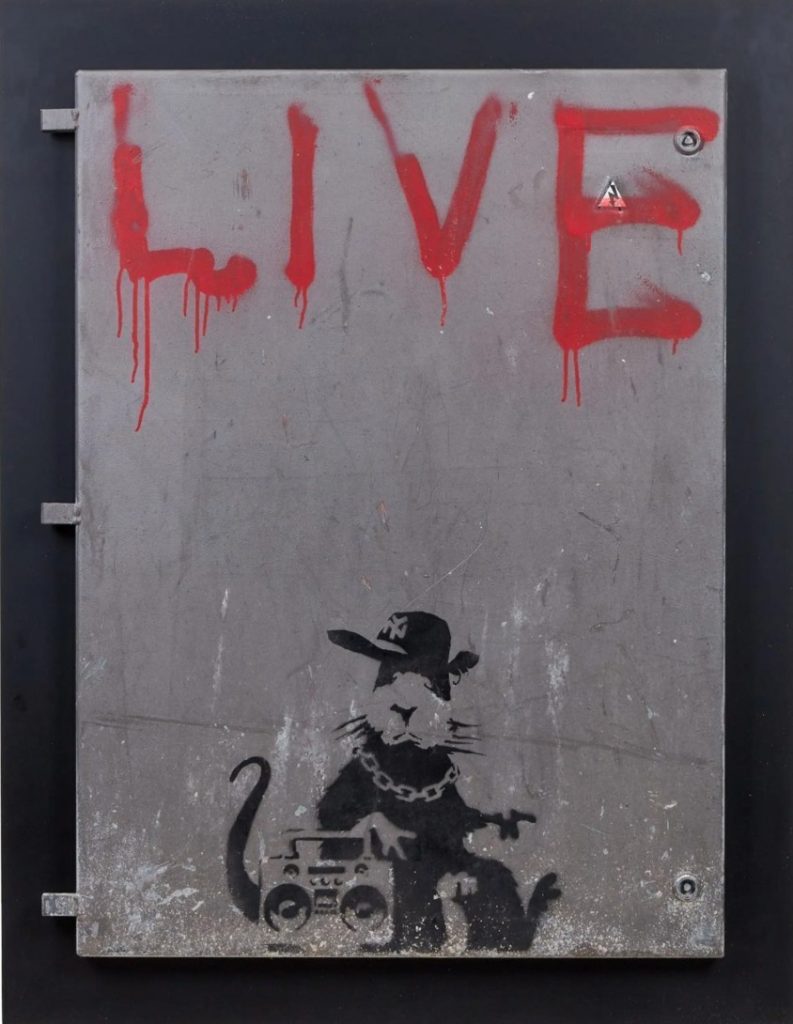
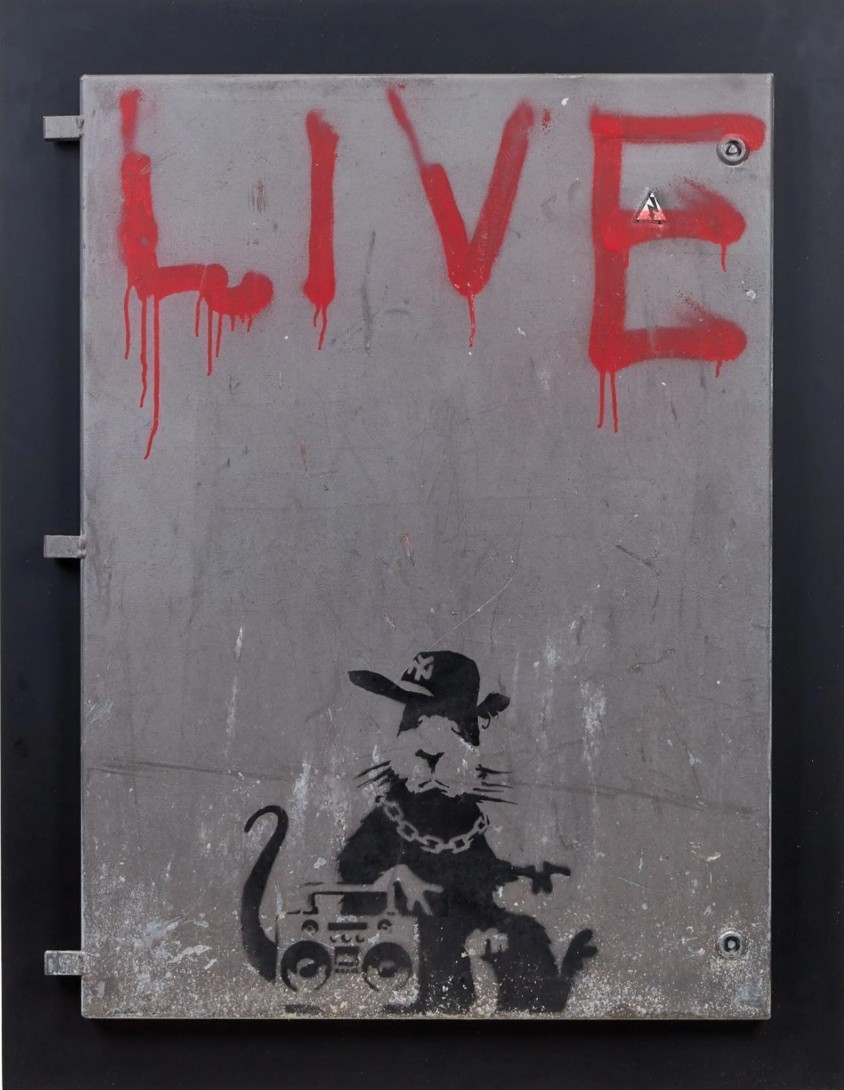
Executed during the 2004 Liverpool Biennial, Gangsta Rat – Live captures one of Banksy’s most enduring protagonists at the height of his creative maturity. Sprayed onto a British Telecom utility cabinet, the work depicts a swaggering rat wearing a sideways baseball cap and oversized chain while standing beside a boombox beneath the dripping red word “LIVE.” The mural was later removed and preserved, offering a rare opportunity to own an authentic fragment of Banksy’s urban practice rather than a studio recreation.

The rat occupies a central place within Banksy’s visual vocabulary. Borrowing inspiration from the French street artist Blek le Rat, Banksy transformed the humble rodent into an emblem of the outsider: resilient, adaptable and impossible to eradicate. Here, the character adopts the visual language of hip-hop culture, embodying confidence and defiance while reclaiming public space through music, graffiti and self-expression. The bold red inscription “LIVE” functions on several levels, affirming both the vitality of street art and its existence beyond the confines of galleries and museums.
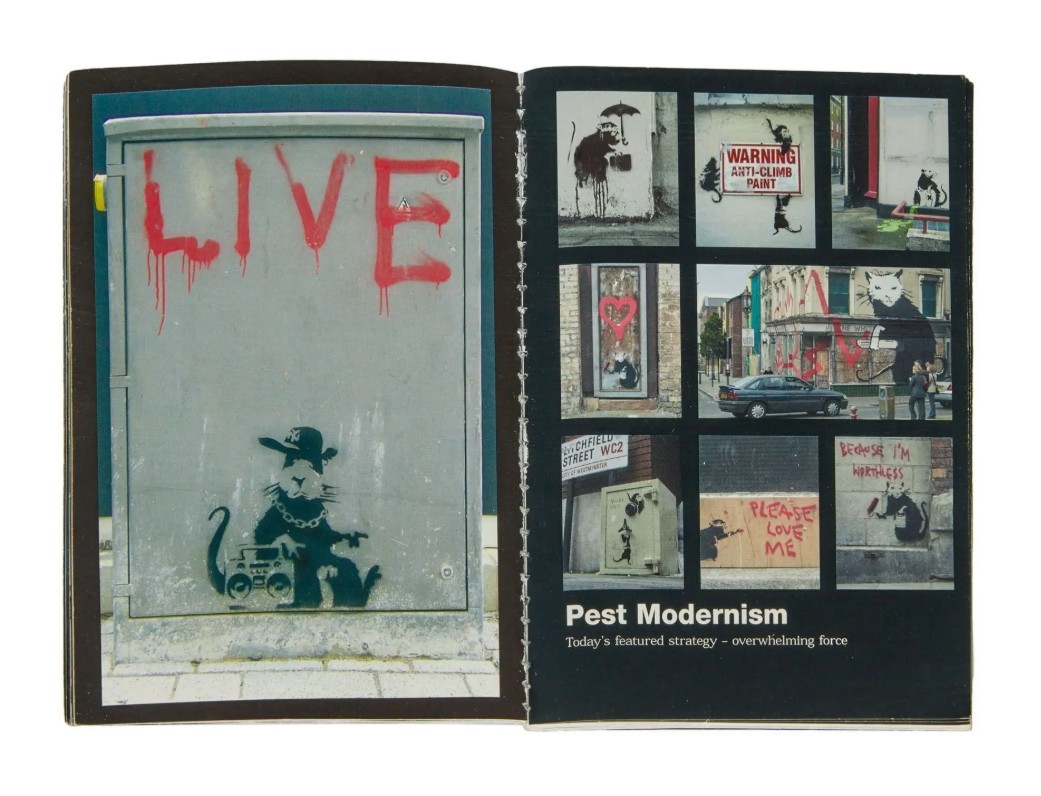
The mural was published by Banksy himself in Cut It Out (2004), where it appears in the chapter entitled “Pest Modernism.” The title perfectly encapsulates the artist’s philosophy: like pests, street artists infiltrate the urban landscape, challenging established hierarchies and quietly disrupting the visual order imposed by authority. The inclusion of Gangsta Rat – Live in Banksy’s own publication firmly establishes the work within his canon and documents its importance during one of the most fertile periods of his career.
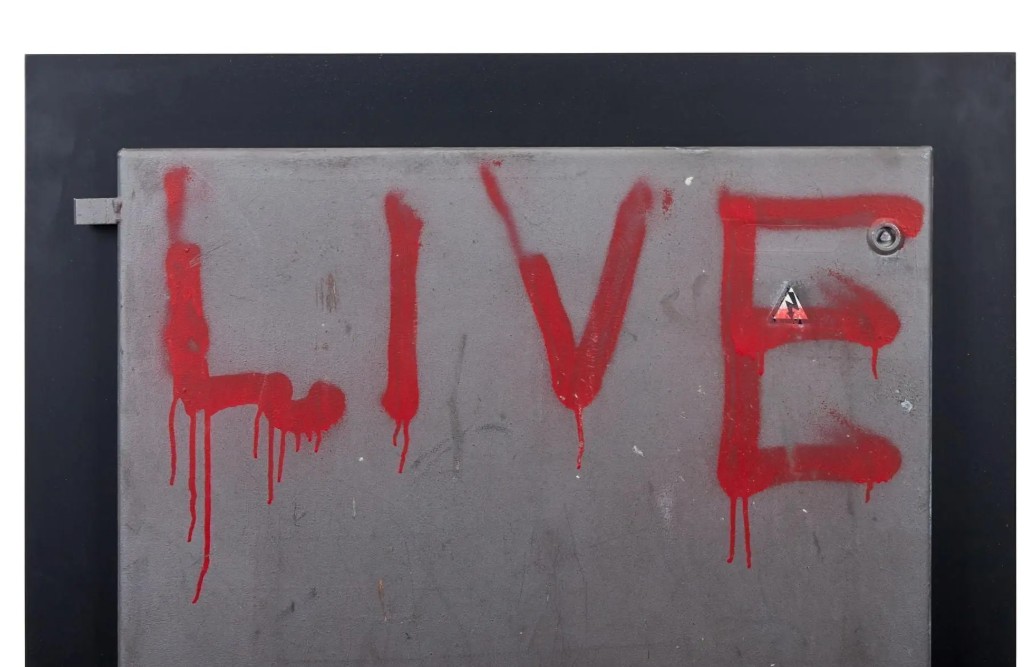
Few of Banksy’s early rats have survived in their original support. Preserved on its original metal door, this work retains the raw materiality, scale and urban context that define Banksy’s practice