BANKSY (British Street Artist, born 1974)
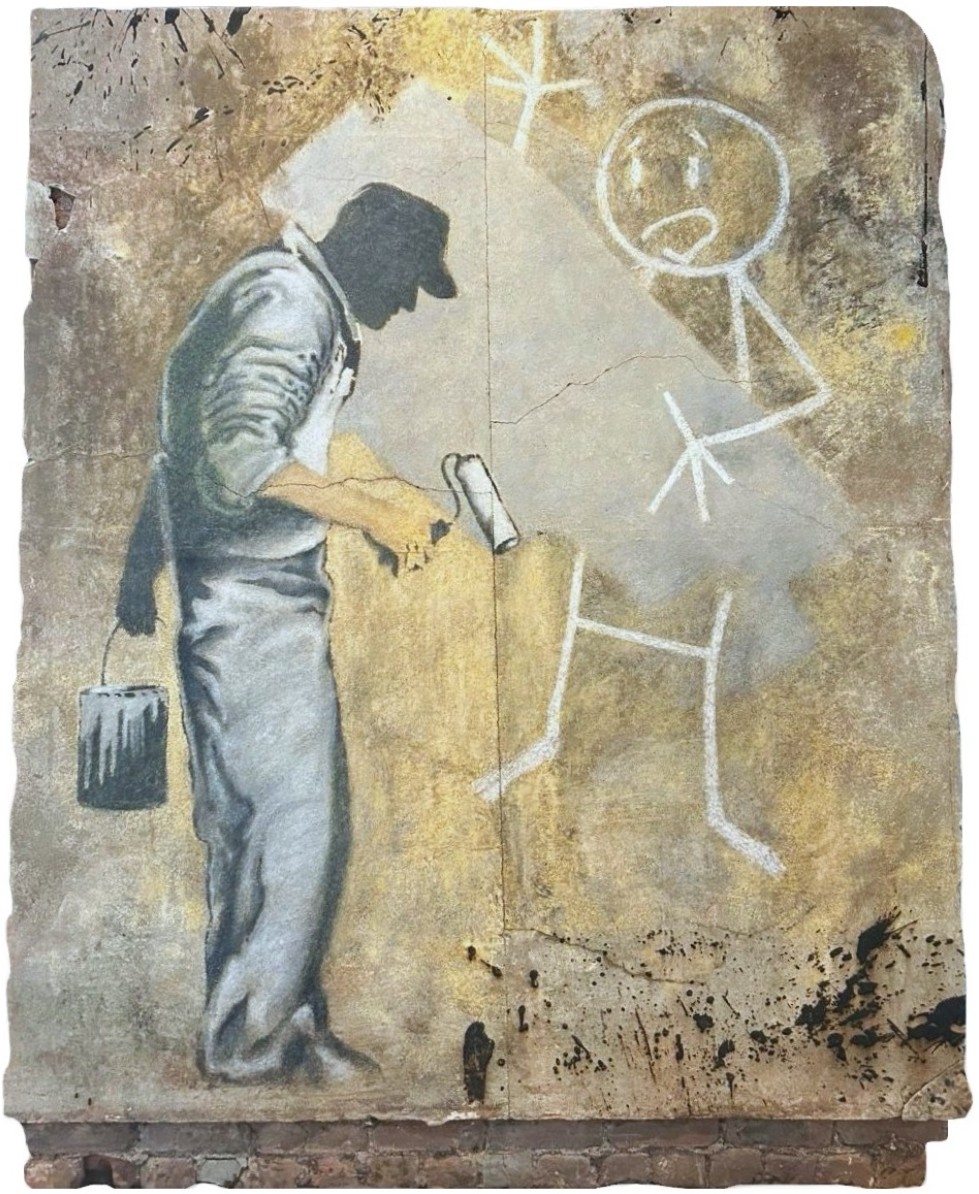
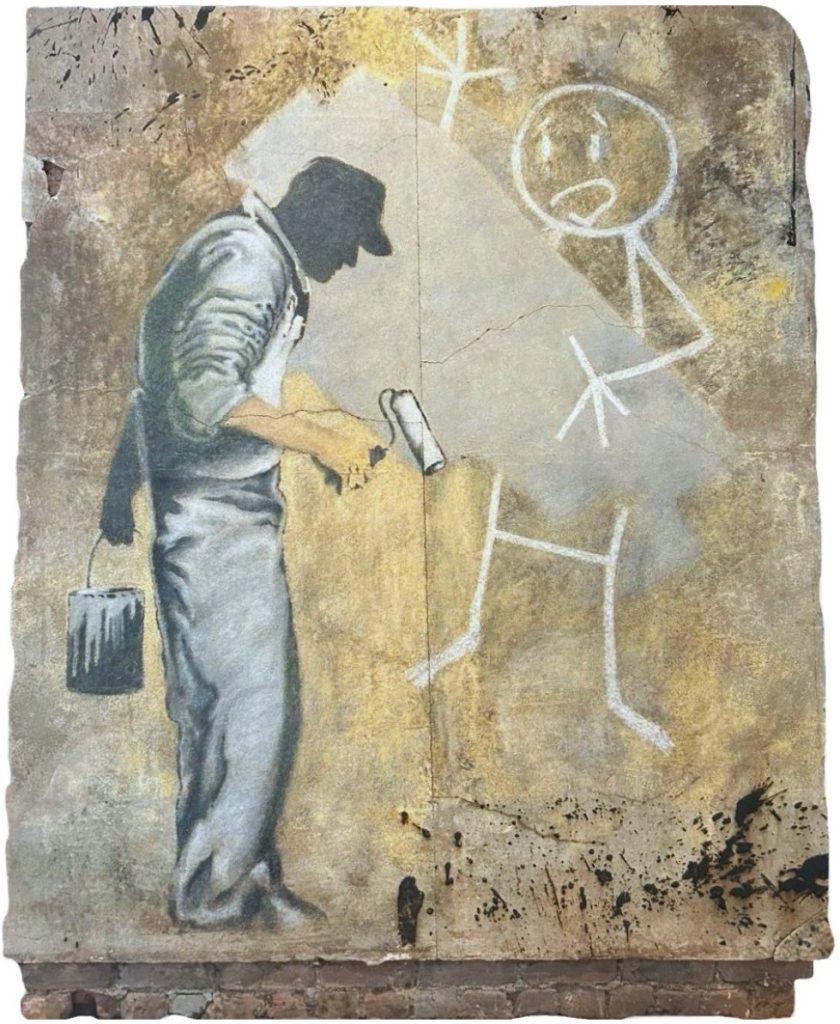
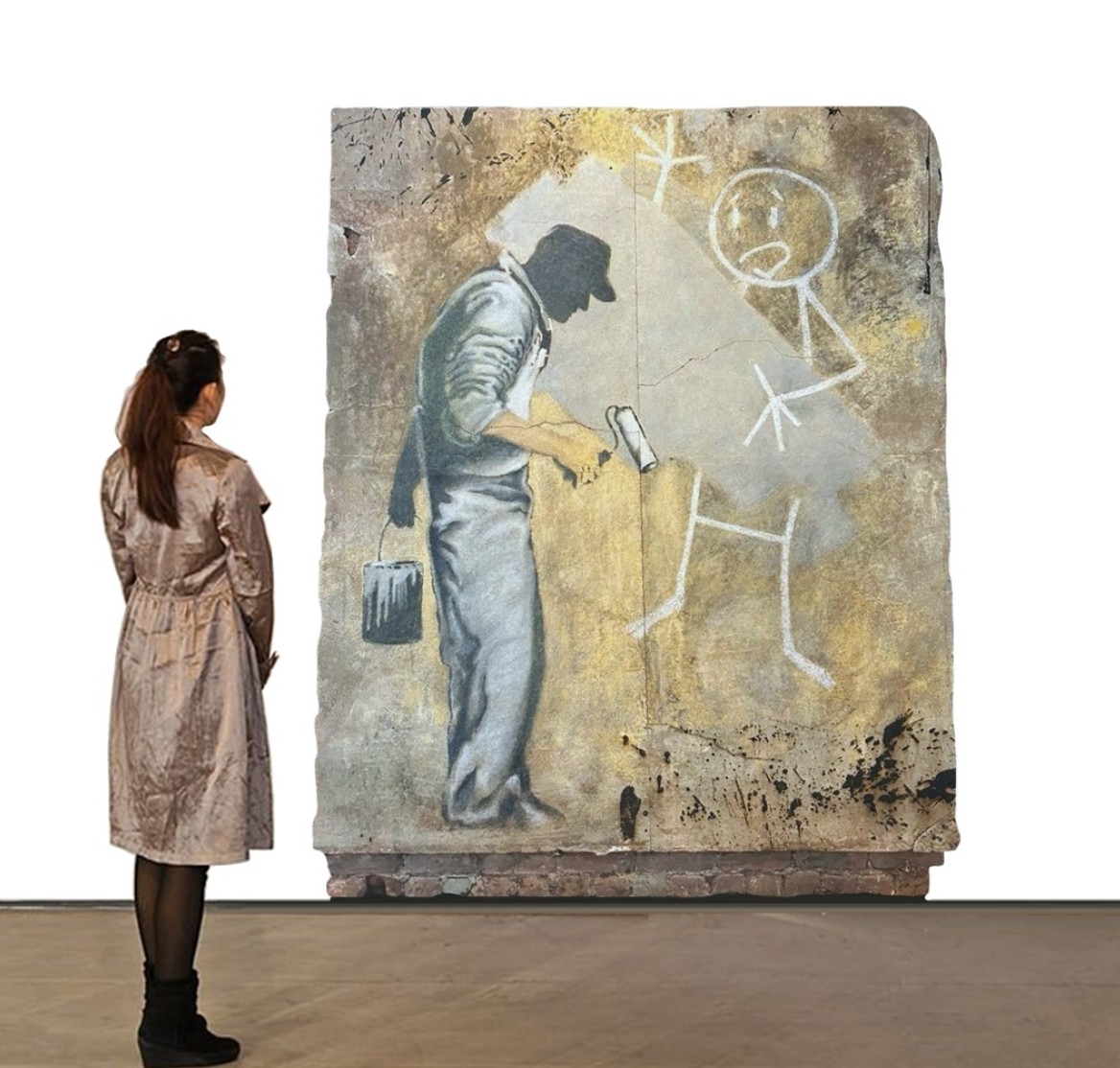
Gray Ghost Attacks Stick Figure, 2008
Stencil, freehand and spray paint on a masonry wall
Dimensions: 244 x 152.5 cm (96×60 inches)
Weight: 2,500 kg
Provenance
Private Collection, New Orleans
Exhibited
Louisiana State Museum, New Orleans
Auction History
| Hessink’s 28 March 2026 Est.: EUR 600,000 – 800,000 | Price Realized EUR 650,000 (Hammer) EUR 812,500 / USD 937,440 Lot 15 – Banksy (British Street Artist, born 1974) |
Catalogue Note
Created during Banksy’s celebrated visit to New Orleans in August 2008, Gray Ghost Attacks Stick Figure is one of the artist’s sharpest meditations on the nature of street art itself. Executed on the wall of a former fire station in the Lower Garden District, the mural was conceived as a direct response to local anti-graffiti activist Fred Radtke, better known as the “Gray Ghost,” who had spent years covering graffiti throughout the city with broad swathes of grey paint. Rather than resisting this intervention, Banksy transformed it into the very subject of the artwork. The diagonal grey patch, originally applied by Radtke, becomes an active participant in the composition, engulfing a distressed stick figure as an anonymous painter calmly rolls fresh paint across the wall.
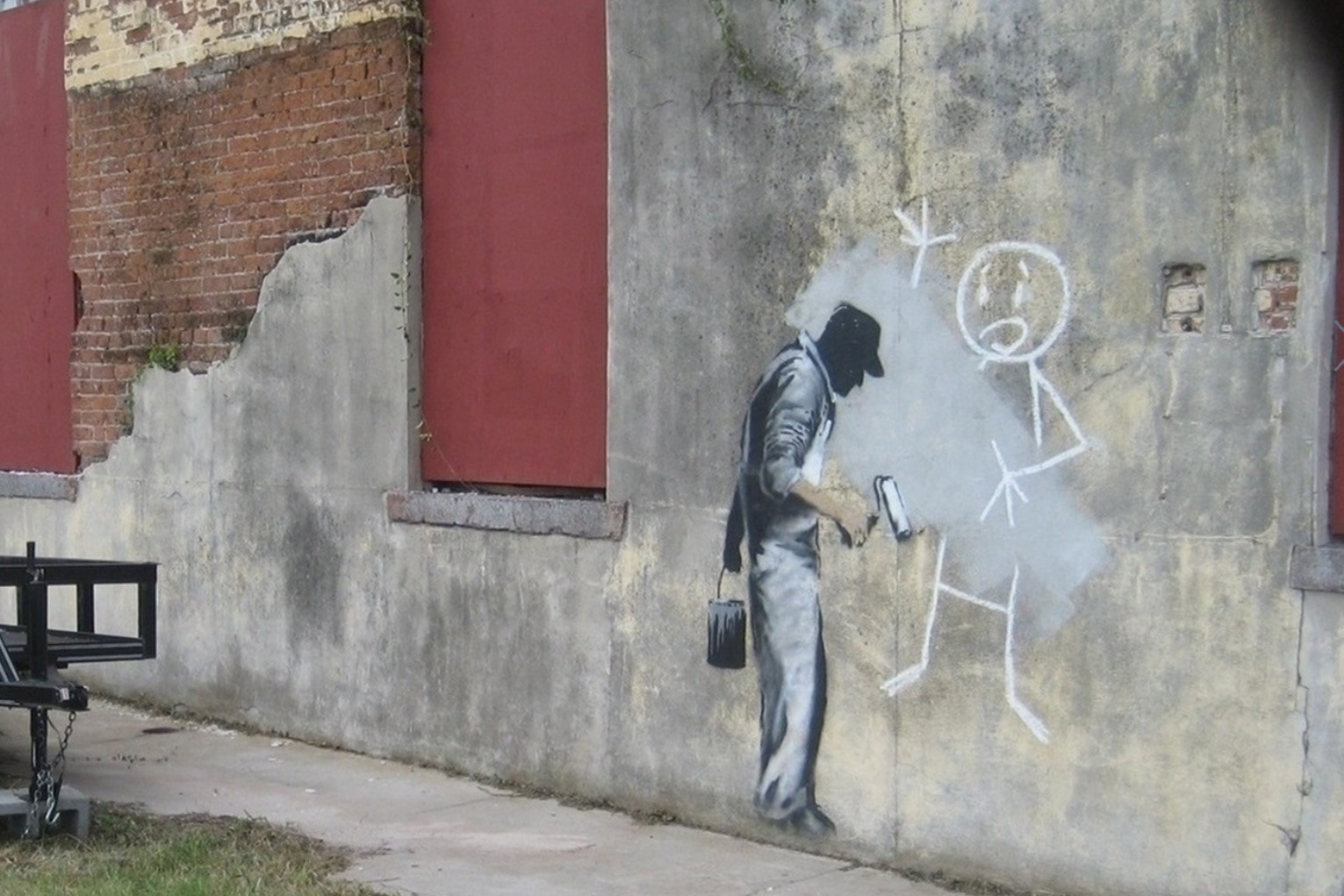
The work perfectly encapsulates Banksy’s ability to turn conflict into collaboration. By incorporating Radtke’s own paint into the final image, Banksy blurs the distinction between creation and destruction, artist and censor. The mural raises a deceptively simple question: who is the real vandal? Is it the graffiti artist who paints without permission, or the self-appointed guardian who erases works regardless of their artistic merit? In an ironic reversal, Radtke unwittingly became Banksy’s collaborator, his grey paint transformed from an instrument of censorship into an essential compositional element.
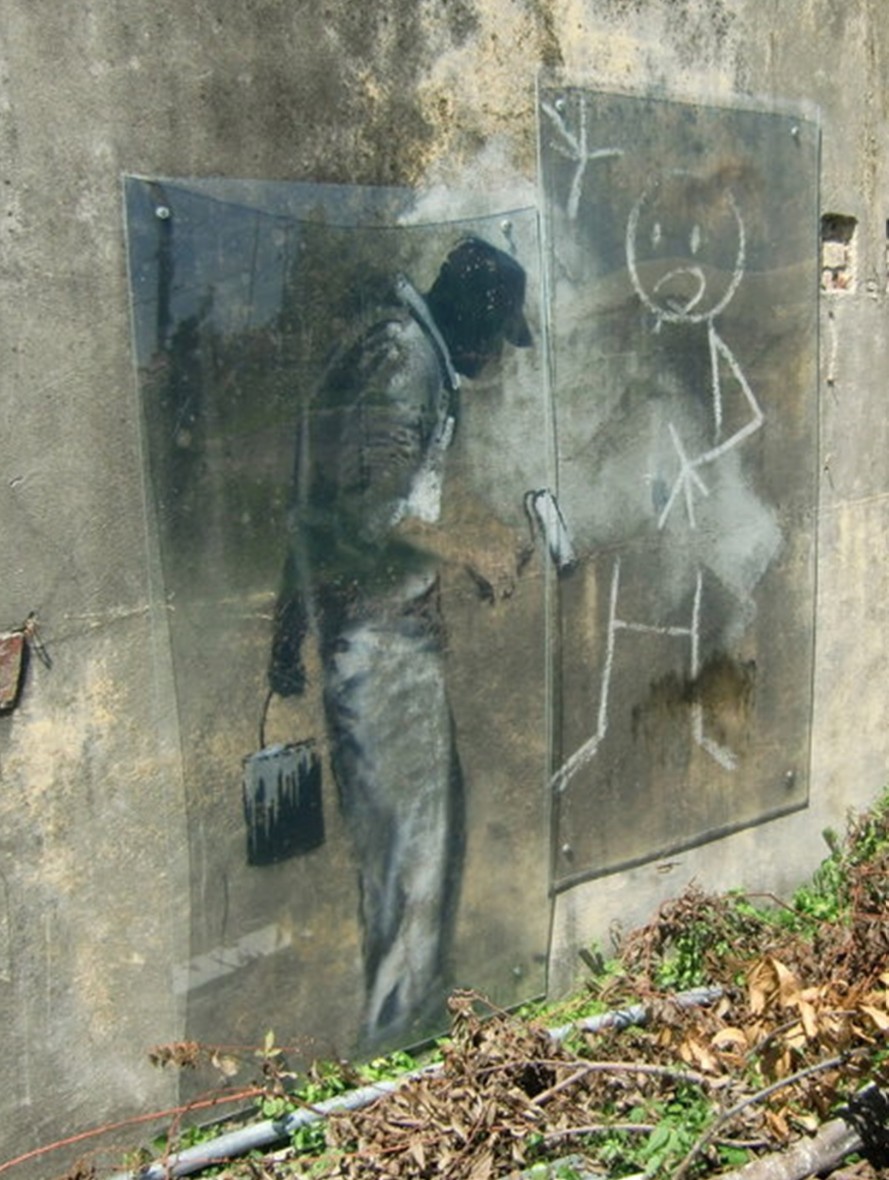
The image also belongs to a small but important group of works produced during the New Orleans residency in which Banksy directly confronted the “Gray Ghost.” The faceless painter appears repeatedly, always anonymous, almost spectral, suggesting that censorship itself is an impersonal force rather than the action of a single individual. This recurring motif demonstrates Banksy’s remarkable economy of visual language: with little more than a stencil, a roller and a crudely drawn stick figure, he constructs an eloquent allegory about artistic freedom, public space and the fragile existence of street art.
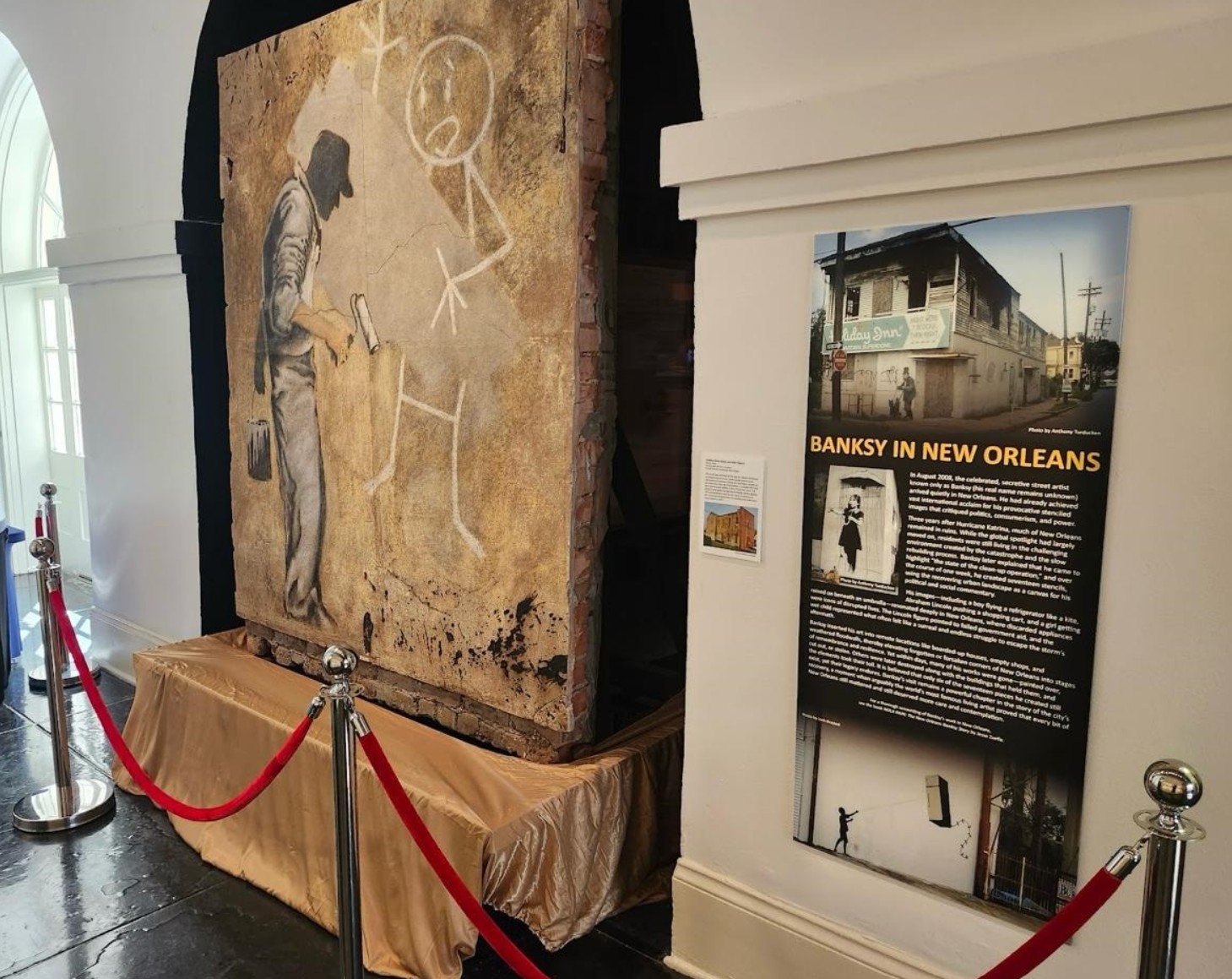
Today, Gray Ghost Attacks Stick Figure stands among the most historically significant murals from Banksy’s New Orleans campaign. Beyond its immediate humour lies a profound reflection on the ephemeral nature of graffiti. Street art exists in perpetual dialogue with time, weather, authority and erasure. Here, Banksy embraces that inevitability, transforming the very act of obliteration into the artwork itself. Few murals illustrate more convincingly his belief that, in the street, every attempt to silence an image simply becomes another chapter in its story.