
BANKSY
Injured Buddah, 2009
200×100 cm (80×40 inches)
Exhibited
Banksy vs. Bristol Museum, Bristol Museum, Bristol, 2009
Catalogue Note
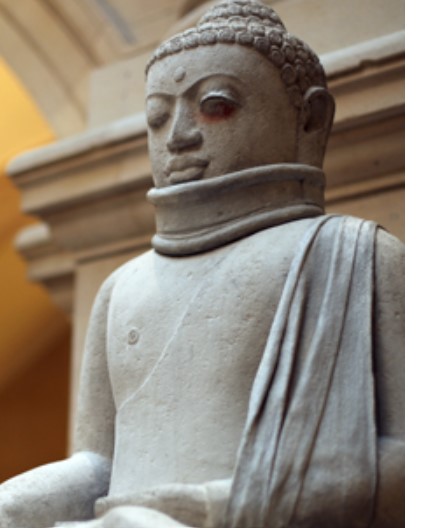
With Injured Buddha, Banksy transforms one of the world’s most recognizable spiritual symbols through an almost imperceptible intervention. A serene stone Buddha sits in meditation, eyes gently closed, his posture unchanged. Only a white bandage wrapped around his neck disrupts the sculpture’s timeless calm, introducing a subtle suggestion of pain into an image traditionally associated with inner peace and enlightenment.
The intervention is remarkably restrained. Unlike many of Banksy’s works, there is no irony, no graffiti and no overt political slogan. The Buddha remains composed, neither suffering visibly nor seeking sympathy. The bandage simply reminds us that even the most enduring symbols of wisdom are not immune to the wounds of the world.

The work invites a broader reflection on vulnerability. Religious and philosophical traditions are often presented as sources of permanence and certainty, standing above the turbulence of everyday life. Banksy gently questions that assumption. Rather than depicting an untouchable spiritual figure, he presents one that has been physically damaged while retaining its dignity and composure. The sculpture suggests that wisdom is not the absence of suffering but the ability to endure it.
The placement of the bandage is particularly significant. Wrapped around the throat, it evokes one of the body’s most fragile points—the place through which we breathe, speak and communicate. Whether interpreted as a physical wound or a symbolic injury, the gesture introduces an unexpected humanity into an otherwise idealized figure. The Buddha remains peaceful, but no longer invulnerable.
Created for Banksy vs. Bristol Museum in 2009, Injured Buddha belongs to a series of sculptures in which Banksy reinterprets familiar cultural icons through minimal intervention. Like Paintpot Angel and Lion Tamer, the work demonstrates how a single carefully chosen detail can completely alter the meaning of a classical object without diminishing its original beauty. Ultimately, Injured Buddha suggests that compassion and resilience are born not from perfection, but from experience. The sculpture reminds us that spiritual strength does not protect us from injury; it teaches us how to carry it.