BANKSY
Lenin in Sight, 2004
Spray-paint and emulsion on wood
59×60 cm (23 1/4 x 23 3/4 inches)
Provenance
Artificial Gallery, London
Private Collection, Asia (acquired from the above)
Christie’s, Hong Kong, 25 May 2021, lot 220 (consigned by the above)
Acquired from the above by the present owner
Auction History
| Christie’s Hong-Kong 25 May 2021 Est.: HKD 5,000,000 – 9,000,000 | Price Realized HKD 7,450,000 / USD 959,000 BANKSY (B. 1974), Lenin in Sight | Christie’s |
Catalogue Note
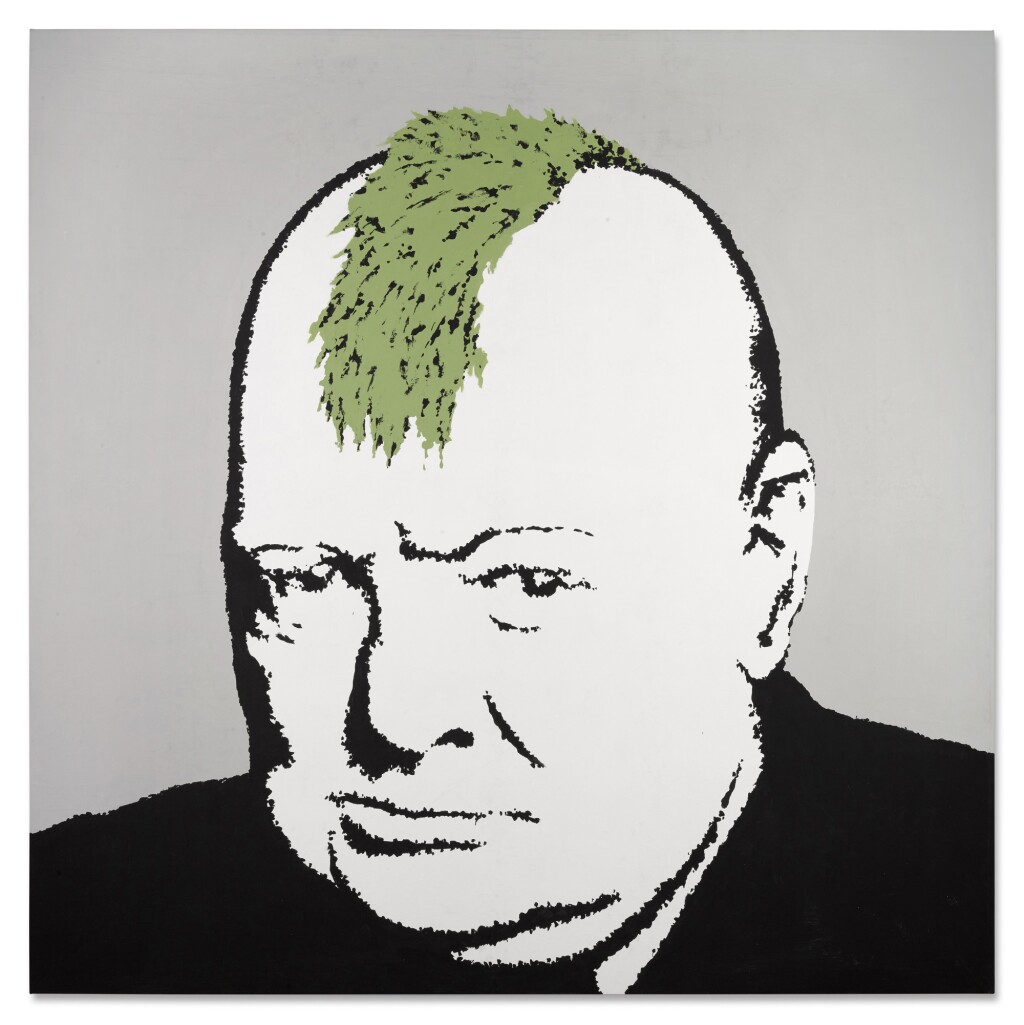
Using his signature stenciled spray-paint, Banksy creates articulate and provocative images that reflect both recent history and contemporary topics. Lenin in Sight exemplifies the anonymous artist’s ability to shape intellectually layered messages within a pointed yet simple composition. Beginning to paint major political powers in the 1990s and into the 2000s, Banksy took on subjects such as Lenin as well as a similarly Mohican Winston Churchill. Using distinct satirical alterations to familiar faces of political leaders, Banksy challenges his viewers to interpret those who hold or have held power from a different viewpoint.
BANKSY
Turf War, 2003
Turf War, 2003
Oil and emulsion on canvas
254.5 x 254.5 cm (100 1/2 x 100 1/2 inches)
Andy Warhol most notably took on the image of Lenin in his final series of works in 1987, examining a key figure in the founding of the USSR only a few years before its collapse. Using bold primary colors and an unsettlingly empty background, the pop artist edited an early reference image of Lenin. Similar to Banksy’s use of stencils, Warhol’s love for the silkscreen was rooted in his ability to reproduce an image over and over. While the Soviet regime used widespread, repetitive imagery as a powerful tool of propaganda and control, Warhol and Banksy use repetition to reframe the power of their subjects. Through his portrayals of capitalist goods and portraits of the ultra-wealthy, Warhol and his artistic practice embraced production methods and the cult of celebrity, embodying the antithesis of his Communist final subject’s beliefs. While Warhol does not drastically modify his subjects’ appearance like Banksy, his Lenin series cultivates the same ideological tension.
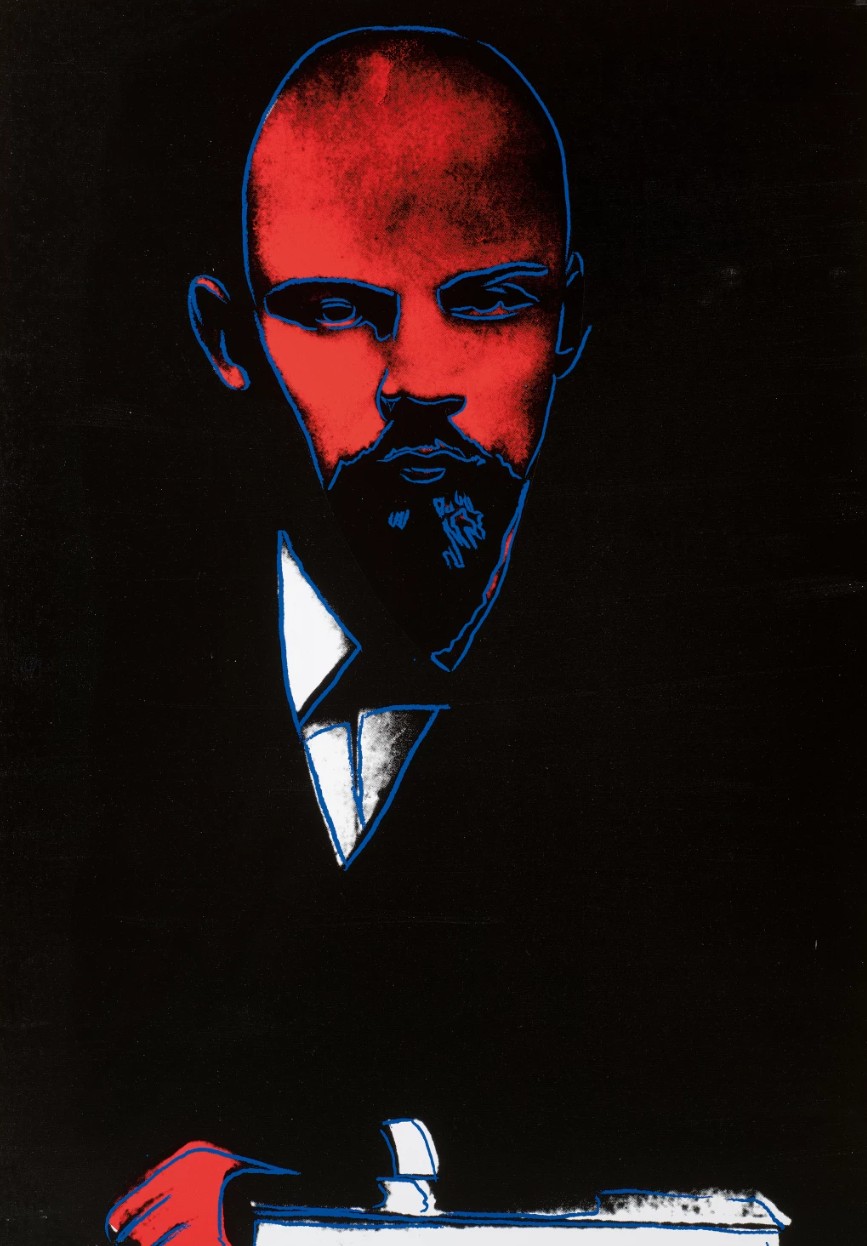
Andy Warhol, Lenin, 1987. Private Collection.
© 2026 The Andy Warhol Foundation for the Visual Arts, Inc. / Licensed by DACS, London.
© 2026 The Andy Warhol Foundation for the Visual Arts, Inc. / Licensed by DACS, London.
In a more humorous tone, Banksy transforms the Russian revolutionary into a Mohican punk, juxtaposing one face of revolution with another highly stylized countercultural movement. The punk-pierced face and spiky mohawk reflect anarchism and a fierce assertion of individuality, while Lenin was at the forefront of Soviet-era communism, embodying uniformity and suppression of opposing perspectives.
“All graffiti is low-level dissent, but stencils have an extra history.
They’ve been used to start revolutions and to stop wars.”
This painting questions what it means to be a revolutionary. Banksy paints a bright red sniper’s sight in front of Lenin’s face, clearly marking the target for his audience. Using a punk aesthetic and the historical context of Lenin as a politician, Lenin in Sight presents both how expressions of individuality can make you a target and the people who target the individual. This is not just a visual joke, but an actual confrontation. The punkified Lenin challenges our assumptions about ideology, authority, and revolution. Is the crosshair a symbol of assassination? Or of targeted propaganda? By fusing Soviet iconography with punk aesthetics, Banksy turns Lenin into both a relic and a rebel, a leader both feared and ridiculed. The title and visual language point to systems of surveillance, militarized control, and historical erasure, all delivered with Banksy’s signature sense of subversive theater.