LES MISÉRABLES
Description
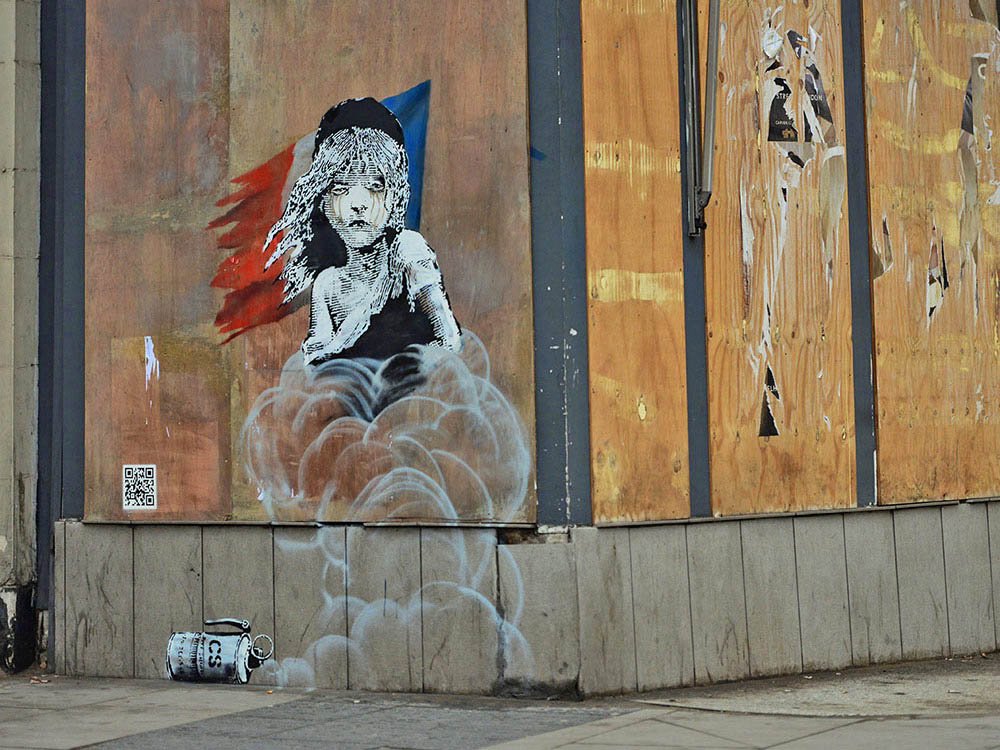
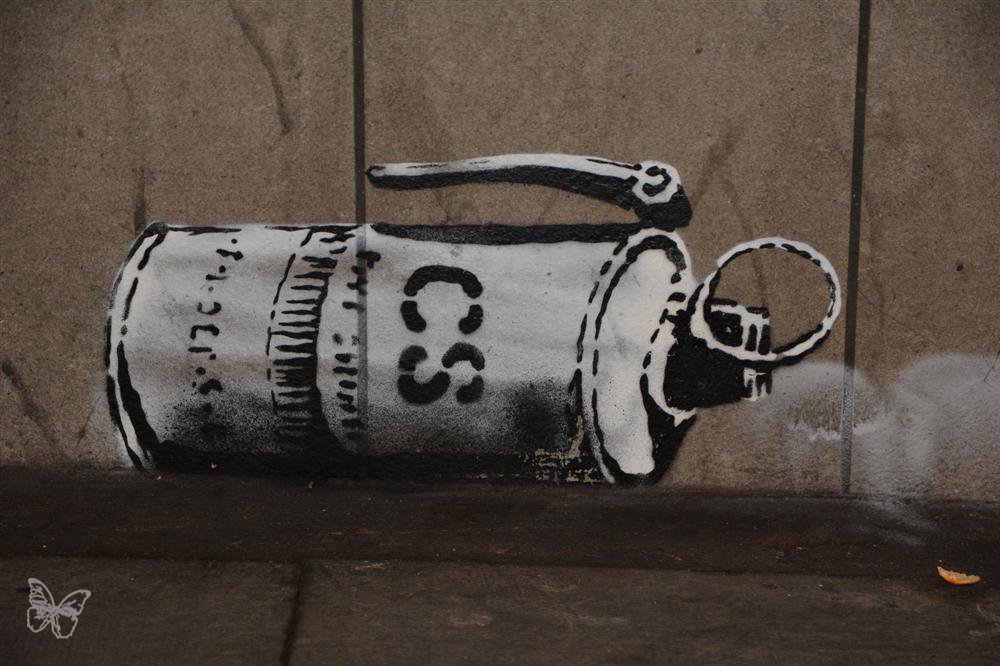
A young Cosette, the child whose face has become the emblematic image of Les Misérables, emerges through a cloud of tear gas. Behind her, the French tricolour appears torn and windswept; at her feet lies a canister marked CS. Tears stream from her eyes as the gas rises around her.
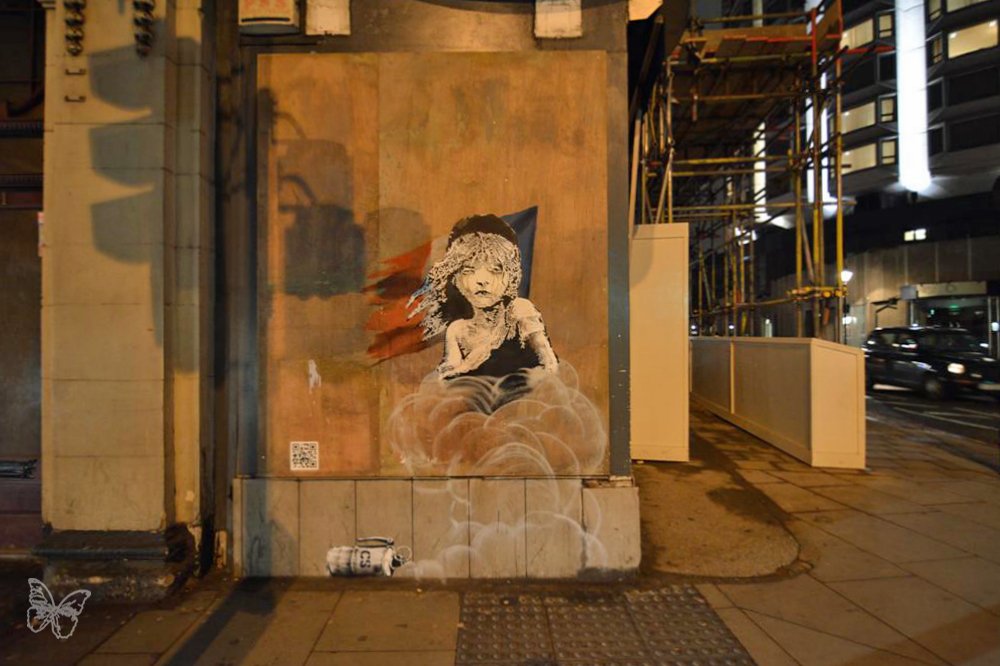
The composition deliberately corrupts an image normally associated with Victor Hugo's great narrative of poverty, injustice and social exclusion. Cosette is no longer simply the nineteenth-century child of Les Misérables: Banksy transports her into contemporary Europe, where she becomes a witness to the treatment of refugees at the Calais “Jungle.”
From Calais to the French Embassy
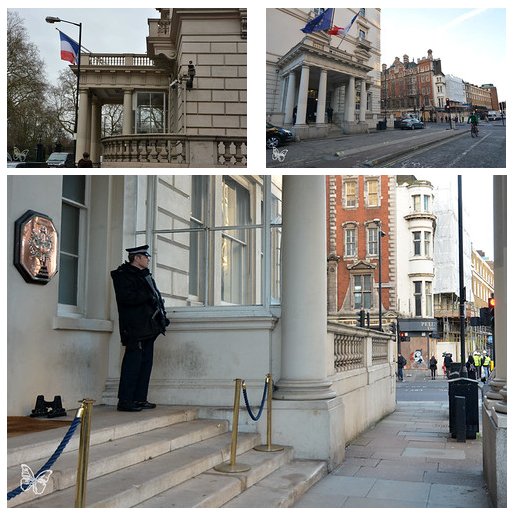
The mural appeared overnight on 23–24 January 2016, directly opposite the French Embassy in Knightsbridge. The location was fundamental. Banksy had already produced several works in Calais addressing Europe's refugee crisis, including his portrait of Steve Jobs, whose biological father was a Syrian immigrant. Les Misérables brought that campaign into central London and placed its accusation symbolically at France's front door.
The immediate context was particularly specific. Earlier that month, French authorities had been accused of using tear gas, rubber bullets and water cannon during operations in the Calais camp. The French authorities disputed allegations concerning the use of tear gas against migrants, but Banksy did something unusual: rather than allowing the image alone to make the argument, he attached evidence to the wall.
Banksy's First Interactive Mural
Beside Cosette, Banksy stencilled a QR code. Scanning it directed the viewer to a seven-minute video produced by Calais Migrant Solidarity documenting police operations in the camp on 5 and 6 January. Contemporary reporting described Les Misérables as Banksy's first interactive mural.
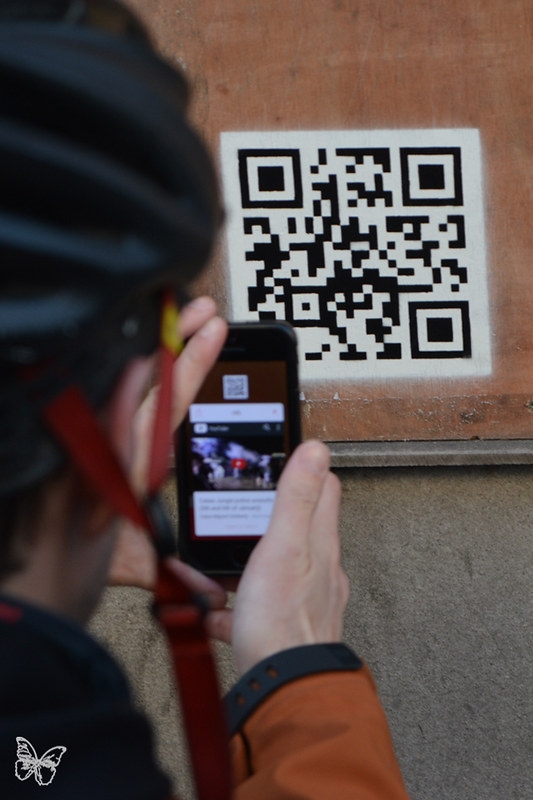
This small technological addition significantly changes the nature of the work. Banksy's street art normally compresses an argument into a single visual metaphor. Here the mural functions almost like a portal: the passer-by encounters the image, scans the code and is transported from an affluent London street to footage recorded inside the Calais camp. Street art becomes both image and documentary link.
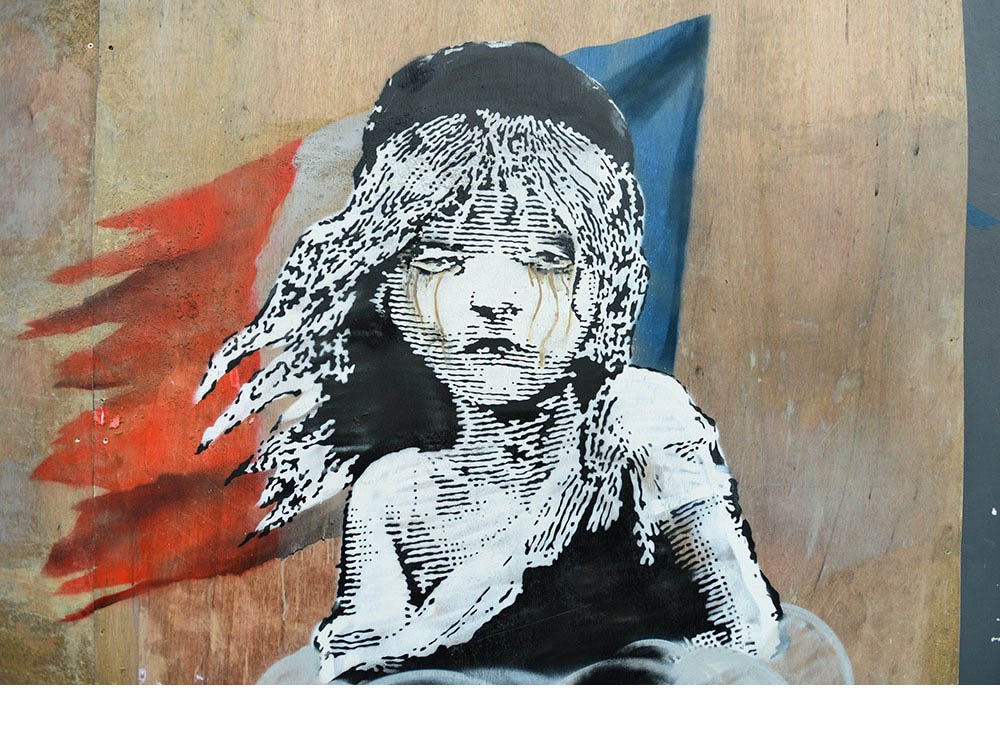
The French flag makes the confrontation sharper. Its revolutionary associations with liberty and citizenship sit uneasily behind a crying child engulfed in gas. Banksy does not need to write an accusation across the wall; the contradiction between the symbols is sufficient.
A Mural Silenced
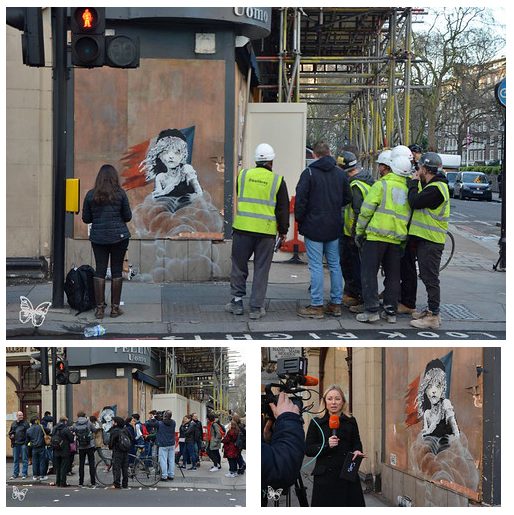
The work had an exceptionally short public existence. Almost immediately, people reportedly attempted to prise the panel from the wall with screwdrivers. Within less than 48 hours, construction workers covered the mural completely with plywood.
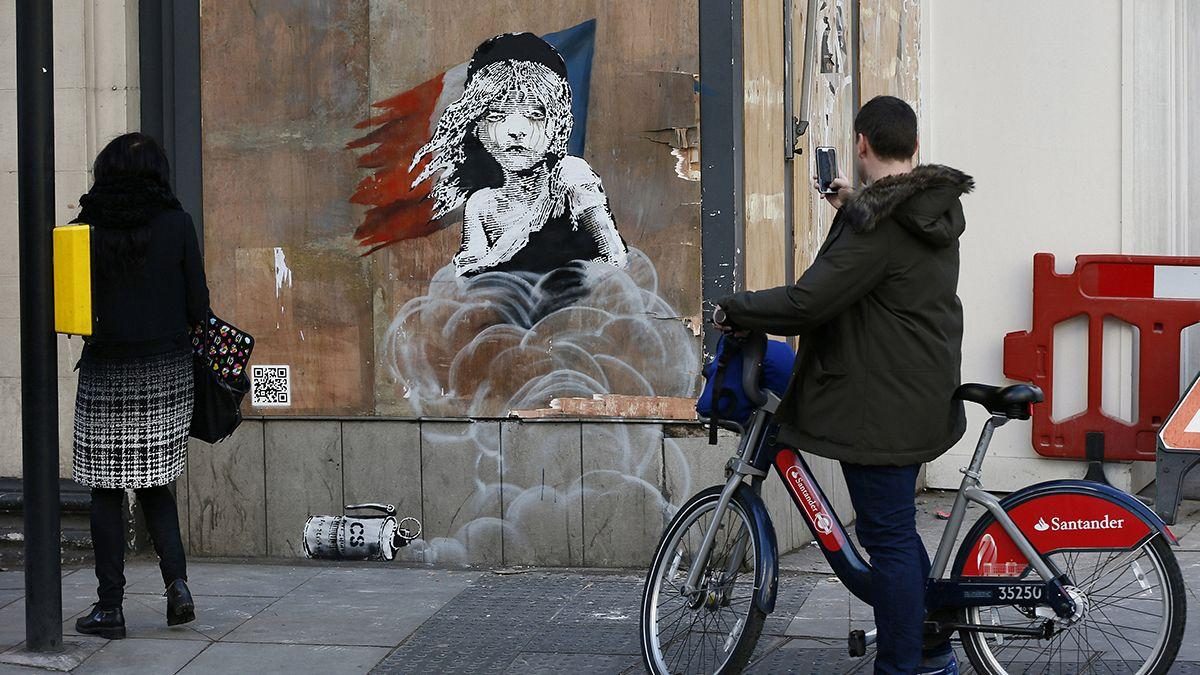
Its disappearance is especially striking because Les Misérables had been conceived to make something distant visible. Banksy placed the suffering of Calais refugees opposite one of France's principal diplomatic buildings, supplied a digital route to the underlying evidence, and allowed anyone walking through Knightsbridge to access it. Within two days, the physical image itself could no longer be seen.
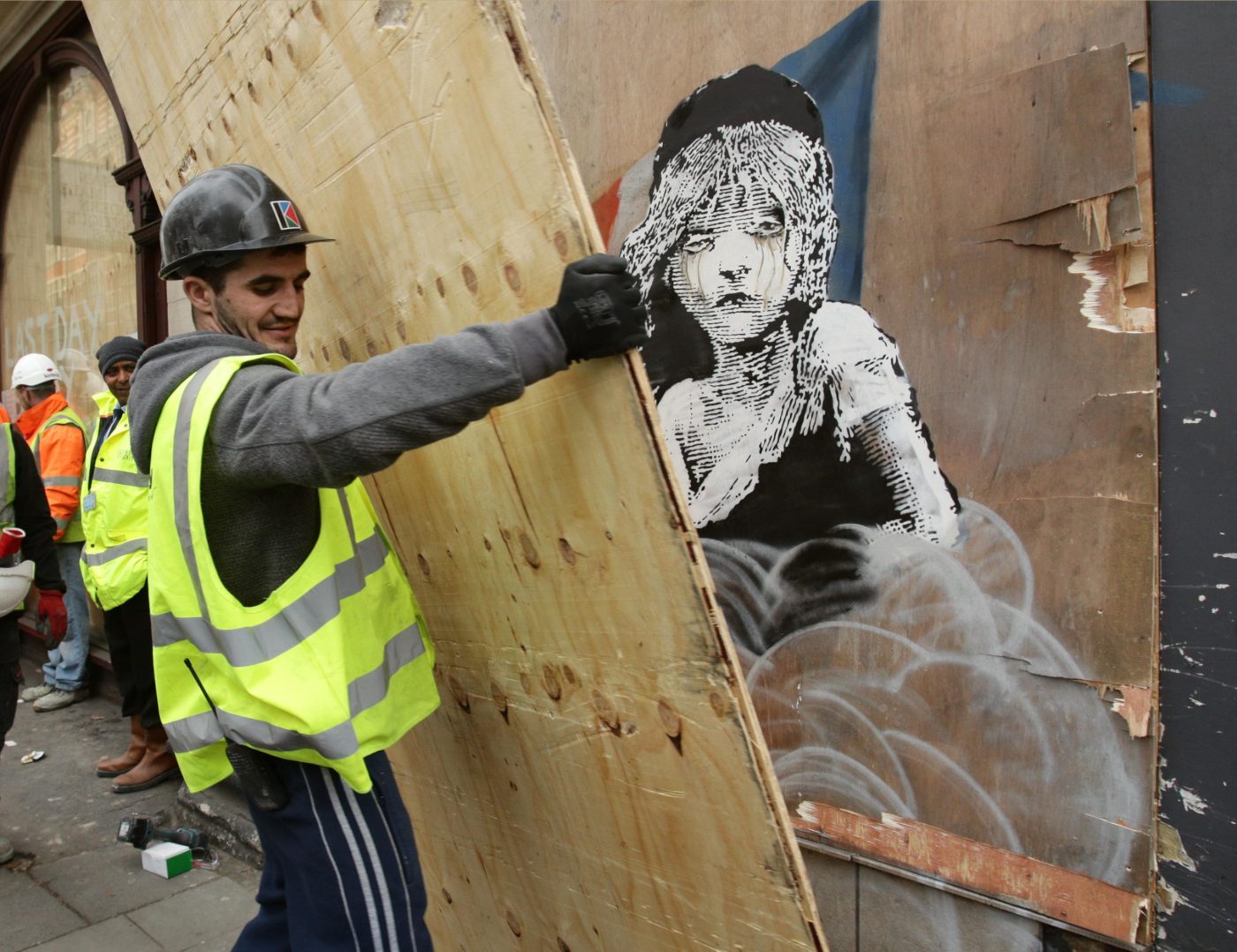
The mural asked London to look at what was happening in Calais. Almost immediately, London put a wall in front of it.
STAY INFORMED
Receive the latest news, exhibitions, artworks and market updates on Banksy.