BANKSY
Masons, 2003
Gouache on board in six parts
Each 45×60 cm (17 3/4 x 23 1/2 inches)
Signed, titled, numbered 1-6, and dated “03” on the reverse of the sixth panel
Provenance
Lazarides Gallery, London
Acquired directly from the above by the present owner
Auction History
| Sotheby’s London 18 October 2013 Est.: GBP 70,000 – 90,000 |
Price Realized GBP 68,500 / USD 110,865 (#133) Banksy |
Catalogue Note
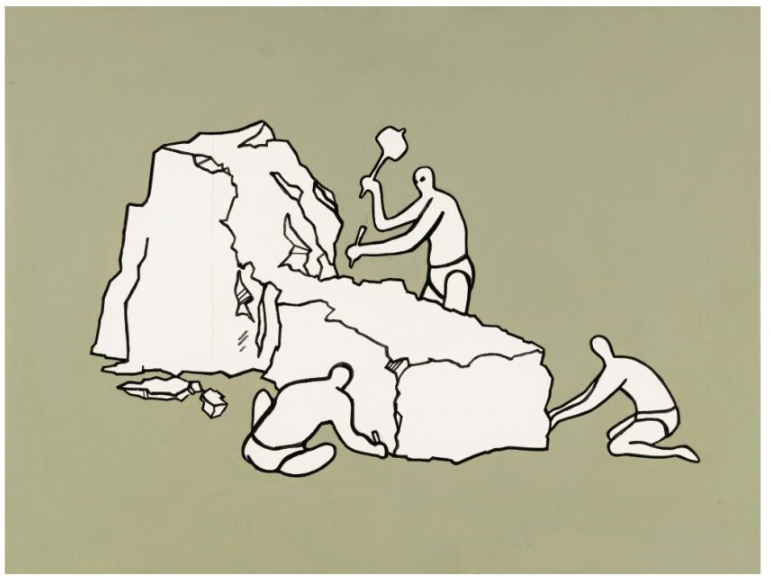
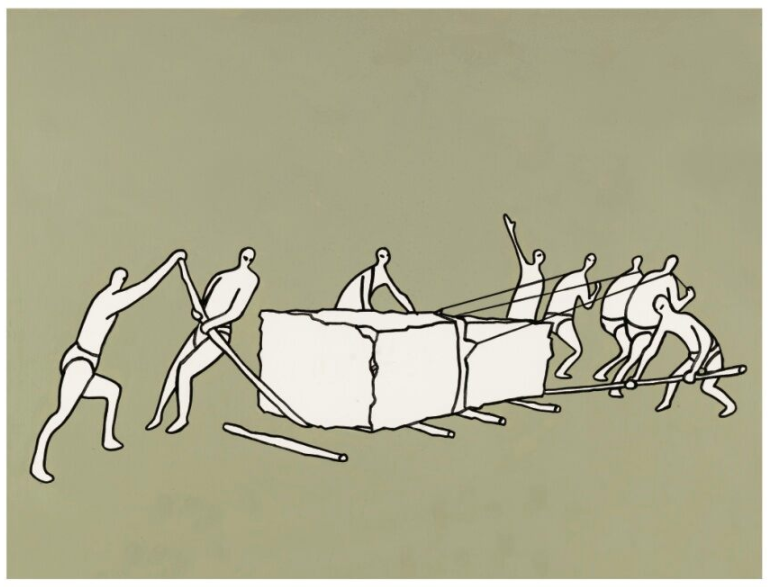
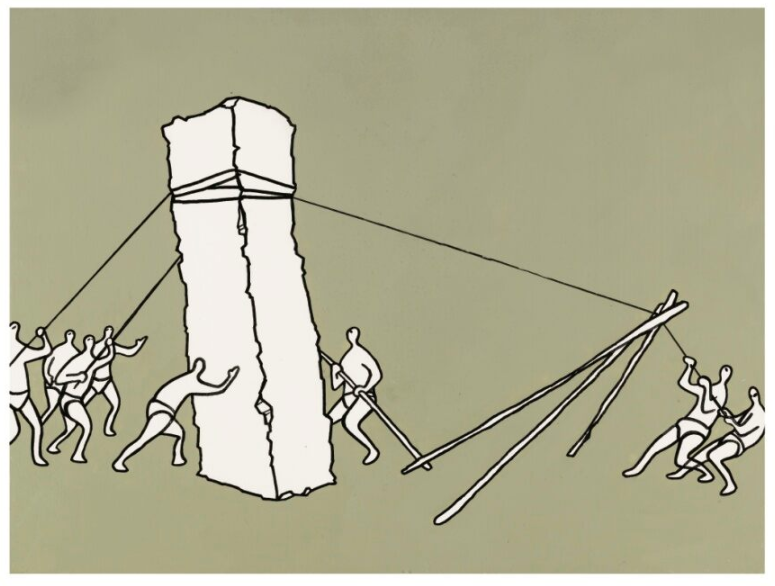
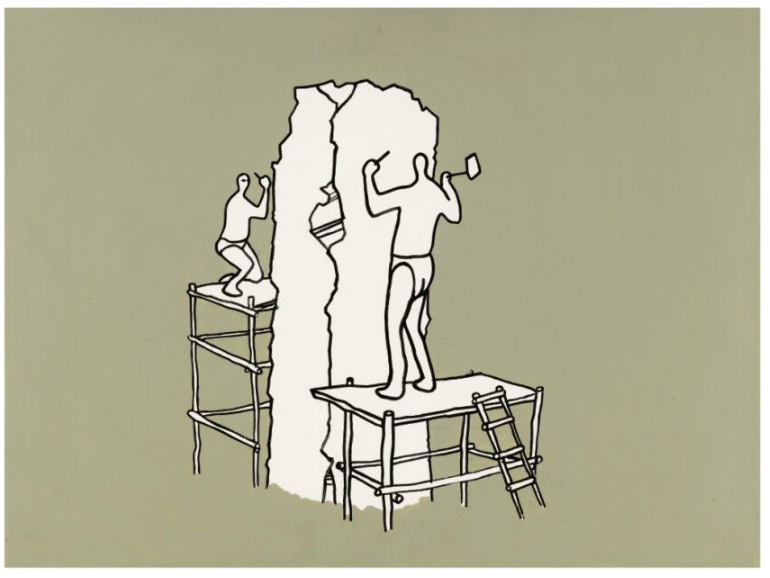
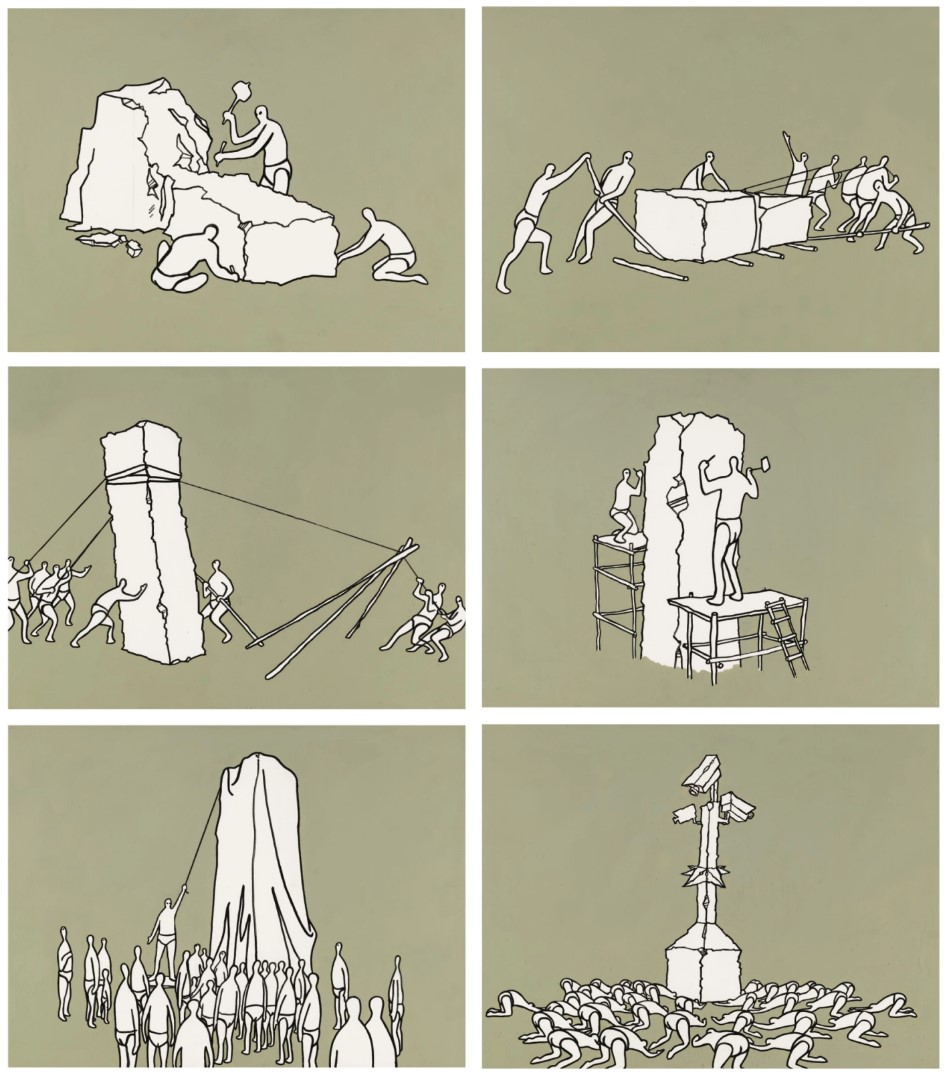
Among Banksy’s earliest and most intellectually ambitious works, Masons unfolds as a six-panel visual narrative tracing the birth of an institution. Executed like a sequence from a graphic novel, the work abandons the instant punchline of the artist’s better-known stencils in favor of something far more unsettling: a step-by-step account of how power is created, legitimized and ultimately worshipped.
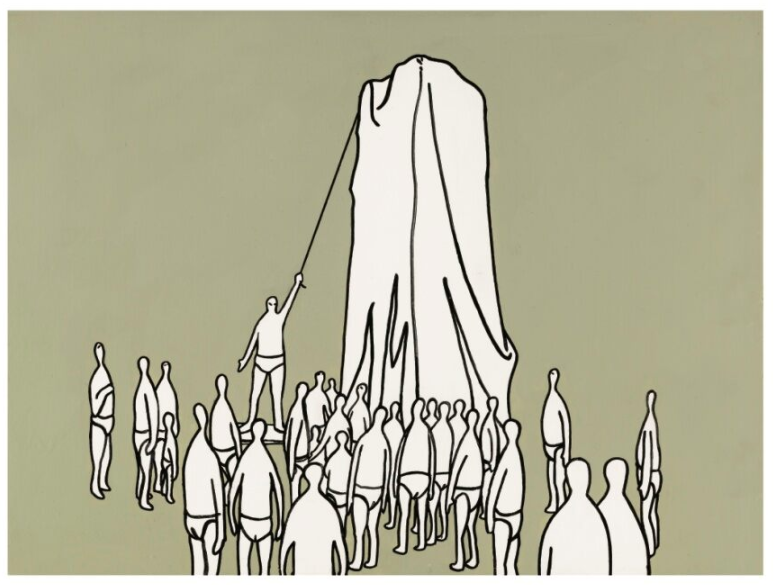
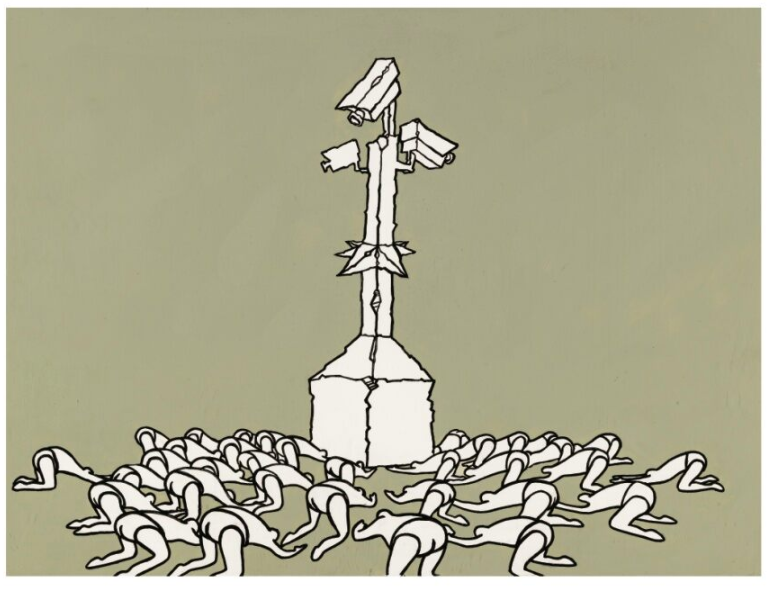
The story begins innocently enough. Anonymous figures quarry enormous blocks of stone, transport them with ropes and levers, painstakingly carve them into shape and finally erect what appears to be an ancient monolith. Only in the final panel is the true identity of the monument revealed: not a deity, not a king, but a modern CCTV camera. Before it, the assembled crowd kneels in silent devotion.
The brilliance of Masons lies in this gradual revelation. Surveillance is not presented as something imposed by force but as something patiently constructed by society itself. Every stage of the process—from extraction and engineering to celebration and worship—is carried out collectively. Authority, Banksy suggests, rarely appears fully formed. It is built, accepted and eventually revered by the very people it comes to oversee.
The title deliberately invites multiple readings. It evokes both the medieval stonemasons who built Europe’s cathedrals and the Freemasons, whose rituals, symbols and mythology revolve around architecture and the notion of a “Great Architect.” Banksy cleverly merges these references into a contemporary parable in which the sacred monument of previous civilizations is replaced by the defining icon of the surveillance age. The object of worship has changed, but the human impulse to construct and venerate symbols of authority remains remarkably constant.
Unlike the immediacy of works such as Laugh Now or Flying Copper, Masons demands slow reading. Each panel functions as a chapter in an allegory, transforming the work into one of the rare occasions on which Banksy adopts sequential storytelling rather than the visual aphorism for which he is best known. In this respect, it occupies a unique place within his oeuvre, sharing more with political cartoons and medieval narrative cycles than with conventional graffiti.
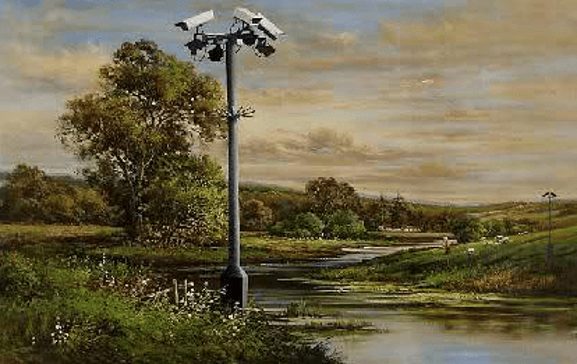
Executed in 2003, at a moment when CCTV cameras were becoming an increasingly familiar feature of British public life, Masons anticipated debates surrounding privacy, surveillance and the normalization of constant observation that have only intensified in the decades since. Yet the work remains strikingly contemporary because its true subject is not technology but belief. Cameras are merely the latest idols. The deeper question Banksy poses is timeless: how easily do societies transform instruments of control into objects of unquestioned faith?
With remarkable economy, Masons condenses the entire life cycle of power into six deceptively simple drawings. Equal parts satire, political philosophy and visual fable, it stands as one of Banksy’s most sophisticated reflections on the fragile boundary between security and obedience, reminding us that the most enduring monuments are often those we build ourselves.